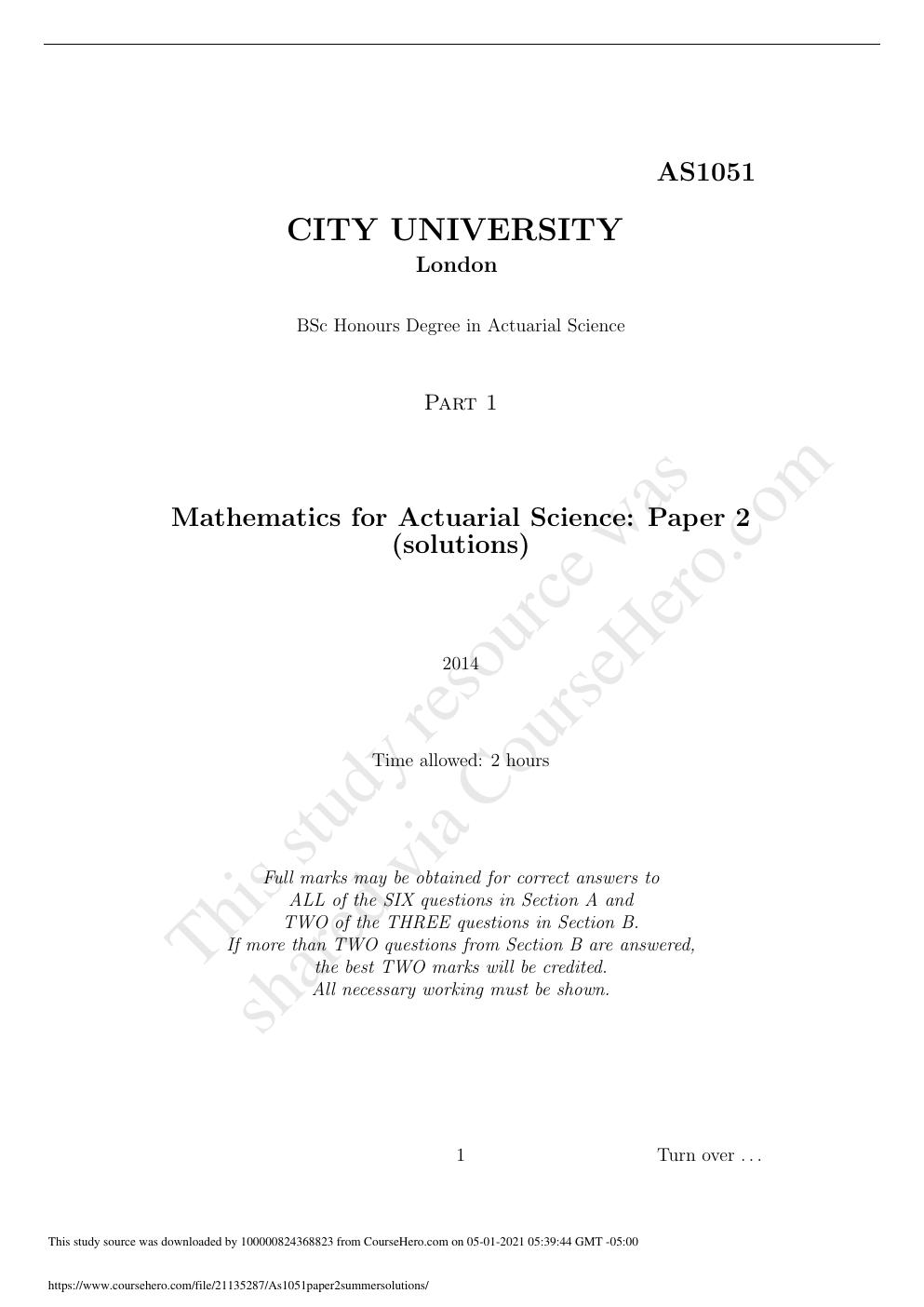
Mathematics > EXAM SOLUTIONS > AS1051 Mathematics for Actuarial Science: Paper 2 (solutions) | CITY UNIVERSITY London (All)
AS1051 Mathematics for Actuarial Science: Paper 2 (solutions) | CITY UNIVERSITY London
Document Content and Description Below
Last updated: 2 days ago
Preview 3 out of 8 pages
Instant download
Buy this Document to get the Full Access Instantly
Provided by Students Who Aced it
We Verify Document Content to Gurantee Accuracy
Reviews( 0 )
Document information
Connected school, study & course
About the document
Uploaded On
Nov 21, 2026
Number of pages
8
Written in
All

Additional information
This document has been written for:
Uploaded
Nov 21, 2026
Downloads
0
Views
24
Topic Tags
Recommended For You
Get more on EXAM SOLUTIONS ».png)
AS1051 CITY UNIVERSITY London BSc Honours Degree in Actuarial...
.png)
AS1051 CITY UNIVERSITY London BSc Honours Degree in Actuarial...
.png)
AS1051 CITY UNIVERSITY London BSc Honours Degree in Actuarial...
Test Bank For Mathematics with Applications In the Management,...
Solutions Manual For Mathematics with Applications In the Mana...

Instructor Solutions Manual for Discrete Mathematics, 8th Edit...
Excursions in Modern Mathematics 10th Edition By Peter Tannenb...

SOLUTIONS MANUAL for Discrete Mathematics, 8th Edition by Rich...
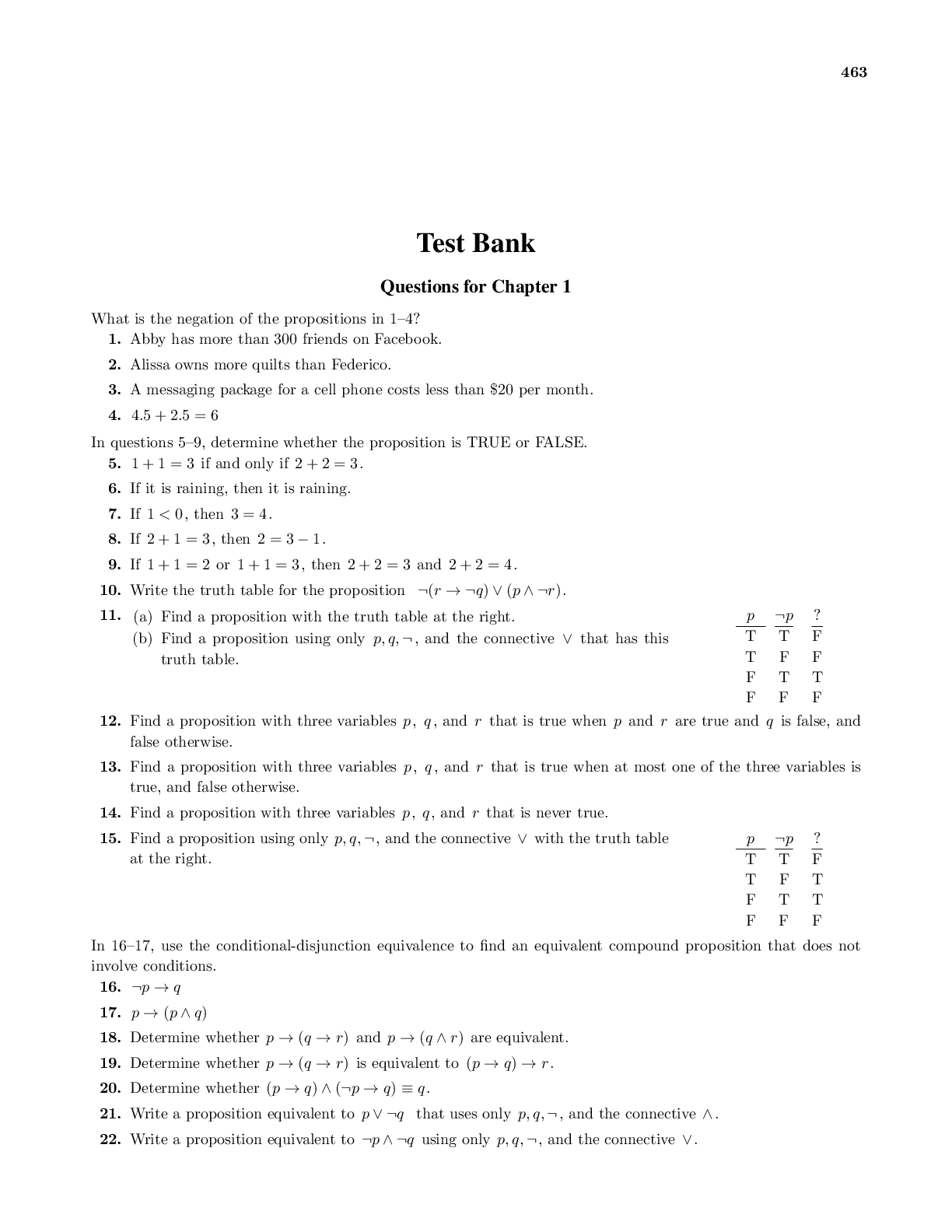
Discrete Mathematics and Its Applications 8th Edition by Kenne...
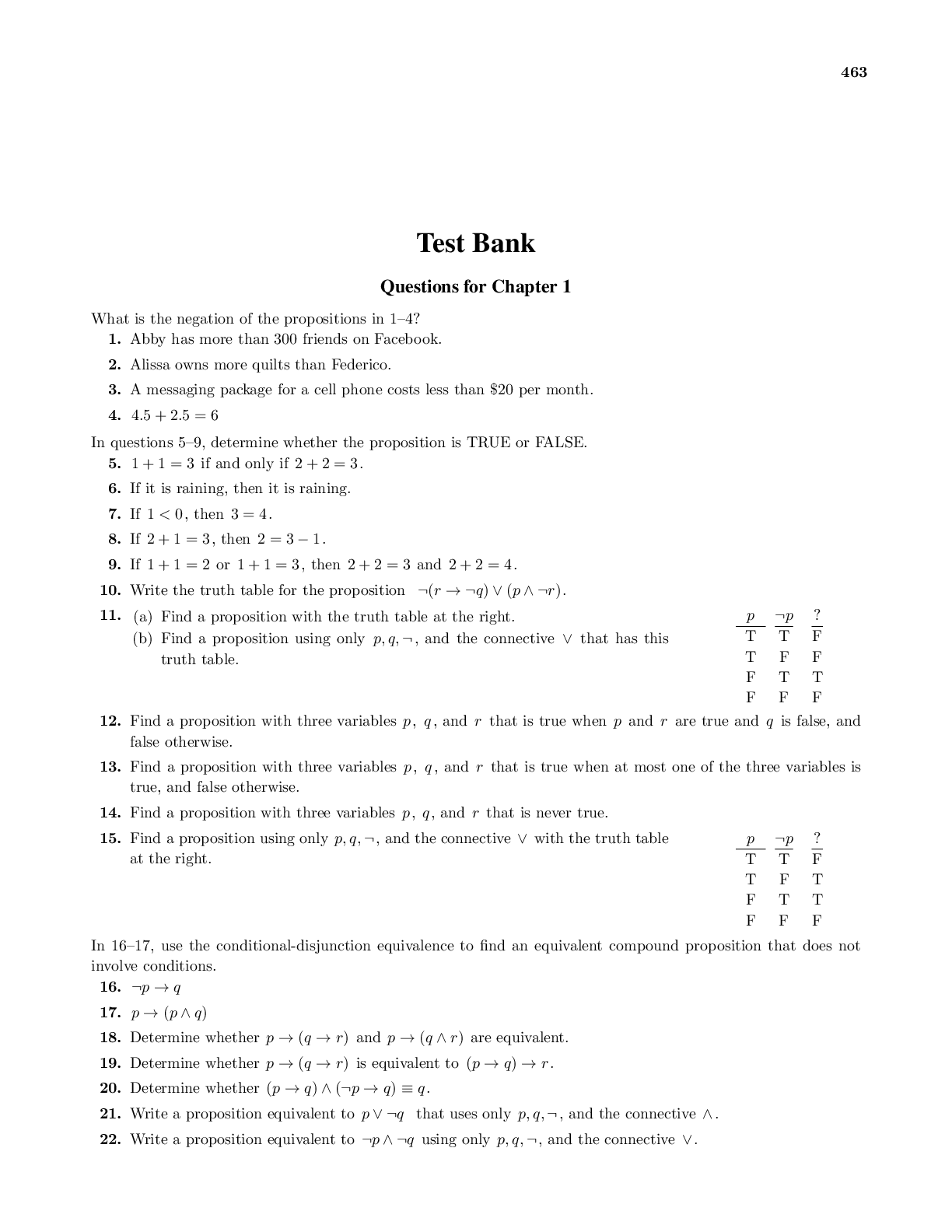
Test Bank for Discrete Mathematics and Its Applications 8th Ed...
SOLUTIONS MANUAL for Discrete Mathematics with Ducks 2nd Editi...

[eBook] [PDF] Discrete Mathematics With Ducks, 2nd Edition By...
eBook Discrete Mathematics and Its Applications 8th Edition By...

Test Bank for Discrete Mathematics and Its Applications 8th Ed...
Solution Manual For Basic College Mathematics, 9th Edition by...
NLN PAX EXAM PREP: MATH QUESTIONS AND ANSWERS ALREADY PASSED
Discrete Mathematics 8th Global Edition By Richard Johnsonbaug...
Discrete Mathematics and Its Applications 2025 Evergreen Relea...