*NURSING  >  STUDY GUIDE  >  Study Guide for NR 293 Exam 1 (All)

Study Guide for NR 293 Exam 1

Document Content and Description Below

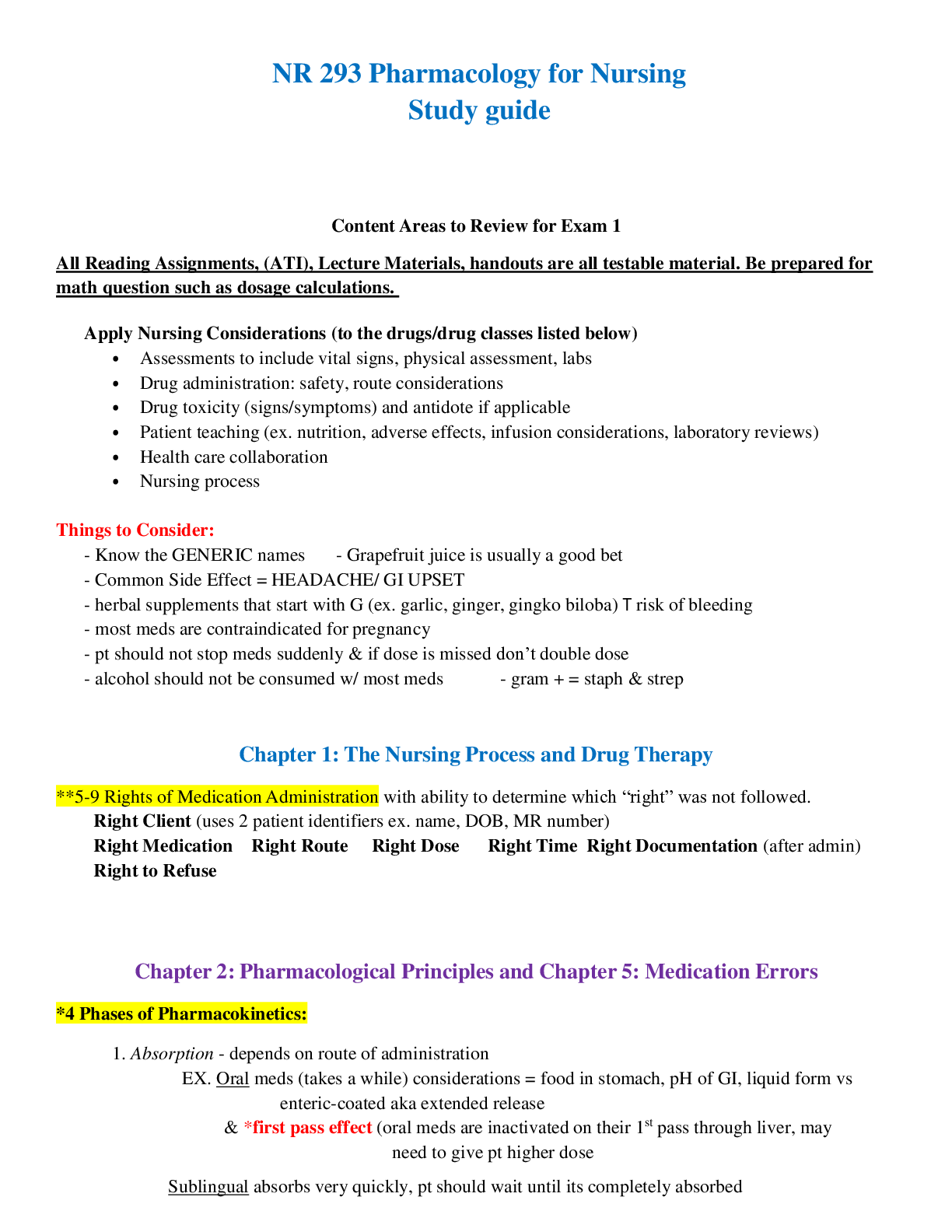
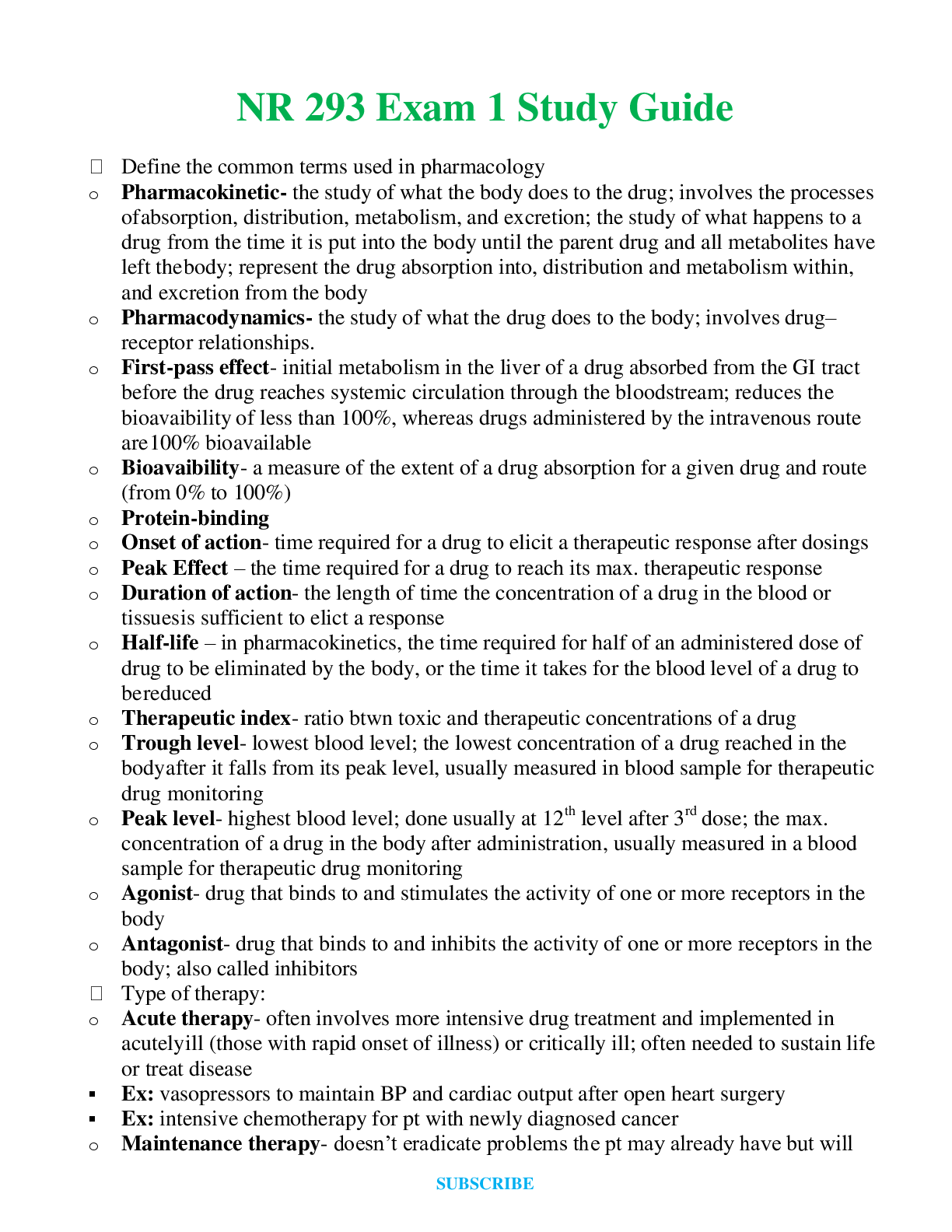
Chapter 2 1. Define the common terms used in pharmacology Pharmacokinetic- the study of what the body does to the drug; involves the processes of absorption, distribution, metabolism, and excretion ... ; the study of what happens to a drug from the time it is put into the body until the parent drug and all metabolites have left the body; represent the drug absorption into, distribution and metabolism within, and excretion from the body Pharmacodynamics- the study of what the drug does to the body; involves drug– receptor relationships. First-pass effect- initial metabolism in the liver of a drug absorbed from the GI tract before the drug reaches systemic circulation through the bloodstream; reduces the bioavaibility of less than 100%, whereas drugs administered by the intravenous route are 100% bioavailable Bioavaibility- a measure of the extent of a drug absorption for a given drug and route (from 0% to 100%) Protein-binding Onset of action- time required for a drug to elicit a therapeutic response after dosings Peak Effect – the time required for a drug to reach its max. therapeutic response Duration of action- the length of time the concentration of a drug in the blood or tissues is sufficient to elict a response Half-life – in pharmacokinetics, the time required for half of an administered dose of drug to be eliminated by the body, or the time it takes for the blood level of a drug to be reduced Therapeutic index- ratio btwn toxic and therapeutic concentrations of a drug Trough level- lowest blood level; the lowest concentration of a drug reached in the body after it falls from its peak level, usually measured in blood sample for therapeutic drug monitoring Peak level- highest blood level; done usually at 12th level after 3rd dose; the max. concentration of a drug in the body after administration, usually measured in a blood sample for therapeutic drug monitoring Agonist- drug that binds to and stimulates the activity of one or more receptors in the body Antagonist- drug that binds to and inhibits the activity of one or more receptors in the body; also called inhibitors [Show More]

Last updated: 3 years ago

Preview 1 out of 18 pages

Buy Now

Instant download

We Accept:

Payment methods accepted on Scholarfriends (We Accept)
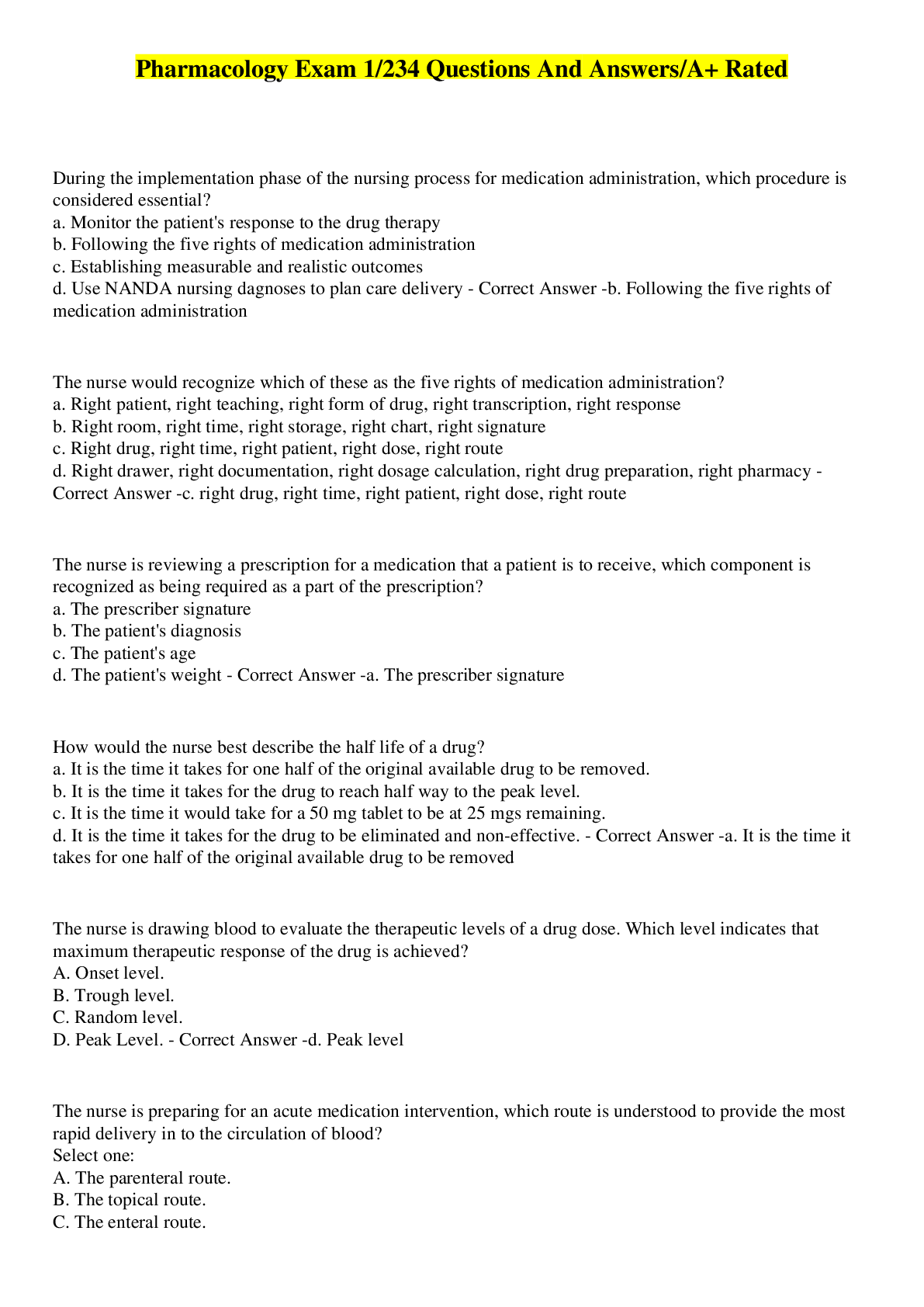
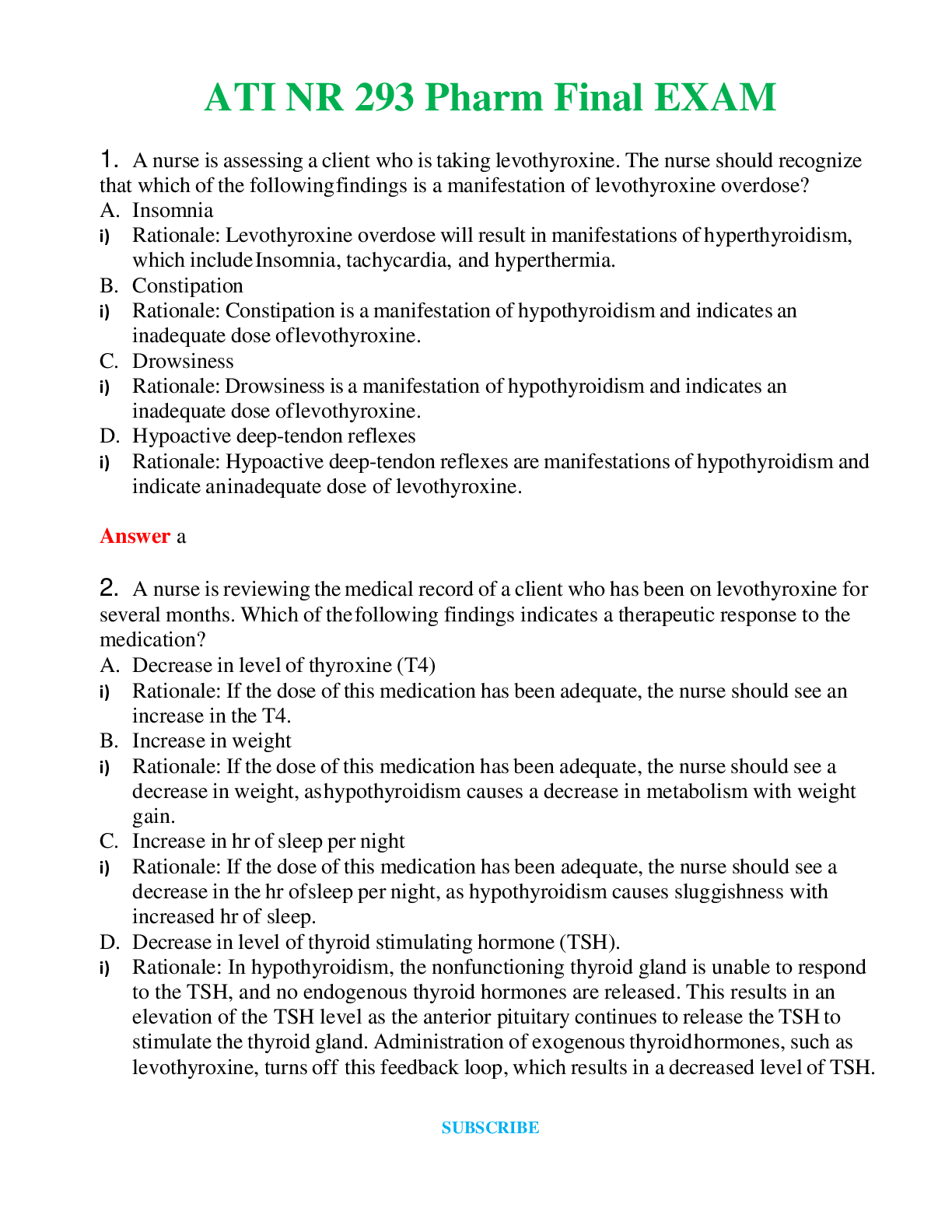
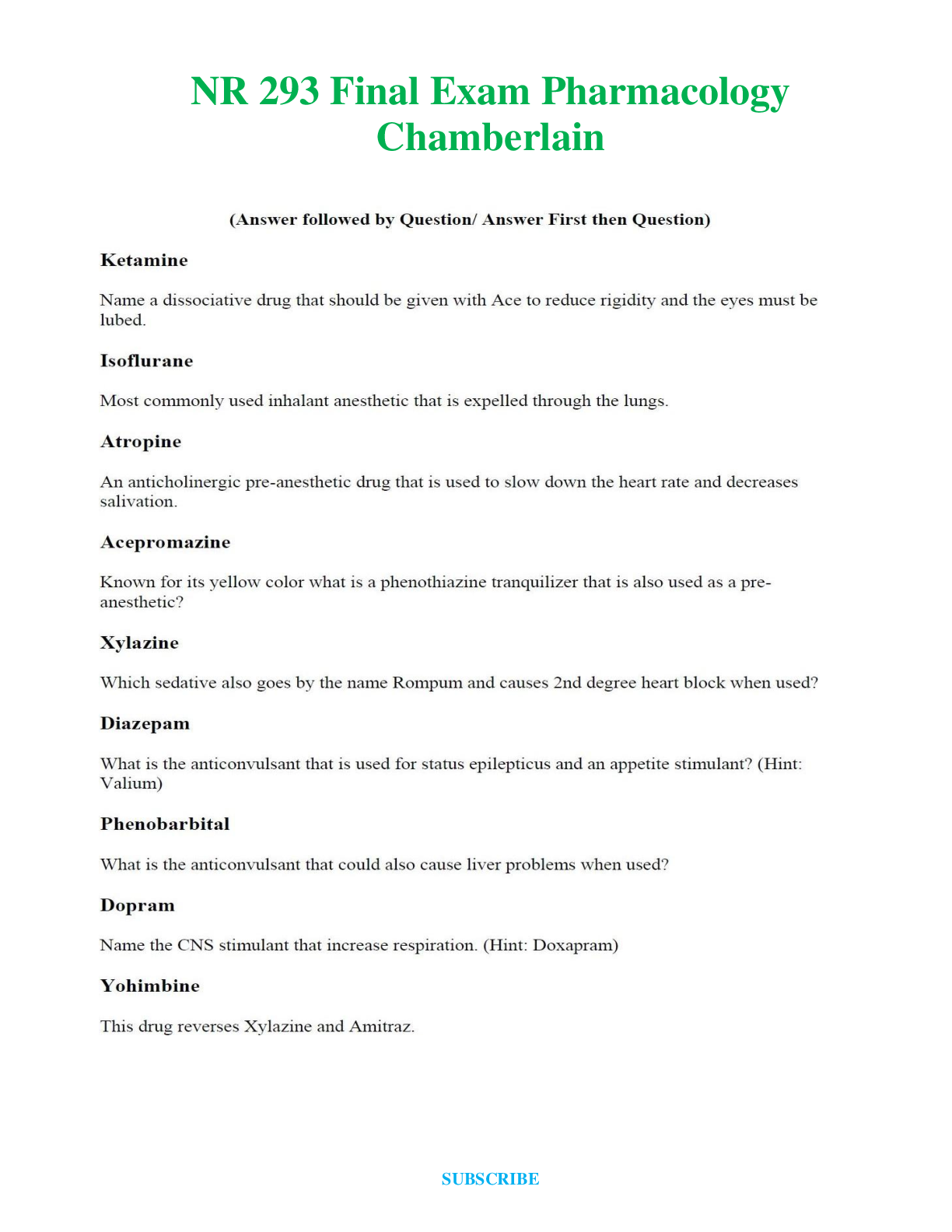
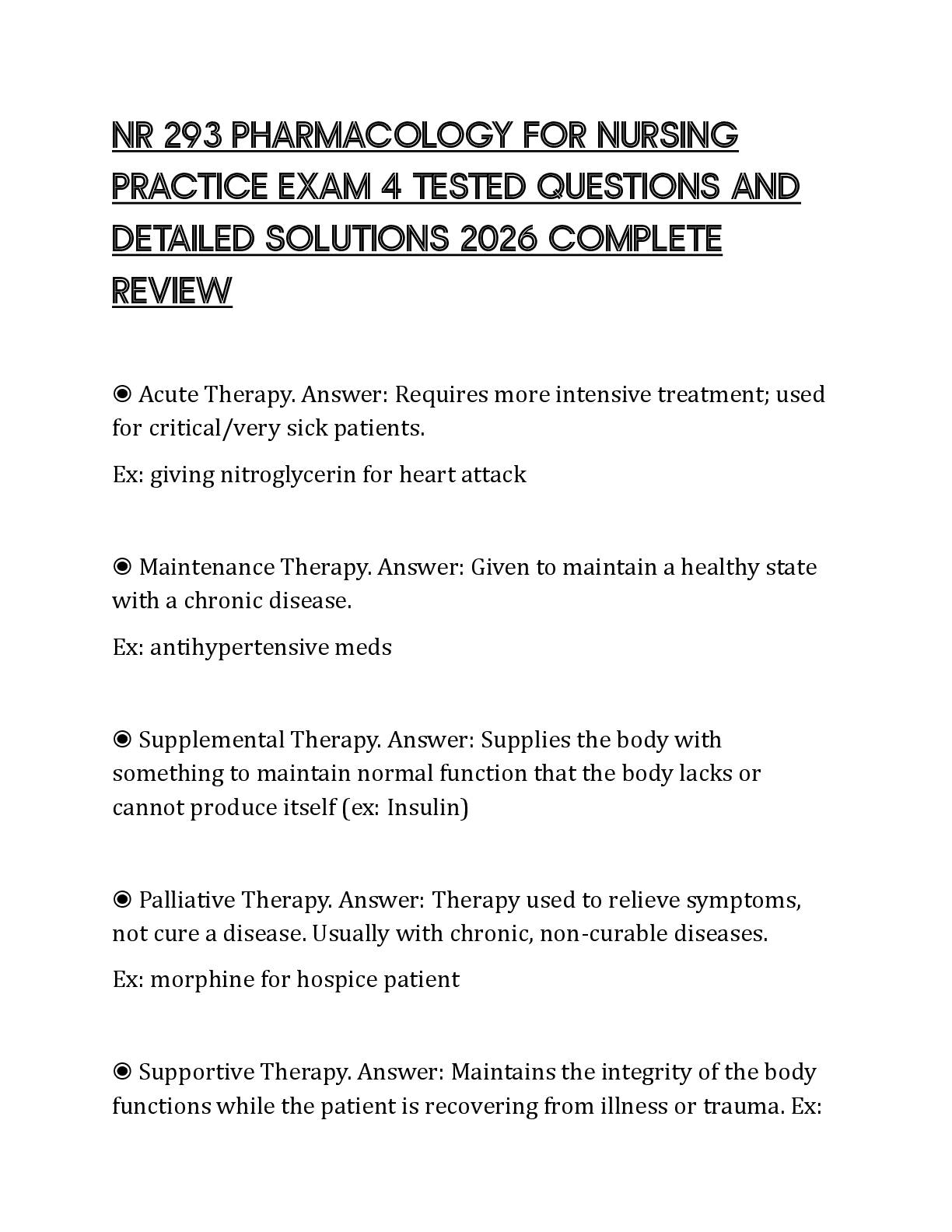
Preview image of Study Guide for NR 293 Exam 1 document

Buy this document to get the full access instantly

Instant Download Access after purchase

Buy Now

Instant download

We Accept:

Payment methods accepted on Scholarfriends (We Accept)

Reviews( 0 )

$12.50

Buy Now

We Accept:

Payment methods accepted on Scholarfriends (We Accept)

Instant download

Can't find what you want? Try our AI powered Search

85
0

Document information


Connected school, study & course


About the document


Uploaded On

May 11, 2021

Number of pages

18

Written in

All

Seller


Profile illustration for QUIZEXPERT
QUIZEXPERT

Member since 4 years

Documents Sold

Additional information

This document has been written for:

Uploaded

May 11, 2021

Downloads

 0

Views

 85

Document Keyword Tags

Recommended For You

Get more on STUDY GUIDE »

$12.50
What is Scholarfriends

Scholarfriends.com Online Platform by Browsegrades Inc. 651N South Broad St, Middletown DE. United States.

We are here to help

We're available through e-mail, Twitter, Facebook, and live chat.
 FAQ
 Questions? Leave a message!

Follow us on
 Twitter

Copyright © Scholarfriends · High quality services·