Chapter 22: Antihypertensive Drugs
1. A patient has a new order for the adrenergic drug doxazosin (Cardura). When providing education about this drug, the nurse will include which instructions?
a. “Weigh yourself d
...
Chapter 22: Antihypertensive Drugs
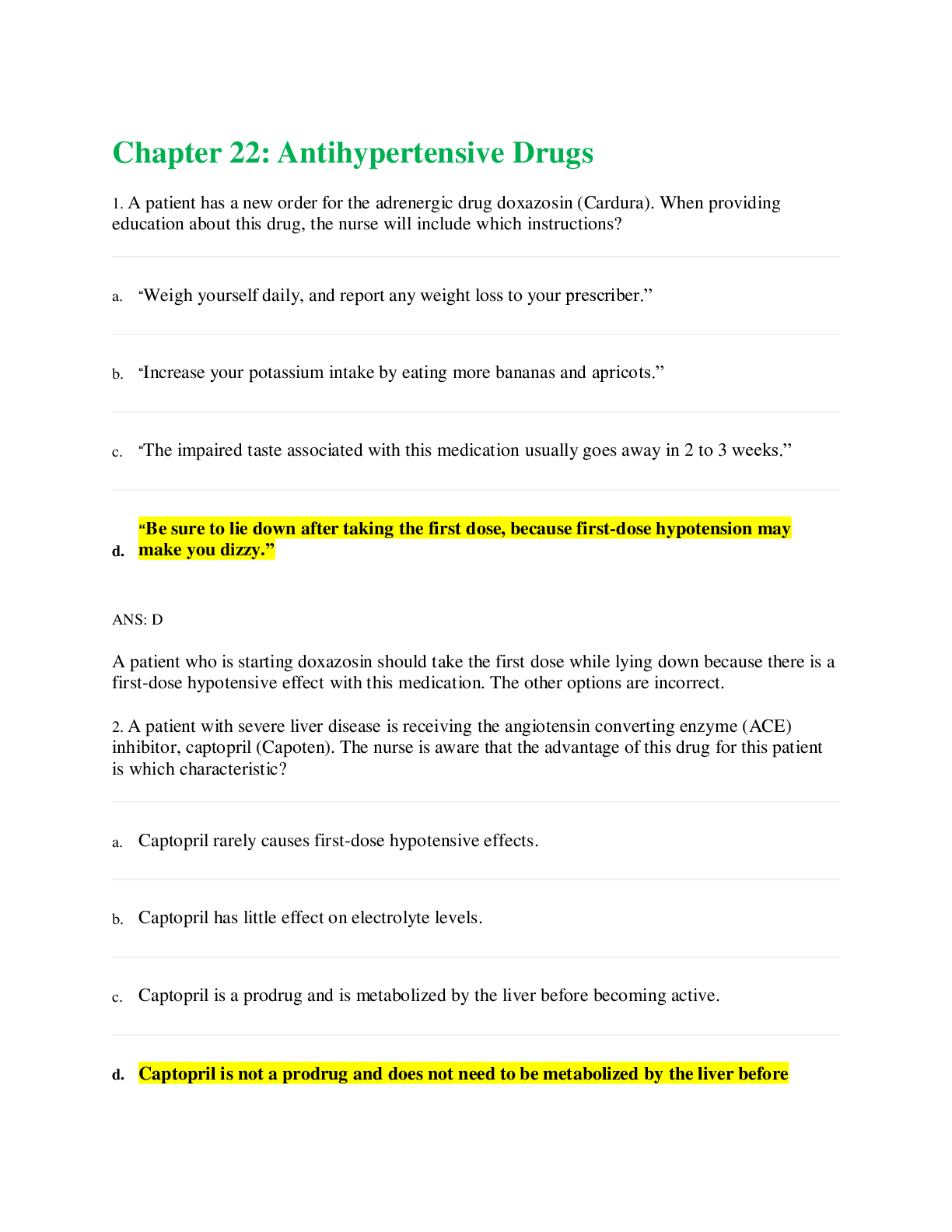
1. A patient has a new order for the adrenergic drug doxazosin (Cardura). When providing education about this drug, the nurse will include which instructions?
a. “Weigh yourself daily, and report any weight loss to your prescriber.”
b. “Increase your potassium intake by eating more bananas and apricots.”
c. “The impaired taste associated with this medication usually goes away in 2 to 3 weeks.”
“Be sure to lie down after taking the first dose, because first-dose hypotension may
d. make you dizzy.”
ANS: D
A patient who is starting doxazosin should take the first dose while lying down because there is a first-dose hypotensive effect with this medication. The other options are incorrect.
2. A patient with severe liver disease is receiving the angiotensin converting enzyme (ACE) inhibitor, captopril (Capoten). The nurse is aware that the advantage of this drug for this patient is which characteristic?
a. Captopril rarely causes first-dose hypotensive effects.
b. Captopril has little effect on electrolyte levels.
c. Captopril is a prodrug and is metabolized by the liver before becoming active.
d. Captopril is not a prodrug and does not need to be metabolized by the liver before
becoming active.
ANS: D
A prodrug relies on a functioning liver to be converted to its active form. Captopril is not a prodrug, and therefore it would be safer for the patient with liver dysfunction.
3. During a follow-up visit, the health care provider examines the fundus of the patient’s eye. Afterward, the patient asks the nurse, “Why is he looking at my eyes when I have high blood pressure? It does not make sense to me!” What is the best response by the nurse?
a. “We need to monitor for drug toxicity.”
b. “We must watch for increased intraocular pressure.”
c. “The provider is assessing for visual changes that may occur with drug therapy.”
d. “The provider is making sure the treatment is effective over the long-term.”
ANS: D
The physician would examine the fundus of a patient’s eyes during antihypertensive therapy because it is a more reliable indicator than blood pressure readings of the long-term effectiveness of treatment.
4. The nurse is preparing for a community education program on hypertension. Which of these parameters determine the regulation of arterial blood pressure?
a. Cardiac output and systemic vascular resistance
b. Heart rate and peripheral resistance
c. Blood volume and renal blood flow
d. Myocardial contractility and arteriolar constriction
ANS: A
Blood pressure is determined by the product of cardiac output and systemic vascular resistance. The other options are incorrect.
5. When counseling a male patient about the possible adverse effects of antihypertensive drugs, the nurse will discuss which potential problem?
a. Impotence
b. Bradycardia
c. Increased libido
d. Weight gain
ANS: A
Sexual dysfunction is a common complication of antihypertensive medications and may be manifested in men as decreased libido or impotence. The other options are incorrect.
6. The nurse is reviewing drug therapy for hypertension. According to the JNC 7 guidelines, antihypertensive drug therapy for a newly diagnosed stage 1 hypertensive African-American patient would most likely include which drug or drug classes?
a. Vasodilators alone
c. Calcium channel blockers with thiazide diuretics
d. Beta blockers with thiazide diuretics
ANS: C
According to the JNC 7 guidelines, calcium channel blockers and diuretics have been shown to be more effective in African Americans than in white patients. Thiazide diuretics are also recommended for newly diagnosed stage 1 hypertension.
7. The nurse is creating a plan of care for a patient with a new diagnosis of hypertension. Which is a potential nursing diagnosis for the patient taking antihypertensive medications?
a. Diarrhea
b. Sexual dysfunction
c. Urge urinary incontinence
d. Impaired memory
ANS: B
Sexual dysfunction is a potential nursing diagnosis related to possible adverse effects of antihypertensive drug therapy. The other nursing diagnoses are not appropriate.
8. A patient’s blood pressure elevates to 270/150 mm Hg, and a hypertensive emergency is obvious. He is transferred to the intensive care unit and started on a sodium nitroprusside (Nipride) drip to be titrated per his response. With this medication, the nurse knows that the maximum dose of this drug should be infused for how long?
b. 30 minutes
c. 1 hour
d. 24 hours
ANS: A
Sodium nitroprusside is a potent vasodilator and may lead to extreme decreases in the patient’s blood pressure. For this reason, it is never infused at the maximum dose for more than 10 minutes. If this drug does not control a patient’s blood pressure after 10 minutes, it will most likely be ordered to be discontinued. The other times listed are incorrect.
9. A patient with primary hypertension is prescribed drug therapy for the first time. The patient asks how long drug therapy will be needed. Which answer by the nurse is the correct response?
a. “This therapy will take about 3 months.”
b. “This therapy will take about a year.”
c. “This therapy will go on until your symptoms disappear.”
d. “Therapy for high blood pressure is usually lifelong.”
ANS: D
There is no cure for the disease, and treatment will be lifelong. The other answers are not appropriate.
10. A patient who has been taking antihypertensive drugs for a few months complains of having a persistent dry cough. The nurse knows that this cough is an adverse effect of which class of antihypertensive drugs?
a. Beta blockers
b. Angiotensin-converting enzyme (ACE) inhibitors
c. Angiotensin II receptor blockers (ARBs)
d. Calcium channel blockers
ANS: B
ACE inhibitors cause a characteristic dry, nonproductive cough that reverses when therapy is stopped. The other drug classes do not cause this cough.
11. A pregnant woman is experiencing hypertension. The nurse knows that which drug is commonly used for a pregnant patient who is experiencing hypertension?
a. mannitol (Osmitrol)
b. enalapril (Vasotec)
c. hydrochlorothiazide (HydroDIURIL)
d. methyldopa (Aldomet)
ANS: D
Methyldopa is used in the treatment of hypertension during pregnancy. The other options are incorrect.
12. The nurse is reviewing the JNC 7 guidelines for treatment of hypertension. Which blood pressure would be classified as “prehypertension” according to the JNC 7 guidelines?
a. 118/76 mm Hg
b. 130/88 mm Hg
c. 150/90 mm Hg
d. 160/104 mm Hg
ANS: B
Prehypertension is defined as having a systolic blood pressure between 120 and 139 mm Hg and a diastolic pressure between 80 and 89 mm Hg. The other parameters listed are incorrect.
13. A patient with type 2 diabetes mellitus has been found to have trace proteinuria. The prescriber writes an order for an angiotensin-converting enzyme (ACE) inhibitor. What is the main reason for prescribing this class of drug for this patient?
a. Cardioprotective effects
b. Renal protective effects
c. Reduces blood pressure
d. Promotes fluid output
ANS: B
ACE inhibitors have been shown to have a protective effect on the kidneys because they reduce glomerular filtration pressure. This is one reason that they are among the cardiovascular drugs of choice for diabetic patients. The other drugs do not have this effect.
14. The nurse is reviewing the orders for a patient and notes a new order for an angiotensin- converting enzyme (ACE) inhibitor. The nurse checks the current medication orders, knowing that this drug class may have a serious interaction with what other drug class?
a. Calcium channel blockers
b. Diuretics
c. Nonsteroidal antiinflammatory drugs
d. Nitrates
ANS: C
Nonsteroidal antiinflammatory drugs (NSAIDs) such as ibuprofen can reduce the antihypertensive effect of ACE inhibitors. In addition, the use of NSAIDs and ACE inhibitors may also predispose patients to the development of acute renal failure.
15. An elderly patient will be taking a vasodilator for hypertension. Which adverse effect is of most concern for the older adult patient taking this class of drug?
a. Dry mouth
b. Restlessness
c. Constipation
d. Hypotension
ANS: D
The elderly are more sensitive to the blood pressure–lowering effects of vasodilators, and consequently experience more problems with hypotension, dizziness, and syncope. The other options are incorrect.
MULTIPLE RESPONSE
1. When teaching a patient about antihypertensive drug therapy, which statements by the nurse are correct? (Select all that apply.)
“You need to have your blood pressure checked once a week and keep track of the
a. readings.”
“If you notice that the symptoms have gone away, you should be able to stop taking the
b. drug.”
“An exercise program may be helpful in treating hypertension, but let’s check with
c. your doctor first.”
“If you experience severe side effects, stop the medicine and let us know at your next office
d. visit.”
e. “Most over-the-counter decongestants are compatible with antihypertensive drugs.”
f. “Please continue taking the medication, even if you are feeling better.”
ANS: A, C, F
Keeping a record of weekly blood pressure checks helps to monitor the effectiveness of the therapy. Remind the patient not to stop taking the medication just because he or she is feeling
better. Abruptly stopping the medication may lead to rebound hypertension. Therapy is often life- long, even though symptoms may improve. Many over-the-counter drugs, especially decongestants, have serious interactions with antihypertensive drugs. The patient needs to consult his or her prescriber before taking any other medication.
OTHER
1. A patient is to receive enalapril (Vasotec) 5 mg IV every 6 hours. Each dose is given over 5 minutes. The medication is available in an injectable form, 1.25 mg/mL. How many milliliters of medication will the nurse draw up for each dose?
ANS:
4 mL
1.25 mg : 1 mL :: 5 mg : x mL
(1.25 × x) = (1 × 5); 1.25x = 5; x = 4
Chapter 23: Antianginal Drugs
1. When the nurse is administering topical nitroglycerin ointment, which technique is correct?
a. Apply the ointment on the skin on the forearm.
b. Apply the ointment only in the case of a mild angina episode.
c. Remove the old ointment before new ointment is applied.
d. Massage the ointment gently into the skin, and then cover the area with plastic wrap.
ANS: C
The old ointment should be removed before a new dose is applied. The ointment should be applied to clean, dry, hairless skin of the upper arms or body, not below the elbows or below the knees. The ointment is not massaged or spread on the skin, and it is not indicated for the treatment of acute angina.
2. The nurse is giving intravenous nitroglycerin to a patient who has just been admitted because of an acute myocardial infarction. Which statement is true regarding the administration of the intravenous form of this medication?
a. The solution will be slightly colored green or blue.
b. The intravenous form is given by bolus injection.
c. It can be given in infusions with other medications.
d. Non-polyvinylchloride (non-PVC) plastic intravenous bags and tubing must be used.
ANS: D
The non-PVC infusion kits are used to avoid absorption and/or uptake of the nitrate by the intravenous tubing and bag and/or decomposition of the nitrate. The medication is given by infusion via an infusion pump and not with other medications. It is not given by bolus injection. If the parenteral solution is discolored blue or green, it should be discarded.
3. A patient has been diagnosed with angina and will be given a prescription for sublingual nitroglycerin tablets. When teaching the patient how to use sublingual nitroglycerin, the nurse will include which instruction?
a. Take up to five doses at 15-minute intervals for an angina attack.
b. If the tablet does not dissolve quickly, chew the tablet for maximal effect.
c. If the chest pain is not relieved after one tablet, call 911 immediately.
d. Wait 1 minute between doses of sublingual tablets, up to three doses.
ANS: C
According to current guidelines, if the chest pain or discomfort is not relieved in 5 minutes, after one dose, the patient (or family member) must call 911 immediately. The patient may take one more tablet while awaiting emergency care and may take a third tablet 5 minutes later, but no more than a total of three tablets. The sublingual dose is placed under the tongue, and the patient needs to avoid swallowing until the tablet has dissolved.
4. A 74-year-old professional golfer has chest pain that occurs toward the end of his golfing games. He says the pain usually goes away after 1 or 2 sublingual nitroglycerin tablets and rest. What type of angina is he experiencing?
a. Classic
b. Variant
c. Unstable
d. Prinzmetal’s
ANS: A
Classic, or chronic stable, angina is triggered by either exertion or stress and usually subsides within 15 minutes with either rest or drug therapy.
5. A patient arrives in the emergency department with severe chest pain. The patient reports that the pain has been occurring off and on for a week now. Which assessment finding would indicate the need for cautious use of nitrates and nitrites?
a. Blood pressure of 88/62 mm Hg
b. Apical pulse rate of 110 beats/min
c. History of renal disease
d. History of a myocardial infarction 2 years ago
ANS: A
Hypotension is a possible contraindication to the use of nitrates because the medications may cause the blood pressure to decrease. The other options are incorrect.
6. A calcium channel blocker (CCB) is prescribed for a patient, and the nurse provides instructions to the patient about the medication. Which instruction is correct?
a. Chew the tablet for faster release of the medication.
b. To increase the effect of the drug, take it with grapefruit juice.
If the adverse effects of chest pain, fainting, or dyspnea occur, discontinue the medication
c. immediately.
A high-fiber diet with plenty of fluids will help prevent the constipation that may
d. occur.
ANS: D
Constipation is a common effect of CCBs, and a high-fiber diet and plenty of fluids will help to prevent it. Grapefruit juice decreases the metabolism of CCBs. Extended-release tablets must never be chewed or crushed. These medications should never be discontinued abruptly because of the risk for rebound hypertension.
7. When applying transdermal nitroglycerin patches, which instruction by the nurse is correct?
a. “Rotate application sites with each dose.”
c. “Temporarily remove the patch if you go swimming.”
d. “Apply the patch to the same site each time.”
ANS: A
Application sites for transdermal nitroglycerin patches need to be rotated. Apply the transdermal patch to any nonhairy area of the body; the old patch should first be removed. The patch may be worn while swimming, but if it does come off, it should be replaced after the old site is cleansed.
8. A patient has been taking a beta blocker for 4 weeks as part of his antianginal therapy. He also has type II diabetes and hyperthyroidism. When discussing possible adverse effects, the nurse will include which information?
a. “Watch for unusual weight loss.”
b. “Monitor your pulse for increased heart rate.”
c. “Use the hot tub and sauna at the gym as long as time is limited to 15 minutes.”
d. “Monitor your blood glucose levels for possible hypoglycemia or hyperglycemia.”
ANS: D
Beta blockers can cause both hypoglycemia and hyperglycemia. They may also cause weight gain if heart failure is developing, and decreased pulse rate. The use of hot tubs and saunas is not recommended because of the possibility of hypotensive episodes.
9. What action is often recommended to help reduce tolerance to transdermal nitroglycerin therapy?
b. Leave the patch on for 2 days at a time.
c. Cut the patch in half for 1 week until the tolerance subsides.
d. Remove the patch at bedtime, and then apply a new one in the morning.
ANS: D
To prevent tolerance, remove the transdermal patch at night for 8 hours, and apply a new patch in the morning. Transdermal patches must never be cut or left on for 2 days, and doses must not be omitted.
10. While assessing a patient who is taking a beta blocker for angina, the nurse knows to monitor for which adverse effect?
a. Nervousness
b. Hypertension
c. Bradycardia
d. Dry cough
ANS: C
Adverse effects of beta blockers include bradycardia, hypotension, dizziness, drowsiness, impotence, and several other effects, but not dry cough.
11. When teaching a patient who has a new prescription for transdermal nitroglycerin patches, the nurse tells the patient that these patches are most appropriately used for which situation?
a. To prevent palpitations
b. To relieve shortness of breath
c. To prevent the occurrence of angina
d. To keep the heart rate from rising too high during exercise
ANS: C
Transdermal dosage formulations of nitroglycerin are used for the long-term prophylactic management (prevention) of angina pectoris. Transdermal nitroglycerin patches are not appropriate for the relief of shortness of breath, to prevent palpitations, or to control the heart rate during exercise.
MULTIPLE RESPONSE
1. The nurse is providing education about the use of sublingual nitroglycerin tablets. She asks the patient, “What would you do if you experienced chest pain while mowing your yard? You have your bottle of sublingual nitroglycerin with you.” Which actions by the patient are appropriate in this situation? (Select all that apply.)
a. Stop the activity, and lie down or sit down.
b. Call 911 immediately.
c. Call 911 if the pain is not relieved after taking 1 sublingual tablet.
d. Call 911 if the pain is not relieved after taking 3 sublingual tablets in 15 minutes.
e. Place a tablet under the tongue.
f. Place a tablet in the space between the gum and cheek.
Take another sublingual tablet if chest pain is not relieved after 5 minutes, up to three
g. total.
ANS: A, C, E, G
With sublingual forms, the medication is taken at the first sign of chest pain, not delayed until the pain is severe. The patient needs to sit down or lie down and take one sublingual tablet.
According to current guidelines, if the chest pain or discomfort is not relieved in 5 minutes, after one dose, the patient (or family member) must call 911 immediately. The patient can take one more tablet while awaiting emergency care and may take a third tablet 5 minutes later, but no more than a total of three tablets. These guidelines reflect the fact that angina pain that does not respond to nitroglycerin may indicate a myocardial infarction. The sublingual dose is placed under the tongue, and the patient needs to avoid swallowing until the tablet has dissolved.
Placing a tablet between the gum and cheek is the buccal route.
2. A patient with a history of angina will be started on ranolazine (Ranexa). The nurse is reviewing the patient’s history and will note potential contraindications to this drug therapy if which condition is present? (Select all that apply.)
a. Type 2 diabetes mellitus
b. Prolonged QT interval on the electrocardiogram
c. Heart failure
d. Closed-angle glaucoma
e. Decreased liver function
ANS: B, E
Ranolazine is contraindicated in patients with preexisting QT prolongation or hepatic impairment. The other options are not contraindications.
OTHER
1. A patient will be receiving metoprolol (Lopressor) 5 mg IV push × 3 doses for angina. The medication is available in a strength of 1 mg/mL. How much medication will the nurse draw up for each dose?
ANS:
5 mL
1 mg : 1 mL :: 5 mg : x mL
(1 × x) = (1 × 5); 1x = 5; x = 5
Chapter 24: Heart Failure Drugs
1. A patient about to receive a morning dose of digoxin has an apical pulse of 53 beats/minute. What will the nurse do next?
a. Administer the dose.
b. Administer the dose, and notify the prescriber.
c. Check the radial pulse for 1 full minute.
d. Withhold the dose, and notify the prescriber.
ANS: D
Digoxin doses are held and the prescriber notified if the apical pulse is 60 beats/minute or lower or is higher than 100 beats/minute. The other options are incorrect.
2. A patient is taking digoxin (Lanoxin) and a loop diuretic daily. When the nurse enters the room with the morning medications, the patient states, “I am seeing a funny yellow color around the lights.” What is the nurse’s next action?
a. Assess the patient for symptoms of digoxin toxicity.
b. Withhold the next dose of the diuretic.
c. Administer the digoxin and diuretic together as ordered.
d. Document this finding, and reassess in 1 hour.
ANS: A
Seeing colors around lights is one potential indication of developing digoxin toxicity. If a patient complains of this, the nurse needs to assess for other signs and symptoms of digoxin toxicity including bradycardia, headache, dizziness, confusion, nausea, and blurred vision, and then notify the prescriber. Administering the drug or withholding the diuretic are incorrect options.
3. While assessing a patient who is receiving intravenous digitalis, the nurse recognizes that the drug has a negative chronotropic effect. How would this drug effect be evident in the patient?
a. Decreased blood pressure
b. Decreased heart rate
c. Decreased conduction
d. Decreased ectopic beats
ANS: B
A negative chronotropic effect results in a reduced heart rate; this is one effect of cardiac glycosides. The other options are incorrect.
4. A patient has been taking digoxin at home but took an accidental overdose and has developed toxicity. The patient has been admitted to the telemetry unit, where the physician has ordered digoxin immune Fab (Digifab). The patient asks the nurse why the medication is ordered. What is the nurse’s best response?
a. “It will increase your heart rate.”
b. “This drug helps to lower your potassium levels.”
c. “It helps to convert the irregular heart rhythm to a more normal rhythm.”
d. “This drug is an antidote to digoxin and will help to lower the blood levels.”
ANS: D
Digoxin immune Fab (Digifab) is the antidote for a severe digoxin overdose. It is given intravenously. The other options are incorrect.
5. A patient has been placed on a milrinone (Primacor) infusion as part of the therapy for end- stage heart failure. What adverse effect of this drug will the nurse watch for when assessing this patient during the infusion?
a. Hypertension
c. Nausea and vomiting
d. Cardiac dysrhythmias
ANS: D
The primary adverse effects seen with milrinone are cardiac dysrhythmias, mainly ventricular. It may also cause hypotension, hypokalemia, and other effects, but not nausea and vomiting.
6. A patient has a digoxin level of 1.4 ng/mL. The nurse interprets that this level is
a. below the therapeutic level.
b. within the therapeutic range.
c. above the therapeutic level.
d. at a toxic level.
ANS: B
The normal therapeutic drug level of digoxin is between 0.5 and 2 ng/mL. The other options are incorrect.
7. The nurse is reviewing discharge teaching for a patient who will be taking digoxin (Lanoxin) therapy. The nurse will teach the patient to avoid which foods when taking the digoxin?
a. Leafy green vegetables
c. Grapefruit juice
d. Bran muffins
ANS: D
Bran, in large amounts, may decrease the absorption of oral digitalis drugs. The other foods do not affect digoxin levels.
8. In assessing a patient before administration of a cardiac glycoside, the nurse knows that which lab result can increase the toxicity of the drug?
a. Potassium level 2.8 mEq/L
b. Potassium level 4.9 mEq/L
c. Sodium level 140 mEq/L
d. Calcium level 10 mg/dL
ANS: A
Hypokalemia increases the chance of digitalis toxicity. The other levels listed are incorrect.
9. The nurse administering the phosphodiesterase inhibitor milrinone (Primacor) recognizes that this drug will have a positive inotropic effect. Which result reflects this effect?
a. Increased heart rate
c. Increased force of cardiac contractions
d. Increased conduction of electrical impulses across the heart
ANS: C
Positive inotropic drugs increase myocardial contractility, thus increasing the force of cardiac conduction. Positive chronotropic drugs increase the heart rate. Positive dromotropic drugs increase the conduction of electrical impulses across the heart. Blood vessel dilation is not affected.
10. The nurse notes in a patient’s medical record that nesiritide (Natrecor) has been ordered. Based on this order, the nurse interprets that the patient has which disorder?
a. Atrial fibrillation
b. Acutely decompensated heart failure with dyspnea at rest
c. Systolic heart failure
d. Long-term treatment of heart failure
ANS: B
Nesiritide is indicated for the treatment of acutely decompensated heart failure with dyspnea at rest. Digoxin is used for the treatment of atrial fibrillation and systolic heart failure. Long-term treatment of heart failure is not an indication for nesiritide.
11. When administering digoxin immune Fab (Digibind) to a patient with severe digoxin toxicity, the nurse knows that each vial can bind with how much digoxin?
b. 5 mg
c. 5.5 mg
d. 15 mg
ANS: A
One vial of digoxin immune Fab binds 0.5 mg of digoxin. The other options are incorrect.
12. A patient is in the intensive care unit and receiving an infusion of milrinone (Primacor) for severe heart failure. The prescriber has written an order for an intravenous dose of furosemide (Lasix). How will the nurse give this drug?
a. Infuse the drug into the same intravenous line as the milrinone.
b. Stop the milrinone, flush the line, and then administer the furosemide.
c. Administer the furosemide in a separate intravenous line.
d. Notify the prescriber that the furosemide cannot be given at this time.
ANS: C
Furosemide must not be injected into an intravenous line with milrinone because it will precipitate immediately. The infusion must not be stopped because of the patient’s condition. A separate line will be needed. The other options are incorrect.
MULTIPLE RESPONSE
1. When a patient is experiencing digoxin toxicity, which clinical situation would necessitate the use of digoxin immune Fab (Digifab)? (Select all that apply.)
a. The patient reports seeing colorful halos around lights.
b. The patient’s serum potassium level is above 5 mEq/L.
c. The patient is experiencing nausea and anorexia.
The patient is experiencing severe sinus bradycardia that does not respond to cardiac
d. pacing.
e. The patient has received an overdose of greater than 10 mg of digoxin.
f. The patient reports fatigue and headaches.
ANS: B, D, E
Clinical situations that would require the use of digoxin immune Fab in a patient with digoxin toxicity include serum potassium level above 5 mEq/L, severe sinus bradycardia that does not respond to cardiac pacing, or an overdose of more than 10 mg of digoxin. Seeing colorful halos around lights and experiencing nausea, anorexia, fatigue, and headaches are potential adverse effects of digoxin therapy but are not necessarily reasons for digoxin immune Fab treatment.
2. Which drug classes are considered first-line treatment for heart failure? (Select all that apply.)
a. Angiotensin-converting enzyme (ACE) inhibitors
b. Angiotensin II receptor blockers (ARBs)
d. Beta blockers
e. Nesiritide (Natrecor), the B-type natriuretic peptide
ANS: A, B, D
ACE inhibitors, ARBs, and beta blockers are now considered the first-line treatments for heart failure. Digoxin is used when the first-line treatments are not successful; nesiritide is considered a last-resort treatment.
OTHER
1. The medication order for a 4-year-old child reads, “Give digoxin elixir, 15 mcg/kg, PO now.” Convert the micrograms to milligrams.
ANS:
0.015 mg
1000 mcg : 1 mg :: 15 mcg : x mg
(1000 × x) = (1 × 15); 1000x = 15; x = 15; 15 ÷ 1000 = 0.015 mg
Chapter 25: Antidysrhythmic Drugs
1. The nurse is reviewing the classes of antidysrhythmic drugs. Amiodarone (Cordarone) is classified on the Vaughan Williams classification as a class III drug, which means it works by which mechanism of action?
a. Blocking slow calcium channels
b. Prolonging action potential duration
d. Decreasing spontaneous depolarization and affecting phase 4
ANS: B
Vaughan Williams class III drugs (amiodarone, dronedarone, sotalol, ibutilide, and dofetilide) increase the action potential duration by prolonging repolarization in phase 3. The other answers are incorrect.
2. A patient is taking procainamide (Pronestyl) for a cardiac dysrhythmia. The nurse will monitor the patient for which possible adverse effect?
a. Bradycardia
b. Shortened QT interval
c. Dyspnea
d. Diarrhea
ANS: D
Diarrhea is a potential adverse effect of procainamide therapy. Prolonged QT interval on the ECG is also possible. The other options are incorrect.
3. Which nursing diagnosis is appropriate for a patient receiving antidysrhythmics?
a. Risk for infection
b. Deficient knowledge
c. Deficient fluid volume
d. Urinary retention
ANS: B
Deficient knowledge related to lack of experience with medication therapy is a potential nursing diagnosis for a patient receiving antidysrhythmics. The other options are incorrect.
4. A patient will be discharged on quinidine sulfate (Quinidex) extended-release tablets for the treatment of ventricular ectopy. The nurse will include which information in the teaching plan?
a. The medication should be stopped once the cardiac symptoms subside.
Signs of cinchonism, such as tinnitus, loss of hearing, or slight blurring of vision, may
b. occur.
It is important to use sunscreen products when outside because of increased
c. photosensitivity.
d. If any tablet or capsule is visible in the stool, contact the prescriber immediately.
ANS: B
Quinidine, a cinchona alkaloid, may cause the symptoms of cinchonism, including tinnitus, loss of hearing, slight blurring of vision, and gastrointestinal upset. The medication will need to be continued even after symptoms subside, or the symptoms may return. Tablets or capsules that are visible in the stool are actually the wax matrixes that contained the drug; the medication is extracted while in the intestines. Photosensitivity occurs with class III drugs, not with quinidine (class Ia).
5. A patient is in the intensive care unit because of an acute myocardial infarction. He is experiencing severe ventricular dysrhythmias. The nurse will prepare to give which drug of choice for this dysrhythmia?
a. diltiazem (Cardizem)
b. verapamil (Calan)
c. amiodarone (Cordarone)
d. adenosine (Adenocard)
ANS: C
Amiodarone (Cordarone) is the drug of choice for ventricular dysrhythmias according to the Advanced Cardiac Life Support guidelines. The other drugs are not used for acute ventricular dysrhythmias.
6. The nurse is preparing to administer adenosine (Adenocard) to a patient who is experiencing an acute episode of paroxysmal supraventricular tachycardia. When giving this medication, which is important to remember?
a. The onset of action occurs in 5 minutes.
b. The medication must be given as a slow intravenous (IV) push.
c. Asystole may occur for a few seconds after administration.
d. The medication has a long half-life, and therefore duration of action is very long.
ANS: C
Adenosine has an extremely short half-life of less than 10 seconds; its onset occurs within 1 minute; and it must be given as a fast IV push injection. In addition, a very brief episode of asystole may occur after administration.
7. A 62-year-old man is to receive lidocaine as treatment for a symptomatic dysrhythmia. Upon assessment, the nurse notes that he has a history of alcoholism and has late-stage liver failure. The nurse will expect which adjustments to his drug therapy?
a. The dosage will be reduced by 50%.
b. A diuretic will be added to the lidocaine.
c. The lidocaine will be changed to an oral dosage form.
d. An increased dosage of lidocaine will be prescribed so as to obtain adequate blood levels.
ANS: A
Because lidocaine is metabolized primarily by the liver, a reduction of the dosage by 50% may be necessary in cases of liver failure or cirrhosis. Lidocaine does not come in oral form.
8. A patient has been started on therapy of a continuous infusion of lidocaine after receiving a loading dose of the drug. The nurse will monitor the patient for which adverse effect?
a. Drowsiness
b. Nystagmus
c. Dry mouth
d. Convulsions
ANS: D
Convulsions are possible if lidocaine reaches toxic levels. The other options are not adverse effects of lidocaine.
9. When starting a patient on antidysrhythmic therapy, the nurse will remember that which problem is a potential adverse effect of any antidysrhythmic drug?
a. Deficiency of fat-soluble vitamins
b. Hyperkalemia
c. Heart failure
d. Dysrhythmias
ANS: D
Many antidysrhythmics are themselves capable of producing new dysrhythmias (theprodysrhythmic effect). The other options are not adverse effects of antidysrhythmic drugs.
10. A patient is in the emergency department with a new onset of rapid-rate atrial fibrillation, and the nurse is preparing a continuous infusion. Which drug is most appropriate for this dysrhythmia?
a. diltiazem (Cardizem)
b. atenolol (Tenormin)
c. lidocaine
d. adenosine (Adenocard)
ANS: A
Diltiazem (Cardizem) is indicated for the temporary control of a rapid ventricular response in a patient with atrial fibrillation or flutter and paroxysmal supraventricular tachycardia. It is given by continuous infusion after a loading dose given by IV bolus. The other options are incorrect.
11. The nurse notes in the patient’s medication orders that the patient will be taking ibutilide (Corvert). Based on this finding, the nurse interprets that the patient has which disorder?
a. Ventricular ectopy
b. Atrial fibrillation
c. Supraventricular tachycardia
d. Bradycardia
ANS: B
Ibutilide (Corvert) is one of two class III antidysrhythmic drugs available for rapid conversion of these atrial fibrillations and atrial flutters into normal sinus rhythm.
MULTIPLE RESPONSE
1. Which patient-teaching instructions are appropriate for a patient taking an antidysrhythmic drug? (Select all that apply.)
a. “Do not chew or crush extended-release forms of medication.”
b. “Take the medication with food if gastrointestinal distress occurs.”
“If a dose is missed, the missed dose should be taken along with the next dose that is due to
c. be taken.”
d. “Take the medications with an antacid if gastrointestinal distress occurs.”
e. “Limit or avoid the use of caffeine.”
f. “The presence of a capsule in the stool should be reported to the physician immediately.”
ANS: A, B, E
Appropriate teaching instructions for a patient taking an antidysrhythmic drug include: do not chew or crush extended-release forms; if gastrointestinal distress occurs, take the drug with food; and limit or avoid the use of caffeine. Do not double medication doses or take medications with an antacid. The presence of a portion of a capsule or tablet in the stool is actually the wax matrix that carried the medication, which has been absorbed. The physician does not need to be notified.
2. The nurse is monitoring for adverse effects in a patient who is receiving an amiodarone (Cordarone) infusion. Which are adverse effects for amiodarone? (Select all that apply.)
a. Tachycardia
b. Constipation
c. Chest pain
d. QT prolongation
e. Headache
f. Hypotension
g. Blue-gray coloring of the skin on the face, arms, and neck
ANS: B, D, F, G
There are numerous adverse effects of amiodarone, including pulmonary toxicity, thyroid disorders, bradycardia, hypotension, SA node dysfunction, QT prolongation, blue-gray coloring of the skin (face, arms, neck), constipation, and others. Tachycardia, chest pain, and headache are not adverse effects of amiodarone therapy.
OTHER
1. The nurse is preparing to administer a bolus dose of verapamil (Calan) as follows:
“Give 5-mg bolus of verapamil, IV push, over 2 minutes. May repeat in 30 minutes if needed.” The medication is available in a 2.5-mg/mL strength solution. How many milliliters will the nurse draw into the syringe for this dose?
ANS:
2 mL
2.5 mg : 1 mL :: 5 mg : x mL
Solve for x: (2.5 × x) = (1 × 5); 2.5x = 5; x = 2
Chapter 27: Antilipemic Drugs
1. A patient with elevated lipid levels has a new prescription for nicotinic acid (niacin). The nurse informs the patient that which adverse effects may occur with this medication?
a. Pruritus, cutaneous flushing
b. Tinnitus, urine with a burnt odor
d. Blurred vision, headaches
ANS: A
Possible adverse effects of nicotinic acid include pruritus, cutaneous flushing, and gastrointestinal distress. Tinnitus, urine with a burnt odor, and headaches are possible adverse effects of bile acid sequestrants. Headaches are also possible adverse effects of HMG–CoA reductase inhibitors, as are myalgia and fatigue.
2. A patient reports having adverse effects with nicotinic acid (niacin). The nurse can suggest performing which action to minimize these undesirable effects?
a. Take the drug on an empty stomach.
b. Take the medication every other day until the effects subside.
c. Take an aspirin tablet 30 minutes before taking the drug.
d. Take the drug with large amounts of fiber.
ANS: C
The undesirable effects of nicotinic acid can be minimized by starting with a low initial dose, taking the drug with meals, and taking small doses of aspirin with the drug to minimize cutaneous flushing. Fiber intake has no effect on niacin’s adverse effects, and it is not within the nurse’s scope of practice to suggest a change of medication dosage.
3. A patient calls the clinic office saying that the cholestyramine (Questran) powder he started yesterday clumps and sticks to the glass when he tries to mix it. The nurse will suggest what method for mixing this medication for administration?
b. Add the powder to any liquid, and stir vigorously to dissolve it quickly.
c. Mix the powder with food or fruit, or at least 4 to 6 ounces of fluid.
d. Sprinkle the powder into a spoon and take it dry, followed by a glass of water.
ANS: C
Mix the powder with food or at least 4 to 6 ounces of fluid. The powder may not mix completely at first, but patients should be sure to mix the dose as much as possible and then dilute any undissolved portion with additional fluid. The powder should be dissolved for at least 1 full minute. Powder and granule dosages are never to be taken in dry form.
4. A patient is concerned about the adverse effects of the fibric acid derivative she is taking to lower her cholesterol level. Which is an adverse effect of this class of medication?
a. Constipation
b. Diarrhea
c. Joint pain
d. Dry mouth
ANS: B
Fibric acid derivatives may cause nausea, vomiting, diarrhea, drowsiness, and dizziness. Other effects are listed in Table 27-8. The other options are not adverse effects of fibric acid derivatives.
5. While a patient is receiving antilipemic therapy, the nurse knows to monitor the patient closely for the development of which problem?
a. Neutropenia
b. Pulmonary problems
c. Vitamin C deficiency
d. Liver dysfunction
ANS: D
Antilipemic drugs may adversely affect liver function; therefore, liver function studies need to be closely monitored. The other options do not reflect problems that may occur with antilipemic drugs.
6. When reviewing patients’ histories, the nurse recognizes that which patient would be a likely candidate for drug therapy for cholesterol reduction?
a. A patient who has coronary heart disease and an LDL level of 100 mg/dL
A patient who has one risk factor, an LDL level of 170 mg/dL, and no history of coronary
b. heart disease
c. A patient who has coronary heart disease and an LDL level of 165 mg/dL
A patient who has two risk factors and a low-density lipoprotein (LDL) level of 100 mg/dL,
d. without coronary heart disease
ANS: C
A patient with coronary heart disease is considered to be at high or very high risk, and with an LDL level greater than or equal to 130 mg/dL, drug therapy will be initiated. The other situations would warrant dietary therapy, initially.
7. A patient tells the nurse that he likes to eat large amounts of garlic “to help lower his cholesterol levels naturally.” The nurse reviews his medication history and notes that which drug has a potential interaction with the garlic?
a. acetaminophen (Tylenol)
b. warfarin (Coumadin)
c. digoxin (Lanoxin)
d. phenytoin (Dilantin)
ANS: B
When using garlic, it is recommended to avoid any other drugs that may interfere with platelet and clotting function. These drugs include antiplatelet drugs, anticoagulants, nonsteroidal antiinflammatory drugs, and aspirin. The other drugs listed do not have known interactions with garlic.
8. A patient with risk factors for coronary artery disease asks the nurse about the “good cholesterol” laboratory values. The nurse knows that “good cholesterol” refers to which lipids?
a. Triglycerides
b. Low-density lipoproteins (LDLs)
c. Very–low-density lipoproteins (VLDLs)
d. High-density lipoproteins (HDLs)
ANS: D
HDLs are responsible for the “recycling” of cholesterol. HDLs are sometimes referred to as the “good” lipid (or good cholesterol) because they are believed to be cardioprotective. LDLs are known as the “bad” cholesterol.
9. A patient who has recently started therapy on a statin drug asks the nurse how long it will take until he sees an effect on his serum cholesterol. Which statement would be the nurse’s best response?
a. “Blood levels return to normal within a week of beginning therapy.”
b. “It takes 6 to 8 weeks to see a change in cholesterol levels.”
c. “It takes at least 6 months to see a change in cholesterol levels.”
d. “You will need to take this medication for almost a year to see significant results.”
ANS: B
The maximum extent to which lipid levels are lowered may not occur until 6 to 8 weeks after the start of therapy. The other responses are incorrect.
10. The nurse will monitor for myopathy (muscle pain) when a patient is taking which class of antilipemic drugs?
a. Niacin
b. HMG–CoA reductase inhibitors
c. Fibric acid derivatives
d. Bile acid sequestrants
ANS: B
Myopathy (muscle pain) is a clinically important adverse effect that may occur with HMG–CoA reductase inhibitors. It may progress to a serious condition known as rhabdomyolysis. Patients receiving statin therapy need to be advised to report any unexplained muscular pain or discomfort to their health care providers immediately. The other drugs and drug classes do not cause muscle pain or myopathy.
11. When teaching a patient who is beginning antilipemic therapy about possible drug-food interactions, the nurse will discuss which food?
a. Oatmeal
b. Grapefruit juice
c. Licorice
d. Dairy products
ANS: B
Taking HMG–CoA reductase inhibitors with grapefruit juice may cause complications. Components in grapefruit juice inactivate CYP3A4 in both the liver and intestines. This enzyme plays a key role in statin metabolism. The presence of grapefruit juice in the body may therefore result in sustained levels of unmetabolized statin drug, which increases the risk for major drug toxicity, possibly leading to rhabdomyolysis. The other foods do not interact with these drugs.
12. The nurse is conducting a class about antilipemic drugs. The antilipemic drug ezetimibe (Zetia) works by which mechanism?
b. Preventing resorption of bile acids from the small intestines
c. Activating lipase, which breaks down cholesterol
d. Inhibiting cholesterol absorption in the small intestine
ANS: D
Ezetimibe selectively inhibits absorption in the small intestine of cholesterol and related sterols. The other options are incorrect.
MULTIPLE RESPONSE
1. Which of these characteristics are considered to be risk factors for coronary heart disease?
(Select all that apply.)
a. Being male, 45 years of age or older
b. Being female, 45 years of age or older
Having a family history that includes a mother who died of a myocardial infarction at 71
c. years of age
d. Having a high-density lipoprotein (HDL) level of 65 mg/dL
e. Having an HDL level of 30 mg/dL
ANS: A, E, F
Risk factors include being male, 45 years of age or older, and being female, 55 years of age or older; having a family history of premature congenital heart disease (e.g., myocardial infarction or sudden death before 55 years of age in a father or other male first-degree relative, or before 65 years of age in a mother or other female first-degree relative); currently smoking cigarettes; having hypertension (blood pressure higher than 140/90 mm Hg or current antihypertensive drug therapy); having a low HDL level (lower than 40 mg/dL); and having diabetes mellitus.
2. Antilipemic drug therapy is prescribed for a patient, and the nurse is providing instructions to the patient about the medication. Which instructions will the nurse include? (Select all that apply.)
a. Limit fluid intake to prevent fluid overload.
b. Eat extra servings of raw vegetables and fruit.
c. Report abnormal or unusual bleeding or yellow discoloration of the skin.
d. Report the occurrence of muscle pain immediately.
e. Drug interactions are rare with antilipemics.
f. Take the drug 1 hour before or 2 hours after meals to maximize absorption.
ANS: B, C, D
Instructions need to include preventing constipation by encouraging a diet that is plentiful in raw vegetables, fruit, and bran. Forcing fluids (up to 3000 mL/day unless contraindicated) may also help to prevent constipation. Notify the prescriber if there are any new or troublesome symptoms, abnormal or unusual bleeding, yellow discoloration of the skin, or muscle pain. These
drugs are highly protein bound, therefore they interact with many drugs. Taking these drugs with food may help to reduce gastrointestinal distress.
OTHER
1. The medication order reads, “Give simvastatin (Zocor) 10 mg daily at bedtime, PO.” The medication is available in 20-mg tablets. How many tablets will the nurse administer to the patient?
ANS:
tablet
20 mg : 1 tab :: 10 mg : x tab
(20 × x) = (1 × 10); 20x = 10; x = 0.5 or ; administer tablet
Chapter 28: Diuretic Drugs
1. When monitoring a patient who has diabetes and is receiving a carbonic anhydrase inhibitor for edema, the nurse will monitor for which possible adverse effect?
a. Metabolic alkalosis
b. Elevated blood glucose
c. Hyperkalemia
d. Mental alertness
ANS: B
An undesirable effect of carbonic anhydrase inhibitors is that they elevate the blood glucose level and cause glycosuria in diabetic patients. They induce metabolic acidosis, making their usefulness limited. In addition, hypokalemia and drowsiness may occur.
2. The nurse will monitor a patient for signs and symptoms of hyperkalemia if the patient is taking which of these diuretics?
a. hydrochlorothiazide (HydroDIURIL)
b. furosemide (Lasix)
c. acetazolamide (Diamox)
d. spironolactone (Aldactone)
ANS: D
Spironolactone (Aldactone) is a potassium-sparing diuretic, and patients taking this drug must be monitored for signs of hyperkalemia. The other drugs do not cause hyperkalemia but instead cause hypokalemia.
3. Mannitol (Osmitrol) has been ordered for a patient with acute renal failure. The nurse will administer this drug using which procedure?
a. Intravenously, through a filter
b. By rapid intravenous bolus
c. By mouth in a single morning dose
d. Through a gravity intravenous drip with standard tubing
ANS: A
Mannitol is administered via intravenous infusion through a filter because of possible crystallization. It is not available in oral form. The other options are incorrect.
4. Furosemide (Lasix) is prescribed for a patient who is about to be discharged, and the nurse provides instructions to the patient about the medication. Which statement by the nurse is correct?
a. “Take this medication in the evening.”
b. “Avoid foods high in potassium, such as bananas, oranges, fresh vegetables, and dates.”
“If you experience weight gain, such as 5 pounds or more per week, be sure to tell your
c. physician during your next routine visit.”
“Be sure to change positions slowly and rise slowly after sitting or lying so as to
d. prevent dizziness and possible fainting because of blood pressure changes.”
ANS: D
Orthostatic hypotension is a possible problem with diuretic therapy. Foods high in potassium should be eaten more often, and the drug needs to be taken in the morning so that the diuretic effects do not interfere with sleep. A weight gain of 5 pounds or more per week must be reported immediately.
5. When reviewing the mechanisms of action of diuretics, the nurse knows that which statement is true about loop diuretics?
a. They work by inhibiting aldosterone.
b. They are very potent, having a diuretic effect that lasts at least 6 hours.
c. They have a rapid onset of action and cause rapid diuresis.
d. They are not effective when the creatinine clearance decreases below 25 mL/min.
ANS: C
The loop diuretics have a rapid onset of action; therefore, they are useful when rapid onset is desired. Their effect lasts for about 2 hours, and a distinct advantage they have over thiazide diuretics is that their diuretic action continues even when creatinine clearance decreases below 25 mL/min.
6. When monitoring a patient who is taking hydrochlorothiazide (HydroDIURIL), the nurse notes that which drug is most likely to cause a severe interaction with the diuretic?
a. Digitalis
b. Penicillin
c. Potassium supplements
d. Aspirin
ANS: A
There is an increased risk for digitalis toxicity in the presence of hypokalemia, which may develop with hydrochlorothiazide therapy. Potassium supplements are often prescribed with hydrochlorothiazide therapy to prevent hypokalemia. The other options do not have interactions with hydrochlorothiazide.
7. When a patient is receiving diuretic therapy, which of these assessment measures would best reflect the patient’s fluid volume status?
a. Blood pressure and pulse
b. Serum potassium and sodium levels
c. Intake, output, and daily weight
d. Measurements of abdominal girth and calf circumference
ANS: C
Urinary intake and output and daily weights are the best reflections of a patient’s fluid volume status.
8. A patient is being discharged to home on a single daily dose of a diuretic. The nurse instructs the patient to take the dose at which time so it will be least disruptive to the patient’s daily routine?
a. In the morning
b. At noon
c. With supper
d. At bedtime
ANS: A
Take the diuretic medication early in the morning to prevent urination during the night. Taking the diuretic at the other times may cause nighttime urination and disrupt sleep.
9. A patient is started on a diuretic for antihypertensive therapy. The nurse expects that a drug in which class is likely to be used initially?
a. Loop diuretics
b. Osmotic diuretics
c. Thiazide diuretics
d. Potassium-sparing diuretics
ANS: C
The Seventh Report of the Joint National Committee on Prevention, Detection, Evaluation, and Treatment of High Blood Pressure (JNC-7) guidelines recommend thiazide diuretics as the first- line treatment for hypertension. The other drug classes are not considered first-line treatments.
10. A patient in the neurologic intensive care unit is being treated for cerebral edema. Which class of diuretic is used to reduce intracranial pressure?
a. Loop diuretics
b. Osmotic diuretics
c. Thiazide diuretics
d. Vasodilators
ANS: B
Mannitol, an osmotic diuretic, is commonly used to reduce intracranial pressure and cerebral edema resulting from head trauma.
11. A 79-year-old patient is taking a diuretic for treatment of hypertension. This patient is very independent and wants to continue to live at home. The nurse will know that which teaching point is important for this patient?
a. He should take the diuretic with his evening meal.
b. He should skip the diuretic dose if he plans to leave the house.
If he feels dizzy while on this medication, he needs to stop taking it and take potassium
c. supplements instead.
He needs to take extra precautions when standing up because of possible orthostatic
d. hypotension and resulting injury from falls.
ANS: D
Caution must be exercised in the administration of diuretics to the elderly because they are more sensitive to the therapeutic effects of these drugs and are more sensitive to the adverse effects of diuretics, such as dehydration, electrolyte loss, dizziness, and syncope. Taking the diuretic with the evening meal may disrupt sleep because of nocturia. Doses should never be skipped or stopped without checking with the prescriber.
12. A patient on diuretic therapy calls the clinic because he’s had the flu, with “terrible vomiting and diarrhea,” and he has not kept anything down for 2 days. He feels weak and extremely tired. Which statement by the nurse is correct?
“It’s important to try to stay on your prescribed medication. Try to take it with sips of
a. water.”
b. “Stop taking the diuretic for a few days, and then restart it when you feel better.”
c. “You will need an increased dosage of the diuretic because of your illness. Let me speak to
the physician.”
“Please come into the clinic for an evaluation to make sure there are no
d. complications.”
ANS: D
Vomiting and diarrhea cause fluid and electrolyte loss. The patient must not continue to take the diuretic until these problems have stopped. He needs to be checked for possible hypokalemia and dehydration. The other options are incorrect responses.
MULTIPLE RESPONSE
1. When assessing a patient who is receiving a loop diuretic, the nurse looks for the manifestations of potassium deficiency, which would include what symptoms? (Select all that apply.)
a. Dyspnea
b. Constipation
c. Tinnitus
d. Muscle weakness
e. Anorexia
f. Lethargy
ANS: D, E, F
Symptoms of hypokalemia include anorexia, nausea, lethargy, muscle weakness, mental confusion, and hypotension. The other symptoms are not associated with hypokalemia.
OTHER
1. A patient is to receive hydrochlorothiazide (HydroDIURIL) via a percutaneous endoscopic gastrostomy (PEG) tube. The order reads, “Give hydrochlorothiazide, 25 mg, per PEG tube once daily.” The medication is available in a liquid form, 50 mg/5 mL. How many milliliters will the nurse administer for each dose?
ANS:
2.5 mL
50 mg : 5 mL :: 25 mg : x mcg
(50 × x) = (5 × 25); 50x = 125; x = 2.5
DIF: COGNITIVE LEVEL: Applying (Application) REF: p. N/A TOP: NURSING PROCESS: Implementation
MSC: NCLEX: Physiological Integrity: Pharmacological and Parenteral Therapies
2. The order for a child reads, “Give furosemide (Lasix) 2 mg/kg IV STAT.” The child weighs 33 pounds. How many milligrams will the child receive for this dose?
ANS:
30 mg
First, convert 33 lb to kg: 33 lb ÷ 2.2 = 15 kg Next, calculate mg/kg: 2 mg/kg × 15 kg = 30 mg
Quiz ends here
Chapter 30: Pituitary Drugs
1. The nurse notes in a patient’s medication history that the patient has been taking desmopressin (DDAVP). Based on this finding, the nurse interprets that the patient has which disorder?
a. Diabetes mellitus
c. Adrenocortical insufficiency
d. Carcinoid tumor
ANS: B
Desmopressin is used to prevent or control polydipsia (excessive thirst), polyuria, and dehydration in patients with diabetes insipidus. The symptoms are caused by a deficiency of endogenous antidiuretic hormone. The other options are incorrect.
2. A 16-year-old boy who is taking somatropin comes into the office because he had an asthma attack during a race at school. Because of this new development, the nurse expects which intervention to occur next?
a. He will need to stop participating in school physical education classes.
b. The somatropin must be discontinued immediately.
c. The somatropin dosage may be adjusted.
d. His growth will be documented and monitored for changes.
ANS: C
Somatropin is to be used with caution in acute or chronic illnesses, such as migraine headaches, epilepsy, and asthma. It will not have to be immediately discontinued but will require close monitoring. The patient’s growth will be measured and documented throughout therapy with somatropin.
3. When a patient is receiving vasopressin (Pitressin), the nurse will monitor for which therapeutic response?
b. Increased serum albumin levels
c. Increased serum potassium levels
d. Decreased urinary output
ANS: D
Decreased severe thirst and decreased urinary output are the therapeutic responses expected with vasopressin. The other options are incorrect.
4. A pituitary drug is prescribed for a patient with a hormone deficiency, and the nurse provides instructions about the medication. Which statement by the patient indicates a need for further instruction?
a. “I will not stop the drug unless my doctor tells me to stop it.”
b. “I will call my doctor if I have a fever or sore throat.”
c. “I will have to stop drinking my nightly glass of wine.”
d. “I am looking forward to a cure for my condition with this hormone replacement.”
ANS: D
The medication does not lead to a cure but does help to alleviate the symptoms of the disease for which it is being given. The patient needs to avoid alcohol while taking any of the pituitary drugs. Instruct the patient not to discontinue this drug abruptly because of possible negative
consequences to the patient and the levels of pituitary hormones. Any fever, sore throat, joint pain, or muscular pain needs to be reported to the prescriber immediately.
5. An 8-year-old child has been diagnosed with true pituitary dwarfism and is being treated with somatropin. In follow-up visits, the nurse will monitor for which expected outcome?
a. Increased growth
b. Decreased urinary output
c. Increased muscle strength
d. Increased height when the child reaches puberty
ANS: A
In patients for whom somatropin is indicated, increased growth is expected. The other options are incorrect.
6. When reviewing the medication profile of a patient with a new order for desmopressin (DDAVP), the nurse notes that a drug interaction will occur if which drug is taken with desmopressin?
a. aspirin
b. digoxin
c. lithium
d. penicillin
ANS: C
Lithium may cause a decreased therapeutic effect of desmopressin. The other options are incorrect.
7. A patient’s medication order indicates that he is to receive a dose of cosyntropin (Cortrosyn). The nurse is aware that this drug is used to diagnose which condition?
a. Adrenocortical insufficiency
b. Diabetes insipidus
c. Myasthenia gravis
d. Pituitary dwarfism
ANS: A
Cosyntropin is used for the diagnosis of adrenocortical insufficiency. The other options are incorrect.
MULTIPLE RESPONSE
1. A patient is about to receive a dose of octreotide (Sandostatin). The nurse will assess for which contraindications or cautions? (Select all that apply.)
a. Carcinoid crisis
b. Diarrhea
c. Type 1 diabetes mellitus
e. Chronic renal failure
f. Esophageal varices
ANS: C, D, E
Octreotide is used with caution in patients with diabetes (type 1 or 2), gallbladder impairment, or renal impairment. Carcinoid crisis, which may be associated with severe diarrhea and flushing, is an indication for octreotide; esophageal varices are also an indication.
OTHER
1. A patient is to receive vasopressin (Pitressin) 5 units subcut BID. The medication is available in a vial that contains 20 units/mL. How many milliliters will the nurse draw up for this dose? (Record answer using two decimal places.)
ANS:
0.25 mL
20 units : 1 mL :: 5 units : x mL
(20 × x) = (1 × 5); 20x = 5; x = 0.25 mL
Chapter 31: Thyroid and Antithyroid Drugs
1. A patient, newly diagnosed with hypothyroidism, receives a prescription for a thyroid hormone replacement drug. The nurse assesses for which potential contraindication to this drug?
a. Infection
b. Diabetes mellitus
d. Recent myocardial infarction
ANS: D
Contraindications to thyroid preparations include known drug allergy to a given drug product, recent myocardial infarction, adrenal insufficiency, and hyperthyroidism. The other options are incorrect.
2. A patient with hypothyroidism is given a prescription for levothyroxine (Synthroid). When the nurse explains that this is a synthetic form of the thyroid hormone, he states that he prefers to receive more “natural” forms of drugs. What will the nurse explain to him about the advantages of levothyroxine?
a. It has a stronger effect than the natural forms.
b. Levothyroxine is less expensive than the natural forms.
c. The synthetic form has fewer adverse effects on the gastrointestinal tract.
d. The half-life of levothyroxine is long enough to permit once-daily dosing.
ANS: D
One advantage of levothyroxine over the natural forms is that it can be administered only once a day because of its long half-life. The other options are incorrect.
3. The order reads, “Give levothyroxine (Synthroid), 200 mg, PO once every morning.” Which action by the nurse is correct?
a. Give the medication as ordered.
c. Hold the drug until the prescriber returns to see the patient.
d. Question the order because the dose is higher than 200 mcg.
ANS: D
Levothyroxine is dosed in micrograms. A common medication error is to write the intended dose in milligrams instead of micrograms. If not caught, this error would result in a thousandfold overdose. Doses higher than 200 mcg need to be questioned in case this error has occurred. The other options are incorrect.
4. During a teaching session for a patient on antithyroid drugs, the nurse will discuss which dietary instructions?
a. Using iodized salt when cooking
b. Avoiding foods containing iodine
c. Restricting fluid intake to 2500 mL per day
d. Increasing intake of sodium- and potassium-containing foods
ANS: B
Patients on antithyroid therapy need to avoid iodine-containing foods. These foods may interfere with the effectiveness of the antithyroid drug. The other options are incorrect.
5. A patient who is taking propylthiouracil (PTU) for hyperthyroidism wants to know how this medicine works. Which explanation by the nurse is accurate?
b. It slows down the formation of thyroid hormone.
c. It destroys overactive cells in the thyroid gland.
d. It inactivates already existing thyroid hormone in the bloodstream.
ANS: B
Propylthiouracil impedes the formation of thyroid hormone but has no effect on already existing thyroid hormone. The other options are incorrect.
6. A 19-year-old student was diagnosed with hypothyroidism and has started thyroid replacement therapy with levothyroxine (Synthroid). After 1 week, she called the clinic to report that she does not feel better. Which response from the nurse is correct?
a. “It will probably require surgery for a cure to happen.”
b. “The full therapeutic effects may not occur for 3 to 4 weeks.”
c. “Is it possible that you did not take your medication as instructed?”
d. “Let’s review your diet; it may be causing absorption problems.”
ANS: B
Patients need to understand that it may take up to 3 to 4 weeks to see the full therapeutic effects of thyroid drugs. The other options are incorrect.
7. When reviewing the drugs taken by a patient who will be starting thyroid replacement preparations, the nurse notes that an interaction may occur with which of these drugs?
a. Vitamin supplements
b. Antibiotics
c. Oral antidiabetic drugs
d. Beta blockers
ANS: C
Drug interactions with thyroid replacement preparations include oral antidiabetic drugs, anticoagulants, cholestyramine, and digitalis. See Table 31-3.
8. When monitoring a patient who is taking a thyroid replacement hormone, which adverse effect needs to be reported to the prescriber?
a. Weakness
b. Palpitations
c. Constipation
d. Drowsiness
ANS: B
The signs of excess dosages of thyroid replacement hormone mimic those of hyperthyroidism. Instruct the patient to report immediately any of the following to the prescriber: chest pain,
weight loss, palpitations, tremors, sweating, nervousness, shortness of breath, or insomnia. The other options are incorrect.
9. A patient, newly diagnosed with hypothyroidism, has received a prescription for thyroid replacement therapy. The nurse will instruct the patient to take this medication at which time of day?
a. In the morning
b. With the noon meal
c. With the evening meal
d. At bedtime
ANS: A
If possible, it is best to administer thyroid drugs taken once daily in the morning so as to decrease the likelihood of insomnia that may result from evening dosing.
10. When reviewing the laboratory values of a patient who is taking antithyroid drugs, the nurse will monitor for which adverse effect?
a. Decreased glucose levels
b. Decreased white blood cell count
c. Increased red blood cell count
d. Increased platelet count
ANS: B
Antithyroid drugs may cause bone marrow suppression, resulting in agranulocytosis, leukopenia, thrombocytopenia, and other problems. The other options are incorrect.
11. A patient has been taking levothyroxine (Synthroid) for more than 1 decade for primary hypothyroidism. Today she calls because she has a cousin who can get her the same medication in a generic form from a pharmaceutical supply company. Which is the nurse’s best advice?
a. “This would be a great way to save money.”
b. “There’s no difference in brands of this medication.”
c. “This should never be done; once you start with a certain brand, you must stay with it.”
d. “It’s better not to switch brands unless we check with your doctor.”
ANS: D
Switching brands of levothyroxine during treatment can destabilize the course of treatment. Thyroid function test results need to be monitored more carefully when switching products.
12. A patient has a diagnosis of primary hypothyroidism. Which statement accurately describes this problem?
The hypothalamus is not secreting thyrotropin-releasing hormone (TRH), therefore thyroid-
a. stimulating hormone (TSH) is not released from the pituitary gland.
b. The pituitary gland is dysfunctional and is not secreting TSH.
c. The abnormality is in the thyroid gland itself.
d. The abnormality is caused by an insufficient intake of iodine.
ANS: C
Primary hypothyroidism stems from an abnormality in the thyroid gland itself and occurs when the thyroid gland is not able to perform one of its many functions. Secondary hypothyroidism begins at the level of the pituitary gland and results from reduced secretion of TSH. TSH is needed to trigger the release of the T3 and T4 stored in the thyroid gland. Tertiary hypothyroidism is caused by a reduced level of the TRH from the hypothalamus. This reduced level, in turn, reduces TSH and thyroid hormone levels.
13. A 19-year-old woman has been diagnosed with hypothyroidism and has started thyroid replacement therapy with levothyroxine (Synthroid). After 6 months, she calls the nurse to say that she feels better and wants to stop the medication. Which response by the nurse is correct?
a. “You can stop the medication if your symptoms have improved.”
“You need to stay on the medication for at least 1 year before a decision about stopping it
b. can be made.”
c. “You need to stay on this medication until you become pregnant.”
“Medication therapy for hypothyroidism is usually lifelong, and you should not stop
d. taking the medication.”
ANS: D
These medications must never be abruptly discontinued, and lifelong therapy is usually the norm. The other options are incorrect.
MULTIPLE RESPONSE
1. Levothyroxine (Synthroid) has been prescribed for a patient with hypothyroidism. The nurse provides information to the patient about the medication and tells the patient to contact the prescriber if which potential adverse effect occurs? (Select all that apply.)
a. Fatigue
b. Chest pains
c. Palpitations
d. Drowsiness
e. Rapid heart rate
f. Constipation
ANS: B, C, E
Some of the more serious adverse effects of the thyroid drugs include tachycardia, palpitations, and chest pains. The other options are not adverse effects of thyroid replacement drugs.
OTHER
1. The nurse is giving morning medications. The Medication Administration Record has an order for levothyroxine, 75 mcg PO. The drug-dispensing cabinet contains levothyroxine tablets in milligram strengths instead of micrograms. Calculate the milligram equivalent dose of 75 mcg.
ANS:
0.075 mg
There are 1000 mcg in 1 mg. 1000 mcg : 1 mg :: 75 mcg : x mg
(1000 × x) = (1 × 75); 1000x = 75; x = 0.075 mg
Chapter 32: Antidiabetic Drugs
1. The nurse is administering lispro (Humalog) insulin and will keep in mind that this insulin will start to have an effect within which time frame?
a. 15 minutes
b. 1 to 2 hours
c. 80 minutes
d. 3 to 5 hours
ANS: A
The onset of action for lispro insulin is 15 minutes. The peak plasma concentration is 1 to 2 hours; the elimination half-life is 80 minutes; and the duration of action is 3 to 5 hours.
2. When teaching about hypoglycemia, the nurse will make sure that the patient is aware of the early signs of hypoglycemia, including
a. hypothermia and seizures.
b. nausea and diarrhea.
c. confusion and sweating.
d. fruity, acetone odor to the breath.
ANS: C
Early symptoms of hypoglycemia include the central nervous system (CNS) manifestations of confusion, irritability, tremor, and sweating. Hypothermia and seizures are later symptoms of hypoglycemia. The other options are incorrect.
3. The nurse is teaching a group of patients about self-administration of insulin. What content is important to include?
a. Patients need to use the injection site that is the most accessible.
b. If two different insulins are ordered, they need to be given in separate injections.
c. When mixing insulins, the cloudy (such as NPH) insulin is drawn up into the syringe first.
When mixing insulins, the clear (such as regular) insulin is drawn up into the syringe
d. first.
ANS: D
If mixing insulins in one syringe, the clear (regular) insulin is always drawn up in to the syringe first. Patients always need to rotate injection sites. Mixing of insulins may be ordered.
4. When monitoring a patient’s response to oral antidiabetic drugs, the nurse knows that which laboratory result would indicate a therapeutic response?
a. Random blood glucose level above 170 mg/dL
b. Blood glucose level of less than 50 mg/dL after meals
c. Fasting blood glucose level between 70 and 100 mg/dL
d. Evening blood glucose level below 80 mg/dL
ANS: C
A fasting blood glucose level between 70 and 100 mg/dL indicates a therapeutic response to drugs that decrease glucose levels. The other options are incorrect.
5. A 75-year-old woman with type 2 diabetes has recently been placed on glyburide (Diabeta), 10 mg daily. She asks the nurse when the best time would be to take this medication. What is the nurse’s best response?
a. “Take this medication in the morning, 30 minutes before breakfast.”
b. “Take this medication in the evening with a snack.”
c. “This medication needs to be taken after the midday meal.”
d. “It does not matter what time of day you take this medication.”
ANS: A
Glyburide is taken in the morning, 30 minutes before breakfast. When taken at this time, it has a longer duration of action, causing a constant amount of insulin to be released. This may be beneficial in controlling blood glucose levels throughout the day.
6. A patient who has type 2 diabetes is scheduled for an oral endoscopy and has been NPO (nothing by mouth) since midnight. What is the best action by the nurse regarding the administration of her oral antidiabetic drugs?
a. Administer half the original dose.
b. Withhold all medications as ordered.
c. Contact the prescriber for further orders.
d. Give the medication with a sip of water.
ANS: C
When the diabetic patient is NPO, the prescriber needs to be contacted for further orders regarding the administration of the oral antidiabetic drugs. The other options are incorrect.
7. The nurse is reviewing instructions for a patient with type 2 diabetes who also takes insulin injections as part of the therapy. The nurse asks the patient, “What should you do if your fasting blood glucose is 47 mg/dL?” Which response by the patient reflects a correct understanding of insulin therapy?
a. “I will call my doctor right away.”
b. “I will give myself the regular insulin.”
c. “I will take an oral form of glucose.”
d. “I will rest until the symptoms pass.”
ANS: C
Hypoglycemia can be reversed if the patient eats glucose tablets or gel, corn syrup, or honey, or drinks fruit juice or a nondiet soft drink or other quick sources of glucose, which must always be kept at hand. She should not wait for instructions from her physician, nor delay taking the glucose by resting. The regular insulin would only lower her blood glucose levels more.
8. The nurse is teaching patients about self-injection of insulin. Which statement is true regarding injection sites?
a. Avoid the abdomen because absorption there is irregular.
b. Choose a different site at random for each injection.
c. Give the injection in the same area each time.
Rotate sites within the same location for about 1 week before rotating to a new
d. location.
ANS: D
Patients taking insulin injections need to be instructed to rotate sites, but to do so within the same location for about 1 week (so that all injections are rotated in one area—for example, the right arm—before rotating to a new location, such as the left arm). Also, each injection needs to be at least to 1 inch away from the previous site.
9. Which action is most appropriate regarding the nurse’s administration of a rapid-acting insulin to a hospitalized patient?
a. Give it within 15 minutes of mealtime.
b. Give it after the meal has been completed.
c. Administer it once daily at the time of the midday meal.
d. Administer it with a snack before bedtime.
ANS: A
Rapid-acting insulins, such as insulin lispro and insulin aspart, are able to mimic closely the body’s natural rapid insulin output after eating a meal; for this reason, both insulins are usually administered within 15 minutes of the patient’s mealtime. The other options are incorrect.
10. After starting treatment for type 2 diabetes mellitus 6 months earlier, a patient is in the office for a follow-up examination. The nurse will monitor which laboratory test to evaluate the patient’s adherence to the antidiabetic therapy over the past few months?
a. Hemoglobin levels
b. Hemoglobin A1C level
c. Fingerstick fasting blood glucose level
d. Serum insulin levels
ANS: B
The hemoglobin A1C level reflects the patient’s adherence to the therapy regimen for several months previously, thus evaluating how well the patient has been doing with diet and drug therapy. The other options are incorrect.
11. A patient in the emergency department was showing signs of hypoglycemia and had a fingerstick glucose level of 34 mg/dL. The patient has just become unconscious. What is the nurse’s next action?
a. Have the patient eat glucose tablets.
b. Have the patient consume fruit juice, a nondiet soft drink, or crackers.
c. Administer intravenous glucose (50% dextrose).
d. Call the lab to order a fasting blood glucose level.
ANS: C
Intravenous glucose raises blood glucose levels when the patient is unconscious and unable to take oral forms of glucose.
12. The nurse is preparing to administer insulin intravenously. Which statement about the administration of intravenous insulin is true?
a. Insulin is never given intravenously.
b. Only regular insulin can be administered intravenously.
Insulin aspart or lispro can be administered intravenously, but there must be a 50% dose
c. reduction.
Any form of insulin can be administered intravenously at the same dose as that is ordered
d. for subcutaneous administration.
ANS: B
Regular insulin is the usual insulin product to be dosed via intravenous bolus, intravenous infusion, or even intramuscularly. These routes, especially the intravenous infusion route, are often used in cases of diabetic ketoacidosis, or coma associated with uncontrolled type 1 diabetes.
13. A patient with a history of chronic obstructive pulmonary disease and type 2 diabetes has been treated for pneumonia for the past week. The patient has been receiving intravenous corticosteroids as well as antibiotics as part of his therapy. At this time, the pneumonia has resolved, but when monitoring the blood glucose levels, the nurse notices that the level is still elevated. What is the best explanation for this elevation?
a. The antibiotics may cause an increase in glucose levels.
b. The corticosteroids may cause an increase in glucose levels.
The hypoxia caused by the chronic obstructive pulmonary disease causes an increased need
d. for insulin.
ANS: B
Corticosteroids can antagonize the hypoglycemic effects of insulin, resulting in elevated blood glucose levels. The other options are incorrect.
14. The nurse knows to administer acarbose (Precose), an alpha-glucosidase inhibitor, at which time?
a. 30 minutes before breakfast
b. With the first bite of each main meal
c. 30 minutes after breakfast
d. Once daily at bedtime
ANS: B
When an alpha-glucosidase inhibitor is taken with the first bite of a meal, excessive postprandial blood glucose elevation (a glucose spike) can be reduced or prevented.
15. A patient has been diagnosed with metabolic syndrome and is started on the biguanide metformin (Glucophage). The nurse knows that the purpose of the metformin, in this situation, is which of these?
a. To increase the pancreatic secretion of insulin
c. To increase blood glucose levels
d. To decrease the pancreatic secretion of insulin
ANS: B
Metformin decreases glucose production by the liver; decreases intestinal absorption of glucose; and improves insulin receptor sensitivity in the liver, skeletal muscle, and adipose tissue, resulting in decreased insulin resistance. The other options are incorrect.
16. When administering morning medications for a newly admitted patient, the nurse notes that the patient has an allergy to sulfa drugs. There is an order for the sulfonylurea glipizide (Glucotrol). Which action by the nurse is correct?
a. Give the drug as ordered 30 minutes before breakfast.
b. Hold the drug, and check the order with the prescriber.
c. Give a reduced dose of the drug with breakfast.
d. Give the drug, and monitor for adverse effects.
ANS: B
There is a potential for cross-allergy in patients who are allergic to sulfonamide antibiotics. Although such an allergy is listed as a contraindication by the manufacturer, most clinicians do prescribe sulfonylureas for such patients. The order needs to be clarified.
17. The nurse is reviewing a patient’s medication list and notes that sitagliptin (Januvia) is ordered. The nurse will question an additional order for which drug or drug class?
b. insulin
c. metformin (Glucophage)
d. sulfonylurea
ANS: B
Sitagliptin is indicated for management of type 2 diabetes either as monotherapy or in combination with metformin, a sulfonylurea, or a glitazone, but not with insulin.
18. The nurse is teaching a review class to nurses about diabetes mellitus. Which statement by the nurse is correct?
a. “Patients with type 2 diabetes will never need insulin.”
b. “Oral antidiabetic drugs are safe for use during pregnancy.”
c. “Pediatric patients cannot take insulin.”
d. “Insulin therapy is possible during pregnancy if managed carefully.”
ANS: D
Oral medications are generally not recommended for pregnant patients because of a lack of firm safety data. For this reason, insulin therapy is the only currently recommended drug therapy for pregnant women with diabetes. Insulin is given to pediatric patients, with extreme care. Patients with type 2 diabetes may require insulin in certain situations or as their disease progresses.
19. The nurse is teaching a group of patients about management of diabetes. Which statement about basal dosing is correct?
a. “Basal dosing delivers a constant dose of insulin.”
b. “With basal dosing, you can eat what you want and then give yourself a dose of insulin.”
c. “Glargine insulin is given as a bolus with meals.”
d. “Basal-bolus dosing is the traditional method of managing blood glucose levels.”
ANS: A
Basal-bolus therapy is the attempt to mimic a healthy pancreas by delivering basal insulin constantly as a basal, and then as needed as a bolus. Glargine insulin is used as a basal dose, not as a bolus with meals. Basal-bolus therapy is a newer therapy; historically, sliding-scale coverage was implemented.
20. When teaching a patient who is starting metformin (Glucophage), which instruction by the nurse is correct?
a. “Take metformin if your blood glucose level is above 150 mg/dL.”
b. “Take this 60 minutes after breakfast.”
c. “Take the medication on an empty stomach 1 hour before meals.”
d. “Take the medication with food to reduce gastrointestinal (GI) effects.”
ANS: D
The GI adverse effects of metformin can be reduced by administering it with meals. The other options are incorrect.
21. The insulin order reads, “Give 10 units of NPH insulin and 5 units of regular insulin, subcut, every morning before breakfast.” Choose the proper syringe for this injection.
The proper syringe for insulin injection is the insulin syringe, which is marked in units. The other syringes listed are not correct for use with insulin because they are not marked in units.
MULTIPLE RESPONSE
1. A patient is taking a sulfonylurea medication for new-onset type 2 diabetes mellitus. When reviewing potential adverse effects during patient teaching, the nurse will include information about which of these effects? (Select all that apply.)
a. Hypoglycemia
b. Nausea
c. Diarrhea
d. Weight gain
e. Peripheral edema
ANS: A, B, D
The most common adverse effect of the sulfonylureas is hypoglycemia, the degree to which depends on the dose, eating habits, and presence of hepatic or renal disease. Another predictable adverse effect is weight gain because of the stimulation of insulin secretion. Other adverse effects include skin rash, nausea, epigastric fullness, and heartburn.
OTHER
1. The insulin order reads, “Check blood glucose levels before meals and at bedtime. For every 5 mg/dL over 150, give 1 unit of regular Humulin insulin, subcutaneously.” The patient’s blood
glucose level at 11:30 A.M., before lunch, was 253 mg/dL. In units, how much insulin will the nurse give?
ANS:
20 units
253 mg/dL is 103 mg/dL more than 150 mg/dL (253 – 150)
103 5 units = 20.6
One cannot administer “0.6” of a unit, so the answer is 20 units.
MATCHING
The nurse is reviewing the various types of insulins. For each insulin listed below, place in order from shortest duration (1) to longest duration (4).
a. Glargine insulin 4
b. Aspart insulin 1
c. Regular insulin 2
d. NPH insulin 3
Chapter 33: Adrenal Drugs
1. The nurse is administering adrenal drugs to a patient. Which action by the nurse is appropriate for this patient?
a. Administering oral drugs on an empty stomach to maximize absorption
b. Rinsing the oral cavity after using corticosteroid inhalers
Discontinuing the medication immediately if weight gain of 5 pounds or more in 1 week
d. occurs
ANS: B
After the patient has used the corticosteroid inhalers, cleaning the oral cavity helps to prevent possible oral fungal infections from developing. Adrenal drugs need be taken with meals to minimize gastrointestinal upset and in the mornings to minimize adrenal suppression, and they need to be discontinued by weaning, not abruptly.
2. A patient will be starting therapy with a corticosteroid. The nurse reviews the patient’s orders and notes that an interaction may occur if the corticosteroid is taken with which of these drug classes?
a. Nonsteroidal antiinflammatory drugs
b. Antibiotics
c. Opioid analgesics
d. Antidepressants
ANS: A
The use of corticosteroids with aspirin, other nonsteroidal antiinflammatory drugs, and other ulcerogenic drugs produces additive gastrointestinal effects and an increased chance for the development of gastric ulcers. The other options are incorrect.
3. A patient is concerned about the body changes that have resulted from long-term prednisone therapy for the treatment of asthma. Which effect of this drug therapy would be present to support the nursing diagnosis of disturbed body image?
b. Weight gain
c. Pale skin color
d. Hair loss
ANS: B
Facial erythema, weight gain, hirsutism, and “moon face” (characteristic of Cushing’s syndrome) are possible body changes that may occur with long-term prednisone therapy.
4. A patient is taking fludrocortisone (Florinef) for Addison’s disease, and his wife is concerned about all of the problems that may occur with this therapy. When teaching them about therapy with this drug, the nurse will include which information?
a. It may cause severe postural hypotension.
b. It needs to be taken with food or milk to minimize gastrointestinal upset.
c. The medication needs to be stopped immediately if nausea or vomiting occurs.
d. Weight gain of 5 pounds or more in 1 week is an expected adverse effect.
ANS: B
Patients receiving fludrocortisone need to take it with food or milk to minimize gastrointestinal upset; weight gain of 5 pounds or more in 1 week needs to be reported to the physician; abrupt withdrawal is not recommended because it may precipitate an adrenal crisis. Adverse effects are related to the fluid retention and may include heart failure and hypertension.
a. Acute asthma
b. Addison’s disease
c. Chronic obstructive pulmonary disease
d. Cushing’s syndrome
ANS: D
Aminoglutethimide is an adrenal steroid inhibitor that is used in the treatment of Cushing’s syndrome. The other options are incorrect.
6. When monitoring a patient who is taking a systemically administered glucocorticoid, the nurse will monitor for signs of which condition?
a. Dehydration
b. Hypokalemia
c. Hyponatremia
d. Hypoglycemia
ANS: B
Systemic glucocorticoid drugs may cause potassium depletion, hyperglycemia, and hypernatremia. The other options are incorrect.
a. Cerebral edema
b. Peptic ulcer disease
c. Tuberculous meningitis
d. Chronic obstructive pulmonary disease
ANS: B
Contraindications to the administration of glucocorticoids include drug allergy and may include cataracts, glaucoma, peptic ulcer disease, mental health problems, and diabetes mellitus. The other options are indications for glucocorticoids.
8. A patient who has been on long-term corticosteroid therapy has had surgery to correct an abdominal hernia. The nurse keeps in mind that which potential effect of this medication may have the most impact on the patient’s recovery?
a. Hypotension
b. Delayed wound healing
c. Muscle weakness
d. Osteoporosis
ANS: B
time. Hypertension, not hypotension, may result from long-term corticosteroid therapy.
MULTIPLE RESPONSE
1. The nurse is reviewing therapy with glucocorticoid drugs. Which conditions are indications for glucocorticoid drugs? (Select all that apply.)
a. Glaucoma
b. Cerebral edema
c. Chronic obstructive pulmonary disease and asthma
d. Organ transplantation
e. Varicella
f. Septicemia
ANS: B, C, D
Cerebral edema, chronic obstructive pulmonary disease, asthma, and organ transplantation are indications for glucocorticoid therapy. Glaucoma, varicella, and septicemia are all contraindications to glucocorticoid therapy.
2. The nurse expects that a patient is experiencing undersecretion of adrenocortical hormones when which conditions are found upon assessment? (Select all that apply.)
a. Dehydration
c. Steroid psychosis
d. Increased potassium levels
e. Increased blood glucose levels
f. Decreased serum sodium levels
ANS: A, B, D, F
The undersecretion (hyposecretion) of adrenocortical hormones causes a condition known as Addison’s disease, which is associated with decreased blood sodium and glucose levels, increased potassium levels, dehydration, and weight loss. Steroid psychosis is an effect of glucocorticoid excess.
OTHER
1. A patient has been admitted for an exacerbation of chronic obstructive pulmonary disease and will be receiving methylprednisolone (Solu-Medrol) 30 mg intravenously every 6 hours. The medication is available in 40-mg/mL vials. How many milliliters will the nurse draw up for this dose?
ANS:
0.75 mL
40 mg : 1 mL :: 30 mg : x mL
(40 × x) = (1 × 30); 40x = 30; x = 0.75, therefore x = 0.75 mL
Chapter 50: Acid-Controlling Drugs
1. A patient is receiving an aluminum-containing antacid. The nurse will inform the patient to watch for which possible adverse effect?
b. Constipation
c. Nausea
d. Abdominal cramping
ANS: B
Aluminum-based antacids have a constipating effect as well as an acid-neutralizing capacity. The other options are incorrect.
2. When reviewing the health history of a patient who will be receiving antacids, the nurse recalls that antacids containing magnesium need to be used cautiously in patients with which condition?
a. Peptic ulcer disease
b. Renal failure
c. Hypertension
d. Heart failure
ANS: B
Both calcium- and magnesium-based antacids are more likely to accumulate to toxic levels in patients with renal disease and are commonly avoided in this patient group. The other options are incorrect.
3. The nurse is reviewing the medication orders for a patient who will be taking an H2 antagonist. Which drug may have an interaction if taken along with the H2 antagonist?
a. ibuprofen (Motrin)
b. ranitidine (Zantac)
c. tetracycline (Doryx)
d. ketoconazole (Nizoral)
ANS: D
All H2 receptor antagonists may inhibit the absorption of certain drugs, such as the antifungal ketoconazole, which require an acidic gastrointestinal environment for gastric absorption. The other options are incorrect.
4. A patient who has been taking cimetidine (Tagamet) for hyperacidity calls the clinic to say that the medication has not been effective. The nurse reviews his history and notes that which factor may be influencing the effectiveness of this drug?
a. He takes the cimetidine with meals.
b. He smokes two packs of cigarettes a day.
c. He drinks a glass of water with each dose.
d. He takes an antacid 3 hours after the cimetidine dose.
ANS: B
Smoking may impair the absorption of H2 antagonists. The other factors are correct interventions for this medication.
5. A patient is taking omeprazole (Prilosec) for the treatment of gastroesophageal reflux disease (GERD). The nurse will include which statement in the teaching plan about this medication?
a. “Take this medication once a day after breakfast.”
b. “You will be on this medication for only 2 weeks for treatment of the reflux disease.”
c. “The medication may be dissolved in a liquid for better absorption.”
d. “The entire capsule must be taken whole, not crushed, chewed, or opened.”
ANS: D
Omeprazole needs to be taken before meals, and an entire capsule must be taken whole, not crushed, chewed, opened, or dissolved in liquid when treating GERD. This medication is used on a long-term basis to maintain healing.
6. A patient is complaining of excessive and painful gas. The nurse checks the patient’s medication orders and prepares to administer which drug for this problem?
a. famotidine (Pepcid)
b. aluminum hydroxide and magnesium hydroxide (Maalox or Mylanta)
c. calcium carbonate (Tums)
d. simethicone (Mylicon)
ANS: D
Simethicone alters the elasticity of mucus-coated bubbles, causing them to break, and is an over- the-counter antiflatulent. The other options are incorrect.
7. A 75-year-old woman comes into the clinic with complaints of muscle twitching, nausea, and headache. She tells the nurse that she has been taking sodium bicarbonate 5 or 6 times a day for the past 3 weeks. The nurse will assess for which potential problem that may occur with overuse of sodium bicarbonate?
a. Constipation
b. Metabolic acidosis
c. Metabolic alkalosis
d. Excessive gastric mucus
ANS: C
Excessive use of sodium bicarbonate may lead to systemic alkalosis. The other options are incorrect.
8. A patient will be taking a 2-week course of combination therapy with omeprazole (Prilosec) and another drug for a peptic ulcer caused by Helicobacter pylori. The nurse expects a drug from which class to be ordered with the omeprazole?
a. An antibiotic
b. A nonsteroidal antiinflammatory drug
c. An antacid
d. An antiemetic
ANS: A
The antibiotic clarithromycin is active against H. pylori and is used in combination with omeprazole to eradicate the bacteria. First-line therapy against H. pylori includes a 10- to 14-day course of a proton pump inhibitor such as omeprazole plus the antibiotics clarithromycin and either amoxicillin or metronidazole, or a combination of a proton pump inhibitor, bismuth subsalicylate, and the antibiotics tetracycline and metronidazole. Many different combinations are used.
9. A patient is asking advice about which over-the-counter antacid is considered the most safe to use for heartburn. The nurse explains that calcium antacids are not used as frequently as other antacids because
a. their use may result in kidney stones.
b. they cause decreased gastric acid production.
c. they cause severe diarrhea.
d. their use may result in fluid retention and edema.
ANS: A
Calcium antacids are not used as frequently as other antacids because their use may lead to the development of kidney stones; they also cause increased gastric acid production. The other options are incorrect.
10. At 0900, the nurse is about to give morning medications, and the patient has asked for a dose of antacid for severe heartburn. Which schedule for the antacid and medications is correct?
a. Give both the antacid and medications at 0900.
b. Give the antacid at 0900, and then the medications at 0930.
c. Give the medications at 0900, and then the antacid at 1000.
d. Give the medications at 0900, and then the antacid at 0915.
ANS: C
Medications are not to be taken, unless prescribed, within 1 to 2 hours of taking an antacid because of their impact on the absorption of many medications in the stomach.
11. During an admission assessment, the patient tells the nurse that he has been self-treating his heartburn for 1 year with over-the-counter Prilosec OTC (omeprazole, a proton pump inhibitor). The nurse is aware that this self-treatment may have which result?
a. No serious consequences
b. Prevention of more serious problems, such as an ulcer
c. Chronic constipation
d. Masked symptoms of serious underlying diseases
ANS: D
Long-term self-medication with antacids may mask symptoms of serious underlying diseases, such as bleeding ulcer or malignancy. Patients with ongoing symptoms need to undergo regular medical evaluations, because additional medications or other interventions may be needed.
12. An elderly patient had gastric surgery due to a gastrointestinal bleed 3 days ago, and he has been stable since the surgery. This evening, his daughter tells the nurse, “He seems to be more confused this afternoon. He’s never been like this. What could be the problem?” The nurse
reviews the patient’s medication record and suspects that which drug could be the cause of the patient’s confusion?
a. cimetidine (Tagamet)
b. pantoprazole (Protonix)
c. clarithromycin (Biaxin)
d. sucralfate (Carafate)
ANS: A
Sometimes H2 receptor antagonists such as cimetidine may cause adverse effects related to the central nervous system in the elderly, including confusion and disorientation. The nurse needs to be alert for mental status changes when giving these drugs, especially if the changes are new to the patient.
13. The nurse is teaching a patient who will be taking a proton pump inhibitor as long-term therapy about potential adverse effects. Which statement is correct?
a. Proton pump inhibitors can cause diarrhea.
b. These drugs can cause nausea and anorexia.
c. Proton pump inhibitors cause drowsiness.
d. Long-term use of these drugs may contribute to osteoporosis.
ANS: D
New concerns have arisen over the potential for long-term users of proton pump inhibitors (PPIs) to develop osteoporosis. This is thought to be due to the inhibition of stomach acid, and it is speculated that PPIs speed up bone mineral loss. The other options are incorrect.
14. A patient in the intensive care unit has a nasogastric tube and is also receiving a proton pump inhibitor (PPI). The nurse recognizes that the purpose of the PPI is which effect?
a. Prevent stress ulcers
b. Reduce bacteria levels in the stomach
c. Reduce gastric gas formation (flatulence)
d. Promote gastric motility
ANS: A
Stress-related mucosal damage is an important issue for critically ill patients. Stress ulcer prophylaxis (or therapy to prevent severe gastrointestinal [GI] damage) is undertaken in almost every critically ill patient in an intensive care unit and for many patients on general medical surgical units. Procedures performed commonly in critically ill patients, such as passing nasogastric tubes, placing patients on ventilators, and others, predispose patients to bleeding of the GI tract. Guidelines suggest that all such patients receive either a histamine receptor– blocking drug or a proton pump inhibitor. The other options are incorrect.
MULTIPLE RESPONSE
1. The nurse is providing patient teaching about antacids. Which statements about antacids are accurate? (Select all that apply.)
a. Antacids reduce the production of acid in the stomach.
b. Antacids neutralize acid in the stomach.
c. Rebound hyperacidity may occur with calcium-based antacids.
d. Aluminum-based antacids cause diarrhea.
e. Magnesium-based antacids cause diarrhea.
ANS: B, C, E
Antacids neutralize acid in the stomach. Magnesium-based antacids cause diarrhea, and aluminum-based antacids cause constipation. Calcium-based antacids often cause rebound hyperacidity.
OTHER
1. A patient will be receiving pantoprazole (Protonix), 20 mg IV daily every morning. The medication, once reconstituted, has a strength of 40 mg/10 mL. How many milliliters will the nurse draw up for this dose?
ANS:
5 mL
40 mg : 10 mL :: 20 mg : x mL
(40 × x) = (10 × 20); 40x = 200; x = 5 mL
Chapter 51: Bowel Disorder Drugs
1. The nurse is providing teaching to a patient who will be taking the laxative bisacodyl (Dulcolax). Which statement by the nurse is appropriate during this teaching session?
a. “You can crush the laxative tablets for improved action.”
b. “Take the tablets with water, not milk or juice.”
d. “In a normal bowel pattern, a bowel movement occurs daily.”
ANS: B
Give bisacodyl only with water because interactions with milk, juices, and antacids may occur. All laxative tablets should be swallowed whole; a normal bowel pattern does not necessarily mean one bowel movement a day. Bisacodyl is a stimulant laxative; this class of laxative is the most likely of all the classes to cause dependence.
2. The nurse is giving oral mineral oil as an ordered laxative dose. The nurse will take measures to prevent which potential problem that may occur with mineral oil?
a. Fecal impaction
b. Electrolyte imbalances
c. Lipid pneumonia
d. Esophageal blockage
ANS: C
Lipid pneumonia may occur if the oral mineral oil is accidentally aspirated into the respiratory tract. The other options are incorrect.
3. When administering a bulk-forming laxative, the nurse instructs the patient to drink the medication mixed in a full 8-ounce glass of water. Which statement best explains the rationale for this instruction?
a. The water acts to stimulate bowel movements.
c. These laxatives may cause esophageal obstruction if taken with insufficient water.
d. The water acts as a lubricant to produce bowel movements.
ANS: C
Bulk-forming drugs increase water absorption, which results in greater total volume (bulk) of the intestinal contents. Bulk-forming laxatives tend to produce normal, formed stools. Their action is limited to the gastrointestinal tract, so there are few, if any, systemic effects. However, they need to be taken with liberal amounts of water to prevent esophageal obstruction and fecal impaction.
4. A patient will be taking bismuth subsalicylate (Pepto-Bismol) to control diarrhea. When reviewing the patient’s other ordered medications, the nurse recognizes that which medication or medication class will interact significantly with the Pepto-Bismol?
a. Oral hypoglycemic drugs
b. Antibiotics
c. acetaminophen (Tylenol)
d. Antidepressants
ANS: A
Taking oral hypoglycemic drugs with an adsorbent such as bismuth subsalicylate may result in decreased absorption of the hypoglycemic drugs. The other options are incorrect.
5. A patient is about to undergo a diagnostic bowel procedure. The nurse expects which drug to be used to induce total cleansing of the bowel?
b. magnesium hydroxide (milk of magnesia)
c. mineral oil
d. polyethylene glycol (GoLYTELY)
ANS: D
Polyethylene glycol is a very potent laxative that induces total cleansing of the bowel and is most commonly used before diagnostic or surgical bowel procedures. The other options are incorrect.
6. While recovering from surgery, a 74-year-old woman started taking a stimulant laxative, senna (Senokot), to relieve constipation caused by the pain medications. Two weeks later, at her follow- up appointment, she tells the nurse that she likes how “regular” her bowel movements are now that she is taking the laxative. Which teaching principle is appropriate for this patient?
a. She needs to be sure to take this medication with plenty of fluids.
b. It is important to have a daily bowel movement to promote bowel health.
Long-term use of laxatives often results in decreased bowel tone and may lead to
c. dependency.
d. She needs to switch to glycerin suppositories to continue having daily bowel movements.
ANS: C
Long-term use of laxatives or cathartics often results in decreased bowel tone and may lead to dependency. Patients need to be taught that daily bowel movements are not necessary for bowel health.
7. A patient asks the nurse about the difference between diphenoxylate with atropine (Lomotil) and the over-the-counter drug loperamide (Imodium). Which response by the nurse is correct?
a. “Lomotil acts faster than Imodium.”
b. “Imodium does not cause physical dependence.”
c. “Lomotil is available in suppository form.”
d. “Imodium is a natural antidiarrheal drug.”
ANS: B
Although the drug exhibits many characteristics of the opiate class, physical dependence on loperamide has not been reported. All antidiarrheal drugs are orally administered. The other options are incorrect.
8. A patient wants to prevent problems with constipation and asks the nurse for advice about which type of laxative is safe to use for this purpose. Which class of laxative is considered safe to use on a long-term basis?
a. Emollient laxatives
b. Bulk-forming laxatives
c. Hyperosmotic laxatives
d. Stimulant laxatives
ANS: B
Bulk-forming laxatives are the only laxatives recommended for long-term use. Stimulant laxatives are the most likely of all the laxative classes to cause dependence. The other options are incorrect.
9. When administering mineral oil, the nurse recognizes that it can interfere with the absorption of which substance?
a. Fat-soluble vitamins
b. Water-soluble vitamins
c. Minerals
d. Electrolytes
ANS: A
Mineral oil can decrease the absorption of fat-soluble vitamins (A, D, E, and K). The other options are incorrect.
10. The nurse is reviewing the mechanism of action of antidiarrheal drugs. Which type of antidiarrheal medication works by decreasing the intestinal muscle tone and peristalsis of the intestines?
a. Adsorbents such as Pepto-Bismol
b. Anticholinergics such as belladonna alkaloids
c. Probiotics such as Lactinex
d. Lubricants such as mineral oil
ANS: B
Anticholinergic drugs work to slow peristalsis by reducing the rhythmic contractions and the smooth muscle tone of the gastrointestinal tract. The other options are incorrect.
11. The nurse is discussing the use of adsorbents such as bismuth subsalicylate (Pepto-Bismol) with a patient who has diarrhea. The nurse will warn the patient about which possible adverse effects?
a. Dark stools and blue gums
b. Urinary hesitancy
c. Drowsiness and dizziness
d. Blurred vision and headache
ANS: A
Dark stools and blue gums are two of the possible adverse effects of bismuth subsalicylate (see Table 51-2). The other adverse effects listed may occur with the use of other antidiarrheal drugs.
12. A patient who has been on antibiotic therapy for 2 weeks has developed persistent diarrhea. The nurse expects which medication class to be ordered to treat this diarrhea?
a. Lubricants
c. Anticholinergics
d. Probiotics
ANS: D
Probiotics work by replenishing bacteria that may have been destroyed by antibiotic therapy, thus restoring the balance of normal flora and suppressing the growth of diarrhea-causing bacteria.
13. A patient will be taking bismuth subsalicylate (Pepto-Bismol) to control diarrhea. When reviewing the patient’s other ordered medications, the nurse recognizes that which medication will interact significantly with the Pepto-Bismol?
a. acetaminophen (Tylenol), an analgesic
b. levothyroxine (Synthroid), a thyroid replacement drug
c. warfarin (Coumadin), an anticoagulant
d. fluoxetine (Prozac), an antidepressant
ANS: C
The oral anticoagulant warfarin is more likely to cause increased bleeding times or bruising when coadministered with adsorbents. This is thought to be because the adsorbents bind to vitamin K, which is needed to make certain clotting factors. Vitamin K is synthesized by the normal bacterial flora in the bowel. The other options are incorrect.
14. A laxative has been ordered for a patient. The nurse checks the patient’s medical history and would be concerned if which condition is present?
b. Diverticulosis
c. Abdominal pain of unknown origin
d. Chronic constipation
ANS: C
All categories of laxatives share the same general contraindications and precautions, including avoidance in cases of drug allergy and the need for cautious use in the presence of the following: acute surgical abdomen; appendicitis symptoms such as abdominal pain, nausea, and vomiting; fecal impaction (mineral oil enemas excepted); intestinal obstruction; and undiagnosed abdominal pain. The other options are possible indications for laxatives.
15. A patient is severely constipated and needs immediate relief. The nurse knows that which class of laxative will provide the most rapid results?
a. Bulk-forming laxative, such as psyllium (Metamucil)
b. Stool softener, such as docusate salts (Colace)
c. Magnesium hydroxide (MOM)
d. Magnesium oxide tablets
ANS: C
Saline laxatives such as magnesium hydroxide (MOM) produce a watery stool, usually within 3 to 6 hours of ingestion. Bulk-forming laxatives such as psyllium do not produce a bowel
movement rapidly. Stool softeners such as docusate salts do not cause patients to defecate; they simply soften the stool to ease its passage. Magnesium oxide tablets are used as magnesium supplements, not as laxatives.
16. A patient is receiving lactulose (Chronulac) three times a day. The nurse knows that the patient is not constipated and is receiving this drug for which reason?
a. High ammonia levels due to liver failure
b. Prevention of constipation
c. Chronic renal failure
d. Chronic diarrhea
ANS: A
Lactulose (Chronulac) produces a laxative effect but also works to reduce blood ammonia levels by converting ammonia to ammonium. Ammonium is a water-soluble cation that is trapped in the intestines and cannot be reabsorbed into the systemic circulation. This effect has proved helpful in reducing elevated serum ammonia levels in patients with severe liver disease. The other options are incorrect.
17. A patient is taking tegaserod (Zelnorm) to treat irritable bowel syndrome (IBS). The nurse will monitor this patient for which adverse effect?
a. Chest pain
b. Chronic constipation
c. Abdominal cramps
d. Elevated blood glucose levels
ANS: A
Tegaserod (Zelnorm) has been associated with serious adverse effects, including angina, heart attacks, and stroke. Abdominal cramps and chronic constipation are symptoms of irritable bowel disease. Elevated blood glucose levels are not an adverse effect of tegaserod.
18. The nurse is preparing to administer methylnaltrexone (Relistor), a peripherally acting opioid antagonist. This drug is appropriate for which patient?
a. A patient with diarrhea
b. A terminally ill patient who has opioid-induced constipation
c. A patient who is scheduled for a colonoscopy
d. A patient who will be having colon surgery in the morning
ANS: B
Methylnaltrexone is approved only for terminally ill (hospice) patients who have opioid-induced constipation. The other options are incorrect.
19. A patient has been treated with alosetron (Lotronex) for severe irritable bowel syndrome (IBS) for 2 weeks. She calls the clinic and tells the nurse that she has been experiencing constipation for 3 days. The nurse will take which action?
a. Advise the patient to increase intake of fluids and fiber
b. Advise the patient to hold the drug for 2 days
Instruct the patient to stop taking the drug and to come to the clinic right away to be
c. evaluated
Instruct the patient to continue the alosetron and to take milk of magnesia for the
d. constipation
ANS: C
Alosetron must be discontinued immediately if constipation or signs of ischemic colitis occur. The other options are incorrect.
MULTIPLE RESPONSE
1. The nurse is reviewing the uses of oral laxatives. Which conditions are general contraindications to or cautions about the use of oral laxatives? (Select all that apply.)
a. Irritable bowel syndrome
b. Abdominal pain of unknown origin
c. Nausea and vomiting
d. Fecal impaction
e. Ingestion of toxic substances
f. Acute abdominal pain
ANS: B, C, D, F
Cautious use of laxatives is recommended in the presence of the following: acute surgical abdomen; appendicitis symptoms, such as abdominal pain, nausea, and vomiting; intestinal obstruction; and undiagnosed abdominal pain. Oral laxatives must not be used with fecal impaction; mineral oil enemas are indicated for fecal impaction. The other options are indications for laxative use.
OTHER
1. A 10-year-old child will be receiving docusate sodium (Colace), 120 mg/day PO, divided into 3 doses. How many milligrams will the child receive per dose?
ANS:
40 mg
120 mg/day ÷ 3 doses/day = 40 mg
DIF: COGNITIVE LEVEL: Applying (Application) REF: p. N/A TOP: NURSING PROCESS: Implementation
MSC: NCLEX: Physiological Integrity: Pharmacological and Parenteral Therapies
Chapter 52: Antiemetic and Antinausea Drugs
1. A patient is receiving a tube feeding through a gastrostomy. The nurse expects that which type of drug will be used to promote gastric emptying for this patient?
a. Prokinetic drugs, such as metoclopramide (Reglan)
b. Serotonin blockers, such as ondansetron (Zofran)
c. Anticholinergic drugs, such as scopolamine (Scopace)
d. Neuroleptic drugs, such as chlorpromazine (Thorazine)
ANS: A
Prokinetic drugs promote the movement of substances through the gastrointestinal tract and increase gastrointestinal motility.
2. A patient who has AIDS has lost weight and is easily fatigued because of his malnourished state. The nurse anticipates an order for which antinausea drug to stimulate his appetite?
a. metoclopramide (Reglan), a prokinetic drug
b. dronabinol (Marinol), a tetrahydrocannabinoid
c. ondansetron (Zofran), a serotonin blocker
d. aprepitant (Emend), a substance P/NK1 receptor antagonist
ANS: B
Dronabinol is used for the treatment of nausea and vomiting associated with cancer chemotherapy, generally as a second-line drug after treatment with other antiemetics has failed. It is also used to stimulate appetite and weight gain in patients with AIDS and in patients undergoing chemotherapy. The drugs in the other options are used to reduce or prevent nausea and vomiting but are not used to stimulate appetite.
3. A patient on chemotherapy is using ondansetron (Zofran) for treatment of nausea. The nurse will instruct the patient to watch for which adverse effect of this drug?
a. Dizziness
b. Diarrhea
c. Dry mouth
d. Blurred vision
ANS: B
Diarrhea is an adverse effect of the serotonin blockers. The other adverse effects listed may occur with anticholinergic drugs.
4. A patient who has severe nausea and vomiting following a case of food poisoning comes to the urgent care center. When reviewing his medication history, the nurse notes that he has an allergy to procaine. The nurse would question an order for which antiemetic drug if ordered for this patient?
a. metoclopramide (Reglan)
b. promethazine (Phenergan)
c. phosphorated carbohydrate solution (Emetrol)
d. palonosetron (Aloxi)
ANS: A
The use of metoclopramide (Reglan) is contraindicated in patients with a hypersensitivity to procaine or procainamide. There are no known interactions with the drugs listed in the other options.
5. A mother calls the pediatrician’s office to report that her 18-month-old child has eaten half of a bottle of baby aspirin. She says, “I have a bottle of syrup of ipecac. Should I give it to him? He seems fine right now. What do I do?” What is the nurse’s best response?
a. “Go ahead and give him the ipecac, and then call 911.”
b. “Don’t give him the ipecac. Call the Poison Control number immediately for
instructions.”
c. “Please come to the office right away so that we can check him.”
d. “Go ahead and take him to the emergency room right now.”
ANS: B
The American Academy of Pediatrics no longer recommends the use of syrup of ipecac for home treatment for poisoning. Instructions state that if the poison has been ingested, first call the national poison control hotline at 800-222-1222. In all cases of poisoning, if the victim is conscious and alert, call the local poison control center. If the victim has collapsed or stopped breathing, call 911 for emergency transport to a hospital.
6. A patient is taking chemotherapy with a drug that has a high potential for causing nausea and vomiting. The nurse is preparing to administer an antiemetic drug. Which class of antiemetic drugs has proven most effective in preventing nausea and vomiting for patients receiving chemotherapy?
a. Prokinetic drugs, such as metoclopramide (Reglan)
b. Serotonin blockers, such a ondansetron (Zofran)
c. Anticholinergic drugs, such as scopolamine
d. Neuroleptic drugs, such as promethazine (Phenergan)
ANS: B
Serotonin blockers have proven to be very effective in preventing chemotherapy-induced and postoperative nausea and vomiting. The other options are incorrect.
7. A patient who has been newly diagnosed with vertigo will be taking an antihistamine antiemetic drug. The nurse will include which information when teaching the patient about this drug?
a. The patient may skip doses if the patient is feeling well.
b. The patient will need to avoid driving because of possible drowsiness.
c. The patient may experience occasional problems with taste.
It is safe to take the medication with a glass of wine in the evening to help settle the
d. stomach.
ANS: B
Drowsiness may occur because of central nervous system (CNS) depression, and patients should avoid driving or working with heavy machinery because of possible sedation. These drugs must not be taken with alcohol or other CNS depressants because of possible additive depressant effects. The medication should be taken as instructed and not skipped unless instructed to do so.
8. A patient with motion sickness is planning a cross-country car trip and has a new prescription for a scopolamine transdermal patch The nurse provides teaching for the use
of this patch medication. The patient shows a correct understanding of the teaching with which statement?
a. “I will change the patch every day.”
b. “I will change the patch every other day.”
c. “I will change the patch every 3 days.”
d. “I will remove the patch only if it stops working.”
ANS: C
Scopolamine patches are 72-hour doses and are changed every 3 days. The other options are incorrect.
9. A woman who is in the first trimester of pregnancy has been experiencing severe morning sickness. She asks, “I’ve heard that ginger tablets may be a natural way to ease the nausea and vomiting. Is it okay to try them?” What is the nurse’s best response?
a. “They are a safe and natural remedy for nausea when you are pregnant.”
b. “Go ahead and try them, but stop taking them once the nausea is relieved.”
“Some health care providers do not recommend ginger during pregnancy. Let’s check
c. with your provider.”
d. “You will need to wait until after the first trimester to try them.”
ANS: C
There is some anecdotal evidence that ginger may have abortifacient properties, and for this reason some clinicians do not recommend its use during pregnancy.
10. The nurse is reviewing new postoperative orders and notes that the order reads, “Give hydroxyzine (Vistaril) 50 mg IV prn nausea or vomiting.” The patient is complaining of slight nausea. Which action by the nurse is correct at this time?
a. Hold the dose until the patient complains of severe nausea.
b. Give the dose orally instead of intravenously.
c. Give the patient the IV dose of hydroxyzine as ordered.
d. Call the prescriber to question the route that is ordered.
ANS: D
The nurse needs to question the route. Hydroxyzine (Vistaril) is an antihistamine-class antiemetic that is only to be given either by oral or intramuscular routes. It may be easy to make the mistake of giving hydroxyzine intravenously because many other antiemetics are given by that route. It is important to note that intravenous, intraarterial, or subcutaneous administration of hydroxyzine may result in significant tissue damage, thrombosis, and gangrene. The nurse cannot change the route of an ordered medication without a prescriber’s order. Antiemetic drugs are best given before the patient’s nausea become severe.
MULTIPLE RESPONSE
1. A patient is on a chemotherapy regimen in an outpatient clinic and is receiving a chemotherapy drug that is known to be highly emetogenic. The nurse will implement which interventions regarding the pharmacologic management of nausea and vomiting? (Select all that apply.)
a. Giving antinausea drugs at the beginning of the chemotherapy infusion
b. Administering antinausea drugs 30 to 60 minutes before chemotherapy is started
c. For best therapeutic effects, medicating for nausea once the symptoms begin
d. Observing carefully for the adverse effects of restlessness and anxiety
e. Instructing the patient that the antinausea drugs may cause extreme drowsiness
f. Instructing the patient to rise slowly from a sitting or lying position because of possible
orthostatic hypotension
ANS: B, E, F
Antiemetics should be given before any chemotherapy drug is administered, often 30 to 60 minutes before treatment, but not immediately before chemotherapy is administered. Do not wait until the nausea begins. Most antiemetics cause drowsiness, not restlessness and anxiety.
Orthostatic hypotension is a possible adverse effect that may lead to injury.
OTHER
1. An adult patient is about to receive intravenous (IV) ondanestron (Zofran) during a chemotherapy treatment. A dose of 0.15 mg/kg IV 30 minutes before chemotherapy is ordered. The patient weighs 140 pounds. The medication is supplied in a vial marked 2 mg/mL for IV administration. How many milliliters will the nurse administer for this dose? (Record answer to one decimal place.)
ANS:
4.8 mL
Convert pounds to kilograms: 140 2.2 = 63.6 kg
Calculate mg per dose: 0.15 mg/kg × 63.6 kg = 9.54 = 9.5 mg dose Calculate mL to be given:
2 mg : 1 mL :: 9.5 mg : x mL
(2 × x) = (1 × 9.5); 2x = 9.5; x = 4.75, which rounds to 4.8 mL
[Show More]