UWORLD NCLEX RATIONALES
Document Content and Description Below
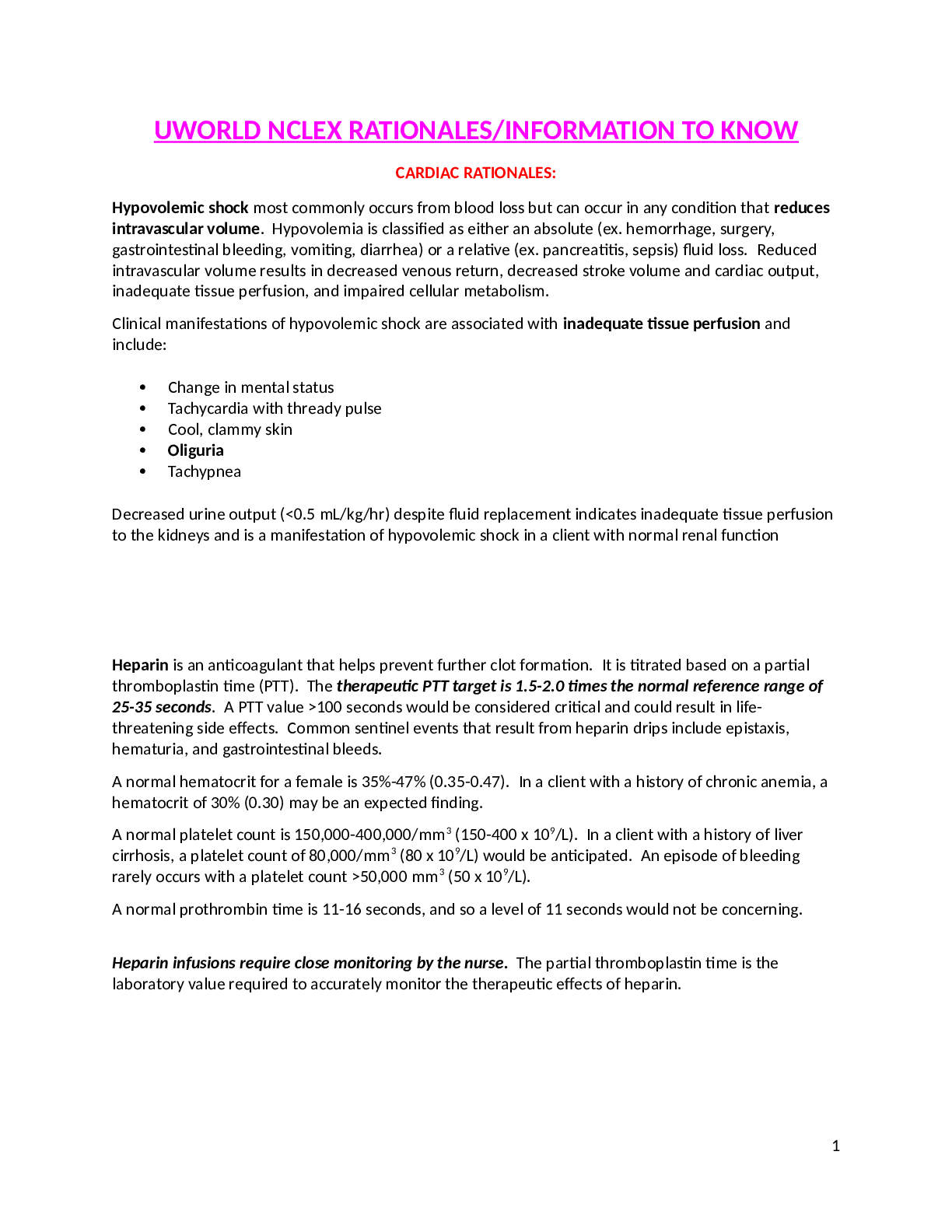
UWORLD NCLEX RATIONALES INFORMATION TO KNOW.CARDIAC RATIONALES:
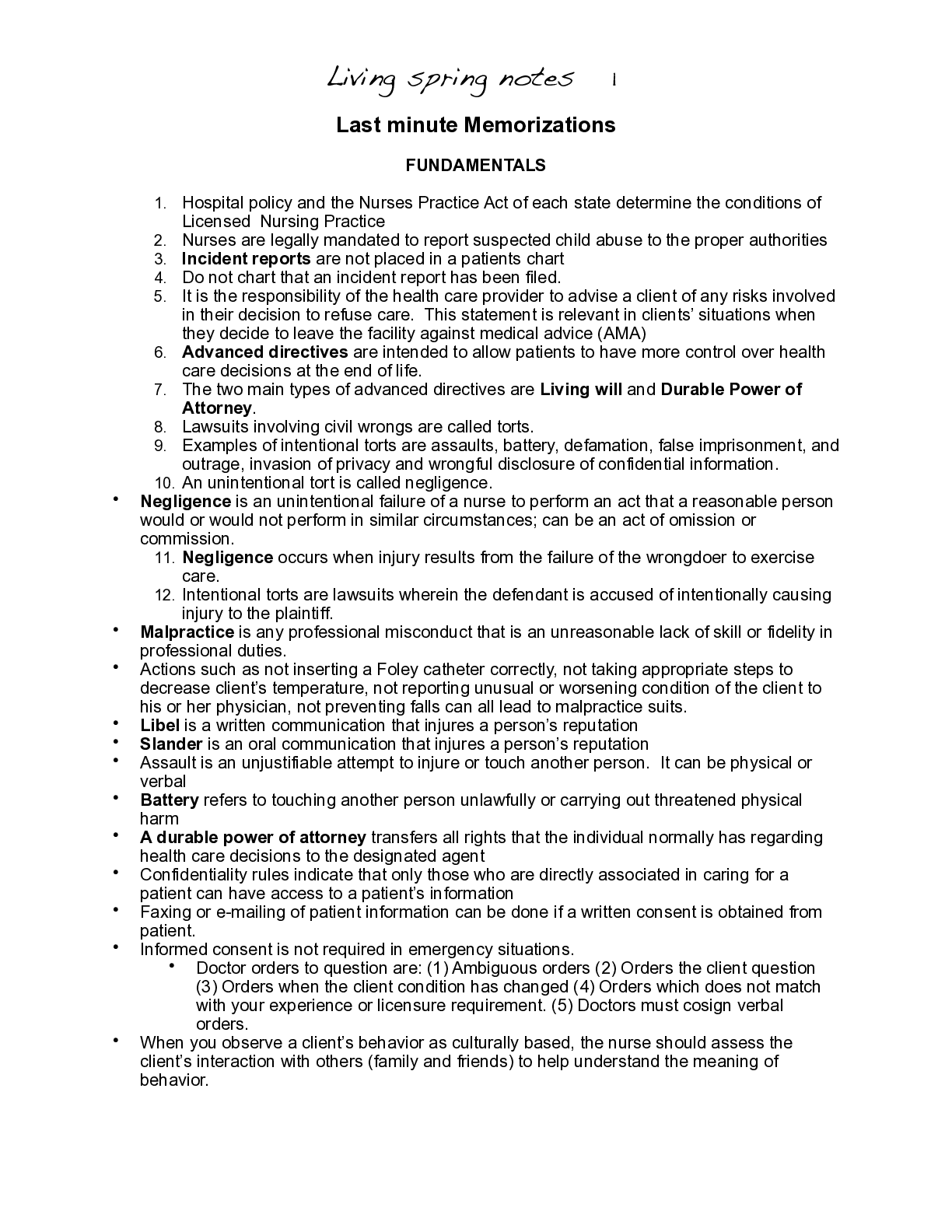
Hypovolemic shock most commonly occurs from blood loss but can occur in any condition that reduces intravascular volume. Hypovolemia is classified as eithe
...
[Show More]
Last updated: 3 years ago
Preview 1 out of 60 pages
Instant download
Buy this Document to get the Full Access Instantly
Provided by Students Who Aced it
We Verify Document Content to Gurantee Accuracy
Reviews( 0 )
Document information
Connected school, study & course
About the document
Uploaded On
May 18, 2021
Number of pages
60
Written in
All

Additional information
This document has been written for:
Uploaded
May 18, 2021
Downloads
0
Views
153
Topic Tags
Recommended For You
Get more on NCLEX »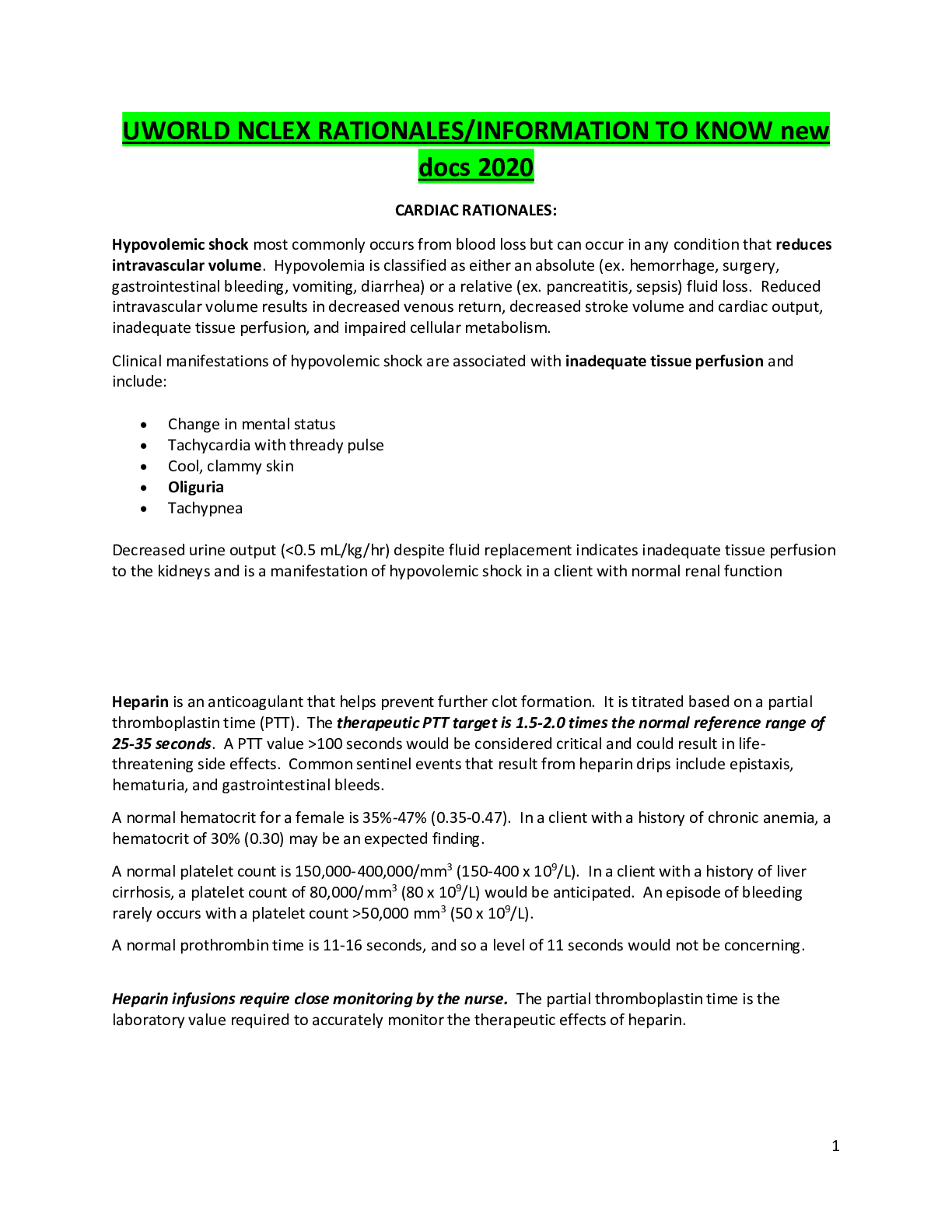
$8.5
60 Pages
NURS 3552 UWORLD NCLEX RATIONALES/INFORMATION TO KNOW new docs...
$20.5
53 Pages
NCLEX RN (NEXT GENERATION) || ACTUAL EXAM TEST BANK ALL QUESTI...

$35.5
168 Pages
2024|2025 NCLEX RN ACTUAL EXAM STUDY GUIDE REAL Q&A LATEST 202...
$20.5
841 Pages
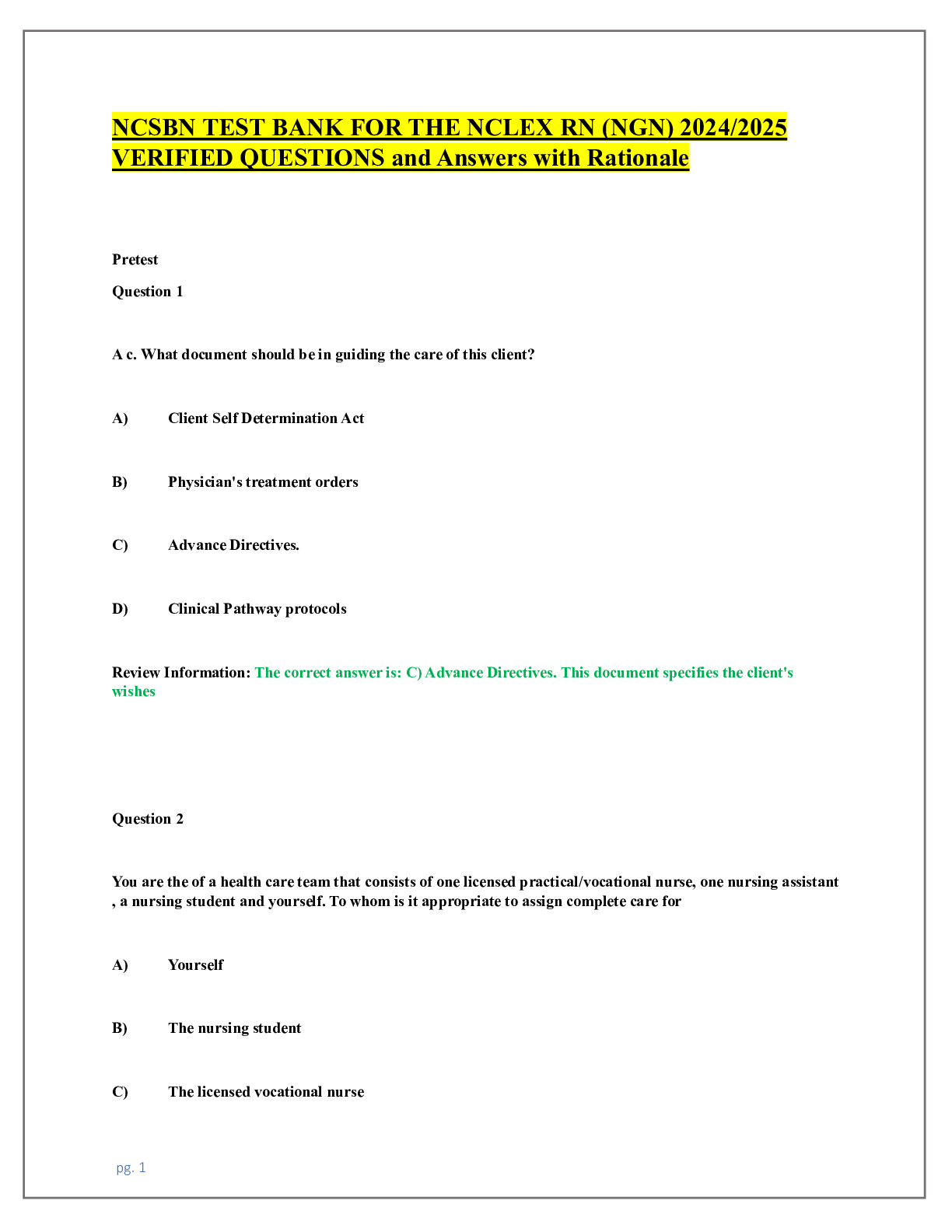
NCSBN TEST BANK FOR THE NCLEX RN (NGN) 2024/2025 VERIFIED QUES...
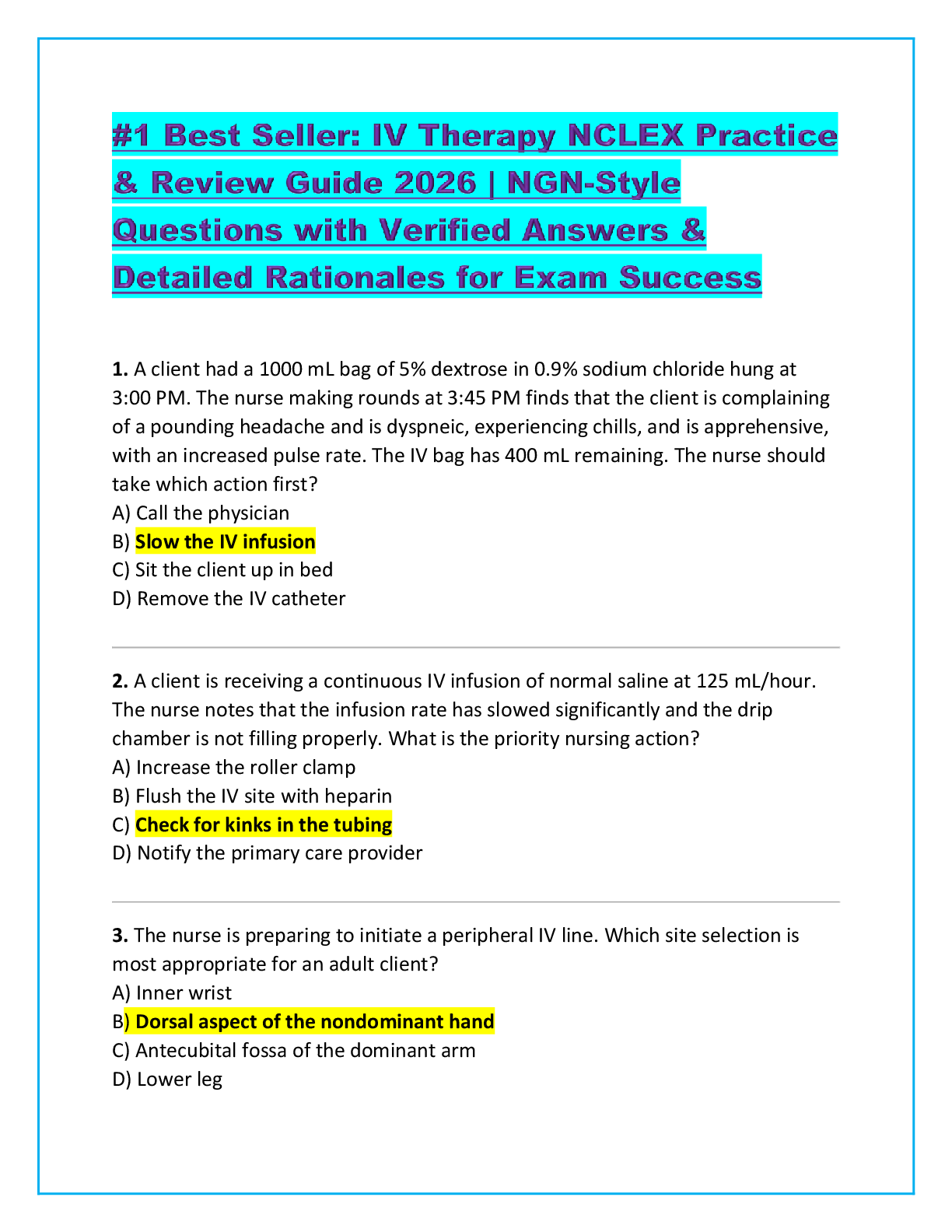
$10
60 Pages
UWORLD NCLEX RATIONALES/INFORMATION TO KNOW- CARDIAC RATIONALE...
$22.5
307 Pages
TEST BANK for Davis Advantage for Psychiatric Mental Health Nu...
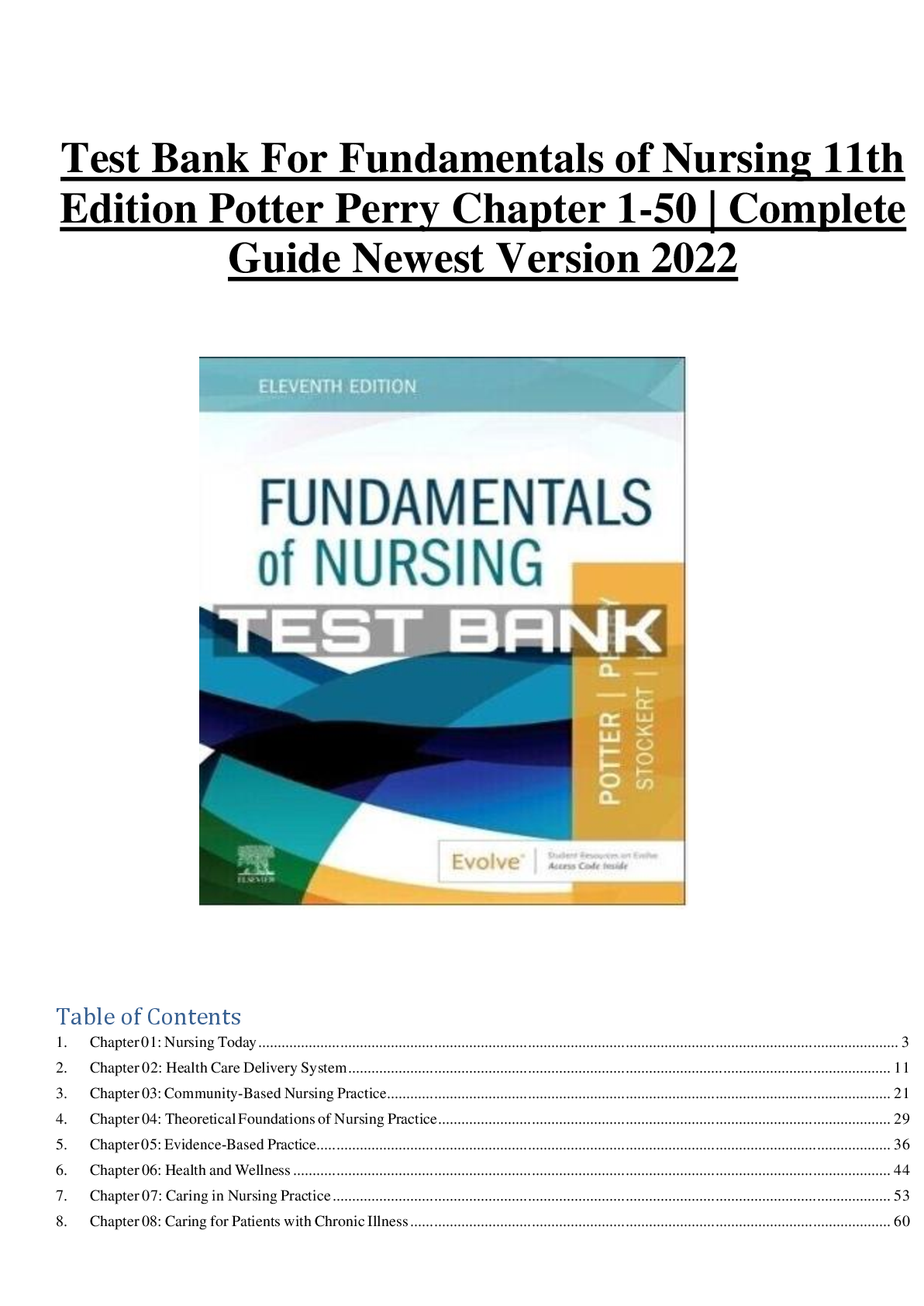
$17
588 Pages
Test Bank For Fundamentals of Nursing 11th Edition Potter Perr...
$16
496 Pages
TEST BANK for Essentials of Psychiatric Mental Health Nursing:...
More related documents below


.png)

