Syllabus 601 Summer
Document Content and Description Below
Syllabus 601 Summer
Course approved by USF School of Nursing Faculty
All rights to this syllabus are reserved by the School of Nursing and may not be duplicated without permission.
Course Description:
This course
...
[Show More]
Last updated: 3 years ago
Preview 1 out of 21 pages
Instant download
.png)
Buy this Document to get the Full Access Instantly
Provided by Students Who Aced it
We Verify Document Content to Gurantee Accuracy
Reviews( 0 )
Document information
Connected school, study & course
About the document
Uploaded On
May 26, 2021
Number of pages
21
Written in
All

Additional information
This document has been written for:
Uploaded
May 26, 2021
Downloads
0
Views
141
Topic Tags
Recommended For You
Get more on HESI ».png)
 Questions, Answers & Rationale, A+ Guide.png)
$25.5
396 Pages
NGN Nursing Med-Surg HESI Exit Exam – Latest 2025 Test Bank wi...

.png)
$29
961 Pages
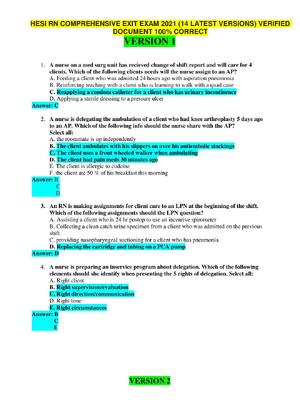
HESI RN COMPREHENSIVE EXIT EXAM Compiled 14 Versions Answers...
$13
28 Pages
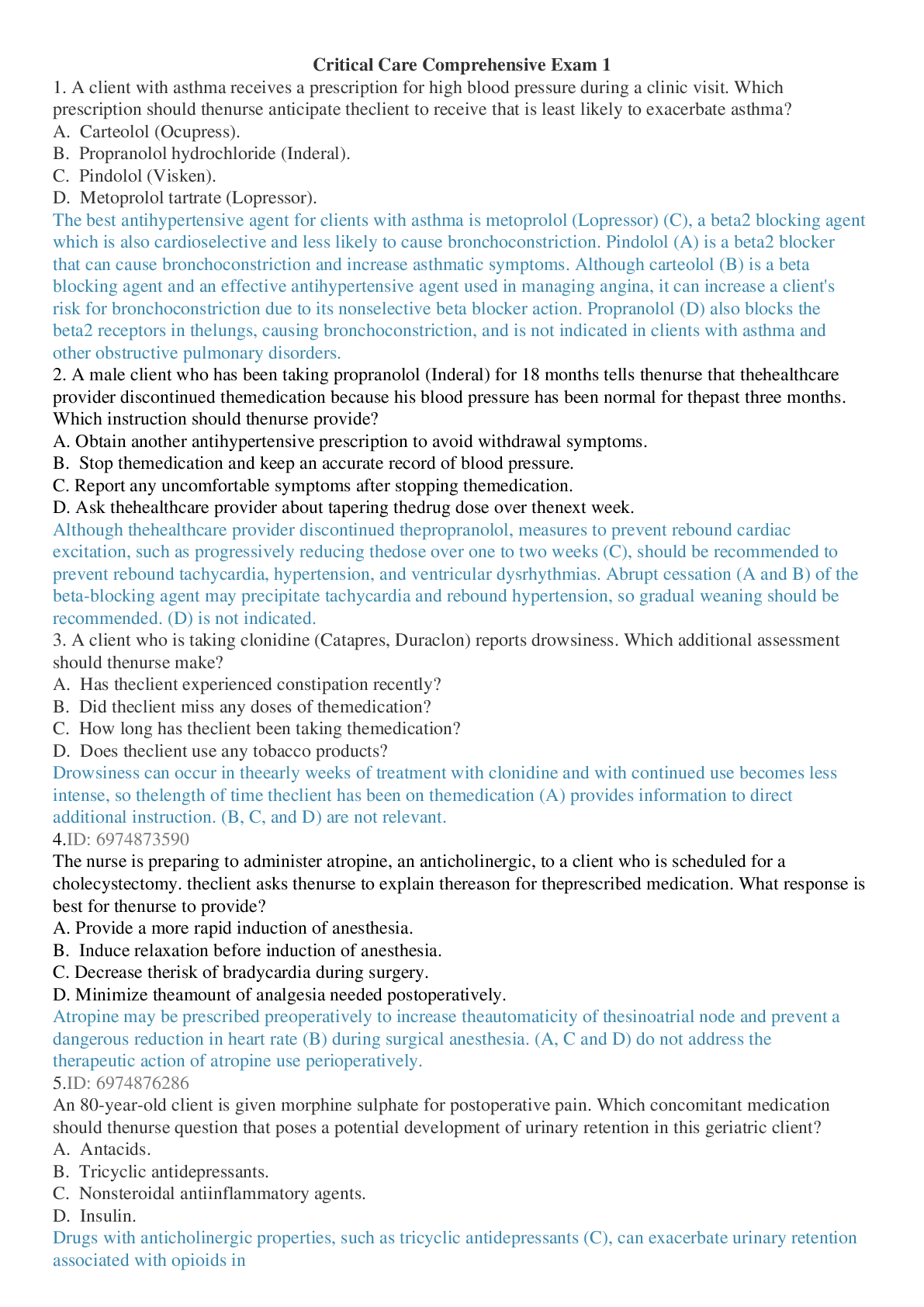
NURS 4345 HESI Critical Care Comprehensive Exam 1 Questions an...

$13
13 Pages
NURS 306 ATI practice asssessment maternal new born ATI Matern...
$18.5
93 Pages


.png)


.png)


