Leadership WEEK 4 75Questions.
1. All the following are LOCs. Starting with the optimal LOC, place these in order of a decreasing LOC.
Alert
Confused
Lethargy
Obtunded
Stuporous
Comatose
Alert
Lethargic
Confu
...
Leadership WEEK 4 75Questions.
1. All the following are LOCs. Starting with the optimal LOC, place these in order of a decreasing LOC.
Alert
Confused
Lethargy
Obtunded
Stuporous
Comatose
Alert
Lethargic
Confused
Obtunded
Comatose
Stuporous
2. Interventions to prevent which problem are the priority for a patient with myasthenia gravis (MG)?
A. Accidental injury
B. Uncontrolled pain
C. Inability to maintain own airway
D. Decreased functional ability and mobility
3. The nurse writes the nursing problem of "fluid volume excess" (FVE). Which intervention should be included in the plan of care?
A. Change the IV fluid from 0.9% NS to D5W.
B. Restrict the client's sodium in the diet.
C. Monitor blood glucose levels.
D. Prepare the client for hemodialysis.
4. The nurse assists a client with serum potassium of 3.2 mEq/L to make which of the following menu selections? Select all that apply.
A. Baked cod
B. Ham and cheese omelet
C. Fried eggs
D. Baked potato
E. spinach
5. The nurse evaluates which of the following clients to have hypermagnesemia?
A. A client who has chronic alcoholism and a magnesium level of 1.3 mEq/L
B. A client who has hyperthyroidism and a magnesium level of 1.6 mEq/L
C. A client who has renal failure, takes antacids, and has a magnesium level of 2.9 mEq/L
D. A client who has congestive heart disease, takes a diuretic, and has a magnesium level of 2.3 mEq/L
6. The nurse is evaluating the serum laboratory results on the following four clients. Which of the following laboratory results is a priority for the nurse to report first?
A. A client with osteoporosis and a calcium level of 10.6 mg/dl
B. A client with renal failure and a magnesium level of 2.5 mEq/L
C. A client with bulimia and a potassium level of 3.6 mEq/L
D. A client with dehydration and a sodium level of 149 mEq/L
7. The registered nurse is delegating client assignments to unlicensed assistive personnel. Which of the following clients does not require additional monitoring and assessment and may be delegated to unlicensed assistive personnel?
A. A client who has been experiencing diarrhea and has a serum chloride level of 100 mEq/L
B. A client with renal failure who has a serum magnesium level of 3.0 mEq/L
C. A client who has experienced a fracture of the femur and has a serum phosphate of 5.0 mg/dl
D. A client with dehydration who has a serum sodium level of 128 mEq/L
8. The client is admitted to a nursing unit from a long-term care facility with a hematocrit of 56% and a serum sodium level of 152 mEq/L. Which condition would be a cause for these findings?
A. Over hydration.
B. Anemia.
C. Dehydration.
D. Renal failure.
9. The client who has undergone an exploratory laparotomy and subsequent removal of a large intestinal tumor has a nasogastric tube (NGT) in place and an IV running at 150 mL/hr via an IV pump. Which data should be reported to the health care provider?
A. The pump keeps sounding an alarm that the high pressure has been reached.
B. Intake is 1800 mL, NGT output is 550 mL, and Foley output 950 mL.
C. On auscultation, crackles and rales in all lung fields are noted.
D. Client has negative pedal edema and an increasing level of consciousness.
10. The client diagnosed with diabetes insipidus weighed 180 pounds when the daily weight was taken yesterday. This morning's weight is 175.6 pounds. One liter of fluid weighs approximately 2.2 pounds. How much fluid has the client lost (in milliliters)?
A. 500 mL
B. 1000 mL
C. 2000 mL
D. 4400 mL
11. The client is admitted with a serum sodium level of 110 mEq/L. Which nursing intervention should be implemented?
A. Encourage fluids orally.
B. Administer 10% saline solution IVPB.
C. Administer antidiuretic hormone intranasally.
D. Place on seizure precautions.
12. The telemetry monitor technician notifies the nurse of the morning telemetry readings. Which client should the nurse assess first?
A. The client in normal sinus rhythm with a peaked T wave.
B. The client diagnosed with atrial fibrillation with a rate of 100.
C. The client diagnosed with a myocardial infarction who has occasional PVC.
D. The client with a first-degree AV block and a rate of 92.
13. The client post-thyroidectomy complains of numbness and tingling around the mouth and the tips of the fingers. Which intervention should be implemented first?
A. Notify the health care provider immediately.
B. Tap the cheek about two (2) centimeters anterior to the ear lobe.
C. Check the serum calcium and magnesium levels.
D. Prepare to administer calcium gluconate IVP.
14. Which statement best explains the scientific rationale for Kussmaul's respirations in the client diagnosed with diabetic ketoacidosis (DKA)?
A. The kidneys produce excess urine and the lungs try to compensate.
B. The respirations increase the amount of carbon dioxide in the bloodstream.
C. The lungs speed up to release carbon dioxide and increase the pH.
D. The shallow and slow respirations will increase the HCO3 in the serum
15. A patient is bought in by ambulance with a suspected brain injury. What are the outward symptoms of head injury? (Select all that apply.)
A. Tinnitus
B. Diarrhea
C. Ottorhea
D. Battle sign
E. Chvostek sign
16. The patient with trigeminal neuralgia asks the nurse if there is anything she can do to prevent future episodes of the disorder. Which response by the nurse is correct?
A. "It is best if you speak with your physician about this condition."
B. "Unfortunately, there is little you can do to prevent future episodes of pain."
C. "Drinking very cold or hot liquids is frequently a trigger, so you should avoid both."
D. "Surgery is the only form of treatment that will prevent this condition from recurring."
17. A patient is admitted to a rehabilitation facility following a brain injury that has resulted in dysphasia. While observing the patient and his wife, the nurse determines further instruction is necessary if which activity is performed?
A. The patient sips from a cup rather than using a straw.
B. The patient sits in his chair for 45 minutes after each meal.
C. The patient tilts his head back when trying to swallow solid foods.
D. The patient's wife places a teaspoon of food in the patient's mouth at a time.
18. The nurse who is caring for a patient following a stroke performs passive range-of-motion exercises on the patient. The patient asks why these exercises are so important. Which response by the nurse is accurate?
A. "This helps the patient believe she is making some progress."
B. "This helps overcome mood swings and crying spells."
C. "This helps prevent fatigue from worsening."
D. "This helps to strengthen and retrain muscles."
19. The nurse is providing patient teaching to a 23-year-old female who has recently been diagnosed with epilepsy. The nurse should educate the patient that seizures are most likely to occur at which time in the patient's menstrual cycle?
A. At the time of ovulation
B. 1 week after menstruation
C. At the time of menstruation
D. 1 week before menstruation
20. A patient who has epilepsy is to take phenytoin (Dilantin). What is an important teaching point that the LPN/LVN should include regarding this medication?
A. The patient should have periodic drug levels drawn.
B. The patient should regulate the dosage according to need.
C. The patient should take the medication with juice containing vitamin C.
D. The patient should take an extra dose of the medication before exercising.
21. A patient has had a left-sided cerebrovascular accident (CVA). Which condition does the nurse expect the patient to have as a result of the CVA?
A. Ataxia
B. Aphasia
C. Dyslexia
D. Quadriplegia
22. A patient has been diagnosed with a cerebral neoplasm. What are the symptoms of a cerebral neoplasm?
A. Long-term memory loss and paralysis
B. Loss of muscle strength and paresthesia
C. Grand mal seizure activity and facial paralysis
D. Severe headache that wakes patient and visual problems
23. The nurse obtaining an admission history for a patient recovering from a CVA finds a medication history including aspirin (Ecotrin). What should alert the nurse to a possible adverse effect of this drug?
A. Nausea
B. Epistaxis
C. Hyperactivity
D. Abdominal distention
24. The LPN/LVN is talking with a patient, who has epilepsy, when he begins having a tonic-clonic (grand mal) seizure. Which assessment(s) should the LPN/LVN make? (Select all that apply.)
A. What the patient had eaten prior to the seizure.
B. What the patient was doing prior to the seizure.
C. What time the seizure began and how long it lasted.
D. Whether body movements are unilateral and symmetrical.
E. Which direction the patient's eyes turned during the seizure.
25. The nurse is providing teaching to a group of patients regarding CVA (stroke). The patients demonstrate an understanding of the teaching when listing which factors as being the possible cause of a stroke? (Select all that apply.)
A. Cerebral thrombosis
B. Cerebral encephalitis
C. Cerebral hemorrhage
D. Meningococcal meningitis
E. Atherosclerosis of the arteries in the head and neck
26. During the advanced stages of amyotrophic lateral sclerosis (ALS), which service would be most beneficial to the family and patient?
A. Hospice services
B. In-home physical therapy
C. Pulmonary rehabilitation program
D. Nursing visits from a home health care agency
27. When teaching the patient with multiple sclerosis (MS) about how to best manage his disease, the nurse determines the patient requires further instruction when making which statement?
A. "It is important that I attend all of my physical therapy sessions."
B. "I should eat adequate fiber to prevent constipation."
C. "It is a good idea for me to take a hot shower in the morning to relax my muscles."
D. "The injections of interferon beta-1b (Betaseron) will help manage my symptoms."
28. A patient has recently been diagnosed with MS. The family asks the nurse about the common manifestations of the disease. The nurse is correct by identifying which as the most common clinical manifestation of the disease?
A. Urinary incontinence
B. Weakness of the limbs
C. A loss of the sense of smell
D. Decreased intellectual function
29. Following a viral respiratory infection, a patient develops symptoms of Guillain-Barré syndrome. What is most closely associated with this disorder?
A. Emotional lability
B. Hyperactive deep tendon reflexes
C. Flapping tremors of the hands and feet
D. Paresthesia and weakness of the lower extremities
30. Why should the nurse check with the physician to be sure that she knows a patient has MG when prescribing medications?
A. Because the patient needs sublingual medications due to excessive salivation.
B. Because when the patient is in remission, certain drugs should not be prescribed.
C. Because the myasthenic patient can suffer from exaggerated and bizarre effects from a variety of drugs.
D. Because the patient's MG medication, selegiline (Eldepryl), needs to be carefully monitored for patient reactions.
31. For which condition would a patient most need to have medical alert identification?
A. Poliomyelitis
B. MS
C. MG
D. Cerebrovascular accident (CVA)
32. During the acute stage of Guillain-Barré syndrome, what is the priority goal of nursing and medical treatment?
A. Sustenance of life
B. Promotion of rest
C. Reduction of fever
D. Prevention complications
33. The nurse is assessing a patient admitted for a work-up to rule out ALS. Which symptoms are typically exhibited in a patient with ALS? (Select all that apply.)
A. Muscle pain
B. Slurred speech
C. Muscle spasticity
D. Decreased sensation
E. Difficulty swallowing
34. The student nurse is caring for a patient with MG. The student demonstrates adequate learning when identifying which pathophysiologic factors regarding the disease? (Select all that apply.)
A. The disease is an acute disorder.
B. The cranial nerves are involved in the disease process.
C. Muscle weakness is the major characteristic of the disorder.
D. The etiology of the majority of cases of the disease is autoimmune.
E.Progressive degeneration of the spinal cord occurs as the disease advances.
35. A client with a seizure disorder is being admitted to the hospital. Which should the nurse plan to implement for this client? Select all that apply
A. Pad the bed's side rails
B. place an airway by the bedside
C. Place oxygen equipment at the bedside
D. place suction equipment at the bedside
E. Take a padded tongue blade to the wall at the head of the bed
36. The client has just undergone computed tomography (CT) scanning with a contrast medium. Which statement by the client demonstrates an understanding of the post procedure care?
A. “I should drink extra fluids for the remainder of the day."
B. “I should not take any medications for at least 4 hours."
C. "I should eat lightly for the remainder of the day."
D. “I should rest quietly for the remainder of the day."
37. The nurse is caring for a client with an increased intracranial pressure. (ICP) Which change in vital signs would occur is ICP is rising?
A. increasing temperature, increasing pulse, increasing respirations, and decreasing BP
B. decreasing temperature, decreasing pulse, increasing respirations, decreasing BP
C. decreasing temperature, increasing pulse, decreasing respirations, increasing BP
D. increasing temperature, decreasing pulse, decreasing respirations, increasing BP
38. The nurse observes the unlicensed assistive personnel positioning the client with increased intracranial pressure. Which position would require intervention by the nurse?
A. Head midline
B. Head turned to the side
C. neck in neutral position
D. head of bed elevated to 30 to 45 degrees
39. The nurse suspects that a 36-year-old patient recovering from a hypophysectomy (removal of the pituitary gland) has developed diabetes insipidus (DI). What sign or symptom is most indicative of DI?
A. Polyuria
B. Polyphagia
C. Hypertension
D. Hyperkalemia
40. The patient who had a laminectomy following a herniated lumbar disk is preparing to be discharged. Which statement by the patient indicates a need for additional discharge instructions?
A. "I should try to maintain a normal weight."
B. "It is best for me to do my back exercises twice a day."
C. "I need to be sure not to twist or bend at the waist when lifting things."
D. "I can take a four hour car ride, as long as I stay perfectly still.
41. A 13-year-old female patient has been seen in a walk-in clinic following a blow to the head from a fall during basketball practice. Which statement by the parent indicates the need for further discharge teaching?
A. "I need to wake her up every 2 or 3 hours for the first 24 hours."
B. "I need to apply ice to the bump on her head for 20 minutes every hour for 72 hours."
C. "I need to check her pupils frequently with a flashlight to be sure her pupils constrict."
D. "I need to watch for any changes in the level of consciousness or vomiting for 48 hours."
42. Which patient is the nurse most concerned with developing a subdural hematoma following an injury that resulted with a blow to the head?
A. The 76-year-old patient who is taking an anticoagulant
B. The 16-year-old football player who suffered a concussion
C. The 36-year-old patient who has a history of migraine headaches
D. The 56-year-old patient who is taking an antihypertensive medication.
43. The student nurse is assisting the nurse in turning a patient who is in cervical traction. What is most important for the LPN/LVN to instruct the student to do when assisting in turning the patient?
A. Flex the knees and hips before turning the patient.
B. Support the patient's head with a pillow so that his neck is flexed.
C. Turn the patient slowly and as one unit to avoid twisting the spine.
D. Place the patient's back in traction so that the spine will be kept slightly flexed.
44. Which of the following conditions can increase the risk for torn vessels and contusion on the brain if an accident that involves brain injury occurs?
A. Brain atrophy
B. Hydrocephalus
C. Heterotopic ossification
D. Increased intracranial pressure (ICP)
45. After a head injury, the patient begins to have drainage from the nose. The nurse assesses the drainage by which method?
A. Halo test
B. Tinel sign
C. Battle sign
D. Babinski sign
46. A patient experienced injury to the spinal cord in the cervical region, with paralysis and loss of sensory perception in both legs and both arms. What term is used to describe this condition?
A. Paraplegia
B. Hemiplegia
C. Homoplegia
D. Quadriplegia
47. A patient who is to have computed tomography (CT scan) of the brain voices concern about the procedure. The LPN/LVN can best allay the patient's fears by making which statement?
A. "CT scans use only a small amount of radioactive material injected into your brain."
B. "The procedure is safe and painless; you will hear a clicking noise as the CT machine rotates."
C. "You will probably be given something to make you drowsy and deaden the pain during the CT scan."
D. "CT scanning is a new procedure, and since it involves the brain, I think the doctor can answer your questions better than I can."
48. A client who is post-gallbladder surgery has a nasogastric tube, decreased reflexes, pulse of 110 weak and irregular, and blood pressure of 80/50 and is weak, mildly confused, and has a serum of potassium of 3.0 mEq/L. Based on the assessment data, which of the following is the priority intervention?
A. Withhold furosemide (Lasix)
B. Notify the physician
C. Administer the prescribed potassium supplement
49. Thiazide diuretics cause the loss of water and potassium through the kidneys. Thus, if the client is not consuming sufficient potassium in the diet, a hypokalemic state could occur. Hypokalemia can cause muscle weakness and dysrhythmias. Hyponatremia is not usually a problem because there is an abundance of sodium in the body and the additional regulation of sodium by aldosterone would compensate for sodium loss due to diuretics Calcium level would be unaffected by thiazide diuretics. If magnesium were to be affected by thiazide diuretics, it would be excreted along with potassium, but the imbalance would be hypomagnesemia, not hypermagnesemia.
The nurse is assisting a physician in obtaining a sample for blood gas analysis from a client's left wrist. After drawing the sample into the syringe, the nurse:
A. Adds a drop of heparin to the sample to prevent clotting
B. Seals the end of the syringe and places it in a cup of crushed ice water
C. Places the syringe of blood in a dark bag to protect the specimen from light
D. Seals the syringe in a zip-lock bag and places the specimen in the out box for laboratory pickup
50. The nurse is conducting an assessment of a client receiving intravenous (IV) fluids via a central line. Today is March 9. The tubing is dated March 5. The nurse determines that the tubing:
A. Is good for 3 more days, for a total of 7 days
B. Can remain in place as long as there is not a disconnection
C. Needs changing because it is beyond the 3-day recommended limit
D. Needs changing, along with the IV port, because they have been in place for 4 days
51. One of the most common electrolyte imbalances is: Hypokalemia
The client most at risk for fluid volume defecit (FVD) is:
a. Elder adult
b. Adult
c. Child
d. Infant
52. One reason older adults experience fluid and electrolyte imbalance and acid-base imbalances, is they:
a. Eat poor quality foods
b. Have a decreased thirst sensation
c. have more stress response
d. have an overly active thirst response
53. Output recorded on an I/O sheet would be all of these: Urine
Diarrhea
Vomit
Gastric suction
Wound drainage
Health promotion activities in the area of fluid and electrolyte imbalance focus primarily on:
a. client teaching
b. dietary intake
c. medication
d. physician involvement in care
54. Many factors are intially controlled for the IV insertion procedure. This nurse understands this begins with:
a. hand washing
b. checking sterility of supplies
c. 6 med rights
d. checking IV order
55. A client with hypoparathyroidism complains of numbness and tingling in his fingers and around the mouth. The nurse would assess for what electrolyte imbalance?
A. Hyponatremia
B. Hypocalcemia
C. Hyperkalemia
D. Hypermagnesemia
56. The nurse evaluates which of the following clients to be at risk for developing hypernatremia?
A. 50-year-old with pneumonia, diaphoresis, and high fevers
B. 62-year-old with congestive heart failure taking loop diuretics
C. 39-year-old with diarrhea and vomiting
D. 60-year-old with lung cancer and syndrome of inappropriate antidiuretic hormone (SIADH)
57. A client is admitted with diabetic ketoacidosis who, with treatment, has a normal blood glucose, pH, and serum osmolality. During assessment, the client complains of weakness in the legs. Which of the following is a priority nursing intervention?
A. Request a physical therapy consult from the physician
B. Ensure the client is safe from falls and check the most recent potassium level
C. Allow uninterrupted rest periods throughout the day
D. Encourage the client to increase intake of dairy products and green leafy vegetables.
58. A client with a potassium level of 5.5 mEq/L is to receive sodium polystyrene sulfonate (Kayexalate) orally. After administering the drug, the priority nursing action is to monitor
A. urine output.
B. blood pressure.
C. bowel movements.
C. ECG for tall, peaked T waves.
59. The nurse is caring for a client who has been in good health up to the present and is admitted with cellulitis of the hand. The client's serum potassium level was 4.5 mEq/L yesterday. Today the level is 7 mEq/L. Which of the following is the next appropriate nursing action?
A. Call the physician and report results
B. Question the results and redraw the specimen
C. Encourage the client to increase the intake of bananas
D. Initiate seizure precautions
60. A client is receiving an intravenous magnesium infusion to correct a serum level of 1.4 mEq/L. Which of the following assessments would alert the nurse to immediately stop the infusion?
A. Absent patellar reflex
B. Diarrhea
C. Premature ventricular contractions
D. Increase in blood pressure
61. A client with chronic renal failure reports a 10 pound weight loss over 3 months and has had difficulty taking calcium supplements. The total calcium is 6.9 mg/dl. Which of the following would be the first nursing action?
A. Assess for depressed deep tendon reflexes
B. Call the physician to report calcium level
C. Place an intravenous catheter in anticipation of administering calcium gluconate
D. Check to see if a serum albumin level is available
62. A client with heart failure is complaining of nausea. The client has received IV furosemide (Lasix), and the urine output has been 2500 ml over the past 12 hours. The client's home drugs include metoprolol (Lopressor), digoxin (Lanoxin), furosemide, and multivitamins. Which of the following are the appropriate nursing actions before administering the digoxin? Select all that apply.
A. Administer an antiemetic prior to giving the digoxin
B. Encourage the client to increase fluid intake
C. Call the physician
D. Report the urine output
E. Report indications of nausea
63. An older adult client admitted with heart failure and a sodium level of 113 mEq/L is behaving aggressively toward staff and does not recognize family members. When the family expresses concern about the client's behavior, the nurse would respond most appropriately by stating
A. "The client may be suffering from dementia, and the hospitalization has worsened the confusion."
B. "Most older adults get confused in the hospital."
C. "The sodium level is low, and the confusion will resolve as the levels normalize."
D. "The sodium level is high and the behavior is a result of dehydration."
64. A client with a serum sodium of 115 mEq/L has been receiving 3% NS at 50 ml/hr for 16 hours. This morning the client feels tired and short of breath. Which of the following interventions is a priority?
A. Turn down the infusion
B. Check the latest sodium level
C. Assess for signs of fluid overload
D. Place a call to the physician
65. A client with chronic renal failure receiving dialysis complains of frequent constipation. When performing discharge teaching, which over-the-counter products should the nurse instruct the client to avoid at home?
A. Bisacodyl (Dulcolax) suppository
B. Fiber supplements
C. Docusate sodium
D. Milk of magnesia
66. A client is receiving intravenous potassium supplementation in addition to maintenance fluids. The urine output has been 120 ml every 8 hours for the past 16 hours and the next dose is due. Before administering the next potassium dose, which of the following is the priority nursing action?
A. Encourage the client to increase fluid intake
B. Administer the dose as ordered
C. Draw a potassium level and administer the dose if the level is low or normal
D. Notify the physician of the urine output and hold the dose
67. The nurse should monitor for clinical manifestations of hypophosphatemia in which of the following clients?
A. A client with osteoporosis taking vitamin D and calcium supplements
B. A client who is alcoholic receiving total parenteral nutrition
C. A client with chronic renal failure awaiting the first dialysis run
D. A client with hypoparathyroidism secondary to thyroid surgery
68. A client admitted with squamous cell carcinoma of the lung has a serum calcium level of 14 mg/dl. The nurse should instruct the client to avoid which of the following foods upon discharge? Select all that apply.
A. Eggs
B. Broccoli
C. Organ meats
D. Nuts
E. Canned salmon
69. A client with pancreatitis has been receiving potassium supplementation for four days since being admitted with serum potassium of 3.0 mEq/L. Today the potassium level is 3.1 mEq/L. Which of the following laboratory values should the nurse check before notifying the physician of the client's failure to respond to treatment?
A. Sodium
B. Phosphorus
C. Calcium
D. Magnesium
70. The nurse should include which of the following instructions to assist in controlling phosphorus levels for a client in renal failure?
A. Increase intake of dairy products and nuts
B. Take aluminum-based antacids such as aluminum hydroxide (Amphojel) with or after meals
C. Reduce intake of chocolate, meats, and whole grains
D. Avoid calcium supplements
71. A client with pneumonia presents with the following arterial blood gases: pH of 7.28, PaCO2 of 74, HCO3 of 28 mEq/L, and PO2 of 45, which of the following is the most appropriate nursing intervention?
A. Administer a sedative
B. Place client in left lateral position
C. Place client in high-Fowler's position
D. Assist the client to breathe into a paper bag
72. A client with COPD feels short of breath after walking to the bathroom on 2 liters of oxygen nasal cannula. The morning's ABGs were pH of 7.36, PaCO2 of 62, HCO3 of 35 mEq/L, O2 at 88% on 2 liters. Which of the following should be the nurse's first intervention?
A. Call the physician and report the change in client's condition
B. Turn the client's O2 up to 4 liters nasal cannula
C. Encourage the client to sit down and to take deep breaths
D. Encourage the client to rest and to use pursed-lip breathing technique
73. A client who had a recent surgery has been vomiting and becomes dizzy while standing up to go to the bathroom. After assisting the client back to bed, the nurse notes that the blood pressure is 55/30 and the pulse is 140. The nurse hangs which of the following IV fluids to correct this condition?
A. D5.45 NS at 50 ml/hr
B. 0.9 NS at an open rate
C. D5W at 125 ml/hr
D. 0.45 NS at open rate
74. A client who is admitted with malnutrition and anorexia secondary to chemotherapy is also exhibiting generalized edema. The client asks the nurse for an explanation for the edema. Which of the following is the most appropriate response by the nurse?
A. "The fluid is an adverse reaction to chemotherapy."
B. "A decrease in activity has allowed extra fluid to accumulate in the tissues."
C. "Poor nutrition has caused decreased blood protein levels, and fluid has moved from the blood vessels into the tissues."
D. "Chemotherapy has increased your blood pressure, and fluid was forced out into the tissues."
75. The registered nurse is delegating nursing tasks for the day. Which of the following tasks may the nurse delegate to a licensed practical nurse?
A. Assess a client for metabolic acidosis
B. Evaluate the blood gases of a client with respiratory alkalosis
C. Obtain a glucose level on a client admitted with diabetes mellitus
D. Perform a neurological assessment on a client suspected of having hypocalcaemia
76. The RN is admitting a client with benign prostatic hyperplasia (BPH) to an acute care unit. The client describes an oral intake of about 1400 mL/day. What is the RN's priority concern?
a) Ask the client about his or her bowel movements.
b) Have the client complete a diet diary for the past 2 days.
c) Instruct the client to increase oral intake to 2 to 3 L/day
d) Ask the client to describe his urine output.
77. The client has fluid volume deficit related to excessive fluid loss. Which action related to fluid management should be delegated by the RN to unlicensed assistive personnel (UAP)?
a) Administering IV fluids as prescribed by the physician.
b) providing straws and offering fluids between meals.
c) Developing a plan for added fluid intake over 24 hours.
d) Teaching family members to assist the client with fluid intake.
78. The unlicensed assistive personnel (UAP) reports to the nurse that a client's urine output for the past 24 hours has been only 360 mL. What is the nurse's priority action at this time? Of head
a) Place an 18-gauge IV in the nondominant arm.
b) Elevate the client’s head of bed at least 45 degrees.
c) Instruct the UAP to provide the client with a pitcher of ice water.
D) Constant and notify the health care provider immediately.
79. The client described in question 3 is also at risk for poor perfusion related to decreased plasma volume. Which assessment finding supports this risk?
a) Flattened neck veins when the client is in the supine position.
b) Full and bounding pedal and post-tibial pulses.
c) Pitting edema located in the feet, ankles and calves
D) Shallow respirations with crackles on auscultation.
80. The nursing care plan for an older client with dehydration includes interventions for oral health. Which interventions are within the scope of practice for an LPN/LVN being supervised by a nurse? Select all that apply.
A). Reminding the client to avoid commercial mouthwashes
B). Encouraging mouth rinsing with warm saline
c). Observing the lips, tongue, and mucous membranes
d). Providing mouth care every 2 hours while the client is awake
e). Seeking a dietary consult to increase fluids on meal trays
81. The health care provider has written these orders for a client with a diagnosis of pulmonary edema. The client's morning assessment reveals bounding peripheral pulses, weight gain of 2 lb, pitting ankle edema, and moist crackles bilaterally. Which order takes priority at this time?
a) Weigh the client every morning
b) Maintain accurate intake and output records.
c) Restrict fluids to 1500mL/day.
d) Administer furosemide 40mg IV push.
82. Which statement by a client with hypovolemia related to dehydration is the best indicator to the nurse of the need for additional teaching?
a)” I will drink 2 to 3 L of fluids everyday”
b)’’I will drink a glass of water whenever I feel thirsty”.
c)’’I will drink coffee and cola drinks throughout the day”.
D)” I will avoid drinks containing alcohol.”
83. The nurse has been floated to the telemetry unit for the day. The monitor technician informs the nurse that the client has developed prominent U waves. Which laboratory value should be checked immediately?
a) Sodium
b) Potassium
c) Magnesium
d) Calcium
84. A client's potassium level is 6.7 mEq/L (6.7 mmol/L). Which intervention should the nurse delegate to the first-year student nurse whom he or she is supervising?
a-Administer sodium polystyrene sulfonate 15g orally.
b-Administer spironolactone 25mg orally.
c-Asses the electrocardiogram (ECG)strip for tall T waves.
d-Administer potassium 10 mEq (10 mmo1/L) orally.
85. A client is admitted to the unit with a diagnosis of syndrome of inappropriate antidiuretic hormone secretion (SIADH). For which electrolyte abnormality would the nurse be sure to monitor?
a-Hypokalemia
b-Hyperkalemia
c-Hyponatremia
d-Hypernatremia
86. The charge nurse assigned the care of a client with acute kidney failure and hypernatremia to a new-graduated RN. Which actions can the new-graduate RN delegate to the unlicensed assistive personnel (UAP)? Select all that apply.
a- Providing oral care every 3 to 4 hours
b- Monitoring for indications of dehydration
c-Administering 0.45% saline by IV line
d- Record urine output when client void assessing daily weights for trends
e- Help the client change position every 2 hours
88 .An experienced LPN/LVN reports to the RN that a client's blood pressure and heart rate have decreased, and when his face was assessed, one side twitches. What action should the RN take at this time?
a- Reassess the client’s blood pressure and heart rate.
b-Review the client’s morning calcium level.
c-Request a neurological consult today.
d-Check the client’s pupillary reaction to light.
89.The nurse is preparing to discharge a client whose calcium level was low but is now just barely within the normal range (9 to 10.5 mg/dL [2.25 to 2.63 mmol/L]). Which statement by the client indicates the need for additional teaching?
a- “I will call my doctor if I experience muscle twitching or seizures.”
b- “I will make sure to take my vitamin D with my calcium every day.”
c-“I will take my calcium citrate pill every morning before breakfast.”
d- “I will avoid dairy products, broccoli, and spinach when I eat.”
90. Which order prescribed for a client with hypercalcemia would the nurse be sure to question?
a-0.9% saline at 50 mL/hr IV
b-Furosemide 20mg orally each morning.
c-Apply cardiac telemetry monitoring.
d-Hydrochlorothiazide (HCTZ) 25 mg orally each morning
91. The unlicensed assistive personnel (UAP) reports to the nurse that a client's urine output for the past 24 hours has been only 360 mL. What is the nurse's priority action at this time?
a- “The client’s low phosphorus is probably due to malnutrition.”
b- “The client is just worn out from not getting enough rest.’’
c- “The client’s skeletal muscles are weak because of the low phosphorus.”
c- “The client will do more for himself when his phosphorus level is normal.”
92. The RN is reviewing the client’s morning laboratory results. Which of these results is of most concern.?
a-Serum potassium level of 5.2 mEq/L (5.2 mmol/L)
b-Serum sodium level of 134 mEq/L(134mmol/L)
c-Serum calcium level of 10.6 mg/dL(2.65mmol/L)
d-Serum magnesium level of 0.8mEq/L(0.4mmol/)
93.Which client would the charge nurse assign to the step-down unit nurse who was floated to the intensive care unit for the day?
a-A 68-year-old client on a ventilator with acute respiratory failure and respiratory acidosis.
b-A 72-year-old client with chronic obstructive pulmonary disease (COPD) and normal blood gas values who is ventilator dependent
c-A newly admitted 56-year-old client with diabetic ketoacidosis receiving an insulin drip
d-A 38-year-old client on a ventilator with narcotic overdose and respiratory alkalosis
94. The client with respiratory failure is receiving mechanical ventilation and continues to produce arterial blood gas results indicating respiratory acidosis. Which change in ventilator setting should the nurse expect to correct this problem?
a-Increase in ventilation rate from 6 to10 breaths/min
B-Decrease in ventilator rate from 10 to 6 breaths/min
C-Increase in oxygen concentration from 30% to 40%
D-Decrease in Oxygen concentration from 40% to 30%
95. Which actions should the nurse delegate to an unlicensed assistive personnel (UAP) for the client with diabetic ketoacidosis? Select all that apply.
A-Checking fingers tick glucose results every hour
B-Recording intake and output every hour
C-Measuring vital signs every 15 minutes
D-Assessing for indicators of fluid imbalance
E-Notifying the provider of changes of glucose level
F-Assisting the client to reposition every 2 hours
96. The nurse is admitting an older adult client to the acute care medical unit. Which assessment factor alerts the nurse that this client has a risk for acid-base imbalances?
A-History of myocardial infarction (MI) 1 year ago
B-Antacid use for occasional indigestion
c-Shortness of breath with extreme exertion
D-Chronic renal insufficiency
97. A client with lung cancer has received oxycodone 10 mg orally for pain. When the student nurse assesses the client, which finding would the nurse instruct the student to report immediately?
A-Respiratory rate of 8 to 10 breaths/min
B-Decrease in pain level from 6 to 2 (on a scale of 1 to 10)
C-Request by the client that the room door be closed
D-Heart rate of 90 to 100 beats/min
98. The unlicensed assistive personnel (UAP) reports to the nurse that a client seems very anxious, and vital sign measurement included a respiratory rate of 38 breaths/min. Which acid-base imbalance should the nurse suspect?
A-Respiratory acidosis
B-Respiratory alkalosis
C-Metabolic acidosis
D-Metabolic alkalosis
99. A client is admitted to the oncology unit for chemotherapy. To prevent an acid-base problem, which finding would the nurse instruct the unlicensed assistive personnel (UAP) to report?
A-Repeated episodes of nausea and vomiting
B-Reports of pain associated with exertion
C-Failure to eat all the food on the food on the breakfast tray
D-Client hair loss during the morning bath
100. The client has a nasogastric (NG) tube connected to intermittent wall suction. The student nurse asks why the client's respiratory rate and depth has decreased. What is the nurse's best response?
a-“It’s common for clients with uncomfortable equipment such as NG tubes to have a lower rate of breathing.”
b-“The client may have a metabolic alkalosis due to the NG suctioning,and the decreased respiratory rate is a compensatory mechanism.”
c-Whenever a client develops a respiratory acid-base problem, decreasing the respiratory rate helps correct the problem.”
d-“The client is hypoventilation because of anxiety ,and we will have to say alert for the development of respiratory acidosis.”
101. The client has an order for hydrochlorothiazide (HCTZ) 10 mg orally every day. What should the nurse be sure to include in a teaching plan for this drug? Select all that apply.
a. Take this medication in the morning."
b. "Inform your prescriber if you notice weight gain or increased swelling."
c. "You should expect your urine output to increase."
d. "Your health care provider may also prescribe a potassium supplement."
102. Which blood test result would the nurse be sure to monitor for the client taking hydrochlorothiazide (HCTZ)?
A-Sodium level
B-Potassium level
C-Chloride level
D-Calcium level
103. The RN is providing care for a client diagnosed with dehydration and hypovolemic shock. Which prescribed intervention from the health care provider should the RN question?
A-Blood pressure every 15 minutes
B-Place two 18-gauge IV lines
C-Oxygen at 3L via nasal cannula
D-IV 5% dextrose in water (D5W) to run at 250 mL/hr
104. The student nurse, under the supervision of an RN, is reviewing a client's arterial blood gas results and notes an acute increase in arterial partial pressure of carbon dioxide (Paco2) to 51 mm Hg compared with the previous results. Which statement by the student nurse indicates accurate understanding of acid-base balance for this client?
a- “When the Paco2 is acutely elevated; the blood pH should be lower than normal.”
b- “This client should be taught to breathe and rebreathe in a paper bag.”
c- “An elevated Paco2 always means that client has an acidosis.”
d- “When a client’s Paco2 is increased, the respiratory rate should decrease to compensate.”
105 .The nurse is providing care for several clients who are at risk for acid-base imbalance. Which client is most at risk for respiratory acidosis?
a-A 68-year-old client with chronic emphysema
b-A 58-year-old client who uses antacids everyday
c-A 48-year-old client with an anxiety disorder
d-A 28-year-old client with salicylate intoxication
106 .The nurse is caring for a client who experiences frequent generalized tonic-clonic seizures associated with periods of apnea. The nurse must be alert for which acid-base imbalance?
A-Respiratory acidosis
B-Respiratory alkalosis
C-Metabolic acidosis
d- Metabolic alkalosis
107. The nurse is completing a history for an older client at risk for an acidosis imbalance. Which questions would the nurse be sure to ask? Select all that apply.
a. "Which drugs to you take on a daily basis?"
b. "Do you have any problems with breathing?"
c. "Have you experienced any activity intolerance or fatigue in the past 24 hours?"
d. "Do you have episodes of drowsiness or decreased alertness?"
e. “Over the past months have you had any dizziness or tinnitus?”
108. Which specific instruction does the charge nurse give the unlicensed assistive personnel (UAP) helping to provide care for a client who is at risk for metabolic acidosis?
a- Check to see that the client keeps his oxygen in place at all time
b-Inform the nurse immediately if the client’s respiratory rate and depth increases.
C-Record any episodes of reflux or constipation.
D-Keep the client’s ice water pitcher filled at all times.
109. The nurse is assessing a client with a neurologic health problem and discovers a change in level of consciousness from alert to lethargic. What is the nurse's best action?
a-Perform a complete neurologic assessment
b-Assess the cranial nerve functions.
C-Contact the Rapid Response Team.
D-Reassess the client for 30 minutes
110. The nurse on the neurologic acute care unit is assessing the orientation of a client with severe headaches. Which questions would the nurse use to determine orientation? Select all that apply.
a). When did you first experience the headache symptoms?
b). Who is the Mayor of Cleveland?
c). What is your health care provider's name?
d). What year and month is this?
e) What’s your parents’ address?
f). What is the name of this health care facility?
111. What is the priority nursing concern for a client experiencing a migraine headache?
a. Pain
b. Anxiety
c. Hopelessness
d. Risk for brain injury
112. The nurse is creating a teaching plan for a client with newly diagnosed migraine headaches. Which key items will be included in the teaching plan? Select all that apply.
a. Foods that contain tyramine, such as alcohol and aged cheese, should be avoided.
b. Drugs such as nitroglycerin and nifedipine should be avoided.
c. Abortive therapy is aimed at eliminating the pain during the aura.
d. A potential side effect of medications is rebound headache.
e. Complementary therapies such as biofeedback and relaxation may be helpful.
f. Estrogen therapy should be continued as prescribed by the client’s health care provider
113. After a client has a seizure, which actions can the nurse delegate to the unlicensed assistive personnel (UAP)?
A. Commentating the seizure
B. Performing a neurological check
C. Checking the client’s vital signs
D. Restraining the client for protection
114. The nurse is preparing to admit a client with a seizure disorder. Which action can be assigned to an LPN/LVN?
A. Completing the admission assessment
B. Setting up oxygen and suction equipment
C. Placing a padded tongue blade at the bedside
D. Padding the side rails before the client arrives
115. A nursing student is teaching a client and family about epilepsy before the client's discharge. For which statement should the nurse intervene?
a. You should avoid consumption of all forms of alcohol.
B. Wear your medical alert bracelet at all times.
C. Protect your loved one’s airway during a seizure.
D. It’s ok to take over-the counter medication.
116. During a client's neurologic assessment, the nurse finds that he is arousable after light touch combined with a loud voice. How does the nurse document this client's level of consciousness?
A. "Sporous"
B. "Lethargic"
C. "Comatose"
D. "Drowsy"
117 .A clients with Parkinson disease has received a nursing diagnosis of Impaired Physical Mobility related to neuromuscular impairment. You observe the UAP performing all of these actions. For which action must you intervene?
a). Helping the client ambulate to the bathroom and back to bed
b). Reminding the client not to look at his feet when he is walking
c). Performing the client's complete bathing and oral care
d). Setting up the client's tray and encouraging the client to feed himself
118 .The nurse is preparing to discharge a client with chronic low back pain. Which statement by the client indicates the need for additional teaching?
A. “I will avoid exercise because the pain gets worse.”
B. “I will use heat or ice to help control the pain.”
C. “I will not wear high-heeled shoes at home or work
D. “I will purchase a firm mattress to replace my old one.”
119. A client with a spinal cord injury (SCI) reports sudden severe throbbing headache that started a short time ago. Assessment of the client reveals increased blood pressure (168/94 mm Hg) and decreased heart rate (48 beats/min), diaphoresis, and flushing of the face and neck. What action should the nurse take first?
A. Administer the order acetaminophen
B. Check the Foley Tubing for kinks for obstruction
C. Adjust the temperature in the client’s room.
D. Notify the health care provider about the change in status.
120. A client with possible Parkinson's disease is scheduled to have magnetic resonance imaging (MRI). The daughter asks the nurse how this test is different from a computed tomography (CT) scan. What is the nurse's best response?
a). "The MRI scan provides better contrast between normal tissue and pathologic tissue."
b). "They are not different; both use ionizing radiation."
c). "The MRI will not require contrast material."D. A peripheral oxygen saturation (Spo2) of 90%
E. New-onset nausea following a position c
121. The nurse is preparing a teaching plan for a client with migraine headaches. Which of these foods or food additives may trigger a migraine headache?
A. Salt
B. Sugar
C. Tyramine
D. Glutamine
122 .A client with a history of seizures is placed on seizure precautions. What emergency equipment will the nurse provide at the bedside? Select all that apply.
A. Oropharyngeal airway
B. Oxygen
C. Nasogastric tube
D. Suction setup
E. Padded tongue blade
123. Which client should the charge nurse assign to a new graduate RN who is orientating to the neurologic unit?
A. A 28-year-old newly admitted client with a spinal cord injury
B. A 67-year-old client who had a stroke 3 days ago and has left-sided weakness
C. An 85-year-old client with dementia who is to be transferred to long-term care today.
D. A 54-year-old client with Parkinson disease who needs assistance with bathing.
124 .A client with moderate dementia asks the nurse to find her brother who is deceased. What is the nurse's best response?
A. "Your brother died over 20 years ago."
B. "We can call him in a little while if you want."
C. "What did your brother look like?"
D. "I'll ask your daughter to find him for you when she comes in.
125.”The nurse is caring for a client with dementia. Which nursing intervention is most appropriate when caring for this client?
A. Provide a large clock and calendar at the nurses' station.
B. Use removable restraints like a roll-waist belt to prevent wandering.
C. Use incontinence pads or absorbent underwear to prevent complications from incontinence.
D. Place the patient in a room close to the nurses' station for frequent observation.
126. When providing discharge teaching to a client after a lumbar laminectomy, the nurse teaches the client to engage in which activities?
A. Evening showers with hot water
B. Vigorous stair climbing
C. Return to work within 1-2 weeks
D. Daily walking
127. A client with a spinal cord injury at level C3 to C4 is being cared for by the nurse in the emergency department (ED). What is the priority nursing assessment?
A. Determine the level at which the client has intact sensation.
B. Assess the level at which the client has retained mobility.
C. Check blood pressure and pulse for signs of spinal shock.
D. Monitor respiratory effort and oxygen saturation level.
128. A client is admitted to the critical care unit with possible Guillain-Barré syndrome. Which symptom of neurologic impairment will require priority nursing interventions? Select all that apply.
A. New adventitious breath sounds
B. A respiratory rate of 12
C. Rapid, shallow breathing pattern
D. A peripheral oxygen saturation (Spo2 of 90%
129. The nurse is floated from the emergency department to the neurologic floor. Which action should the nurse delegate to the unlicensed assistive personnel (UAP) when providing nursing care for a client with a spinal cord injury?
A. Assessing the client’s respiratory status every 4 hours
B. Checking and recording the client’s vital signs every 4 hours.
C. Monitoring the client’s nutritional status, including calorie count
D. Instructing the client how to turn, cough, and breathe deeply every 2 hours
130. Which statements by a client or family member about preventing stroke indicate a need for further teaching by the nurse? Select all that apply.
A. "I will adjust my aspirin drug dose depending on whether I have pain."
B. "I have cut down on smoking to only a half-pack daily."
C. "I need to walk at least 30 minutes most days of the week."
D. "I need to consider salt content in the foods I eat at restaurants."
E. "I don't need to worry about fat calories in what I eat—my heart is fine!"
131. A client returns from the post anesthesia care unit (PACU) after a craniotomy for removal of a left parietal lobe tumor. How will the nurse position the client after surgery?
A. Flex the client's knees to decrease intra-abdominal pressure and cerebral hypertension.
B. Keep the client on the left side to prevent surgical site bleeding or cerebrospinal fluid leakage.
C. Elevate the client's head to at least 30 degrees to promote cerebral venous drainage.
D. Hyperextend the client's neck to maintain the airway and prevent aspiration regardless of supine or side-lying positioning
132. The nurse is about to administer a contrast medium to the client undergoing diagnostic testing. Which question will the nurse first ask the client?
A. "Are you allergic to iodine or shellfish?"
B. "Are you in pain?"
C. "Are you wearing any metal?"
D. "Do you know what this test is for?"
133. The client has just returned from a cerebral angiography. Which symptom does the client display that causes the nurse to act immediately?
A. Bleeding
B. Increased temperature
C. Severe headache
D. Urge to void
134. The client has received contrast medium. Which teaching will the nurse provide to avoid any neurologic health problems after the procedure?
A. "Practice memory drills this afternoon."
B. "Drink at least 1000 to 1500 mL of water today."
C. "Avoid sunlight."
D. "Rest in bed for 24 hours.
135."The client has undergone single-photon emission computed tomography (SPECT). Which instruction does the nurse give the client?
A. "Continue to use the ice pack."
B. "Call me if you have any itching.
C. "Return to your usual activity."
D. Clients who have undergone SPECT can return to their usual activities immediately after the test.
136. The nurse understands that which client diagnosed with neurologic injury is typically at highest risk for depression?
A. Young man with a spinal cord injury
B. Young woman with a spinal cord injury
C. Older man with a mild stroke
D. Older woman with a mild stroke
A. Young males who experience a significant life-changing event are typically at higher depression risk.
137. The nurse is aware that which cranial nerve allows a person to feel a light breeze on the face?
A. I (olfactory)
B. III (oculomotor)
C. V (trigeminal)
D. VII (facial)
138. The nurse is performing a neurologic assessment on an 81-year-old client. Which physiologic change does the nurse expect to find because of the client's age?
A. Decreased coordination
B. Increased sleeping during the night
C. Increased touch sensation
D. Stability in pain perception
139. Which client will the neurologic unit charge nurse assign to a registered nurse who has floated from the labor/delivery unit for the shift?
A. An older adult client who was just admitted with a stroke and needs an admission assessment
B. A young adult client who has had a lumbar puncture and reports, "Light hurts my eyes."
C. An adult client who has just returned from having a cerebral arteriogram and needs vital sign checks every 15 minutes.
D. A middle-aged client who has a possible brain tumor and has questions about the scheduled magnetic resonance imaging.
140. The nurse prepares to assess a client with diabetes mellitus for sensory loss. Which equipment will the nurse need to perform this assessment?
A. Glucometer
B. Hammer
C. Nothing; the client is asked to walk
D. Paper clip
141. The nurse is performing a rapid neurologic assessment on a trauma client. Which assessment finding is normal?
A. Decerebrate posturing
B. Increased lethargy
C. Minimal response to stimulation
D. Constriction of pupils
142. The nurse team leader is working with a nursing assistant in caring for a group of clients. Which task will the nurse plan to delegate to the nursing assistant?
A. Prepare a client who is going to radiology for a cerebral arteriogram.
B. Attend the care needs of a client who has had a transcranial Doppler study.
C. Assist the physician in performing a lumbar puncture on a confused client.
D. Educate a client about what to expect during an electroencephalogram (EEG)
143. The nurse has just received a change-of-shift report about a group of clients on the neurosurgical unit. Which client will the nurse attend first?
A. Young adult post-motor vehicle accident client who is yelling obscenities at the nursing staff
B. Adult postoperative left craniotomy client whose hand grips are weaker on the right
C. Middle-aged adult post-cerebral aneurysm clipping client who is increasingly sporous
D. Older adult-old post-carotid endarterectomy
144. Client who is unable to state the day of the week the nurse has just received a report on a group of clients. Which client will the nurse assess first?
A. Young adult who was in a car accident and has a 13 Glasgow Coma Scale score
B. Adult who had a cerebral arteriogram and has a cool, pale right leg
C. Middle-aged adult who has a headache after undergoing a lumbar puncture
D. Older adult who has expressive aphasia after a left-sided stroke.
145. The nurse is reviewing the chart of a client who is scheduled for cerebral angiography. The nurse plans to report his condition to the health care provider. Which information will be most important for the nurse to communicate to the physician for a client who is scheduled for cerebral angiography?
A. Allergy to penicillin
B. History of bacterial meningitis
C. Poor skin turgor and dry mucous membranes
D. The client's dose of metformin (Glucophage) was held today.
146 .The clients with dementia and Alzheimer's disease is discharged to home. The client's daughter says, "He wanders so much, I am afraid he'll slip away from me." What resource does the nurse suggest?
A. Alzheimer's Wandering Association
B. National Alzheimer's Group
C. Safe Return Program
D. Lost Family Members Tracking Association
147 .The clients with a migraine is lying in a darkened room with a wet cloth on his head after receiving analgesic drugs. What will the nurse do next?
A. Allow the client to remain undisturbed.
B. Assess the client's vital signs.
C. Remove the cloth because it can harbor microorganisms.
D. Turn on the lights for a neurologic assessment
148. Which is the most effective way for the college student to minimize the risk for bacterial meningitis?
A. Avoiding large crowds
B. Getting the meningitis polysaccharide vaccine
C. Taking a daily vitamin
D. Taking prophylactic antibiotics.
149-The nurse is teaching the client newly diagnosed with migraine about trigger control. Which statement made by the client demonstrates a good understanding of the teaching plan?
A. "I can still eat Chinese food."
B. "I must not miss meals."
C. "It is okay to drink a few wine coolers."
D. "I need to use fake sugar in my coffee."
150 .The clients with Parkinson disease is being discharged home with his wife. To ensure compliance with the management plan, which discharges action is most effective?
A. Involving the client and his wife in developing a plan of care
B. Setting up visitations by a home health nurse
C. Telling his wife what the client needs
D. Writing up a detailed plan of care according to standard
151. A client who delivered by cesarean section 24 hours ago is using a patient-controlled analgesia (PCA) pump for pain control. Her oral intake has been ice chips only since surgery. She is now complaining of nausea and bloating, and states that because she had nothing to eat, she is too weak to breastfeed her infant. Which nursing diagnosis has the highest priority?
A. Altered nutrition, less than body requirements for lactation
B. Alteration in comfort related to nausea and abdominal distention
C. Impaired bowel motility related to pain medication and immobility
D.NFatigue related to cesarean delivery and physical care demands of infant
152. The nurse is teaching care of the newborn to a childbirth preparation class and describes the need for administering antibiotic ointment into the eyes of the newborn. An expectant father asks, "What type of disease causes infections in babies that can be prevented by using this ointment?" Which response by the nurse is accurate?
A. Herpes
B. Trichomonas
C. Gonorrhea
D. Syphilis
153. A new mother is having trouble breastfeeding her newborn. The child is making frantic rooting motions and will not grasp the nipple. Which intervention should the nurse implement?
A. Encourage frequent use of a pacifier so that the infant becomes accustomed to sucking.
B. Hold the infant's head firmly against the breast until he latches onto the nipple.
C. Encourage the mother to stop feeding for a few minutes and comfort the infant.
D. Provide formula for the infant until he becomes calm, and then offer the breast again.
154. The nurse is counseling a couple who has sought information about conceiving. The couple asks the nurse to explain when ovulation usually occurs. Which statement by the nurse is correct?
A. Two weeks before menstruation
B. Immediately after menstruation
C. Immediately before menstruation
D. Three weeks before menstruation
155. The nurse instructs a laboring client to use accelerated blow breathing. The client begins to complain of tingling fingers and dizziness. Which action should the nurse take?
A. Administer oxygen by face mask.
B. Notify the health care provider of the client's symptoms.
C. Have the client breathe into her cupped hands.
D. Check the client's blood pressure and fetal heart rate.
156. When assessing a client at 12 weeks of gestation, the nurse recommends that she and her husband consider attending childbirth preparation classes. When is the best time for the couple to attend these classes?
A. At 16 weeks of gestation
B. At 20 weeks of gestation
C. At 24 weeks of gestation
D. At 30 weeks of gestation
158. One hour following a normal vaginal delivery, a newborn infant boy's axillary temperature is 96° F, his lower lip is shaking and, when the nurse assesses for a Moro reflex, the boy's hands shake. Which intervention should the nurse implement first?
A. Stimulate the infant to cry.
B. Wrap the infant in warm blankets.
C. Feed the infant formula.
D. Obtain a serum glucose level.
159. Which statement made by the client indicates that the mother understands the limitations of breastfeeding her newborn?
A. "Breastfeeding my infant consistently every 3 to 4 hours stops ovulation and my period."
B. "Breastfeeding my baby immediately after drinking alcohol is safer than waiting for the alcohol to clear my breast milk. "
C. "I can start smoking cigarettes while breastfeeding because it will not affect my breast milk.”
D. "When I take a warm shower after I breastfeed, it relieves the pain from being engorged between breastfeedings.”
160. A client at 30 weeks of gestation is on bed rest at home because of increased blood pressure. The home health nurse has taught her how to take her own blood pressure and gave her parameters to judge a significant increase in blood pressure. When the client calls the clinic complaining of indigestion, which instruction should the nurse provide?
A. Lie on your left side and call 911 for emergency assistance.
B. Take an antacid and call back if the pain has not subsided.
C. Take your blood pressure now and if it is seriously elevated, go to the hospital.
D. See your health care provider to obtain a prescription for a histamine blocking agent.
161. The nurse observes that an ante partum client who is on bed rest for preterm labor is eating ice rather than the food on her breakfast tray. The client states that she has a craving for ice and then feels too full to eat anything else. Which is the best response by the nurse?
A. Remove all ice from the client's room.
B. Ask the client what foods she might consider eating.
C. Remind the client that what she eats affects her baby.
D. Notify the health care provider.
162. Which finding(s) is (are) of most concern to the nurse when caring for a woman in the first trimester of pregnancy? (Select all that apply.)
A. Cramping with bright red spotting
B. Extreme tenderness of the breast
C. Lack of tenderness of the breast
D. Increased amounts of discharge
E. Increased right-side flank pain
163. Prior to discharge, what instructions should the nurse give to parents regarding the newborn's umbilical cord care at home?
A. Wash the cord frequently with mild soap and water.
B. Cover the cord with a sterile dressing.
C. Allow the cord to air-dry as much as possible.
D. Apply baby lotion after the baby's daily bath.
164. The nurse is evaluating a full-term multigravida who was induced 3 hours ago. The nurse determines that the client is dilated 7 cm and is 100% effaced at 0 station, with intact membranes. The monitor indicates that the FHR decelerates at the onset of several contractions and returns to baseline before each contraction ends. Which action should the nurse take?
A. Reapply the external transducer.
B. Insert intrauterine pressure catheter.
C. Discontinue the oxytocin infusion.
D. Continue to monitor labor progress.
165. The nurse is counseling a client who wants to become pregnant. She tells the nurse that she has a 36-day menstrual cycle and the first day of her last menstrual period was January 8. When will the client's next fertile period occur?
A. January 14 to 15
B. January 22 to 23
C. January 29 to 30
D.February 6 to 7
166. A client who delivered a healthy infant 5 days ago calls the clinic nurse and reports that her lochia is getting lighter in color and asks when the flow will stop. How should the nurse respond?
A. 2 weeks
B. 10 days
C. When the placental site has healed
D.After the first time ovulation occurs
167. Which maternal behavior is the nurse most likely to see when a new mother receives her infant for the first time?
A. She eagerly reaches for the infant, undresses the infant, and examines the infant completely.
B. Her arms and hands receive the infant and she then traces the infant's profile with her fingertips.
C. Her arms and hands receive the infant and she then cuddles the infant to her own body.
D. She eagerly reaches for the infant and then holds the infant close to her own body.
168. A client in active labor is becoming increasingly fearful because her contractions are occurring more often than she had expected. Her partner is also becoming anxious. Which of the following should be the focus of the nurse's response?
A. Telling the client and her partner that the labor process is often unpredictable
B. Informing the client that this means she will give birth sooner than expected
C. Asking the client and her partner if they would like the nurse to stay in the room
D. Affirming that the fetal heart rate is remaining within normal limits
169. In developing a teaching plan for expectant parents, the nurse decides to include information about when the parents can expect the infant's fontanels to close. Which statement is accurate regarding the timing of closure of an infant's fontanels that should be included in this teaching plan?
A. The anterior fontanel closes at 2 to 4 months and the posterior fontanel by the end of the first week.
B. The anterior fontanel closes at 5 to 7 months and the posterior fontanel by the end of the second week.
C. The anterior fontanel closes at 8 to 11 months and the posterior fontanel by the end of the first month.
D. The anterior fontanel closes at 12 to 18 months and the posterior fontanel by the end of the second month.
170. Twenty minutes after a continuous epidural anesthetic is administered, a laboring client's blood pressure drops from 120/80 mm Hg to 90/60 mm Hg. Which action should the nurse take immediately?
A. Notify the health care provider or anesthesiologist.
B. Continue to assess the blood pressure every 5 minutes.
C. Place the client in a lateral position.
D. Turn off the continuous epidural.
171. A mother who is HIV-positive delivers a full-term newborn and asks the nurse if her baby will become HIV-infected. Which explanation should the nurse provide?
A. Most infants of HIV-positive women will continue to test positive for HIV antibodies.
B. Infants who have HIV-positive mothers carry the virus and will eventually develop the disease.
C. Medication taken during pregnancy to reduce the mother's viral load ensures that the infant is HIV-negative.
D. HIV infection is determined at 18 months of age, when maternal HIV antibodies are no longer present.
172. When preparing a class on newborn care for expectant parents, which is correct for the nurse to teach concerning the newborn infant born at term gestation?
A. Milia are red marks made by forceps and will disappear within 7 to 10 days.
B. Meconium is the first stool and is usually yellow gold in color.
C. Vernix is a white cheesy substance, predominantly located in the skin folds.
D. Pseudostrabismus found in newborns is treated by minor surgery.
173. A nurse receives a shift change report for a newborn who is 12 hours post-vaginal delivery. In developing a plan of care, the nurse should give the highest priority to which finding?
A. Cyanosis of the hands and feet
B. Skin color that is slightly jaundiced
C. Tiny white papules on the nose or chin
D. Red patches on the cheeks and trunk
174. A new mother who has just had her first baby says to the nurse, "I saw the baby in the recovery room. She sure has a funny-looking head." Which response by the nurse is best?
A. "This is not an unusually shaped head, especially for a first baby."
B. "It may look odd, but newborn babies are often born with heads like that."
C. "That is normal. The head will return to a round shape within 7 to 10 days."
D. "Your pelvis was too small, so the head had to adjust to the birth canal."
175. A breastfeeding postpartum client is diagnosed with mastitis, and antibiotic therapy is prescribed. Which instruction should the nurse provide to this client?
A. Breastfeed the infant, ensuring that both breasts are completely emptied.
B. Feed expressed breast milk to avoid the pain of the infant latching onto the infected breast.
C.Breastfeed on the unaffected breast only until the mastitis subsides.
D. Dilute expressed breast milk with sterile water to reduce the antibiotic effect on the infant.
176. The nurse is teaching a new mother about diet and breastfeeding. Which instruction is most important to include in the teaching plan?
A. Avoid alcohol because it is excreted in breast milk.
B. Eat a high-roughage diet to help prevent constipation.
C. Increase caloric intake by approximately 500 cal/day.
D. Increase fluid intake to at least 3 quarts each day.
177. The client comes to the hospital assuming she is in labor. Which assessment finding(s) by the nurse would indicate that the client is in true labor? (Select all that apply.)
A. Pain in the lower back that radiates to abdomen
B. Contractions decreased in frequency with ambulation
C. Progressive cervical dilation and effacement
D. Discomfort localized in the abdomen
E. Regular and rhythmic painful contractions
178. A mother who is breastfeeding her baby receives instructions from the nurse. Which instruction is most effective in preventing nipple soreness?
A. Wear a cotton bra with nonbinding support.
B. Increase nursing time gradually over several days.
C. Ensure that the baby is positioned correctly for latching on.
D. Manually express a small amount of milk before nursing.
179. A mother expresses fear about changing the infant's diaper after circumcision. What information should the nurse include in the teaching plan?
A. Cleanse the penis with prepackaged diaper wipes every 3 to 4 hours.
B. Wash off the yellow exudate on the glans once every day to prevent infection.
C. Place petroleum ointment around the glans with each diaper change and cleansing.
D. Apply pressure by squeezing the penis with the fingers for 5 minutes if bleeding occurs.
180. An expectant father tells the nurse he fears that his wife "is losing her mind." He states that she is constantly rubbing her abdomen and talking to the baby and that she actually reprimands the baby when it moves too much. Which recommendation should the nurse make to this expectant father?
A. Suggest that his wife seek professional counseling to deal with her symptoms.
B. Explain that his wife is exhibiting ambivalence about the pregnancy.
C. Ask him to report similar abnormal behaviors at the next prenatal visit.
D. Reassure him that normal maternal-fetal bonding is occurring.
181. Prior to discharging a 24-hour-old newborn, the nurse assesses her respiratory status. Which of the following would the nurse expect to assess?
A) Respiratory rate 45, irregular
B) Costal breathing pattern
C) Nasal flaring, rate 65
D) Crackles on auscultation
182. The nurse encourages the mother of a healthy newborn to put the newborn to the breast immediately after birth for which reason?
A) To aid in maturing the newborn's sucking
reflex
B) To encourage the development of maternal antibodies
C) To facilitate maternal-infant bonding
D) To enhance the clearing of the newborn's respiratory passages
183. When making a home visit, the nurse observes a newborn sleeping on his back in a bassinet. In one corner of the bassinet is a soft stuffed animal and at the other end is a bulb syringe. The nurse determines that the mother needs additional teaching because of which of the following?
A) The newborn should not be sleeping on his back.
B) Stuffed animals should not be in areas where infants sleep.
C) The bulb syringe should not be kept in the bassinet.
D) This newborn should be sleeping in a crib.
184. Assessment of a newborn reveals a heart rate of 180 beats/minute. To determine whether this finding is a common variation rather than a sign of distress, what else does the nurse need to know?
A) How many hours old is this newborn?
B) How long ago did this newborn eat?
C) What was the newborn's birth weight?
D) Is acrocyanosis present?
185. Just after delivery, a newborn's axillary temperature is 94 degrees F. What action would be most appropriate?
A) Assess the newborn's gestational age.
B) Rewarm the newborn gradually.
C) Observe the newborn every hour.
D) Notify the physician if the temperature goes lower.
186. The parents of a newborn become concerned when they notice that their baby seems to stop breathing for a few seconds. After confirming the parents' findings by observing the newborn, which of the following actions would be most appropriate?
A) Notify the health care provider immediately.
B) Assess the newborn for signs of respiratory distress.
C) Reassure the parents that this is an expected pattern.
D) Tell the parents not to worry since his color is fine.
187. When assessing a newborn 1 hour after birth, the nurse measures an axillary temperature of 95.8 degrees F, an apical pulse of 114 beats/minute, and a respiratory rate of 60 breaths/minute. Which nursing diagnosis takes highest priority?
A) Hypothermia related to heat loss during birthing process
B) Impaired parenting related to addition of new family member
C) Risk for deficient fluid volume related to insensible fluid loss
D) Risk for infection related to transition to extrauterine environment
188. The nurse places a newborn with jaundice under the phototherapy lights in the nursery to achieve which goal?
A) Prevent cold stress
B) Increase surfactant levels in the lungs
C) Promote respiratory stability
D) Decrease the serum bilirubin level
189. The nurse assesses a 1-day-old newborn. Which finding indicates that the newborn's oxygen needs aren't being met?
A) Respiratory rate of 54 breaths/minute
B) Abdominal breathing
C) Nasal flaring
D) Acrocyanosis
190. During a physical assessment of a newborn, the nurse observes bluish markings across the newborn's lower back. The nurse interprets this finding as:
A) Milia
B) Mongolian spots
C) Stork bites
D) Birth trauma
191. While making rounds in the nursery, the nurse sees a 6-hour-old baby girl gagging and turning bluish. What would the nurse do first?
A) Alert the physician stat and turn the newborn to her right side.
B) Administer oxygen via facial mask by positive pressure.
C) Lower the newborn's head to stimulate crying.
D) Aspirate the oral and nasal pharynx with a bulb syringe.
192. While performing a physical assessment of a newborn boy, the nurse notes diffuse edema of the soft tissues of his scalp that crosses suture lines. The nurse documents this finding as:
A) Molding
B) Microcephaly
C) Caput succedaneum
D) Cephalhematoma
193. Assessment of a newborn reveals uneven gluteal (buttocks) skin creases and a "clunk" when Ortolani's maneuver is performed. Which of the following would the nurse suspect?
A) Slipping of the periosteal joint
B) Developmental hip dysplasia
C) Normal newborn variation
D) Overriding of the pelvic bone
194. The nurse strokes the lateral sole of the newborn's foot from the heel to the ball of the foot when evaluating which reflex?
A) Babinski
B) Tonic neck
C) Stepping
D) Plantar grasp
195. The nurse administers vitamin K intramuscularly to the newborn based on which of the following rationales?
A) Stop Rh sensitization
B) Increase erythopoiesis
C) Enhance bilirubin breakdown
D) Promote blood clotting
196. when explaining how a newborn adapts to extrauterine life, the nurse would describe which body systems as undergoing the most rapid changes?
A) Gastrointestinal and hepatic
B) Urinary and hematologic
C) Respiratory and cardiovascular
D) Neurological and integumentary
197. A new mother reports that her newborn often spits up after feeding. Assessment reveals regurgitation. The nurse responds based on the understanding that this most likely is due to which of the following?
A) Placing the newborn prone after feeding
B) Limited ability of digestive enzymes
C) Underdeveloped pyloric sphincter
D) Relaxed cardiac sphincter
198 .After teaching a class about hepatic system adaptations after birth, the instructor determines that the teaching was successful when the class identifies which of the following as the process of changing bilirubin from a fat-soluble product to a water-soluble product?
A) Hemolysis
B) Conjugation
C) Jaundice
D) Hyperbilirubinemia
199.Twenty minutes after birth, a baby begins to move his head from side to side, making eye contact with the mother, and pushes his tongue out several times. The nurse interprets this as:
A) A good time to initiate breast-feeding
B) The period of decreased responsiveness preceding sleep
C) The need to be alert for gagging and vomiting
D) Evidence that the newborn is becoming chilled
200. The nurse institutes measure to maintain thermoregulation based on the understanding that newborns have limited ability to regulate body temperature because they:
A) Have a smaller body surface compared to body mass
B) Lose more body heat when they sweat than adults
C) Have an abundant amount of subcutaneous fat all over
D) Are unable to shiver effectively to increase heat production
201. A new mother is changing the diaper of her 20-hour-old newborn and asks why the stool is almost black. Which response by the nurse would be most appropriate?
A) "You probably took iron during your pregnancy."
B) "This is meconium stool, normal for a newborn."
C) "I'll take a sample and check it for possible bleeding."
D) "This is unusual and I need to report this."
202. A client expresses concern that her 2-hour-old newborn is sleepy and difficult to awaken. The nurse explains that this behavior indicates which of the following?
A) Normal progression of behavior
B) Probable hypoglycemia
C) Physiological abnormality
D) Inadequate oxygenation
203. After the birth of a newborn, which of the following would the nurse do first to assist in thermoregulation?
A) Dry the newborn thoroughly.
B) Put a hat on the newborn's head.
C) Check the newborn's temperature.
D) Wrap the newborn in a blanket.
204. Assessment of a newborn reveals rhythmic spontaneous movements. The nurse interprets this as indicating:
A) Habituation
B) Motor maturity
C) Orientation
D) Social behaviors
205. When teaching new parents about the sensory capabilities of their newborn, which sense would the nurse identify as being the least mature?
A) Hearing
B) Touch
C) Taste
D) Vision
206. The nurse places a warmed blanket on the scale when weighing a newborn to minimize heat loss via which mechanism?
A) Evaporation
B) Conduction
C) Convection
D) Radiation
207. Which of the following would alert the nurse to the possibility of respiratory distress in a newborn?
A) Symmetrical chest movements
B) Periodic breathing
C) Respirations of 40 breaths/minute
D) Sternal retractions
208. When counseling a mother about the immunologic properties of breast milk, the nurse would emphasize breast milk as a major source of which immunoglobulin?
A) IgA
B) IgG
C) IgM
D) IgE
209. The nurse is teaching a group of students about the similarities and differences between newborn skin and adult skin. Which statement by the group indicates that additional teaching is needed?
A) The newborn's skin and that of an adult are similar in thickness.
B) The newborn's sweat glands function fully, just like those of an adult.
C) Skin development in the newborn is not complete at birth.
D) The newborn has fewer fibrils connecting the dermis and epidermis
210. When describing the neurologic development of a newborn to his parents, the nurse would explain that it occurs in which fashion?
A) Head-to-toe
B) Lateral-to-medial
C) Outward-to-inward
D) Distal-caudal
211. A client at 28 weeks gestation is admitted to the labor and birth unit. Which test would most likely be used to assess the client's comprehensive fetal status?
a) Ultrasound for physical structure
b) Nonstress test (NST)
c) Biophysical profile (BPP)
d) Amniocentesis
212. A prenatal client in her second trimester is admitted to the maternity unit with painless, bright red vaginal bleeding. What test might the physician order?
a) Alpha-fetoprotein (AFP)
b)Contraction stress test (CST)
c)Amniocentesis
d)Ultrasound
213. The nurse is preparing a prenatal client for a transvaginal ultrasound. What nursing action should the nurse include in the preparations? Select all that apply.
a) Advise the client to empty her bladder.
b) Encourage the client to drink 1.5 quarts of fluid.
c) Apply transmission gel over the client's abdomen.
D) Place client in lithotomy position.
214. A pregnant client asks why ultrasound is used so frequently during pregnancy. The nurse's response is based on her knowledge that the advantages of ultrasound include which of the following? Select all that apply.
a)"It is noninvasive and painless."
b)"It can be used to estimate gestational age."
c)"Results are immediate."
d)"The ultrasound is the only test to determine gender."
215. The physician orders an ultrasound for a prenatal client prior to an amniocentesis. The nurse explains to the client that the purpose of the ultrasound is to:
a)Determine the gestational sac volume.
b) Measure the fetus's crown-rump length.
c) Locate the placenta.
d) Measure the fetus's biparietal diameter.
216. The nurse is reviewing four prenatal charts. Which client would be an appropriate candidate for a contraction stress test (CST)?
a)A client with intrauterine growth retardation
b)A client with multiple gestation
c)A client with an incompetent cervix
d)A client with placenta previa
217. A prenatal client at 22 weeks gestation is scheduled for an amniocentesis. Which nursing action would apply to any client undergoing this procedure? Select all that apply.
a) Assess for bleeding.
b) Administer Rh immune globulin to the client.
c) Cleanse skin with alcohol.
d) Assess vital signs and fetal heart rate.
218. A prenatal client at 30 weeks gestation is scheduled for a Nonstress test (NST) and asks the nurse, "What is this test for?" The nurse correctly responds that the test is used to determine which of the following? Select all that apply.
a) Fetal lung maturity
b) Adequate fetal oxygenation
c) Accelerations of fetal heart rate
d)Fetal well-being
219. The nurse is teaching a prenatal client about chorionic villus sampling (CVS). The nurse correctly teaches the client that risks related to CVS include which of the following? Select all that apply.
a)Intrauterine infection
b)Rupture of membranes
c)Maternal hypertension
d)Spontaneous abortion
220. A prenatal client at 35 weeks gestation is scheduled for an amniocentesis to determine fetal lung maturity. The nurse expects the lecithin/sphingomyelin (L/S) ratio to be:
a)0.5:1
b)1:1
c)2:1
d)3:1
221. A pregnant client is concerned about a blow to the abdomen if she continues to play basketball during her pregnancy. The nurse's response is based upon her knowledge of which of the following facts concerning amniotic fluid?
a) The total amount of amniotic fluid during pregnancy is 300 mL.
b) Amniotic fluid functions as a cushion to protect against mechanical injury.
c) The fetus does not contribute to the production of amniotic fluid.
d) Amniotic fluid is slightly acidic.
222. A client states that she had a spontaneous abortion 12 months ago. The client asks if her hormones may have contributed to the loss of the pregnancy. The nurse's response is based upon her knowledge of which of the following facts?
a) Implantation occurs when progesterone levels are low.
b) hCG reaches a maximum level at 4 weeks gestation.
c) Progesterone decreases the contractility of the uterus.
d) Progesterone is only produced by the corpus luteum during pregnancy.
223. A nurse is teaching a group of student nurses about amniotic fluid. Which of the following statements by the student nurse reflects an understanding of the fetus's contribution to the quality of amniotic fluid? Select all that apply.
a) "The fetus contributes to the volume of amniotic fluid by excreting urine."
b) "Approximately 400 mL of amniotic fluid flows out of the fetal lungs each day."
c) "The fetus swallows about 600 mL of the fluid in 24 hours."
d) "A fetus can move freely and develop normally, even if there is no amniotic fluid."
224. The nurse is preparing an educational workshop on fetal development. Which statement by the student would require the nurse to explain further?
a) "True knots are usually associated with a cord that is too long."
b) "The average cord length at term is 22 inches."
c) "The umbilical cord normally contains two veins and one artery."
d) "The high blood volume and Wharton's jelly content of the umbilical cord prevents compression of the cord."
225. At 17 weeks pregnant, a mother asks the nurse questions about the development of her baby. The mother states that it may be too early to visualize anybody structures via ultrasound. The nurse's best response in relation to fetal development at 17 weeks is:
a) Myelination of the spinal cord has occurred.
b) Differentiation of hard and soft palate can be seen.
c) The earlobes are soft with little cartilage.
d) Hard tissue (enamel) for teeth has developed.
226. The main goal of treatment for acute glomerulonephritis is to:
A) Encourage activity.
B) Encourage high protein intake.
C) Maintain fluid balance.
D) Teach intermittent urinary catheterization.
227. Nursing diagnoses mostly differ from medical diagnoses; in that they are:
A) Dependent upon medical diagnoses for the direction of appropriate interventions.
B) Primarily concerned with caring, while medical diagnoses are primarily concerned with curing.
C) Primarily concerned with human response, while medical diagnoses are primarily concerned with pathology.
D) Primarily concerned with psychosocial parameters, while medical diagnoses are primarily concerned with physiologic parameters.
228. A patient who received spinal anesthesia four hours ago during surgery is transferred to the surgical unit and, after one and a half hours, now reports severe incisional pain. The patient's blood pressure is 170/90 mm Hg, pulse is 108 beats/min, temperature is 99oF (37.2oC), and respirations are breaths/min. The patient's skin is pale, and the surgical dressing is dry and intact. The most appropriate nursing intervention is to:
A) medicate the patient for pain.
B) place the patient in a high Fowler position and administer oxygen.
C) place the patient in a reverse Trendelenburg position and open the IV line.
D) report the findings to the provider.
229. To prevent a common, adverse effect of prolonged use of phenytoin sodium (Dilantin), patients taking the drug is instructed to:
A) Avoid crowds and obtain an annual influenza vaccination.
B) Drink at least 2 L of fluids daily, including 8 to 10 glasses of water.
C) Eat a potassium-rich, low sodium diet.
D) Practice good dental hygiene and report gum swelling or bleeding.
230. The most common, preventable complication of abdominal surgery is:
A) atelectasis.
B) Fluid and electrolyte imbalance.
C) Thrombophlebitis.
D) Urinary retention.
231. A 78-year-old patient is scheduled for transition to home after treatment for heart disease. The patient's spouse, who has chronic obstructive pulmonary disease, plans to care for the patient at home. The spouse says that their grown children, who live nearby, will help. The best approach to discharge planning is to:
A) Arrange nursing home placement for the couple.
B) Consult the spouse's healthcare provider about the spouse's ability to care for the patient.
C) Contact the children to ascertain their commitment to help.
D) Discuss community resources with the spouse and offer to make referrals.
232. During an assessment of a patient who sustained a head injury 24 hours ago, the medical-surgical nurse notes the development of slurred speech and disorientation to time and place. The nurse's initial action is to:
A) Continue the hourly neurologic assessments.
B) Inform the neurosurgeon of the patient's status.
C) Prepare the patient for emergency surgery.
D) Recheck the patient's neurologic status in 15 minutes.
233. For the evaluation feedback process to be effective, the medical-surgical nurse who is a manager:
A) Conducts weekly meetings with staff members.
B) Considers staff members' interests and abilities when delegating tasks.
C) Informs staff members regularly of how well they are performing their jobs.
D) Provides goals for staff members to meet.
234. An 80-year-old patient is placed in isolation when infected with methicillin-resistant Staphylococcus aureus. The patient was alert and oriented on admission but is now having visual hallucinations and can follow only simple directions. The medical-surgical nurse recognizes that the changes in the patient's mental status are related to:
A) a fluid and electrolyte imbalance.
B) a stimulating environment.
C) Sensory deprivation.
D) sun downing.
235. To prepare a patient on the unit for a bronchoscopy procedure, the medical-surgical nurse administers the IV sedative. The nurse then instructs the licensed practical/vocational nurse to:
A) Educate the patient about the pending procedure.
B) Give the patient small sips of water only.
C) Measure the patient's blood pressure and pulse readings.
D) Take the patient to the bathroom one more time.
236. Which physiological response is often associated with surgery-related stress?
A) Bronchial constriction.
B) Decreased cortisol levels.
C) Peripheral vasodilation.
D) Sodium and water retention.
237. A patient's family does not know the patient's end-of-life care preferences but assumes that they know what is best for the patient under the circumstances. This assumption reflects:
A) Justice.
B) Paternalism.
C) Pragmatism.
D) Veracity.
238. Which statement by a patient with diabetes mellitus indicates an understanding of the medication insulin glargine (Lantus)?
A) "Lantus causes weight loss."
B) "Lantus is used only at night."
C) "The duration of Lantus is six hours."
D) "There is no peak time for Lantus."
239. Which action occurs primarily during the evaluation phase of the nursing process?
A) Data collection.
B) Decision-making and judgment.
C) Priority-setting and expected outcomes.
D) Reassessment and audit.
240. Which action best describes a sentinel event alert?
A) Documenting the breakdown in communication during a shift report.
B) Indicating that a community or institution is unsafe.
C) Recording the harm done when a medication error occurs.
D) Signaling the need for immediate investigation and response.
241. Which is primarily a developmental task of middle age?
A) Learning and acquiring new skills and information.
B) Rediscovering or developing satisfaction in one's relationship with a significant other.
C) Relying strongly upon spiritual beliefs.
D) Risk taking and its perceived consequences.
242. The medical-surgical nurse, who is caring for a patient with a new diagnosis of cancer, observes the patient becoming angry with the physicians and nursing staff. The best approach to diffuse the emotionally charged discussion is to:
A) Allow the patient and family members time to be alone.
B) Arrange time for the patient to speak with another patient with cancer.
C) Direct the discussion and validation of emotion, without false reassurance.
D) Request a consultation from a social worker on the oncology unit.
243. It is hospital policy to assess and record a patient's pulse before administering digoxin (Lanoxin). By auditing the nursing records to determine the frequency of compliance with this policy, the quality assessment and improvement committee is conducting:
A) A process analysis.
B) A quality analysis.
C) A system analysis.
D) An outcome analysis.
244. The nursing diagnosis for a patient with a myocardial infarction is activity intolerance. The plan of care includes the patient outcome criterion of:
A) Agreeing to discontinue smoking.
B) Ambulating 50 feet without experiencing dyspnea.
C) Experiencing no dyspnea on exertion.
D) Tolerating activity well.
245. A nursing department in an acute care setting decides to redesign its nursing practice based on a theoretical framework. The feedback from patients, families, and staff reflects that caring is a key element. Which theorist best supports this concept?
A) Erikson.
B) Maslow.
C) Rogers.
D) Watson.
246. Which statement by a patient demonstrates an accurate understanding about herbal supplements?
A) "Herbs may interact with prescribed medications but not other herbs."
B) "Most herbs have been tested and found to be safe and therapeutic."
C) "The Food and Drug Administration regulates herbs and allows advertising."
D) "There is no standardization among the manufacturers of herbs in this country."
247. For a patient with Crohn's disease, the medical-surgical nurse recommends a diet that is:
A) High in fiber, and low in protein and calories.
B) High in potassium.
C) Low in fiber, and high in protein and calories.
D) Low in potassium.
248. When examining a patient who is paralyzed below the T4 level, the medical-surgical nurse expects to find:
A) Flaccidity of the upper extremities.
B) Hyperreflexia and spasticity of the upper extremities.
C) Impaired diaphragmatic function requiring ventilator support.
D) Independent use of upper extremities and efficient cough.
247. After completing a thorough neurological and physical assessment of a patient who is admitted for a suspected stroke, the medical-surgical nurse anticipates the next step in the immediate care of this patient to include:
A) Administering tissue plasminogen activator.
B) Obtaining a computed tomography scan of the head without contrast.
C) Obtaining a neurosurgical consultation.
D) Preparing for carotid Doppler ultrasonography.
248 The first step in applying the quality improvement process to an activity in a clinical setting is to:
A) Assemble a team to review and revise the activity.
B) Collect data to measure the status of the activity.
C) Select an activity for improvement.
D) Set a measurable standard for the activity.
249) A patient is presenting with mild symptoms of pneumonia. The doctor diagnoses the patient with "walking pneumonia". From your nursing knowledge, you know this type of pneumonia is caused by what type of infectious agent? *
A. Fungi
B. Streptococcus pneumonia
C. Mycoplasma pneumonia
D. Influenza
250. A patient was admitted to the intensive care unit 48 hours ago for treatment of a gunshot wound. The patient has recently developed a productive cough and a fever of 104.3 'F. The patient is breathing on their own and doesn't require mechanical ventilation. On assessment, you note coarse crackles in the right lower lobe. A chest x-ray shows infiltrates with consolidation in the right lower lobe. Based on this specific patient scenario, this is known as what type of pneumonia? *
A. Aspiration pneumonia
B. Ventilator acquired pneumonia
C. Hospital-acquired pneumonia
D. Community-acquired pneumonia
251. Which of the following patients are MOST at risk for developing pneumonia? Select-all-that-apply:
A. A 53-year-old female recovering from abdominal surgery.
B. A 69-year-old patient who recently received the pneumococcal conjugate vaccine.
C. A 42-year-old male with COPD and is on continuous oxygen via nasal cannula.
D. A 8-month-old with RSV (respiratory syncytial virus) infection.
252) . You're caring for a patient with pneumonia. The patient has just started treatment for pneumonia and is still experiencing hypoxemia. You know that respiratory acidosis is very common with patients with pneumonia. Which arterial blood gas readings below represent respiratory acidosis that is NOT compensated? *
A. pH 7.29, PaCO2 55, HCO3 23, PO2 85
B. pH 7.48, PaCO2 35, HCO3 22, PO2 85
C. pH 7.20, PaCO2 20, HCO3 28, PO2 85
D. pH 7.55, Paco 63, HCO3 19, PO2 85
253. Which of the following are typical signs and symptoms of pneumonia? Select-all-that-apply: *
A. Stridor
B. Coarse crackles
C. Oxygen saturation less than 90%
D. Non-productive, nagging cough
E. Elevated white blood cells
F. Low PCO2 of less than 35
G. Tachypnea
254. You're educating a patient with pneumonia on how to deep breathe by using an incentive spirometer. Which of the following is the correct way to use this device?
A. Encourage the patient to use it twice a day.
B. The patient exhales into the device rapidly and then coughs.
C. The patient inhales slowly from the device until no longer able, and then holds breath for 6 seconds and exhales.
D. The patient rapidly inhales 10 times from the device and then exhales for 6 seconds.
255. A 72-year-old male patient who is diagnosed with bilateral lower lobe pneumonia is admitted to your unit. The patient has a history of systolic heart failure and arthritis. On assessment, you note the patient has a respiratory rate of 21, oxygen saturation 93% on 2L nasal cannula, is alert & oriented, and has a productive cough with green/yellowish sputum. Which of the following nursing interventions will you provide to this patient based on your assessment findings and the patient's diagnosis? Select-all-that-apply: *
A. always Keep head-of-the-bed less than 30 degrees.
B. Collect sputum cultures.
C. Encourage 3L of fluids a day to keep secretions thin.
D. Encourage incentive spirometer usage
E. Provide education about receiving the Pneumovax vaccine every 5 years.
256. You’re providing discharge teaching to a patient who was admitted for pneumonia. You are discussing measures the patient can take to prevent pneumonia. Which of the following statements by the patient indicates they did NOT understand your education material? *
A. "I’ll use hand sanitizer regularly while I'm out in public."
B. "It is important I don’t receive the Pneumovax vaccine since I'm already immune to pneumonia."
C. "I will try to avoid large crowds of people during the peak of flu season."
D. "It is important I try to quit smoking."
257. A patient is admitted with pneumonia. Sputum cultures show that the patient is infected with a gram-positive bacterium. The patient is allergic to Penicillin. Which medication would the patient most likely be prescribed? *
A. Macrolide
B. Cephalosporins
C. Penicillin G
D. Tamiflu
258. A 25-year-old female patient with pneumonia is prescribed Doxycycline. What question is important to ask the patient prior to administration of this medication? *
A. "Do you take birth control pills?"
B. "Are you allergic to Penicillin?"
C. "Are you allergic to eggs?"
D. "Do you have a history of diabetes?"
259. Select all the medications used to treat pneumonia that are narrow spectrum? *
A. Macrolides
B. Tamiflu
C. Fluroquinolones
D. Penicillin’s
260. A patient is admitted with rupture of the Achilles tendon. The patient was recently treated with antibiotics for pneumonia. Which of the following medications below can cause this adverse effect? *
A. Penicillin
B. Fluroquinolones
C. Tetracyclines
D. Macrolides
261. A patient is being discharged home on Doxycycline for treatment of pneumonia. Which statement by the patient indicates they understood your education material? *
A. "I will wear sunscreen when outdoors."
B. "I will avoid green leafy vegetables while taking this medication."
C. "I will monitor my blood glucose regularly due to the side effects of hypoglycemia."
D. "I will take this medication with a full glass of milk."
262. You are about to hang a bag of intravenous Vancomycin for a patient who has severe pneumonia. Which statement by the patient causes you to hold the bag of Vancomycin and notify the doctor immediately? *
A. "I'm seeing yellow halos around the light."
B. "My mouth tastes like metal."
C. "My head hurts."
D. "I have this constant ringing in my ears."
263. Bronchial breath sounds can be auscultated where? *
A. Peripheral lung fields
B. Sternal area
C. Mid-scapulae area
D. Tracheal area
264. This type of breath sounds are found at the site of the bronchi and are located anteriorly at the 1st and 2nd intercostal space & posteriorly in between the scapulae? *
A. Crackles
B. Wheezes
C. Bronchovesicular
D. Vesicular
265. These breath sounds are found anteriorly and posteriorly throughout the peripheral lung fields?
A. High-pitched wheezes
B. Vesicular
C. Discontinuous
D. Bronchial
266. While assessing a patient's lung sounds you note bronchial breath sounds in the peripheral lung fields. What could this finding represent? *
A. This is a normal finding.
B. Pulmonary emboli
C. Lung consolidation like with pneumonia
D. Pleuritis
267. Select all the following that are considered discontinuous breath sounds:
A. High-pitched wheeze
B. Stridor
C. Pleural friction rub
D. Fine crackles
E. Low-pitched wheeze
F. Coarse Crackles
268 True or False: Low-pitched wheezes are polyphonic sounds that can be cleared when coughing.
True
False
269. This lung sound is continuous, high-pitched with musical instrument sound that is polyphonic and occurs mainly during expiration but can be present with inspiration as well?
A. Stridor
B. Fine crackles
C. High-pitched wheeze
D. High-pitched crackles
270. On auscultation of a patient in respiratory distress, you hear a high-pitched, harsh sound that is monophonic and is present only during inspiration. This is known as:
A. Stridor
B. Vesicular
C. Rales
D. Rhonchi
271. You are auscultating a patient's lung sounds. During your assessment, you note there is a low-pitched harsh, grating sound that sounds like a pleural friction rub. However, you're not sure if this is a pleural friction rub or pericardial friction rub. What do you do next to determine the difference?
A. Have the patient cough and see if the sound clears
B. Assess the posterior lower lobe only
C. Have the patient hold their breath and note if the sound is still present
D. Place the patient in supine position and reassess for the sound
272. True or False: The left lung has 3 lobes: left upper lobe, left middle lobe, and left lower lobe. *
True
False
273. True or False: During auscultation, the anterior part of the chest mainly provides an assessment of the upper lobes of the right and left lungs, while the posterior part of the chest provides mainly provides an assessment of the lower lobes of the right and left lungs.
True
False
274. When auscultating the anterior part of the chest, specifically the apex of the lungs, it is best to auscultate where with the stethoscope?
A. Slightly above the clavicle
B. 2nd intercostal space mid-clavicular
C. 4th intercostal space mid-clavicular
D. 6th intercostal space mid-axillary line
275 .The right middle lobe is auscultated with the stethoscope where?
A. Posteriorly on the right at the 4th intercostal space
B. Anteriorly on the right at the 4th intercostal space
C. Anteriorly between C7 to T3
D. Posteriorly between T3 to T10
276. When auscultating the posterior part of the chest the upper lobes are found?
A. Between C9 to T10
B. Between T3 to T10
C. Between C7 to T3
D. Directly over the scapulae
277. The liver receives blood from two sources. The _____________ is responsible for pumping blood rich in nutrients to the liver.
A. hepatic artery
B. hepatic portal vein
C. mesenteric artery
D. hepatic iliac vein
278. Which statements are INCORRECT regarding the anatomy and physiology of the liver? Select all that apply:
A. The liver has 3 lobes and 8 segments.
B. The liver produces bile which is released into the small intestine to help digest fats.
C. The liver turns urea, a by-product of protein breakdown, into ammonia.
D. The liver plays an important role in the coagulation process.
279. You’re providing an in-service on viral hepatitis to a group of healthcare workers. You are teaching them about the types of viral hepatitis that can turn into chronic infections. Which types are known to cause ACUTE infections ONLY? Select all that apply:
A. Hepatitis A
B. Hepatitis B
C. Hepatitis C
D. Hepatitis D
E. Hepatitis E
280. Which patients below are at risk for developing complications related to a chronic hepatitis infection, such as cirrhosis, liver cancer, and liver failure? Select all that apply:
A. A 55-year-old male with Hepatitis A.
B. An infant who contracted Hepatitis B at birth.
C. A 32-year-old female with Hepatitis C who reports using IV drugs.
D. A 50-year-old male with alcoholism and Hepatitis D.
E. A 30-year-old who contracted Hepatitis E.
281. A patient is diagnosed with Hepatitis A. The patient asks how a person can become infected with this condition. You know the most common route of transmission is?
A. Blood
B. Percutaneous
C. Mucosal
D. Fecal-oral
282. Which of the following is NOT a common source of transmission for Hepatitis A? Select all that apply:
A. Water
B. Food
C. Semen
D. Blood
283. A 36-year-old patient’s lab work show anti-HAV and IgG present in the blood. As the nurse you would interpret this blood work as.
A patient has an active infection of Hepatitis A.
B. The patient has recovered from a previous Hepatitis A infection and is now immune to it.
C. The patient is in the pericentric phase of viral Hepatitis.
D. The patient is in the icteric phase of viral Hepatitis.
284 . TRUE or FALSE: A patient with Hepatitis A is contagious about 2 weeks before signs and symptoms appear and 1-3 weeks after the symptoms appear. *
True
False
285 . A 25-year-old patient was exposed to the Hepatitis A virus at a local restaurant one week ago. What education is important to provide to this patient? *
A. Inform the patient to notify the physician when signs and symptoms of viral Hepatitis start to appear.
B. Reassure the patient the chance of acquiring the virus is very low.
C. Inform the patient it is very important to obtain the Hepatitis A vaccine immediately to prevent infection.
D. Inform the patient to promptly go to the local health department to receive immune globulin.
286. Select all the ways a person can become infected with Hepatitis B:
A. Contaminated food/water
B. During the birth process
C. IV drug use
D. Undercooked pork or wild game
E. Hemodialysis
F. Sexual intercourse
287. A patient has completed the Hepatitis B vaccine series. What blood result below would demonstrate the vaccine series was successful at providing immunity to Hepatitis B?
A. Positive IgG
B. Positive HBsAg
C. Positive IgM
D. Positive anti-HBs
288. A patient has lab work drawn and it shows a positive HBsAg. What education will you provide to the patient?
A. Avoid sexual intercourse or intimacy such as kissing until blood work is negative.
B. The patient is now recovered from a previous Hepatitis B infection and is now immune.
C. The patient is not a candidate from antiviral or interferon medications.
D. The patient is less likely to develop a chronic infection.
289. A patient with Hepatitis A asks you about the treatment options for this condition. Your response is?
A. Antiviral medications
B. Interferon
C. Supportive care
D. Hepatitis A vaccine
290. A patient was exposed to Hepatitis B recently. Post exposure precautions include vaccination and administration of Habit (Hepatitis B Immune globulin). Habit needs to be given as soon as possible, preferably ___________ after exposure to be effective.
A. 2 weeks
B. 24 hours
C. 1 month
D. 7 days
291. You’re providing education to a patient with an active Hepatitis B infection. What will you include in their discharge instructions? Select all that apply:
A. “Take acetaminophen as needed for pain.”
B. “Eat large meals that are spread out through the day.”
C. “Follow a diet low in fat and high in carbs.”
D. “Do not share toothbrushes, razors, utensils, drinking cups, or any other type of personal hygiene product.”
E. “Perform aerobic exercises daily to maintain strength.”
292. What is the MOST common transmission route of Hepatitis C?
A. Blood transfusion
B. Sharps injury
C. Long-term dialysis
D. IV drug use
293. A patient is diagnosed with Hepatitis D. What statement is true about this type of viral Hepatitis? Select all that apply:
A. The patient will also have the Hepatitis B virus.
B. Hepatitis D is most common in Southern and Eastern Europe, Mediterranean, and Middle East.
C. Prevention of Hepatitis D includes hand washing and the Hepatitis D vaccine.
D. Hepatitis D is most commonly transmitted via the fecal-oral route.
294) select all the signs and symptoms associated with Hepatitis?
A. Arthralgia
B. Bilirubin 1 mg/dL
C. Ammonia 15 mcg/dL
D. Dark urine
E. Vision changes
F. Yellowing of the sclera
G. Fever
H. Loss of appetite
295). A patient with Hepatitis has a bilirubin of 6 mg/dL. What findings would correlate with this lab result? Select all that apply:
A. None because this bilirubin level is normal
B. Yellowing of the skin and sclera
C. Clay-colored stools
D. Bluish discoloration on the flanks of the abdomen
E. Dark urine
F. Mental status changes
296). A patient with Hepatitis is extremely confused. The patient is diagnosed with Hepatic Encephalopathy. What lab result would correlate with this mental status change?
A. Ammonia 100 mcg/dL
B. Bilirubin 7 mg/dL
C. ALT 56 U/L
D. AST 10 U/L
297). The physician writes an order for the administration of Lactulose. What lab result indicates this medication was successful? *
A. Bilirubin <1 mg/dL
B. ALT 8 U/L
C. Ammonia 16 mcg/dL
D. AST 10 U/L
D. Blood and organ donation screening
[Show More]





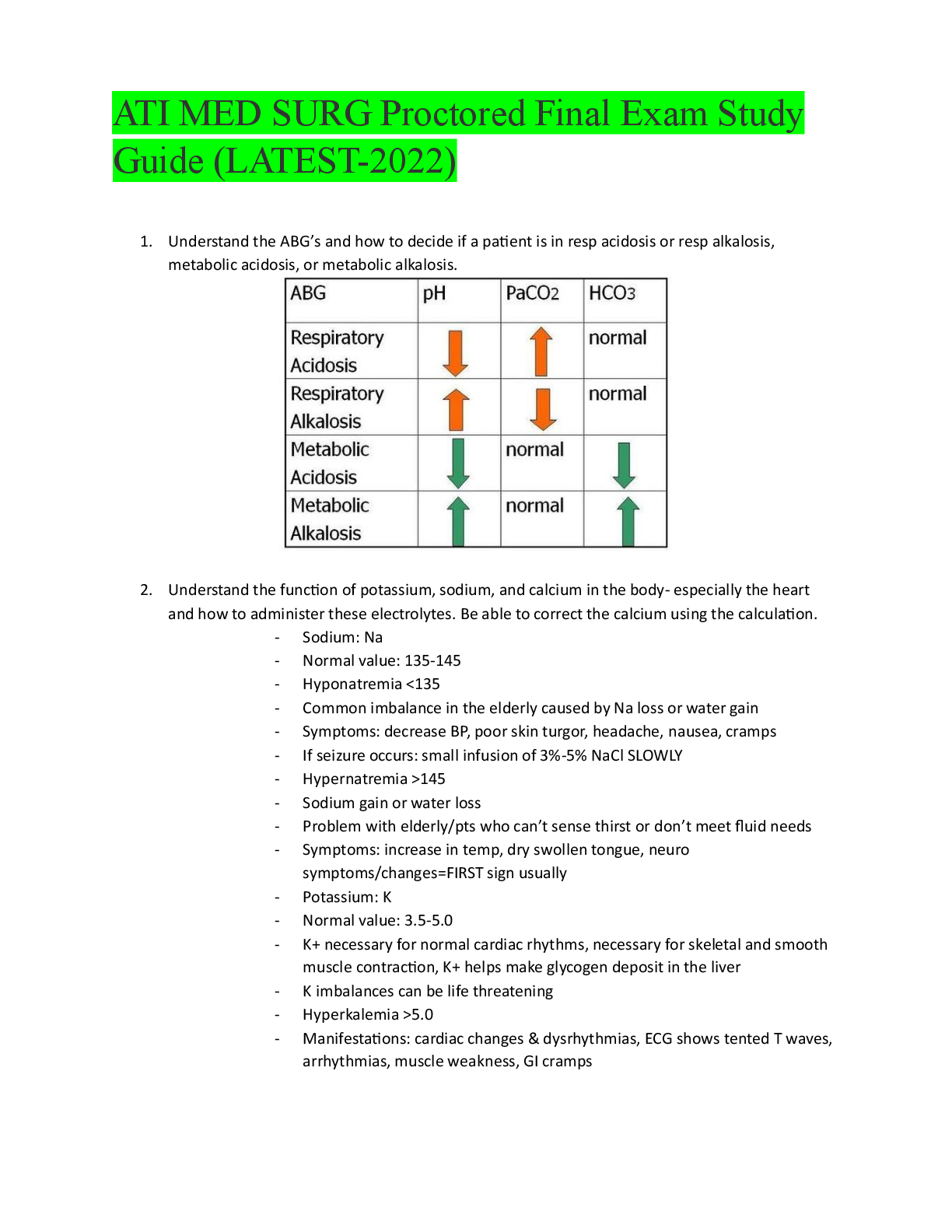




 Rasmussen College.png)