Psychology > EXAM > PSY3010 ASSESSMENT OF BEHAVIOUR Chapter 03 A Statistics Refresher. questions with correct answer 202 (All)
PSY3010 ASSESSMENT OF BEHAVIOUR Chapter 03 A Statistics Refresher. questions with correct answer 2021
Document Content and Description Below
Last updated: 3 years ago
Preview 1 out of 31 pages
Instant download

Buy this Document to get the Full Access Instantly
Provided by Students Who Aced it
We Verify Document Content to Gurantee Accuracy
Also available in bundle (1)
Click Below to Access Bundle(s)
PSY3010 ASSESSMENT OF BEHAVIOR. questions with correct answer 2021
psychology assessment week 3, 4, 5, 9 and 11. correct answers on the exams.
By Professor Lynne 5 years ago
$9
4
Reviews( 0 )
Document information
Connected school, study & course
About the document
Uploaded On
May 28, 2021
Number of pages
31
Written in
All

Additional information
This document has been written for:
Uploaded
May 28, 2021
Downloads
0
Views
88
Topic Tags
Recommended For You
Get more on EXAM »
LEHNES PHARMACOLOGY FOR NURSING CARE 10TH EDITION BURCHUM TEST...
Sophia Milestone Adult Nursing (NUR 105) Med Surg test Latest...

Milestone Chapter 03: Common Health Problems of Older Adults (...

CIS 3250 QUIZ CHAPTER 03 Cyberattacks and Cybersecurity | Flo...
TEST BANK FOR NURSING RESEARCH 9TH EDITION BY LOBIONDO-WOOD C...

Test bank Introduction to Medical Surgical Nursing 6th edition...
 (1).png)
Chapter 03 Analyzing financing activities QUESTIONS AND ANSWER...

NURSING TEST BANK. COMPLETE. Chapter 01- Introduction to Nursi...
NURSING TEST BANK. COMPLETE. Chapter 01- Introduction to Nursi...

NUR511:FINAL EXAM STUDY GUIDE (ALL WEEKS INCLUSIVE)QUESTION AN...
NUR511:FINAL EXAM STUDY GUIDE (ALL WEEKS INCLUSIVE)QUESTION AN...
.png)
Chapter 03: The Interview Jarvis:_ Physical Examination & Heal...

Chapter 03: Pharmacokinetics, Pharmacodynamics, and Pharmacoge...
Chapter 03: Introduction to Qualitative Research Grove: Unders...
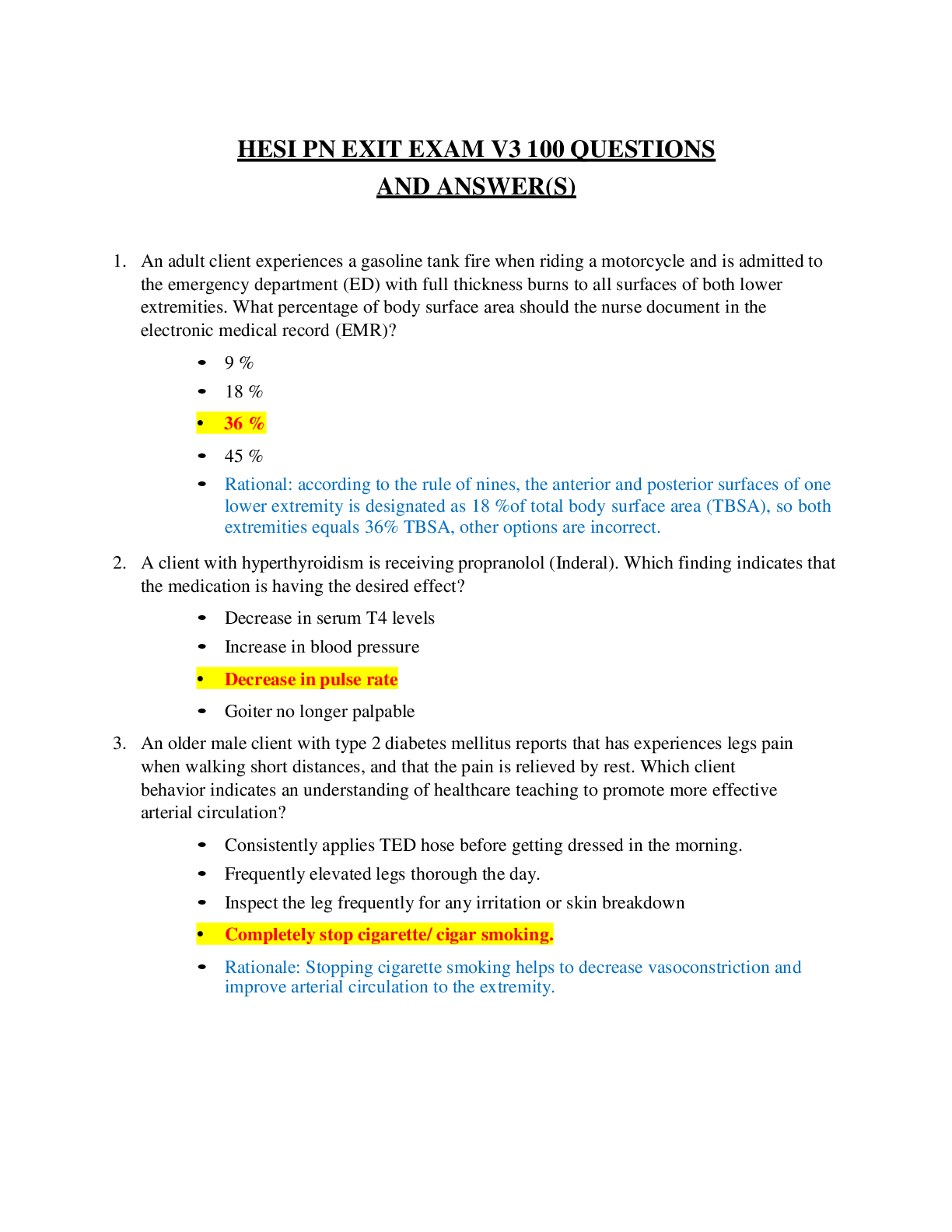
HESI V3 PN EXIT EXAM 110 QUESTIONS AND ANSWER 2021 graded A