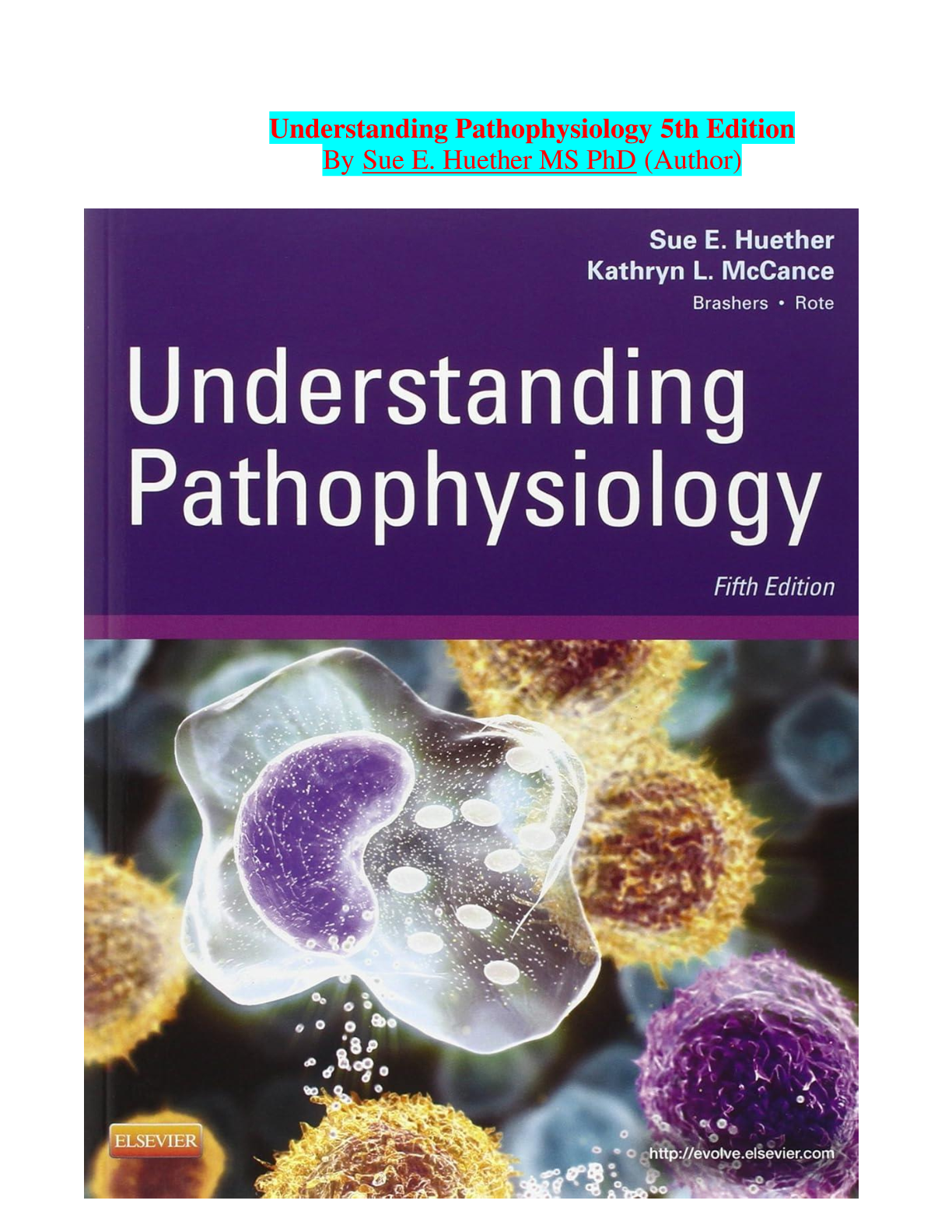
Study Guide for
Understanding
PathophysiologyThis page intentionally left blankStudy Guide for
Understanding
Pathophysiology
Sue E. Huether, MSN, PhD
Professor Emeritus
College of Nursing
University of Utah
Salt
...
Study Guide for
Understanding
PathophysiologyThis page intentionally left blankStudy Guide for
Understanding
Pathophysiology
Sue E. Huether, MSN, PhD
Professor Emeritus
College of Nursing
University of Utah
Salt Lake City, Utah
Kathryn L. McCance, MSN, PhD
Professor
College of Nursing
University of Utah
Salt Lake City, Utah
Section Editors
Valentina L. Brashers, MD
Professor Nursing and Attending Physician in Internal Medicine
University of Virginia Health System
Charlottesville, Virginia
Neal S. Rote, PhD
Academic Vice-Chair and Director of Research
Department of Obstetrics and Gynecology
University Hospitals of Cleveland;
Professor of Reproductive Biology and Pathology
Case School of Medicine
Case Western Reserve University
Cleveland, Ohio
Prepared by
Clayton F. Parkinson, PhD
Professor Emeritus
College of Health Sciences
Weber State University
Ogden, Utah3251 Riverport Lane
St. Louis, Missouri 63043
STUDY GUIDE FOR UNDERSTANDING PATHOPHYSIOLOGY, ISBN: 978-0-323-08489-5
5TH EDITION
Copyright © 2012, 2008, 2004, 2000, 1996 by Mosby, an imprint of Elsevier Inc.
All rights reserved. No part of this publication may be reproduced or transmitted in any form or by any means,
electronic or mechanical, including photocopying, recording, or any information storage and retrieval system,
without permission in writing from the publisher. Details on how to seek permission, further information about
the Publisher’s permissions policies and our arrangements with organizations such as the Copyright Clearance
Center and the Copyright Licensing Agency, can be found at our website: www.elsevier.com/permissions.
This book and the individual contributions contained in it are protected under copyright by the Publisher (other
than as may be noted herein).
Notices
Knowledge and best practice in this field are constantly changing. As new research and experience broaden
our understanding, changes in research methods, professional practices, or medical treatment may become
necessary.
Practitioners and researchers must always rely on their own experience and knowledge in evaluating
and using any information, methods, compounds, or experiments described herein. In using such
information or methods they should be mindful of their own safety and the safety of others, including
parties for whom they have a professional responsibility.
With respect to any drug or pharmaceutical products identified, readers are advised to check the most
current information provided (i) on procedures featured or (ii) by the manufacturer of each product to be
administered, to verify the recommended dose or formula, the method and duration of administration, and
contraindications. It is the responsibility of practitioners, relying on their own experience and knowledge
of their patients, to make diagnoses, to determine dosages and the best treatment for each individual
patient, and to take all appropriate safety precautions.
To the fullest extent of the law, neither the Publisher nor the authors, contributors, or editors, assume
any liability for any injury and/or damage to persons or property as a matter of products liability,
negligence or otherwise, or from any use or operation of any methods, products, instructions, or ideas
contained in the material herein.
Vice President and Publisher: Loren S. Wilson
Senior Editor: Sandra Clark
Senior Developmental Editor: Charlene Ketchum
Editorial Assistant: Brooke Kannady
Publishing Services Managers: Jeffrey Patterson and Hemamalini Rajendrababu
Senior Project Managers: Jeanne Genz and Srikumar Narayanan
Designer: Paula Catalano
Multimedia Producer: Lisa Godoski
Printed in the United States of America
Last digit is the print number: 9 8 7 6 5 4 3 2v
Reviewers
Mandi Counters, RN, MSN, CNRN
Assistant Professor
Nursing Department
Mercy College of Health Sciences
Des Moines, Iowa
Bradley R Harrell, DNP, ACNP-BC, CCRN
Assistant Professor of Nursing
School of Nursing
Union University-Germantown
Germantown, Tennessee
Jane Cross Norman, Ph.D., R.N., CNE
Professor of Nursing
MSN Program Director
Tennessee State University
Nashville, Tennessee
Marylou Virginia Robinson, PhD, FNP-C
Assistant Professor
College of Nursing
University of Colorado
Aurora, Colorado
ReviewersThis page intentionally left blankvii
Preface
The study of pathophysiology is complex, ever expanding, and challenging. It requires correlations between normal and
abnormal anatomy and physiology as well as the processes resulting in the manifestations of disease.
This Study Guide is designed for students as an adjunct to Understanding Pathophysiology, fifth edition, by Sue E.
Huether and Kathryn L. McCance. It is intended to facilitate an understanding of the consequences of pathologic processes on the structure and function of the human body.
The Study Guide contains 40 chapters, each following the organization of the textbook. The Guide’s chapters have
two different formats—one for normal anatomy and physiology and another for anatomic and physiologic alterations.
For the normal anatomy and physiology chapters, it is assumed that the student possesses foundational knowledge of
anatomy and physiology; therefore, no supplemental narrative is provided.
n These chapters have foundational objectives that direct review of the information, principles, and concepts that are
essential for understanding the specific diseases that follow in the next chapter. Chapters five and six depart from the
usual normal anatomy and physiology chapter’s format. This departure is because inflammation and immunity concepts are frequently referenced throughout the following text and study guide chapters.
n Each chapter has a practice examination to give students an opportunity to assess their understanding of normality.
The chapters on alterations direct the learner’s study of abnormal anatomy and physiology.
n These chapters include 1) foundational objectives for review and 2) learning objectives for study with narrative, charts,
and tables.
n Each chapter has a practice examination requiring factual and conceptual knowledge related to disease mechanisms.
n Each chapter includes one or two case studies linking fact and concept to reality that require analysis and application.
The objectives for all chapters are referenced to corresponding pages in the fifth edition of Understanding
Pathophysiology. Huether and McCance’s philosophy that students need to grasp basic laws and principles to understand
how alterations occur led them to develop an understandable and conceptually integrated textbook.
I enjoyed working with Mosby, particularly with Charlene Kechum and Jeanne Genz. All of Mosby’s staff ensured
that my efforts were developed into a creative, professional, and pleasing style for student learners. I wish to dedicate
my efforts during the preparation of this Study Guide to students who inspired me to search for a better way to convey
information to them.
Clayton F. Parkinson
PrefaceThis page intentionally left blankix
Contents
PaRt One Basic cOncePts Of PathOPhysiOlOgy
Unit 1 the cell
1. Cellular Biology, 1
2. Genes and Genetic Diseases, 5
3. Altered Cellular and Tissue Biology, 11
4. Fluids and Electrolytes, Acids and Bases, 17
Unit 2 Mechanisms of self-Defense
5. Innate Immunity: Inflammation and Wound Healing, 25
6. Third Line of Defense: Adaptive Immunity, 33
7. Infection and Defects in Mechanisms of Defense, 39
8. Stress and Disease, 47
Unit 3 cellular Proliferation: cancer
9. Biology, Clinical Manifestations, and Treatment of Cancer, 53
10. Cancer Epidemiology, 63
11. Cancer in Children, 69
PaRt tWO BODy systeMs anD Diseases
Unit 4 the neurologic system
12. Structure and Function of the Neurologic System, 73
13. Pain, Temperature, Sleep, and Sensory Function, 77
14. Alterations in Cognitive Systems, Cerebral Hemodynamics and Motor Function, 85
15. Disorders of the Central and Peripheral Nervous Systems and the Neuromuscular Junction, 95
16. Alterations of Neurologic Function in Children, 107
Unit 5 the endocrine system
17. Mechanisms of Hormonal Regulation, 113
18. Alterations of Hormonal Regulation, 117
Unit 6 the hematologic system
19. Structure and Function of the Hematologic System, 131
20. Alterations of Hematologic Function, 135
21. Alterations of Hematologic Function in Children, 147
Unit 7 the cardiovascular and lymphatic systems
22. Structure and Function of the Cardiovascular and Lymphatic Systems, 153
23. Alterations of Cardiovascular Function, 157
24. Alterations of Cardiovascular Function in Children, 177
Unit 8 the Pulmonary system
25. Structure and Function of the Pulmonary System, 183
26. Alterations of Pulmonary Function, 187
27. Alterations of Pulmonary Function in Children, 199
contentsx
Contents
Unit 9 the Renal and Urologic systems
28. Structure and Function of the Renal and Urologic Systems, 205
29. Alterations of Renal and Urinary Tract Function, 209
30. Alterations of Renal and Urinary Tract Function in Children, 219
Unit 10 the Reproductive systems
31. Structure and Function of the Reproductive Systems, 225
32. Alterations of the Reproductive Systems, Including Sexually Transmitted Infections, 229
Unit 11 the Digestive system
33. Structure and Function of the Digestive System, 243
34. Alterations of Digestive Function, 247
35. Alterations of Digestive Function in Children, 261
Unit 12 the Musculoskeletal and integumentary systems
36. Structure and Function of the Musculoskeletal System, 267
37. Alterations of Musculoskeletal Function, 271
38. Alterations of Musculoskeletal Function in Children, 285
39. Structure, Function, and Disorders of the Integument, 291
40. Alterations of the Integument in Children, 303
Answers to Practice Examinations, 3091
Copyright © 2012, 2008, 2004, 2000, 1996 by Mosby, an imprint of Elsevier Inc. All rights reserved. Chapter 1 Cellular Biology
SECTION ONE UNITE TITLE OR SECTION TITLE
Cellular Biology
UNIT ONE THE CELL
FOUNDATIONAL OBJECTIVES
After reviewing this chapter, the learner will be able to
do the following:
1. State the functions of a typical eukaryotic cell.
Review pages 2-3.
2. Describe the structure and function of the nucleus
and identify the cytoplasmic organelles.
Review page 3; refer to Figures 1-1 and 1-2 and
Table 1-1.
3. Describe the structure and function of the plasma
membrane.
Review pages 3 and 5-7; refer to Figures 1-3 through
1-5 and Tables 1-2 and 1-3.
4. Describe cellular receptors.
Review pages 7-8; refer to Figure 1-6.
5. Identify the three mechanisms that bind cells
together.
Review pages 8-9; refer to Figures 1-7 and 1-8.
6. Describe the primary modes of chemical signaling.
Review pages 9, 11, and 13 refer to Figures 1-9
through 1-12 and Table 1-3.
7. Describe cellular catabolism and the transfer of
energy to accomplish other cellular processes.
Refer to Figures 1-13 through 1-15.
8. Differentiate between passive and active
transport, between endocytosis and exocytosis,
and between phagocytosis and pinocytosis.
Refer to Figures 1-16 through 1-24 and Table 1-4.
9. Describe the changes in the plasma membrane
that result in an action potential.
Review pages 21-22; refer to Figure 1-25.
10. Identify the phases of mitosis and cytokinesis.
Review pages 22-23; refer to Figure 1-26.
11. Describe the stimulation of cell proliferation by
growth factors.
Review pages 23-24; refer to Figure 1-27 and Table 1-5.
12. Characterize pattern formation.
Review page 24.
13. Identify the location and a major function for
each type of tissue: epithelial, connective, muscle,
and nervous.
Refer to Boxes 1-3 through 1-5.
PRACTICE EXAMINATION
Multiple Choice
Circle the correct answer for each question:
1. Which are principal parts of a eukaryotic cell?
a. fat, carbohydrate, and protein
b. minerals and water
c. organelles
d. phospholipids and protein
e. protoplasm and nucleus
2. The cell membrane is described as a fluid mosaic.
Some proteins have a degree of mobility within the
lipid bilayer. (More than one answer may be correct.)
a. The first sentence is true.
b. The first sentence is false.
c. The second sentence is true.
d. The second sentence is false.
e. The second sentence is relevant to the first.
f. The second sentence is irrelevant to the first.
12
Chapter 1 Cellular Biology Copyright © 2012, 2008, 2004, 2000, 1996 by Mosby, an imprint of Elsevier Inc. All rights reserved.
3. Which particle can penetrate cell membranes most
easily?
a. lipid soluble, transport protein present
b. neutral charge, water soluble
c. smaller, water soluble
d. uncharged, larger
4. For a cell to engage in active transport processes, it
requires:
a. mitochondria.
b. appropriate fuel.
c. ATP.
d. enzymes.
e. All of the above are correct.
5. Which is inconsistent with the others?
a. diffusion
b. osmosis
c. filtration
d. phagocytosis
e. facilitated diffusion
6. Which can transport substances uphill against the
concentration gradient?
a. active transport
b. osmosis
c. dialysis
d. facilitated diffusion
e. None of the above is correct.
7. Caveolae:
a. serve as repositories for some receptors.
b. provide a route for transport into a cell.
c. relay signals into cells.
d. All of the above are correct.
8. Which statement is true for cytoplasm?
a. It is located outside the nucleus.
b. It provides support for organelles.
c. It is mostly water.
d. a, b, and c
e. a and b
9. The retinoblastoma (Rb) protein:
a. is a brake on the progress of the cell cycle.
b. binds to gene regulatory proteins.
c. slows cell proliferation.
d. a and c
e. a, b, and c
10. A major function of connective tissue is:
a. to form glands.
b. support and binding.
c. covering and lining.
d. movement.
e. to conduct nerve impulses.
11. Which are characteristic of epithelial tissue? (More
than one answer may be correct.)
a. elasticity
b. protection
c. fills spaces between organs
d. secretion
12. Signaling molecules cause all of the following
except:
a. acceleration/initiative of intracellular protein
kinases.
b. arrest of cellular growth.
c. apoptosis.
d. conversion of an intracellular signal into an
extracellular response.
13. Ligands that bind with membrane receptors include
which of the following? (More than one answer
may be correct.)
a. hormones
b. antigens
c. neurotransmitters
d. drugs
e. infectious agents
14. The products from the metabolism of glucose
include which of the following? (More than one
answer may be correct.)
a. kilocalories
b. CO
2
c. H
2O
d. ATP
15. Identify the correct sequence of events for initiation
and conduction of a nerve impulse.
1. Sodium moves inside.
2. Potassium leaves cell.
3. Sodium permeability changes.
4. Resting potential is reestablished.
5. Potassium permeability changes.
a. 1, 3, 2, 5, 4
b. 3, 1, 5, 2, 4
c. 5, 2, 3, 1, 4
d. 4, 5, 2, 3, 1
16. Increased cytoplasmic calcium:
a. causes one cell to adhere to another.
b. increases permeability at the junctional complex.
c. decreases permeability at the junctional complex.
d. None of the above is correct.
17. Cell junctions:
a. coordinate activities of cells within tissues.
b. are an impermeable part of the plasma
membrane.
c. hold cells together.
d. Both a and c are correct.
e. Both b and c are correct.3
Copyright © 2012, 2008, 2004, 2000, 1996 by Mosby, an imprint of Elsevier Inc. All rights reserved. Chapter 1 Cellular Biology
Matching
Match the term with its descriptor:
18. Anaphase a. 75% to 90% H2O, lipids, and protein
b. within the nucleus, stored RNA
c. compartmentalizes cellular activity
d. single strand of DNA, nondividing cell
e. “generation plant” for ATP
f. centriole migration
g. chromatid pair alignment
h. chromatid migration
i. daughter nuclei
j. protein synthesis site
19. Chromatin
20. Metaphase
21. Mitochondria
22. Prophase
23. Ribosome
Match the location with the tissue type found:
24. Lining of the kidney tubules a. simple squamous
b. simple cuboidal
c. simple columnar, ciliated
d. stratified squamous
e. transitional
25. Lining of the upper respiratory tract
Fill in the Blank
Complete the following table identifying membrane transport of cellular intake or output:
Membrane Transport
Transport Mechanism Description
Diffusion
Filtration
Osmosis
Mediated transport Two molecules move simultaneously in one direction
(symport) or in opposite direction (antiport) or a single
molecule moves in one direction (uniport)
Passive mediated transport/facilitated diffusion Does not require the expenditure of metabolic energy (ATP)
Active mediated transport Requires the expenditure of metabolic energy (ATP)
Endocytosis
Pinocytosis
PhagocytosisThis page intentionally left blank5
Copyright © 2012, 2008, 2004, 2000, 1996 by Mosby, an imprint of Elsevier Inc. All rights reserved. Chapter 2 Genes and Genetic Diseases
Genes and Genetic Diseases
FounDational objectives
a. Describe the interrelationships of DNA, RNA,
and proteins.
Review pages 35-39; refer to Figures 2-1 through 2-8.
2
MeMoRY cHecK!
• The gene consists of a particular sequence of nucleotides in the deoxyribonucleic acid (DNA) of the chromosome.
The sequence of nucleotides in a gene determines which proteins are found in a cell, and these proteins determine
both the form and the function of the cell.
• Genetic information flows from DNA to RNA to proteins. Three major processes are involved in the preservation
and transmission of genetic information. The first is replication, or the copying of DNA to form identical daughter
molecules. The second is transcription, in which the genetic message encoded within DNA is transcribed into RNA
and is carried to the ribosomes, the sites of protein synthesis. The third is translation, in which the genetic message
is decoded and converted into the 20-letter alphabet of protein structure. Because the sequence of nucleotides in
the DNA bears a linear correspondence to the sequence of amino acids in the formed proteins, genetic information
is preserved and transmitted to progeny.
MeMoRY cHecK!
Genetic Term Definition
Progeny Offspring
Chromosomes Structures in the nucleus that contain DNA, which transmits genetic information;
each chromosome is composed of many genes arranged in linear order
Gene DNA, the basic unit of heredity, located at a particular locus on the chromosome
Locus The position each gene occupies along a chromosome
Allele One of two or more alternative genes that contain specific inheritable characteristics
(such as eye color) and occupy corresponding positions on paired, homologous
chromosomes—one gene from each parent; a different version of the same paired gene
Homozygous A trait of an organism produced by identical or nearly identical alleles
Heterozygous Possessing different alleles at a given chromosomal location
Karyotype/karyogram A display of human chromosomes based on their lengths and the locations of their
centromeres
Genotype The basic combination of genes of an organism
Phenotype The expression of the gene or trait in an individual (e.g., physical appearance, such as
eye color)
Carrier An individual who has a gene for disease but is phenotypically normal
Dominant traits Traits for which one of a pair of alleles is necessary for expression (e.g., brown eyes)
Recessive traits Traits for which two alleles of a pair are necessary for expression (e.g., blue eyes, a
recessive gene on the male’s X chromosome, will be expressed because the gene is
not matched by a corresponding gene on the Y chromosome)
Pedigree chart A schematic method for classifying genetic data
Penetrance The percentage of individuals with a specific genotype who exhibit the expected phenotype
Expressivity The extent of variation in phenotype for a particular genotype
Genetic imprinting Different expression of a disease gene depending on which parent transmits the gene;
it is associated with methylation
b. Define general genetic terms.6
Chapter 2 Genes and Genetic Diseases Copyright © 2012, 2008, 2004, 2000, 1996 by Mosby, an imprint of Elsevier Inc. All rights reserved.
Single-gene disorders are known to be caused by
mutation in a single gene. The mutated gene may be
present on one or both chromosomes of a gene pair.
Multifactorial disorders result when small variations
in genes combine with environmental factors to
produce serious defects. Multifactorial disorders
tend to cluster in families.
leaRninG objectives
After studying this chapter, the learner will be able to
do the following:
1. Characterize the chromosome and its aberrations.
Study pages 40-46; refer to Figures 2-9 through 2-18.
In chromosome disorders, the defect is due to an
abnormality in chromosome number or structure. The
structure of the genes in chromosome disorders may be
normal, but the genes may be present in multiple copies
or may be situated on a different chromosome.
Normal somatic cells that have two sets of 23 chromosomes are diploid (double), or 2N. Gametes with a single
set of 23 chromosomes are haploid (single), or N. A cell
with an exact multiple of the haploid number is euploid.
Euploid numbers may be 2N, 3N (triploid), or 4N (tetraploid). Chromosome numbers that are exact multiples of
N, but greater than 2N, are called triploid or polyploid.
Aneuploidy refers to a chromosome complement that is
abnormal in number but is not an exact multiple of N. An
aneuploid cell may be trisomic (2N + 1 chromosome) or
monosomic (2N − 1 chromosome).
Disjunction is the normal separation and migration of
chromosomes during cell division. Failure of the process,
or nondisjunction, in a meiotic division results in one
daughter cell receiving both homologous chromosomes
and the other receiving neither. It is the primary cause of
aneuploidy. If this deviation in normal processes occurs
during the first meiotic division, half of the gametes will
contain 22 chromosomes and half will contain 24. If
joined with a normal gamete, a gamete produced in this
manner will produce either a monosomic (2N − 1) or
trisomic (2N + 1) zygote.
Deviations in the normal structure of chromosomes
result when the chromosome material breaks and reassembles in an abnormal arrangement. Structural abnormalities include deletion, duplication, inversion, and
translocation.
In deletion, or loss of a portion of a chromosome,
usually the zygote has one normal chromosome united
with a chromosome with some missing genes. Cri-duchat (“cry of the cat”) syndrome is such a deletion
and is manifested by the high-pitched cat-like cry of an
affected child.
Duplication is the presence of a repeated gene or gene
sequence. A deleted segment of one chromosome may
become incorporated into its homologous chromosome.
Inversion is the reversal of gene order. The linear
arrangement of genes on a chromosome is broken, and
the order of a portion of the gene complement is reversed
in the process of reattachment.
Translocation is the transfer of part of one chromosome to a nonhomologous chromosome. This occurs
when two chromosomes break and the segments are
rejoined in an abnormal arrangement.
2. Cite examples of chromosome disorders.
Refer to Figures 2-13 through 2-16 and Table 2-1.
A common example of an autosomal aneuploidy disorder that results from an abnormality of chromosome
number is trisomy 21, or Down syndrome. This disorder can result when nondisjunction of chromosome 21
occurs at meiosis, producing one gamete with an extra
chromosome 21 and one gamete with no chromosome
21. Union of the extra chromosome female gamete with
a normal sperm produces a 47-chromosome zygote, or
trisomy 21.
The overall incidence of Down syndrome is 1 per 800
live births. The incidence rises with increasing maternal age. Clinical diagnosis of trisomy 21 is often based
on facial appearance. A low nasal bridge, epicanthal
folds, protruding tongue, and low-set ears are common.
Mental retardation is consistent in children with Down
syndrome, but its degree may vary. The average IQ is
approximately 50.
Two sex chromosome aneuploidy disorders are Turner
syndrome (female) and Klinefelter syndrome (male).
The most common karyotype showing female phenotype
is 45,X or the absence of one X chromosome; the male
karyotype is 47,XXY or an extra X chromosome.
The diagnosis of Turner syndrome is suggested in
the newborn by the presence of redundant neck skin and
peripheral lymphedema. Later, the presence of short stature is suggestive.
Klinefelter syndrome is a common cause of infertility
in men. Other manifestations are long lower extremities,
sparse body hair with female distribution, and female
breast development in about 50% of cases. A moderate
degree of mental impairment may be present.
3. Characterize single-gene disorders.
Study pages 47-54; refer to Figures 2-19 through 2-31.
An inherited gene may be present on one or both
chromosomes of a pair. The pedigree patterns of inherited traits depend on whether the gene is located on an
autosomal chromosome, any chromosome other than a
sex chromosome, or the X chromosome and whether
the gene is dominant or recessive. These factors allow
four basic patterns of inheritance for single-gene traits,
whether normal or abnormal: autosomal dominant,
autosomal recessive, X-linked dominant, and X-linked
recessive.
In autosomal dominant inheritance of genetic
defects, the abnormal allele is dominant and the normal
allele is recessive. The phenotype is the same whether
the allele is present in either a homozygous or a heterozygous state.7
Copyright © 2012, 2008, 2004, 2000, 1996 by Mosby, an imprint of Elsevier Inc. All rights reserved. Chapter 2 Genes and Genetic Diseases
Characteristics of autosomal dominant inheritance are
(1) affected persons have an affected parent; (2) affected
persons mating with normal persons have affected and
unaffected offspring in equal proportion; and (3) males
and females are equally affected.
In autosomal recessive disorders, the abnormal
allele is recessive. For the trait to be expressed, a
person must be homozygous for the abnormal allele.
Because the dominant or normal allele masks the trait,
most persons who are heterozygous for an autosomal
recessive allele are phenotypically normal. When
two heterozygous individuals mate and an offspring
receives the recessive allele from each parent, the trait
is expressed.
Characteristics of autosomal recessive inheritance
are: (1) the trait usually appears in siblings only, not
in the parents; (2) males and females are equally likely
to be affected; (3) for parents of one affected child, the
recurrence risk is one in four for every subsequent birth;
(4) both parents of an affected child carry the recessive
allele; and (5) the parents of the affected child may be
blood relatives, for example, first cousins.
Unlike the 44 autosomes that can be arranged in
22 homologous pairs, the two sex chromosomes in the
female are XX and in the male are XY. The ovum must
contain an X chromosome, so if it is fertilized by a sperm
containing an X chromosome, the progeny will be a
female (XX). If the sperm contributes a Y chromosome,
the progeny will be male (XY).
Traits determined by either dominant or recessive
X-linked genes are expressed in the male. The genes on
the X chromosome cannot be transmitted from father to
son (fathers contribute a Y chromosome to sons) but are
transmitted from father to all daughters through one X
chromosome. Recessive abnormal genes on the X chromosome of a female may not be expressed because they
are matched by normal genes inherited with the other X
chromosome.
X-linked dominant disorders are rare. The main characteristic of this inheritance pattern is that an affected
male transmits the gene to all of his daughters and to
none of his sons. The affected female may transmit the
gene to offspring of either sex.
In X-linked recessive disorders, the recessive gene
located on the one X chromosome of the male is not
balanced by the dominant allele on the Y chromosome
and is thus expressed. Only matings between an affected
male and a carrier or affected female should result in an
affected female.
Males affected with an X-linked recessive disorder
cannot transmit the gene to sons, but transmit it to all
daughters. An unaffected female who is heterozygous (a
carrier) for the recessive gene transmits it to 50% of her
sons and daughters.
Principles of the X-linked recessive inheritance are:
(1) males are predominantly affected; (2) affected males
cannot transmit the gene to sons, but do transmit the gene
to all daughters; (3) sons of female carriers have a 50%
risk of being affected; and (4) daughters of female carriers have a 50% risk of being carriers.
4. Cite examples of single-gene disorders.
Refer to Figures 2-23 and 2-31.
One of the best-known autosomal dominant diseases is
Huntington disease, a neurologic disorder that exhibits
progressive dementia and increasingly uncontrollable
movements of the limbs. A key feature of this disease is
that symptoms are not usually evident until after age 40
years. Thus, those in whom the disease develops often
have had children before they are aware that they have
the gene.
The severity of an autosomal dominant disease can
vary greatly. An example of variable expressivity in an
autosomal dominant disease is type 1 neurofibromatosis, or von Recklinghausen disease, which has been
mapped to the long arm of chromosome 17. The expression of this gene can vary from a few harmless café au
lait–colored spots on the skin to numerous malignant
neurofibromas, scoliosis, seizures, gliomas, neuromas,
hypertension, and mental retardation.
The cystic fibrosis gene, the cause of an autosomal
recessive disease, has been mapped to the long arm
of chromosome 7. In this disease, defective transport
of chloride ion leads to a salt imbalance that results
in secretions of abnormally thick, dehydrated mucus.
Some of the digestive organs, particularly the pancreas,
become obstructed with mucus, resulting in malnutrition. The lung airways tend to become clogged with
mucus, making them highly susceptible to bacterial
infections.
The most common and severe of all X-linked recessive disorders is Duchenne muscular dystrophy, which
affects males. This disorder is characterized by progressive muscle degeneration; individuals are usually unable
to walk by age 10 or 12. The disease also affects the heart
and respiratory muscles, and death due to respiratory or
cardiac failure may occur before age 20 years. These
cases result from an absence of dystrophin, without
which the muscle cell cannot survive, and muscle deterioration follows.
5. Characterize multifactorial inheritance, and cite
examples.
Study pages 55 and 56; refer to Figures 2-30 and 2-31.
Not all traits are produced by single genes; some traits
are the result of several genes acting together. When several genes act together, the trait is referred to as polygenic
traits. When environmental factors also influence the
expression of the trait, the term multifactorial inheritance is used. Both genes and environment contribute to
variation in traits. Multifactorial disorders tend to cluster
in families.
Although genes determine both height and IQ, the
environment also influences these traits. Also, IQ scores
can be improved by exposing children to enriched learning environments.
A number of diseases do not follow the bell-shaped
distribution of polygenic and multifactorial traits. Instead,
a certain threshold of liability must be crossed before the8
Chapter 2 Genes and Genetic Diseases Copyright © 2012, 2008, 2004, 2000, 1996 by Mosby, an imprint of Elsevier Inc. All rights reserved.
disease is expressed. A well-known example of a threshold trait is pyloric stenosis, a disorder characterized by
narrowing or obstruction of the pylorus. Chronic vomiting, constipation, weight loss, and electrolyte imbalance
can result from this condition. Pyloric stenosis is much
more common in males than in females. The reason for
this difference is that the threshold of liability is much
lower in males than in females. Thus, fewer defective
alleles are required to generate the disorder in males.
This situation also means that the offspring of affected
females are more likely to have pyloric stenosis because
affected females carry more disease-causing alleles than
do most affected males.
Other multifactorial diseases include cleft lip and cleft
palate, neural tube defects, clubfoot, and some forms of
congenital heart disease. Hypertensive heart disease and
diabetes mellitus likely can be grouped in the category of
multifactorial disorders.
PRactice exaMination
Multiple Choice
Circle the correct answer for each question:
1. Which genetic disease is caused by an abnormal
karyotype?
a. Down syndrome
b. Huntington disease
c. phenylketonuria (PKU)
d. neurofibromatosis
e. cystic fibrosis
2. Which is not characteristic of Down syndrome?
a. It is an autosomal aneuploidy.
b. It is a genetic error of metabolism.
c. Mental retardation is consistently expressed.
d. Clinical diagnosis can be suggested by facial
appearance.
e. The karyotype is 47,XY + 21.
3. Cri-du-chat syndrome is an abnormality of
chromosomal structure involving:
a. translocation.
b. inversion.
c. duplication.
d. deletion.
4. An individual’s karyotype lacks a homologous X
chromosome and has only a single X chromosome
present. Which statement is not true?
a. The karyotype is 45,X.
b. Features include ribbed neck and short stature.
c. The karyotype is 46,XY.
d. The disorder is a sex chromosome aneuploidy.
5. If homologous chromosomes fail to separate during
meiosis, the disorder is:
a. polyploidy.
b. aneuploidy.
c. disjunction.
d. nondisjunction.
e. translocation.
6. Cystic fibrosis has been mapped to chromosome:
a. 17.
b. 7.
c. X.
d. 16.
7. In autosomal dominant inherited disorders:
a. affected individuals do not have an affected
parent.
b. affected persons mating with normal persons
have a 50% risk of having an affected offspring.
c. male offspring are most often affected.
d. unaffected children born to affected parents will
have affected children.
8. Indentify the characteristic(s) of X-linked recessive
inherited disorders:
a. affected males have normal sons.
b. affected males have affected daughters.
c. sons of female carriers have a 50% risk of being
affected.
d. the affected female may transmit the gene to both
sons and daughters.
9. Which is/are not autosomal dominant disease(s)?
a. Huntington disease
b. neurofibromatosis
c. Duchenne muscular dystrophy
d. von Recklinghausen disease
e. pyloric stenosis
10. When environmental influences cause varied
phenotypic expressions of genotypes, the result is:
a. a multifactorial trait.
b. a threshold liability.
c. an autosomal dominant trait.
d. an X-linked recessive trait.
11. Which likely is not a multifactorial inherited
disorder?
a. cleft palate
b. hypertension
c. diabetes mellitus
d. cystic fibrosis
e. heart disease9
Copyright © 2012, 2008, 2004, 2000, 1996 by Mosby, an imprint of Elsevier Inc. All rights reserved. Chapter 2 Genes and Genetic Diseases
Case study
Mrs. S.J., a 42-year-old woman who is pregnant for the first time, was admitted to the
labor and delivery unit. She appeared to be in excellent health, and this anticipated
delivery would be the culmination of an uneventful pregnancy. Eight hours later, she
delivered a 7-pound, 3-ounce baby boy. The infant had low-set ears, a flat facial profile
with a small nose, wide epicanthal folds, and simian creases. The parents were told
that the baby’s features were the result of a genetic aberration and that he had Down
syndrome. The father asked, “Why did this happen, and what does the future hold?”
How would you answer the father’s questions?
Matching
Match the term with the circumstance:
12. Recessive disorder a. results from numerical or structural aberrations
b. many genes are common
c. two or more cell lines with different karyotypes
d. individual is homozygous for a gene
e. failure of homologous chromosomes to separate during
meiosis or mitosis
f. outward appearance of an individual
g. a probability of .25
h. summarizes family relationships
13. Multifactorial inheritance
14. Aneuploidy
15. Chromosomal aberration
16. Phenotype
17. Pedigree
18. Autosomal recessive inheritance
Match the term with the circumstance:
19. Expressivity a. a probability of 0.5
b. females are unlikely to be affected
c. species chromosomal morphology
d. expressed by one allele
e. Turner syndrome
f. different version of the same paired gene
g. Klinefelter syndrome
h. no loss or gain of genetic material, reversed order
i. extent of phenotypic variation of a particular genotype
20. X-linked
21. Inversion
22. Dominant trait
23. Allele
24. 47,XXY
25. Karyotype
Complete the following table comparing the transmission patterns of single-gene and multifactorial diseases:
Transmission Patterns for Genetic Diseases
Single-Gene Diseases Multifactorial Diseases
Inheritance patternThis page intentionally left blank11
Copyright © 2012, 2008, 2004, 2000, 1996 by Mosby, an imprint of Elsevier Inc. All rights reserved. Chapter 3 Altered Cellular and Tissue Biology
Altered Cellular and Tissue Biology
FoundATionAl oBjeCTives
a. Describe processes of cellular intake and output.
Review pages 13-18 and 20.
3
MeMoRY CHeCK!
• The intact, normally functioning plasma membrane is selectively or differentially permeable to substances; that is,
it allows some substances to pass while excluding others. Water and small, uncharged substances move through
pores of the lipid bilayer by passive transport, which requires no expenditure of energy. This process is driven by
the forces of osmosis, hydrostatic pressure, and diffusion. Larger molecules and molecular complexes are moved
into the cell by active transport, which requires the expenditure of energy or ATP by the cell. In active transport,
materials move from low concentrations to high concentrations. The largest molecules and fluids are ingested by
endocytosis (from the extracellular medium) and expelled by exocytosis (into the extracellular medium) after cellular synthesis of smaller building blocks. When the plasma membrane is injured, it becomes permeable to virtually
everything, and substances move into and out of the cells in an unrestricted manner. Notably, such substances may
affect: (1) the nucleus and its genetic information or (2) the cytoplasmic organelles and their varied functions. Then,
there is altered cellular physiology and pathology.
leARning oBjeCTives
After studying this chapter, the learner will be able to
do the following:
1. Describe the cellular adaptations occurring in
atrophy, hypertrophy, hyperplasia, dysplasia, and
metaplasia. Identify the conditions under which
each can occur.
Study pages 59-62; refer to Figures 3-1 through 3-5.
When confronted with environmental stresses that
disrupt normal structure and function, the cell undergoes adaptive changes that permit survival and maintain
function. The adaptation is a reversible, structural, or
functional response to normal or adverse conditions; it
enables the cell to maintain a steady state called homeostasis. These changes may lead to atrophy, hypertrophy,
hyperplasia, dysplasia, or metaplasia.
Cellular atrophy decreases the cell substance and
results in cell shrinkage. Causes of atrophy may be physiologic (associated with normal development), pathologic
(accompanying disease), or disuse (because of lack of
stimulation). All three causes may result in decreased
protein synthesis, increased protein catabolism, or both.
A ubiquitin-proteosome pathway degrades proteins to
ubiquitin, a smaller protein, and then proteosomes in the
cytoplasm complete the proteolysis.
Hypertrophy increases cell size. Hypertrophy is commonly seen in cardiac and skeletal muscle tissue. The
increase in cell components is related to an increased rate
of protein synthesis. Mechanical signals, such as stretch,
and trophic signals, such as growth factors, hormones,
and vasoactive agents, are triggers for hypertrophy.
Physiologic hypertrophy is observed in uterine tissue and
mammary glands during pregnancy.
Hyperplasia is an increase in the number of cells
of a tissue or organ. It occurs in tissues where cells
are capable of mitotic division. Breast and uterine enlargement during pregnancy are examples of
physiologic hyperplasia and hypertrophy that are hormonally regulated. A pathologic hyperplasia occurs
when the endometrium enlarges because of excessive
estrogen production. Then, the abnormally thickened
uterine layer may bleed excessively and frequently.
Compensatory hyperplasia enables certain organs,
such as the liver, to regenerate after loss of substance.
Hyperplasia and hypertrophy often occur together if
cells can synthesize DNA; however, in nondividing
cells, only hypertrophy occurs.
Dysplasia is deranged cell growth that results in cells
that vary in size, shape, and appearance in comparison
with mature cells and is related to hyperplasia. Dysplasia
occurs in association with chronic irritation or inflammation in the uterine cervix, oral cavity, gallbladder, and
respiratory passages. Dysplasia is potentially reversible
once the irritating cause has been removed. Dysplastic
changes do not indicate cancer and may not progress to
neoplastic disease.
Metaplasia is a reversible conversion from one adult
cell type to another adult cell type. It allows for replacement with cells that are better able to tolerate environmental stresses. In metaplasia, one type of cell may be
converted to another type of cell within its tissue class.12
Chapter 3 Altered Cellular and Tissue Biology Copyright © 2012, 2008, 2004, 2000, 1996 by Mosby, an imprint of Elsevier Inc. All rights reserved.
An example of metaplasia is the substitution of stratified
squamous epithelial cells for ciliated columnar epithelial
cells in the airways of an individual who is a habitual
cigarette smoker.
2. Identify the mechanism of cellular injury from
hypoxia, free radicals, chemicals, unintentional and
intentional injuries, infectious agents, immunologic
and inflammatory responses, and genetic factors.
Study pages 62-66, 68-75, and 78-80; refer to Figures
3-6 through 3-16 and Tables 3-1 through 3-10.
Hypoxia deprives the cell of oxygen and interrupts
oxidative metabolism and the generation of ATP.
As oxygen tension within the cell falls, oxidative
metabolism ceases and the cell reverts to anaerobic
metabolism. One of the earliest effects of reduced
ATP is acute cellular swelling caused by failure of the
sodium-potassium membrane pump. With impaired
function of this pump, intracellular potassium levels
decrease and sodium and water accumulate within
the cell. As fluid and ions move into the cell, there
is dilation of the endoplasmic reticulum, increased
membrane permeability, and decreased mitochondrial
function as extracellular calcium accumulates in the
mitochondria. If the oxygen supply is not restored,
loss of essential enzymes, proteins, and ribonucleic
acid continues through the permeable membrane of
the cell. Hypoxia can result from inadequate oxygen
in the air, respiratory disease, decreased blood flow
due to circulatory disease, anemia, or inability of
the cells to utilize oxygen. Restoration of oxygen,
however, can cause reperfusion injury. Reperfusion
injury results from the generation of highly reactive
oxygen intermediates, including hydroxyl radical,
superoxide, and hydrogen peroxide (free radicals; see
next paragraph).
An important mechanism of membrane damage is
caused by reactive oxygen species (ROS), especially
by activated oxygen species. A free radical is an atom
or group of atoms with an unpaired electron. The
unpaired electron makes the atom or group unstable.
To gain stability, the radical gives up an electron to
another molecule or steals an electron. These highly
reactive radicals have low chemical specificity and
can bond with key molecules in membranes and
nucleic acids. These reactive species cause injury by:
(1) lipid peroxidation, which destroys unsaturated
fatty acids; (2) fragmentation of polypeptide chains
within proteins; and (3) alteration of DNA by breakage of single strands. Free radicals may be initiated
within cells by the absorption of ultraviolet light or
x-rays, oxidative reactions that occur during normal
metabolism, and enzymatic metabolism of exogenous
chemicals or drugs.
Toxic chemical agents can injure the cell membrane and cell structures, block enzymatic pathways,
coagulate cell proteins, and disrupt the osmotic and
ionic balance of cells. Chemicals may injure cells
during the process of metabolism or elimination.
Carbon tetrachloride, for example, causes little damage until it is metabolized by liver enzymes to highly
reactive free radicals, and then it is extremely toxic to
liver cells. Carbon monoxide has a special affinity for
the hemoglobin molecule and reduces hemoglobin’s
ability to carry oxygen.
Liver disease, nutritional disorders, and CNS impairment are serious consequences of alcohol abuse. The
hepatic changes, initiated by ethanol conversion to
acetaldehyde, include deposition of fat, enlargement of
the liver, interruption of transport of proteins and their
secretion, increase in intracellular water, depression of
fatty acid oxidation, greater membrane rigidity, and acute
liver cell necrosis. In the CNS, alcohol is a depressant,
initially affecting subcortical structures. Consequently,
motor and intellectual activity becomes disoriented. At
high blood alcohol levels, respiratory medullary centers
become depressed.
Unintentional and intentional injuries affect more
men than women and more blacks than whites or
other racial groups. Injuries by blunt force result from
mechanical energy applied to the body. Contusion
(bleeding in skin or underlying tissue) and abrasion
(removal of skin) are consequences of blunt blows.
Contusions and abrasions exhibit a patterned appearance that mirrors the shape and features of an injuring
object. Asphyxial injuries are caused by a failure of
cells to receive or use oxygen; these injuries can be
categorized as suffocation, strangulation, chemical, and
drowning.
Infectious agents that survive and proliferate in the
body may produce toxic substances and hypersensitivity
reactions that injure cells and tissues.
Immunologic and inflammatory injuries are
important causes of cellular injury. Cellular membranes are injured by direct contact with cellular
and chemical components of the innate and adaptive
immune responses. Such mediators are lymphocytes
and macrophages and chemicals such as histamine,
antibodies, lymphokines, complement, and proteases.
Complement, a serum protein, is responsible for
many of the membrane alterations that occur during
immunologic injury. Membrane alterations are associated with rapid leakage of potassium out of the cell
and rapid influx of water. Antibodies can interfere
with membrane function by binding to and occupying
receptor molecules on the plasma membrane. (Later
chapters deal with these injurious consequences,
as well as with hypersensitivity and autoimmune
disease.)
Genetic disorders may alter the cell’s nucleus and
the plasma membrane’s structure, shape, receptors, or
transport mechanisms. (Mechanisms causing genetic
abnormalities are discussed in Chapter 2.)
Errors in health care are unintended events that
harm individuals. Such errors involve medications, surgery, diagnosis, equipment, and laboratory reports. They
can occur in hospitals, clinics, outpatient surgery centers,
health provider offices, pharmacies, and individuals’
homes.13
Copyright © 2012, 2008, 2004, 2000, 1996 by Mosby, an imprint of Elsevier Inc. All rights reserved. Chapter 3 Altered Cellular and Tissue Biology
3. Identify various cellular accumulations occurring
in response to injury and the subsequent
manifestations of cellular damage.
Study pages 80-84; refer to Figures 3-17 through 3-22
and Table 3-11.
Cellular accumulations or infiltrations occur whenever normal substances are produced in excess, normal
and abnormal substances are ineffectively catabolized, or
harmful exogenous materials accumulate intracellularly.
4. Identify the major types of cellular necrosis and
cite examples of the tissues involved in each type.
Compare necrosis with apoptosis and describe
autophagy.
Study pages 84-88 and 90; refer to Figures 3-23
through 3-31 and Table 3-12.
Cellular death leads to cellular dissolution, or
necrosis. It is likely that under certain conditions,
such as activation of proteases, necrosis is regulated
or programmed in a well-orchestrated way. Hence,
it is termed programmed necrosis or necroptosis.
Necrosis is local cell death and involves the process
of cellular self-digestion known as autodigestion or
autolysis. As necrosis progresses, most organelles
are disrupted and karyolysis, nuclear dissolution from
the action of hydrolytic enzymes, becomes evident.
In some cells, the nucleus shrinks and is termed pyknosis. The process of the fragmentation of nucleus
into nuclear dust is known as karyorrhexis. There are
four major types of necrosis: coagulative, liquefactive, caseous, and fatty. Gangrenous necrosis is not a
distinctive type of cell death, but instead refers to large
areas of tissue death.
Coagulative necrosis occurs primarily in the kidneys, heart, and adrenal glands and usually results from
hypoxia caused by severe ischemia. Protein denaturation
causes coagulation.
Liquefactive necrosis is common following ischemic
injury to neurons and glial cells in the brain. Because brain
cells are rich in digestive hydrolytic enzymes and lipids,
the brain cells are digested by their own hydrolases. The
brain tissue becomes soft, liquefies, and is walled off from
healthy tissue to form cysts. Bacterial infections are causes
of liquefactive necrosis.
Caseous necrosis, which is commonly seen in tuberculous pulmonary infection, is a combination of liquefactive necrosis and coagulative necrosis. The necrotic
debris is not digested completely by hydrolases, so
tissues appear soft and granular and resemble clumped
cheese. A granulomatous inflammatory wall may enclose
the central areas of caseous necrosis.
The fatty necrosis found in the breast, pancreas, and
other abdominal structures is a specific cellular dissolution caused by lipases. Lipases break down triglycerides
and release free fatty acids, which then combine with
calcium, magnesium, and sodium ions to create soaps,
in a process known as saponification. The necrotic tissue
appears opaque and chalk white.
Gangrenous necrosis refers to death of tissue,
usually in considerable mass and with putrefaction.
It results from severe hypoxic injury subsequent to arteriosclerosis or blockage of major arteries followed by bacterial
invasion. Dry gangrene is usually caused by a coagulative
necrosis, whereas wet gangrene develops when neutrophils
Cellular Accumulations
Accumulation Causes Consequence of Cellular Damage
H
2O Shift of extracellular H2O into cell, reduced
ATP and ATPase, sodium accumulates
in cell
Cellular swelling, vacuolation, oncosis cell,
reduced ATP and ATPase, accumulation of
sodium in cell
Lipids,
carbohydrates
Imbalance in production, utilization, or
mobilization of lipids or carbohydrates
Vacuolation, displacement of nucleus and
organelles leading to fibrosis and scarring
Glycogen Genetic disorders, diabetes mellitus Cytoplasmic vacuolation
Proteins Enzyme digestion of cellular organelles,
renal disorders, plasma cell tumors
Disrupted function and intracellular
communication, displaced cellular organelles
Pigments Exogenous particle ingestion, UV light
stimulates melanin production
malignancy, loss of hormonal feedback,
genetic defects, hemosiderin increase
due to bruising and hemorrhage, liver
dysfunction
Membrane injury, disruption of cellular
metabolism
Calcium Altered membrane permeability, influx of
extracellular calcium excretion of H+
leading to more OH−, which precipitates
Ca++, endocrine disturbances
Hardening of cellular structure, interference
with function
Urate Absence of enzymes Crystal deposition, inflammation14
Chapter 3 Altered Cellular and Tissue Biology Copyright © 2012, 2008, 2004, 2000, 1996 by Mosby, an imprint of Elsevier Inc. All rights reserved.
invade the site and cause liquefactive necrosis. Gas gangrene, a special type of gangrene, results from bacterial
infection of injured tissue by species of Clostridium. These
anaerobic bacteria produce hydrolytic enzymes and toxins
that destroy connective tissue and cellular membrane; bubbles of gas likely form in muscle cells.
Apoptosis is an important, distinct type of cell
death that differs from necrosis. It is a regulated or
programmed cell program characterized by “dropping
off” cellular fragments known as apoptotic bodies.
It is an active process of cellular self-destruction in
both normal and pathologic tissue changes. Apoptosis
likely plays a role in deletion of cells during embryonic development and in endocrine-dependent tissues
that are undergoing atrophic change. It may occur
spontaneously in malignant tumors and in normal,
rapidly proliferating cells treated with cancer chemotherapeutic agents and ionizing radiation. Defective
apoptosis may not eliminate lymphocytes that react
to self-antigens, leading to autoimmune disorders.
Increased apoptosis occurs in neurodegenerative diseases, myocardial infarction and stroke, and death in
virus-infected host cells. Apoptosis affects scattered,
single cells and results in shrinkage of a cell, whereas
in necrosis, cells swell and lyse.
Autophagy, which literally means “eating of self,”
is a self-destructive and a survival mechanism. When
cells are nutrient deprived, autophagy cannibalizes and
recycles the digested contents. Autophagy may be an
immune defense against infectious microbes that penetrate intracellularly.
5. Describe the biology of aging; characterize frailty.
Study pages 90-93; refer to Figures 3-32 and 3-33, and
Tables 3-13 and 3-14.
Three mechanisms of aging have emerged, as follows:
(1) cellular changes produced by genetic, environmental,
and behavioral factors; (2) changes in regulatory mechanisms, especially in the cells of the endocrine, immune,
and central nervous systems, that are responsible for
aging; and (3) degenerative extracellular and vascular
alterations.
Alterations of cellular control mechanisms include
increased hormonal degradations, decreased hormonal
synthesis and secretion, and a reduction in receptors for
hormones and neuromodulators.
Immune function declines with age, and the number
of autoantibodies that attack body tissues increases with
age. These observations implicate the immune system in
the aging process.
A degenerative extracellular change that affects the
aging process is collagen cross-linking, which makes
collagen more rigid and results in decreased cell permeability to nutrients. It is believed that free radicals
of oxygen damage tissues as they age. These reactive
species not only permanently damage cells, but also
may lead to cell death. Damage accumulates over time
[Show More]