Law-Ham Pharm Exam 2 Review
**Know every drug that is on the PowerPoint – have a one-line mechanism of action on a table for each drug and
understand it, as well as how and where it works
Carbamazepine (Tegretol) – is
...
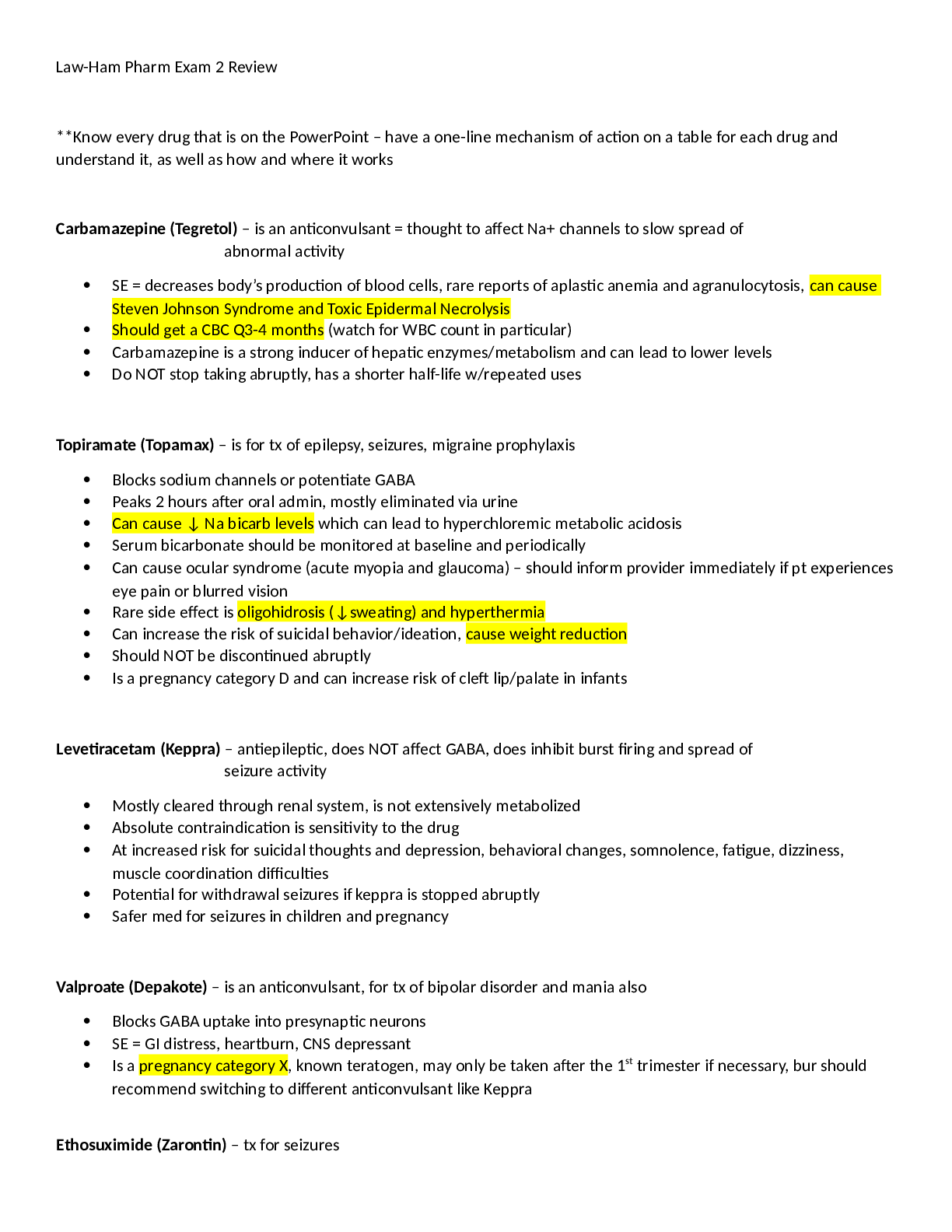
Law-Ham Pharm Exam 2 Review
**Know every drug that is on the PowerPoint – have a one-line mechanism of action on a table for each drug and
understand it, as well as how and where it works
Carbamazepine (Tegretol) – is an anticonvulsant = thought to affect Na+ channels to slow spread of
abnormal activity
SE = decreases body’s production of blood cells, rare reports of aplastic anemia and agranulocytosis, can cause
Steven Johnson Syndrome and Toxic Epidermal Necrolysis
Should get a CBC Q3-4 months (watch for WBC count in particular)
Carbamazepine is a strong inducer of hepatic enzymes/metabolism and can lead to lower levels
Do NOT stop taking abruptly, has a shorter half-life w/repeated uses
Topiramate (Topamax) – is for tx of epilepsy, seizures, migraine prophylaxis
Blocks sodium channels or potentiate GABA
Peaks 2 hours after oral admin, mostly eliminated via urine
Can cause ↓ Na bicarb levels which can lead to hyperchloremic metabolic acidosis
Serum bicarbonate should be monitored at baseline and periodically
Can cause ocular syndrome (acute myopia and glaucoma) – should inform provider immediately if pt experiences
eye pain or blurred vision
Rare side effect is oligohidrosis (↓sweating) and hyperthermia
Can increase the risk of suicidal behavior/ideation, cause weight reduction
Should NOT be discontinued abruptly
Is a pregnancy category D and can increase risk of cleft lip/palate in infants
Levetiracetam (Keppra) – antiepileptic, does NOT affect GABA, does inhibit burst firing and spread of
seizure activity
Mostly cleared through renal system, is not extensively metabolized
Absolute contraindication is sensitivity to the drug
At increased risk for suicidal thoughts and depression, behavioral changes, somnolence, fatigue, dizziness,
muscle coordination difficulties
Potential for withdrawal seizures if keppra is stopped abruptly
Safer med for seizures in children and pregnancy
Valproate (Depakote) – is an anticonvulsant, for tx of bipolar disorder and mania also
Blocks GABA uptake into presynaptic neurons
SE = GI distress, heartburn, CNS depressant
Is a pregnancy category X, known teratogen, may only be taken after the 1st trimester if necessary, bur should
recommend switching to different anticonvulsant like Keppra
Ethosuximide (Zarontin) – tx for seizures
Should be monitored for blood dyscrasia (an abnormal condition or dx of the blood)
Antiepileptics block transmission, raise the seizure threshold, so that the patient will not peak over the seizure threshold
and have a seizure.
Anticonvulsants in terms of monitoring (most common side effects, most serious side effects) – know that they are all
monitored with blood work for their levels so that is a similarity amongst them
Carbamazepine – CBC – Causes agranulocytosis so be watching the white count in particular although
there is other bone marrow suppression as well
What do you monitor? – TSH because the med can affect the thyroid
Never want anyone to d/c suddenly, must be weaned off
Talk to patients about safety – driving limitations, may have to report patient to DMV if they are having
active seizures
Oral health can be affected by anti-seizure meds and extra trips to the dentist may be required
Neurotransmitters
GABA – calming
Acetylcholine – muscle action, thought and learning
***If a specific drug is listed on the PowerPoint, know all about it.
All these drugs are listed on the PowerPoint
Seizure
o Topiramate – topamax
o Carbamazepine – Tegretol
o Valproate – Depakote
o Levetiracetam – Keppra
MAOI
o Phenelzine – Nardil
Anxiolytics
Phentermine (Adipex-P) – used for obesity, stimulating satiety centers
Should only be used short-term (6 months or less)
DO NOT mix w/ SSRIs or St. John’s Wart (Serotonin Syndrome), or w/ MAOIs (HTN crisis)
Lithium— tx of choice for manic-depressive (bipolar) illness, ↓ severity/frequency of mania
Replaces Na+ during depolarization in neurons = stops transmission of electrical impulses
Inversely proportional to Na+ --- ↓Na+ = ↑Lithium ↑Na+ = ↓Lithium
Lithium Toxicity can occur = drowsiness, nausea, course tremors, diarrhea, confusion, stupor
NOT to be used in renal pts, children under 12, or pregnant women
Pt education = avoid dehydration, eat a diet with consistent Na+ levels
Antidepressants – SSRIs (fluoxetine, paroxetine, sertraline, citalopram, escitalopram)
SSRI blocks the reuptake of serotonin which keeps it present in the synapse for longer, so you get more effect
from it
All of the antidepressants, whether a drug family or specific drug, you need to know and understand that drug
and mechanism of action
Common side effects of SSRIs – weight gain, sometimes weight loss, anticholinergic effects like dry mouth and
constipation, nausea, vomiting, sexual side effects – diminished, delayed or absent orgasm, premature
ejaculation, decreased libido
Nausea can occur when first starting SSRI, but will resolve in a week or so
With citalopram, appetite and concentration improve in the first 1-2 weeks, works quickly
Interacts w/ MAOIs
SSRIs – serotonin syndrome – HA, hallucinations, shivering, agitation, sweating, high body temperature, tremor,
hyperreflexia, dilated pupils, nausea, diarrhea
DO NOT stop abruptly or miss doses = serotonin withdrawal – can see this in shorter acting SSRI’s when people
forget to take them (paroxetine is the shortest acting), sertraline and citalopram can also happen but not as
quickly as paroxetine.
Serotonin withdrawal syndrome – tremulous, paresthesia’s, nausea, vomiting, sweating
SNRIs
Effect and block the reabsorption of norepinephrine – norepi effects specifically the sympathetic nervous system
and also has serotonergic effects
Sevilla, Cymbalta, etc. names of drugs
An initial tx for depression w/ symptoms of fatigue, sleeping all the time, and lack of motivation
Side effects – headaches, nausea, somnolence, dry mouth, anticholinergic things, palpitations, hypertension, and
hyperhidrosis (excessive sweating).
TCAs (amitriptyline, nortriptyline, imipramine, trimipramine)
Effect brain chemicals
o Serotonin – 5ht
o Noradrenaline/norepinephrine
o Acts on Histamine and Acetylcholine
This group of medications has the highest anticholinergic effects – the highest amount of dry mouth and
constipation
People who have BPH, glaucoma, urinary problems should not take this medication due to the degree of
anticholinergic effect
Should be prescribed cautiously in patients with heart disease
Can behave like class 1 antiarrhythmics = terminate Vfib, ↓ heart contractility, increase collateral blood flow to
ischemic heart muscles
SE = anticholinergic, sedating, increas
[Show More]















.png)
.png)

