NUR 226 HESI Final Exam Blueprint
Key concepts: to guide your studies
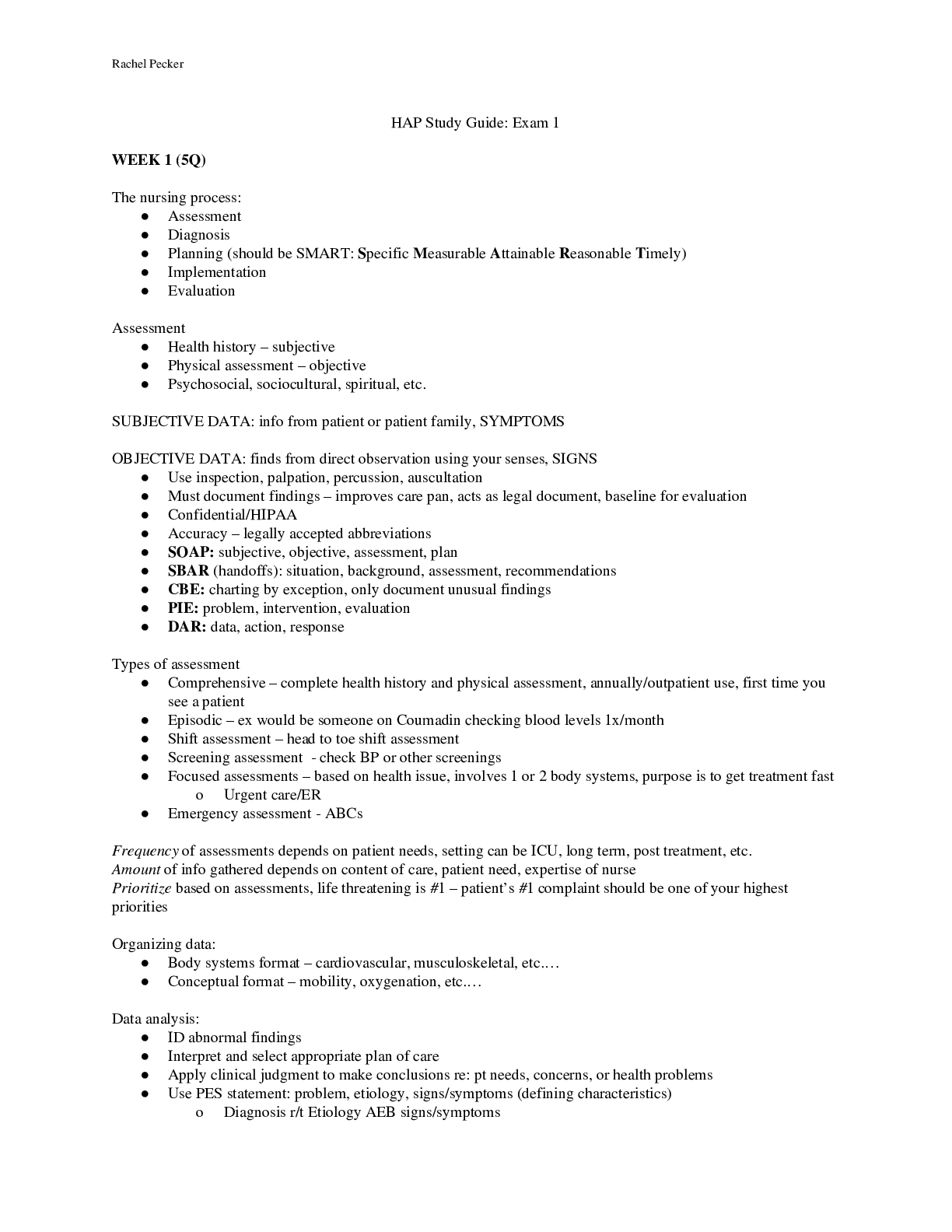
Nursing Process
1. Assessment
2. Analysis (Diagnosing)
3. Planning
4. Implementation
5. Evaluation
Client Needs
1.
...
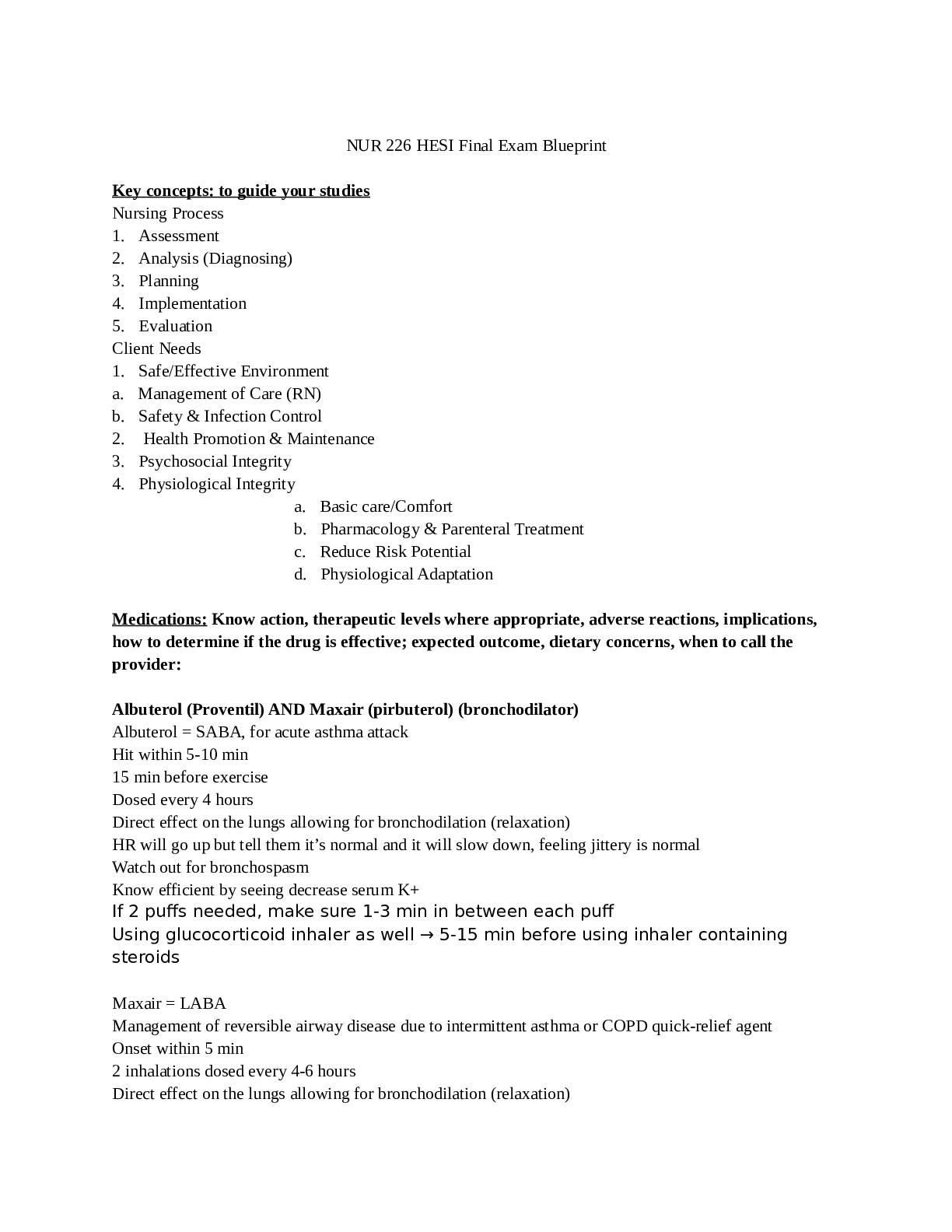
NUR 226 HESI Final Exam Blueprint
Key concepts: to guide your studies
Nursing Process
1. Assessment
2. Analysis (Diagnosing)
3. Planning
4. Implementation
5. Evaluation
Client Needs
1. Safe/Effective Environment
a. Management of Care (RN)
b. Safety & Infection Control
2. Health Promotion & Maintenance
3. Psychosocial Integrity
4. Physiological Integrity
a. Basic care/Comfort
b. Pharmacology & Parenteral Treatment
c. Reduce Risk Potential
d. Physiological Adaptation
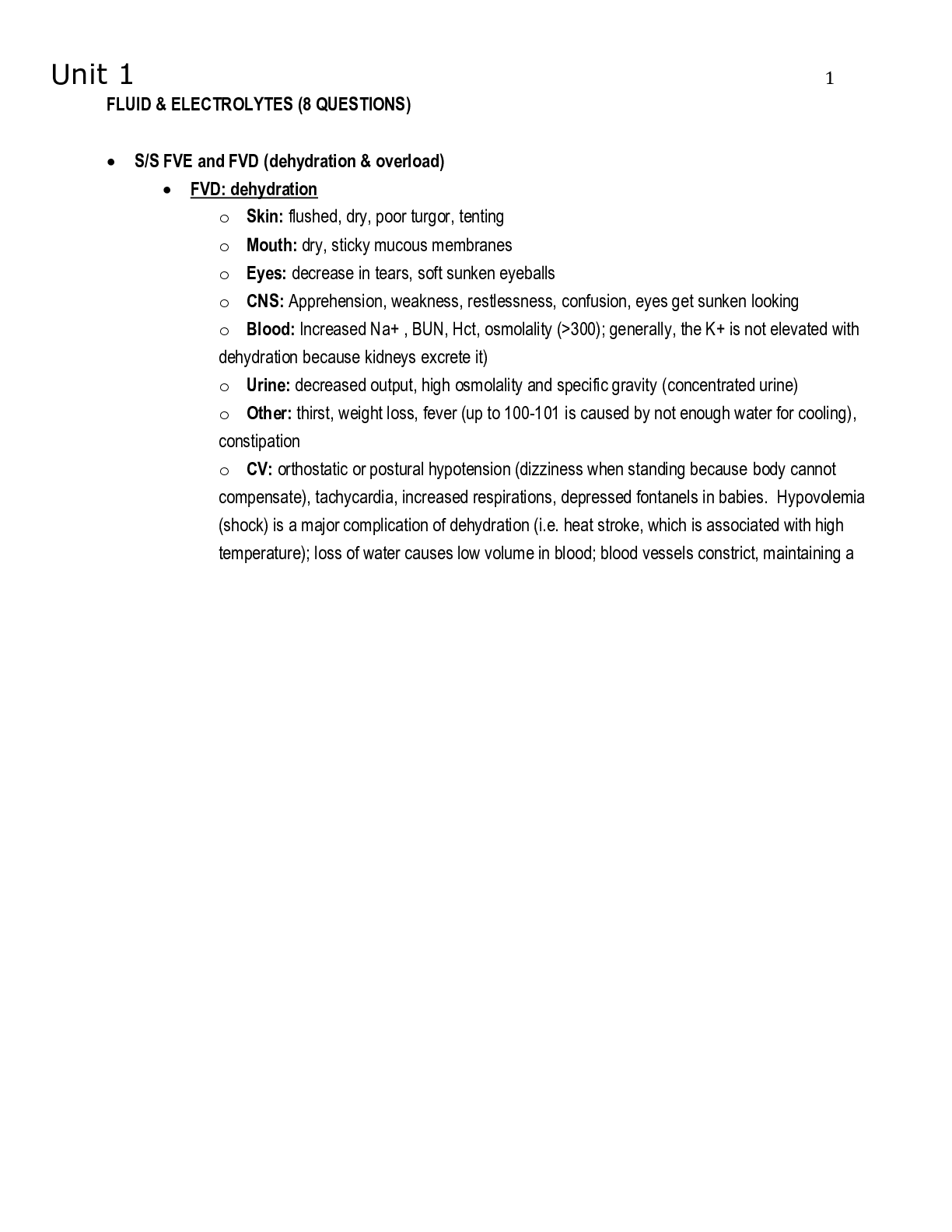
Medications: Know action, therapeutic levels where appropriate, adverse reactions, implications, how to determine if the drug is effective; expected outcome, dietary concerns, when to call the provider:
Albuterol (Proventil) AND Maxair (pirbuterol) (bronchodilator)
Albuterol = SABA, for acute asthma attack
Hit within 5-10 min
15 min before exercise
Dosed every 4 hours
Direct effect on the lungs allowing for bronchodilation (relaxation)
HR will go up but tell them it’s normal and it will slow down, feeling jittery is normal
Watch out for bronchospasm
Know efficient by seeing decrease serum K+
If 2 puffs needed, make sure 1-3 min in between each puff
Using glucocorticoid inhaler as well → 5-15 min before using inhaler containing steroids
Maxair = LABA
Management of reversible airway disease due to intermittent asthma or COPD quick-relief agent
Onset within 5 min
2 inhalations dosed every 4-6 hours
Direct effect on the lungs allowing for bronchodilation (relaxation)
Both can cause tachycardia, restlessness, nervousness, jitters, palpitation → can be uncomfortable for pt but they will go away
Monitor for Paradoxical bronchospasm
Can lead to hyperactivity in children
RINSE MOUTH
Check for cardiac dysrhythmias
Naloxone
Narcan
Opioid Antagonist
IV onset 1-2 min, IM onset 2-5 min, Intranasal onset 8-13 min
Action: prevent the effects of opioid agonists, block opioid activity by blocking mu and kappa receptors
Results/Adverse Reactions: Can result in BP increase, RR increase, N/V/drowsy/tremors
Implications: repeat Q 2-3mins until desired effect
Will need to monitor for recurrence CNS/Resp depression (repeated OD as med wears off), and might need to re-administer naloxone again later d/t short half-life
Risk of hepatotoxicity
AE: ventricular arrythmias
Hesi Hint: For narcotic-induced respiratory depression, naloxone may be administered as prescribed by the healthcare provider
Atorvastatin (Lipitor)
● Lipid lowering agent
● Lowers LDL reducing risk of MI, stroke, CAD
● HMG-CoA Reductase Inhibitor (enzyme needed in liver to produce cholesterol); Statin; Anti-cholesterol
● AE: rhabdomyolysis, angioneurotic edema
● May cause stomach upset
● Preferably taken at night-when sleeping, liver is making cholesterol
● Avoid grapefruit juice, pregnant/breast feeding
● Monitor liver enzymes
● Notify HCP if muscle pain, tenderness, or weakness occurs, especially if accompanied by fever or malaise (indicative of rhabdomyolysis) (Brown Urine—due to effects on kidneys) [CK levels]
● Dose adjustment may be required
Miotic drops
Pilocarpine (Asorbocarpine) (cholinergic)
-Used in open-angle glaucoma which is unresponsive to other therapy due to the risk of toxicity.
-Mechanism of Action: Activate cholinergic receptors in the eye, causing constriction of the pupil, and the ciliary muscle.
-These actions stretch the trabecular meshwork allowing for increased outflow of the aqueous humor and the lowering of IOP
-Adverse effects-headache, induced myopia, decreased vision in low light
-Applied topically to the eye
(just adding this section too b/c not sure if we should know all of the glaucoma eyedrops)
- increase outflow of aqueous humor
o pilocarpine, cholinergic, PNS effects
o latanoprost, prostaglandin, may change eye color and thicken eyelashes
- decrease aqueous humor production
o timolol, beta-blocker, hypotension, bronchoconstriction (not on lung pt), press down on inner canthus to prevent systemic absorption (causes PNS effects)
o acetazolamide, carbonic anhydrase inhibitor, cross sensitivity with sulfa
→ also a weak diuretic
Dopaminergic medications
Dopamine agonist (carbidopa/ levodopa - combination drug of the two trade name: Sinemet). For treatment of Parkinson’s disease. Aim to replace dopamine in CNS. Relief of tremors/ rigidity.
MOA: restores dopamine in extrapyramidial areas of the brain. Levodopa is a precursor to dopamine
-caution in cardiac, psychiatric or ulcer pts. Do not use with MAOI’s.
A/E: depression/anxiety, involuntary movements, drowsiness/ hallucinations/psych problems, orthostatic hypotension.
Toxicity s/s: Facial grimacing, muscle spasms, behavioral changes.
How to monitor Effectiveness: reduction in movement abnormalities, improved functioning (can they feed themselves, get dressed, cook, eat, etc.)
-avoid a high protein diet within 2 hours of administration
Slows GI motility
Imitrex (Sumatriptan)
· 5-HT1 agonist; acute migraine, vascular headache suppressants
Vasoconstriction in large intracranial arteries
· Treats severe headaches; migraines; no angina/previous MI/ CAD pt
· Take 2 in 24 hours (60 mins apart)
· AE: coronary artery vasospasm, MI, myocardial ischemia, V-Fib, VT
· Use only during migraine attack; Lay down in dark environment
· May cause drowsiness or dizziness
· Avoid with pregnancy/breastfeeding; alcohol
· Notify HCP prior to next dose if pain / tightness in chest or pain does not subside
Ibuprofen (non-opioid analgesic)
· NSAIDS, inhibits Cox 1 and Cox 2
· Anti-inflammatory; antipyretic; SULFA ALLERGY
· AE: GI bleeding, hepatitis, dermatitis, Steven-Johnson syndrome, epidermal necrolysis
· WITH food; remain upright for 30 mins; avoid alcohol
· May cause drowsiness or dizziness, most common SE is N/V so hydrate!
· Report abdominal / stomach pain / red-black stools / rash / sore throat
· Assess for rhinitis, asthma, and urticaria (hypersensitivity)
· No more than 2400 mg per day
Contraindicated in pts with ulcers, pregnant pts, pts with kidney damage
Antacids
-These are oldest drugs used to control gastric acidity; can be sodium bicarbonate based (Tums, alka seltzer) or can be aluminum and/or magnesium hydroxide based (Maalox, Mylanta)
-Generic: Aluminum hydroxide
-MOA: Weak bases that neutralize the acids in stomach
-Tend to affect absorption of most drugs by binding or altering drug solubility ** take 1-2 hours apart from other drugs
-Take between meals, or at bedtime (works best on empty stomach), take with full glass of water-Need frequent dosing which is a down-side to these drugs
-Adverse Effects: constipation
-Nursing considerations: hypermagnesium—caution w/renal insufficiency; some antacids may cause diarrhea
Baclofen
* Therapeutic class: antispasticity agents, skeletal muscle relaxant
* Used to treat muscle spasms, spinal cord injuries, and MS
* Gradually increase dose and decrease dose (titrating)
* Patient teaching: take missed dose within one hour, do not double doses, avoid abrupt withdrawal (may cause hallucinations, seizures, mental status changes, increased spasticity), discontinue over a 2-week period
* Don’t consume ETOH or other CNS depressants
* Side Effect: frequent urge to urinate, dysuria, GI symptoms, HA, insomnia, restlessness, confusion, tinnitus
* Evaluate: improvement in spasticity
Tetracycline (Sumycin)
● Antiinfective, inhibits bacterial protein synthesis
● Used to treat RMSF; H.Pylori; STI; acne
● WITH FOOD
● DO NOT take with calcium / iron (no dairy)
● DO NOT give to pregnant women - risk to fetal bone growth/teeth formation
● Don’t give to child < 8—stains teeth
● Risk of superinfection is high
● Photophobia
● Hepatotoxic if pt has liver disease
● NEVER use outdated pills → causes nephrotoxicity
● May increase effects of warfarin
● Decreases effect of contraceptives, so use secondary sex prevention
Warfarin (Coumadin)
· Inhibits synthesis of vitamin K factors (2, 7, 9, 10)
· Therapeutic effects take 24-38 hrs, may take 96 hours to work
· Monitor INR (2-3) - this is how therapeutic effects are monitored
A Fib 2-3
DVT 2-3
Valvular disease 2.5-3.5
Indications: Atrial fibrillation, ACS, valvular disease, thromboembolic disease-DVT/PE, CVA, thrombophilic disease
· Watch for Bleeding, check BP
· Vitamin K is the antidote
Medication interactions-antibiotics, steroids, amiodarone
· Soft toothbrush, electric razors
Avoid leafy green veggies
AE: cramps, nausea, fever
Med interactions: antibiotics, steroids, amiodarone
Can use acetaminophen while on this
HESI Hint Anticoagulants Heparin Antagonist: protamine sulfate
Laboratory: PTT or aPTT determines efficacy Keep 1.5 to 2.5 times normal control
Warfarin (Coumadin) Antagonist: vitamin K
Laboratory: PT determines efficacy Keep 1.5 to 2.5 times normal control INR (international normalized ratio): desirable therapeutic level usually 2: 3 (reflects how long it takes a blood sample to clot)Advise client to avoid aspirin and aspirin products and NSAIDs.
HESI Hint Heparin prevents conversion of fibrinogen to fibrin and prothrombin to thrombin, thereby inhibiting clot formation. Because the clotting mechanism is prolonged, do not cause tissue trauma, which may lead to bleeding when giving heparin subcutaneously. Do not massage area or aspirate; give in the abdomen between the pelvic bones, 2 inches from umbilicus; rotate sites.
HESI Hint Clients may ingest foods high in Vitamin K to maintain therapeutic blood levels based on their dietary intake.
Insulins
[Show More]