1. A nurse in the emergency department is caring for a client who reports
abrupt, sharp, right-sided lower quadrant abdominal pain and bright red vaginal bleeding. The client states she missed one menstrual cycle and ca
...
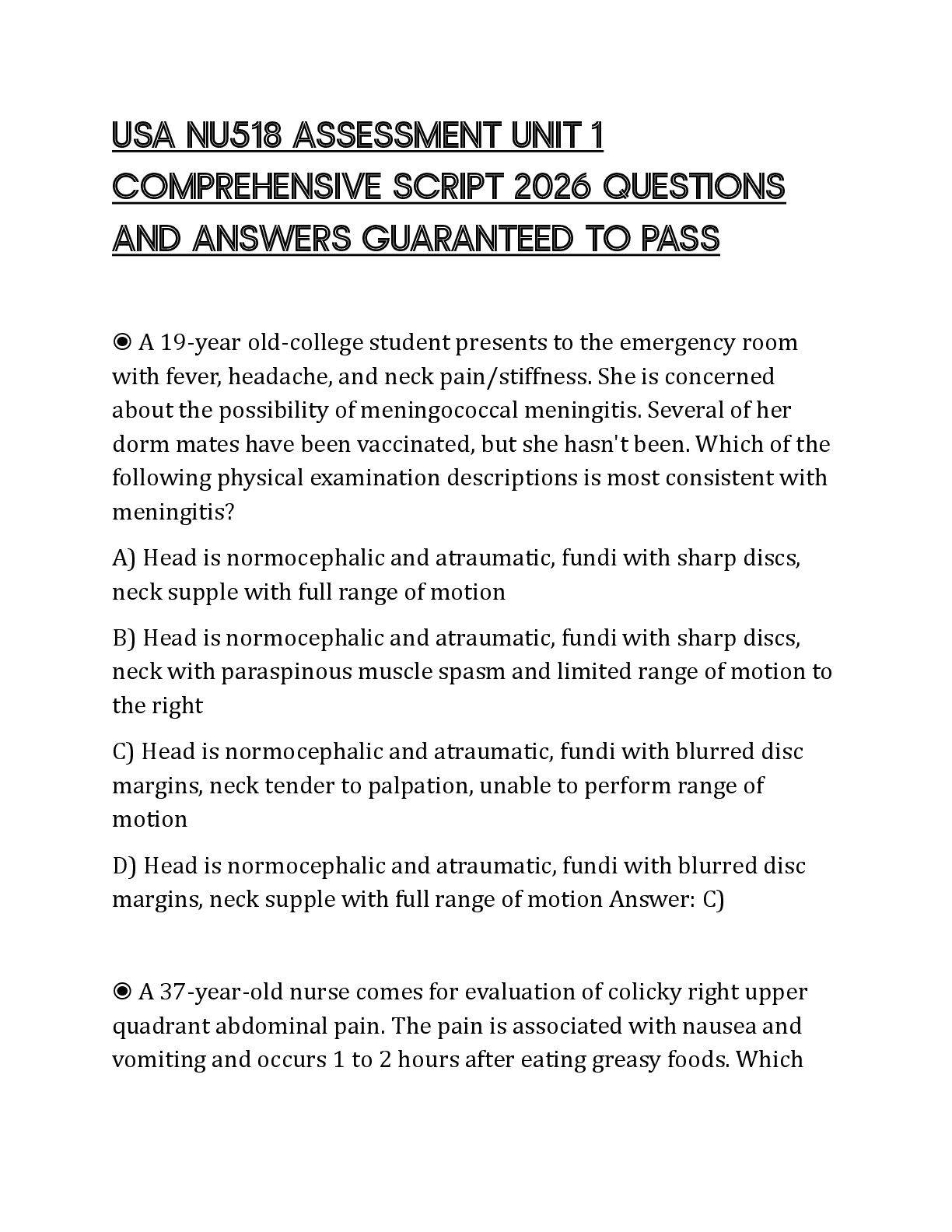
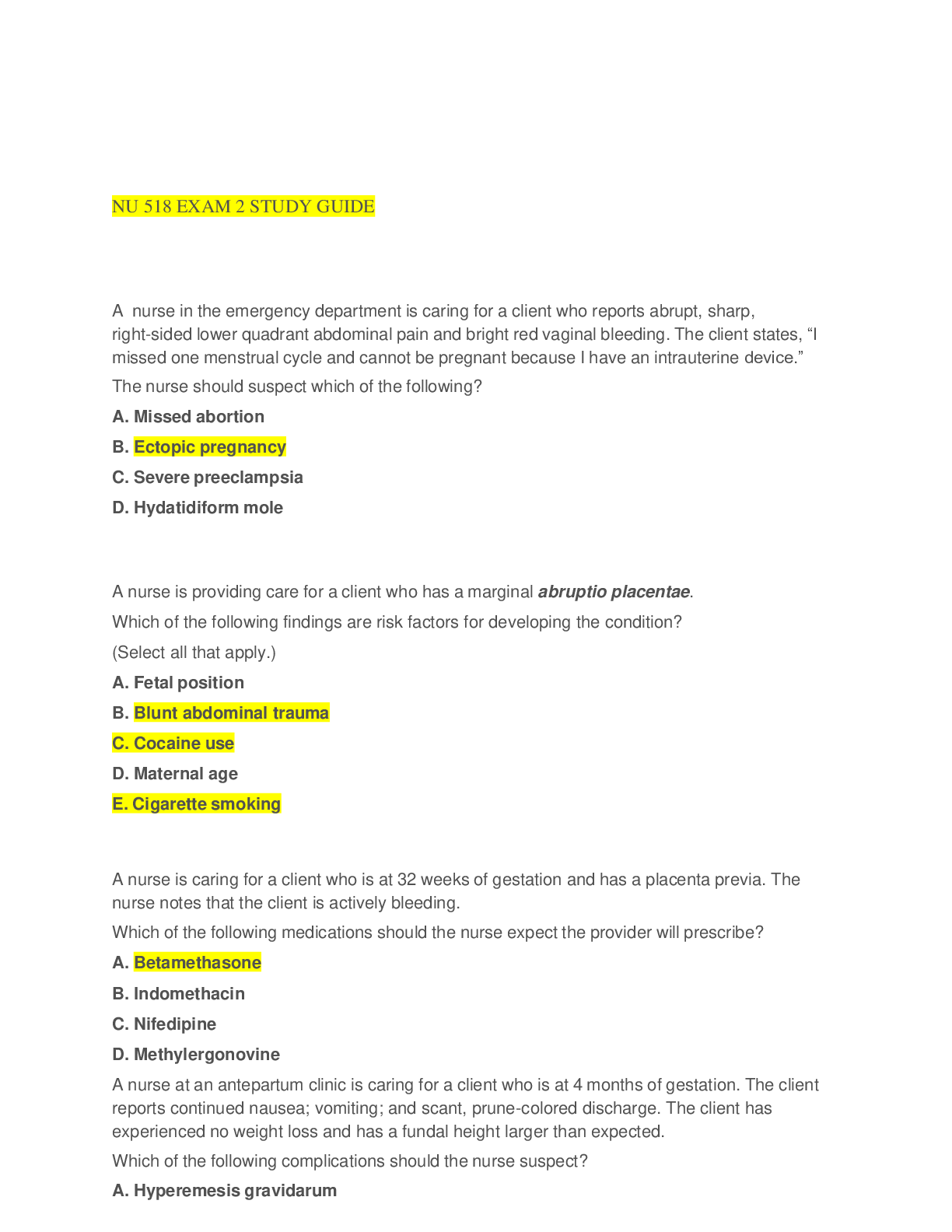
1. A nurse in the emergency department is caring for a client who reports
abrupt, sharp, right-sided lower quadrant abdominal pain and bright red vaginal bleeding. The client states she missed one menstrual cycle and cannot be pregnant because she has an intrauterine device. The nurse should suspect which of the following?
A. Missed abortion B. Ectopic pregnancy
C. Severe preeclampsia
D. Hydatidiform moleA nurse is providing care for a client who is diagnosed with a marginal abruptio placentae.
The nurse is aware that which of the following findings are risk factors for developing the
condition? (Select all that apply.)
A. Fetal position
B. Blunt abdominal trauma C. Cocaine use
D. Maternal age
E. Cigarette smoking
2. A nurse is providing care for a client who is at 32 weeks of gestation
and who has a placenta previa. The nurse notes that the client is actively bleeding. Which of the following types of medications should the nurse anticipate the provider will prescribe? A. Betamethasone
B. Indomethacin
C. Nifedipine
D. Methylergonovine
3. A nurse at an antepartum clinic is caring for a client who is at 4
months of gestation. The client reports continued nausea and vomiting and scant, prune-colored discharge. She has experienced no weight loss and has a fundal
height larger than expected. Which of the following complications should the nurse suspect?
A. Hyperemesis gravidarum
B. Threatened abortion C. Hydatidiform mole
D. Preterm labor
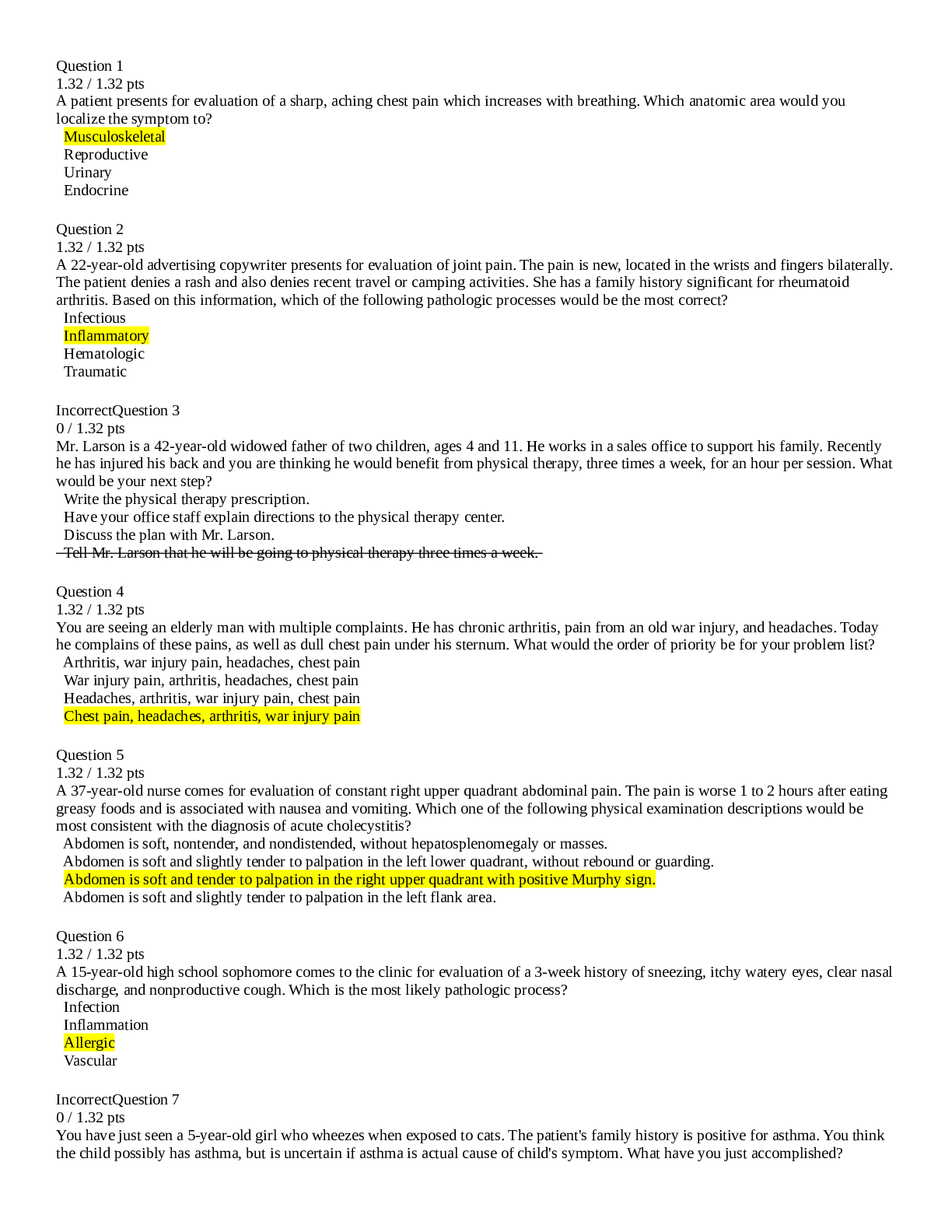
4. A nurse is caring for a client who has a diagnosis of ruptured ectopic pregnancy. Which of the following findings is seen with this condition?
A. No alteration in menses
B. Transvaginal ultrasound indicating a fetus in the uterus
C. Serum progesterone greater than the expected reference range
D. Report of severe shoulder pain
1. A nurse is admitting a client who is in labor and has HIV. Which of the following interventions should the nurse identify as contraindicated for this client? (Select all that apply.)
A. Episiotomy
B. Oxytocin infusion C. Forceps
D. Cesarean birth
E. Internal fetal monitoring
2. A nurse in an antepartum clinic is assessing a client who has a TORCH infection. Which of the following findings should the nurse expect? (Select all that apply.)
A. Joint pain B. Malaise C. Rash
D. Urinary frequency E. Tender lymph nodes
3. A nurse is caring for a client who has gonorrhea. Which of the following medications should the nurse anticipate the provider will prescribe? A. Ceftriaxone
B. Fluconazole
C. Metronidazole
D. Zidovudine
4. A nurse is caring for a client who is in labor. The nurse should identify that which of the following infections can be treated during labor or immediately following birth? (Select all that apply.)
A. Gonorrhea B. Chlamydia C. HIV
D. Group B streptococcus beta-hemolytic
E. TORCH infection
5. A nurse manager is reviewing ways to prevent a TORCH infection during pregnancy
with a group of newly licensed nurses. Which of the following statements by a nurse indicates understanding of the teaching?
A. “Obtain an immunization against rubella early
in pregnancy.”
B. “Seek prophylactic treatment if cytomegalovirus is detected during pregnancy.”
C. “A woman should
avoid crowded places during pregnancy.”
D. “A woman should avoid consuming undercooked meat while pregnant.”
[Show More]