*NURSING > QUESTIONS & ANSWERS > NR 507 Week 7: Advanced pathophysiology Quiz (All)
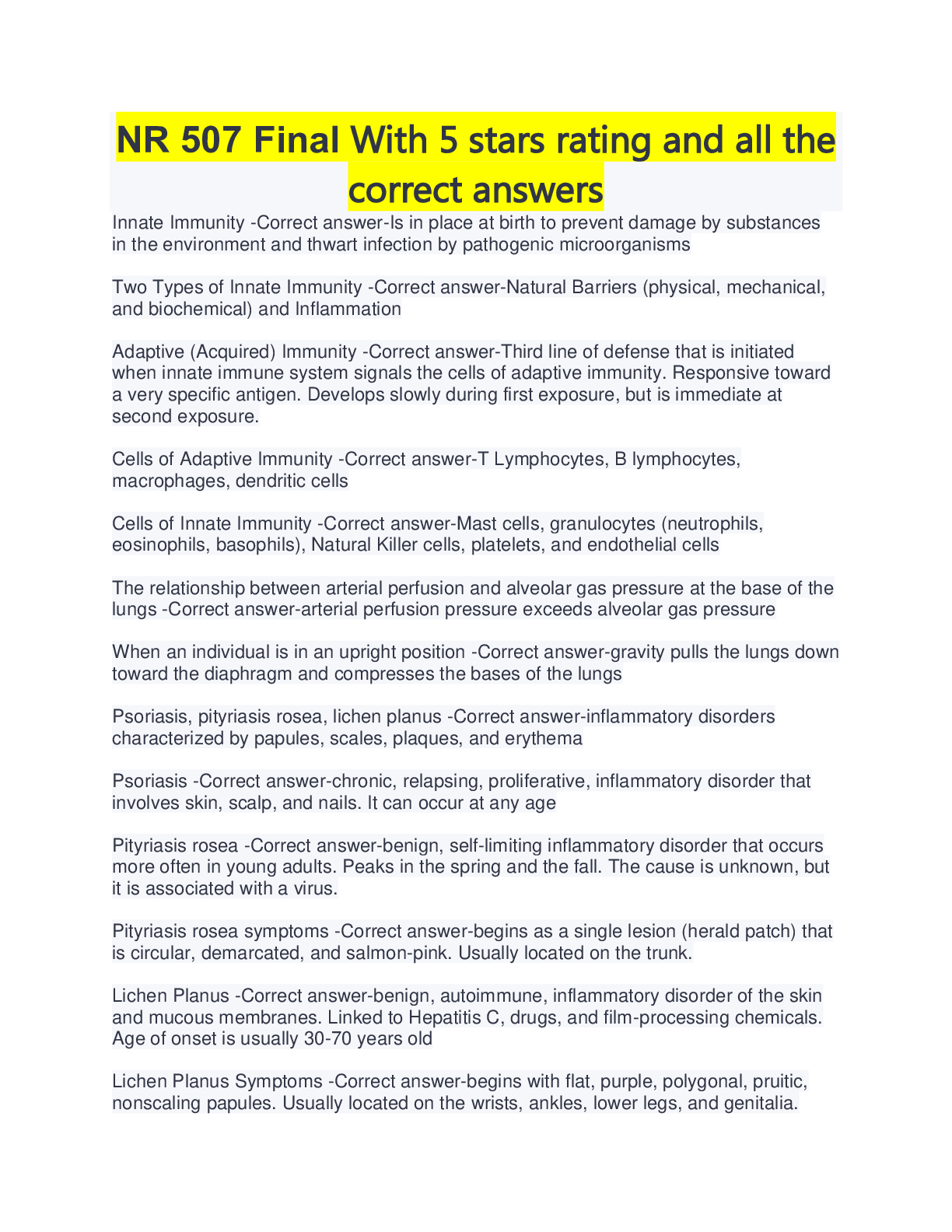
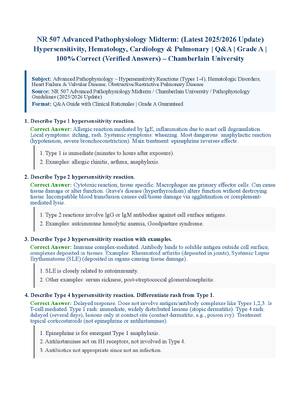
NR 507 Week 7: Advanced pathophysiology Quiz A bone breaks in a place where there was pre-existing disease. What type of fracture is being described? A. Fatigue B. Pathological C. Stress D. Trans ... chondral Patients with Osteoporosis are at risk for which of the following problems? A. Osteomalacia B. Osteomyelitis C. Rhabdomyolysis D. Pathologic bone fractures The best screening test for osteoporosis is? A. A dual energy x-ray absorptiometry (DEXA) scan. B. An x-ray C. A thorough physical exam D. A bone biopsy Reflux esophagitis is defined as? A. dysplasia of the epithelial lining of the esophagus B. an inflammatory response to gastroesophageal reflux C. the autoimmune destruction of the esophageal lining D. a congenital anatomy of the esophagus 1. Which of the following nutritional disorders is characterized by consumption of large amounts of food (binging) followed by self-induced vomiting and/or the use of laxatives (purging)? A. Anorexia nervosa B. Bulimia Nervosa C. Obesity D. Kwashiorkor 2. The most common cause of elevated liver function test is? A. Chronic alcohol abuse B. Hepatitis C. A drug induced injury D. Biliary tract obstruction 3. The chief pathologic feature of degenerative join disease is A. stress fractures of the epiphysis B. thinning of the join capsule C. degeneration of articular cartilage D. loss of synovial fluid 4. Gastric ulcers are characterized by A. Increased acid secretion B. Pain with eating C. Bloody diarrhea D. Regurgitation of bile 5. An individual is to begin a series of hepatitis B vaccines. You perform a test for a serogical marker, and the results show hepatitis B surface antibodies (HBsAb). You tell the individual that: A. this is evidence of acute hepatitis B infection B. Permanent immunity to hepatitis B has been achieved C. The individual should be tested again because one reading is not indicative of immunity. D. The hepatitis B series needs to be started as soon as possible 6. Pain and inflammation associated with gout are caused by crystallization of ____in the tissue. A. uric acid B. ketones C. amino acid D. hyaluronic acid 7. When evaluating the kidney function of a client with diabetes insipidus (DI) the nurse would observe? A. hematuria B. high urine osmolality C. high volume urinary output D. proteinuria 8. The diagnosis of rhabdomyolysis is based on the measurement of which laboratory value? A. antinuclear antibodies B. white blood cell count (WBC) C. aspartate aminotransferase D. creatinine kinase (CK) 9. A 36 years old reports pain and weakness in the elbow. MRI reveals inflammation of the tendon and the presence of microtears where it attaches to bone. This condition is called? A. Bursitis B. Epicondylopathy C. Muscle strain D. Periostitis 10. Chronic complications of Diabetes Mellitus (DM) include which of the following? A. All of the above B. End stage renal failure C. Coronary artery disease D. Peripheral neuropathies 11. A 56y.o male was admitted to the hospital with a diagnosis of osteomalacia. History reveals that he underwent bariatric surgery 3 years earlier. What is the common link between the surgery and the development of osteomalcia? A. Impaired phosphate absorption B. Impaired vitamin c metabolism C. Increased calcium excretion D. Vitamin D deficiency 12. A 70 y.o. female presents with a hip fracture secondary to osteoporosis. This condition is caused by an increase in bone? A. Density B. Mineralization C. Formation D. Resorption 13. Signs common to both type 1 and type 2 diabetes mellitus (DM) include all of the following EXCEPT: A. Weight loss B. Polyuria C. Polydipsia D. Polyphagia 14. Transchondral fractures are most prevalent in? A. Premenopausal female B. Infants C. Older adults D. Adolescents 15. The symptom of polyuria in Diabetes Mellitus (DM) is caused by? A. Increased glucose in the urine B. The massive production of ketones C. A reduced AHD response caused by insulin deficiency D. The loss of protein across the glomerular membrane 16. The pathophysiology of type 1 Diabetes involves which of the following? A. Production of antibodies against insulin B. Auto-immune destruction of the pancreatic beta cells C. All of the above D. Cell membrane destruction of the islet cells. [Show More]
Last updated: 3 years ago
Preview 1 out of 3 pages
Buy this document to get the full access instantly
Instant Download Access after purchase
Buy NowInstant download
We Accept:
Can't find what you want? Try our AI powered Search
Connected school, study & course
About the document
Uploaded On
Jul 30, 2020
Number of pages
3
Written in
All
This document has been written for:
Uploaded
Jul 30, 2020
Downloads
0
Views
157
Scholarfriends.com Online Platform by Browsegrades Inc. 651N South Broad St, Middletown DE. United States.
We're available through e-mail, Twitter, Facebook, and live chat.
FAQ
Questions? Leave a message!
Copyright © Scholarfriends · High quality services·