NURSING > SHADOW HEALTH > Adelphi UniversityNUR 0302-481Assessment - Hematologic System (All)
Adelphi UniversityNUR 0302-481Assessment - Hematologic System
Document Content and Description Below
Last updated: 3 years ago
Preview 1 out of 6 pages
Instant download

Buy this Document to get the Full Access Instantly
Provided by Students Who Aced it
We Verify Document Content to Gurantee Accuracy
Reviews( 0 )
Document information
Connected school, study & course
About the document
Uploaded On
Jun 29, 2021
Number of pages
6
Written in
All

Additional information
This document has been written for:
Uploaded
Jun 29, 2021
Downloads
0
Views
154
Topic Tags
Recommended For You
Get more on SHADOW HEALTH »
eBook Making Sense of Evidence-Based Practice for Nursing An I...
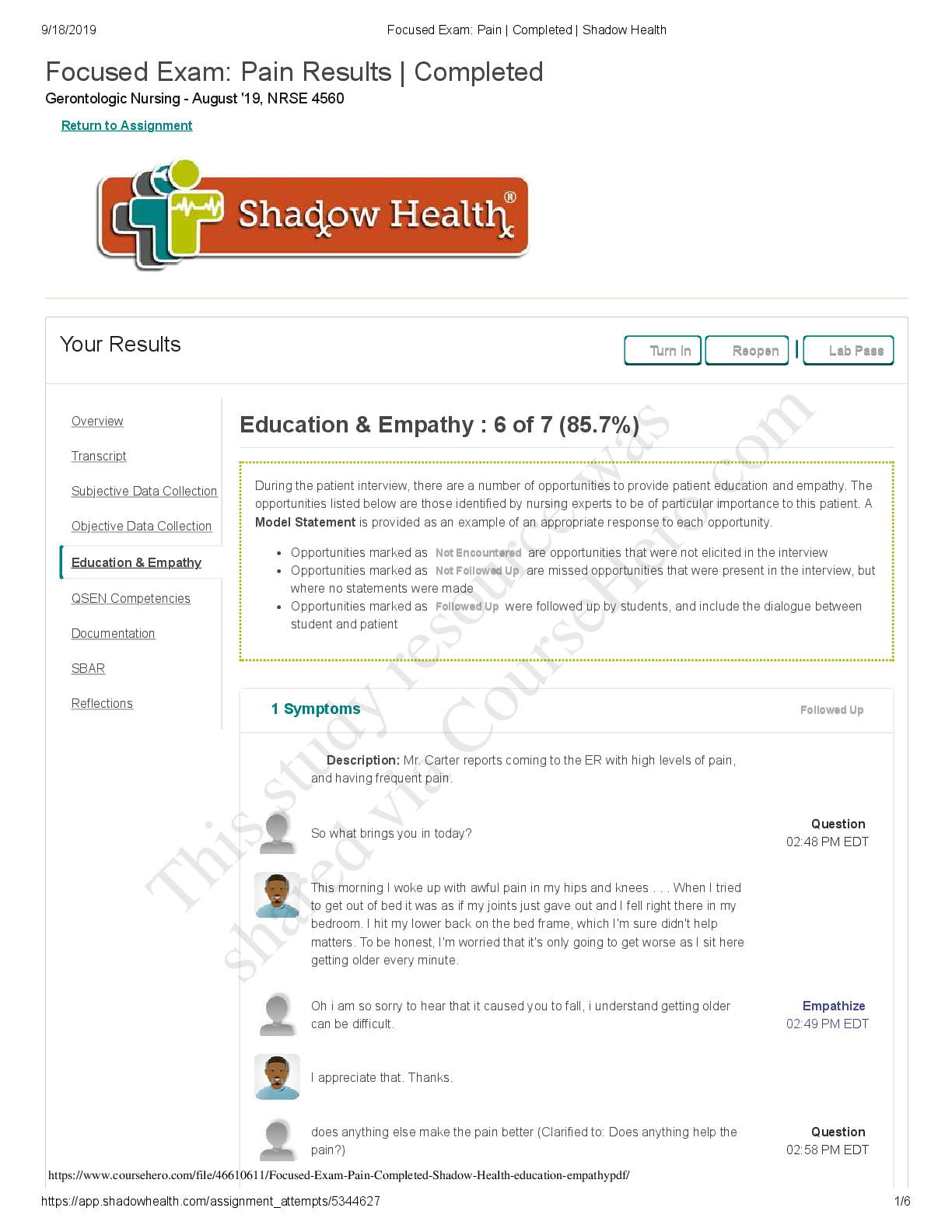
NRSE 4560 Gerontologic Nursing Edward Carter 65 year old Afric...

Shadow Health Tanner Bailey Case 01- Focused Exam Pain Managem...
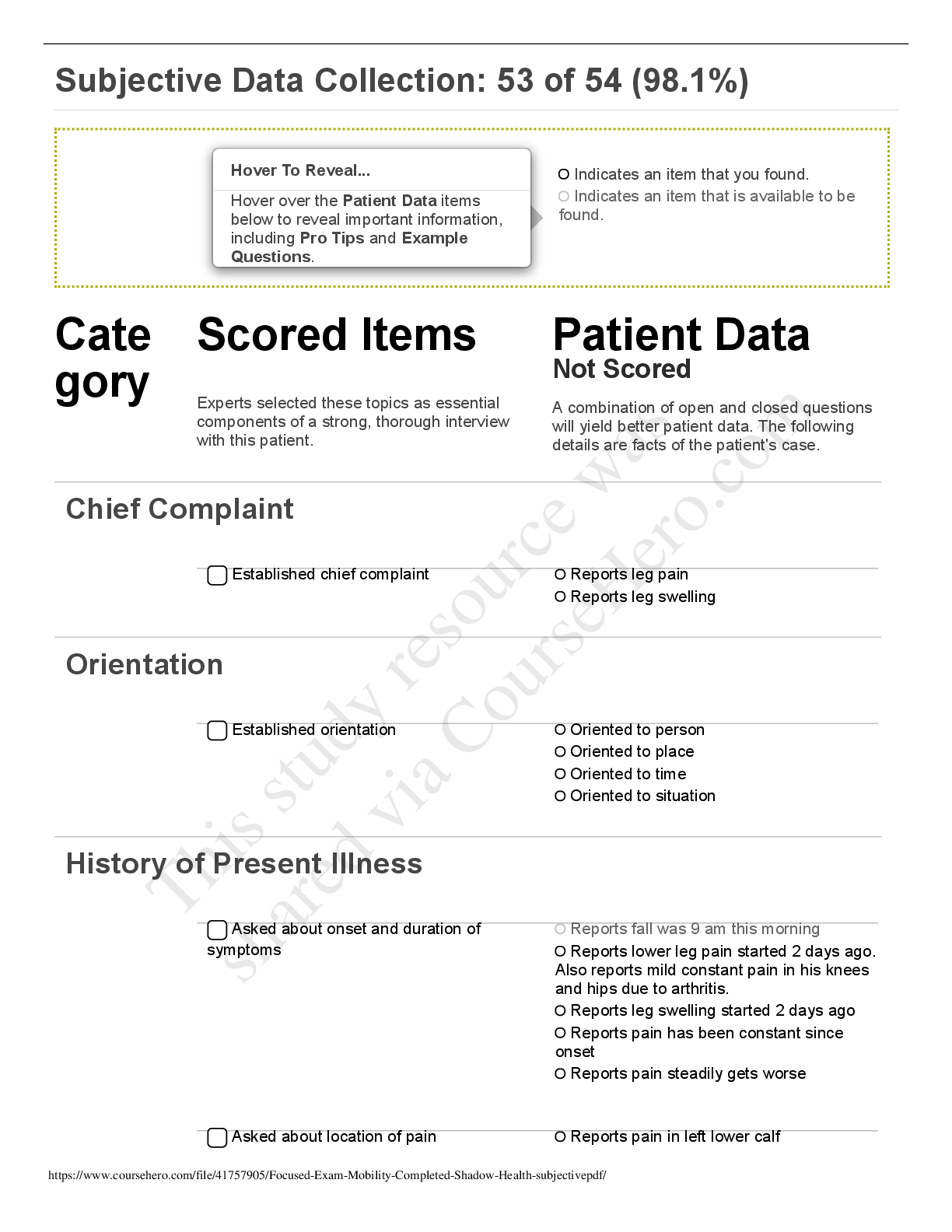
Focused Exam Mobility Completed Shadow Health subjective Subj...


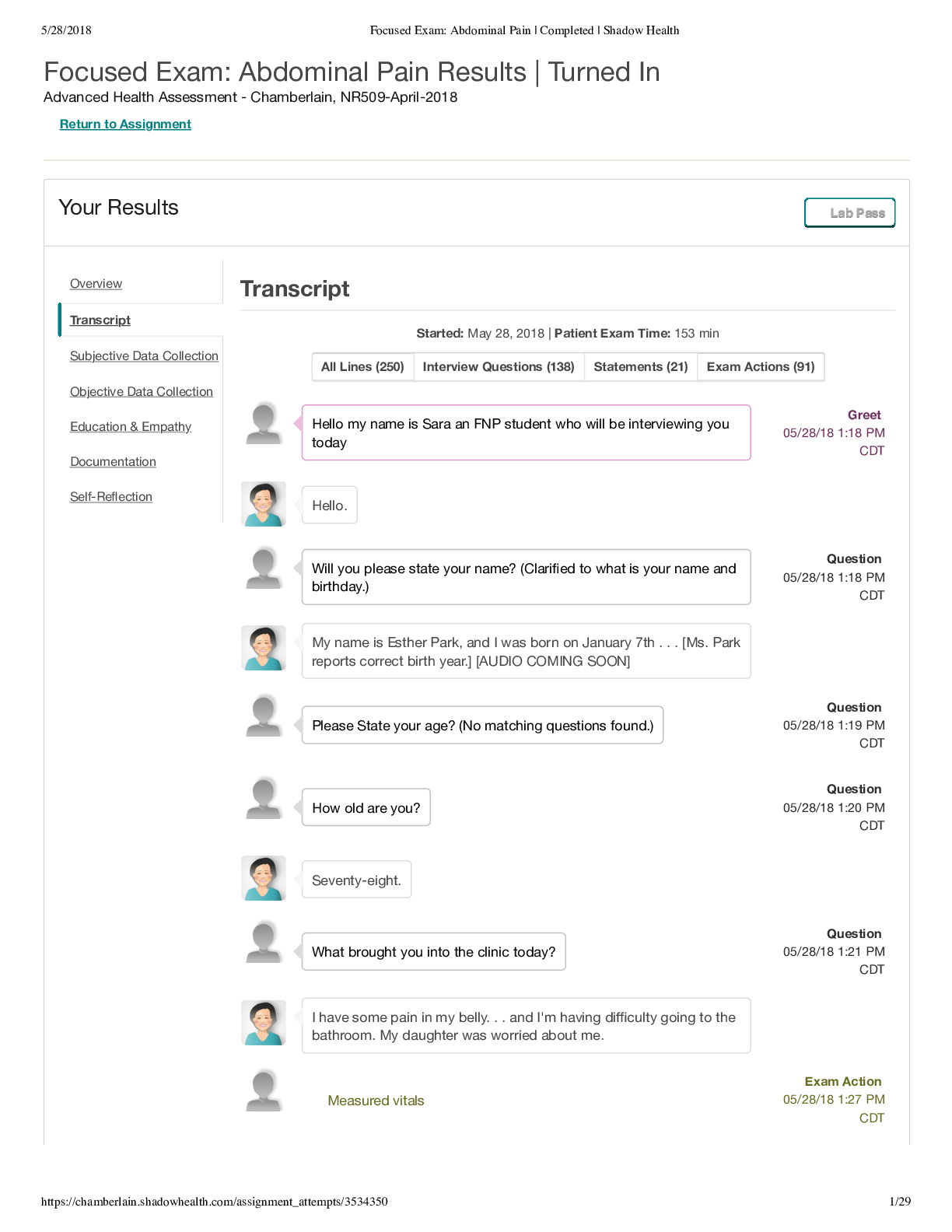
Chamberlain College of Nursing - NR 509 Focused Exam Abdominal...



Shadow Health Alcohol Abuse -Subjective interview and SBAR Rac...

Mental Health | Education and empathy Student Performance Inde...