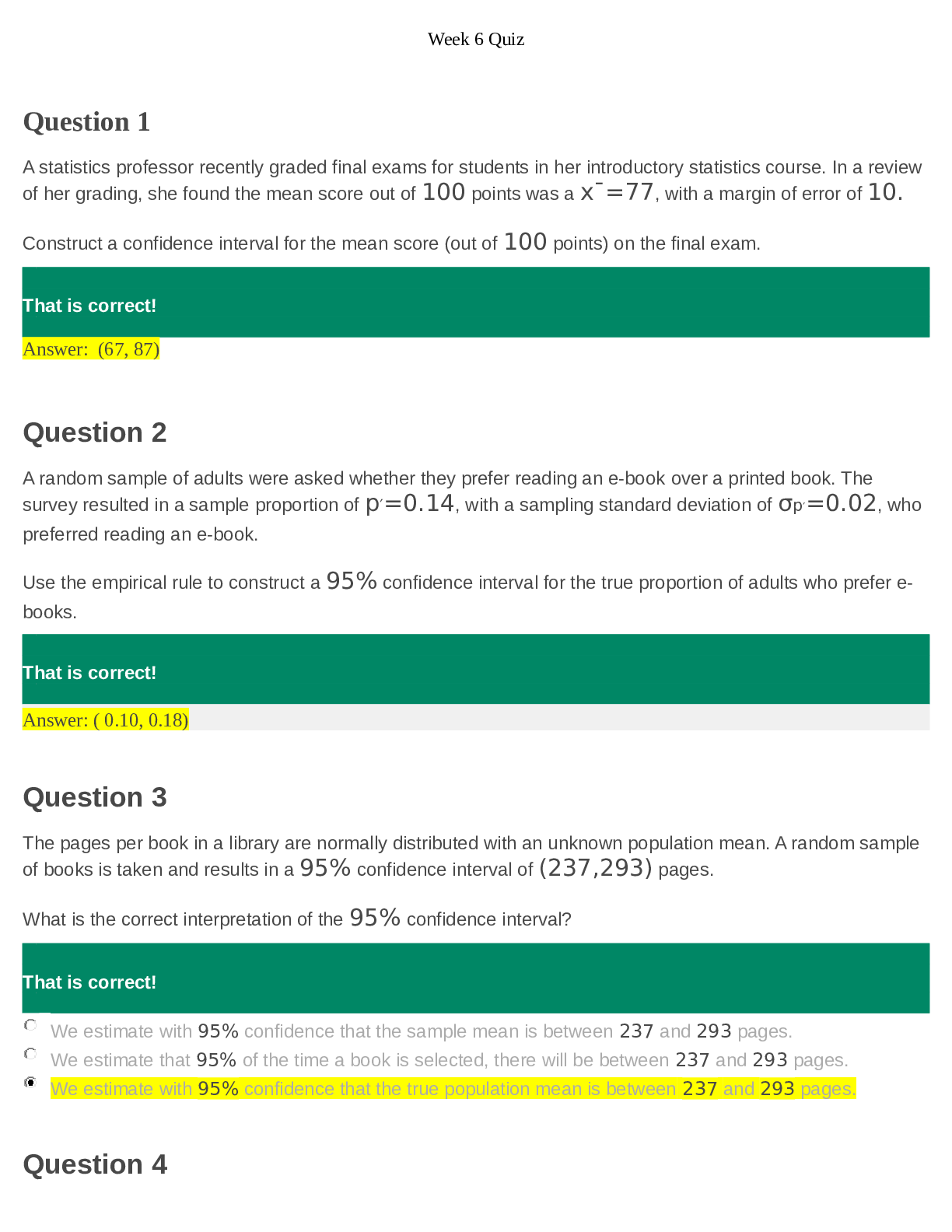
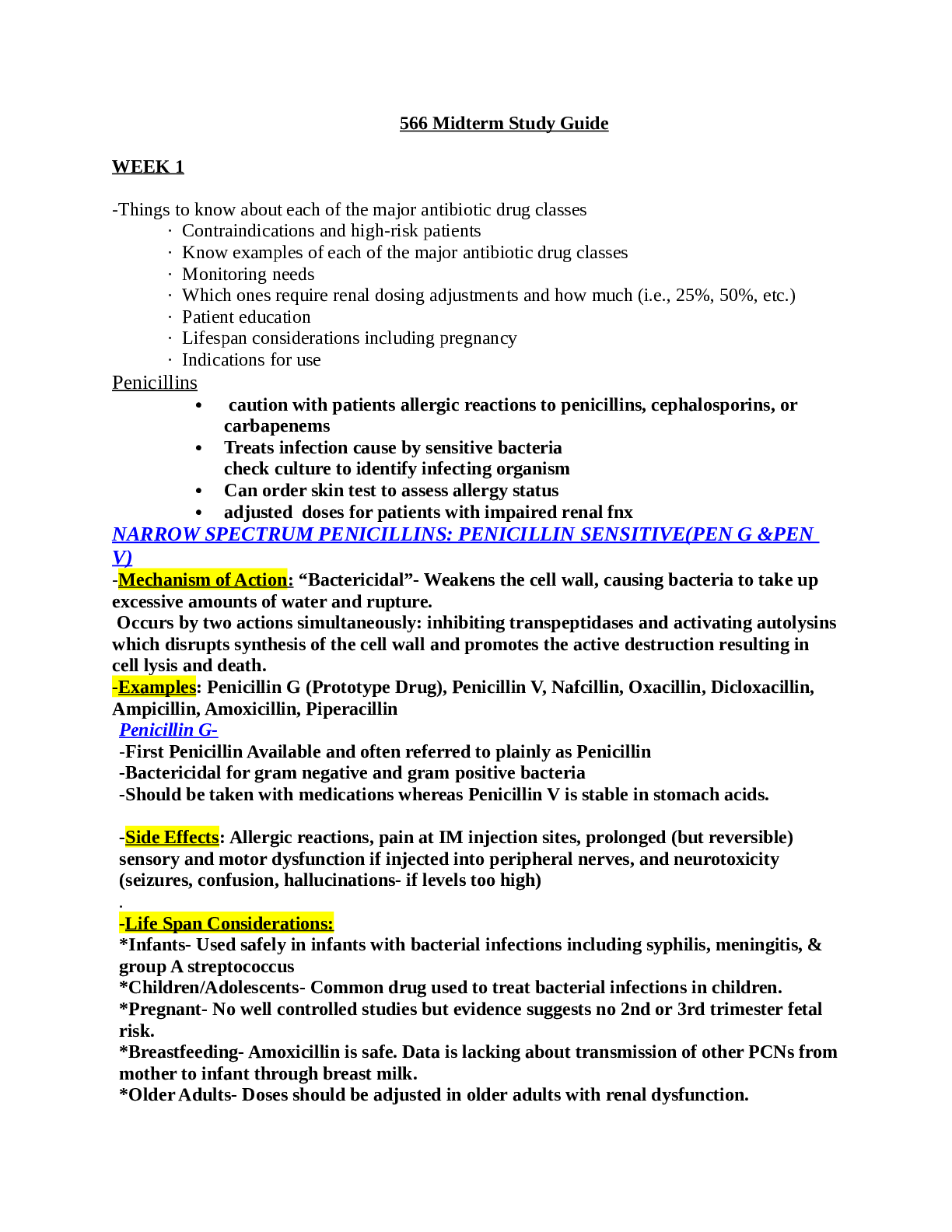
NURS 6560 Midterm 18 Exam with answers - (A Grade _ School graded)
Document Content and Description Below
S. is a 59-year-old female who has been followed for several years for aortic regurgitation. Serial echocardiography has demonstrated normal ventricular function, but the patient was lost to follow-up for the last 16 mon
...
[Show More]
Last updated: 3 years ago
Preview 1 out of 43 pages
Instant download

Buy this Document to get the Full Access Instantly
Provided by Students Who Aced it
We Verify Document Content to Gurantee Accuracy
Reviews( 0 )
Document information
Connected school, study & course
About the document
Uploaded On
Jul 02, 2021
Number of pages
43
Written in
All

Additional information
This document has been written for:
Uploaded
Jul 02, 2021
Downloads
0
Views
65
Topic Tags
Recommended For You
Get more on EXAM »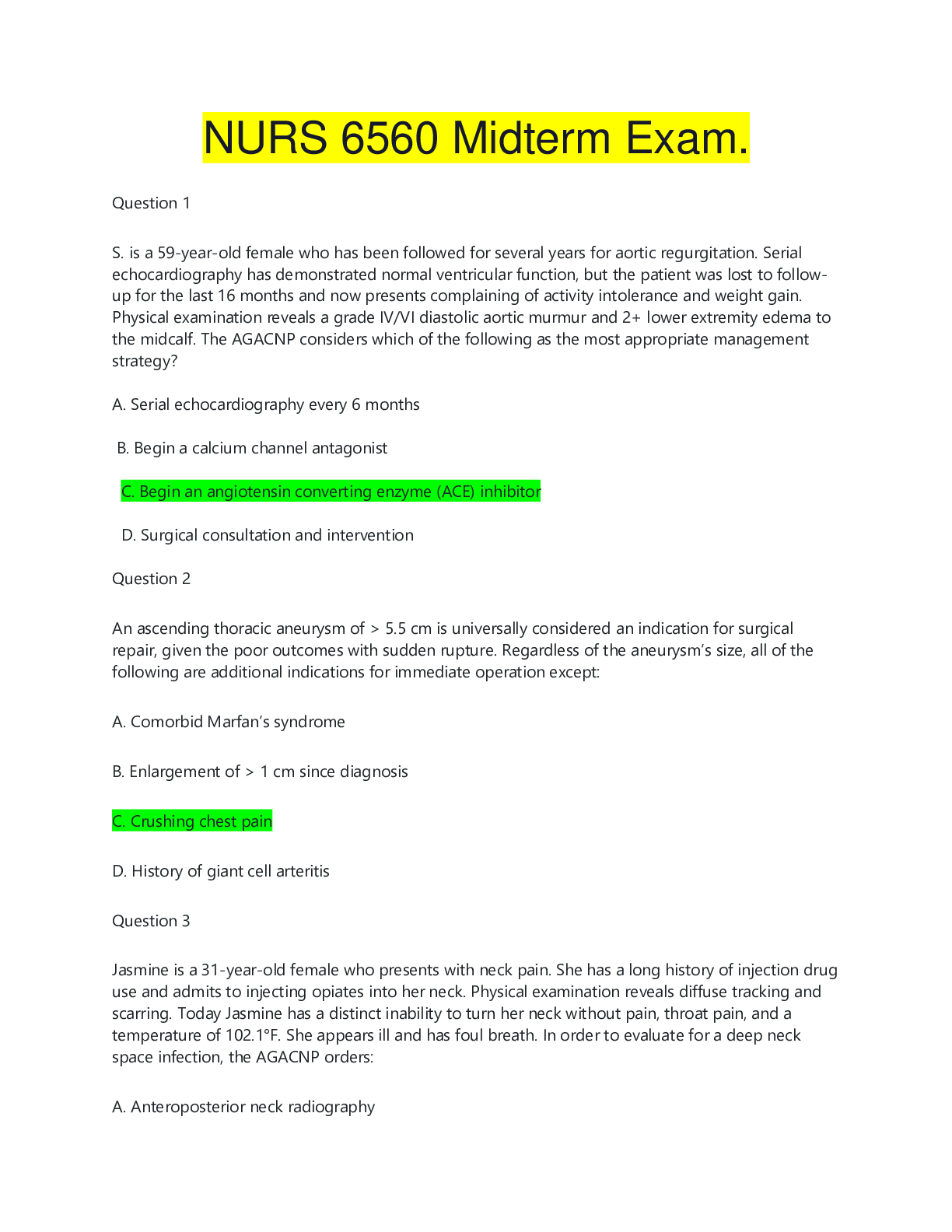
$9
26 Pages
NURS 6560 Midtem Exam. 100 Questions and Answers | NURS 6560...

$12
7 Pages
NURS6560 / NURS 6560: Advanced Practice Care of Adults in Acut...

$14.5
17 Pages
NURS 6560 FINAL EXAM, Latest (2022/2023) complete Questions &...

$9
34 Pages
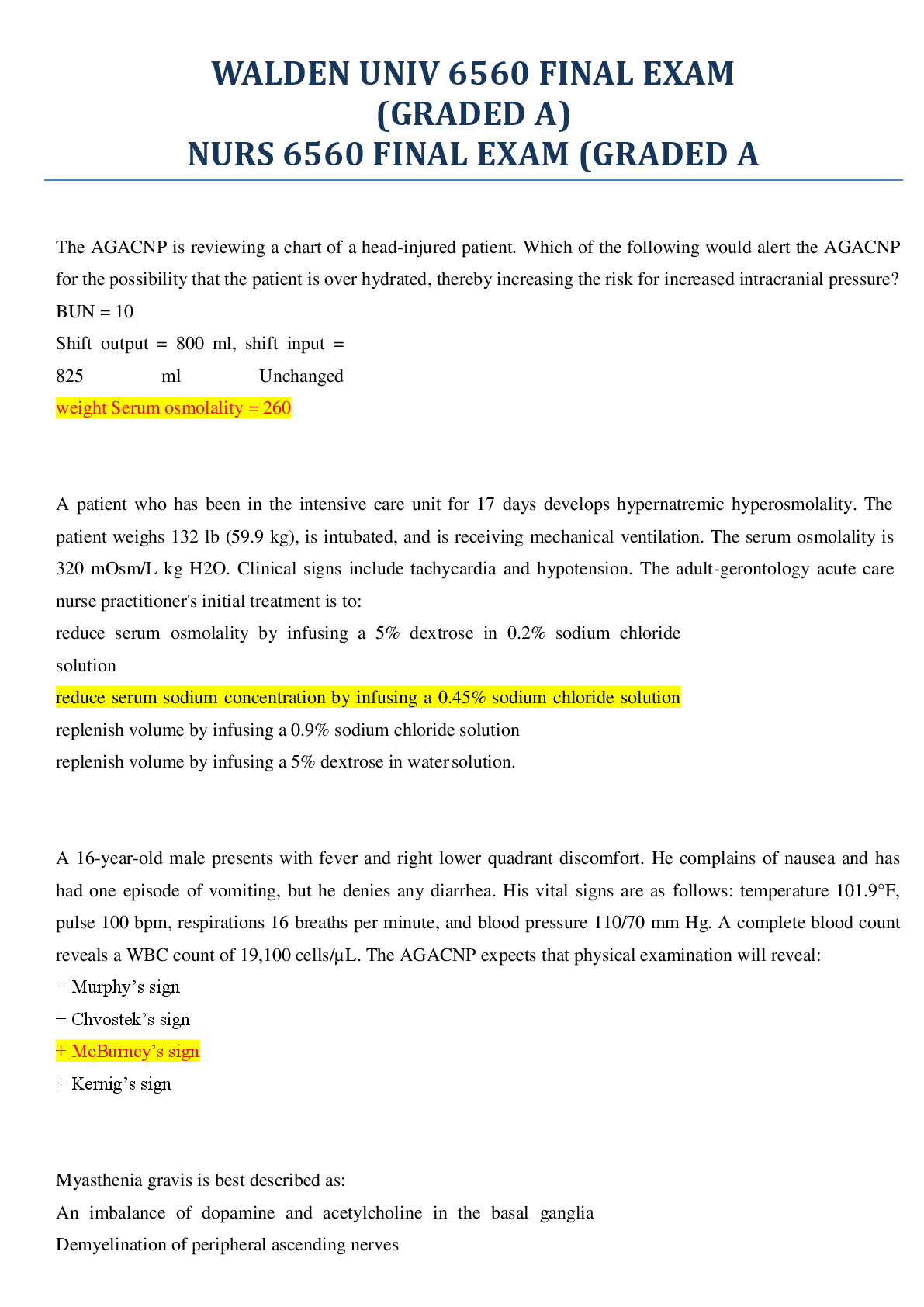
NURS 6560 FINAL EXAM | 100 QUestions and Answers | Walden Univ...
$15
27 Pages
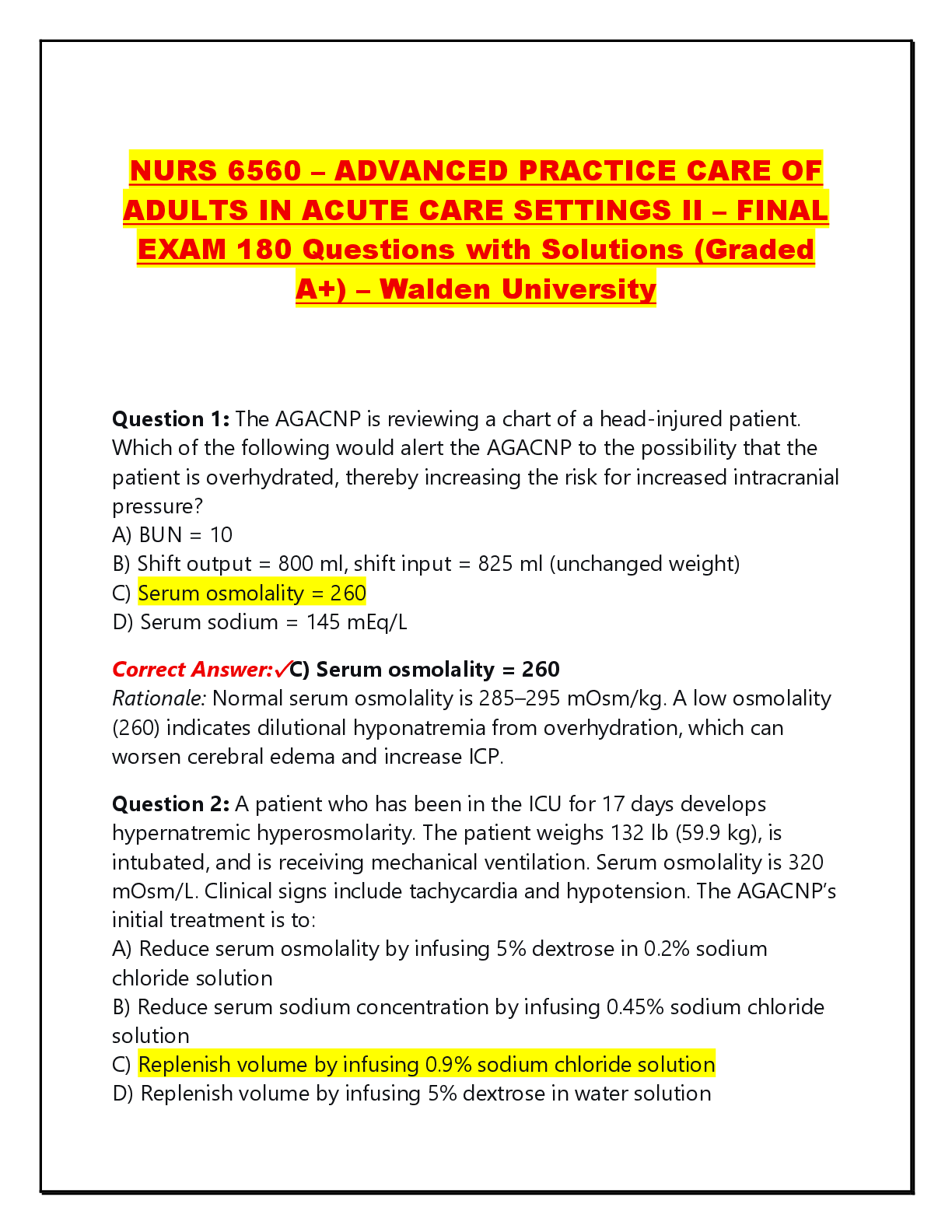
NURS 6560 Advanced Practice Care of Adults in Acute Care Setti...

$15
17 Pages
TEST BANK NURS 6560 Exit Exam | NURS6560 exit exam (2020/2021)
$18
136 Pages
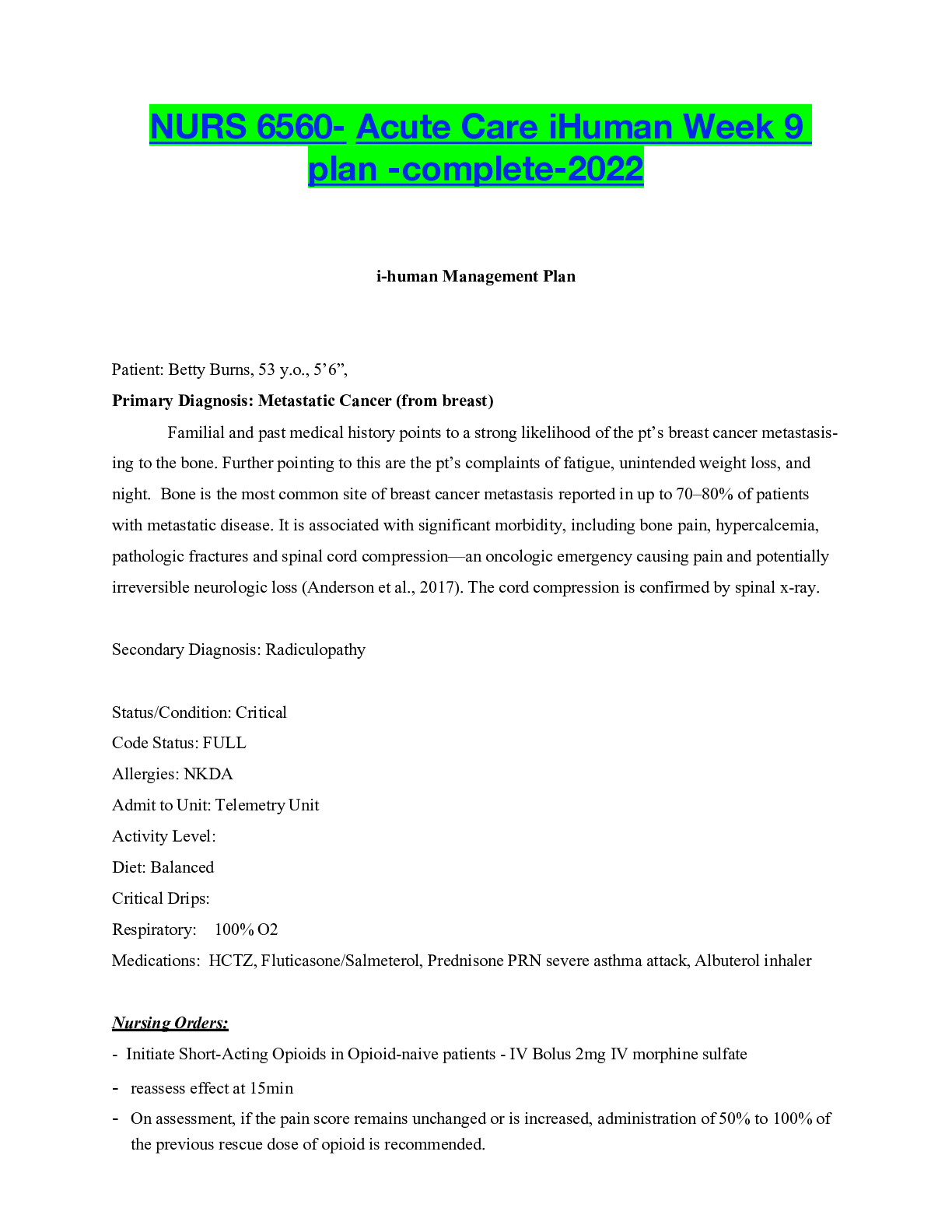
TEST BANK; NURS 6560 Final, MIDTERM & FINAL JUNE Exam / NURS-...

$11
63 Pages
NURS6560 / NURS 6560 Midterm Exam Study Guide : Advanced Prac...

$5
4 Pages
NURS6560 / NURS 6560 Final Study Guide List : Advanced Practi...

$8.5
4 Pages
NURS 6560 - Week4 iHuman; Primary Diagnosis: Acute Bacterial e...
$25
16 Pages
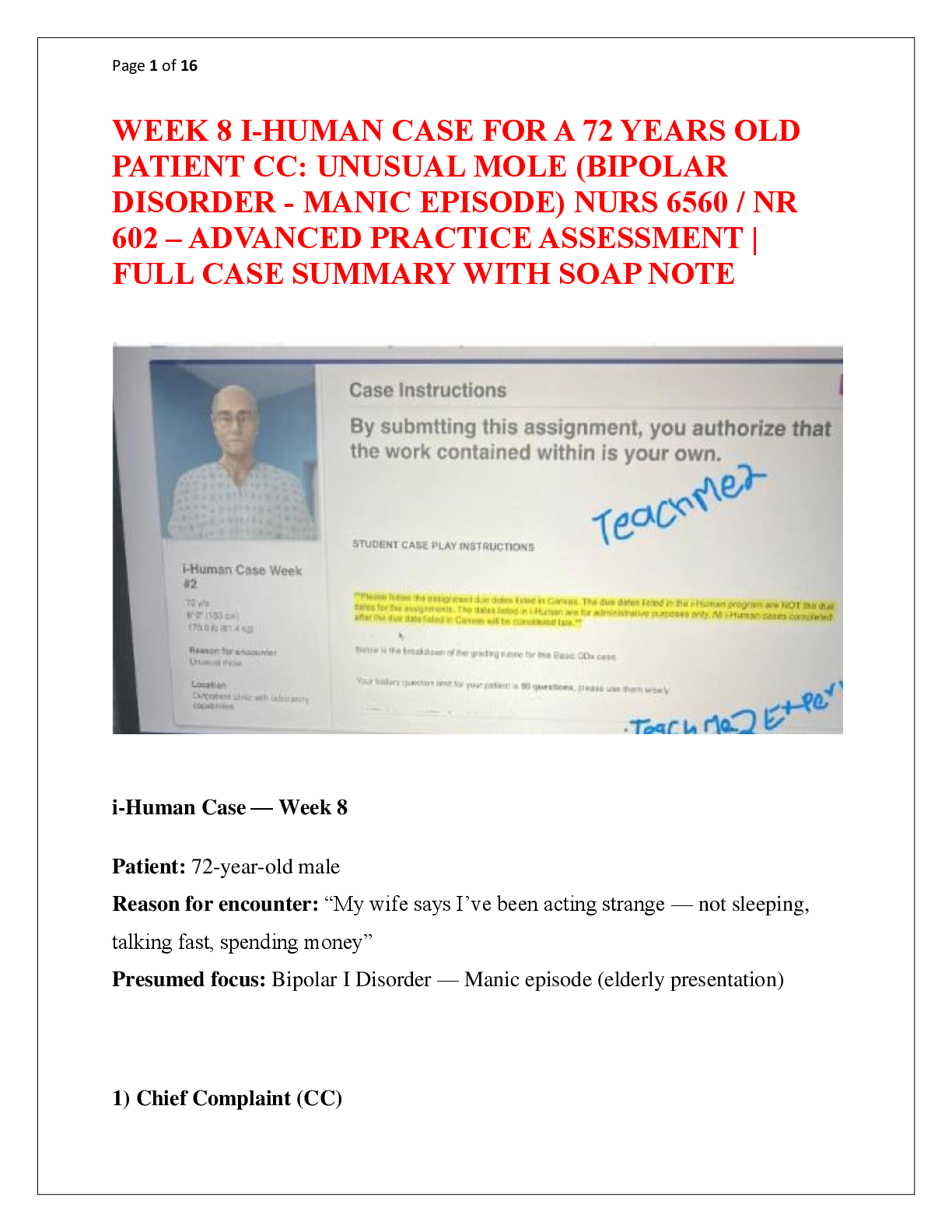
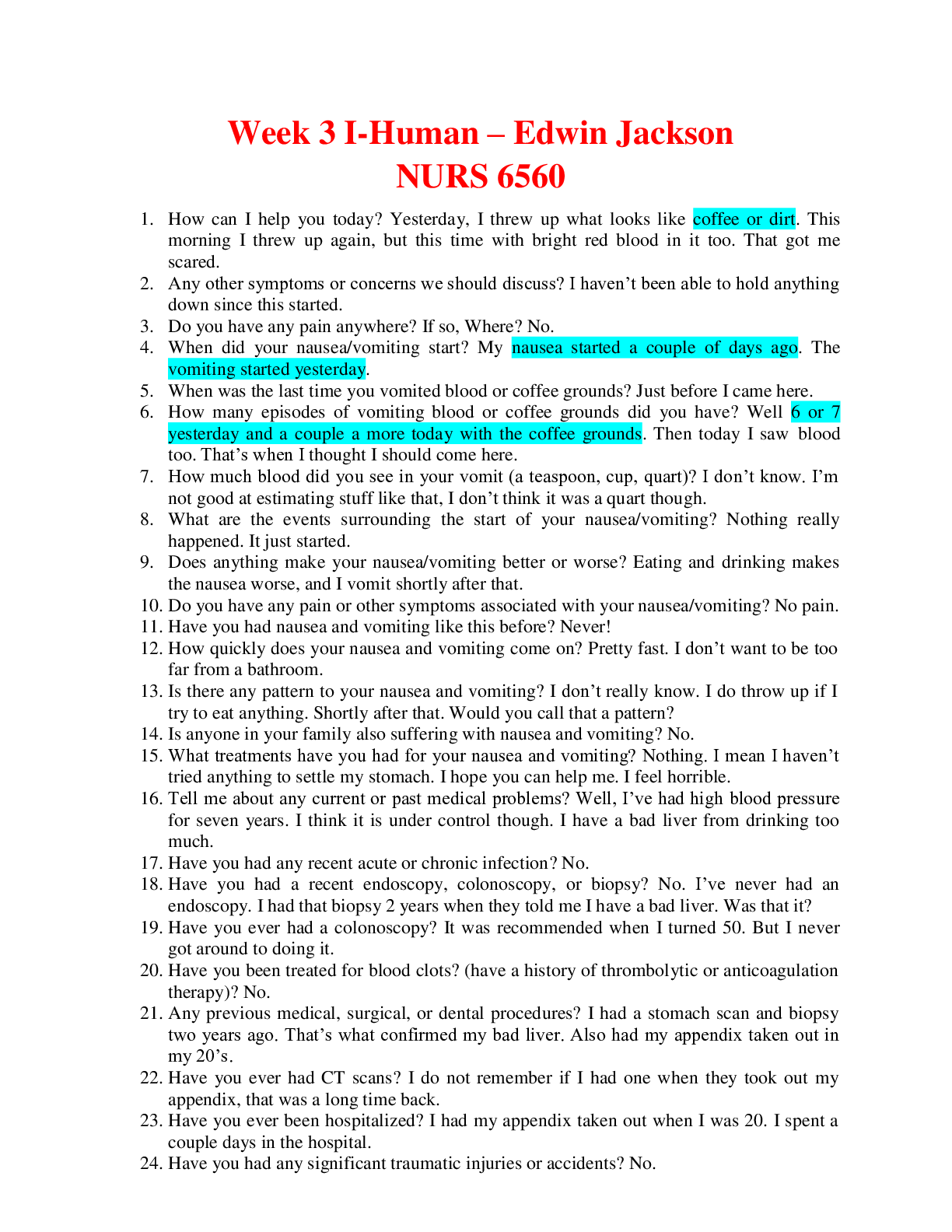
WEEK 8 I-HUMAN CASE FOR A 72 YEARS OLD PATIENT CC: UNUSUAL MO...
More related documents below