Financial Accounting > EXAM > ACC 121-Accounting Pikes Peak Community College-M5COMP.docx (All)
ACC 121-Accounting Pikes Peak Community College-M5COMP.docx
Document Content and Description Below
Last updated: 3 years ago
Preview 1 out of 11 pages
Instant download

Buy this Document to get the Full Access Instantly
Provided by Students Who Aced it
We Verify Document Content to Gurantee Accuracy
Reviews( 0 )
Document information
Connected school, study & course
About the document
Uploaded On
Jul 06, 2021
Number of pages
11
Written in
All

Additional information
This document has been written for:
Uploaded
Jul 06, 2021
Downloads
0
Views
44
Topic Tags
Recommended For You
Get more on EXAM »
ACC 121-Accounting Pikes Peak Community College-M5COMP.docx

ACC 121-Accounting Pikes Peak Community College-Unit 4 Case St...
ACC 121-Accounting Pikes Peak Community College-Unit 4 Case St...


Financial Accounting with International Financial Reporting St...

Solutions Manual for Advanced Accounting, 8th Edition by Debra...

Advanced Accounting 4th Edition By Hamlen, Huefner, Largay (Te...
Test Bank for Business and Professional Ethics 9th Edition by...
 1e Gail Fayerman.png)
Advanced Accounting, Canadian Edition (Updated Version) 1st Ed...
.png)
Test Bank for Advanced Accounting, 14th Edition by Joe Ben Hoy...
Advanced Accounting 7th Edition By Debra Jeter, Paul Chaney (T...
Advanced Accounting 5th Edition By Susan Hamlen - TEST BANK [A...

Income Tax Fundamentals 2023, 41e Gerald Whittenburg, Steven G...
Financial Accounting with International Financial Reporting St...
Advanced Accounting 5th Edition By Susan Hamlen TEST BANK | A...
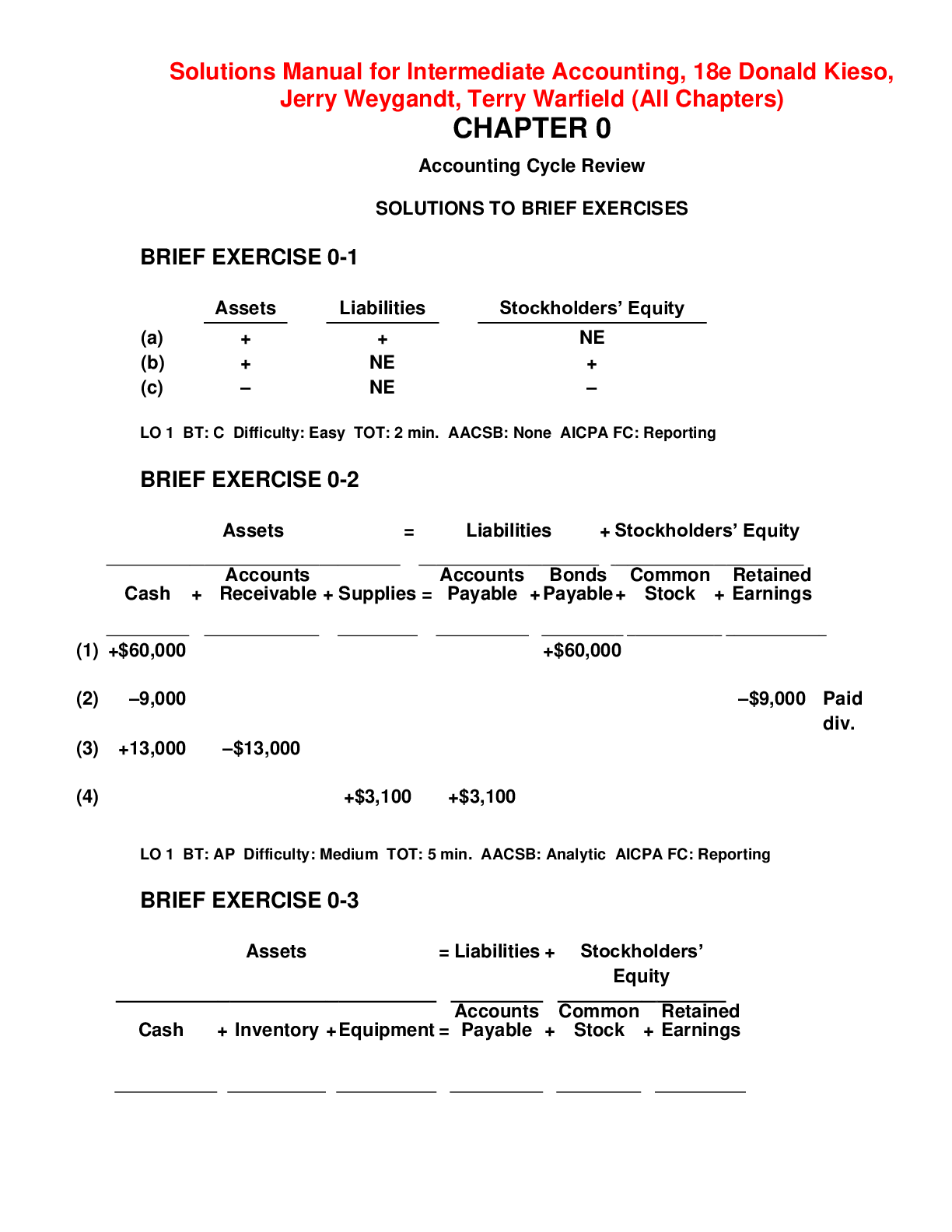
Solutions Manual for Intermediate Accounting, 18th Edition Don...

Test Bank for Advanced Accounting 6th Edition By Debra Jeter P...

Test Bank for Advanced Accounting 4th Edition By Robert Halsey...

Survey of Accounting, 6e Thomas Edmonds, Christopher Edmonds,...