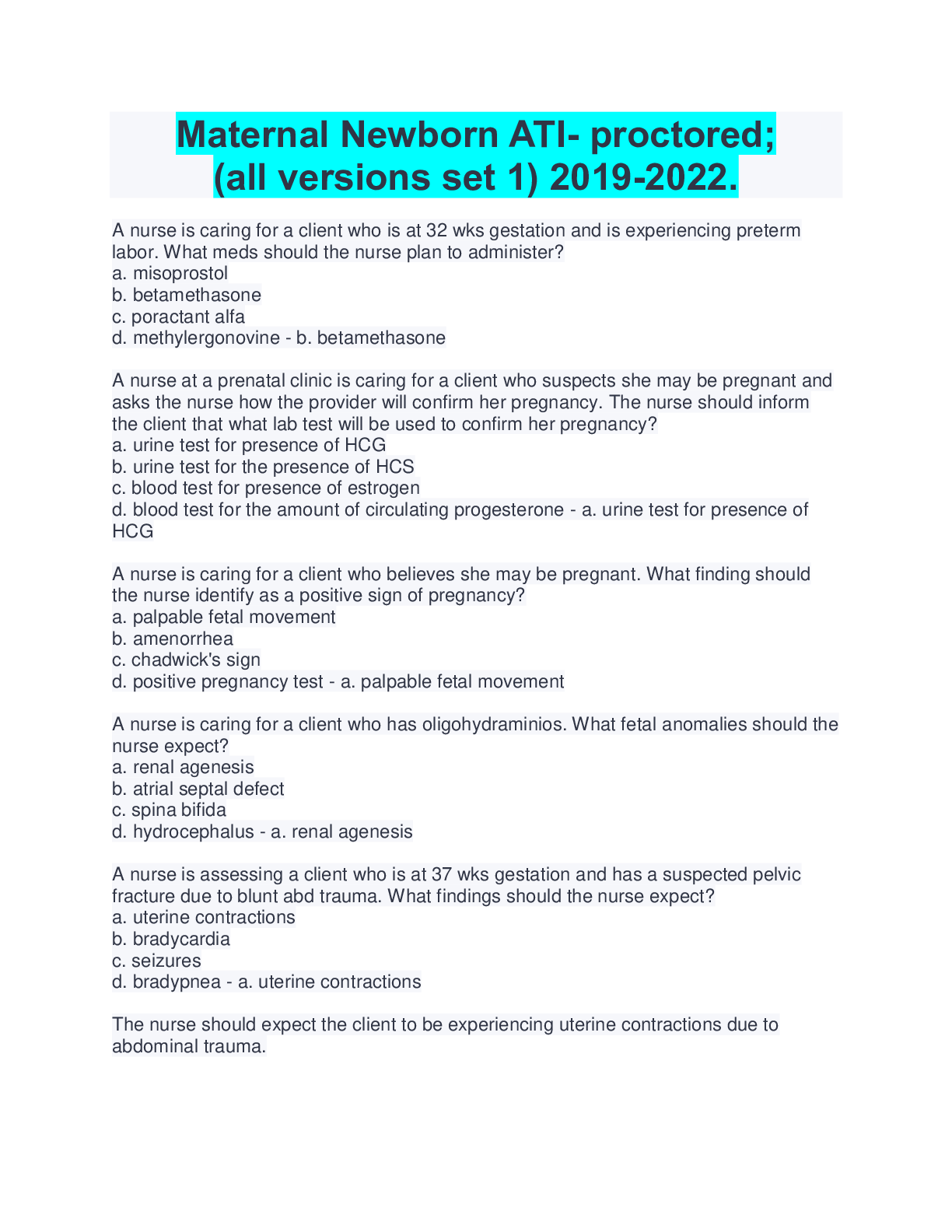
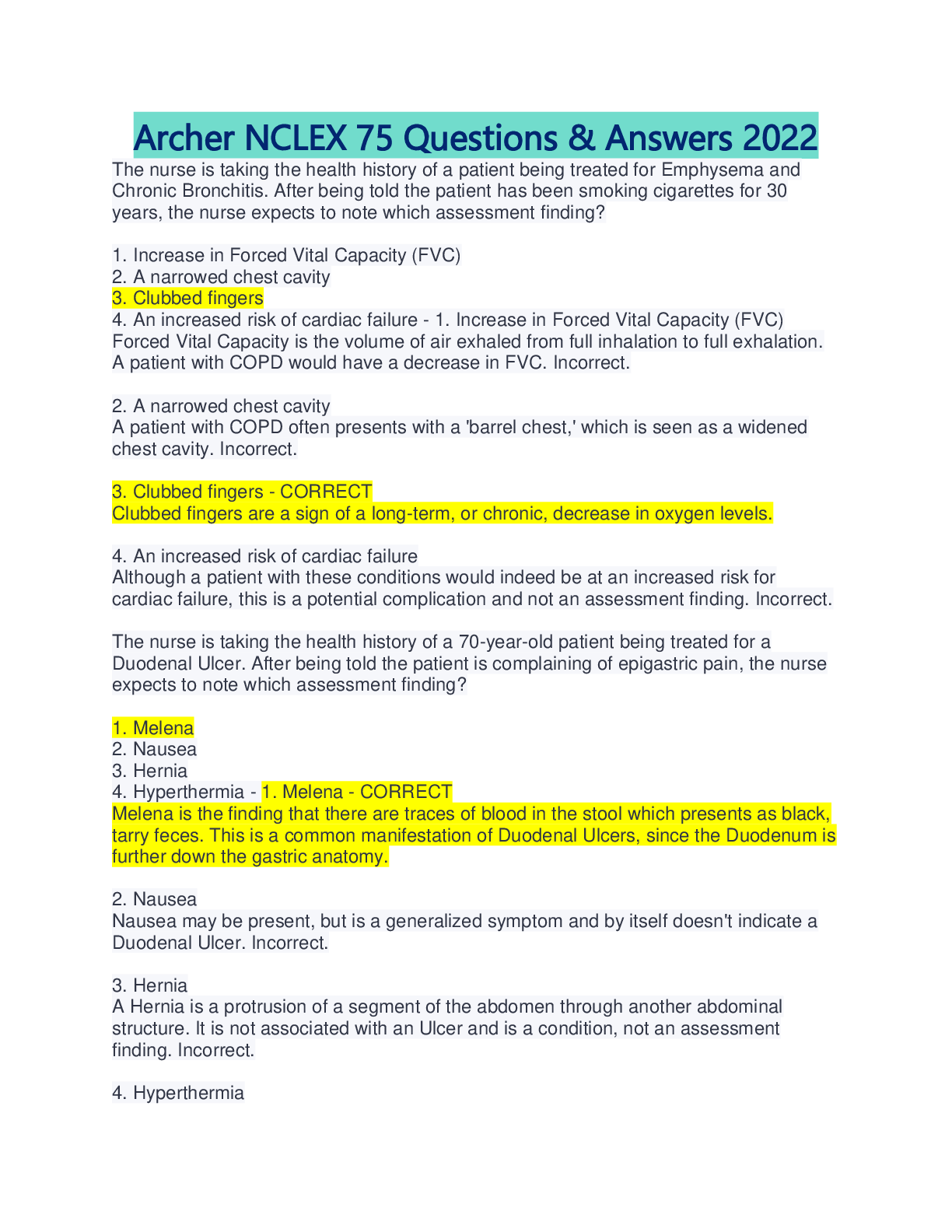
History > QUESTIONS & ANSWERS > HIS 104 week 2 quiz, all answers 100% correct. (All)
HIS 104 week 2 quiz, all answers 100% correct.
Document Content and Description Below
Last updated: 6 months ago
Preview 1 out of 2 pages
Instant download

Buy this Document to get the Full Access Instantly
Provided by Students Who Aced it
We Verify Document Content to Gurantee Accuracy
Reviews( 0 )
Document information
Connected school, study & course
About the document
Uploaded On
Aug 03, 2020
Number of pages
2
Written in
All

Additional information
This document has been written for:
Uploaded
Aug 03, 2020
Downloads
0
Views
220
Topic Tags
Recommended For You
Get more on QUESTIONS & ANSWERS »
FLORIDA DRIVING CLASS E KNOWLEDGE TEST EXAM NEWEST 2026/2027 A...
BIO 203 PURDUE ANATOMY HEALTH EXAM 2 LATEST 2026/2027 TEST QUE...
BIO 203 PURDUE ANATOMY PRACTICE TEST EXAM 1 LATEST 2026 ALL ST...

ATI RN Fundamentals Online Practice 2025/2026 B Questions and...

TEST BANK for A History of World Societies, 12th Edition by Me...
TEST BANK for Archaeology and Humanity's Story: A Brief Introd...
Test Bank For Living Theatre A History of Theatre 7th Edition...
Western Civilizations Study Set 1/ Quiz 7: Romes Three Heirs,...
Test Bank for Archaeology and Humanity's Story A Brief Introdu...
History of Psychology The Making of a Science 1st Edition By E...

eBook (EPUB) The COVID-19 Pandemic and Memory Remembrance, com...
A History of Western Society (1 Volume) 14th Edition By Wiesne...