1.
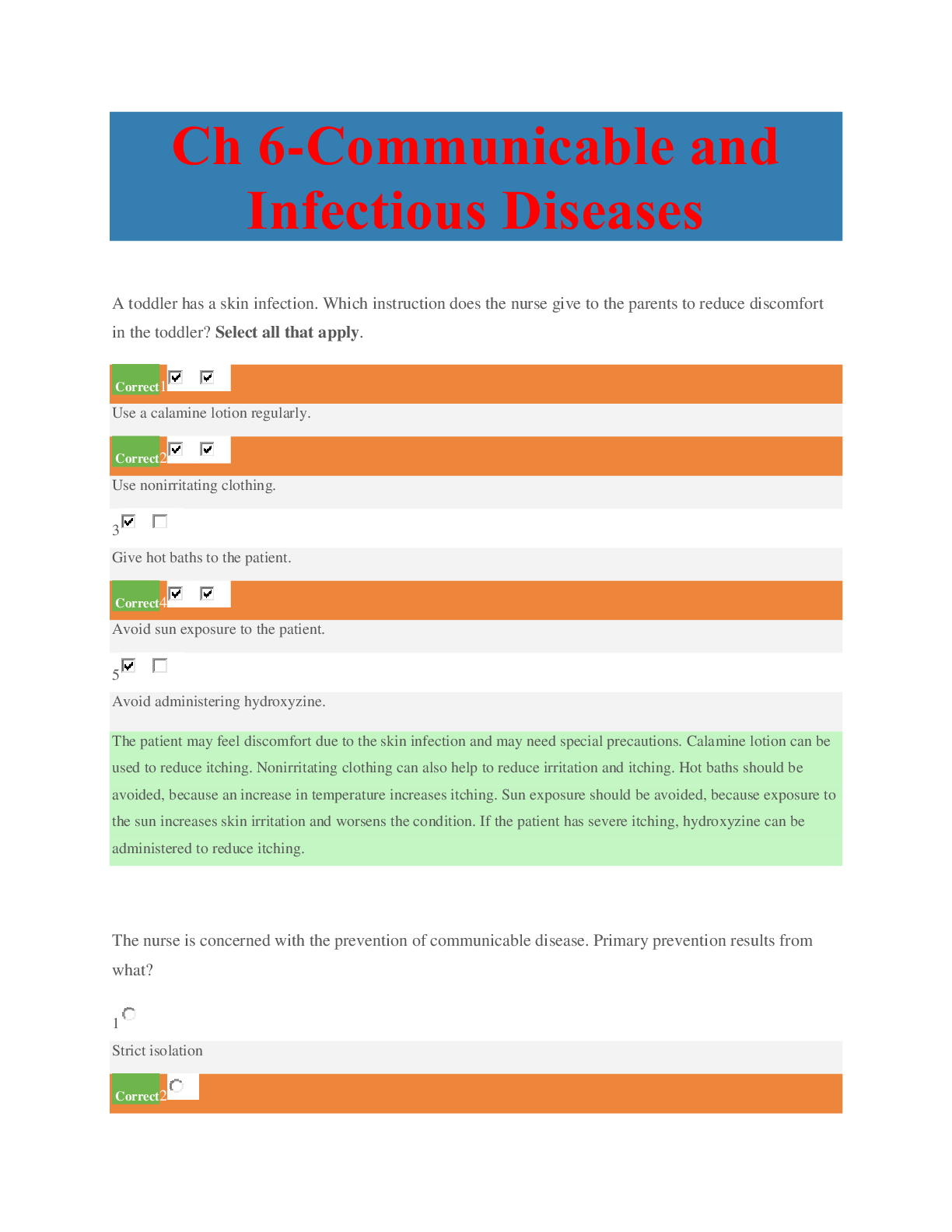
A toddler has a skin infection. Which instruction does the nurse give to the parents to reduce discomfort in the toddler? Select all that apply.
Correct1
Use a calamine lotion regularly.
Correct2
Use nonirr
...
1.
A toddler has a skin infection. Which instruction does the nurse give to the parents to reduce discomfort in the toddler? Select all that apply.
Correct1
Use a calamine lotion regularly.
Correct2
Use nonirritating clothing.
3
Give hot baths to the patient.
Correct4
Avoid sun exposure to the patient.
5
Avoid administering hydroxyzine.
2.
The nurse is concerned with the prevention of communicable disease. Primary prevention results from what?
1
Strict isolation
Correct2
Immunizations
3
Early diagnosis
4
Treatment of disease
.
An 18-month-old child has fever, rash, runny nose, and Koplick's spots on the inside of the mouth. The child is diagnosed with measles. Which vitamin administration is recommended to decrease the risk of mortality in this child?
1
Two doses of vitamin C on consecutive days
2
Two doses of vitamin D on consecutive days
Correct3
Two doses of vitamin A on consecutive days
4
Two doses of vitamin K on consecutive days
4.
A nurse is caring for a toddler with sickle cell disease. Which complication is likely to be found in this patient?
1
Stomatitis
Correct2
Aplastic anemia
3
Conjunctivitis
4
Gingivostomatitis
5.
What does the nurse recognize as having the greatest impact on the significant decline in incidence of communicable diseases of childhood?
Correct1
Immunizations
2
New medical treatments
3
Proper handwashing skills
4
Secondary prevention measures
Topics
6.
A mother of two children tells the nurse that she has decided to not have her children immunized because her neighbor has a 9-year-old son with autism and she is now convinced that the autism may have been caused by the immunizations her son received. What is the most empathic response the nurse could give?
1
"What you've heard is bogus. There's no evidence that immunizations cause autism."
2
"The law says you must immunize your children. Refusing to immunize is breaking the law."
3
"You must really be afraid. Autism is a horrible condition for any parent to have to deal with."
Correct4
"I can understand your concerns. Would you like more information about the safety of immunizations?"
7.
A child was brought to the hospital with fever and vomiting. The vital signs of the child show a body temperature of 103o F and pulse rate of 130 beats per minute. Physical examination shows a red and swollen tongue. Which condition has the child most likely developed?
1
Mumps
2
Measles
3
Chickenpox
Correct4
Scarlet fever
A 12-year-old child being seen in the clinic has not received the hepatitis B (HBV) vaccine. The nurse, drawing on knowledge of vaccines, knows that the most appropriate recommendation is what?
1
One dose of HBV vaccine is needed at age 14 years.
Correct2
The three-dose series of HBV vaccine should be started at this time.
3
Only one dose of HBV vaccine will be needed sometime during adolescence.
4
The three-dose series of HBV vaccine should be started at age 16 years or sooner if the adolescent becomes sexually active.
.
A child was brought to the hospital with complaints of fever. The vital signs of the child show a temperature of 102° F. On diagnosis, the child is found to have developed exanthema subitum. Which drug administered to the child with this communicable disease reduces the body temperature?
1
Cetirizine
2
Loratadine
3
Fexofenadine
Correct4
Acetaminophen
10.
What is the typical mode of transmission of pertussis (whooping cough)?
1
Fecal
2
Blood
Correct3
Droplet
4
Mucous membranes
11.
The nurse is assessing a child with herpetic gingivostomatitis. The nurse wears gloves when examining the lesions. Which statement best describes this nursing action?
1
Unnecessary because the virus is not easily spread
2
Unnecessary because the virus is sexually transmitted
Correct3
Necessary because the virus can easily enter breaks in the skin
Incorrect4
Necessary only if the nurse touches his or her own mouth after touching the child's mouth
2.
What should the nurse ask the parent before giving influenza vaccination to a child?
Correct1
"Is your child allergic to eggs of any kind?"
2
"Does your child have celiac disease?"
3
"Is your child allergic to cow's milk?"
4
"Is your child allergic to any antibiotics?"
[Show More]