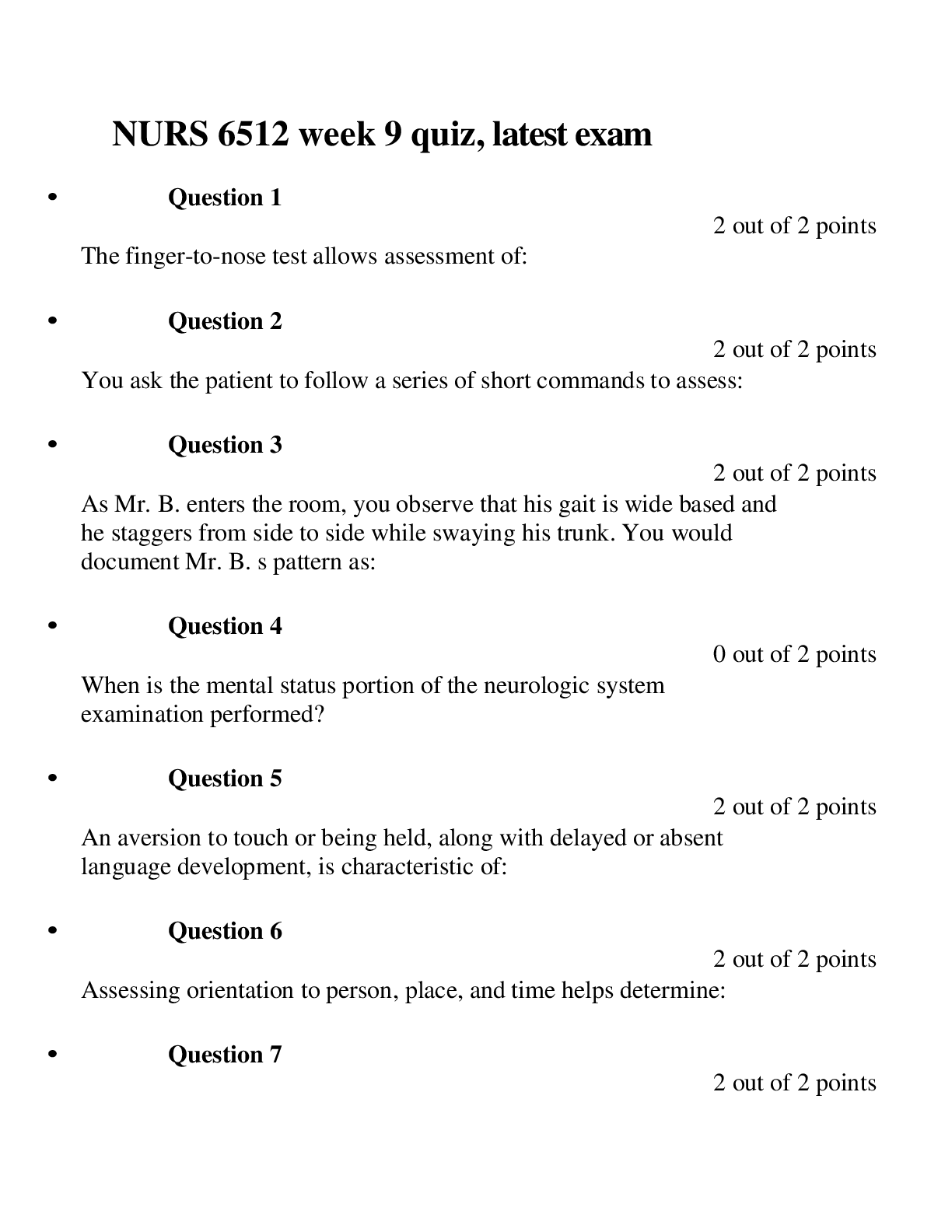
NURS 6512 week 9 quiz, latest exam
Document Content and Description Below
NURS 6512 week 9 quiz, latest exam
• Question 1
The finger-to-nose test allows assessment of:
• Question 2
2 out of 2 points
2 out of 2 points
You ask the patient to follow a series of short commands to assess:
•
...
[Show More]
Last updated: 3 years ago
Preview 1 out of 22 pages
Instant download
Buy this Document to get the Full Access Instantly
Provided by Students Who Aced it
We Verify Document Content to Gurantee Accuracy
Reviews( 0 )
Document information
Connected school, study & course
About the document
Uploaded On
Jul 07, 2021
Number of pages
22
Written in
All

Additional information
This document has been written for:
Uploaded
Jul 07, 2021
Downloads
0
Views
88
Topic Tags
Recommended For You
Get more on EXAM »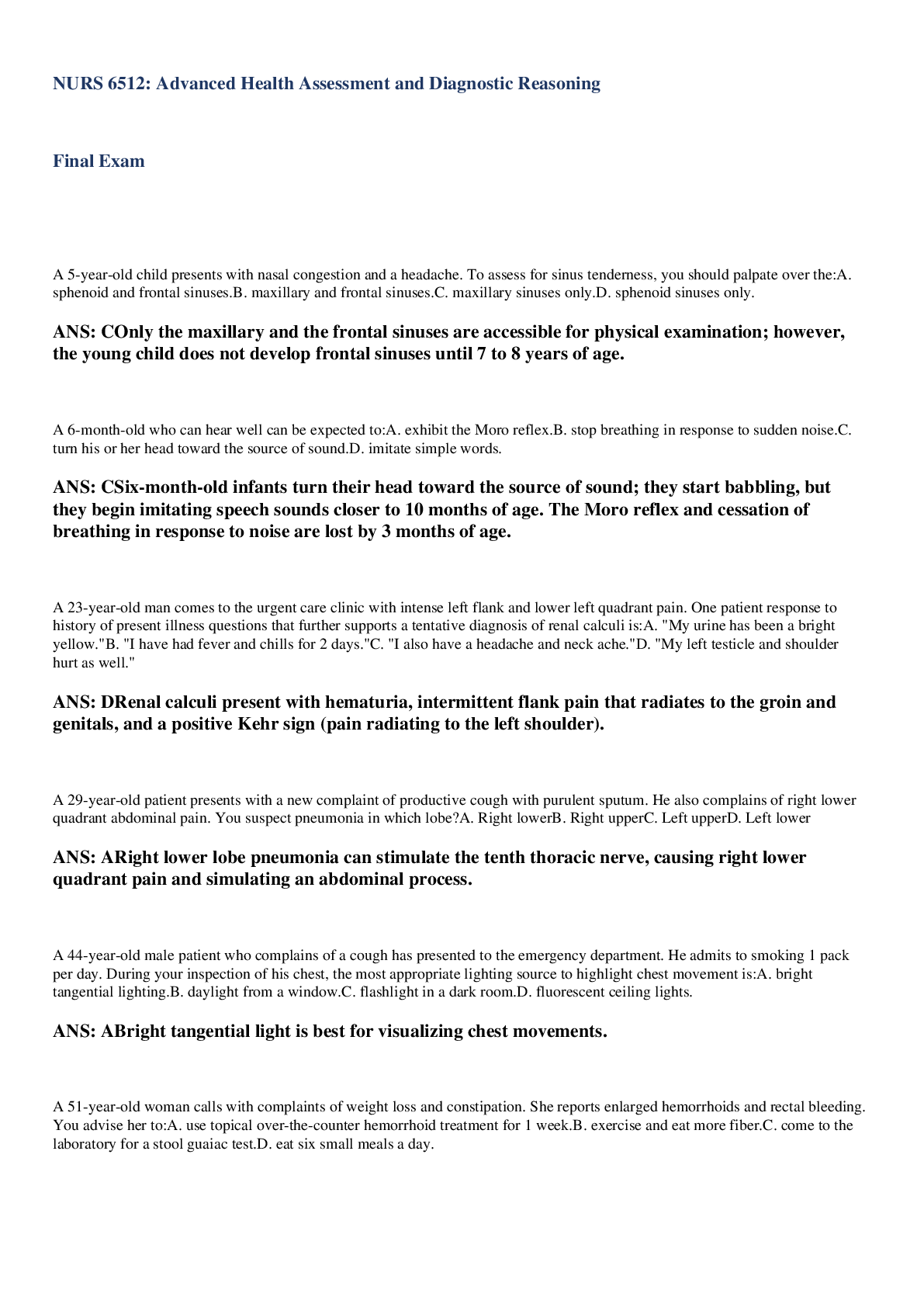
$18.5
22 Pages
NURS 6512 / NURS6512: Advanced Health Assessment and Diagnosti...

$15
15 Pages
NURS-6512N-53, Advanced Health Assessment.2020 FINAL EXAM
$15
47 Pages
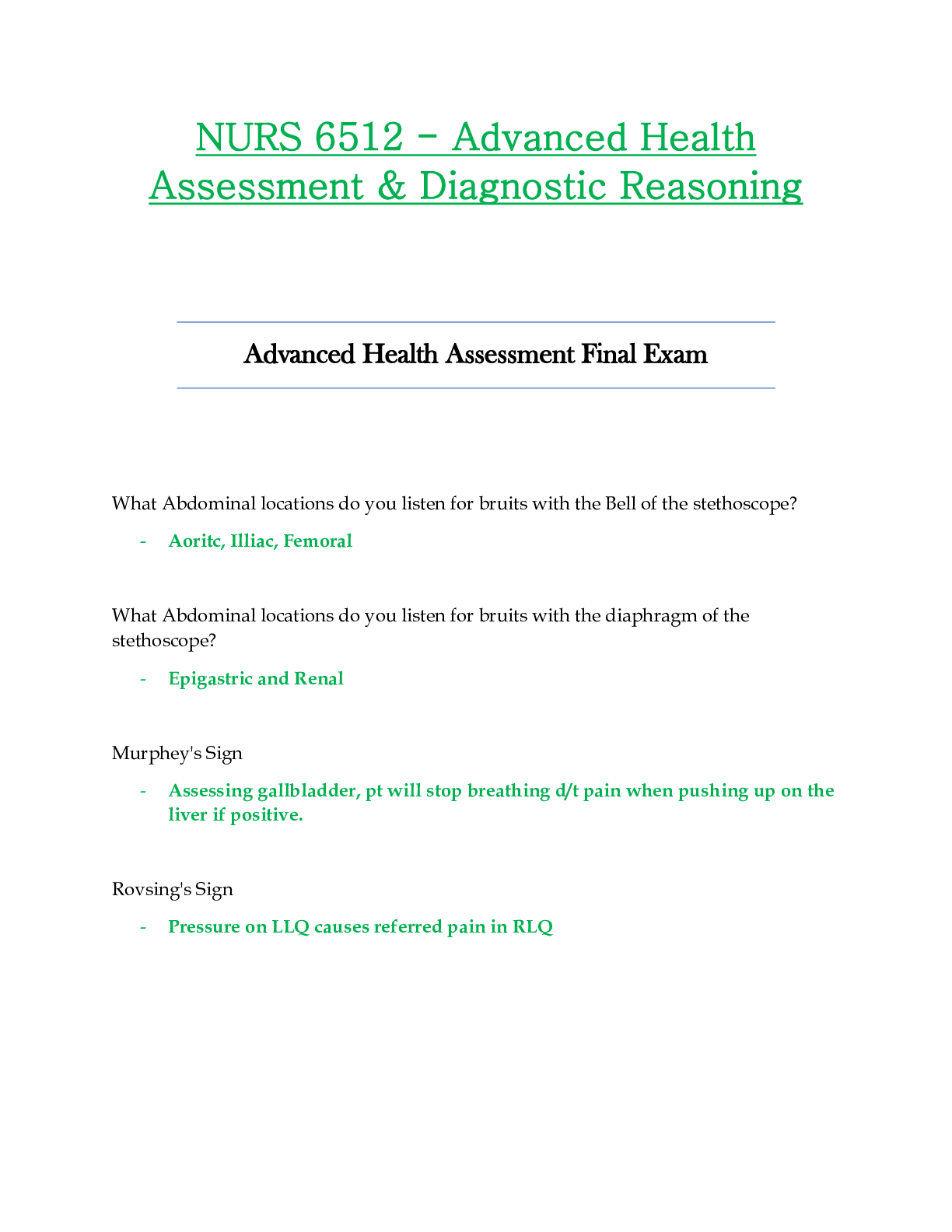
NURS 6512 / NURS6512 Final Exam (Latest): Advanced Health Asse...
$10.5
17 Pages
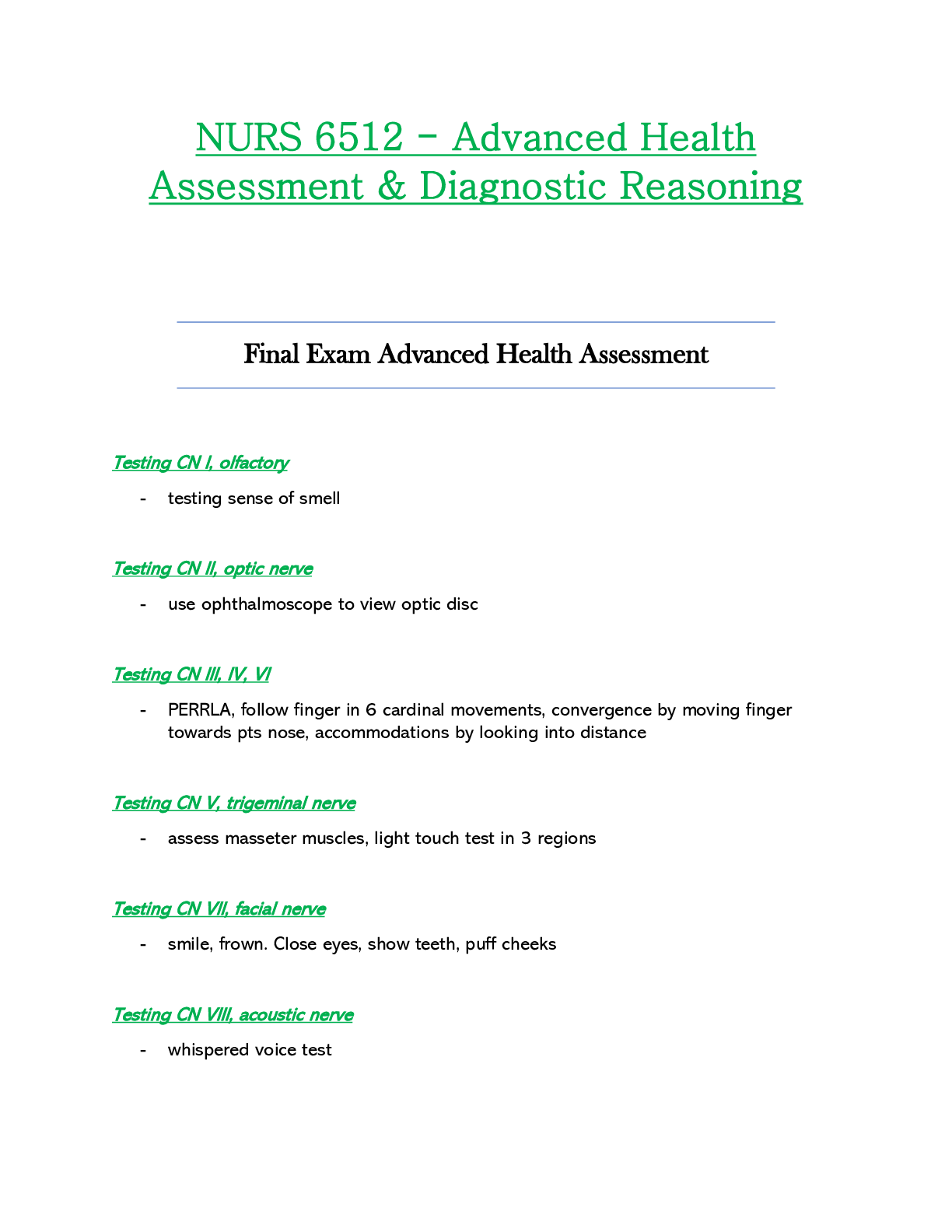
NURS 6512 / NURS6512 Final Exam (Latest): Advanced Health Asse...
$10
16 Pages
NURS-6512N / NURS 6512 / NURS6512, Advanced Health Assessment...
$10
26 Pages
NURS-6512N / NURS 6512 / NURS6512, Advanced Health Assessment...

$10
4 Pages
NURS-6512N / NURS 6512 / NURS6512, Advanced Health Assessment...
$6
4 Pages
NUR 321 VCE #5 Fluid and Electrolyte Balance QUESTIONS AND ANS...

$8
6 Pages
NUR 321 VCE # 1 Lesson 3- Critical Thinking in Nursing Practic...
More related documents below


.png)


