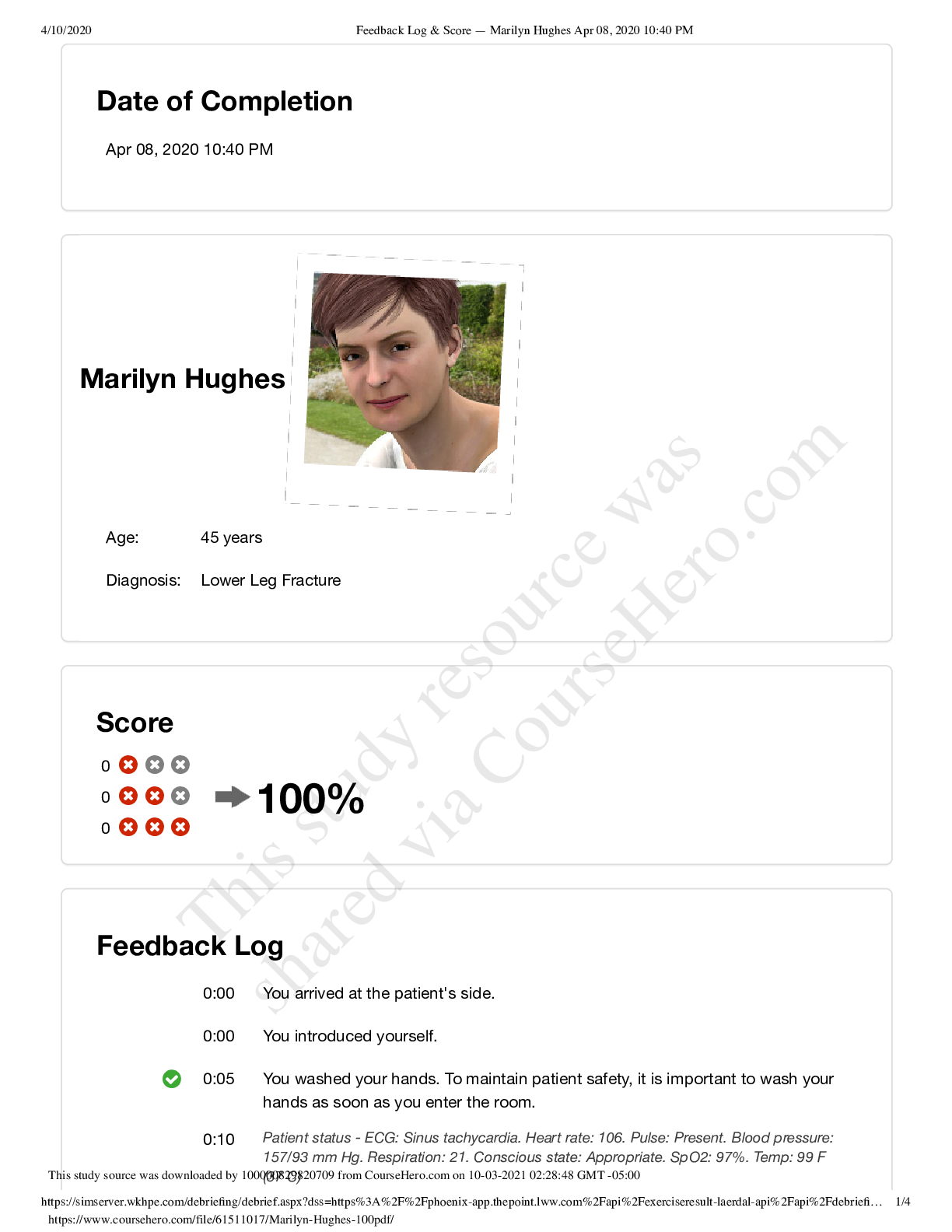
Patient status - ECG: Sinus tachycardia. Heart rate: 107. Pulse: Present. Blood pressure: 153/92 mm Hg. Respiration: 21. Conscious state: Appropriate. SpO2: 98%. Temp: 99 F (37 C)
1:18 You washed your hands.
2:10 P
...
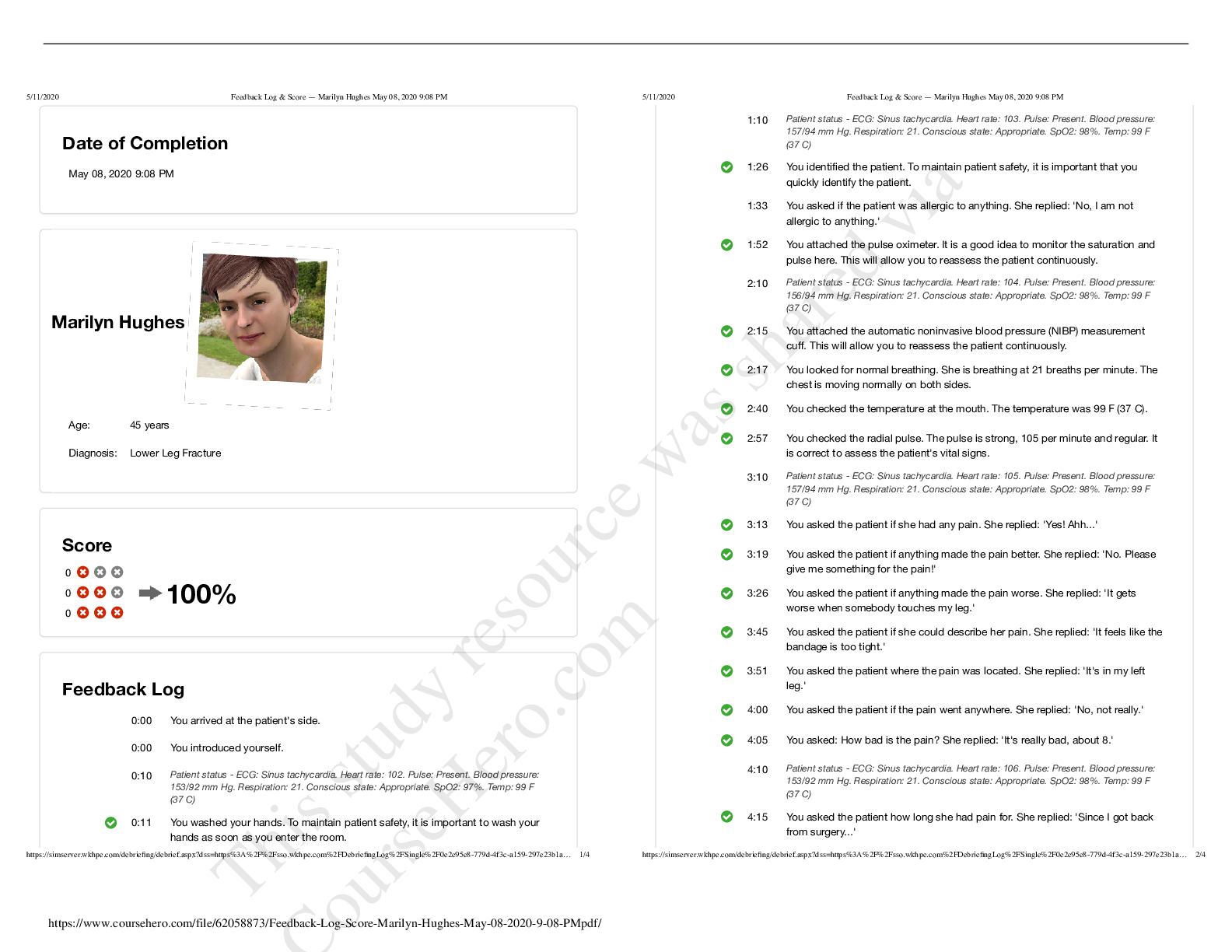
Patient status - ECG: Sinus tachycardia. Heart rate: 107. Pulse: Present. Blood pressure: 153/92 mm Hg. Respiration: 21. Conscious state: Appropriate. SpO2: 98%. Temp: 99 F (37 C)
1:18 You washed your hands.
2:10 Patient status - ECG: Sinus tachycardia. Heart rate: 108. Pulse: Present. Blood pressure: 155/92 mm Hg. Respiration: 21. Conscious state: Appropriate. SpO2: 98%. Temp: 99 F (37 C)
2:31 You identified the patient. To maintain patient safety, it is important that you quickly identify the patient.
2:40 You asked if the patient was allergic to anything. She replied: 'No, I am not allergic to anything.'
2:48 You looked for normal breathing. She is breathing at 21 breaths per minute. The chest is moving normally on both sides.
3:10 Patient status - ECG: Sinus tachycardia. Heart rate: 109. Pulse: Present. Blood pressure: 154/92 mm Hg. Respiration: 21. Conscious state: Appropriate. SpO2: 98%. Temp: 99 F (37 C)
3:18 You attached the pulse oximeter. It is a good idea to monitor the saturation and pulse here. This will allow you to reassess the patient continuously.
3:29 You checked the radial pulse. The pulse is strong, 110 per minute and regular. It is correct to assess the patient's vital signs.
3:56 You measured the blood pressure at 156/92 mm Hg. It is appropriate to monitor the patient by measuring the blood pressure.
4:10 Patient status - ECG: Sinus tachycardia. Heart rate: 110. Pulse: Present. Blood pressure: 154/91 mm Hg. Respiration: 21. Conscious state: Appropriate. SpO2: 98%. Temp: 99 F (37 C)
4:22 You checked the temperature at the mouth. The temperature was 99 F (37 C).
4:41 You examined the patient's skin. There is normal skin turgor. Her skin is cool, and she is very sweaty.
5:00 You checked the pedal pulse. The pulse is strong, 110 per minute and regular.
The pulse is absent on the left side, though. Correct. This is part of a neurovascular assessment when compartment syndrome is suspected.
5:10 Patient status - ECG: Sinus tachycardia. Heart rate: 111. Pulse: Present. Blood pressure: 156/93 mm Hg. Respiration: 21. Conscious state: Appropriate. SpO2: 98%. Temp: 99 F (37 C)
5:18 You asked the patient if she could describe her pain. She replied: 'It feels like the bandage is too tight.'
5:24 You asked the patient where the pain was located. She replied: 'It's in my left leg.'
5:28 You asked the patient if the pain went anywhere. She replied: 'No, not really.'
[Show More]