NURSING > STUDY GUIDE > Pediatrics Study Guide Exam 1 Chapters 15-23. Best Exam Materials and the Extra Stuff To Know. (All)
Pediatrics Study Guide Exam 1 Chapters 15-23. Best Exam Materials and the Extra Stuff To Know.
Document Content and Description Below
Last updated: 3 years ago
Preview 1 out of 18 pages
Instant download
.png)
Buy this Document to get the Full Access Instantly
Provided by Students Who Aced it
We Verify Document Content to Gurantee Accuracy
Reviews( 0 )
Document information
Connected school, study & course
About the document
Uploaded On
Aug 19, 2020
Number of pages
18
Written in
All

Additional information
This document has been written for:
Uploaded
Aug 19, 2020
Downloads
0
Views
159
Topic Tags
Recommended For You
Get more on STUDY GUIDE »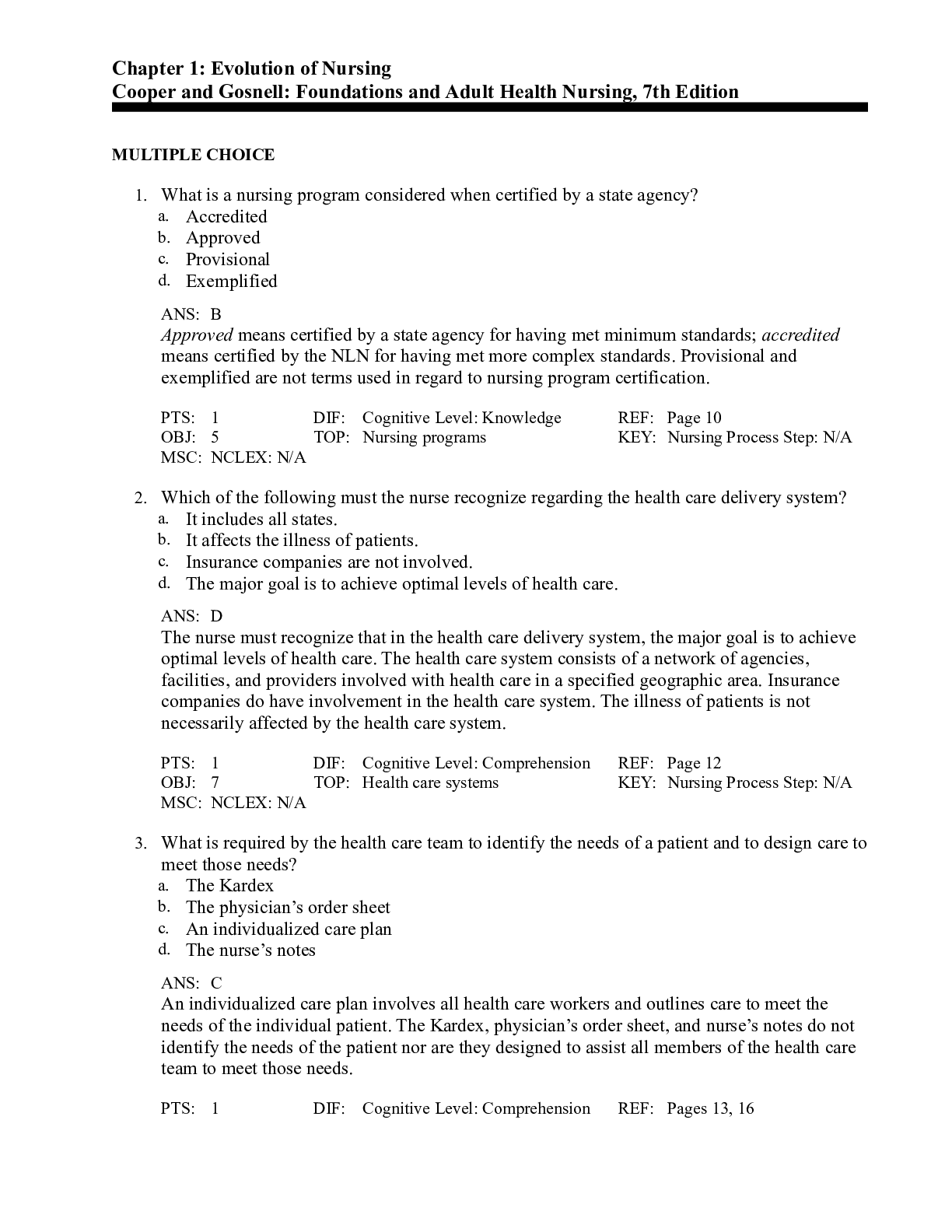
TEST BANK for Foundations And Adult Health Nursing, 7th Editio...
TEST BANK for Emergency Care in the Streets 8th edition by Nan...

Test Bank for Davis Advantage for Understanding Medical-Surgic...

Test Bank for Davis Advantage for Understanding Medical-Surgic...
TEST BANK for Pharmacotherapeutics for Advanced Practice Nurse...
Test Bank Pharmacology and the Nursing Process 11th Edition by...

Fundamentals of Nursing, 12th Edition by Potter, Perry, Stocke...
Solutions Manual for Principles of Accounting The Financial Ch...
Solutions Manual for Principles of Accounting: The Managerial...
Solution Manual For Business Ethics Decision Making for Perso...

Solution Manual For Business Law and Strategy 2nd Edition by...
Solution Manual For Business Law: The Ethical, Global and Dig...

The Complete Political Science 104 Midterm Study Guide - Chapt...
STUDY GUIDE for Lehne's Pharmacology for Nursing Care 12th Edi...
NUR 225 Nutrition Exam 2 – Comprehensive Nursing Questions, An...
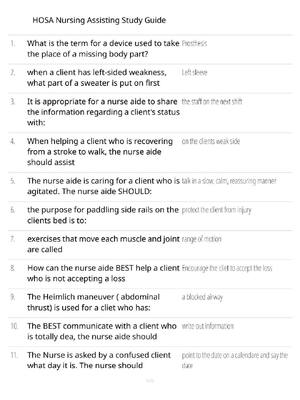
HOSA Nursing Assisting Study Guide – Comprehensive Patient Car...
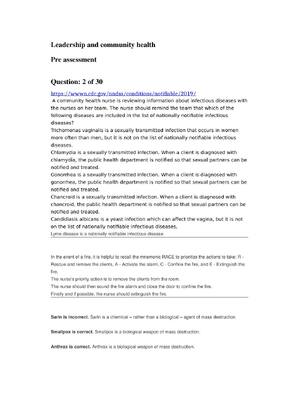
Leadership and Community health Pre assessment Questions and a...