NR 507 Week 7 Outline Chapter 17: Drugs Affecting the Respiratory System (ASSURED A)
Bronchodilators
• BETA2-RECEPTOR AGONISTS
o Albuterol (ProAir, Ventolin, Proventil) *most common
o metaproterenol (Alupent), terbu
...
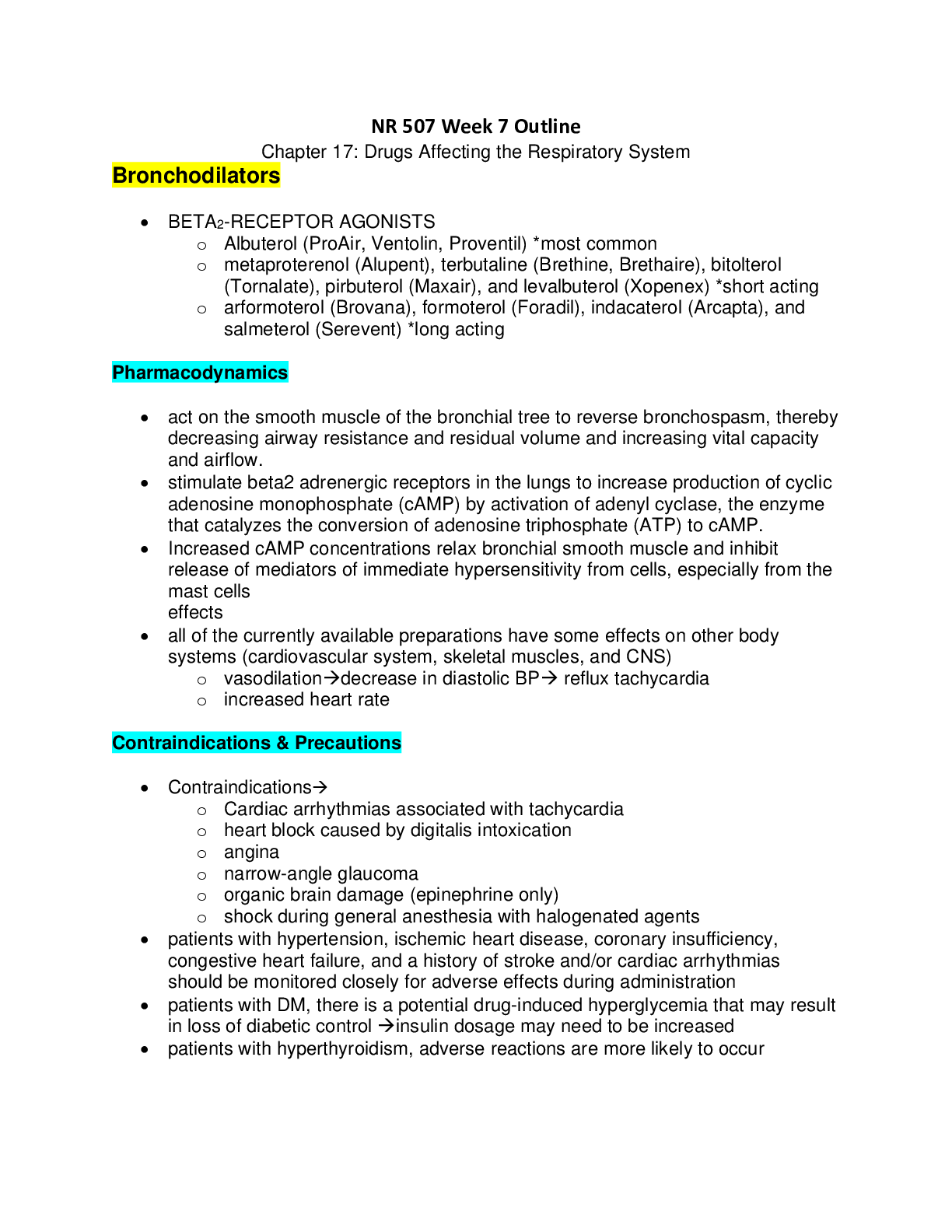
NR 507 Week 7 Outline Chapter 17: Drugs Affecting the Respiratory System (ASSURED A)
Bronchodilators
• BETA2-RECEPTOR AGONISTS
o Albuterol (ProAir, Ventolin, Proventil) *most common
o metaproterenol (Alupent), terbutaline (Brethine, Brethaire), bitolterol
(Tornalate), pirbuterol (Maxair), and levalbuterol (Xopenex) *short acting
o arformoterol (Brovana), formoterol (Foradil), indacaterol (Arcapta), and
salmeterol (Serevent) *long acting
Pharmacodynamics
• act on the smooth muscle of the bronchial tree to reverse bronchospasm, thereby
decreasing airway resistance and residual volume and increasing vital capacity
and airflow.
• stimulate beta2 adrenergic receptors in the lungs to increase production of cyclic
adenosine monophosphate (cAMP) by activation of adenyl cyclase, the enzyme
that catalyzes the conversion of adenosine triphosphate (ATP) to cAMP.
• Increased cAMP concentrations relax bronchial smooth muscle and inhibit
release of mediators of immediate hypersensitivity from cells, especially from the
mast cells
effects
• all of the currently available preparations have some effects on other body
systems (cardiovascular system, skeletal muscles, and CNS)
o vasodilation→decrease in diastolic BP→ reflux tachycardia
o increased heart rate
Contraindications & Precautions
• Contraindications→
o Cardiac arrhythmias associated with tachycardia
o heart block caused by digitalis intoxication
o angina
o narrow-angle glaucoma
o organic brain damage (epinephrine only)
o shock during general anesthesia with halogenated agents
• patients with hypertension, ischemic heart disease, coronary insufficiency,
congestive heart failure, and a history of stroke and/or cardiac arrhythmias
should be monitored closely for adverse effects during administration
• patients with DM, there is a potential drug-induced hyperglycemia that may result
in loss of diabetic control →insulin dosage may need to be increased
• patients with hyperthyroidism, adverse reactions are more likely to occur
• Patients taking digoxin require close monitoring when albuterol is started
because it increases the volume of distribution of digoxin and can cause up to a
30% decrease in blood digoxin levels.
• FDA released a safety announcement regarding LABAs (Long acting beta
agonists)→
o To ensure the safe use of these products:
▪ Single-ingredient LABAs should only be used in combination with
an asthma controller medication; they should not be used alone.
▪ should only be used long-term in patients whose asthma cannot be
adequately controlled on asthma controller medications.
▪ should be used for the shortest duration of time required to achieve
control of asthma symptoms and discontinued, if possible, once
asthma control is achieved. Patients should then be maintained on
an asthma controller medication.
▪ Pediatric and adolescent patients who require the addition of a
LABA to an inhaled corticosteroid should use a combination
product containing both an inhaled corticosteroid and a LABA, to
ensure compliance with both medications
ADR
• usually transient →temporary reduction in dose may alleviate some of the side
effects
• palpitations
• supraventricular & ventricular ectopic beats
• CNS excitation → tremors, dizziness, shakiness, nervousness, and restlessness
• headache
[Show More]