NURSING > STUDY GUIDE > NUR 3029: Foundations of Health Assessment Final Exam: Study Guide-2021 (All)
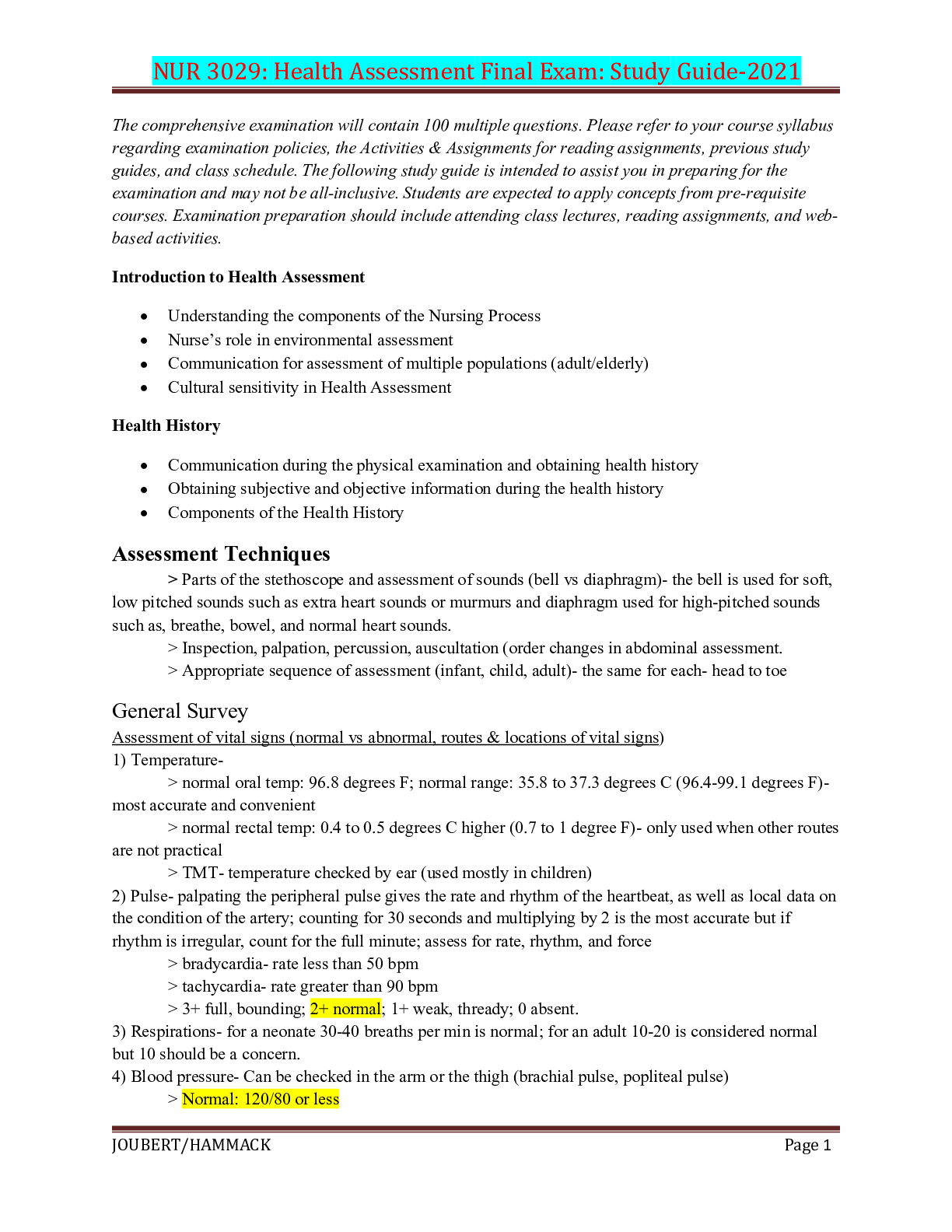
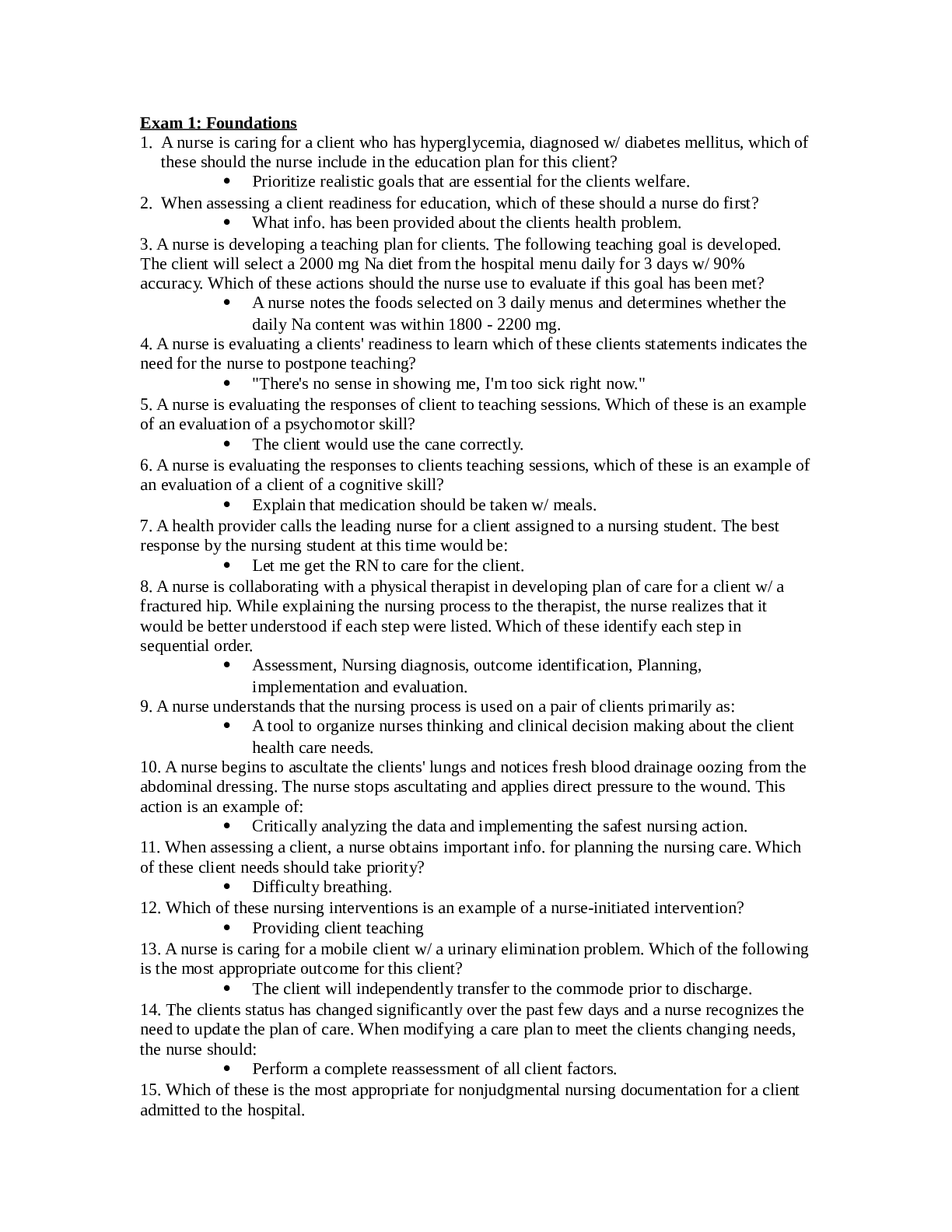
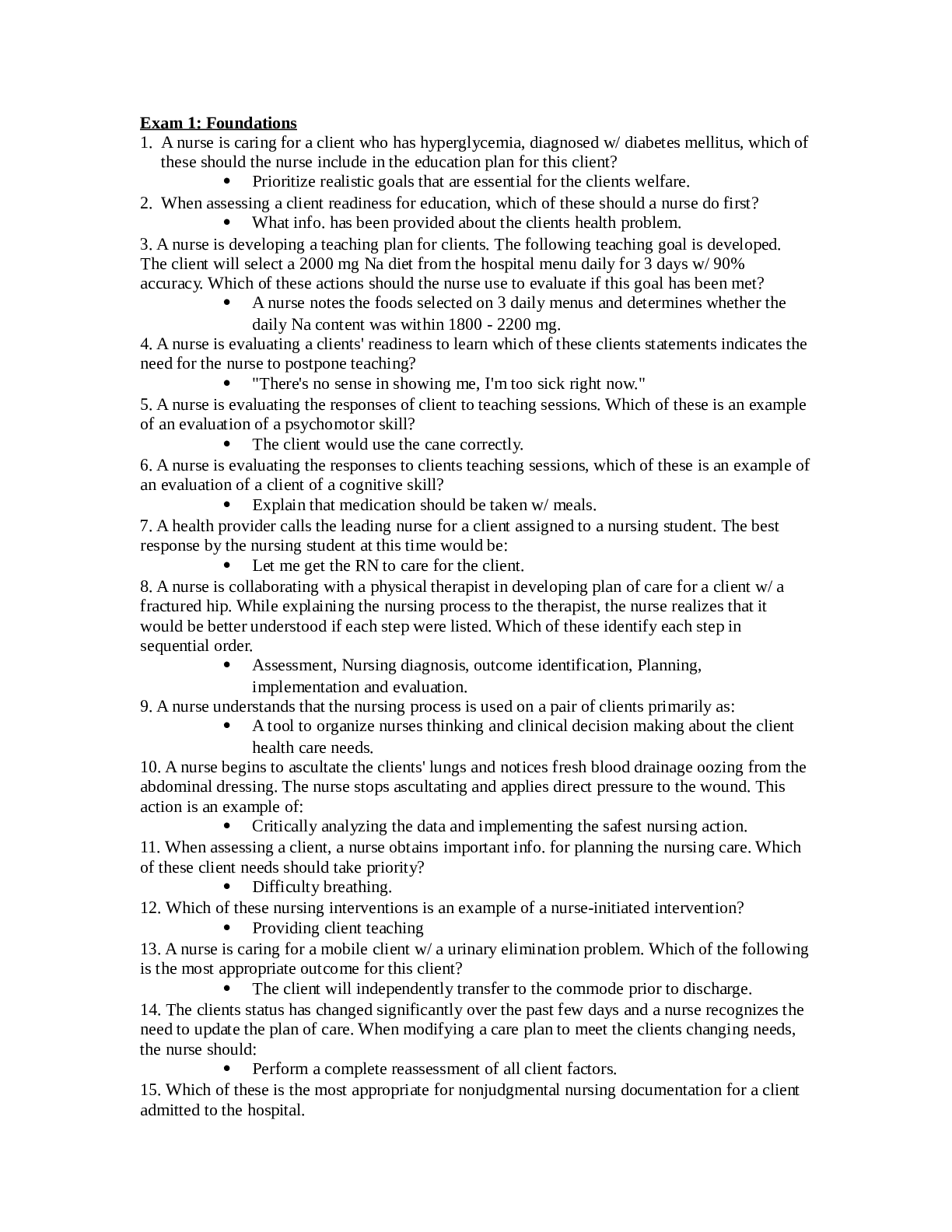
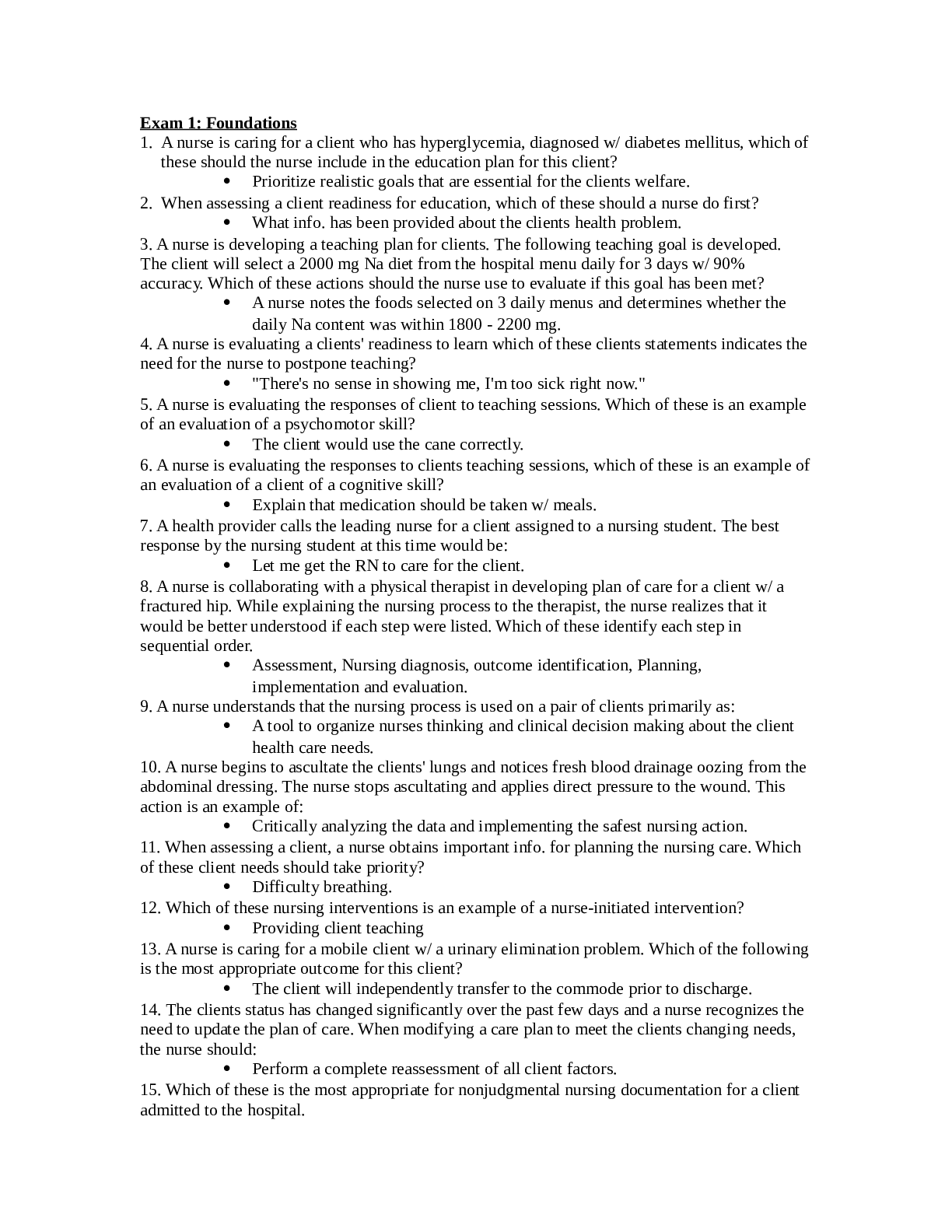
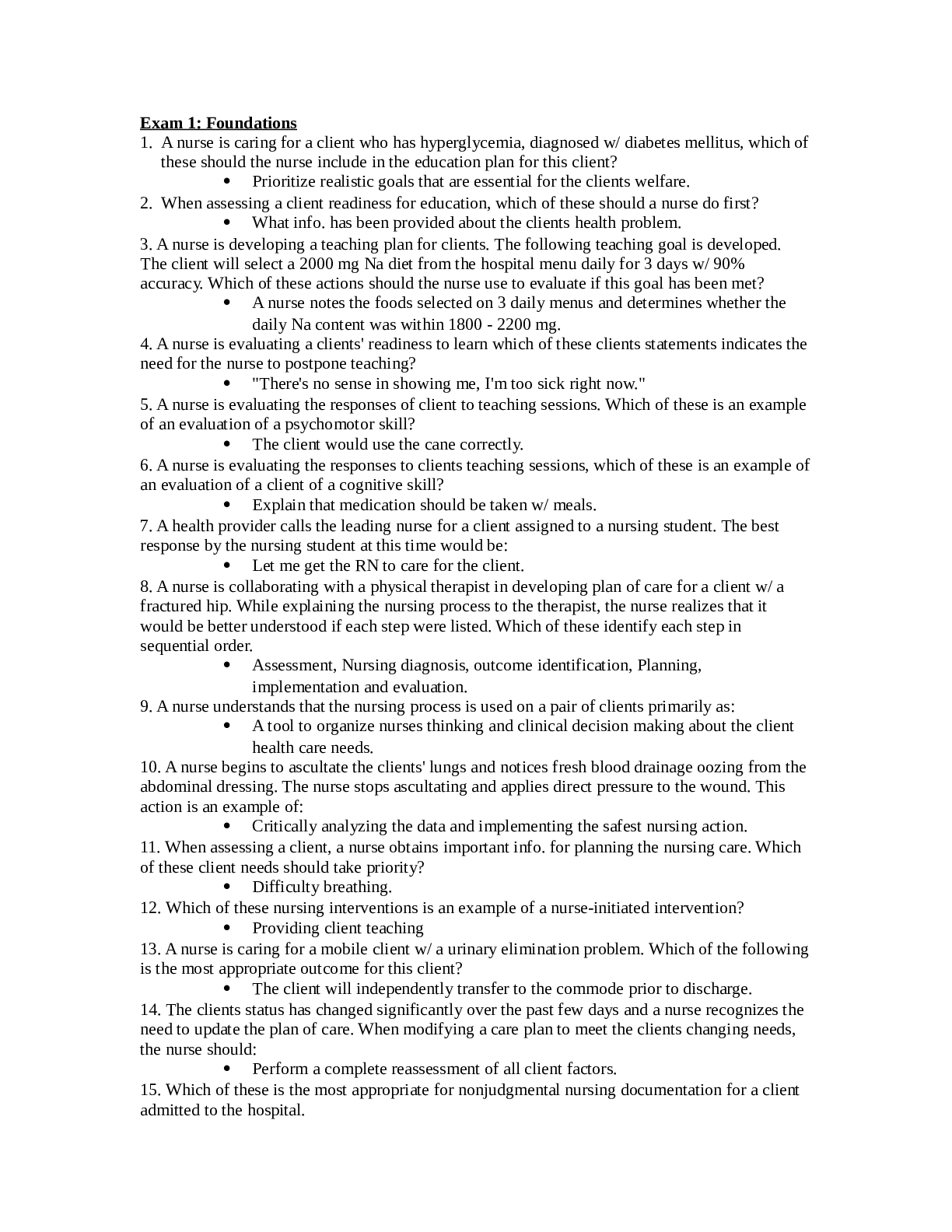
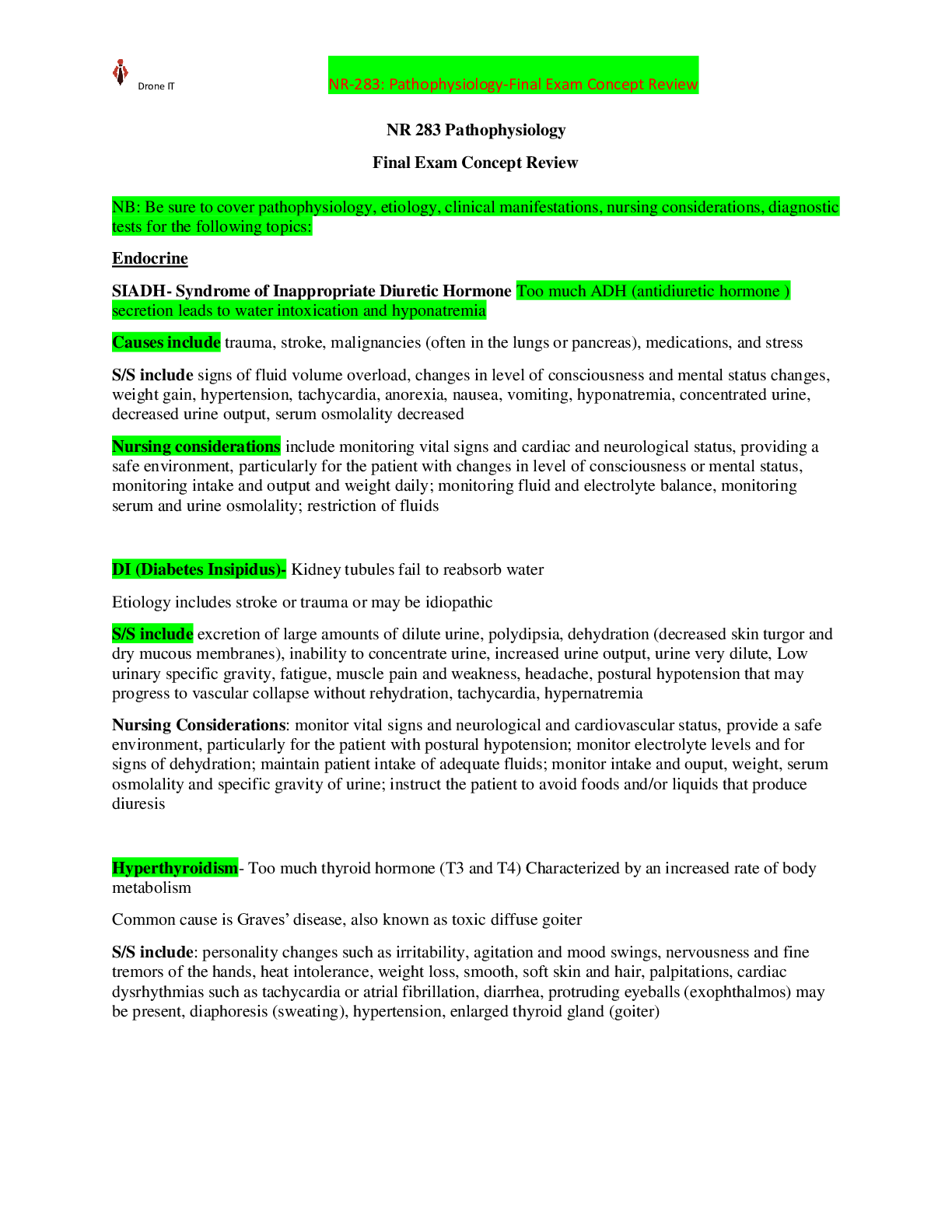
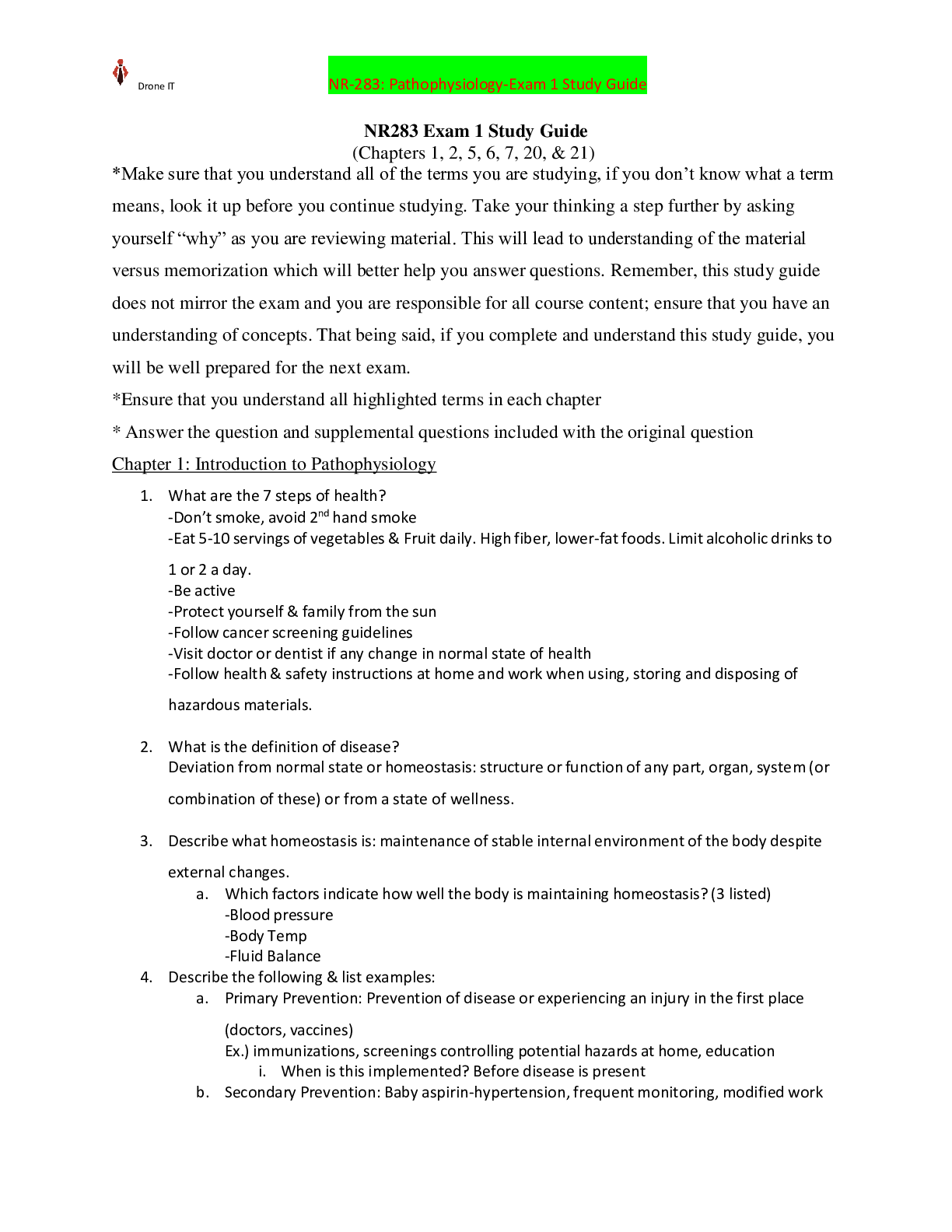
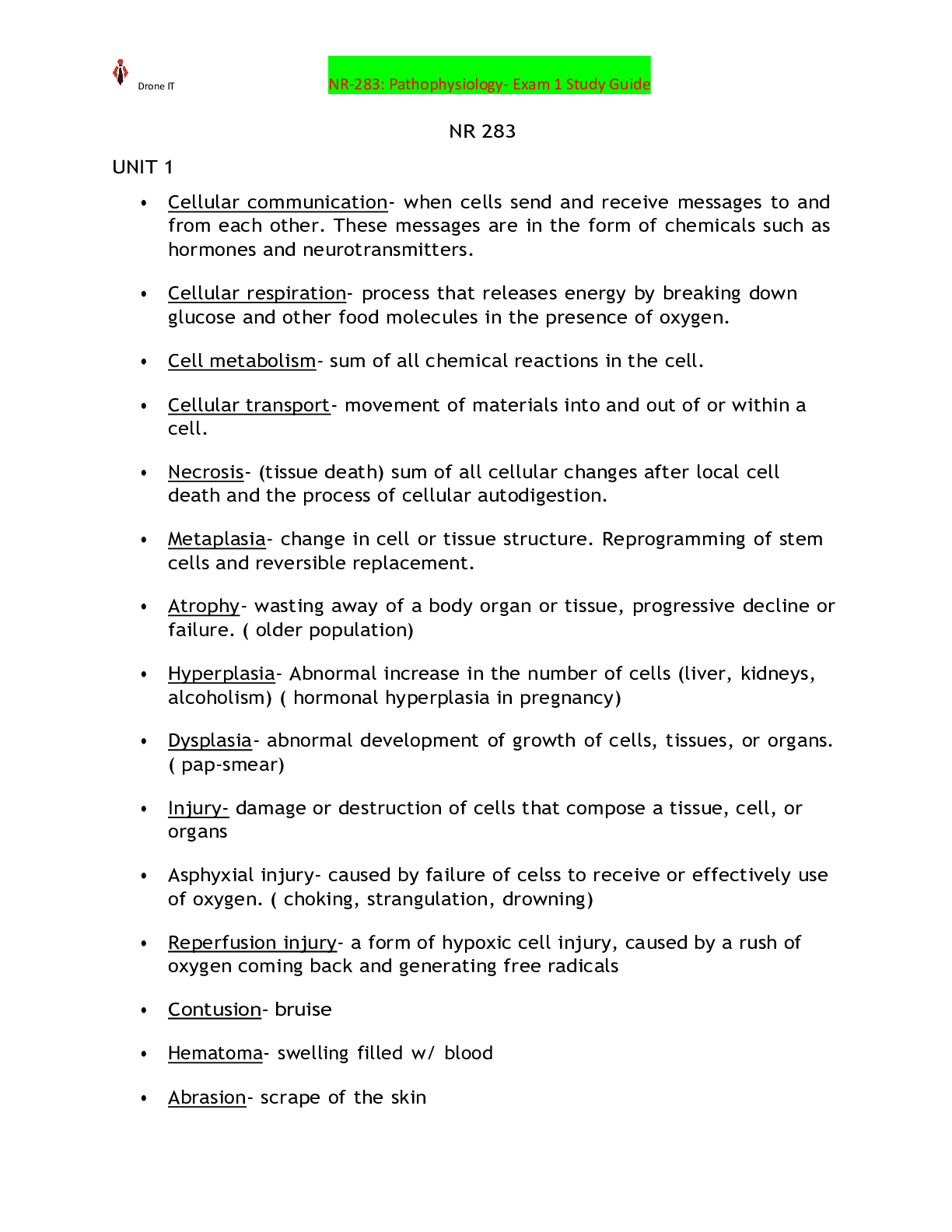
NUR 3029: Foundations of Health Assessment Final Exam: Study Guide-2021
Document Content and Description Below
Last updated: 4 years ago
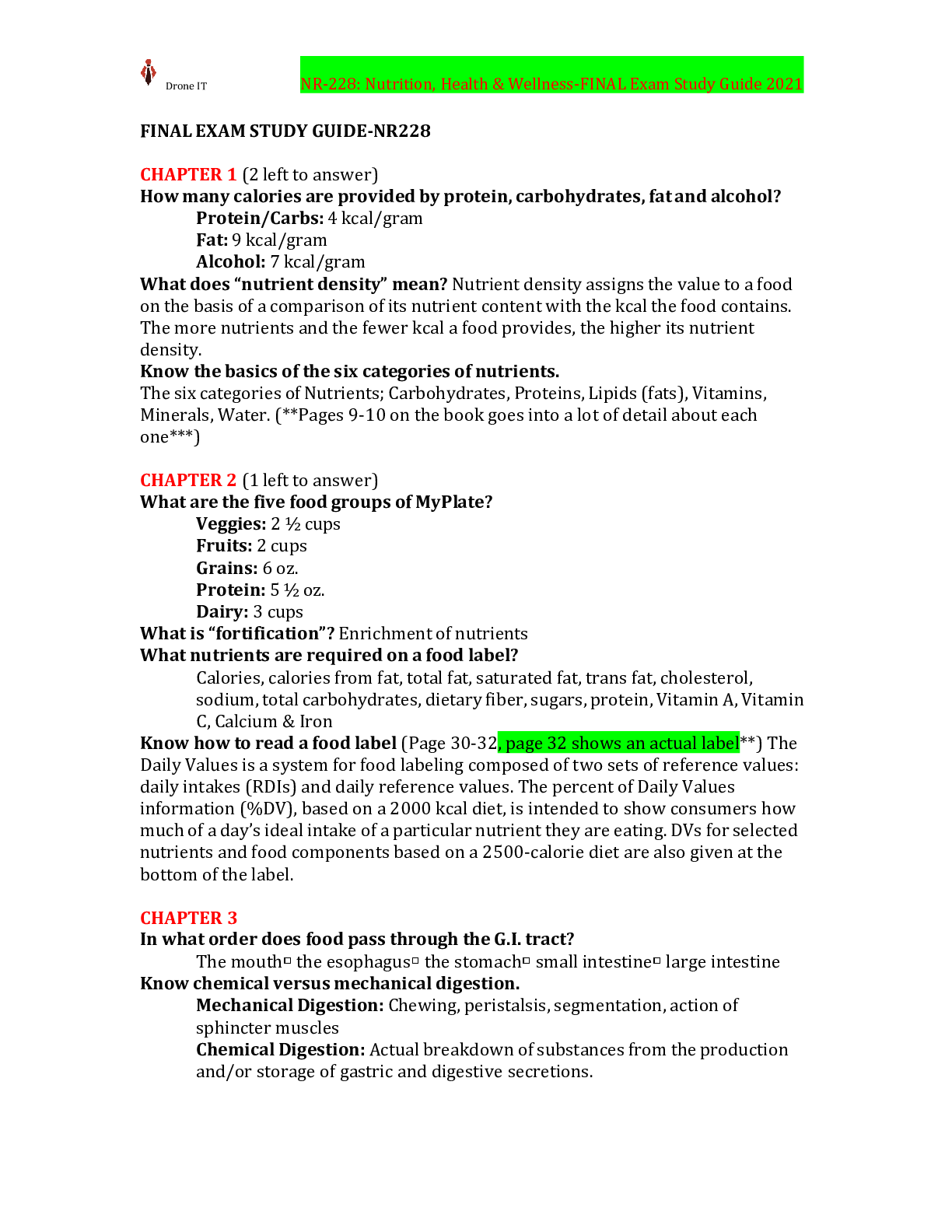
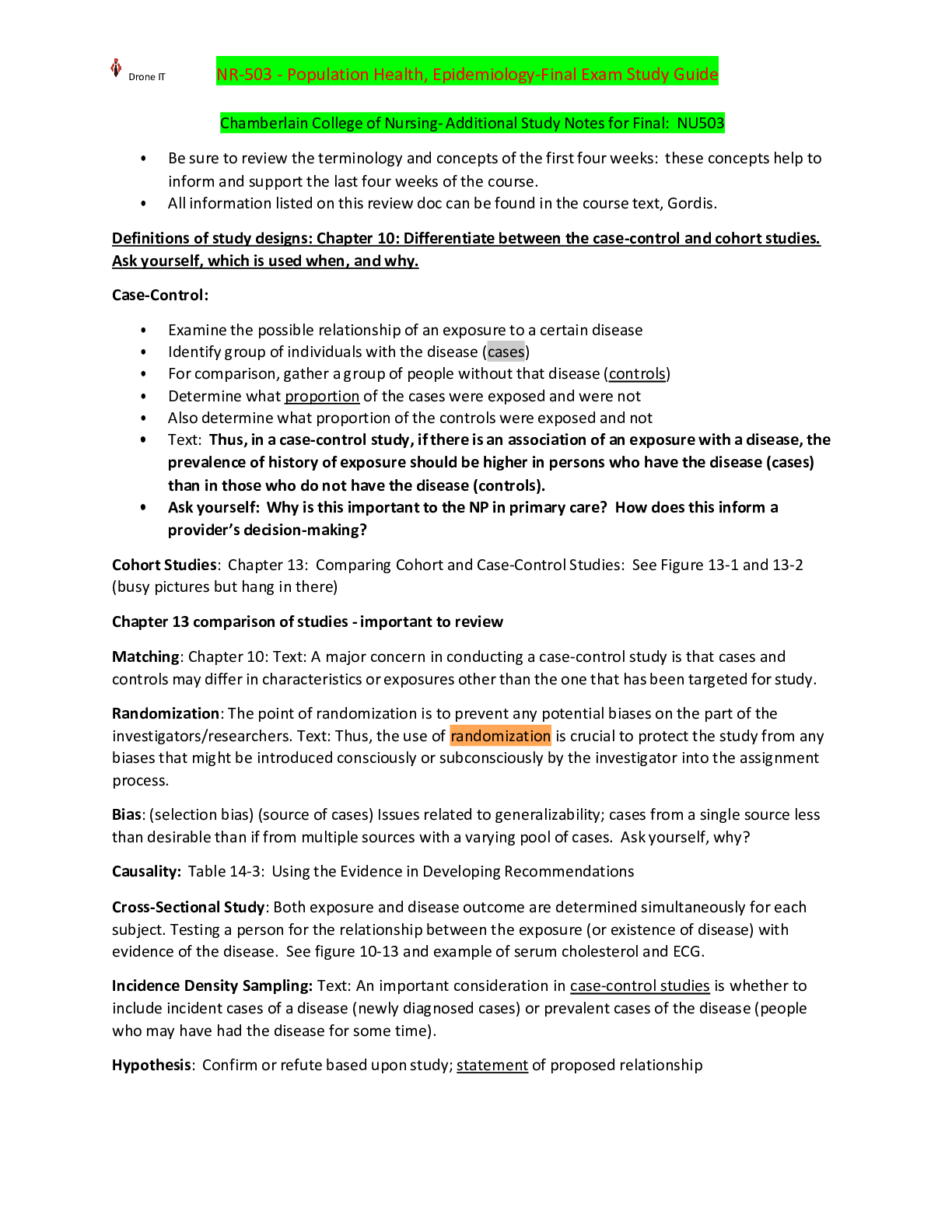
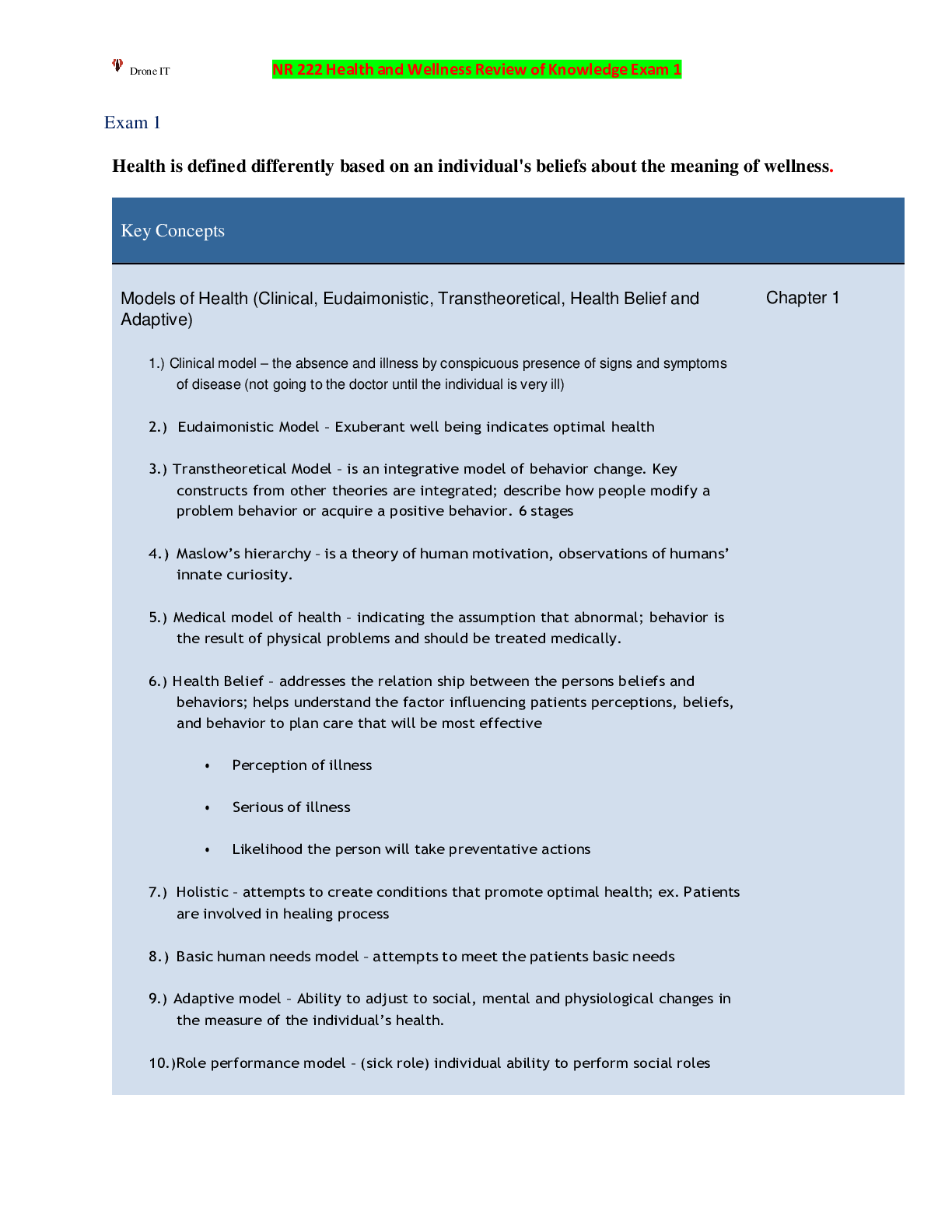
Preview 1 out of 32 pages
Instant download
Buy this Document to get the Full Access Instantly
Provided by Students Who Aced it
We Verify Document Content to Gurantee Accuracy
Reviews( 0 )
Document information
Connected school, study & course
About the document
Uploaded On
Aug 03, 2021
Number of pages
32
Written in
All

Additional information
This document has been written for:
Uploaded
Aug 03, 2021
Downloads
0
Views
94
Topic Tags
Recommended For You
Get more on STUDY GUIDE »
NUR 3029: Foundations of Health Assessment Final Exam: Study G...

NUR 3029: HEALTH ASSESSMENT FINAL EXAM 2021 : STUDY GUIDE HIGH...
(NUR 3029L) Final Exam Guide Q & S - Foundations of NP Lab
(NUR 3029C) Final Exam Guide Q & S - Foundations of NP Clinica...
(FIU) NUR 3029 Foundations of NP - Latest Midterm Review 20242...

CHIM NCE Health Information Management Practice Exam 1 – Ver...
TEST BANK for Davis Advantage for Psychiatric Mental Health Nu...
TEST BANK for Essentials of Psychiatric Mental Health Nursing:...
Test Bank For Community Public Health Nursing Promoting the He...
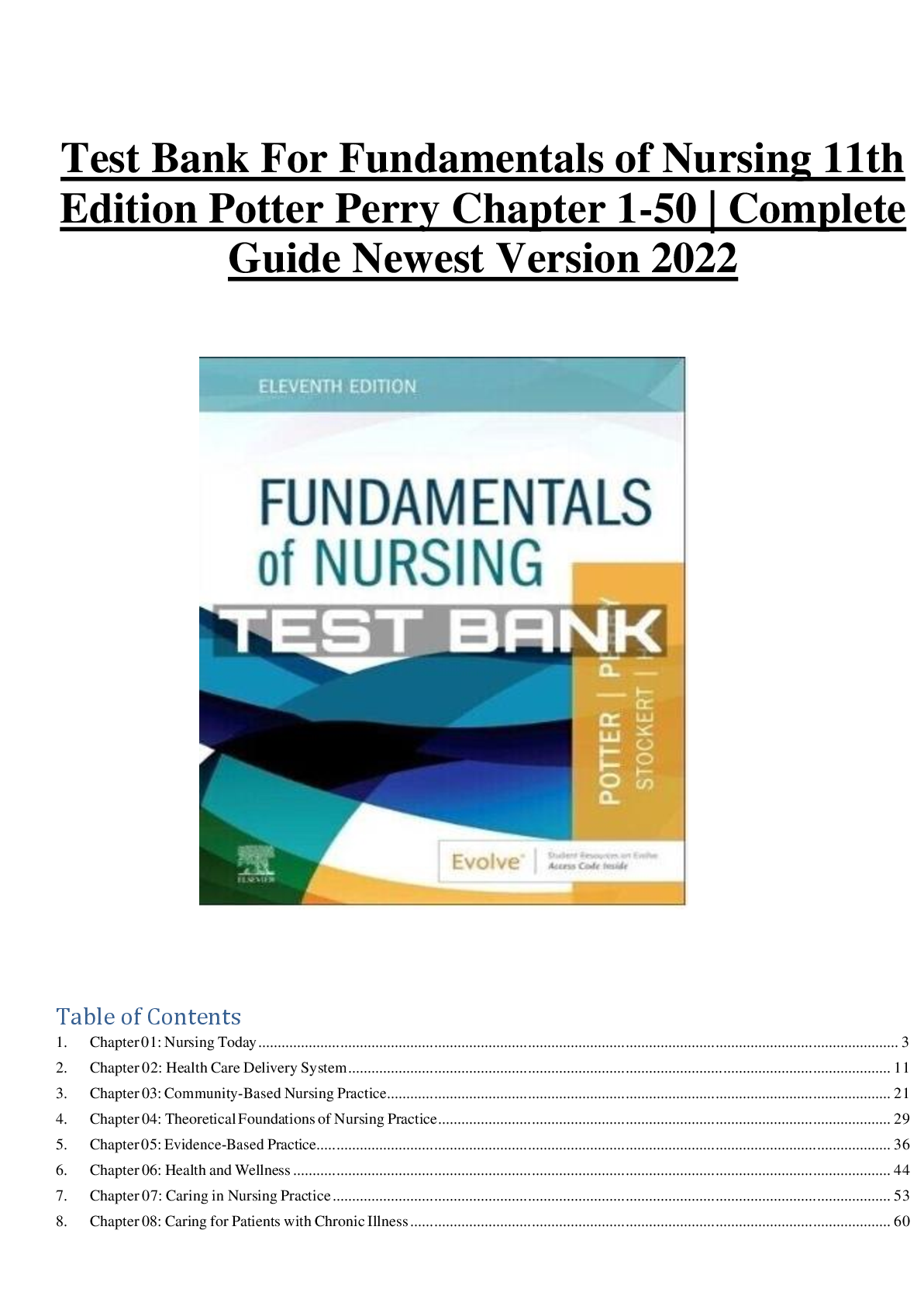
Test Bank For Fundamentals of Nursing 11th Edition Potter Perr...


 A Graded.png)