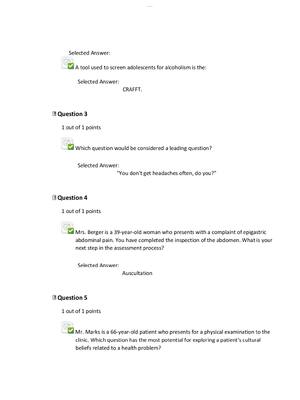
NURSING > QUESTIONS & ANSWERS > 6512 Final exam rated 5 star. (All)
6512 Final exam rated 5 star.
Document Content and Description Below
Last updated: 3 years ago
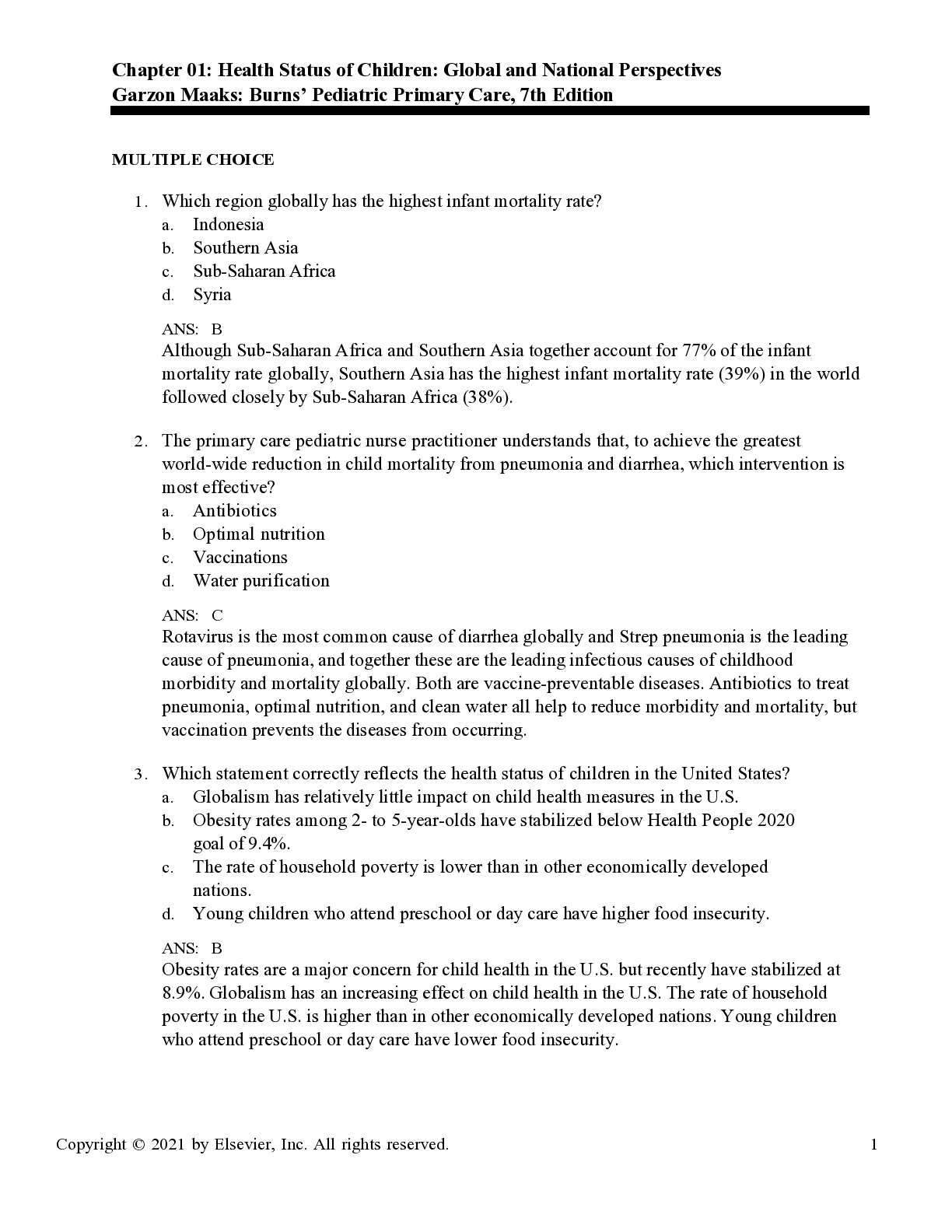
Preview 1 out of 14 pages
Instant download

Buy this Document to get the Full Access Instantly
Provided by Students Who Aced it
We Verify Document Content to Gurantee Accuracy
Reviews( 0 )
Document information
Connected school, study & course
About the document
Uploaded On
Aug 05, 2021
Number of pages
14
Written in
All

Additional information
This document has been written for:
Uploaded
Aug 05, 2021
Downloads
0
Views
57
Topic Tags
Recommended For You
Get more on QUESTIONS & ANSWERS »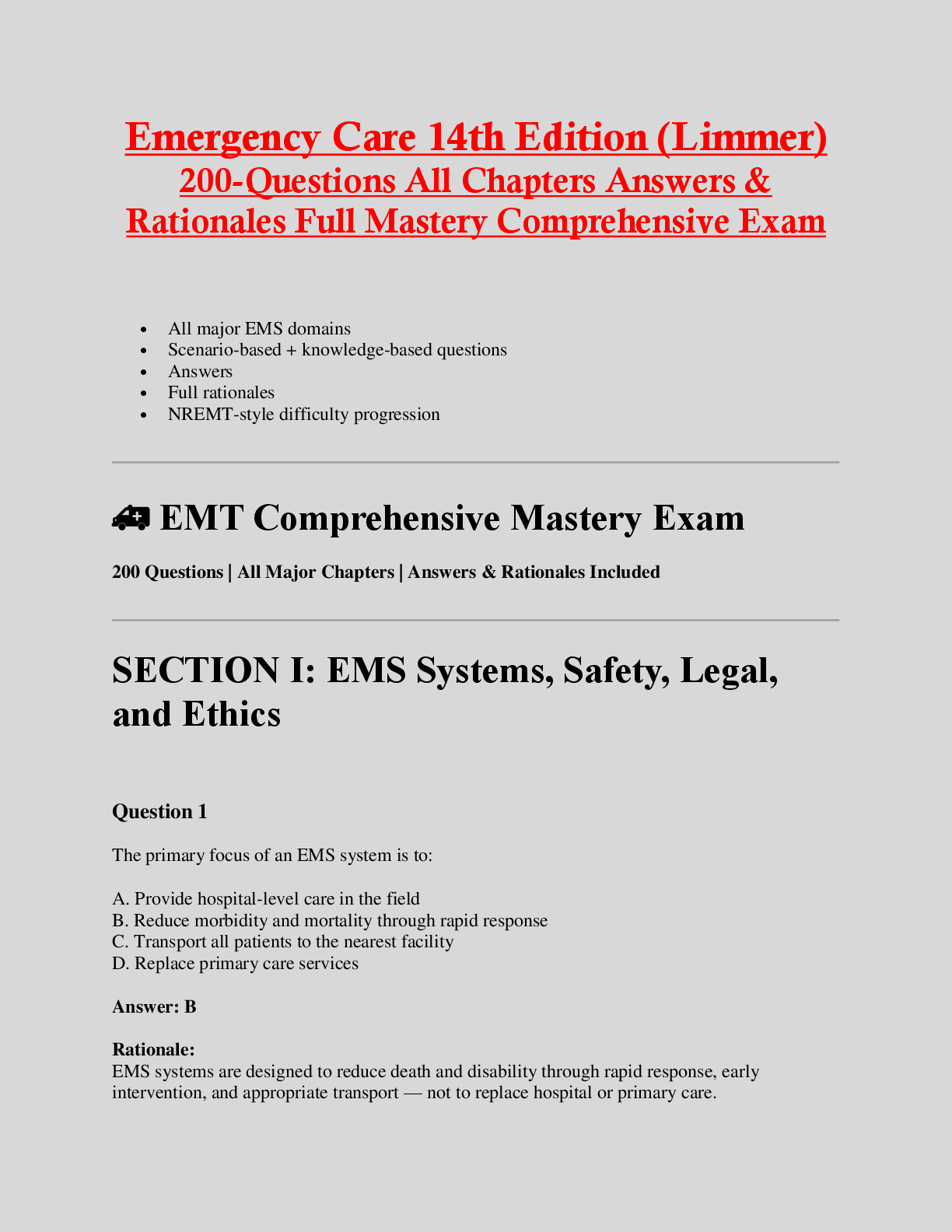
Emergency Care 14th Edition (Limmer) 200-Questions All Chapte...
NURS 6501 ADVANCED PATHOPHYSIOLOGY_ NURS6501 WeeK 3 FINAL EXAM...

eBook [PDF] Barash, Cullen, and Stoelting's Clinical Anesthesi...

eBook [PDF] Fundamentals of Nursing 3rd Edition By Joanne Toll...

eBook [PDF] Burns' Pediatric Primary Care 7th Edition BY Dawn...

Test Bank for Burns' Pediatric Primary Care 7th Edition by Daw...
Burns Pediatric Primary Care 7th Edition All Chapters Complete...
Burns' Pediatric Primary Care, 7th Edition by Garzon, Barber S...
Complete Test Bank Emergency Care 14th Edition Daniel Limmer Q...
Test Bank Emergency Care 14th Edition Daniel Limmer Questions...