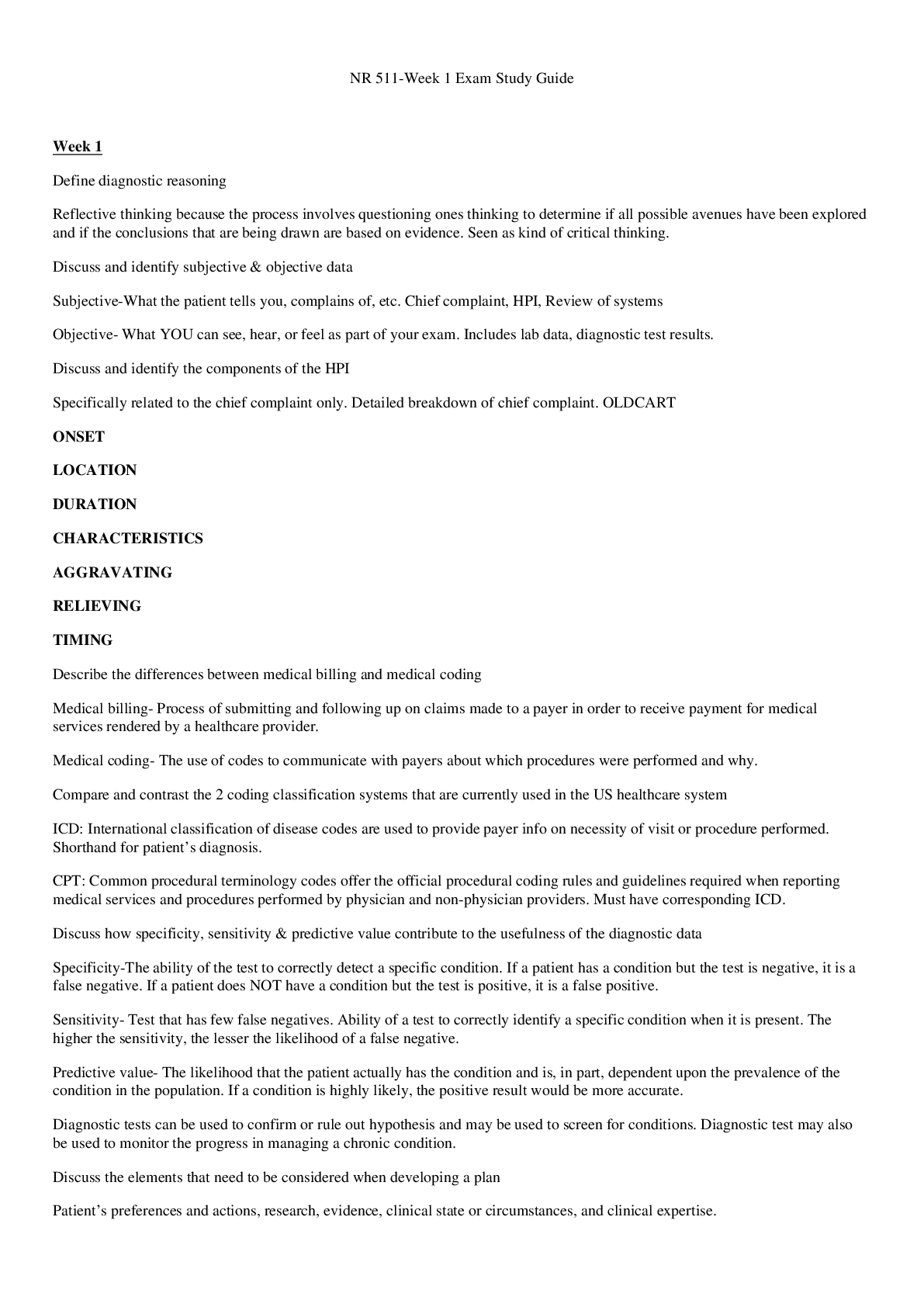
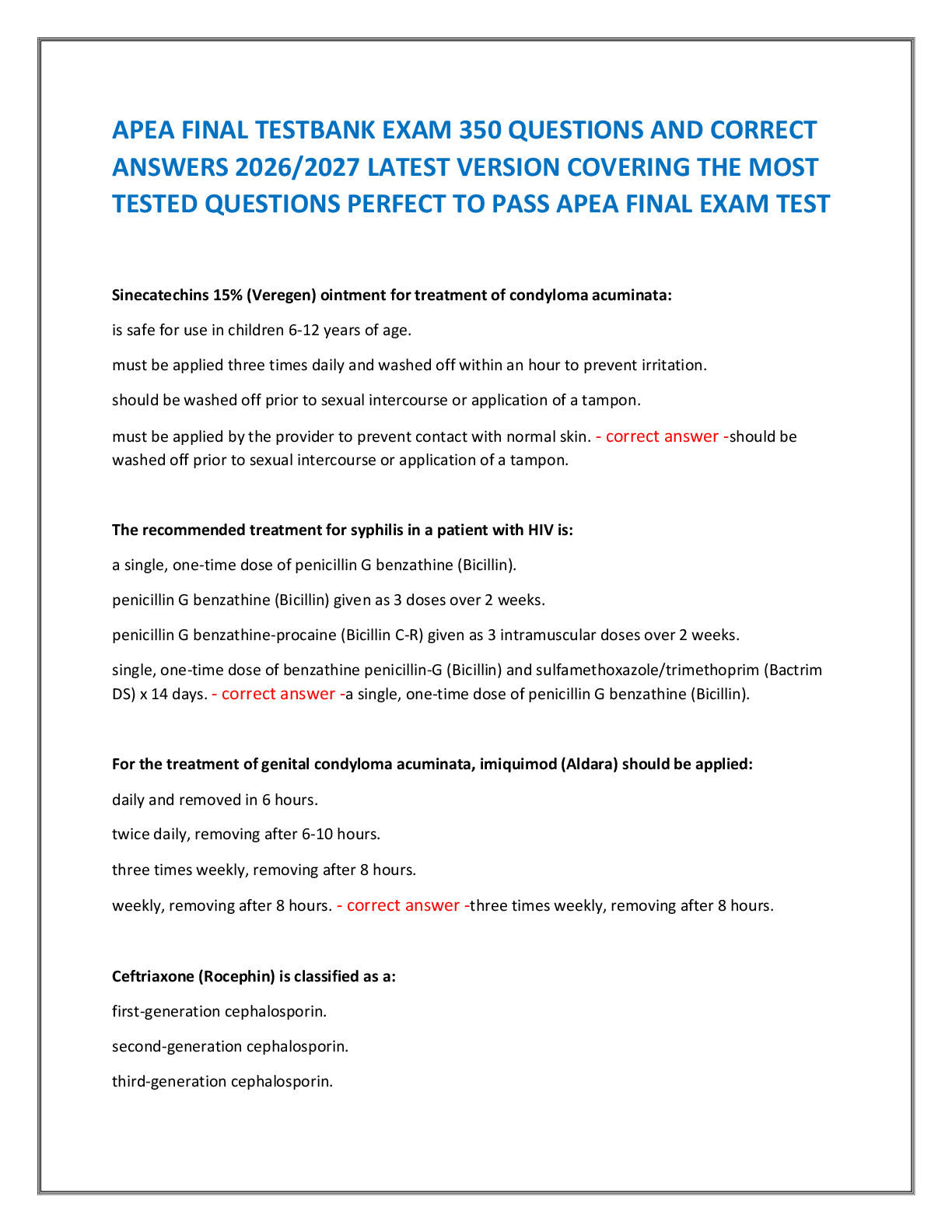
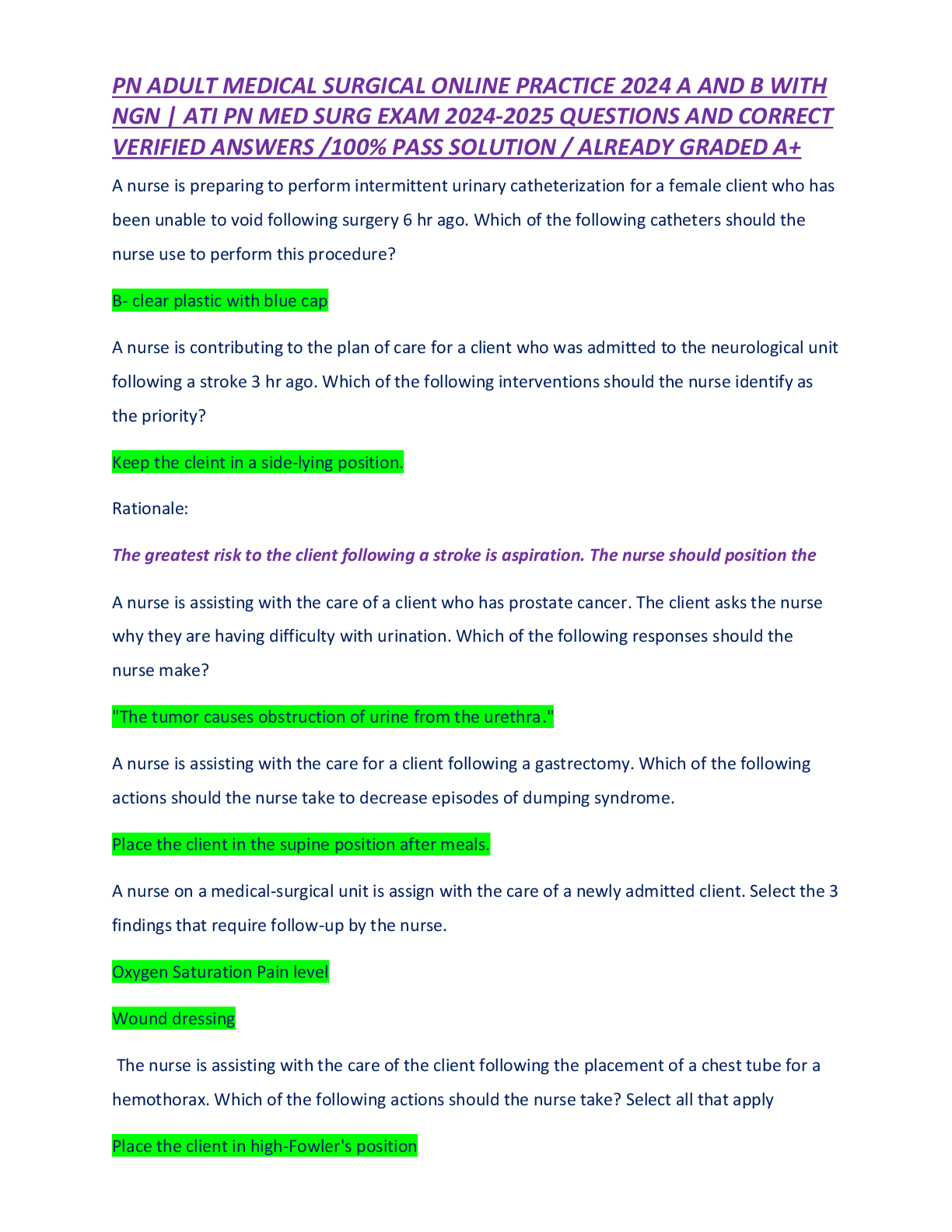
NR511 Week 8 Final Exam (Latest 2020): Advanced
Physical Assessment: Chamberlain (All correct
answers, Already graded A)
Problem1.
The most cost-effective screening test for determining HIV status is which of the
fo
...
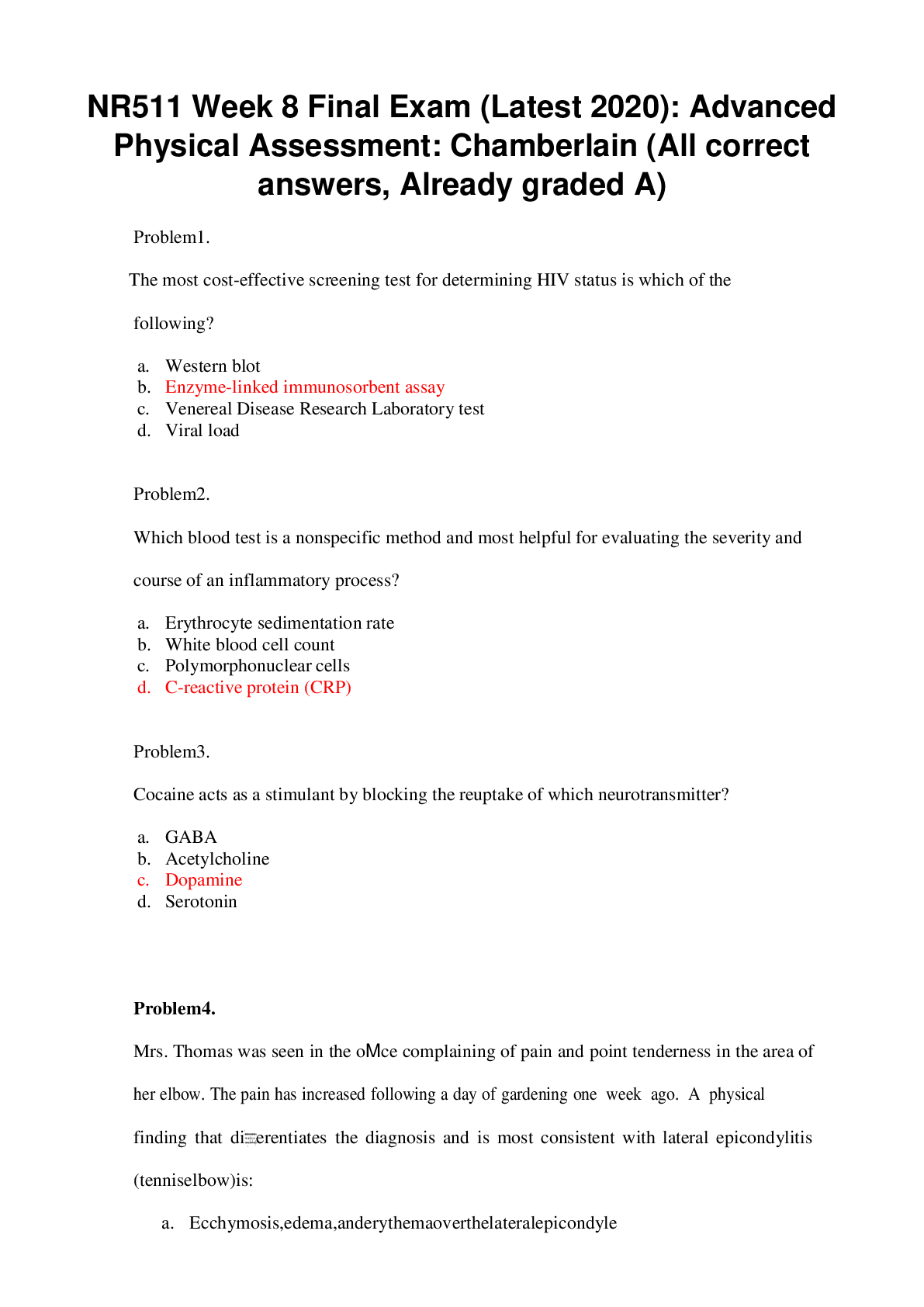
NR511 Week 8 Final Exam (Latest 2020): Advanced
Physical Assessment: Chamberlain (All correct
answers, Already graded A)
Problem1.
The most cost-effective screening test for determining HIV status is which of the
following?
a. Western blot
b. Enzyme-linked immunosorbent assay
c. Venereal Disease Research Laboratory test
d. Viral load
Problem2.
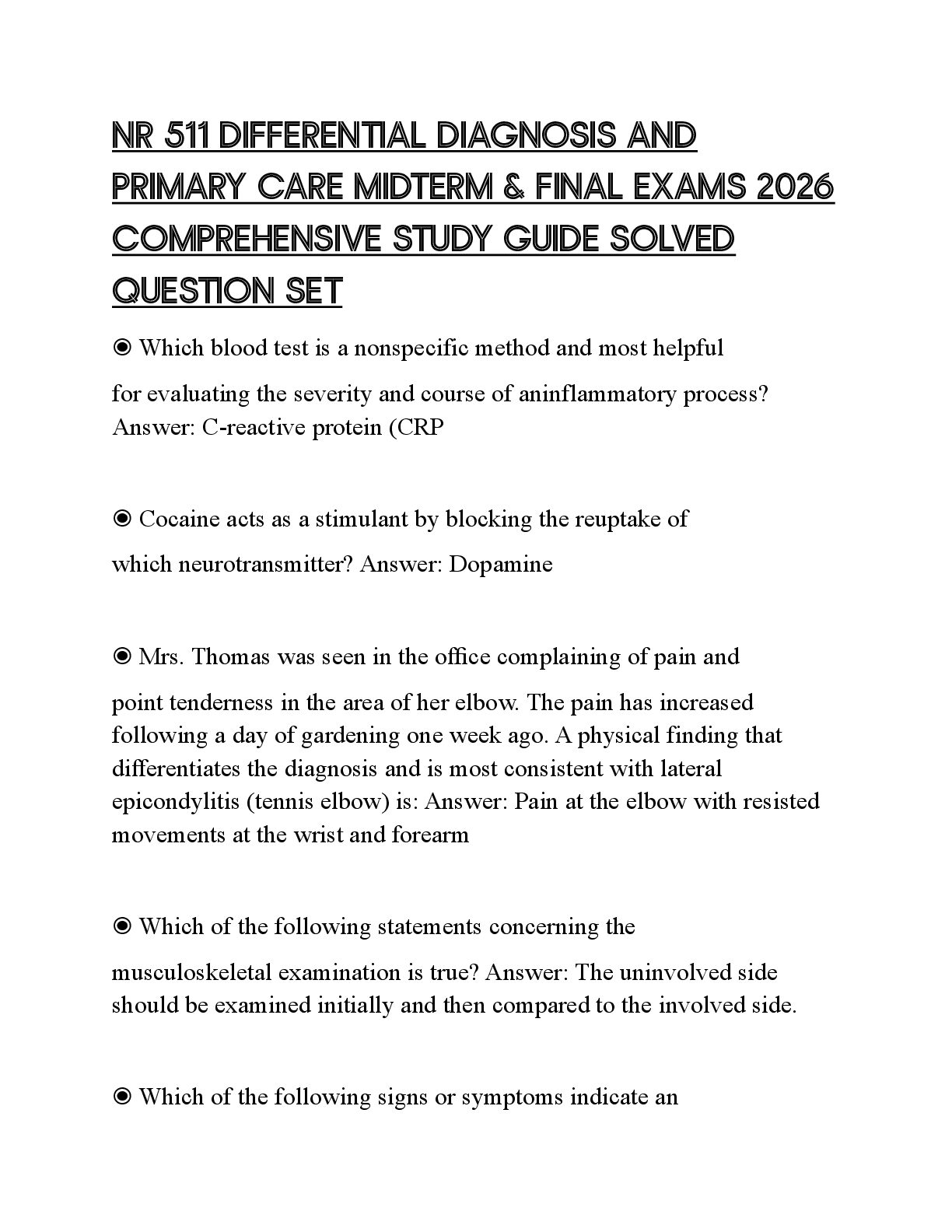
Which blood test is a nonspecific method and most helpful for evaluating the severity and
course of an inflammatory process?
a. Erythrocyte sedimentation rate
b. White blood cell count
c. Polymorphonuclear cells
d. C-reactive protein (CRP)
Problem3.
Cocaine acts as a stimulant by blocking the reuptake of which neurotransmitter?
a. GABA
b. Acetylcholine
c. Dopamine
d. Serotonin
Problem4.
Mrs. Thomas was seen in the oMce complaining of pain and point tenderness in the area of
her elbow. The pain has increased following a day of gardening one week ago. A physical
finding that different iat es t he diagnosis and is most consist ent w it h lat eral epicondyl it iserentiates the diagnosis and is most consistent with lateral epicondylitis
(tenniselbow)is:
a. Ecchymosis,edema,anderythemaoverthelateralepicondyle
b. Pain at the elbow with resisted movements at the wrist and forearm
c. Inability to supinate and pronate the arm
d. Inabilitytoflexorextendtheelbowagainstresistance
Problem5.
Which of the following statements concerning the musculoskeletal examination is true?
a. The uninvolved side should be examined initially and then compared to the
involved side.
b. The part of the body that is causing the patient pain should be examined first.
c. When possible, the patient should not be asked to perform active range-of-motion
(ROM) exercises to avoid causing pain.
d. Radiographs should always be obtained prior to examination so as not to cause
further injury to the patient.
Problem6. Which of the following signs or symptoms indicate an inflammatory
etiology to musculoskeletal pain?
a. DecreasedC-reactiveprotein
b. Hyperalbuminemia
c. Morning stifferentiat es t he diagnosis and is most consit ent wit h lat eral epicondylit isness
d. Weight gain
Problem7. Which causes the greatest percentage of mammalian bites?
a. Dogs
b. Cats
c. Humans
d. Rodents
Problem8.
A 48-year-old woman is seen in the clinic with complaints of prolonged heavy menstrual
periods. She is pale and states she can no longer exercise. Pelvic exam reveals a single,
very large mass. Which of the following diagnostic tests should the clinician order first?
a. Transvaginal ultrasound
b. Endometrial biopsy
c. MRI
d. Abdominal computed tomography scan
Problem9.
Adiabetic patient asks the clinician why he needs to check his blood sugar at home even
when he feels good. Which of the following responses would be most appropriate?
a. “Control of glucose will help postpone or delay complications.”
b. “Regularly checking blood sugar will help establish a routine.”
c. “Monitoring glucose will promote a sense of control.”
d. All of the above
Problem10.
A 25-year-old patient presents to the clinic with fatigue, cold intolerance, weight gain, and
constipation for the past 3 months. On physical examination, the clinician notices a sinus
bradycardia; muscular stiffness; coarse, dry hair; and a delay in relaxation in deep tendon
reflexes. Which of the following tests should be ordered next?
a. Serum calcium
b. TSH
c. Electrolytes
d. Urine specific gravity
Problem11.
Which of the following medications for type 2 diabetes mellitus should not be prescribed
during pregnancy?
[Show More]