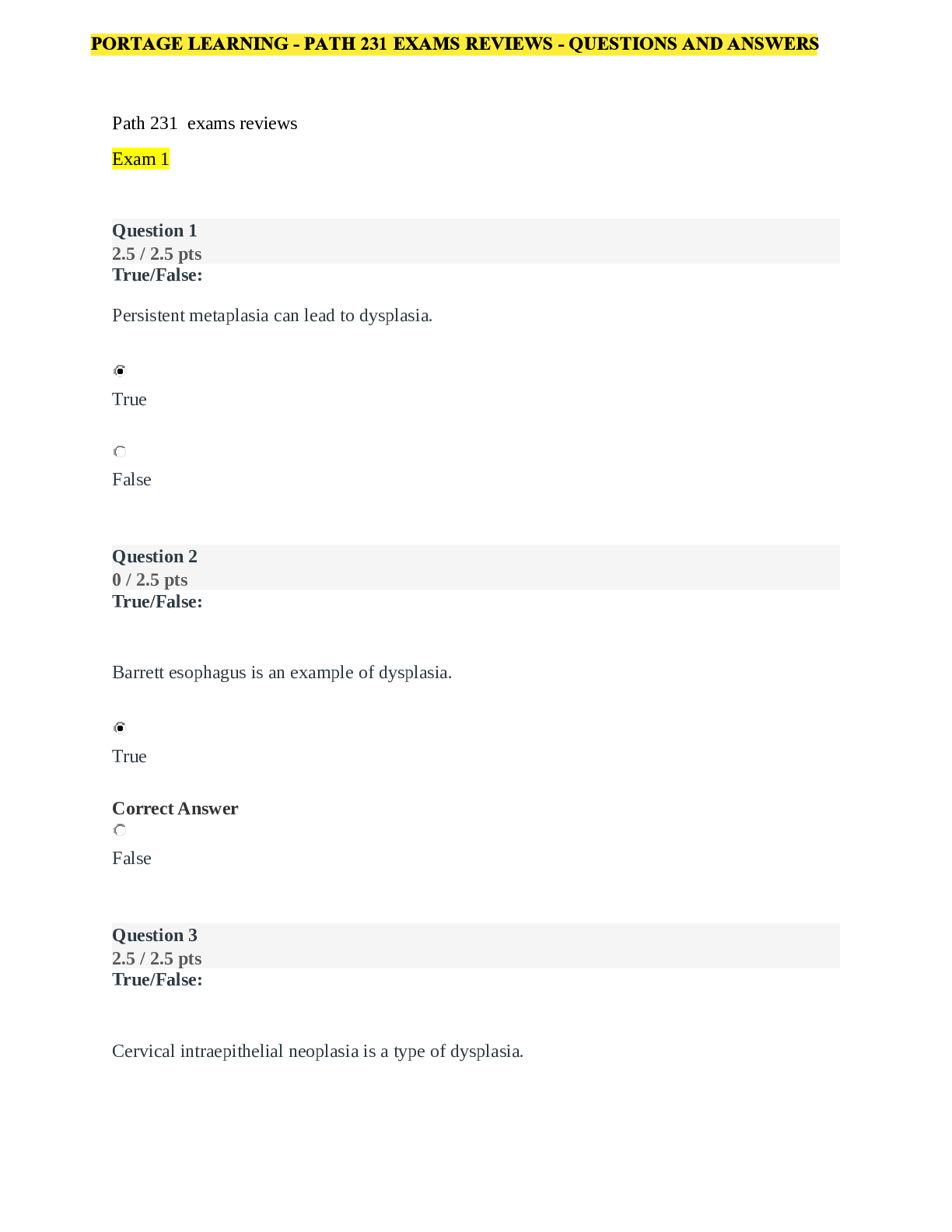
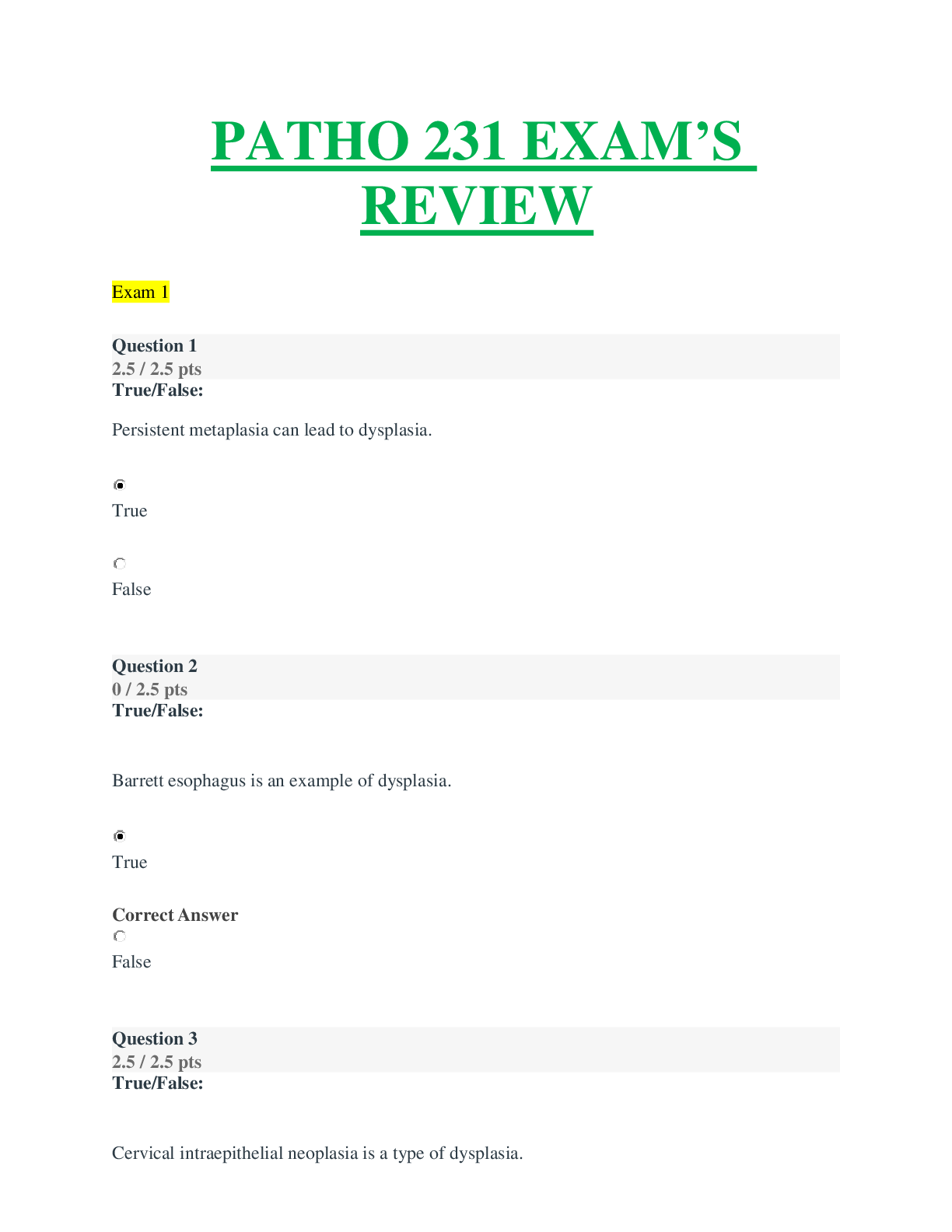
Metaplastic cells are not better prepared to survive under stressful circumstances.
True False
True/False:
Hypertrophy can occur under normal and pathological conditions.
True False
Multiple Choice
Whic
...
Metaplastic cells are not better prepared to survive under stressful circumstances.
True False
True/False:
Hypertrophy can occur under normal and pathological conditions.
True False
Multiple Choice
Which is NOT true of the cytoskeleton?
It controls shape and movement
Cilia and flagella are microtubule-filled cellular extensions
It includes peroxisomes and proteasomes
Peroxisomes and proteasomes are not part of the cytoskeleton.
Which are true of the cell membrane? Select all that apply.
Controls the transport of materials from the outside fluids to within The main structural component is made of proteins
Helps with the conduction of electrical currents in nerve and muscle cells
Aids in the regulation of cell growth and proliferation
Compare and contrast the two types of gangrenous necrosis.
True/False:
Cell proliferation is the process in which proliferating cells become more specialized cell types.
True False
False, cell differentiation
True/False:
Cell differentiation is the process of increasing cell numbers by mitotic cell division.
True False
False, cell proliferation
This type of cell remains incompletely differentiated throughout life:
Your Answer: Stem Cell stem cell
Which of the following are most likely to have arisen from an adult stem cell?
Muscle Bone Epithelial
Epithelial cells like the skin are constantly being replaced.
Neural
1. is a systemic treatment that enables drugs to reach the site of the tumor as well as other
distant sites.
2. The profound weight loss and wasting of fat and tissue that accompany cancer is known as
.
e
True/False:
The T cells that display the host’s MHC antigens and T-cell receptors for a nonself-antigen are allowed to mature, a process termed positive selection.
True False
Multiple Choice:
Which cell in the blood provides primary hemostasis?
Platelets Endothelial cells Histamine Macrophages
A 12-year-old female presents with itchy eyes, nasal congestion and drainage, and sneezing every spring when the pollen count is high. (1) Explain the immunologic mechanisms that are responsible for her symptoms. (2) What type(s) of treatment might be used to relieve her symptoms?
Your Answer:
Atopy, in most cases it is a genetic predisposition to the IgE-mediatied reaction that occure upon exposure. High level of IgE. Treament sims to remove the offeding agents and control symptoms. Antihistamines and intranasal corticosteriods used. Second generation antihistmines like zyrtec and claritin are better tolerated.
(1) Mast cells, basophils, and eosinophils play an important role in the development of type I reactions because they contain the chemical mediator histamine. A primary or initial-phase response is vasodilation, vascular leakage, and smooth muscle contraction. A secondary or late-phase response is characterized by more intense infiltration of tissues with eosinophils
and other acute and chronic inflammatory cells, as well as tissue damage. (2) Antihistamines and intranasal corticosteroids are the mainstay of treatment.
Multiple Choice:
The patient is found to be a severely malnourished alcoholic. The most likely cause of his anemia is:
Folate deficiency Pernicious anemia Iron deficiency anemia
Anemia of chronic inflammation
Multiple Choice:
Which of the following is NOT true of vitamin B12 deficiency anemia?
Vitamin B12 is bound to intrinsic factor
Peripheral neuropathy can be a result of deficiency Dietary deficiencies are common
MCV is elevated
Multiple Choice:
Each of the following are risk factors for secondary hyperlipidemia except?
Obesity
Diabetes mellitus High cholesterol diet
Autosomal dominant disorder of LDL receptor
Multiple Choice:
Risk factors for coronary heart disease include each of the following except: HDL > 60
Smoking Hypertension
Family history of heart disease
[Show More]