Microbiology Study Questions
Module 1: Types of Microorganisms
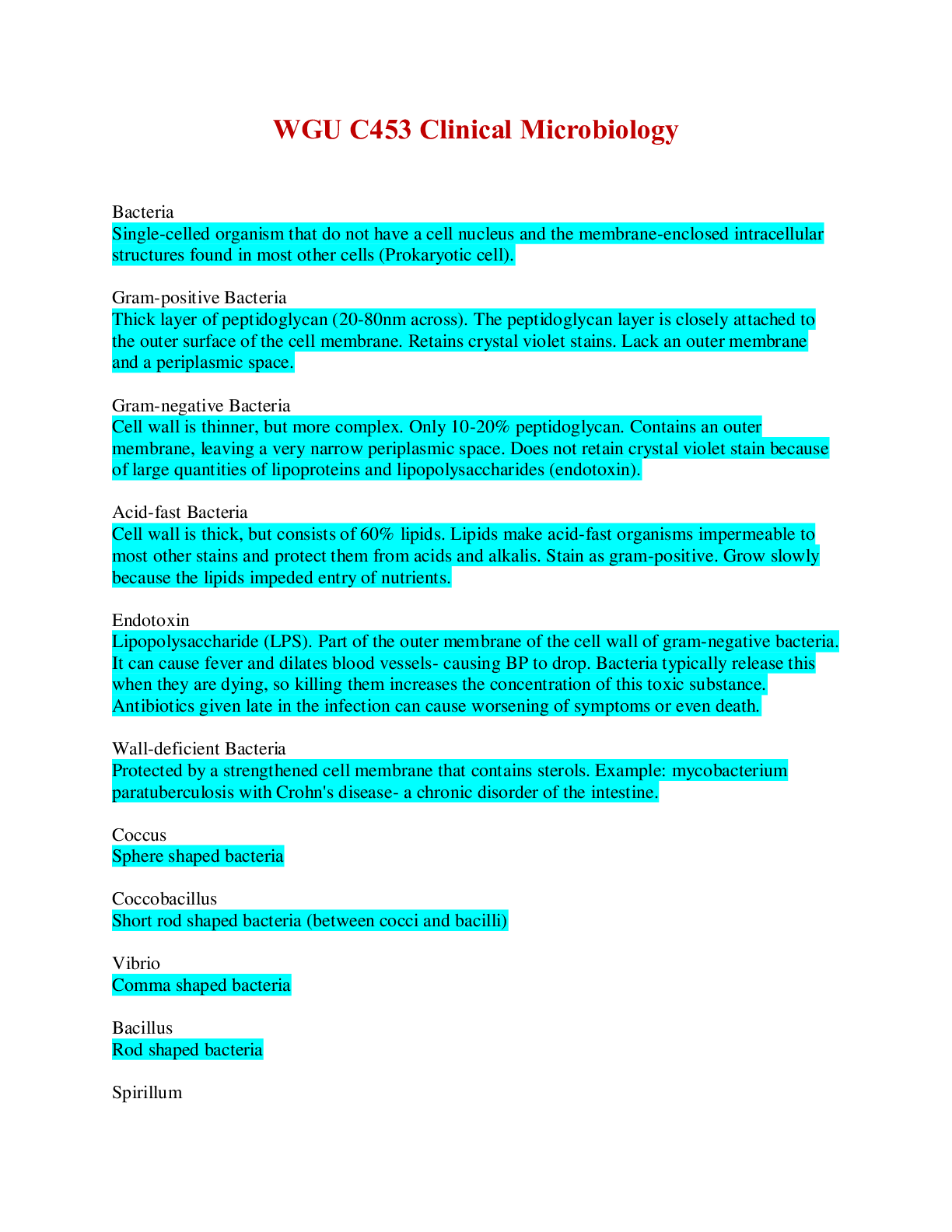
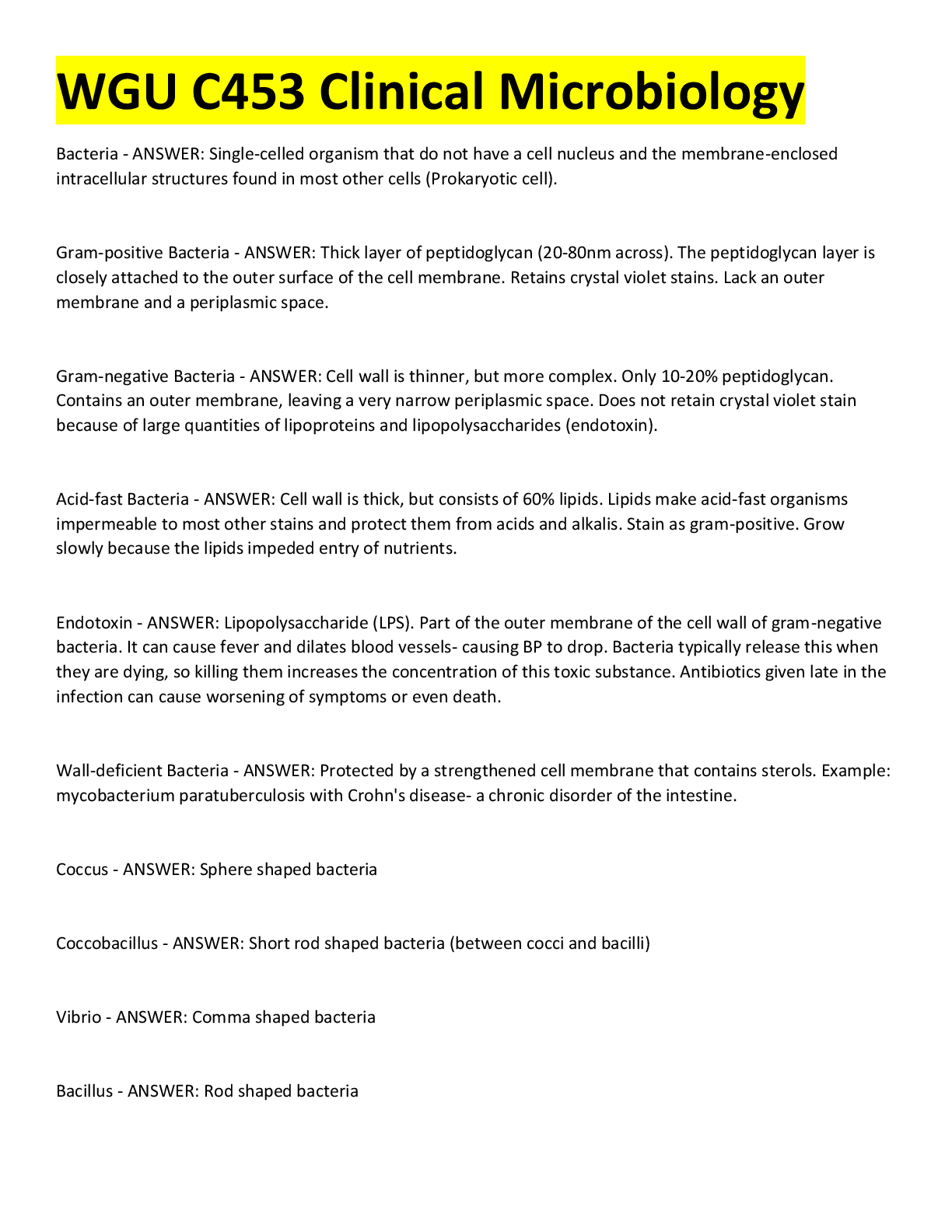
1) Describe the basic characteristics of bacteria.
a. Bacteria are small and come in many different shapes such as coccus, coccobacillus,
vibrio, bacillu
...
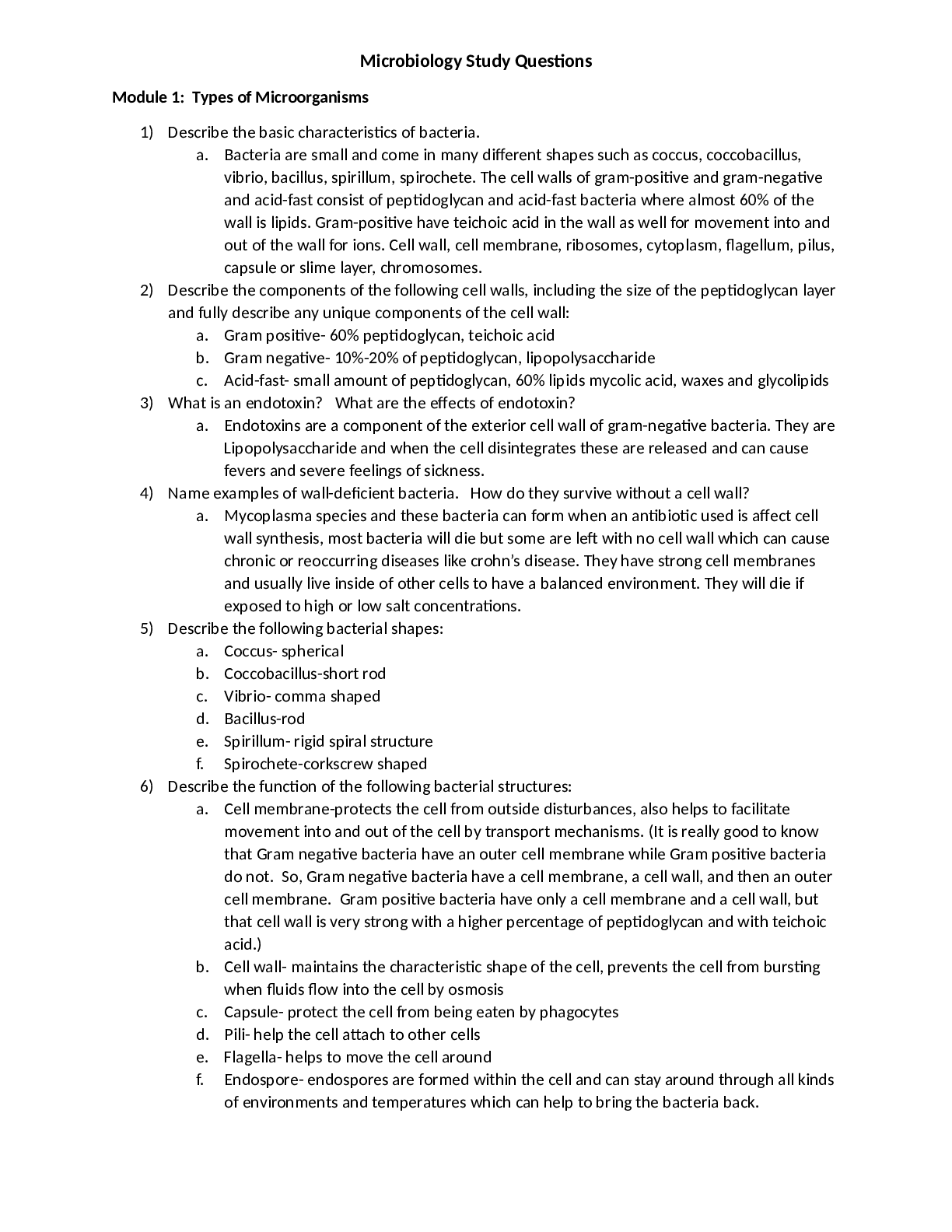
Microbiology Study Questions
Module 1: Types of Microorganisms
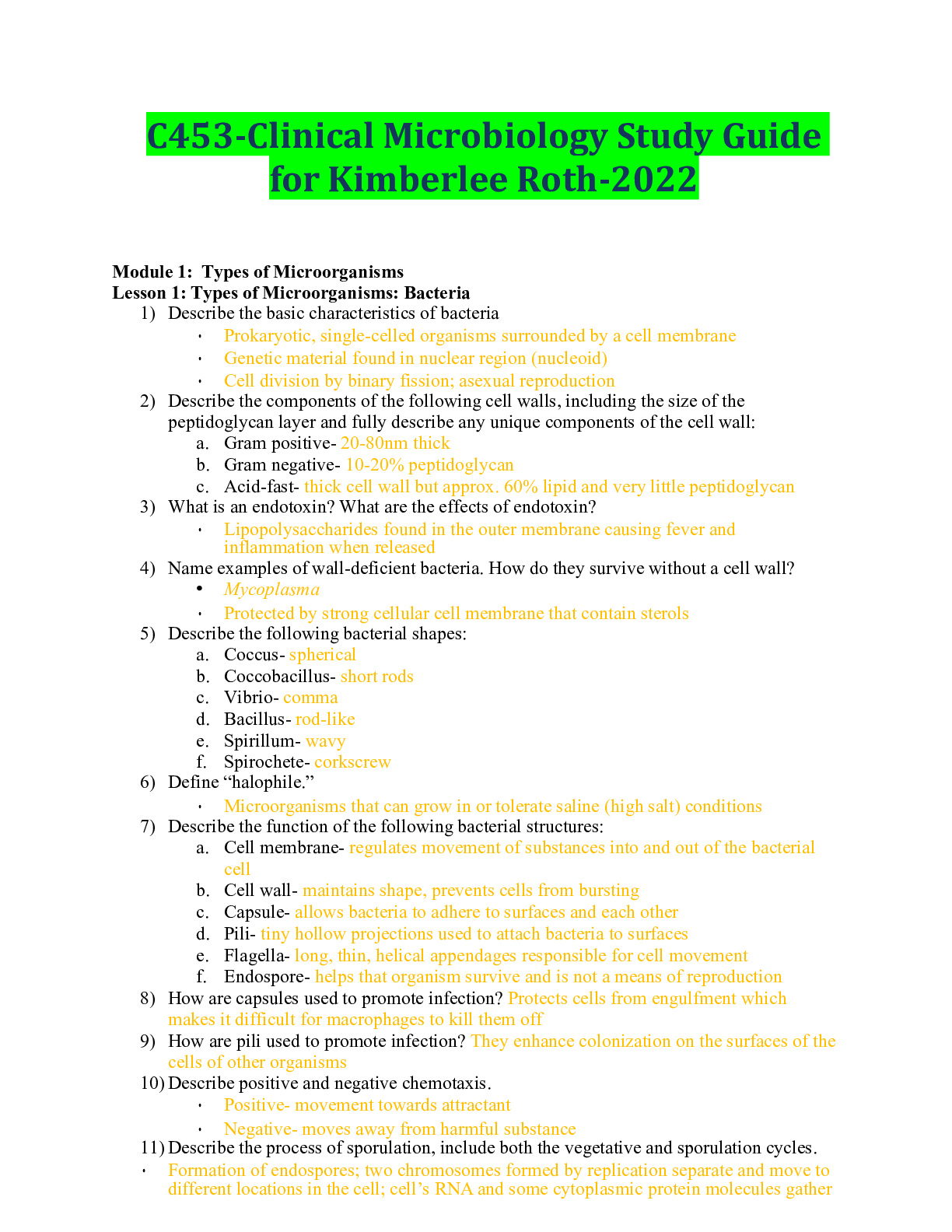
1) Describe the basic characteristics of bacteria.
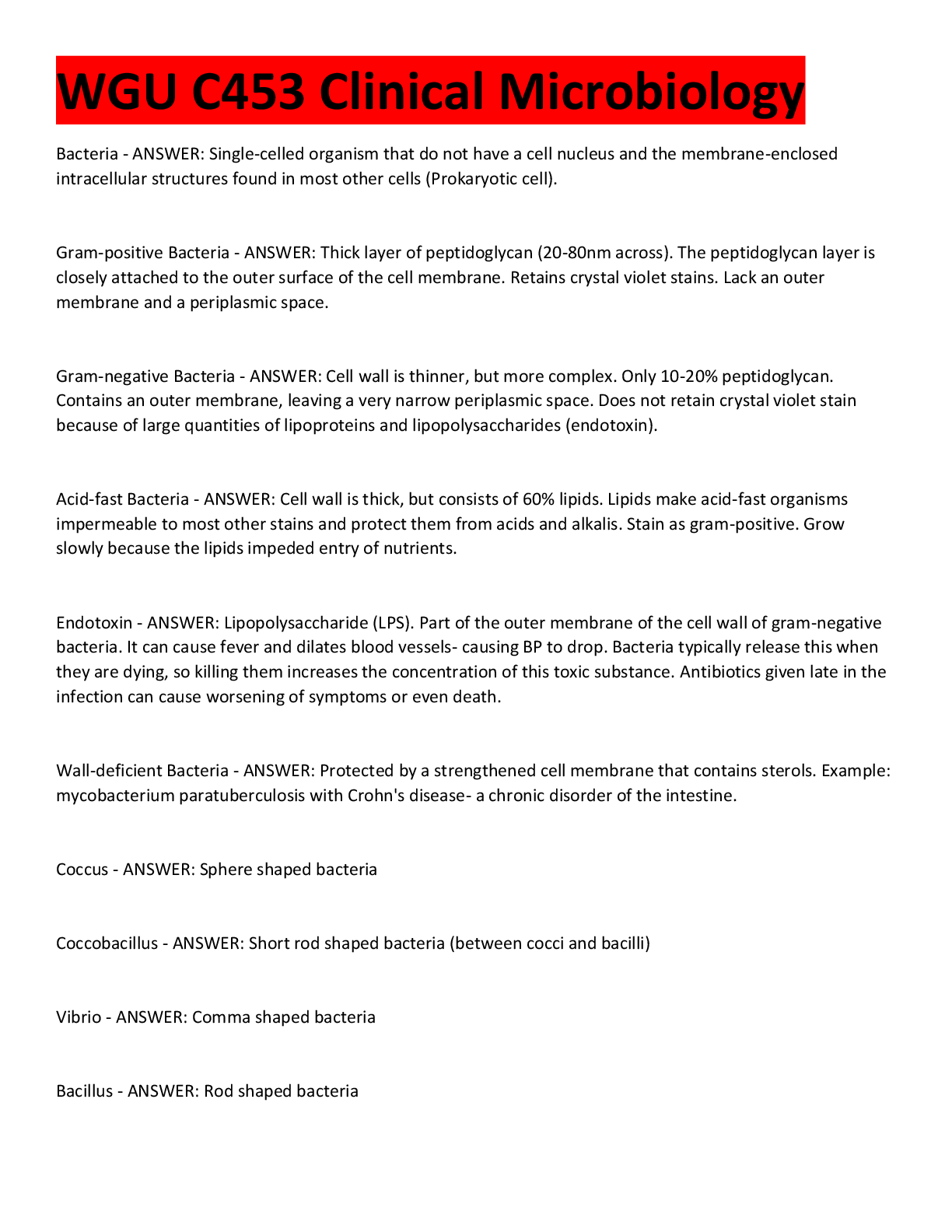
a. Bacteria are small and come in many different shapes such as coccus, coccobacillus,
vibrio, bacillus, spirillum, spirochete. The cell walls of gram-positive and gram-negative
and acid-fast consist of peptidoglycan and acid-fast bacteria where almost 60% of the
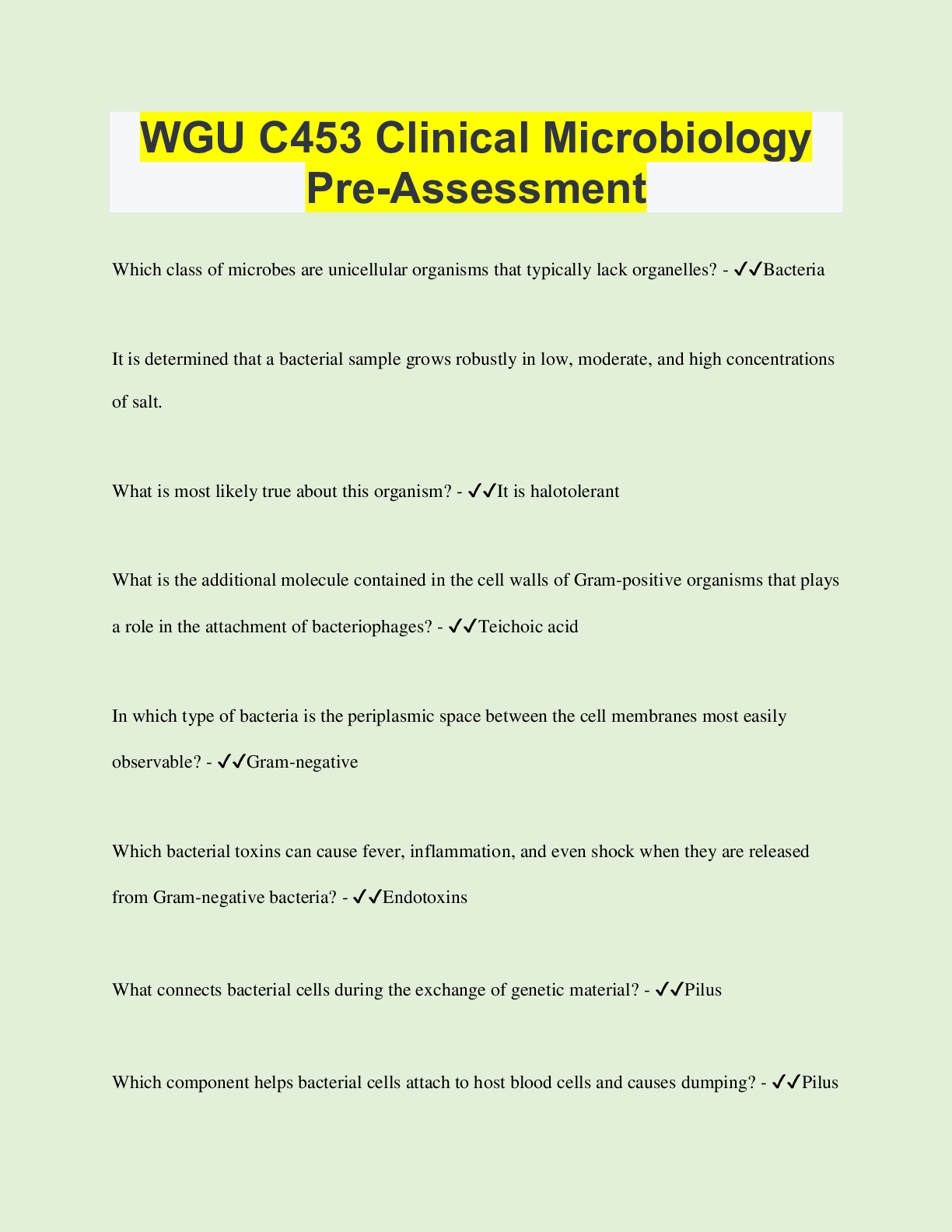
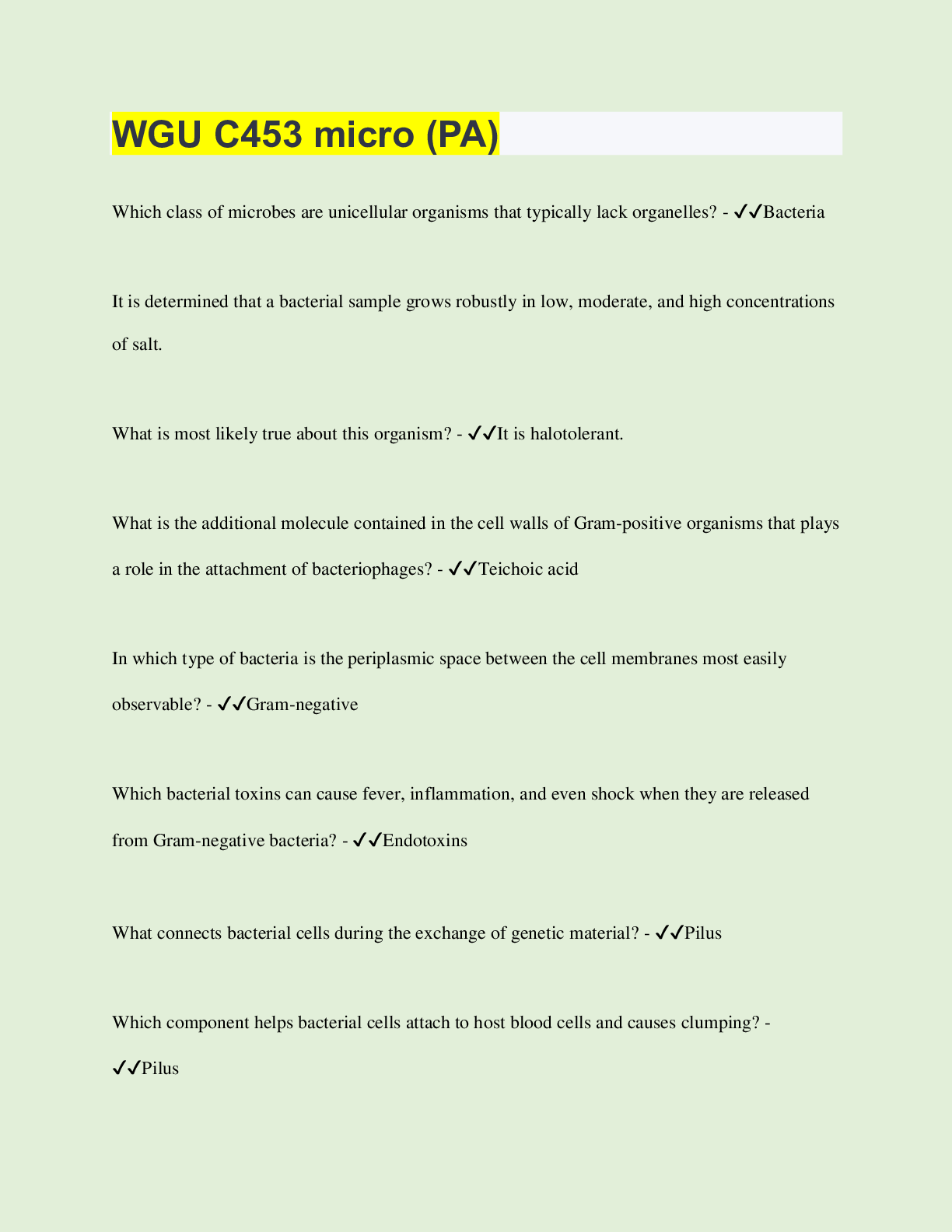
wall is lipids. Gram-positive have teichoic acid in the wall as well for movement into and
out of the wall for ions. Cell wall, cell membrane, ribosomes, cytoplasm, flagellum, pilus,
capsule or slime layer, chromosomes.
2) Describe the components of the following cell walls, including the size of the peptidoglycan layer
and fully describe any unique components of the cell wall:
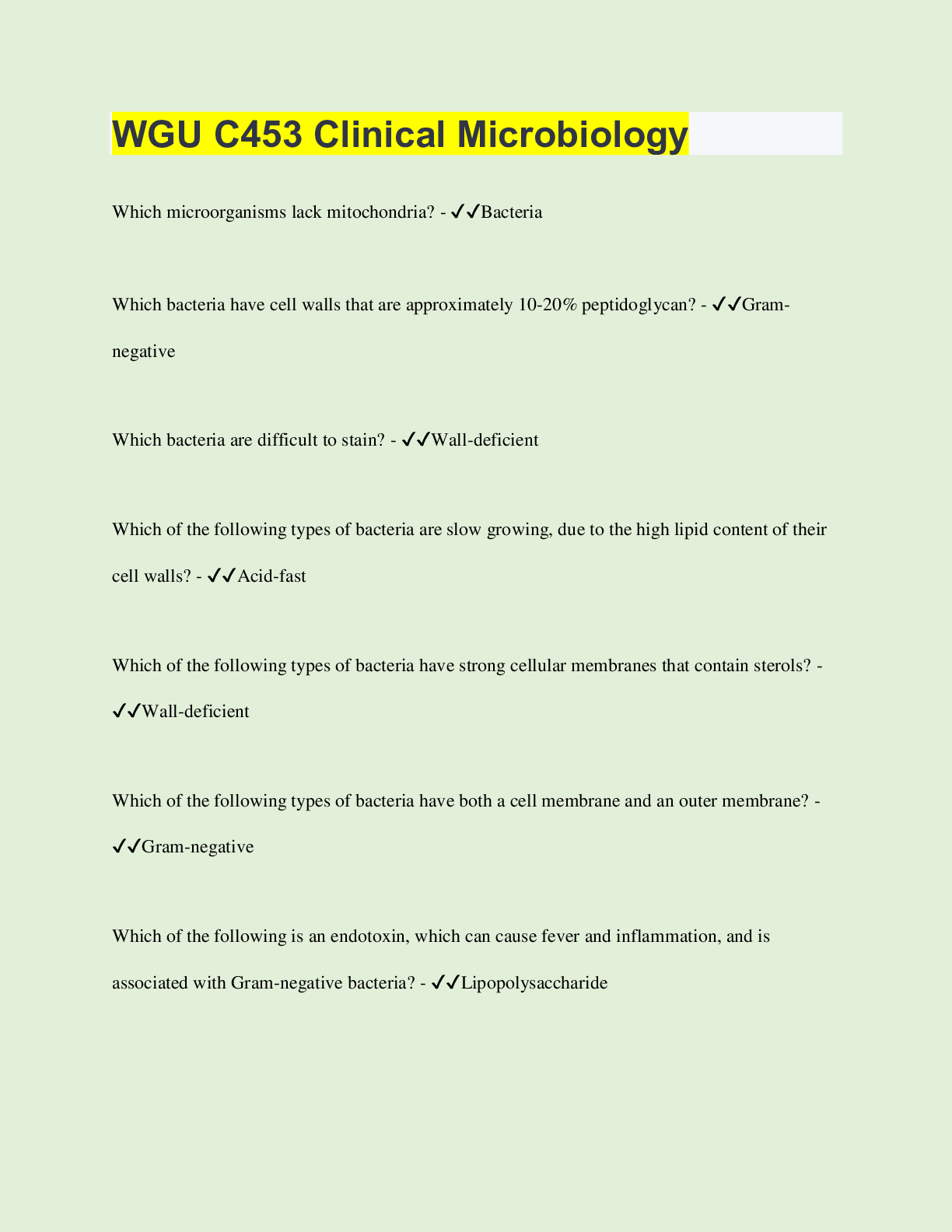
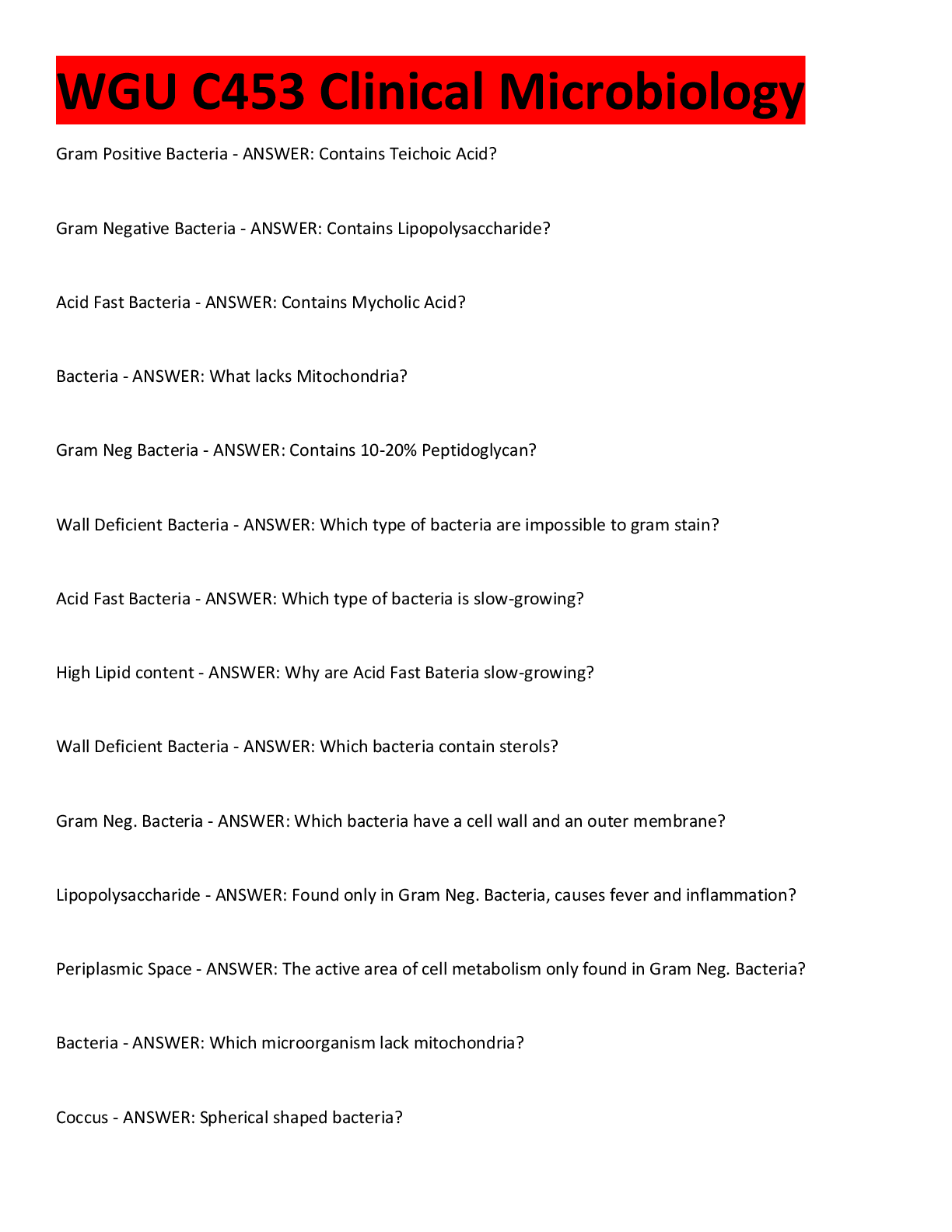
a. Gram positive- 60% peptidoglycan, teichoic acid
b. Gram negative- 10%-20% of peptidoglycan, lipopolysaccharide
c. Acid-fast- small amount of peptidoglycan, 60% lipids mycolic acid, waxes and glycolipids
3) What is an endotoxin? What are the effects of endotoxin?
a. Endotoxins are a component of the exterior cell wall of gram-negative bacteria. They are
Lipopolysaccharide and when the cell disintegrates these are released and can cause
fevers and severe feelings of sickness.
4) Name examples of wall-deficient bacteria. How do they survive without a cell wall?
a. Mycoplasma species and these bacteria can form when an antibiotic used is affect cell
wall synthesis, most bacteria will die but some are left with no cell wall which can cause
chronic or reoccurring diseases like crohn’s disease. They have strong cell membranes
and usually live inside of other cells to have a balanced environment. They will die if
exposed to high or low salt concentrations.
5) Describe the following bacterial shapes:
a. Coccus- spherical
b. Coccobacillus-short rod
c. Vibrio- comma shaped
d. Bacillus-rod
e. Spirillum- rigid spiral structure
f. Spirochete-corkscrew shaped
6) Describe the function of the following bacterial structures:
a. Cell membrane-protects the cell from outside disturbances, also helps to facilitate
movement into and out of the cell by transport mechanisms. (It is really good to know
that Gram negative bacteria have an outer cell membrane while Gram positive bacteria
do not. So, Gram negative bacteria have a cell membrane, a cell wall, and then an outer
cell membrane. Gram positive bacteria have only a cell membrane and a cell wall, but
that cell wall is very strong with a higher percentage of peptidoglycan and with teichoic
acid.)
b. Cell wall- maintains the characteristic shape of the cell, prevents the cell from bursting
when fluids flow into the cell by osmosis
c. Capsule- protect the cell from being eaten by phagocytes
d. Pili- help the cell attach to other cells
e. Flagella- helps to move the cell around
f. Endospore- endospores are formed within the cell and can stay around through all kinds
of environments and temperatures which can help to bring the bacteria back.
g. Periplasmic space-gap between cell membrane and cell wall, very active area of cell
metabolism, present mostly in gram negative bacteria,
7) How are capsules used to promote infection?
a. They prevent phagocytosis so they are not engulfed and can still cause infection
8) How are pili used to promote infection?
a. They help the bacteria nt get flushed by adhesion and helps them stick to cells and
infect.
9) Describe positive and negative chemotaxis.
a. Positive is movement towards the attractant, negative is the movement away from the
repellent
10) Describe the process of sporulation, include both the vegetative and sporulation cycles.
a. Stage 1- DNA replicates and extends into an axial filament, stage 2 Septum forms near
one pole, separating forespore from mother cell and each gets a chromosome, stage 3
mother cell engulfs the forespore surrounding it with a second membrane, Stage 4
chromosomes of mother cell disintegrate, stage 5 forespore develops a cortex layer of
peptidoglycan between original forespore membrane and the membrane from the
mother cell, stage 6 dipicolinic acid is synthesized and calcium is incorporated into the
spore coat, stage 7 mother cell releases spore.
b. Vegetative state first activation, then germination proper then outgrowth.
11) Name the bacteria that produce spores. What diseases do they cause? (Module 6 will help with
the diseases)
a. Clostridium and bacillus which can cause tetanus, botulism, gangrene,
pseudomembranous colitis
12) Describe the basic characteristics of protozoa.
a. Single-celled eukaryotes which feed on organic matter such as other microorganisms or
organic tissues and debris
13) What diseases are caused by protozoa?
a. Malaria, toxoplasmosis, babesiosis, trichomoniasis, giardiasis
14) Describe the basic characteristics of a fungi.
a. Eukaryotic, non vascular, both sexual and asexual, typically not motile, hyphae
15) Define hyphae.
a. Threadlike elements of the mycelium
16) Define dimorphic. Which fungi are capable of dimorphism?
a. They can switch between mold and yeast depending on the environment. Histoplasma
capsulatum, Blastomyces dermatitidis
17) Describe the characteristics of the following fungal groups, include common names, replication,
and example fungi:
a. Zygomycota
i. Bread molds, conjugation fungi, have complex mycelia composed of hyphae
(lacking septa) with chitinous walls
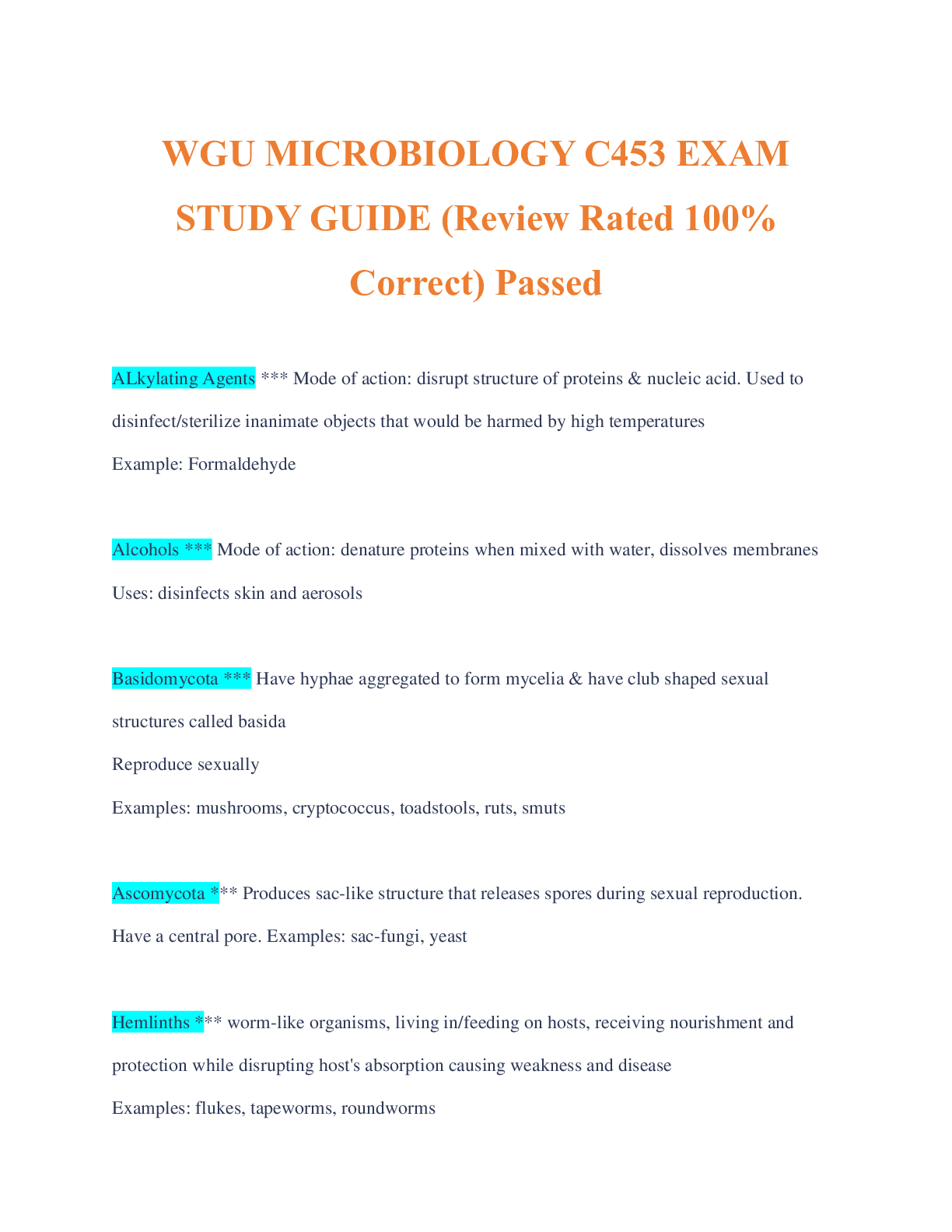
b. Ascomycota
i. Sac fungi have chitin in their cell walls and produce no flagellated spores. With
the exception of some yeasts, which do not form hyphae, the hyphae of sac
fungi have septa with a central pore.
c. Basidiomycota
i. The club fungi include mushrooms, toadstools, rusts, and smuts. The rusts and
smuts parasitize plants and cause significant crop damage. In addition to having
hyphae aggregated to form mycelia, the club fungi have club-shaped sexual
structures called basidia, from which the name Basidiomycota is derived. In a
typical basidiomycete life cycle, sexual spores called basidiospores germinate to
form septate mycelia, and cells of mycelia unite into dikaryotic forms.
d. Deuteromycota
i. The Fungi Imperfecti are called “imperfect” because no sexual stage has been
observed in their life cycles. Without information on the sexual cycle,
taxonomists cannot assign them to a taxonomic group. However, by their
vegetative characteristics and the production of asexual spores, most of these
fungi seem to belong with the sac fungi.
18) Describe helminths.
a. Worms are bilaterally symmetrical—that is, they have left and right halves that are
mirror images. A helminth also has a head and tail end, and its tissues are differentiated
into three distinct tissue layers: ectoderm, mesoderm, and endoderm. Helminths that
parasitize humans include flatworms and roundworms
19) Describe the basic characteristics of a virus.
a. Viruses can replicate only by infecting a host cell. They cannot reproduce on their own.
Viruses are not cells; they are a strand of genetic material within a protective protein
coat called a capsid. They infect a wide variety of organisms, including both eukaryotes
and prokaryotes
20) Differentiate naked and enveloped viruses. How do enveloped viruses gain their envelope?
a. Enveloped virus enclosed within a lipid membrane and is sensitive to heat, nonenveloped virus lacks a bilayer lipid membrane and is heat resistant. Envelopes are
typically derived from portions of the host cell membranes but include some viral
glycoproteins.
21) Describe the characteristic of the following viral groups, including families that belong in these
groups:
Positive sense single-stranded
RNA viruses
Envelope/capsid shape Infection or Disease
Picornvirdae ( 1 copy) Naked, polyhedral
Polio
Common Cold
Hepatitis A
Togaviridae ( 1 copy) Enveloped, polyhedral Rubella
Equine encephalitis
Flaviviridae (1 copy) Enveloped, polyhedral Yellow fever
Retroviridae ( 2 copies) Enveloped, spherical
Adult leukemia
Tumors
AIDS
Negative sense single-stranded
RNA viruses
Envelope/capsid shape Infection or Disease
Paramyxoviridae ( 1 copy) Enveloped, helical Measles
Rhabdoviridae ( 1 copy) Enveloped, helical Rabies
Orthomyxoviridae ( 1 cipy in 8
segments)
Enveloped, helical Influenza A & B
Filoviridae ( 1 copy) Enveloped, filamentous Marburg
Ebola
Bunyaviridae ( 1 copy in 3
segments)
Enveloped, spherical Respiratory distress
Hemorrhagic fevers
Double-stranded RNA viruses Envelope/capsid shape Infection or Disease
Reoviridae ( 1 copy in 10-12
segments)
Naked, polyhedral Rota virus
Double-stranded DNA viruses Envelope/capsid shape Infection or Disease
Adenoviridae (linear DNA) Naked, Polyhedral Respiratory infections
Herpesviridae (linear DNA) Enveloped, polyhedral Oral and genital herpes
Chickenpox, shingles
Poxviridae (linear DNA) Enveloped, complex shape Smallpox, cowpox
Papovaviridae (circular DNA) Naked, polyhedral Warts
cervical and penile cancers
Hepadnaviridae Enveloped, polyhedral Hepatitis B
Single-stranded DNA viruses Envelope/capsid shape Infection or Disease
Parvoviridae (linear DNA) Naked, polyhedral Fifth disease (erythema
infectiosum) in children
a. Positive sense single-stranded RNA viruses
i. A positive-sense single-stranded RNA virus is a virus that uses positive sense,
single-stranded RNA as its genetic material. Single stranded RNA viruses are
classified as positive or negative depending on the sense or polarity of the RNA.
b. Negative sense single-stranded RNA viruses
i. Negative-sense RNA (like DNA) has a nucleotide sequence complementary to the
mRNA that it encodes. Like DNA, this RNA cannot be translated into protein
directly. Instead, it must first be transcribed into a positive-sense RNA that acts
as an mRNA.
c. Double-stranded RNA viruses
i. The capsid consists of three concentric layers of protein, inside of which is the
dsRNA genome, which range from approximately 670 to 3300 base pairs in
length
d. Double-stranded DNA viruses
i. Single-stranded DNA is usually expanded to double-stranded in infected cells.
Although Group VII viruses such as hepatitis B contain a DNA genome, they are
not considered DNA viruses according to the Baltimore classification, but rather
reverse transcribing viruses because they replicate through an RNA
intermediate.
ii. Herpes or the common cold
e. Single-stranded DNA viruses
i. A DNA virus is a virus that has DNA as its genetic material and replicates using a
DNA-dependent DNA polymerase. The nucleic acid is usually double-stranded
DNA but may also be single-stranded DNA
22) Which viral group (and family) produces reverse transcriptase?
a. Group VI viruses. All members of Group VI use virally encoded reverse transcriptase, an
RNA-dependent DNA polymerase, to produce DNA from the initial virion RNA genome.
Module 3: The Case of a Cat-Lover’s Good Deed
1) Please address the following aspects of Innate Immunity.
a. List several examples of physical barriers a host has against pathogenic microorganisms.
i. Skin and mucous membranes which make the surfaces hard to penetrate and
inhospitable to pathogens.
b. List several examples of chemical barriers a host has against pathogenic microorganisms.
i. Body fluids, saliva, mucus, gastric juices and iron limitation mechanisms
c. Define and state the function of interferon.
i. Several related proteins that are produced by the bodies cells as a defensive
response to viruses. Inhibit cell division, combat bacterial and parasitic
infections and promote or impede the differentiation of cells.
d. What causes fever and why is it beneficial?
i. The destruction of bacteria that release endotoxins and it helps the bodies
immune system get to the infection site fast
e. Discuss the general functions of the complement system
i. 20 large regulatory proteins that play a role in a host defense. The effects are
nonspecific but can be activated by immune reactions. Enhances phagocytosis,
lyse microorganisms, bacteria and enveloped viruses directly, generates peptide
fragments that regulate inflammation and immune responses.
f. Briefly describe each of the three complement pathways
i. Classical
1. Antibodies bind to antigens such as microbes and involves complement
proteins C1, C4, C2
ii. Lectin
1. Macrophages complete phagocytosis, releasing cytokines that cause the
liver to produce lectin proteins, bind to carbohydrates found on bacteria
and viruses
iii. Alternative (properdin)
[Show More]