CARDIOVASCULAR
Renal:
Diuretics: most act by disrupting solute reabsorption. NA and CH are predominant solutes in the filtrate. Most of these solutes is reabsorbed in PCT. Also, most bicarb and potassium is reabsor
...
CARDIOVASCULAR
Renal:
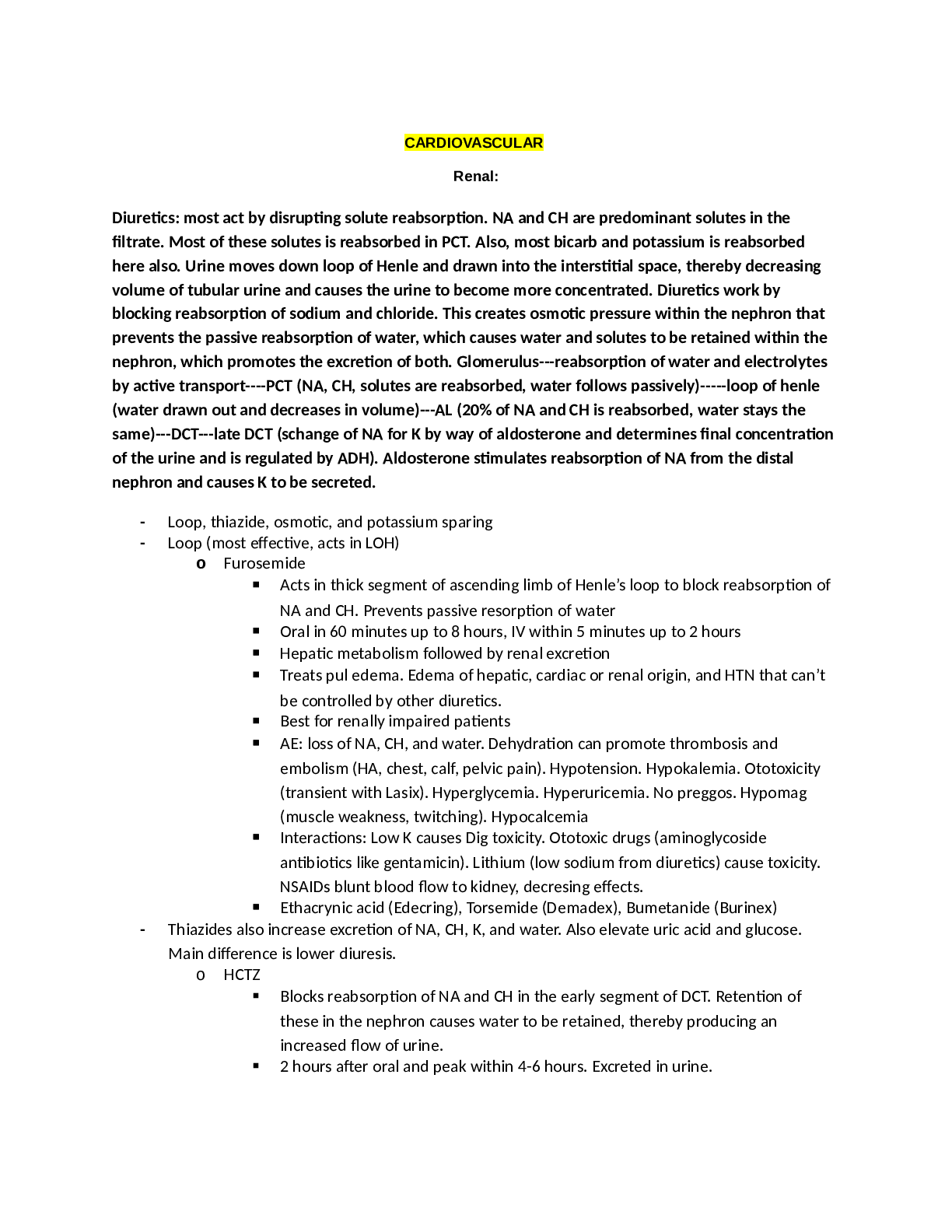
Diuretics: most act by disrupting solute reabsorption. NA and CH are predominant solutes in the filtrate. Most of these solutes is reabsorbed in PCT. Also, most bicarb and potassium is reabsorbed here also. Urine moves down loop of Henle and drawn into the interstitial space, thereby decreasing volume of tubular urine and causes the urine to become more concentrated. Diuretics work by blocking reabsorption of sodium and chloride. This creates osmotic pressure within the nephron that prevents the passive reabsorption of water, which causes water and solutes to be retained within the nephron, which promotes the excretion of both. Glomerulus---reabsorption of water and electrolytes by active transport----PCT (NA, CH, solutes are reabsorbed, water follows passively) loop of henle
(water drawn out and decreases in volume) AL (20% of NA and CH is reabsorbed, water stays the
same)---DCT late DCT (schange of NA for K by way of aldosterone and determines final concentration
of the urine and is regulated by ADH). Aldosterone stimulates reabsorption of NA from the distal nephron and causes K to be secreted.
- Loop, thiazide, osmotic, and potassium sparing
- Loop (most effective, acts in LOH)
o Furosemide
▪ Acts in thick segment of ascending limb of Henle’s loop to block reabsorption of NA and CH. Prevents passive resorption of water
▪ Oral in 60 minutes up to 8 hours, IV within 5 minutes up to 2 hours
▪ Hepatic metabolism followed by renal excretion
▪ Treats pul edema. Edema of hepatic, cardiac or renal origin, and HTN that can’t be controlled by other diuretics.
▪ Best for renally impaired patients
▪ AE: loss of NA, CH, and water. Dehydration can promote thrombosis and embolism (HA, chest, calf, pelvic pain). Hypotension. Hypokalemia. Ototoxicity (transient with Lasix). Hyperglycemia. Hyperuricemia. No preggos. Hypomag (muscle weakness, twitching). Hypocalcemia
▪ Interactions: Low K causes Dig toxicity. Ototoxic drugs (aminoglycoside
antibiotics like gentamicin). Lithium (low sodium from diuretics) cause toxicity. NSAIDs blunt blood flow to kidney, decresing effects.
▪ Ethacrynic acid (Edecring), Torsemide (Demadex), Bumetanide (Burinex)
- Thiazides also increase excretion of NA, CH, K, and water. Also elevate uric acid and glucose. Main difference is lower diuresis.
o HCTZ
▪ Blocks reabsorption of NA and CH in the early segment of DCT. Retention of these in the nephron causes water to be retained, thereby producing an increased flow of urine.
▪ 2 hours after oral and peak within 4-6 hours. Excreted in urine.
▪ Treats mobilizing edema from HF, HTN, DI (paradoxical), PM osteoporosis (retains calcium, so more circulating calcium after ovaries stop and bone is broken down).
▪ AE: low NA, CH, K, dehydration, hyperglycemia, hyperuricemia. Increased LDL
and triglycerides. Low magnesium.
▪ Interactions: Identical to loop diuretics. Except can be combined with ototoxic drugs.
▪ Others: Chlorothiazide can be IV., methyclothiazide, chlorthalidone, indapamide,
metolazone.
- K sparing: produce a modest increase in urine production and produce a substantial decrease in K excretion. Rarely employed because diuresis is low. Usually used with thiazides and loop.
o Spironolactone (Aldactone)
▪ Blocks action of aldosterone (promotes NA uptake in exchange for K secretion) in the distal nephron. Causes opposite effects which is retention of potassium and increased excretion of NA. Most NA has already been filtered before distal nephron, so diuresis is scant.
▪ Takes 48 hours to develop.
▪ Treats HTN and edema. Treats primary hyperaldosteronism, premenstrual syndrome, and polycystic oveary syndrome.
▪ AE: Hyperkalemia. Spironolactone is a steroid derivative (gynecomastia,
menstrual irregularities, impotence, hirsutism, and deepening of the voice).
▪ Interactions: hyperK when used with K supps, salt subs, or other K sparing diuretics. ACE inhibitors, ARBs, and direct renin inhibitors elevate K by suppressing aldosterone secretion.
o Triamterene (Dyrenium): spironolactone reduces ion transport indirectly through
blockade of aldosterone, triamterene is a direct inhibitor of the exchange mechanism itself. Which causes a decrease in NA reabsorption and a reduction in K secretion. Hence NA excretion is increased while K is conserved. Since its direct, it works faster than spir.
▪ HTN and edema. When used alone, triamterene produces mild diuresis. When
combined with other diuretics, it augments diuresis and helps ounteract the K wasting effects.
▪ AE: HyperK. N/V, leg cramps, and dizziness. Blood dyscrasias occurs rarely.
▪ Other: Amiloride
o Amiloride: similar to Triamterene. Both inhibit potassium loss by direct blockade of sodium potassium exchange in the distal nephron.
▪ Same side effects as Triamterene.
- Osmotic: only Mannitol.
o Mannitol (Osmitrol)
▪ Freely filtered at the glomerulus. Minimal tubular reabsorption. Minimal metabolism. Pharmacologically inert (no direct effect on biochemistry or physiology of cells)
▪ IV admin leads to no reabsorption, so it accumulates in nephron creating an osmotic force that inhibits passive reabsorption of water. So urine flow increases.
▪ Can prevent renal failure by drawing water through kidney.
▪ Reduces ICP by creating an osmotic force that draws edematous fluid from the brain into the blood.
▪ AE: Edema (water leaves capillaries). Use in caution with heart disease cause it
increases risk of CHF and PE. HA, nausea, and vomiting.
▪ Preps: IV infusion. Should elicit a urine flow of 30-50 ml/hour. Watch for crystals. Warm to disintegrate.
Diuretics to use for Calcium kidney stones
Thiazide diuretics. Chlorothiazide, HCTZ, Methyclothiazide.
What diuretic increases plasma urate concentrations?
Thiazide diuretics. Loop diuretics (Furosemide, Ethacrynic acid, Bumetanide, Torsemide)
K+ sparing drug with quickest onset
- Spironolactone : onset 24-28 hours, duration 48-72 hours
- Triamterene: 2-4 hours, 12-16 hours
- Amiloride: 2 hours, 24 hours
Understand RAAS, impact of ACE inhibitors, SEs of ACE
- RAAS causes constriction of arterioles and veins and retention of water by the kidneys. Vasoconstriction is mediated by angiotensin II. Water retention is mediated by aldosterone through secretion of sodium.
- Angiotensin II also causes indirect release of NE, EPI, and the CNS to increase sympathetic outflow to blood vessels. AII causes secretion of aldosterone.
- Aldosterone acts on distal tubules of the kidney to cause retention of NA and excretion of K and hydrogen.
- A2 is formed by sequential reactions by renin and ACE (Angiotensin converting enzyme). Renin (kidney origin) causes A1 to A2 by decrease in BP, volume, NA content, and renal perfusion.
- ACE is an enzyme on most blood vessels, especially the lungs. Converts angiotensin I into II.
Drugs of choice for hypertension
Understand the actions of each type of HTN medications – ACE inhibitors (‘pril) BBs (olols), ARBs, CCB (Verapamil, Cardizem)
ACE inhibitors (‘pril)
- Treats MI, HF, and diabetic nephropathy, HTN.
- Suppresses formation of Angiotensin II. Increases levels of bradykinin (vasodilation secondary to production of prostaglandins and nitric oxide).
- Inhibition of ACE can cause hyperkalemia and fetal injury
- Elevated bradykinin causes cough and angioedema
- Most are oral except enalapril. All oral with food besides captopril and moexipril
- 1-2 times daily cause of long half-lives besides captopril
- All besides lisinopril are prodrugs and require conversion to active from besides lisinopril.
- ALL are excreted by kidneys. Require reduced in kidney patients besides eosinophil
- Treats HTN, HF, MI, diabetic and nondiabetic nephropathy (reduction of glomerular filtration pressure). Not used in prevention of DN. Only Ramipril is approved for reducing the risk of MI, stroke, and CV deaths. Enalapril can reduce risk of diabetic retinopathy.
- AE: First dose hypotension (reduce diuretics and dosage, cough (dry, persistent cough from bradykinin), hyperkalemia (inhibition of aldosterone, usually diuretic and K supp patients), renal failure (in bilateral renal artery stenosis patients), fetal injury (2nd and 3rd trimester), angioedema
( accumulation of bradykinin).
- Interactions: diuretics, other HTN drugs, K drugs, Lithium (toxicity), NSAIDs (reduces anti-HTN effects)
ARBs (sartan): decreases influence of A2. ACE inhibitors block production, ARBs block the actions. Much lower risk of cough and hyperkalemia
- Dilation of arterioles and veins by blocking action of A2. Blocking A2 prevents changes to cardiac structure, decreased aldosterone from AM and thereby increase renal excretion of NA and water. Do not inhibit kinase II, hence do not increase levels of bradykinin in the lungs.
- 2 ARBs treat HF (valsartan and candesartan)
- Diabetic nephropathy (Irbesartan and losartan)
- MI: valsartan
- Stroke prevention: losartan
- Prevention of MI, stroke, and death in high CV patients: telmisartan in patients 55 and older.
- Diabetic retinopathy: losartan
- AE: Angioedema, fetal harm, renal failure (stenosis)
- Interactions are same
Direct renin inhibitor: Aliskiren
- Suppresses entire RAAS. Less cough, less angioedema. Same sides as ACE
Aldosterone antagonist
- Eplerenone
o One side effect is hyperkalemia. Causes blocked receptors for aldosterone, which leads to K retention and increased excretion of NA and water.
o Takes 4 weeks to develop
o Interactions: inhibitors of CYP3A4 can increases levels (erythromycin, saquinavir, verapamil, fluconazole, ketoconazole, itraconazole)
- Spironolactone
o Blocks receptors for aldosterone, but also binds with receptors for other steroid hormones (causes gyno, menstrual irregularities, impotence, hirsutism, and deepening of the voice)
Calcium Channel Blockers (‘dipine): Calcium channels regulate contraction when an action potential travels down smooth muscle, calcium channels open and calcium ions flow inward, which initiates the contractile process. CCBs block contraction and cause vasodilation
- Myocardium effects: calcium blocked, contractile force will diminish. SA node (pacemaker): calcium increases discharge, so blocked will decrease rate. AV node: calcium entry determines excitability, so CCBs decrease velocity of conduction.
- Dihydropyridines (Nifedipine is prototype) act primarily on arterioles. No effect on heart at therapeutic doses
- Orphans: Verapamil (only phenylalkylamine), and Diltiazem (only benzothiazepine).
- Verapamil
o Treats angina, essential HTN, and dysrhythmias.
o Blocks CA at peripheral arterioles causing dilation and reduction in pressure, at arteries and arterioles which increases coronary perfusion, at the SA node which reduces heart rate, at the AV node which decreases conduction, in the myocardium which decreases force of contraction (negative inotrope). Counterbalanced by indirect effects (baroreceptors increase
NE which increases HR, conduction, and contraction). So this drug just dilates, reduces pressure, and increases perfusion.
o Lots of first pass in oral form. Effects begin in 30 minutes and peak within 5 hours. Reduce in liver patients
o Treats a flutter, afib, SVT by suppressing AV node, preventing atria from firing too fast.
o AE: constipation most common. Dizziness, flushing, HA, edema of the ankles and feet. Brady from blocked SA. Heart blocks from blocked AV.
o Do not give to sick sinus syndrome, 2nd or 3rd degree block.
o Interactions: Digoxin suppresses impulse conduction also. Risk of AV block is increased. Increases dig levels. Betablockers can cause excessive suppression. Grapefruit juice inhibits metabolism. Hypotension. Ventricular tachycardias.
- Diltiazem
o Blocks calcium channels in heart and BVs. Very similar to Verapamil.
o Liver metabolized. Rapid (minutes) effects and peak within .5 hour.
o AE: less constipation. Dizziness, flushing, HA, edema. Same as verapamil.
o Interactions: same as verapamil.
- Nifedipine
o Blocks CCs in VSM, but little blockage in heart. So can’t treat dysrhythmias, no cardiosuppression, and less likely to exacerbate preexisting cardiac disorders.
o Causes vasodilation in VSM and lowers arterial pressure. No direct suppressant effects on automaticity, AV conduction, or contractile force.
o Indirect effects: activates baroreceptors. Increased cardiac stimulation than above 2 because no block of CC in heart. Occurs primarily in IR formulations, not with SR formulation.
o Treats angina, HTN (only SR should be used to avoid reflex effects).
o AE: flushing, dizziness, HA, edema, and gingival hyperplasia, and may pose a risk of chronic eczematous rash. Very little constipation. Safer to give cardiac patients. May cause reflex tachy, which increase pain in angina and can be combined with beta blocker.
o Interactions: Beta blockers help RT. But when BBs are given with verapamil and diltiazem.
o Toxicity: loses selectivity, same treatment as verapamil (gastric lavage, charcoal, calcium gluconate will reverse dilation and inotropic effects, but will not reverse AV block.
o Others:
▪ Nicardipine: essential HTN and angina. Flushing, HA, weakness, palpitations, and edema. Can give with BB.
▪ Amlodipine: EHTN and angina. Orally at 6-12 hours peak, half life of 30-50 hours. Daily dosing indicated. Little reflex tachy.
▪ Isradipine: only HTN. Little reflex tachy. Rapid absorption.
▪ Felodipine: Only HTN. Peak 2.5-5 hours. 24-hour half-life.
▪ Nimodipine: prophylaxis of neuro injury following rupture of an intracranial aneurysm. Prevents cerebral arterial spasm that follow subarachnoid hemorrhage.
▪ Nisoldipine: Only HTN. Peak 6 hours.
▪ Clevidipine: IV therapy for severe HTN. Systolic above 180 and diastolic above 115. 1-minute half-life.
Beta Blockers (‘lol): blocks beta 1 receptors which decreases heart rate and contractility, causing cardiac output to decline. Suppresses reflex tachy. Blockade of beta 1 receptors on juxta cells of the kidneys reduces release of renin, and thereby reduces A2 mediated vasoconstriction and aldosterone mediated volume expansion. Long term use reduces peripheral vascular resistance.
- Acebutolol, Penbutolol, Pindolol have intrinsic sympathomimetic activity. They produce mild activation of beta receptors while blocking receptor activation by strong agonists (NE). Heart rate at rest is slowed less than with other beta blockers.
- AE: brady, decreased AV conduction, and reduced contractility.
- Do not give to patients with sick sinus syndrome or 2nd and 3rd degree blocks.
- Blockage of beta 2 in the lungs can promote bronchoconstriction. If must be used, use a beta 1 selective agent (metoprolol).
- BBs can mask hypoglycemia.
- Other SEs: depression, insomnia, bizarre dreams, and sexual dysfunction.
-
Review the Antihypertensive and Lipid-Lowering Tx to prevent HA trial (ALLHAT)
- ALLHAT, a randomized, double-blind, active-controlled hypertension treatment trial in 42,418 patients, reported that a thiazide-type diuretic (chlorthalidone) was superior to a calcium channel blocker (amlodipine), an angiotensin-converting enzyme inhibitor (lisinopril), and an alpha1-blocker (doxazosin) in preventing the new onset of heart failure (HF.
- Recommends that alpha blockers not be used as first line therapy for HTN.
Hypertensive emergencies: diastolic BP exceeds 120. When associated with papilledema, intracranial hemorrhage, MI, or acute CHF, BP must be lowered rapidly (1 hour). When no signs of organ damage, then BP reduced over 24-48 hours.
- IV nitroprusside is usually drug of choice. Direct acting vasodilator within seconds and fades rapidly. 0/3-3mcg/kg/min. Prolonged infusion (greater than 72 hours), can produce toxic accumulation of thiocyanate and should be avoided.
- Fenoldopam is for short term management. Good for renal function. Promotes NA and water excretion through direct effects on renal tubules. Rapid onset and short duration less than 5 minutes. Reflex tachy. Can elevate IOP.
- Labetalol blocks alpha and beta. Reduces BP from alpha blockage and tachy by beta blockage. No asthma, HF, av block patients.
- Clevedipine: 1 minute half-life dihydropyridine CCB. IV infusion.
HTN in pregnancy
- No ACE, ARBs and or DRIs (direct renin inhibitors).
- If started during pregnancy, methyldopa or labetalol are first choice.
- Mild HTN does not require treatment SBP 140-159, DBP 90-109)
- Severe SBP 160 and above, DBP 110 and above.
Heart failure: unable to pump blood sufficiently to meet metabolic needs.
• Diagnosis, treatment, and monitoring of Heart failure
o Inadequate tissue perfusion (fatigue, SOB, exercise intolerance), volume overload (venous distention, peripheral and pulmonary edema).
o Caused by chronic HTN and MI. Other causes are valve disease, CHD, CAD, dysrhythmias.
o Cardiac dilation from reduced contractility (lowers amount of blood during systole causing end systolic volume to rise), and from increased venous pressure which increases diastolic filling which causes the heart to expand even further.
o Increased sympathetic tone from falling arterial pressure. Baroreceptor reflex causes sympathetic output to the heart and parasympathetic effects are reduced. Increased HR, contractility, venous tone, arteriolar tone.
o Water retention from reduced cardiac output that causes a reduced renal blood flow, which lowers GFR and urine is decreased. Also, HF activates RAAS (increased aldosterone and A2). Increased blood volume increases venous pressure and return. As a result, ventricular filling and stroke volume are increased.
o Stretched atria and dilation of ventricles causes ANP and BNP to be released. These promote dilation and promote loss of NA and water through the kidneys. Counterbalance vasoconstriction caused by the SNS and A2, as well as retention of NA and water caused by the RAAS.
• Review stages of HF
o Stage A high risk, no symptoms or structure changes
▪ Lifestyle changes. Maybe ARB or ACE with diabetes, atherosclerosis, or HTN.
o Stage B, structural changes, no symptoms
▪ ACE plus BB is recommended for patients with decreased EF.
o Stage C, structural changes and previous symptoms
▪ Treatment as above PLUS, diuretic, ACE or ARB, and a BB. Thiazide with good kidneys, loop with bad. Avoid ASA and NSAIDs (decreases diuresis effects), If a AA is used, renal function and K should be evaluated and DC if kidneys are bad.
▪ Drugs to avoid: antidysrhythmic (cardiosuppression and prodysrhythmic actions that can make HF worse.) Amiodarone and dofetilide. Long acting CCBs like amlodipine. NSAIDs promote NA retention and vasoconstriction. Also reduce efficacy and intensify the toxicity of diuretics and ACE.
o Stage D, advanced structural changes with marked symptoms of HF at rest, requiring specialized interventions
▪ Heart transplant if exhausted resources.
• Which drugs are the best to use? Which HTN meds work well with CHF meds?
o Diuretics are first line drugs. Decreases venous pressure, arterial pressure (afterload), pulmonary edema, peripheral edema and cardiac dilation. If volume is dropped too low, CO and BP may fall precipitously and compromises perfusion.
o Thiazide for long term. Ineffective is GFR is too low. Hypokalemia
o Loops work even if GFR is low. Hypokalemia.
o K sparing promote little diuresis. Hyperkalemia. ACE and ARBs increase K also, so uses with caution. DC diuretic if ACE or ARB is started.
o ACE blocks production of A2, decreases aldosterone, and suppresses degradation of kinins. Blocked aldosterone causes arteriolar dilation, venous dilation, and excretion of NA and water, while causing retention of K.
o ARBs improve LV EF, reduce symptoms, increase e tolerance. ARBS do NOT increase levels of kinins, their effects on cardiac remodeling are less favorable than ACE drugs. Don’t cause cough is usually the reason people switch to ARBs from ACE.
o Aldosterone antagonists (spironolactone and eplerenone) are added to standard HF therapy, but only in patients with persistent symptoms despite adequate treatment with an ACE or BB. ACE and ARBs partially block aldosterone, but not enough. AAs block receptors completely. Hyperkalemia. DC K supps. Spironolactone, not eplerenone, poses a risk of gyno.
o Direct Renin inhibitors shut down entire RAAS. Only one (aliskiren).
o BBs reduce contractility, which seems like a contraindication. Carvedilol, bisoprolol, and SR metoprolol are added to conventional therapy, they can improve LV EF, slow progression, and prolong survival.
o Inotropes: Dopamine increases contractility, HR, and activates dopamine receptors in the kidneys which dilates renal blood vessels, increasing urine output. Activates alpha 1 and increases vascular resistance (afterload), thereby reducing CO. Dobutamine activates only beta 1 (increase cont, and rate). Does not activated alpha 1, so does not increase vascular resistance.
o Digoxin: positive inotrope. Second line therapy for HF. Does not prolong life in HF patients.
▪ Low K causes increased sensitivity.
▪ Increased contractility = increased CO, which leads to decline in sympathetic tone, urine production increases, and renin release declines.
▪ By increasing arterial pressure, causes reduction in HR (more ventricular filling), afterload is reduced (because of reduced arteriolar constriction), and venous pressure is reduced, thereby reducing cardiac distention, pulmonary congestion, and peripheral edema. Renin declines in response to increased arterial pressure. No renin means low aldosterone and A2 (decreased vasoconstriction).
▪ AE: dysrhythmias from hypokalemia secondary to diuretics or v/d. Phenytoin and lidocaine can treat dysrhythmias.
▪ AE (noncardiac): anorexia, n/v most common. Fatigue and visual disturbances.
▪ Range: 0.5-0.8
▪ Interactions: Thiazides and Loop causes hypokalemia. ACE and ARBs increase K (decreases response to dig). Sympathomimetics (dopamine, dobutamine) increase rate and contraction. Complements inotrope effect of dig, but rate increase is bad. Quinidine cause elevated levels of dig. Verapamil (CCB), increases levels of dig.
▪ High bran meals can decrease absorption. Taken with meals decrease rate of absorption, but not the extent. Eliminated by kidneys (renal impairment leads to accumulation). Half life of 1.5 days. 6 days to reach plateau and to be eliminated after stopped.
▪ Single oral dose starts in 30 minutes-2 hours, and peaks 4-5 hours.
• African Americans
o Adding isosorbide dinitrate/hydralazine is recommended to improve outcomes in AA who have moderate to severe symptoms despite optimal therapy with ACE, BB, and diuretics.
Diabetes:
- Diuretics, BB, ACE, ARBs, and CCBs are effective. No aldosterone antagonists (Eplerenone , Spironolactone)
JNC-8 Guidelines and recommended treatments(first line and second line drugs) in each stage of hypertension
o Treatment should be initiated if SBP greater than 150 or a DBP greater than 90 if patients greater than 60. Younger than 60= greater than 140 and 90.
o Sympathetic stimulation causes activation of beta 1 (rate) and alpha 1 (constriction). RAAS releases renin in response to reduced renal blood flow, bv, or reduced BP, and activation of beta 1. Then it converts angiotensinogen into A1, then ACE turns it into A2, which constricts everything and causes aldosterone to be releases also (NA and water retention). Drug induced reactions can activated the RAAS, which counteracts HTN medications.
o Frist, counteract renin release with beta blockers, then prevent conversion of angio to A1 with a direct renin inhibitor. Then prevent conversion of A1 to A2 with an ACE inhibitor, then block A2 with an ARB, hen block receptors for aldosterone with an AA.
• Patients 60 years old or older with hypertension should aim for a blood pressure level of less than 150/90 mm Hg. Furthermore, people between the ages of 30 and 59, as well as adults with diabetes or kidney disease, should aim for a diastolic goal of less than 90 mm Hg and a systolic goal less than 140 mm Hg.
• Threshold blood pressure levels to begin treatment should be 150/90 mm Hg for patients aged 60 or older. Note: High blood pressure is still defined at 140/90 mm Hg. Treatment for older patients (60+) is recommended to begin at a higher threshold.
• A healthy diet, weight control, and regular exercise have the potential to improve blood pressure control and reduce medication dependency. A government-appointed panel updated the guidelines, but the government has not offered an endorsement.
o
Electrolyte imbalances
• Patho, indications, contraindications, adverse effects
• Treatments and consequences – isotonic, hypertonic, hypotonic, metabolic alkalosis, hypo/hyperkalemia, hypomagnesemia, hypo/hyper natremia, dehydration
Natriuretic Peptides:
o Stretched atria and dilation of ventricles causes ANP and BNP to be released. These promote dilation and promote loss of NA and water through the kidneys. Counterbalance vasoconstriction caused by the SNS and A2, as well as retention of NA and water caused by the RAAS.
o Protects CV system in the event of volume overload, which increases preload and increases CO and AP. Reduce blood volume and promotes dilation of arterioles and veins.
o ANP is produced by the atria. BNP is produced by the ventricles and CNP is produced by cells of the vascular endothelium.
o When blood volume is excessive all three are release.
o ANP and BNP reduce BV and increase venous capacitance, and thereby reduce cardiac preload. Suppress sympathetic outflow and cause dilation of arterioles and veins. Suppresses both the RAAS and sympathetic outflow.
Drugs that treat dyslipidemia
• Classes of lipoproteins, levels, recommended guidelines for treatment
o VLDL- contain mainly triglycerides. Most of the TG in the blood. Delivers TGs from liver to adipose tissue and muscle, which can use TGs as fuel. Above 500, increased risk of pancreatitis.
o LDL: cholesterol as primary core lipid. Majority of cholesterol in blood. Delivers cholesterol to nonhepatic tissues. Greatest contribution to atherosclerosis. Main goal in cholesterol drugs is to reduce LDL. Above 190 needs treatment. 40-75 years of age with diabetes 70-189.
o HDL: cholesterol primary core. Carry cholesterol from peripheral tissues back to the liver for removal. Levels below 40 increase risk
o Cholesterol screening done every 5 years for adults 20 years and older.
o Lipid screening for all children between 9-11 and 18-21. Less than 170 is acceptable.
o Lovastatin, simvastatin, pravastatin, and atorvastatin are approved for kids older than 10.
o Pregnant women: statins are cat x. Ezetimibe and fibrates are cat c.
o Guidelines: pg 563.
o TG level above 200 is bad.
• Statins – pharmacokinetics, types of statins, labs to watch, SEs of meds.
o Most effective for lowering LDL and TC. And can lower TG and raise HDL in some patients
o Significant reductions in 2 weeks, max in 4-6 weeks
o CH synthesis happens at night, so give in the evening
o Lifelong treatment. DC will return levels to normal
o Increases number of LDL receptors on hepatocytes.
o Goal is LDL below 100. 70 if high risk.
o Rosuvastatin is approved for prevention in normal LDL levels and a risk factor
o Treats hypercholesterolemia, primary and secondary prevention of CV effects, Post MI therapy, Diabetes (older than 40, LDL greater than 100, or all type 2 patients with ASCVD).
o Oral admin. Most is absorbed in the liver.
o Atorvastatin, lovastatin, and simvastatin are metabolized by CYP3A4.
o Rosuvastatin reaches high levels in Asians
o AE: HA, rash, GI disturbances. Hepatoxicity and myopathy is rare.
o Myopathy/Rhabdo in 10-15% of patients. Muscle aches, tenderness, or weakness to certain muscles. Myositis from inflammation associated with elevation of CK from injured muscle. K can be released from muscle causing hyperkalemia. Myositis can progress to rhabdo (elevated CK and free myoglobin), which causes renal impairment. Myopathy is increased in small body frame, frailty, multisystem disease, use of high dose statins, low vit D, concurrent use of fibrates, and use of drugs that raise statin levels. Hypothyroidism increases risk also.
o Rosuvastatin highest risk of rhabdomyolysis.
o Hepatoxicity: elevations in serum transaminase levels. Viral or alcoholic hepatitis? Avoid statins.
o Cataracts and new onset diabetes is rare
o Interactions: other lipid lowering agents increases risk of muscle injury. Primarily with fibrates (gemfibrozil, fenofibrate). Inhibitors of CYP raise levels (macroglide antibiotics, azole antifungal drugs, HIV protease inhibitors, amiodarone, and cyclosporine).
o Drug selection: 30-40% reduction needed, any statin will do. More than 40%, then atorvastatin or simvastatin. Levels of atorvastatin, lovastatin, and simvastatin are raised by CYP inhibitors.
o Renal impairment? Use atorvastatin or fluvastatin (no dosage adjustment needed)
o Asian? Half dose of rosuvastatin.
• Bile-Acid sequestrants - pharmacokinetics, labs to watch, SEs of meds, directions for taking meds
o Reduce LDL. Used primarily as adjuncts to statins. Colesevelam, cholestyramine, and colestipol.
o Colesevelam (Welchol):
▪ Drug of choice. Non absorbable resin that binds bile acids and other substances in the GI tract and prevent their absorption and promotes their excretion.
▪ Less bloating, flatulence, bloating, and cramping, does not reduce absorption of fat soluble vitamins, and does not significantly reduce absorption of statins, dig, warfarin, and other drugs.
▪ Helps control hyperglycemia in type 2
▪ LDL starts decline in 1 week and max (20%) in a month.
▪ May raise VLDL in patients with high VLDL starting therapy. Not drug of choice if so.
▪ Biologically inert, not soluble in water, and cannot b absorbed from the GI tract. Excreted in feces.
▪ Normally, bile acids secreted into the intestine are normally reabsorbed and reused, BASs prevent this from happening. Increased excretion calls for more synthesis in the liver. Bile acids are made from cholesterol, so liver cells require more to increase bile acid production. LDL supplies this and liver cells increase uptake of LDL.
▪ Usually combined with statin.
▪ AE: no systemic effects. Constipation (increase fiber and fluids), bloating, indigestion, and nausea.
▪ Cholestyramine and colestipol can decrease fat absorption, and may decrease uptake of fat soluble vitamins.
▪ Interactions: Thiazides, dig, warfarin, and some antibiotics can get bound and become useless. Oral meds should be administered either 1 hour before the sequestrant or 4 hours after.
o
• Nicotinic Acid – pharmacokinetics, labs to watch, SEs of meds, combining with other cholesterol reducing meds, risks
o Reduces LDL and TG levels, and increases HDL. Does little to improve outcomes.
o AE: intense flushing, GI upset, liver injury. Take 325 ASA to reduce flushing before dose. ER niacin produces little flushing. Niacin is hepatotoxic (least likely with ER Niaspan). Increases levels of uric acid
o LDL reduction of 14-17%, TGs 28-35. Raises HDL by 28-35%.
o Inhibits synthesis of TGs in liver and adipose tissue, and decreases production of VLDLs (which produce LDL).
o IR Niacor, levels rise rapidly, so highest incidence of flushing. Decreases over time. Levels fall rapidly also, so total dose is split up 2-3 times daily.
o ER Niaspan levels rise slowly and remain steady. Flushing is minimized and daily dosing is adequate. Costs more though.
• Ezetimibe – method of action, SEs of med
o Blocks CH absorption. Inhibits CH absorption from diet and bile.
o Reduces TC, LDL, TG, and apolipoprotein B. Small increase in HDL.
o Adjunct to diet mods. Approved for monotherapy. Reduces LDL by 19%, increases HDL by 1- 4%, and decreases TGs by 5-10%.
o Orally, unaffected by food.
o AE: myopathy, rhabdo, hepatitis, pancreatitis, and thrombocytopenia. No GI side effects.
o Interactions: Risk of liver probs and myopathy with statin. Monitor transaminase levels. With fibrates, increase in CH content of bile and increase risk of gallstones and myopathy. BASs significantly decrease the absorption of ezetimibe. Administer ezetimibe 2 hours before or 4 hours after. Cyclosporine increase levels.
o Liver impairment increases bioavailability.
• Fibrates – labs to watch, SEs of med
o Most effective at lowering TGs. Raise HDL. Little effect on LDL.
o Increases risk of bleeding with warfarin and increased risk of rhabdo when combined with statins
o Gemfibrozil, fenofibrate, and fenofibric acid
o Gemfibrozil
▪ Decreases TG and raises HDL. Lowers VLDL within 3-4 weeks. High TG levels, LDL may be increased.
▪ Third line treatment.
▪ AE: Rash and GI disturbances. Gallstones (increased biliary CH saturation), myopathy (tenderness, weakness, muscle pain), liver injury
▪ Interactions: Displaces warfarin from plasma albumin, increases anticoagulant effects. Increased risk of statin induced myopathy.
o Fenofibrate
▪ Treats hypertriglyceridemia who haven’t responded to other things
▪ AE: rash and GI. Gallstones, liver injury. Increased risk of bleeding with warfarin
o Fenofibric acid
▪ Active metabolite of fenofibrate
▪ Only one approved for use with a statin
▪ Same as above for AEs.
Review meds to take post-MI
o BB, ACE or ARB, AP or warfarin, and a statin
Antidysrhythmic:
• Quinidine, Amiodarone, Lidocaine – when do you use them, what are SEs, how do you monitor the patient?
o SA node fires, atria contract, impulse travels through AV node (delayed to fill ventricles), then ventricles contract, impulse actives His-Purkinje system, through the bundle of His, to left and right BBs, then branches of the purkinje fibers causing ventricular contraction.
o Sodium channel blockers: slow impulse conduction in the atria, ventricles, and HP system.
o Beta blockers: reduce calcium entry and they depress phase 4 depolarization. Reduce automaticity in the SA node, slow conduction through AV node, reduce contractility.
o K channel blockers: Delay repolarization of fast potentials. Prolong both the action potential duration and the effective refractory period.
o CCBs: Verapamil and Diltiazem. Same actions as beta blockade.
o Supraventricular: above the ventricles. Least harmful. If atria drive ventricles at excessive rate, results in incomplete filling of ventricles. Objective in treatment is to slow ventricular rate by blocking impulse conduction through the AV node. AFIB, Aflutter, SVT.
o Ventricular: CV is often treatment of choice. Vtach, vfib, PVCs, Digoxin induced ventricular dysrhythmias (usually blocks) , torsades
• Class IA agents: widens QRS, prolongs QT.
o Quinidine
▪ SCB. Class IA. Slows impulse conduction through the atria, ventricles, and HP system. Delays repolarization at these sites by blocking K channels.
▪ Strongly AC and blocks vagal input to the hart. Causes increase in SA automaticity and AV conduction can drive ventricles excessively. Pretreat with BB, dig, verapamil to suppress av conduction.
▪ Widens QRS (slowing depolarization of the ventricles), and prolongs QT (delays ventricular repolarization)
▪ Treats supraventricular and ventricular dysrhythmias. Principal indication is long term suppression of dysrhythmias, including SVT, aflutter, afib, and sustained vtach.
▪ AE: Diarrhea and other GI symptoms. Cinchonism (tinnitus, HA, nausea, vertigo, and disturbed vision), cardiotoxic (sinus arrest, blocks, tachydysrhythmias, asystole), arterial embolism (from corrected afib), alpha blockade (vasodilation, and hypotension).
▪ Interactions: doubles dig levels. Reduce dig. AC effects so watch for tachy. Intensifies warfarin. Shortened half-life by phenobarbital, phenytoin, and other drugs that induce hepatic metabolism.
o Procainamide
▪ Similar to quinidine. Blocks NA channels, decreasing conduction velocity in the atria, ventricles, and HP system. Delays repolarization. In contrast to quinidine, procainamide is weakly AC, and is not likely to increase ventricular rate. Same effects on ECG as above.
▪ Atrial and ventricular dysrhythmias. Long term suppression. Less desirable due to serious AEs.
▪ Peak 1 hour after oral. Metabolized by liver and excreted by kidneys. Metabolite can accumulate in liver to toxic levels.
▪ AE: Systemic lupus erythematosus like syndrome with prolonged treatment. Pain and inflammation of the joints, pericarditis, fever, and hepatomegaly. When withdrawn, symptoms usually subside.
▪ Blood dyscrasias like neutropenia, thrombocytopenia, and agranulocytosis. CBC weekly during initial therapy.
▪ Cardiotoxic like quinidine. Widening QRS (more than 50%), stop medication.
▪ GI symptoms like quinidine.
• Class IB: differ from class IA by accelerating repolarization and little or no effect on ECG
o Lidocaine
▪ Only ventricular dysrhythmias.
▪ Blocks NA channels and slows conduction in the atria, ventricles, and HP system, reduces automaticity in the ventricles and HP system, and ACCELERATES repolarization. No AC effects. No QRS widening.
▪ Rapid hepatic metabolism. So almost always IV. Short term therapy of ventricular dysrhythmias. Not effective against supraventricular dysrhythmias.
▪ AE: CNS effects can occur. Drowsiness, confusion, paresthesia. Toxic doses may produce seizures and RA. Reduce dosage in hepatic impaired.
o Phenytoin
▪ Antiseizure med that treats digoxin induced dysrhythmias. Same effects as lidocaine. Increases AV nodal conduction, contrasted to practically all other antidysrhythmic agents.
▪ Wide interpatient variation of metabolism. Low TI (levels of 5-20).
▪ Treats dig dys, and ventricular dys. Increase in AV conduction can counter the depressing effects of DIG. Phenytoin can’t treat afib or aflutter cause it enhances AV conduction and could increase eht number of atrial impulses reaching the ventricles (fast v rate).
• Class IC: block NA channels and reduce conduction velocity in the atria, ventricles, and HP system. Delay ventricular repolarization, causing a small increase in the refractory period.
o Flecainide
▪ Maintenance therapy of supraventricular dys. Prolongs PR and widens QRS.
▪ Asymptomatic v tach associated with acute MI, flecainide causes mortality.
▪ Decreases myocardial contractility and can exacerbate HF. Do not give with BB, verapamil, diltiazem, because they all decrease contractility.
o Propafenone
▪ Same actions and uses as Flecainide. Has beta blocking properties so can decrease myocardial contractility and promote bronchospasm.
• Class II: Beta Blockers: propranolol, acebutolol, esmolol, and sotalol are approved for treating dysrhythmias. Sotalol also blocks K channels.
o Propranolol
▪ Nonselective beta blocker. Blocks both beta 1 and beta 2.
▪ Beta 1 blockade: attenuates sympathetic stimulation of the heart. Decreased automaticity of the SA node, decreased velocity of conduction through the AV node, and decreased contractility. Beta 1 is coupled with calcium channels, so heart rate, av conduction, and contractility all result from decreased calcium influx.
▪ Treats sinus tach, vtach, and paroxysmal atrial tachycardia. Also treats supraventricular by suppressing discharge of SA node and slowing of ventricular rate by decreasing transmission of atrial impulses through the AV node.
▪ AE: HF, AV block, and sinus arrest, hypotension. Bronchospasm.
o Acebutolol
▪ Cardioselective. Oral therapy of PVCs. Same AEs as Propranolol.
o Esmolol
▪ 9 minute half life. IV infusion. Immediate control of ventricular rate in SVT, atrial flutter, and afib. Short term only. Same AEs as propranolol.
• Class III: K channel blockers: Amiodarone, dronedarone, dofetilide, ibutilide, and sotalol. All delay repolarization of fast potentials, hence all five prolong the action potential duration and ERP. By doing so, they prolong the QT interval.
o Amiodarone
▪ Treats both atrial and ventricular dys. Approved for only life threatening dys.
▪ Oral therapy only for recurrent vfib, and recurrent hemodynamically unstable vtach. Treats afib also, even though its not approved.
• Reduced automaticity in the SA node, reduced contractility, and reduced conduction velocity in the AV node, ventricles, and HP system. QRS widening, prolongation of PR and QT.
• Lipid soluble and accumulates in liver and lungs. Metabolized by CYP3A4. Half life of 25-110 days.
• AE: Pulmonary toxicity, cardiotoxicity (block and brady), thyroid toxicity, liver (LFT x3 from baseline, then DC), eye probs, avoid in preggos, photosensitivity (bluish gray skin), ataxia, dizziness, tremor, mood alteration, and hallucinations.
• Interactions: increases quinidine, procainamide, phenytoin, dig, diltiazem, warfarin, cyclosporine, lovastatin, simvastatin, atorvastatin. Amiodarone is increased by grapefruit juice and inhibitors of CYP3A4. Reduced by cholestyramine and by agents that induce CYP3A4 (SJ wort, rifampin). K wasting diuretics can increase dysrhythmias. Combined with BB, verapamil, or diltiazem can lead to excessive slowing of heart rate.
▪ IV therapy: initial treatment of recurrent vfib, and vtach. Compared with Oral, IV effects mainly the AV node and slow conduction and prolongs AV refractoriness.
• AE: hypotension and brady dys. Torsades in association with QT prolongation occurs rarely.
o Dronedarone
▪ Aflutter, paroxysmal or persistent afib but not permanent afib.
▪ Delays repolarization. Also blocks NA channels like class I agents, beta receptors like class II agents, and calcium channels like class IV agents.
▪ PR and QT prolongation.
▪ Oral is low with food. Peak 3-6 hours. Metabolized by CYP3A4.
▪ AE: Diarrhea, weakness, nausea, and skin reaction. Contraindicated in HF, 2nd and 3rd degree heart block because of reduced SA nodal automaticity and AV nodal conduction. Avoid in greater than 500 QT. Liver toxic. Cat x preg.
▪ Interactions: Inhibitors of CYP (ketoconazole, clarithromycin, ritonavir) causes toxic. Inducers (rifampin, carbamazepine, SJ wort) reduce effects. Can inhibit CYP, so raise levels of warfarin and other drugs. BB worsen brady. Verapamil and diltiazem also suppress the SA and AV conduction. QT prolongers can intensify effects.
▪ Contraindications: Class IV HF, liver or lung toxicity related to previous amiodarone use, permanent afib, 2nd or 3rd block, less than 50 BPM, PR greater than 280, QT greater than 500, QT drugs, preg, breast feeding, liver impairment.
• Class IV: CCBs: Verapamil and Diltiazem. Slows SA nodal automaticity, delays AV nodal conduction, Reduces myocardial contractility
o Prolongs PR which reflects delayed AV conduction
o Slows ventricular rate in patient with afib or aflutter, and terminates SVT caused by an AV nodal reentrant circuit. Benefits derive from suppressing AV nodal conduction. IV seen in 2-3 minutes.
o AE: brady, av block, hf. Blockage of calcium channels causes vasodilation which causes hypotension and peripheral edema.
o Interactions: Elevates levels of dig. Both decrease AV conduction so more risk of block. Since BB do the same things, increased risk of brady, av block, and hf when combine.
Review digoxin – pharmacokinetics, indication, SEs, evaluation for toxicity (physical assessment & labs)
o Digoxin: positive inotrope. Second line therapy for HF. Does not prolong life in HF patients.
▪ Low K causes increased sensitivity.
▪ Increased contractility = increased CO, which leads to decline in sympathetic tone, urine production increases, and renin release declines.
▪ By increasing arterial pressure, causes reduction in HR (more ventricular filling), afterload is reduced (because of reduced arteriolar constriction), and venous pressure is reduced, thereby reducing cardiac distention, pulmonary congestion, and peripheral edema. Renin declines in response to increased arterial pressure. No renin means low aldosterone and A2 (decreased vasoconstriction).
▪ AE: dysrhythmias from hypokalemia secondary to diuretics or v/d. Phenytoin and lidocaine can treat dysrhythmias.
▪ AE (noncardiac): anorexia, n/v most common. Fatigue and visual disturbances.
▪ Range: 0.5-0.8
▪ Interactions: Thiazides and Loop causes hypokalemia. ACE and ARBs increase K (decreases response to dig). Sympathomimetics (dopamine, dobutamine) increase rate and contraction. Complements inotrope effect of dig, but rate increase is bad. Quinidine cause elevated levels of dig. Verapamil (CCB), increases levels of dig.
▪ High bran meals can decrease absorption. Taken with meals decrease rate of absorption, but not the extent. Eliminated by kidneys (renal impairment leads to accumulation). Half life of 1.5 days. 6 days to reach plateau and to be eliminated after stopped.
▪ Single oral dose starts in 30 minutes-2 hours, and peaks 4-5 hours.
Treatment of Angina and adverse effects/monitoring
• Pathophysiology of angina pain
o Stable angina is triggered by physical activity, meals, emotions and cold.
o Variant (Prinzmetal’s Angina, Vasospastic angina) is caused by coronary artery spasm, which restricts blood flow to the myocardium. Produces pain at any time.
o Oxy supply is insufficient to meet oxy demands of the heart. Drug therapy has 2 goals: prevention of MI and death, and prevention of myocardial ischemia and pain. 2 types of drugs are employed to decrease risk of MI and death: cholesterol lowering drugs and antiplatelet drugs.
o Nitrates decrease O2 demand by dilating veins, which decreases preload in stabile angina.
Variant angina: increase 02 by relaxing coronary vasospasm
o BB decrease O2 demand by decreasing HR and contractility. Not used in variant angina.
o CCB decrease 02 demands by dilating arterioles, which decreases afterload (all CCBs) and by decreasing HR and contractility (verapamil and diltiazem). Increase 02 supply by relaxing coronary vasospasm in variant angina.
o Ranolazine appears to decrease 02 demands by helping the myocardium generate energy more efficiently, not used in Variant.
• Nitroglycerin – pharmacokinetics, route of medication (po, SL, transdermal, translingual, topical, IV), SEs of drug, must not be used with which drug
o Vasodilates VSM. Primarily at veins.
o Decreases 02 demand. Does not dilate atherosclerotic coronary arteries. Does not increase blood flow in stable angina. Effects are from peripheral blood vessels, not coronary blood flow.
o Variant angina: relaxes and prevents vasospasm.
o Highly lipid soluble. Sublingual, buccal, transdermal, oral, intravenous)
o Rapid inactivation by hepatic enzymes. Half of 5-7 minutes.
o AE: HA, hypotension, tachy secondary to vasodilation.
o Interactions: Other hypotensive drugs. BB, CCBs, Diuretics. BB, Verapamil, and Diltiazem can suppress nitroglycerin tachycardia.
o Tolerance can develop rapidly.
o Preparations: Sublingual 1-3, 30-60, translingual spray 2-3, 30-60, oral SR 20-45, 3-8 hours, transdermal patches 30-60, 24 hours, Topical ointment 20-60, 2-12 hours.
o PAGE 585-586 preparations and use
• CCBs – pharmacokinetics, route of medications, SEs of drug, know which BP meds are best combined with CCBs
o Verapamil, Diltiazem, and Nifedipine
o Blocks calcium in arterioles. Arteriolar dilation and reduction of peripheral resistance (afterload). All 3 can relax vasospasm.
o V and D also block calcium channels in the heart and can thereby decrease HR, AV conduction, and contractility.
o Variant angina: increase 02 supply and suppress vasospasm
o Stabile angina: relaxation of peripheral arterioles causes decrease in afterload which reduces cardiac 02 demand.
o AE: lowers BP, so reflex tachy. Greatest in nifedipine and minimal with verapamil and diltiazem. V and D must be used cautiously with BB, brady, HF, or AV blocks.
• BBs – which drugs work best (Propanolol, Metoprolol)
o First line drugs for angina of effort but are not effective against vasospastic angina. Increases exercise tolerance and lowers rate of attacks.
o Decreases 02 demand, through blockade of beta 1, which decreases HR and contractility.
o Low dosage at first. Goal of RHR 50-60, never over 100.
o AE: brady, decreased AV conduction, and reduction of contractility. Only use beta1 selective in asthma (metoprolol). Can mask hypoglycemia.
• Ranolazine: does not reduce rate, BP, or vascular resistance. Can prolong QT. Reduces accumulation of NA nd calcium in myocardial cells.
o Peaks 2-5 hours. Rapid and extensive metabolism by CYP. Half life of 7 hours.
o AE: QT prolongation, elevation of BP in renal patients.
o Interactions: CYP inhibitors increase levels. QT drugs (quinidine, sotalol) increase risk of torsades. CCBs, besides amlodipine, inhibit CYP and increase levels.
Anticoagulation/Antiplatelets: Anticoags reduce formation of fibrin.
• indications, monitoring, adverse effects
• Heparin, LMWH – therapeutic uses, AEs, route of med, reversal med, labs used for monitoring drug
o Heparin
▪ Anticoag only by IV. Promotes anthrombin factors, thrombin and factor Xa.
▪ Unable to cross membranes due to polarity and size
▪ No oral absorption. Binds to plasma proteins, mononuclear cells, and endothelial cells, so free heparin can be highly variable.
▪ Hepatic metabolism. Half life of 1.5 hours, increased in hepatic and renal patients
▪ Used in pregnancy (does not cross). Used in rapid onset for PE and DVT. Open heart surgery, renal dialysis. Low doses to prevent post op DVT. And treats DIC.
▪ AE: Bleeding. OD treated with protamine sulfate. Aptt should not exceed 2 times the control value. Avoid antiplatelets.
▪ Heparin induced thrombocytopenia: immune mediated characterized by reduced platelet counts and a paradoxical increase in thrombotic events. Treated by non heparin anticoag. HIT suspected whenever platelet counts fall significantly or when thrombosis develops despite heparin treatment. Platelet counts 2-3 weekly during the first 3 weeks. If platelet count below 100,000, heparin should be DCd.
▪ Contraindications: Thrombocytopenia, and uncontrolled bleeding. Avoid during and post surgery of the eye, brain, or spinal cord.
▪ Interactions: ASA and other platelet depressing drugs can weaken the defense against heparin bleeding.
o LMWH:
▪ Heparin molecules that are shorter than found in unfractionated heparin. Just as effective and are easier to use because they can be given using a fixed dosage and don’t require aPTT monitoring.
▪ Can be used at home, whereas unfractionated cannot.
▪ Enoxaparin and dalteparin.
▪ MOA: Inactivates thrombin less than unfractionated. Focuses on inactivating factor Xa.
▪ Treats prevention of DVT, treatment of established DVT, with or without PE, and prevention of ischemic complications in patient with unstable angina, non q wave MI, and Stemi.
▪ Higher bioavailability and half lives. All are subQ. Fixed dosage.
▪ AE: Bleeding. Like unfractionated, can cause neruo injury, especially in spinal puncture or spinal or epidural anesthesia. Increased risk by concurrent use of antiplatelet drugs or anticoags.
▪ Fondaparinux: blocks Xa, not thrombin. Prevnets DVT after hip surgery, PE, and treating acute DVT in conjunction with warfarin for both. Bleeding up to 2-4 days after last dose. Administered SubQ. AE: caution in renal impairment. Avoid in severe renal impairment.
• Coumadin – pharmacokinetics, indication, labs monitored, how to treat in overdose, contraindications of use of Coumadin, drug interactions, bridging of medication
o Warfarin (vit K antagonist)
▪ Oral anticoag.
▪ Decreases production of four vit k dependent clotting factors.
▪ Blocks enzyme that converts Vit K to its active form, which activates the clotting factors.
▪ 90% binds to albumin. Free warfarin can cross membranes. Inactivated by CYP2C9.
▪ No effect on existing clotting factors, must wait for them to die off. Effects in 8-12 hours after first dose. Several days to develop peak. Inhibited for 2-5 days after DC
▪ Uses: long term prophylaxis of thrombosis. Afib, heart valves, and prevention of PE.
▪ Monitoring: PT time. Average normal time is 12 seconds. INR of 2.3 for MI, afib, valve disease, PE, DVT, tissue heart valves. 3-4.5 for MHVs.
▪ AE: bleeding. Severe OD can be treated with Vit K. Warfarin can cross placenta. Cat x.
▪ Interactions: Pg 606.
▪ Contraindications: like heparin, thrombocytopenia, uncontrollable bleeding, and patients undergoing lumbar puncture, regional anesthesia, or surgery of the eye, brain, or spinal cord.
• Dabigatran – Direct thrombin inhibitors
o Oral prodrug that converts to dabigatran, a reversible direct thrombin inhibitor.
o Compared to warfarin, 5 major advantages: rapid onset, no need to monitor anticoagulation, few interaction, lower risk of bleeding, and same dose can be used for all patients.
o Reversible inhibitor of thrombin. Heparin binds free thrombin, this drug binds thrombin that is bound to clots and free thrombin.
o Treats afib, knee of hip replacement.
o Absorbed from GI tract with or without food. Renal excretion, no liver.
o AE: Bleeding. Safer than warfarin. No antidote. Life threatening hemorrhage is treated with recombinant factor VIIa or factor IX complex. Not protein bound, so dialysis can remove this drug. Diuresis is important cause drugs is eliminated by kidneys. Stop before operation earlier in kidney patients. Can cause GI disturbances. Take PPI or histamine blocker to reduce GI symptoms.
o Interactions: Substrate for intestinal P-glycoprotein, the transporter protein that can pump dabigatran and other drugs back into the intestine. Drugs that inhbit p-glycoprotein can increase dabigatran absorption and blood levels. (Ketoconazole, amiodarone, verapamil, quinidine).
• ASA – pharmacokinetics, role of drug/indication, dose and use in platelet aggregation
o Suppresses platelet aggregation by causing irreversible inhibition of cyclooxygenase, an enzyme required by platelets to synthesize TXA2 (factor that promotes platelet activation)
o AE: Risk of GI bleeding and hemorrhagic stroke. Enteric coated or buffered aspirin may not reduce risk.
o Dosing: 81/mg daily to prevent cardiovascular events.
• Plavix – pharmacokinetics – deficiency in CYP2C19, increased risk for what? What meds are contraindicated?
o P2y12 Adenosine Diphosphate Receptor Antagonist
o Block P2Y receptors on the platelet surface and prevent ADP-stimulated aggregation. Clopidogrel, Prasurgrel, and Ticlopidine are irreversible, and Ticagrelor is reversible.
o The irreversible are used for secondary prevention of atherothrombotic events in patients with acute coronary syndrome, defined as unstable angina, or MI. Ticlopidine is approved for stroke prevention in patients at risk. All 4 are taken orally and can cause bleeding
o Plavix
▪ Absorbed in GI tract with or without food. Prodrug that is converted to active form by hepatic CYP2C19. People with variant forms of this are poor metabolizers and may not benefit.
▪ Use: Prevent blockage of CA stents and to reduce thrombotic events in patients with ACS and in those with atherosclerosis documented by prevent MI, stroke, or peripheral arterial disease.
▪ Should not be used in poor metabolizers.
▪ AE: bleeding. Less GI bleeding than ASA. DC 5 days before surgery.
▪ Thrombotic Thrombocytopenic Purpura (TTP): potentially fatal condition characterized by thrombocytopenia, hemolytic anemia, neurological symptoms, renal dysfunction, and fever. Usually in first 2 weeks of therapy.
▪ Interactions: PPIs (omeprazole, Prilosec, Losec), and other PPIs suppress secretion of gastric acid and hcne are often combined with Plavix to protect against GI bleeding. BUT may also reduce antiplatelet effects cause they inhibit CYP2C19, which converts Plavix to its active form
▪ Other inhibitors include cimetidine, fluoxetine, fluvoxamine, fluconazole, ketoconazole, voriconzole, etravirine, felbamate, and ticlopidine. All reduce effects.
Thrombolytics: Removes thrombi that have already formed. Alteplase, reteplase, and tenecteplase.
• Indications
o Aletplase (tPA): acute MI, acute ischemic stroke, and acute massive PE. Half life of 5 minutes owing to rapid hepatic inactivation. Within 5 minutes of stopping, 59% of the drug is cleared.
▪ AE: Bleeding. ICH most serious concern. DC if severe bleeding. Give whole blood (PRBs or FFP). Fibrinolysis can be reversed with IV aminocaproic acid (AMICAR). 90 minute infusion time.
o Tenecteplase (TNKase): ONLY acute MI. More resistant than tPA to circulating inhibitors and half life of 20-24 minutes.
▪ Given as single bolus. Thrombolysis develops faster, and ER staff are spared the trouble of monitoring a prolonged infusion.
o Reteplase (Retevase): Half life of 13-16 minutes owing to destruction by liver and kidneys. ONLY for acute MI.
▪ 2 10-unit doses separated by 30 minutes over 2 minute push.
• contraindications—concentrate on streptokinase
o Prior ICH. Known cerebral vascular lesion, ischemic stroke within last 3 months except ischemic stroke within 4.5 hours. Intracranial neoplasm. Active internal bleeding (not menses), suspected aortic dissection.
o Can’t give streptokinase within 6 months of itself, but may have tPA.
o Page 619
Deficiency Anemias: Causes and treatments
• Iron – SEs, selection of po vs IV, how to give IV iron dextran
o Vitamin C enhances absorption, food reduces it.
o Iron deficiency comes from increased demand (pregnancy, expansion during growth, and chronic blood loss. Microcytic and pale RBCs cause fatigue, pallor, and listlessness.
o 2 basic types of iron salts: Ferrous and ferric
o Ferrous absorbed 3 times more readily than the ferric salts.
o Ferrous salts: Sulfate, gluconate, fumarate, and aspartate. Equally effective. GI disturbances are most common.
▪ Sulfate:
▪ treats IDA and prevents deficiency.
▪ AE: Nausea, pyrosis (heartburn), bloating, constipation, and diarrhea. Most intense during initial therapy. Aggravates peptic ulcers, regional enteritis, and UC, so don’t take by mouth. Dark green or black stool.
▪ Toxicity: most common in children (2-10 gm). Early reactions include n/v/d, and shock, followed by acidosis, gastric necrosis, hepatic failure, pulmonary edema, and vasomotor collapse. Treated by GL. If level above 500, it should be lowered with parenteral deferoxamine (Desferal). And deferasirox (Exjade) fixes iron overload caused by BTs.
▪ Interactions: Antacids reduce iron. Iron and tetracyclines together decrease both drugs. Vit C promotes absorption, but also increases AEs.
▪ EC and SR reduce gastric disturbances, but are absorbed unpredictably. Standard tabs do not share these drawbacks.
▪ Food decrease effects by 50-70%, but reduces GI problems. Should be administered between meals. Higher than 200mg, GI probs are high. Dosages should be spaced evenly.
o Gluconate, Fumarate, and Aspartate
▪ Only differences are iron content. PG 644. Fail to respond to one? Then you will fail to respond to the others.
o Carbonly Iron is pure, elemental iron in the form of microparticles, which have good bioavailability. Risk of toxicity is reduced. Since its pure, 100mg equals 100mg.
o Parenteral Iron Preparations: do not combine with oral. Stop oral before.
▪ Iron dextran only approved for iron deficiency. Iron sucrose, sodium-ferric gluconate complex, and ferumoxytol is only to treat IDA in CKD patients.
▪ Iron Dextran
• Rate of response is equal to oral iron.
• Used in clear IDA diagnosis, and not responding to oral
• Intestinal disease patients who can’t absorb, blood loss of 500-1000/week, and when oral iron might exacerbate preexisiting conditions.
• AE: Anaphylactic reactions triggered by dextran, not by iron. Precede with small test dose, before full dose. Hypotension, HA, fever, urticaria, and arthralgia, circulatory failure, and cardiac arrest. IM can cause persistent pain and localized discoloration.
• IV is preferred because fewer reactions.
▪ Iron sucrose, sodium-ferric gluconate complex, and ferumoxytol: low anaphylaxis, so no test dose needed.
• SFGC is for dialysis patients in conjunction with erythropoietin. Flushing, hypotension, severe chest, back, and flank pain.
• Iron sucrose for CKD patients, not just dialysis. Hypotension and cramps
• Ferumoxytol: therapy for all patients with CKD whether or not they are on erythropoietin or not. Can interfere with MRIs. Hypotension, HA, vomiting.
• B12 – causes of B12 deficiency, treatment parameters.
o B12 is essential for DNA synthesis and is required by cells to grow and divide. Catalyzes the conversion of folic acid to its active form, which participates in DNA synthesis. Absorption requires intrinsic factor.
o Deficiency is usually due to impaired absorption. Rarely is caused by diet. Regional enteritis, celiac disease, and development of antibodies directed against the vitamin B12 intrinsic factor complex. No stomach acid, no breakdown and release of B12 from foods. Most frequently is lack of intrinsic factor (atrophy of gastric parietal cells and stomach surgery because parietal cells secrete intrinsic factor), which causes pernicious anemia.
o Profound effects on bone marrow and Megaloblastic anemia (oversized erythroblasts in bone marrow and oversized erythrocytes appear in the blood). Megaloblastic or macrocytic anemia is the result. Anemia produces peripheral and cerebral hypoxia and can cause HF and dysrhythmias. Hematologic effects can be reversed with large doses of folic acid.
o B12 deficiency can cause neuro damage. Early manifestations include paresthesia, reduction in DTRs. Late includes loss of memory, mood changes, hallucinations. May be permanent.
o Cyanocobalamin
▪ Drug of choice
▪ Hypokalemia from increased erythrocyte production. Erythrocytes incorporate significant amounts of K, so large numbers of new cells are produced, levels of free K may fall.
▪ Oral: mild to moderate B12 def, regardless of cause. IF due to malabsorption, dosages must be high (1000-10,000 mcg/day).
▪ Parenteral: IM or deep subQ. For impaired absorption. If malabsorption is irreversible (parietal cell atrophy, total gastrectomy), therapy must be lifelong.
▪ Intranasal: Hot foods and liquids might increase nasal secretions, so not eaten within 1 hour before or after admin.
▪ Major exception for oral therapy is for patients with severe neurological deficits caused by B12 deficiency, parenteral only.
▪ Moderate does not cause leukopenia, thrombocytopenia, or nerlic complications. Can be managed with B12 alone.
▪ Severe: Decreased production of all cells, not just macrocytes and megaloblasts. Hypoxia, CV insufficiency, and HF. Loss of leukocytes encourages infection, and loss of thrombocytes promotes bleeding. Treated with IM, folic acid, administration of PRBCs, transfusion of platelets, and antibiotics if infection has developed.
▪ Patients who lack intrinsic factor or who wuffer from another permanent cause of B12 malabsorption, lifelong treatment is required. Large daily doses or scheduled monthly shots.
▪ Folic acid can exacerbate the neuro consequences of deficiency. Folic acid, by itself, can reverse the hematologic effects, but will not alleviate the neuro deficits. Never treat with folic acid alone.
• Folic Acid – circumstances for use, how medication is given
o Without folic acid, DNA replication and cell division cannot proceed. Absorbed early in small intestine and transported to the liver.
o Poor diet and malabsorption secondary to intestinal disease. Especially ETOH.
o Consequences: Like B12 def, megaloblastic anemia, leukopenia, thrombocytopenia, and injury to the oral and GI mucosa.
o Folic acid (Pteroylglutamic Acid)
▪ Treats megaloblastic anemia resulting form folic acid deficiency, prophylaxis of folate def, especially during pregnancy and lactation, and initial treatment of severe megaloblastic anemia resulting from vit B12 deficiency.
▪ AE: oral is nontoxic in short term. Long term can increase risk of cancers. Folic acid can correct hematologic consequences of b12 def. and can mask the fact that a b12 deficiency still exists.
• Review erythropoietin – conditions for use, SEs for medication, review Risk Evaluation and Mitigation Strategy (REMS)
o Growth factor produced by recombinant DNA technology. Glycoprotein containing 165 amino acids.
o Used to maintain erythropoietin in patients with CRF, patients with nonmyeloid malignancies who have anemia secondary to chemotherapy, and HIV infected patients taking zidovudine. Also used to elevate counts in anemic patients before surgery.
o Erythropoietin is produced by cells in the kidney.
o Treats anemia of CRF. Does not eliminate need for transfusions though. Effects in 1-2 weeks. Does not improve QOF, fatigue, or prevent progressive renal deterioration. For therapy to be effective, iron stores must be adequate.
o Epoetin alfa treats chemotherapy induced anemia in patients with nonmyloid malignancies, reducing the need for periodic transfusions. Takes 2-4 weeks to replenish hematocrit, transfusions are still indicated when rapid replenishment of RBCs is needed.
o If goal is to cure, epoetin should not be used. Its palliative.
o HIV patients taking Zidovudine: Epoetin alfa reduces need for transfusions. If levels of erythropoietin are above 500, no need.
o AE: HTN most significant in patients with CRF. No significant drug interactions. Rise in hematocrit, rise in BP. Cardiac arrest, HF, and thrombotic events. Risk is greatest when HGB exceeds 11 or the rate of rise in HGB exceeds 1 in a 2 week interval.
o Accelerated tumor progression when HGB is above 12.
o CRF patients are at increased risk of CV effects. HGB no higher than 10-11. Increased risk of DVT when given preop.
o REMS: medication guide explaining risks and benefits of ESAs.
o Measure HGB at baseline and twice weekly until target level has been reached and maintenance dose is established.
Hemophilia:
• Review drugs for hemophilia
o Plasma derived:
▪ Factor VIII are mainstream drugs to treat HA.
▪ Factor VIII are made from purification from human plasma, and production in cell culture using recombinant DNA technology. Recombinant is somewhat safer than plasma derived factor VIII.
▪ Plasma derived factor VIII: Low risk of hepatitis. Prions (cause Creutzfeldt_Jakob disease or mad cow) is main concern.
▪ PAGE 635.
o Recombinant Factor VIII:
▪ During manufacturing most are exposed to bovine serum albumin and human serum albumin or both, which could be a source of BSA and HSA.
▪ First generation (Recombinate) is made in BSA and contains HAS as stabilizer
▪ Second gen (Helixate FS and Kogenate FS): are made using HSA but do not contain BSA or HSA.
▪ Third (Advate and Xyntha): are not exposed to BSA or HAS and contain neither in the vial.
▪ On demand therapy is done by push or infusion when patient is bleeding or about to undergo surgery.
▪ Recombinant products are preferred in prophylactic therapy, although plasma derived are just as effective.
o Factor IX concentrates
▪ Treats HB. Manufactured same as factor VII concentrates.
▪ Plasma derived carries small risk of hep a, parvovirus, B19, or CJD. BeneFix is safer than plasma derived factor IX (Alphanine SE, Bebulin VH, Monoine, Progilnine SD), recombinant factor IX is preferred.
▪ On demand therapy should be started at first sign of bleeding. Each unit given per KG of body weight, we will raise plasma activity by 1%, compared with 2% in factor VIII.
o Desmopressin:
▪ Stop or prevents bleeding in mild HA. Reseases stored factor VII from vascular endothelium. Can stop trauma bleeding and preop. Can’t treat HB.
▪ Fluid retention and hyponatremia cause analog of ADH.
• Immunizations
o Children should undergo normal immunization schedule. SubQ rather than IM to avoid muscle hemorrhage, but IM is preferred. New diagnosed should be vaccinated for hep a and b.
• Pain management
o Mild pain with acetaminophen. Severe pain gets opioid analgesic. No ASA. Avoid NSAIDs. Can use second generation NSAIDs like celecoxib.
RESPIRATORY
• Know 4 devices for inhalation use – understand proper education to pt on proper use of inhaled steroids, MDIs
o 3 advantages of inhalation: therapeutic effects are enhanced by delivering drugs directly to their site of action, systemic effects are minimized, and relief of acute attacks is rapid.
o 4 types: MDIs, Respimats, dry-powder inhalers, and nebulizers.
o MDIs
▪ Pressurized devices that deliver measure dose with each actuation
▪ 1 or 2 inhalants are used. When 2 are used, 1 minute interval should separate both.
▪ Begin inhaling before activating
▪ Spacers are devices that attach directly to the MDI to increase delivery
o Respimats
▪ Inhalers that deliver drugs as a very fine mist
▪ Activated by user, but does not use propellants. Extremely small particle size ensures greater delivery, because less drug falls out of the mist
o Dry powder inhalers
▪ Dry, micronized power.
▪ Unlike MDIs, they are breath activated. Much easier to use. More drug to the lungs compared to MDIs. Spacers are not used
o Nebulizers
▪ Converts solution into a mist. Droplets are much finer, resulting in less drug deposits on the oropharynx and increased delivery to the lung. Use of face mask or mouthpiece. Hand breath not a concer.
▪ Takes several minutes to deliver same amount of drug contained in 1 inhalation from an inhaler.
• Tx for Severe asthma attack
o Give 02, give a systemic glucocorticoid, nebulizer high dose SABA (albuterol, Levalbuterol) to relieve airflow obstruction, give nebulized ipratropium to further reduce airflow obstruction.
• Use of glucocorticoids – when to use inhaled vs po, length of time of use, SEs in adults and children. What do you do when switching patient from long term steroid use to inhaled.
o Beclomethasone, Budesonide, Ciclesonide, Flunisolide, Fluticase, Memtasone
o Most effective for long term control of airway inflammation
o Suppress inflammation by decreasing synthesis and release of inflammatory mediators (leukotrienes, histamine, prostaglandins), Decrease infiltration and activity of inflammatory cells (eosinophils, leukocytes), Decrease edema of the airway mucosa.
o Fixed schedule to control long term chronic asthma. Can’t be used to abort attack.
o Inhalation: First line therapy for inflammatory component of asthma. Daily use and are safer than systemic. Budesonide is first inhaled glucocorticoid. Beclomethasone, Ciclesonide, Flunisolide, Fluticase, Memetasone.
▪ AE:. Oropharyngeal candidiasis and dysphonia (hoarseness). Rinse with water to avoid. Spacer can help. Adrenal suppression in high dose therapy. Slow growth and development of brain, lungs, and other organs. Long term may promote bone loss.
o Oral: Moderate to severe chronic asthma or COPD. Only prescribed when inhalants don’t work. Methylprednisolone, prednisone, and prednisolone.
▪ Less than 10 days for acute treatment, no significant AEs. Prolonged can cause adrenal suppression, osteoporosis, hyperglycemia, peptic ulcer disease, and growth suppression. When DCing long term, adrenal function takes months to recover, so give supplemental glucocorticoids.
• Treatment for exercise induced asthma – when to use SABA
o Beta 2 agonists should be inhaled immediately before exercise (Albuterol, Levalbuterol)
o Cromolyn should be inhaled 15 minutes before exercise
• Be familiar with Lung function - FEV levels in adults and children
o Tested with spirometer.
o Diagnosis of COPD: less than 0.70 after bronchodilator
o Forced expiratory volume in 1 second. Asthma may be 75 of predicted value.
o Forced vital capacity measure the total volume of air the patient can exhale following a full inhalation.
o FEV divided by FVC is the fraction of vital capacity exhaled ruing the first second of forced expiration. Normal values range from 85% (8-19 years old) down to 70% (for people 60-80 years old).
o Peak expiratory flow is the maximal rate of airflow during expiration. Less than 80% should be followed up
• Review goals of stepwise therapy, why steps are chosen, what are the indicators for moving up and down
o Drug dosages and drug classes are stepped up as needed and stepped down when possible.
o All patients starting with step 1 should use an inhaled SABA for quick relief. Second, all patients, except those on step 1, should use a long term control medication (inhaled corticosteroid) to provide baseline control. Third, when patients move up a step, owing to increased impairment and risk, dosage of the control medication is increased and another control medication is added (typically a LABA). Fourth, after a period of sustained control, moving down a step should be tried. Pg 932
• Patient education instructions regarding short acting and long acting beta agonist
o SABA: Albuterol, Levalbuterol
▪ Abort ongoing attack.
▪ AE: Tachy, angina, tremor, can occur.
▪ MDIs, DPIs, and nebulizers for quick relief
▪ MDI or DPI: 1-2 inhalations, 3-4 times daily
▪ 2 inhalations needed? Wait 1 minute
o LABA: Aclidinium bromide, Arformoterol, Formoterol, Indacaterol, Salmeterol
▪ Patients who experience frequent attacks
▪ Fixed schedule, not PRN
▪ LABAs are preferred over SABAs in COPD.
▪ LABAs are always combined with glucocorticoid in asthma patients. (both drugs in same inhaler). Risk of death in asthma patients when monotherapy is used
▪ AE: Increase risk of severe asthma when used only as monotherapy. Not first line therapy for prolonged control and never be used alone.
▪ Only Salmeterol, Formoterol, and Arformoterol are approved for asthma.
▪ Dosing is every 12 hours.
• TX for seasonal allergies (allergic rhinitis) – first line therapy, SEs, types of medications
o Glucocorticoids (intranasal)
▪ Most effective
▪ Anti-inflammatory (prevents congestion, cough, sneezing, nasal itching)
▪ AE: drying of nasal mucosa, burning, epistaxis. Systemic effects: adrenal suppression.
▪ Metered dose spray device. Use daily rather than PRN. Max effects in a week. Clear with topical decongestant if needed.
o antihistamines (oral or intranasal)
▪ Oral: first line drugs for mild to moderate allergic rhinitis. Most effective prophylactically.
• Less effective than glucocorticoids. No value against common cold because histamine is only one of several mediators of allergic rhinitis.
• AE: sedation. AC effects (dry mouth, constipation, urinary hesitancy).
▪ Intranasal
• Azelastine and Olopatadine
• AR in adults and children over 12. 2 sprays in each nostril.
• Systemic causes somnolence. Nosebleeds and Has.
o Intranasal Cromolyn Sodium
▪ Safe, but only moderately effective
▪ Suppresses release of histamine and other mediators from mast cells. Best suited for prophylaxis. Give before symptoms start
o sympathomimetics (orals or intranasal)
▪ Phenylephrine, Pseudoephedrine
▪ Activates alpha 1 causing vasoconstriction, which in turn causes shrinkage of swollen membranes followed by nasal drainage. Topical, vasoconstriction is both rapid and intense. Oral, responses are delayed and prolonged.
▪ Only relieve stuffiness in AR.
▪ AE: Rebound congestion when topical is used for a few days. DC in one nostril at a time. Or use intranasal glucocorticoid for 2-6 weeks. CNS stimulation. CV effects: vasoconstriction.
▪ Don’t use topical for more than 3 days.
▪ Phenylephrine is topical
▪ Ephedrine and pseudoephedrine are only used orally.
• Indications for Atrovent
o Ipratropium
▪ Atropine derivative by inhalation to relieve bronchospasm from COPD.
▪ AE: AC effects. Low systemic effects, but can raise IOC pressure.
• Classification of COPD severity
o 1 mild
o 2 moderate
o 3 severe
o 4 very severe
• Management of stable COPD vs COPD exacerbation – which drugs work best immediately, which are better long-term
o Stable
▪ Long acting either beta 2 agonists or anticholinergics (blocks muscarinic receptors in the bronchi, reducing bronchoconstriction) like Ipratropium, Tiotropium, Aclidinium for bronchodilation
▪ Theophylline is reserved for use only when other bronchodilator are not available
▪ Glucocorticoids: long term inhaled are recommended when symptoms are severe or when long acting bronchodilators are inadequate. Give in combination with LABA.
▪ Phosphodiesterase Type 4 inhibitors: Roflumilast (Daliresp) may decrease exacerbations. Selective inhibitor of PDE, an enzyme that inactivates cyclic adenosine monophosphate. Reduces inflammation, cough, and excessive mucus production by raising levels of cAMP in lung cells. AE: diarrhea, reduced appetite, weight loss, nausea, HA, back pain, depression.
o Exacerbations
▪ SABAs for bronchodilation.
Theophylline: Methylxanthine: Actions are CNS excitation, and bronchodilation. Also, cardiac stimulation, vasodilation, and diuresis. Used in asthma. Narrow Therapeutic range. Orally or IV. Bronchodilation by relaxing smooth muscle of the bronchi. Oral is used for maintenance therapy of chronic stable asthma. Less effective than beta agonists, it has a longer duration of action in SR formulation. No longer recommended in COPD. Best used to prevent nocturnal asthma attacks.
- Metabolized by liver
- Must be individualized.
- Treatment of toxicity can be done by charcoal together with a cathartic. Ventricular dys respond to lidocaine.
• SE of theophylline
o Levels 20-25 are mild (n/v/d, insomnia, restlessness)
o Above 30 (Severe dysrhythmias, convulsions, and CV collapse)
• Patient teaching with theophylline
o Interactions: Caffeine is a methylxanthine and can intensify the AEs. Avoid caffeine. Phenobarbital, phenytoin, and rifampin lower levels. Cimetidine and fluoroquinolone antibiotics increase levels.
• Theophylline and smoking
o Smoking accelerates metabolism and decreases the half life. Slowed in heart disease, liver, prolonged fever.
• Therapeutic level of theophylline
o 10-20
-
[Show More]