Georgia Gwinnett CollegeNURS 4000vati pharm
Document Content and Description Below
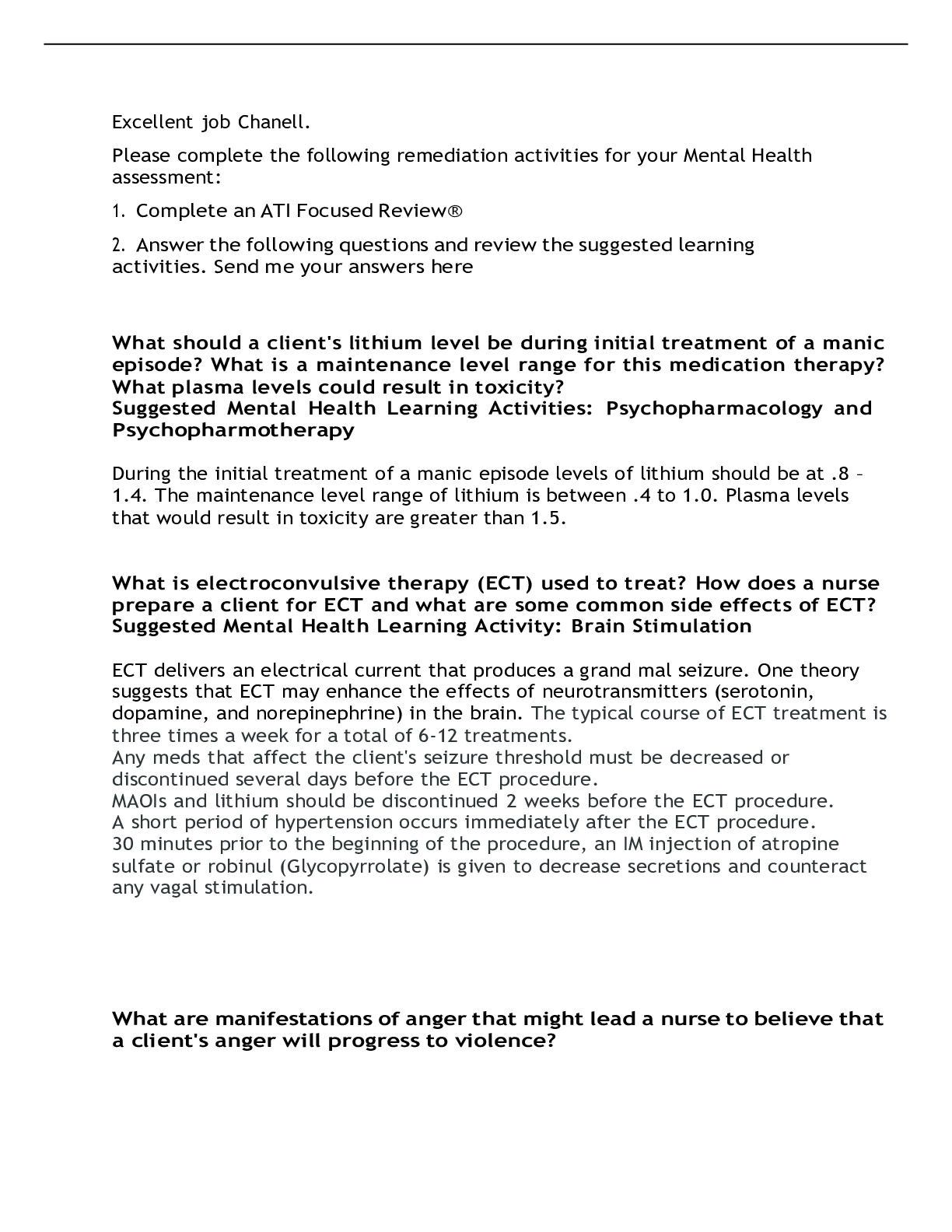
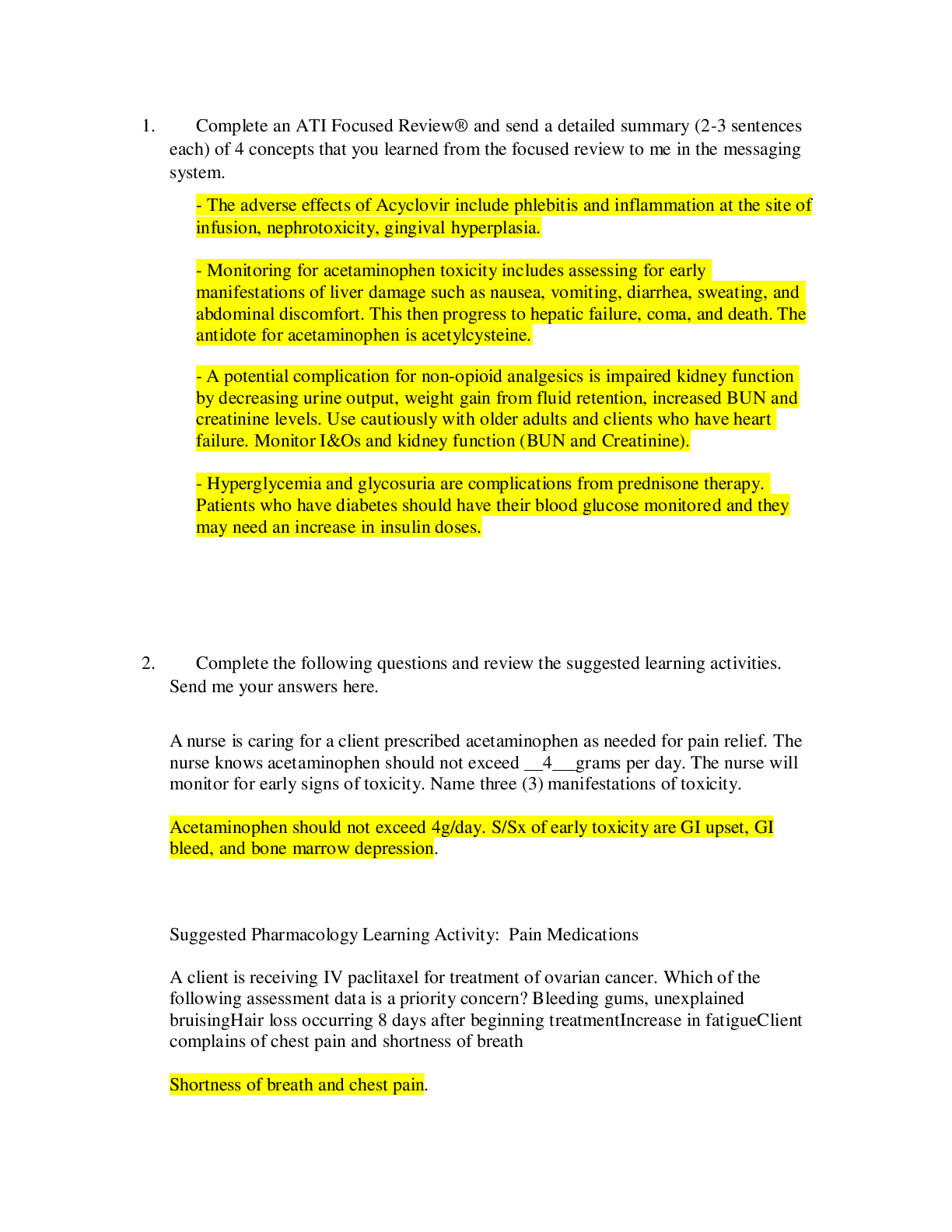
Please complete the following remediation activities for your Pharmacology assessment:
1. Complete an ATI Focused Review® and send a detailed summary (2-3 sentences each) of 4
concepts that you learned from the focused
...
[Show More]
Last updated: 4 years ago
Preview 1 out of 5 pages
Instant download

Buy this Document to get the Full Access Instantly
Provided by Students Who Aced it
We Verify Document Content to Gurantee Accuracy
Reviews( 0 )
Document information
Connected school, study & course
About the document
Uploaded On
Sep 22, 2021
Number of pages
5
Written in
All

Additional information
This document has been written for:
Uploaded
Sep 22, 2021
Downloads
0
Views
296
Topic Tags
Recommended For You
Get more on VATI PN »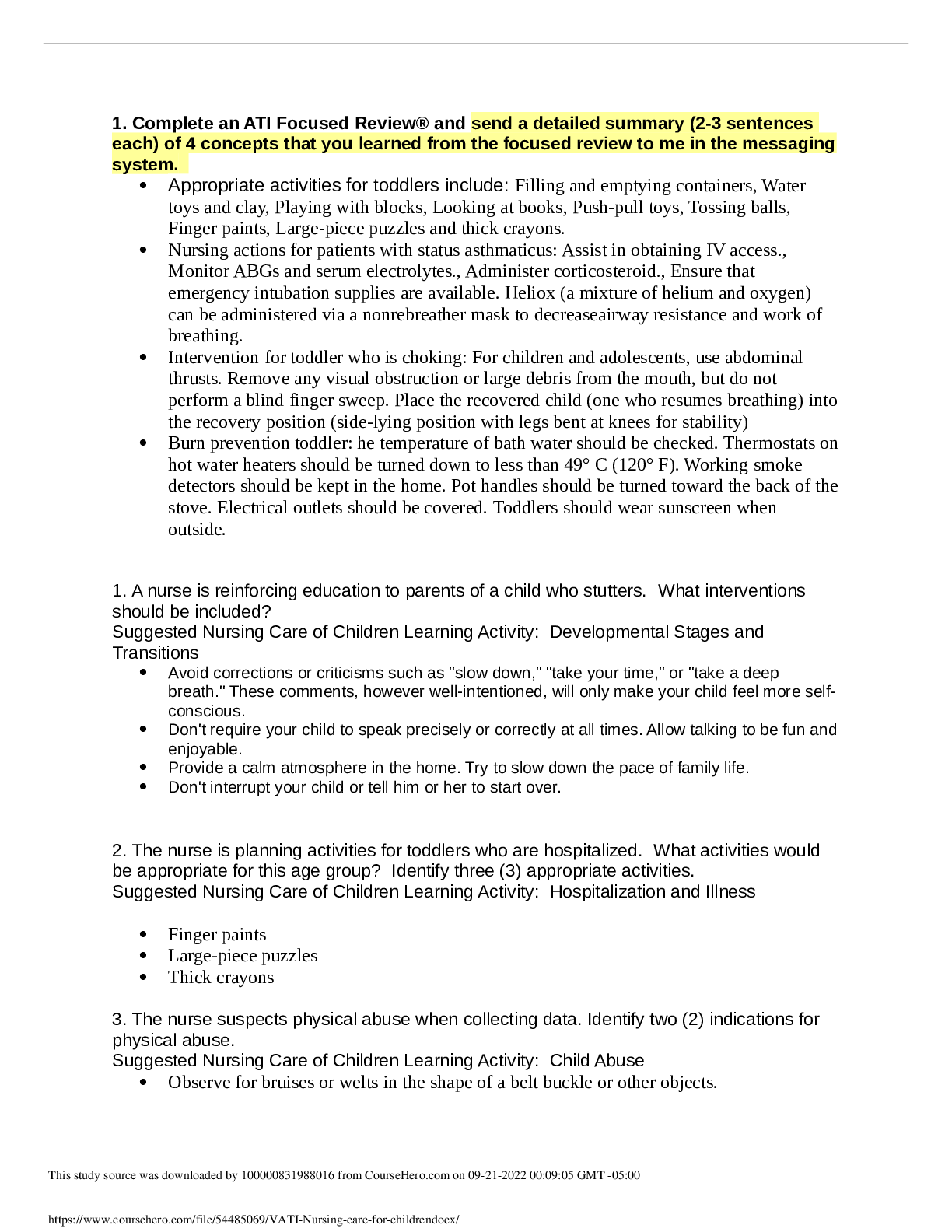
$6
5 Pages
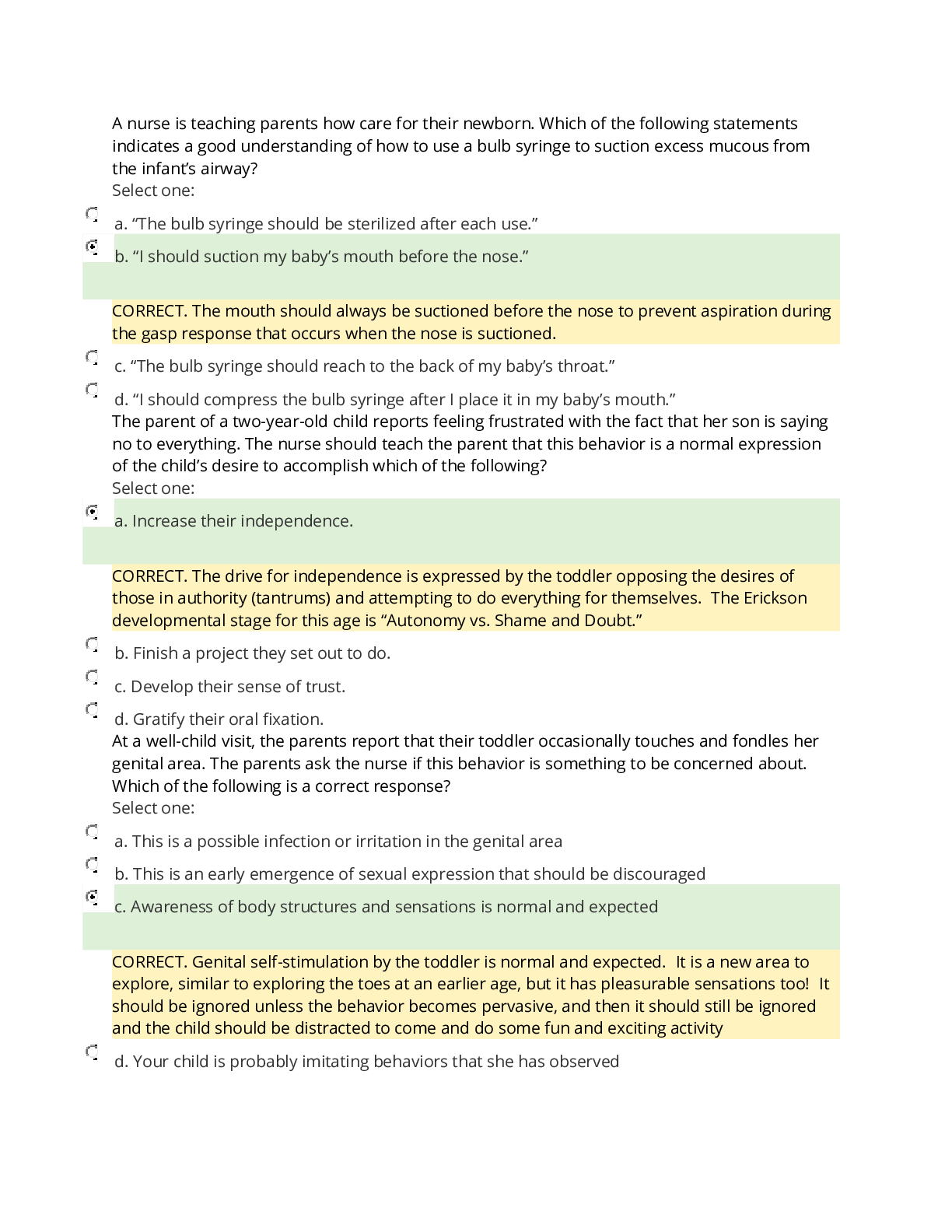
VATI Nursing care for children | questions and answers | 5 pag...
$15
11 Pages
VATI Basic Care and Comfort Quiz 2022 | all answers are 100% c...

$50
35 Pages
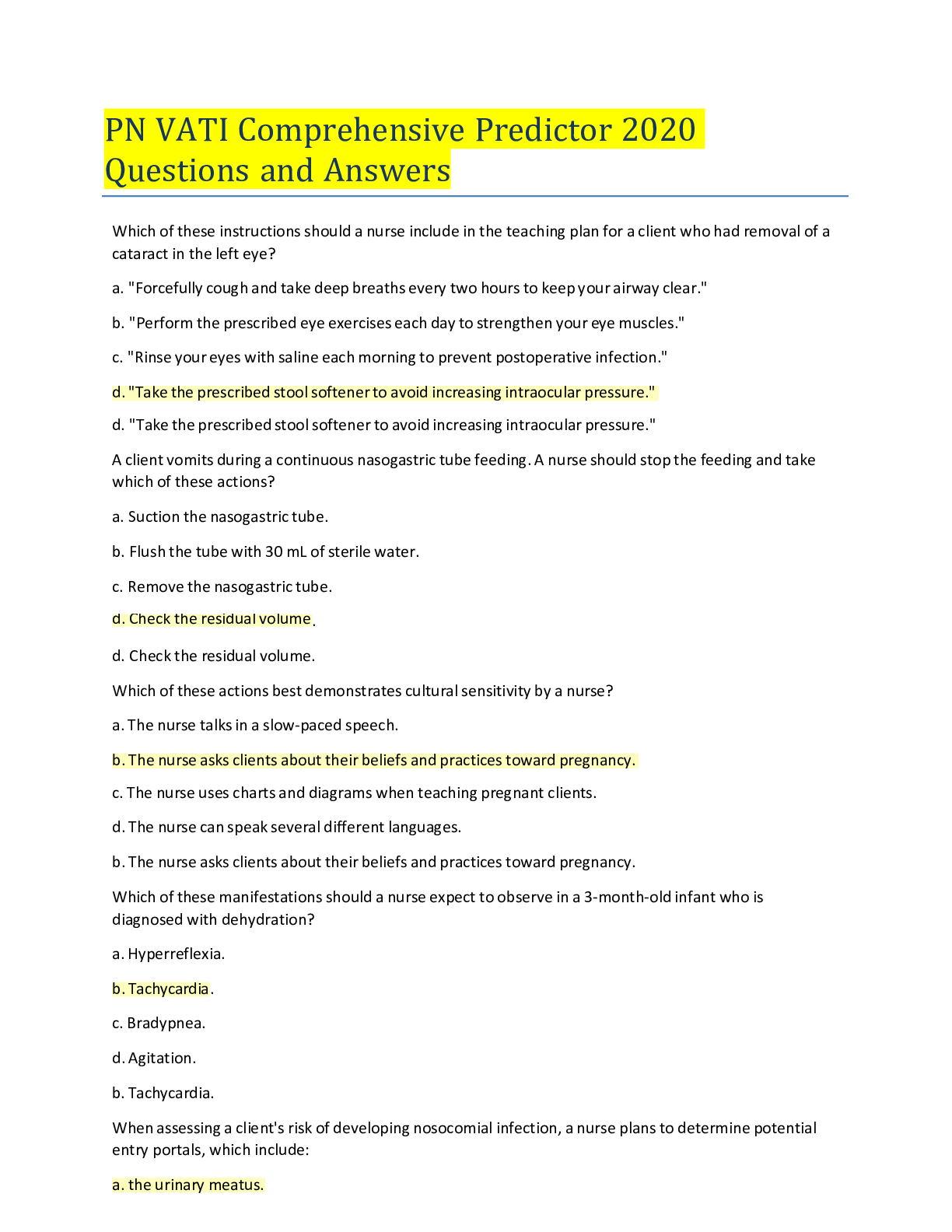
PN VATI Comprehensive Predictor A, B, C 2020 Questions and Ans...
$10
15 Pages
2023 VATI RN Maternal Newborn LATEST EXAM REAL EXAM 200 QUESTI...
$22.5
307 Pages
TEST BANK for Davis Advantage for Psychiatric Mental Health Nu...
$17
588 Pages
Test Bank For Fundamentals of Nursing 11th Edition Potter Perr...
$16
496 Pages
TEST BANK for Essentials of Psychiatric Mental Health Nursing:...
$19
553 Pages
Essentials of Psychiatric Nursing 2nd Edition Boyd TEST BANK
$16
554 Pages
TEST BANK for Essentials of Psychiatric Nursing 2nd Edition by...
$15
554 Pages
Test Bank for Essentials of Psychiatric Nursing 2nd Edition by...


2021.png)

More related documents below


.png)