PN VATI Pharmacology Post-assignment Review 2022
Document Content and Description Below
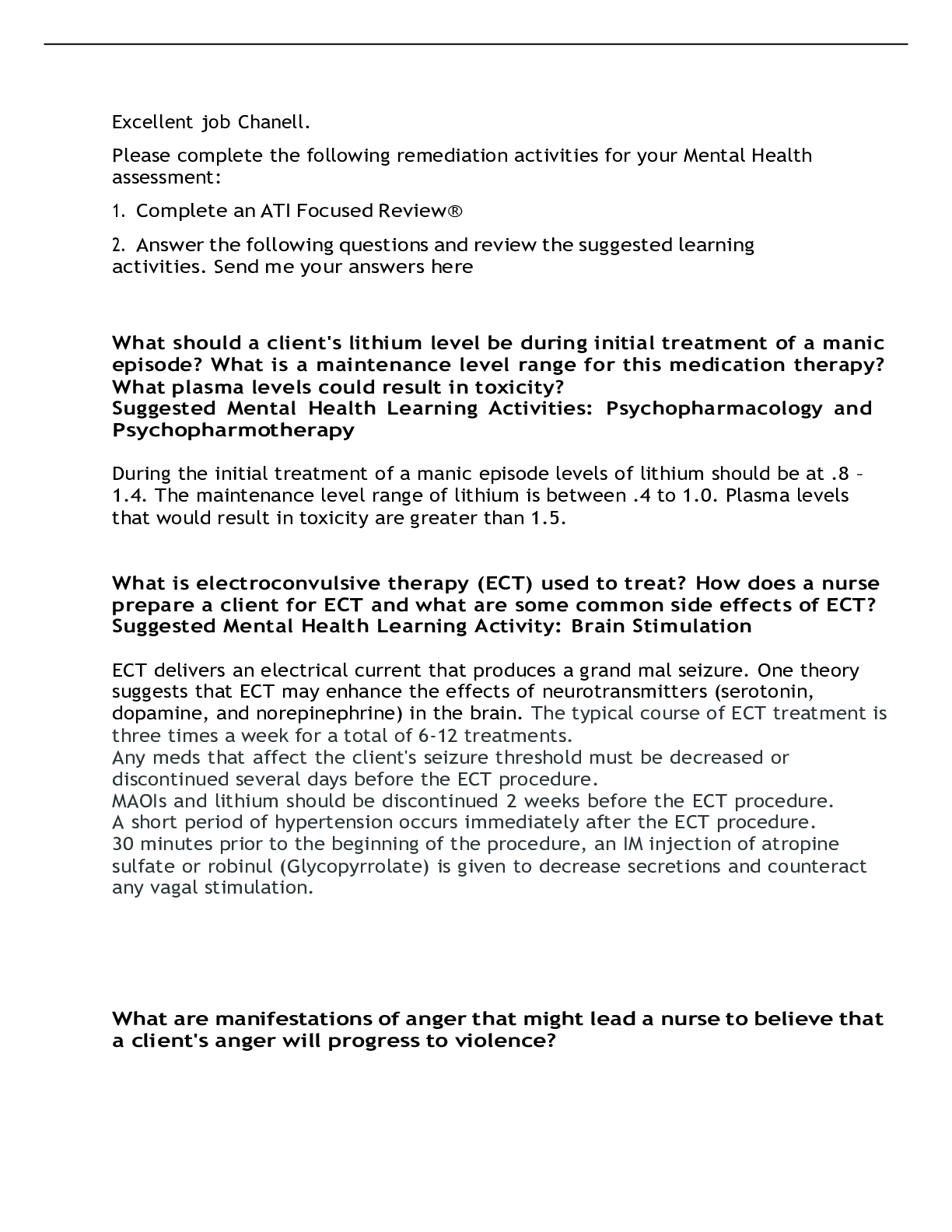
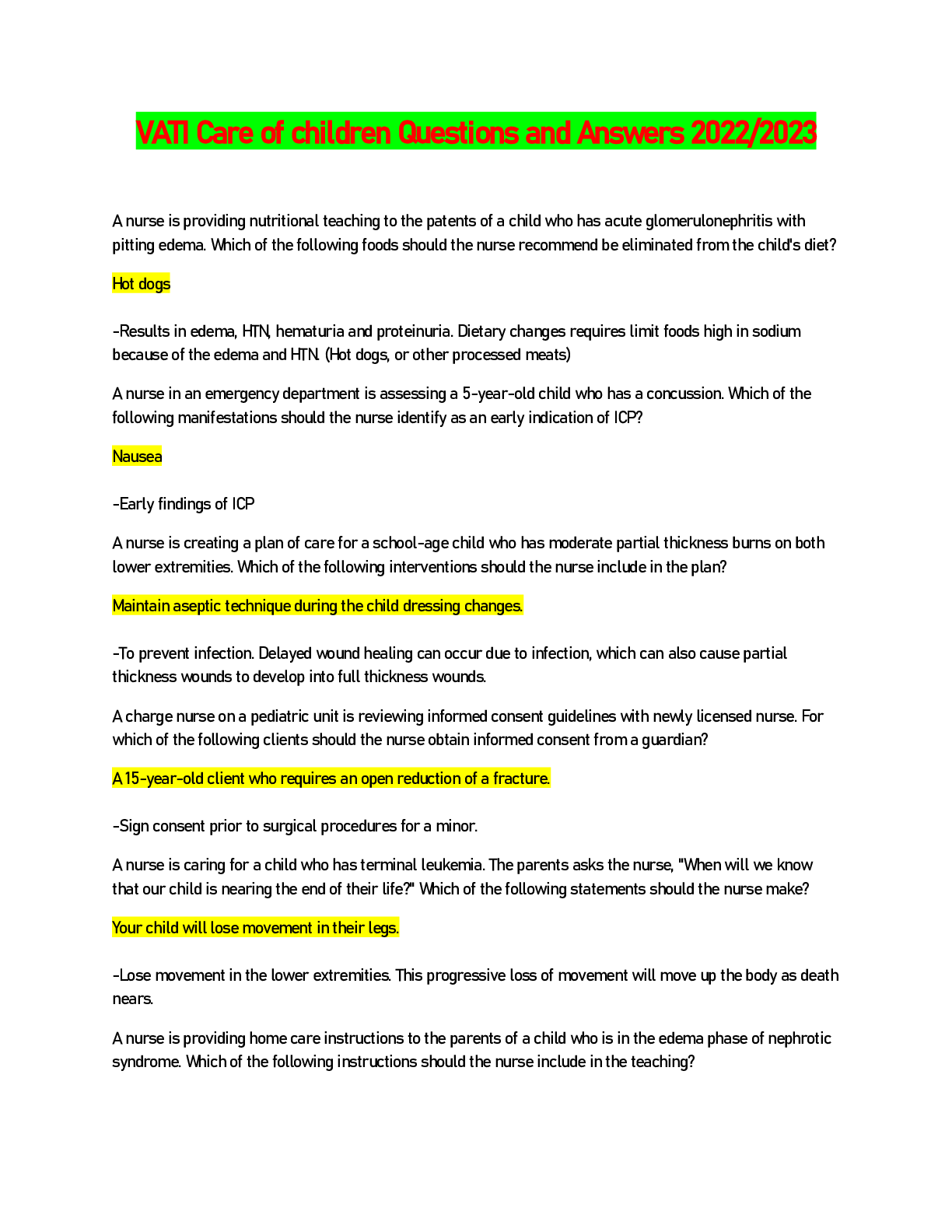
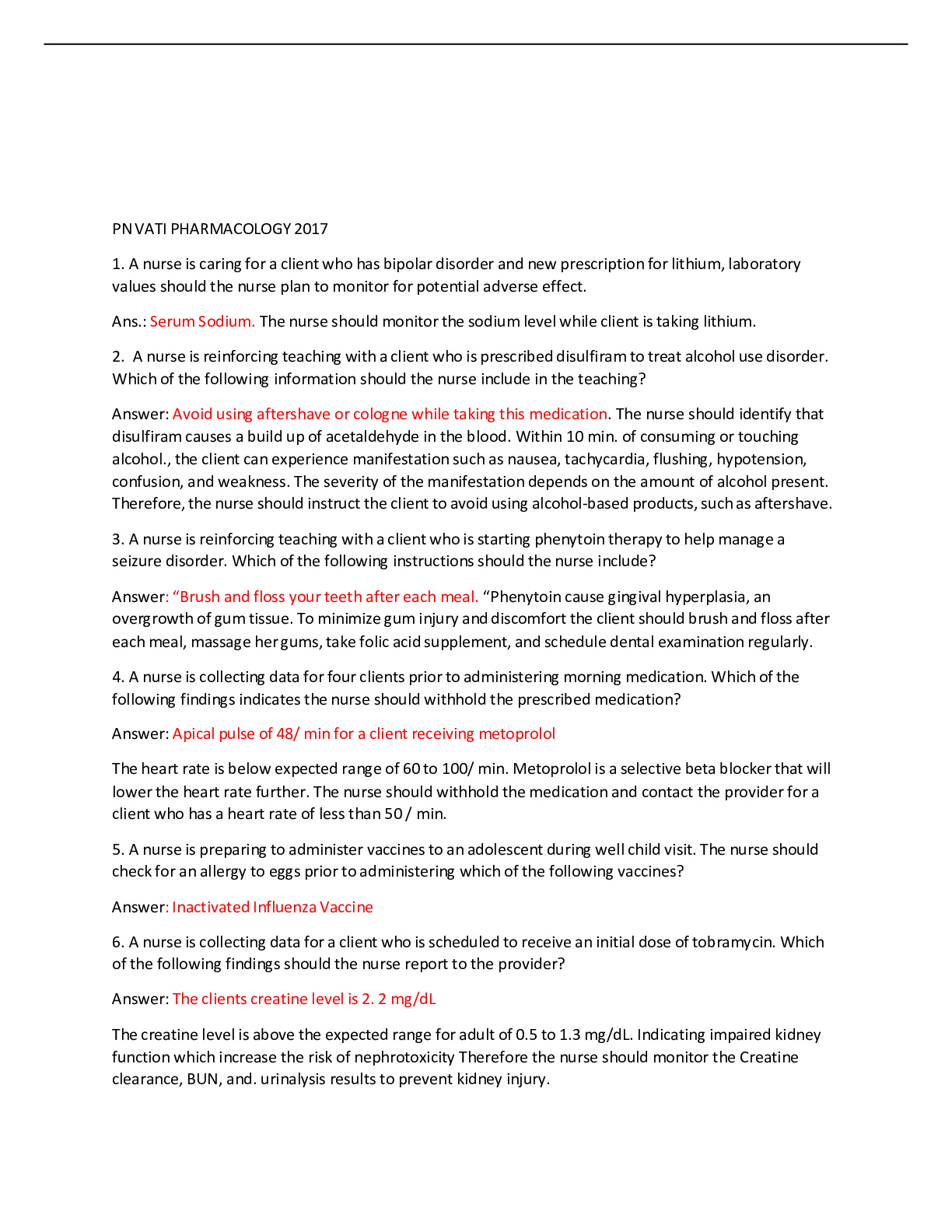
ATI PN VATI PHARMACOLOGY FOCUS REVIEW
Do not administer live virus vaccines (varicella or MMR), to a client who is severely immunocompromised. Severe febrile illness is a contraindication to all
immunizations. Modera
...
[Show More]
Last updated: 4 years ago
Preview 1 out of 4 pages
Instant download

Buy this Document to get the Full Access Instantly
Provided by Students Who Aced it
We Verify Document Content to Gurantee Accuracy
Reviews( 0 )
Document information
Connected school, study & course
About the document
Uploaded On
Aug 27, 2022
Number of pages
4
Written in
All

Additional information
This document has been written for:
Uploaded
Aug 27, 2022
Downloads
0
Views
377
Topic Tags
Recommended For You
Get more on VATI PN »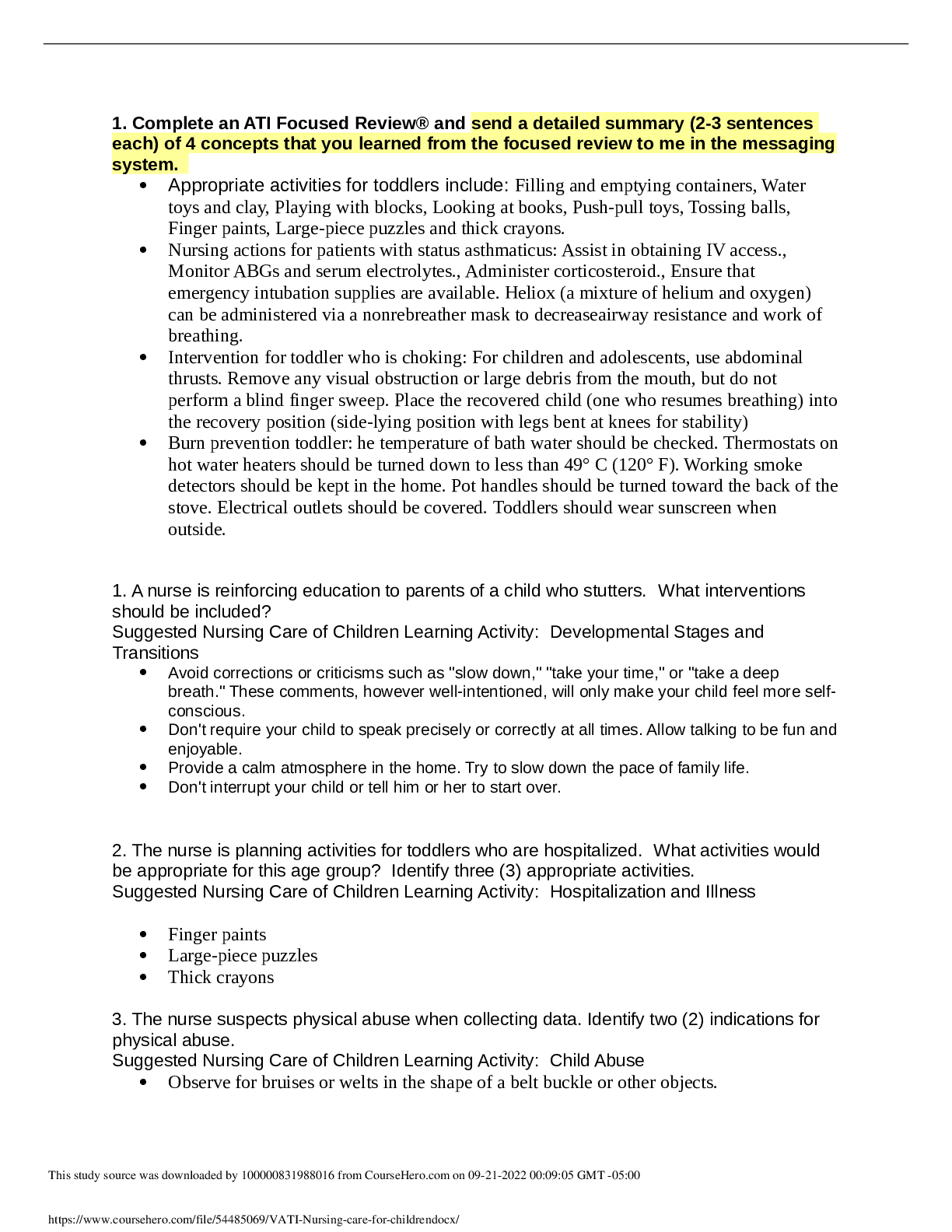
$6
5 Pages
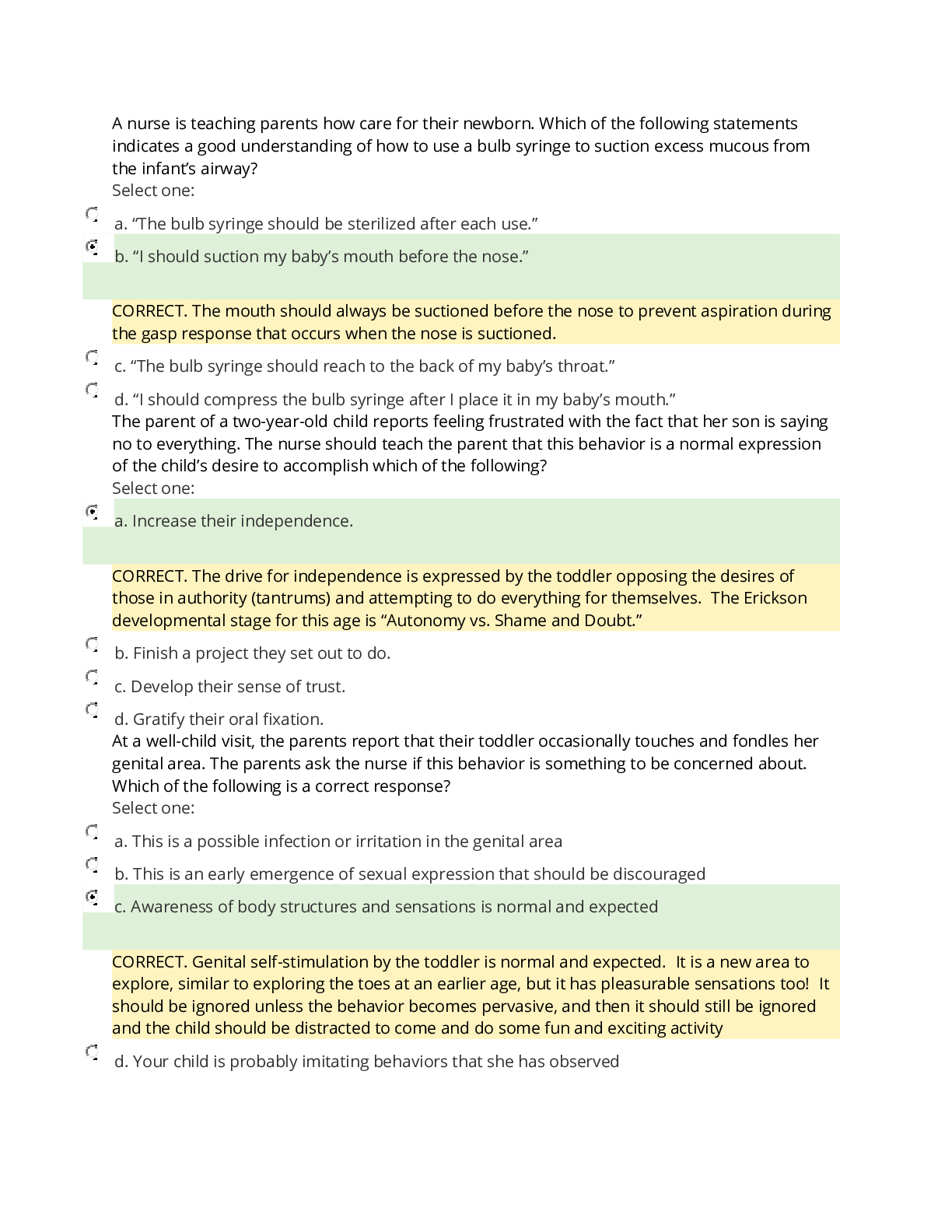
VATI Nursing care for children | questions and answers | 5 pag...
$15
11 Pages
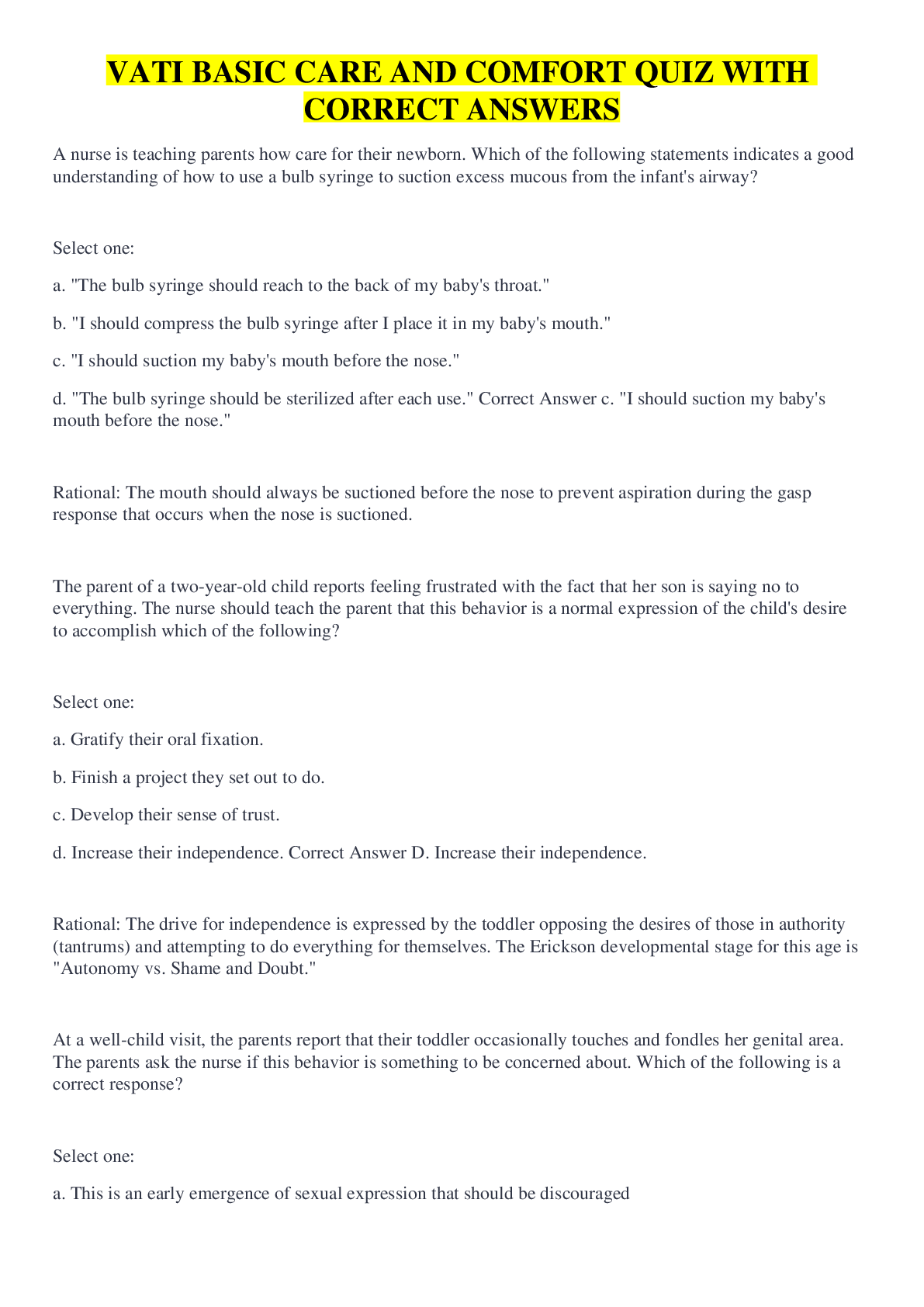
VATI Basic Care and Comfort Quiz 2022 | all answers are 100% c...


$15
17 Pages
Fundamentals VATI module study guide | Safety and Infection |...
$50
35 Pages
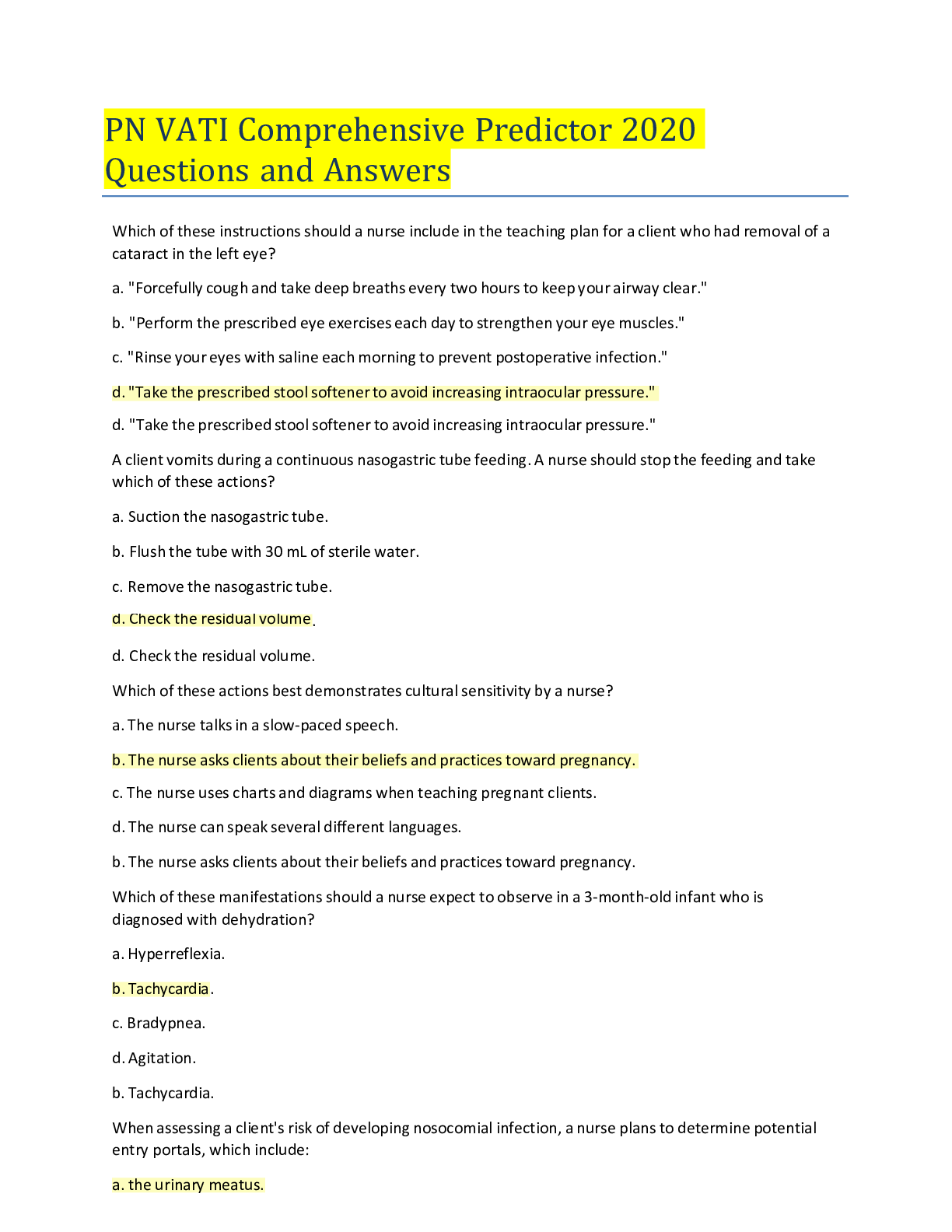
PN VATI Comprehensive Predictor A, B, C 2020 Questions and Ans...

$15
23 Pages
VATI Fundamentals Assessment | All answers are 100% correct |...

$100.5
996 Pages
ATI TEAS 7 | 4 Versions for Reading, Math, Science, English, A...


$10.5
24 Pages
VATI PN COMPREHENSIVE EXAM_complete updated answers_latest 202...


$14
25 Pages
VATI PN COMPREHENSIVE EXAM_complete updated answers_latest 202...

More related documents below


.png)