Risk Management Plan
Project Name: Rose Custom Building Risk Management
Learner Name: Megan Ribb
Course Name: FPX PM5334
Date: 12/19/21
Table of Contents
Section 1 – Introduction to the Plan________________________
...
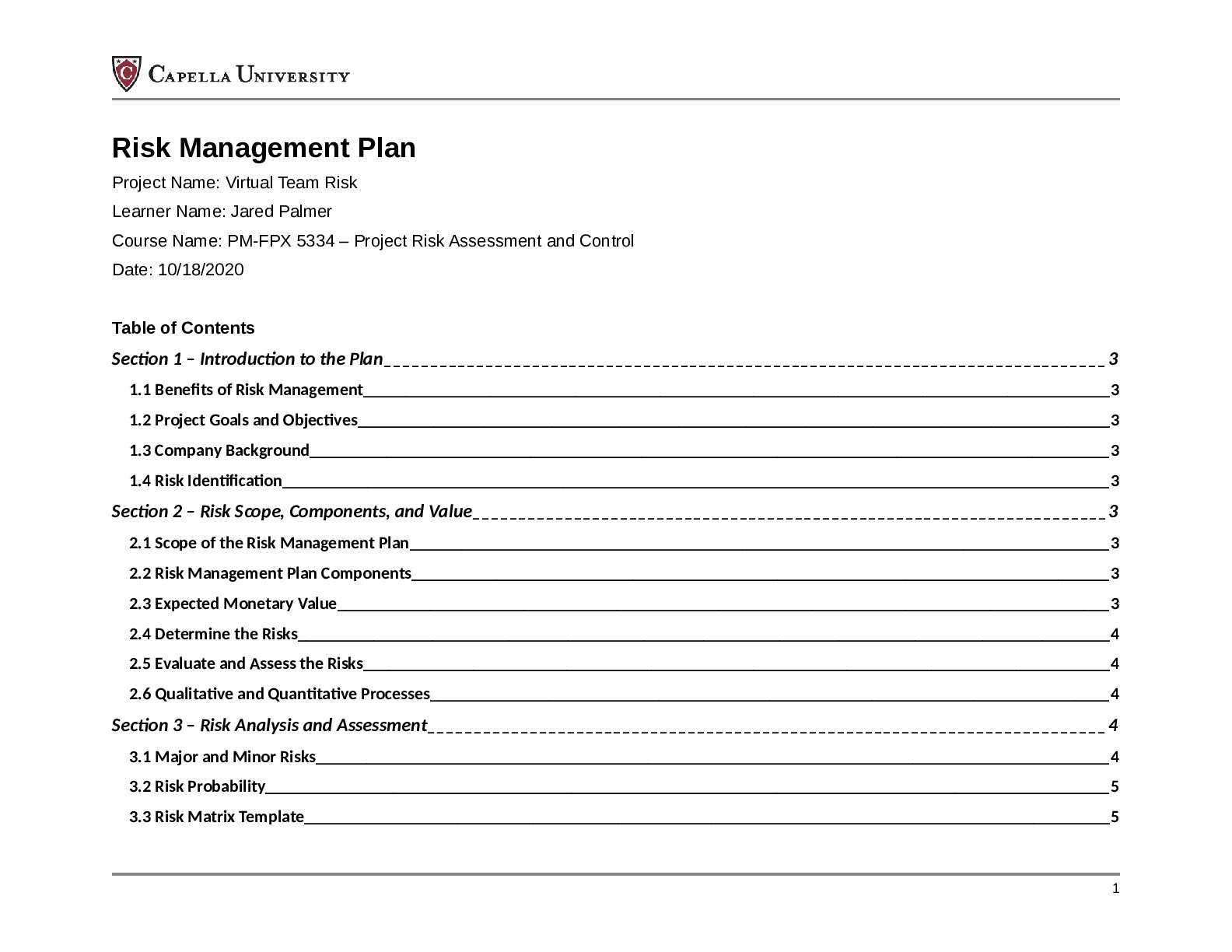
Risk Management Plan
Project Name: Rose Custom Building Risk Management
Learner Name: Megan Ribb
Course Name: FPX PM5334
Date: 12/19/21
Table of Contents
Section 1 – Introduction to the Plan______________________________________________________________________________3
1.1 Benefits of Risk Management________________________________________________________________________________________3
1.2 Project Goals and Objectives_________________________________________________________________________________________3
1.3 Company Background______________________________________________________________________________________________3
1.4 Risk Identification_________________________________________________________________________________________________3
Section 2 – Risk Scope, Components, and Value_____________________________________________________________________3
2.1 Scope of the Risk Management Plan__________________________________________________________________________________3
2.2 Risk Management Plan Components__________________________________________________________________________________3
2.3 Expected Monetary Value___________________________________________________________________________________________3
2.4 Determine the Risks________________________________________________________________________________________________4
2.5 Evaluate and Assess the Risks________________________________________________________________________________________4
2.6 Qualitative and Quantitative Processes________________________________________________________________________________4
Section 3 – Risk Analysis and Assessment_________________________________________________________________________4
3.1 Major and Minor Risks_____________________________________________________________________________________________4
3.2 Risk Probability___________________________________________________________________________________________________5
3.3 Risk Matrix Template_______________________________________________________________________________________________5
13.4 Risk Data Quality Strategy___________________________________________________________________________________________5
3.5 Risk Reviews______________________________________________________________________________________________________5
Section 4 – Corrective Action and Monitoring______________________________________________________________________5
4.1 Risk Tolerance____________________________________________________________________________________________________5
4.2 Risk Mitigation____________________________________________________________________________________________________6
4.3 Corrective Risk Management Strategy_________________________________________________________________________________6
4.4 Corrective Action Plan______________________________________________________________________________________________6
Section 5 – Postmortem Plan____________________________________________________________________________________6
5.1 Results__________________________________________________________________________________________________________6
5.2 Follow Up________________________________________________________________________________________________________6
Section 6 – References_________________________________________________________________________________________7
6.1 References_______________________________________________________________________________________________________7
Templates___________________________________________________________________________________________________8
Risk Matrix Legend Example____________________________________________________________________________________________8
Risk Matrix Example__________________________________________________________________________________________________8
Risk Monitoring and Control Example____________________________________________________________________________________9
2Section 1 – Introduction to the Plan
1.1 Benefits of Risk Management
Risk Management is one of the most important portions of any project phase. Risk management is included within the planning,
identification, analysis, implementation and monitoring of the project. Risks can happen during any phase so it is best to plan ahead
and review risk management during each phase. All employees must ensure they are aware and prepared for any risk that could
happen. A successful risk management plan will provide the stakeholders and managers information to review and show the different
aspects of how the project can succeed if a problem was to occur. In addition risk management also provides mitigation for when
these problems do arrive. However, not all risk can be predicted but with an appropriate risk management plan there will be options
for how the issue is handled and possibly even budget put aside to help detain the issue. The best way to determine the risk is to get
the employees involved, since they handle majority of the data and issues this will help provide proper decision making based on the
data coming from the project itself. As you can see, ensuring the team has adequate information and knowledge of what to do
if/when a problem occurs is a key factor in project management.
1.2 Project Goals and Objectives
My father in law owns a construction business, Rose Custom Building that conducts various construction projects. These projects
can be very difficult and risky. Due to the amount of knowledge needed for larger projects each construction project is unique and
have very little research. Not conducting research for construction plans/projects can increase the probability of risks. The main
objective and goal is to determine the effectiveness of the business when it comes to managing project risks. The best way to do this
would be determine the strengths and weakness of the workshops. These workshops can included any job site or the physical
location of the business.
Throughout the world, Construction is the highest division of employment that is most at risk for accidents. There are more than 1300
people killed in constructions accidents daily. Construction workers are three times more likely to be killed and twice as likely to be
injured than other workers. Due to the dangers of construction, this type of work can be difficult for everyone involved including the
client, owners, suppliers, or just bystanders in the surrounding area. Additional risk not involving injury is the health of the workers
too. This can include pollution related conditions, which can negatively impact the project while its still going, and once it is
completed. The goal of this plan is to ensure all risk are identified, assessed, mitigated and monitored to decrease any injuries or
illnesses at Rose Custom Building.
[Show More]




.png)