Financial Accounting > Class Notes > C19 - Accounting for Income Taxes class notes (All)
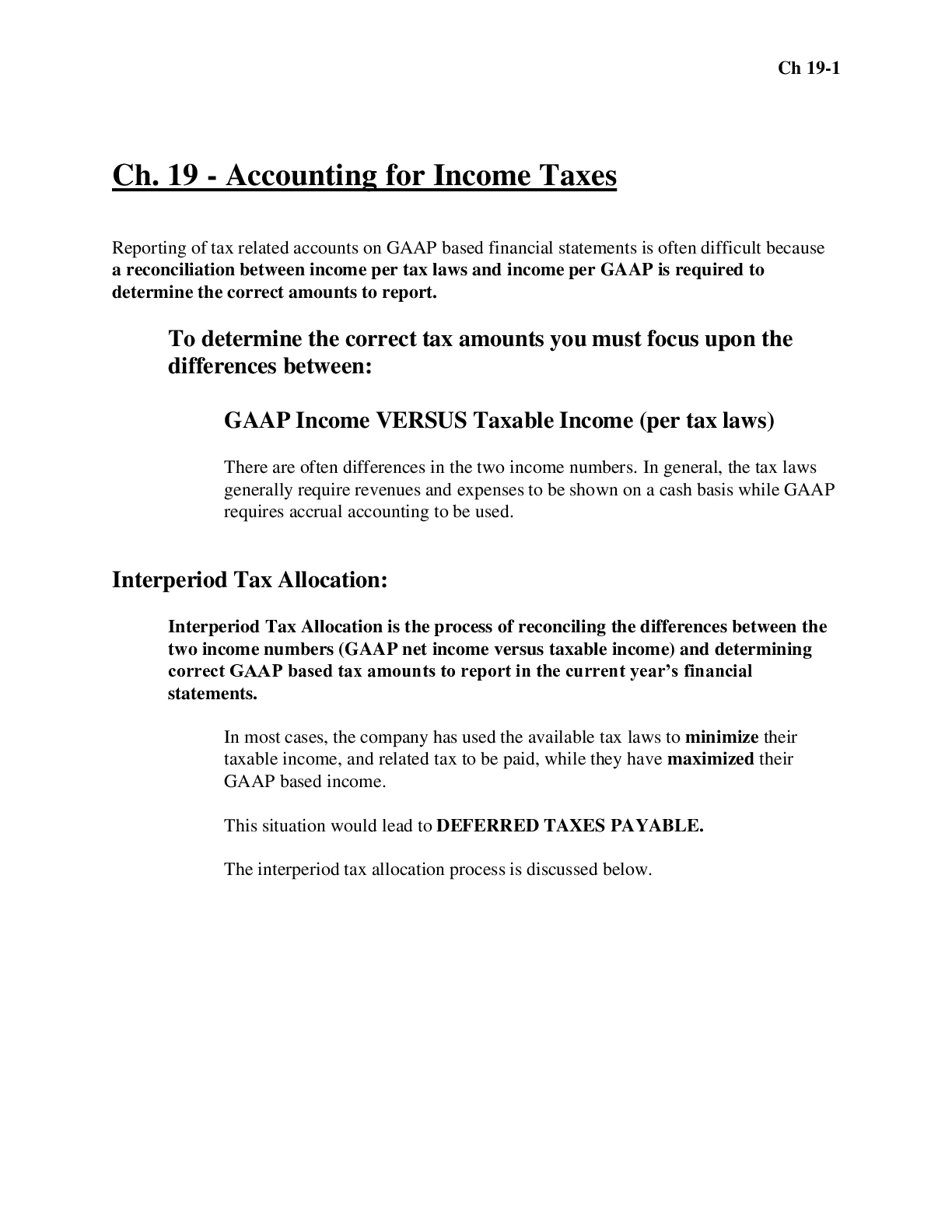
Reporting of tax related accounts on GAAP based financial statements is often difficult because a reconciliation between income per tax laws and income per GAAP is required to determine the correct am ... ounts to report. To determine the correct tax amounts you must focus upon the differences between: GAAP Income VERSUS Taxable Income (per tax laws) There are often differences in the two income numbers. In general, the tax laws generally require revenues and expenses to be shown on a cash basis while GAAP requires accrual accounting to be used. Interperiod Tax Allocation: Interperiod Tax Allocation is the process of reconciling the differences between the two income numbers (GAAP net income versus taxable income) and determining correct GAAP based tax amounts to report in the current year’s financial statements. In most cases, the company has used the available tax laws to minimize their taxable income, and related tax to be paid, while they have maximized their GAAP based income. This situation would lead to DEFERRED TAXES PAYABLE. The interperiod tax allocation process is discussed below. BASIC JOURNAL ENTRIES: If GAAP income and taxable income were the same, the journal entry would be the following: Tax Expense $ (Expense based on GAAP income) Tax Payable $ (Amount payable based on taxable income) Note that the tax expense relates to the GAAP based income while tax payable relates to the taxes to be paid on taxable income. The problem occurs when GAAP income and taxable income are DIFFERENT. Usually your taxable income will have lower income and taxes payable and this will result in "deferred taxes" (taxes that are deferred and will be payable in the future). Therefore, the likely entry if there is a difference (we will get to the specifics later): Tax Expense $ Deferred Taxes Payable $ Taxes Payable $ Key issue: How can the deferred taxes payable best be estimated? Remember, deferred taxes is suppose to indicate how much liability you have for taxes that you have been able to defer and you will have to pay in the future years. GAAP requires that you create a schedule that will estimate the amount of taxes you really will have to pay in the future due to the current differences in the two income numbers. This “tax deferral schedule” is discussed below under timing differences. income: A. Permanent differences When a revenue or expense item affects one (GAAP income or taxable income) but never the other ...............................................................CONTINUED................................................................ [Show More]
Last updated: 3 years ago
Preview 1 out of 11 pages
Buy this document to get the full access instantly
Instant Download Access after purchase
Buy NowInstant download
We Accept:
Can't find what you want? Try our AI powered Search
Connected school, study & course
About the document
Uploaded On
Sep 27, 2021
Number of pages
11
Written in
All
This document has been written for:
Uploaded
Sep 27, 2021
Downloads
0
Views
144
Scholarfriends.com Online Platform by Browsegrades Inc. 651N South Broad St, Middletown DE. United States.
We're available through e-mail, Twitter, Facebook, and live chat.
FAQ
Questions? Leave a message!
Copyright © Scholarfriends · High quality services·