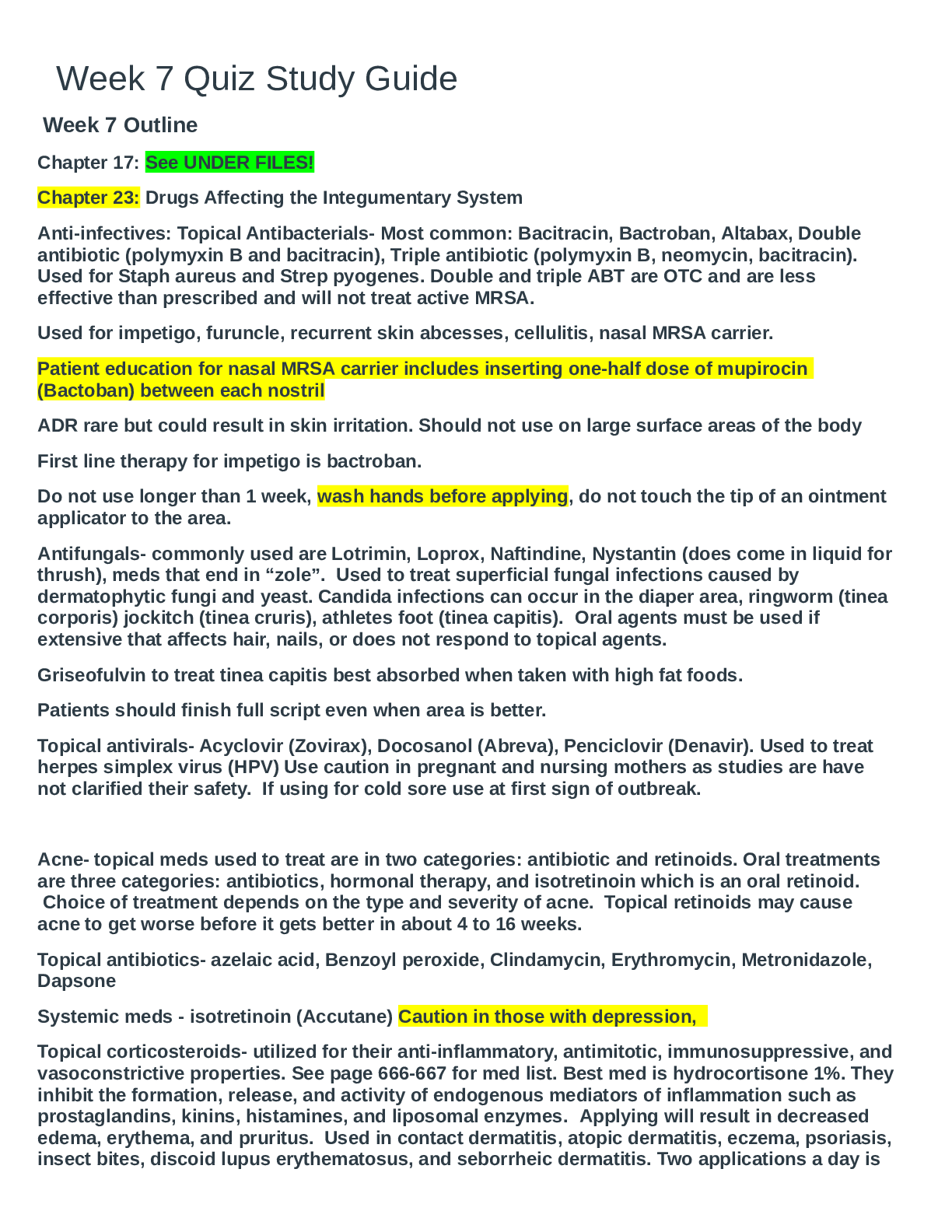
Week 7 Quiz Study Guide
Week 7 Outline
Chapter 17: See UNDER FILES!
Chapter 23: Drugs Affecting the Integumentary System
Anti-infectives: Topical Antibacterials- Most common: Bacitracin, Bactroban, Altabax, Double
a
...
Week 7 Quiz Study Guide
Week 7 Outline
Chapter 17: See UNDER FILES!
Chapter 23: Drugs Affecting the Integumentary System
Anti-infectives: Topical Antibacterials- Most common: Bacitracin, Bactroban, Altabax, Double
antibiotic (polymyxin B and bacitracin), Triple antibiotic (polymyxin B, neomycin, bacitracin).
Used for Staph aureus and Strep pyogenes. Double and triple ABT are OTC and are less
effective than prescribed and will not treat active MRSA.
Used for impetigo, furuncle, recurrent skin abcesses, cellulitis, nasal MRSA carrier.
Patient education for nasal MRSA carrier includes inserting one-half dose of mupirocin
(Bactoban) between each nostril
ADR rare but could result in skin irritation. Should not use on large surface areas of the body
First line therapy for impetigo is bactroban.
Do not use longer than 1 week, wash hands before applying, do not touch the tip of an ointment
applicator to the area.
Antifungals- commonly used are Lotrimin, Loprox, Naftindine, Nystantin (does come in liquid for
thrush), meds that end in “zole”. Used to treat superficial fungal infections caused by
dermatophytic fungi and yeast. Candida infections can occur in the diaper area, ringworm (tinea
corporis) jockitch (tinea cruris), athletes foot (tinea capitis). Oral agents must be used if
extensive that affects hair, nails, or does not respond to topical agents.
Griseofulvin to treat tinea capitis best absorbed when taken with high fat foods.
Patients should finish full script even when area is better.
Topical antivirals- Acyclovir (Zovirax), Docosanol (Abreva), Penciclovir (Denavir). Used to treat
herpes simplex virus (HPV) Use caution in pregnant and nursing mothers as studies are have
not clarified their safety. If using for cold sore use at first sign of outbreak.
Acne- topical meds used to treat are in two categories: antibiotic and retinoids. Oral treatments
are three categories: antibiotics, hormonal therapy, and isotretinoin which is an oral retinoid.
Choice of treatment depends on the type and severity of acne. Topical retinoids may cause
acne to get worse before it gets better in about 4 to 16 weeks.
Topical antibiotics- azelaic acid, Benzoyl peroxide, Clindamycin, Erythromycin, Metronidazole,
Dapsone
Systemic meds - isotretinoin (Accutane) Caution in those with depression,
Topical corticosteroids- utilized for their anti-inflammatory, antimitotic, immunosuppressive, and
vasoconstrictive properties. See page 666-667 for med list. Best med is hydrocortisone 1%. They
inhibit the formation, release, and activity of endogenous mediators of inflammation such as
prostaglandins, kinins, histamines, and liposomal enzymes. Applying will result in decreased
edema, erythema, and pruritus. Used in contact dermatitis, atopic dermatitis, eczema, psoriasis,
insect bites, discoid lupus erythematosus, and seborrheic dermatitis. Two applications a day is
effective
[Show More]







.png)





.png)


