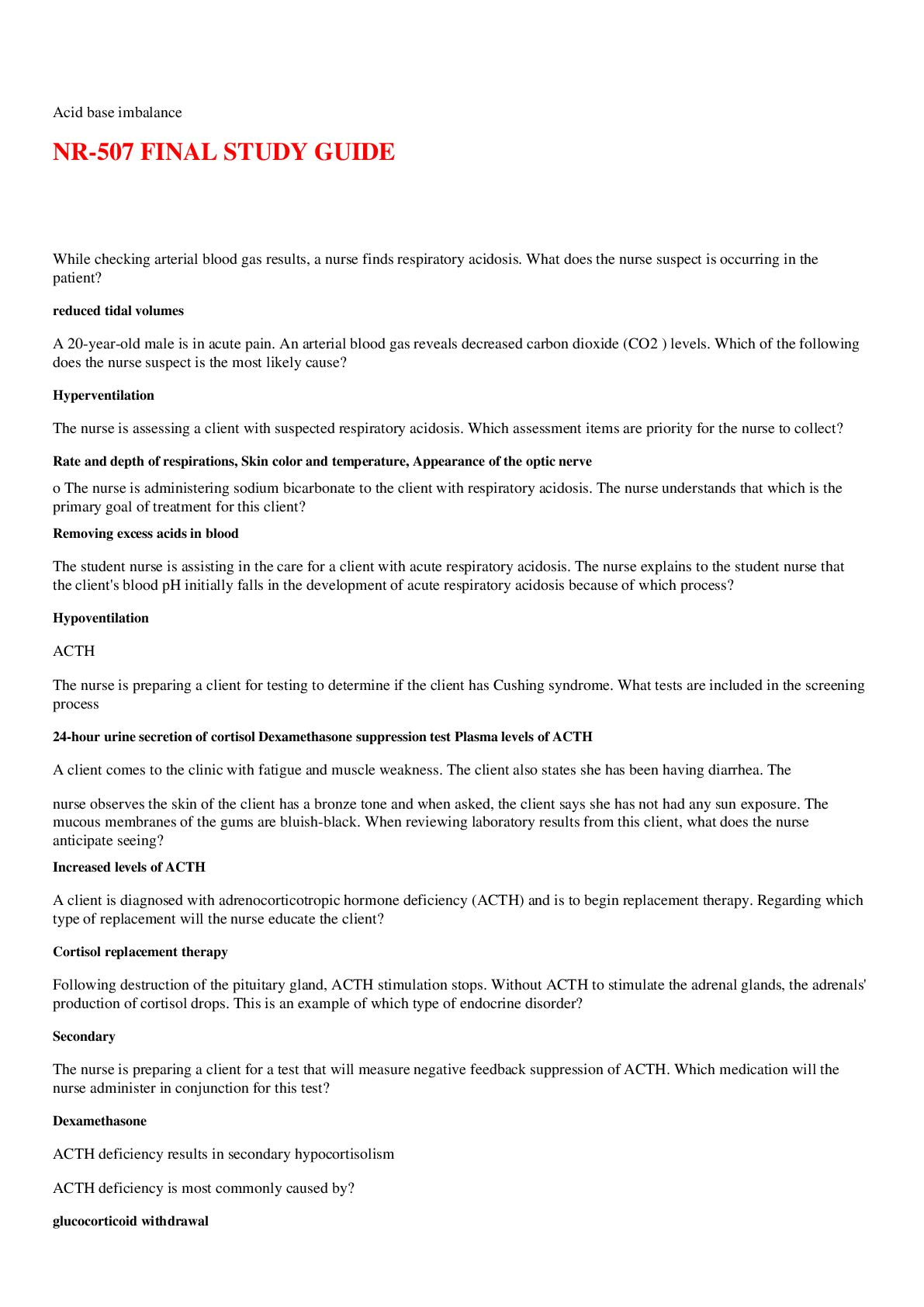
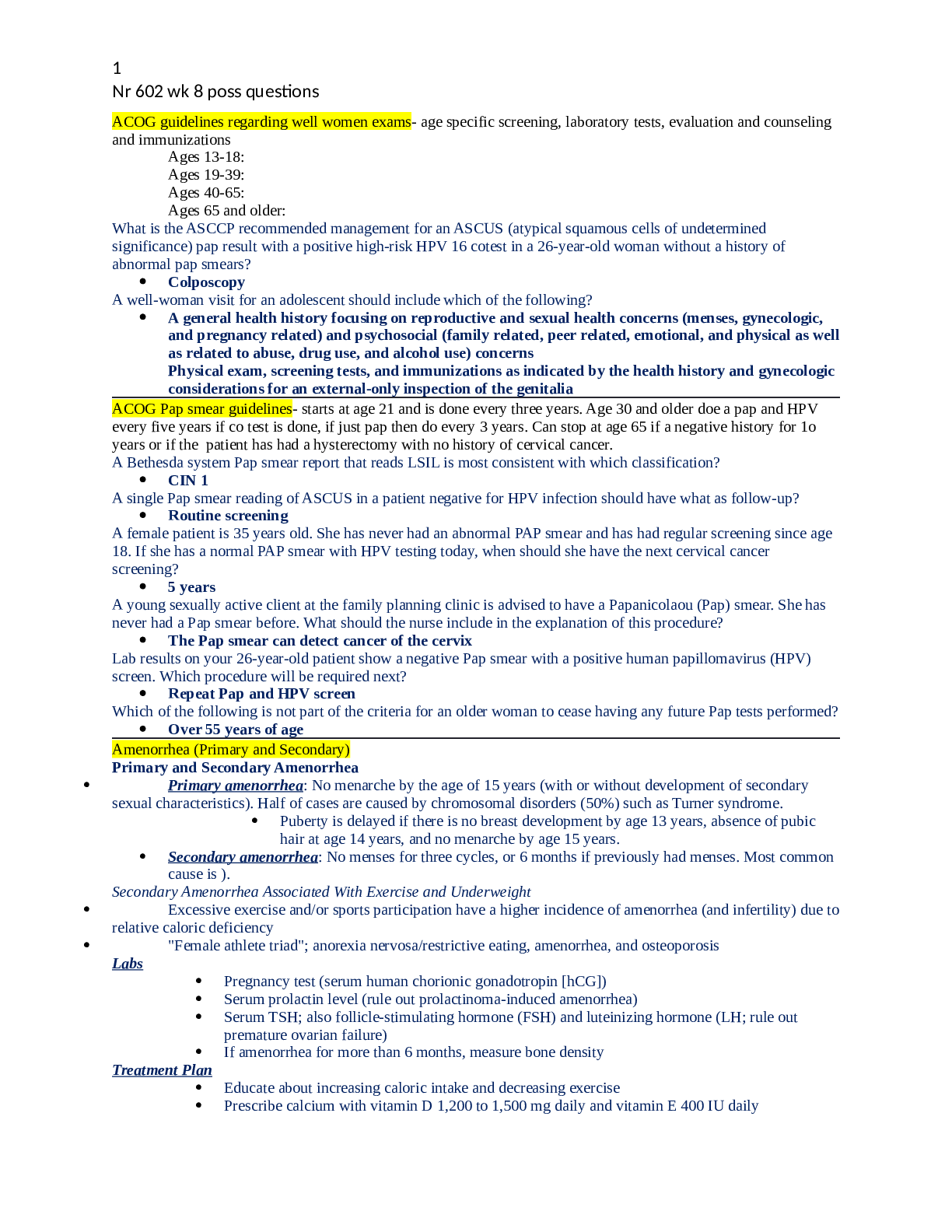
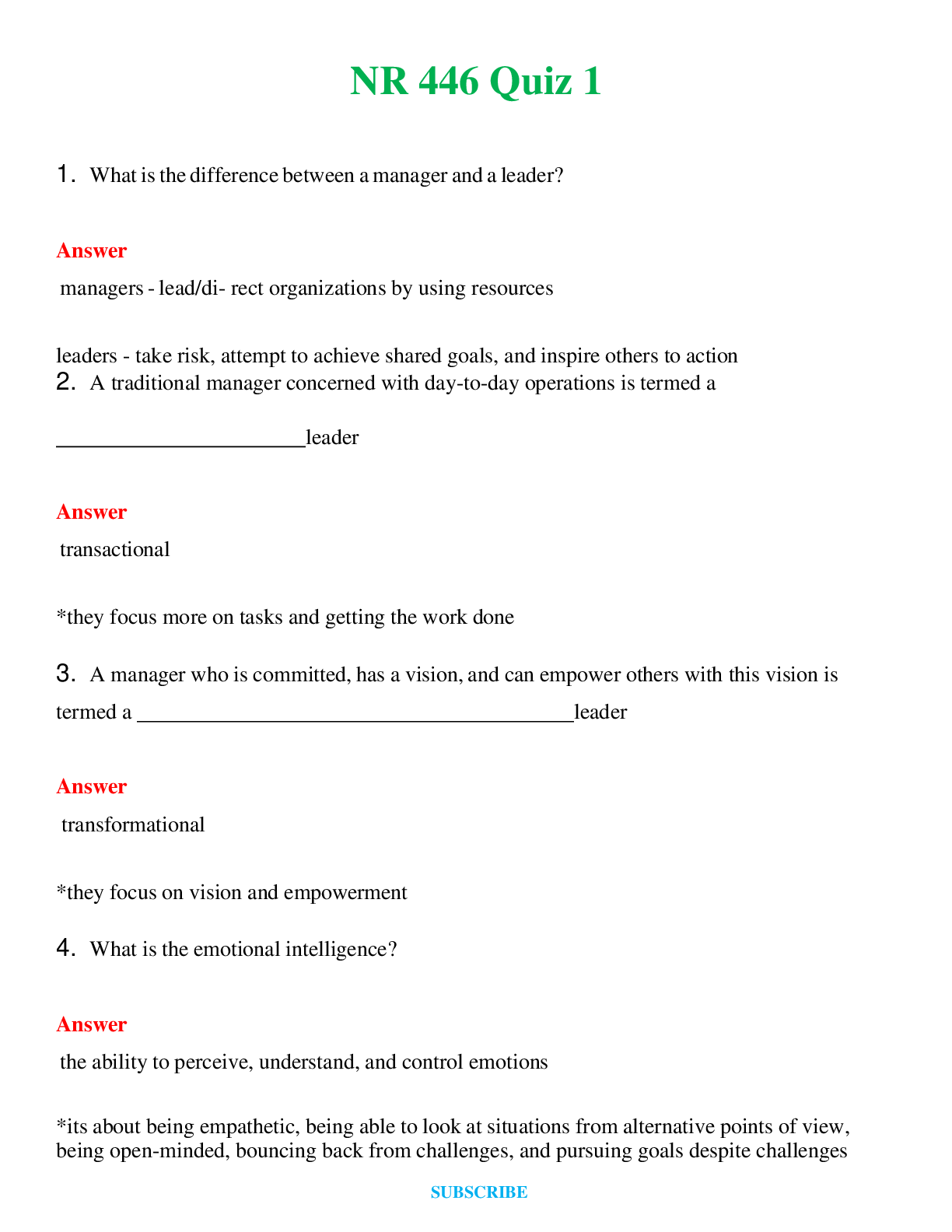
NURSING > STUDY GUIDE > NR 446 Exam 2 -Chapters 7, 8, 9, 10,12, 13, and 14 (All)
NR 446 Exam 2 -Chapters 7, 8, 9, 10,12, 13, and 14
Document Content and Description Below
Last updated: 3 years ago
Preview 1 out of 8 pages
Instant download
.png)
Buy this Document to get the Full Access Instantly
Provided by Students Who Aced it
We Verify Document Content to Gurantee Accuracy
Reviews( 0 )
Document information
Connected school, study & course
About the document
Uploaded On
Oct 13, 2021
Number of pages
8
Written in
All

Additional information
This document has been written for:
Uploaded
Oct 13, 2021
Downloads
0
Views
113
Topic Tags
Related Subjects & Courses
Explore similar study resources and related concepts.
Recommended For You
Get more on STUDY GUIDE »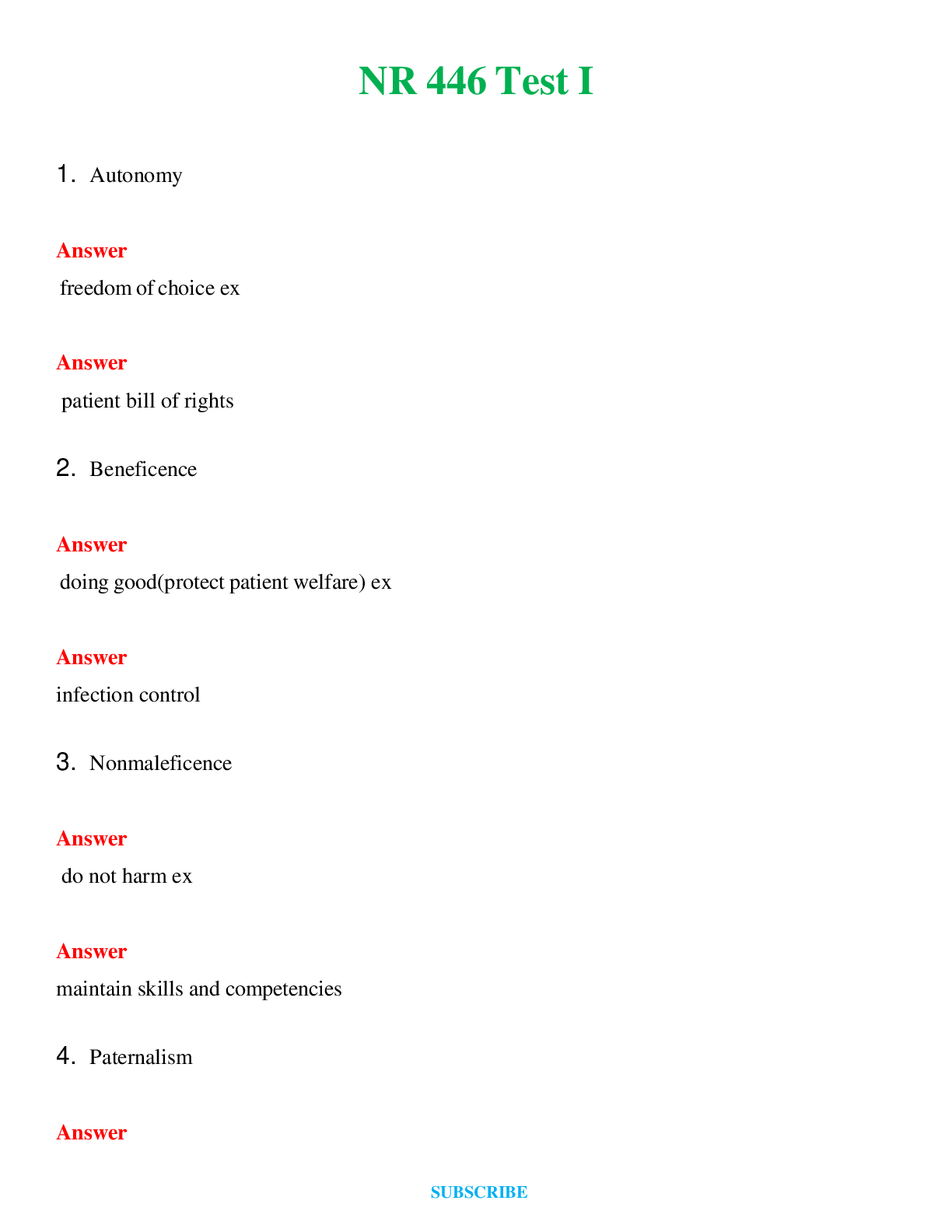
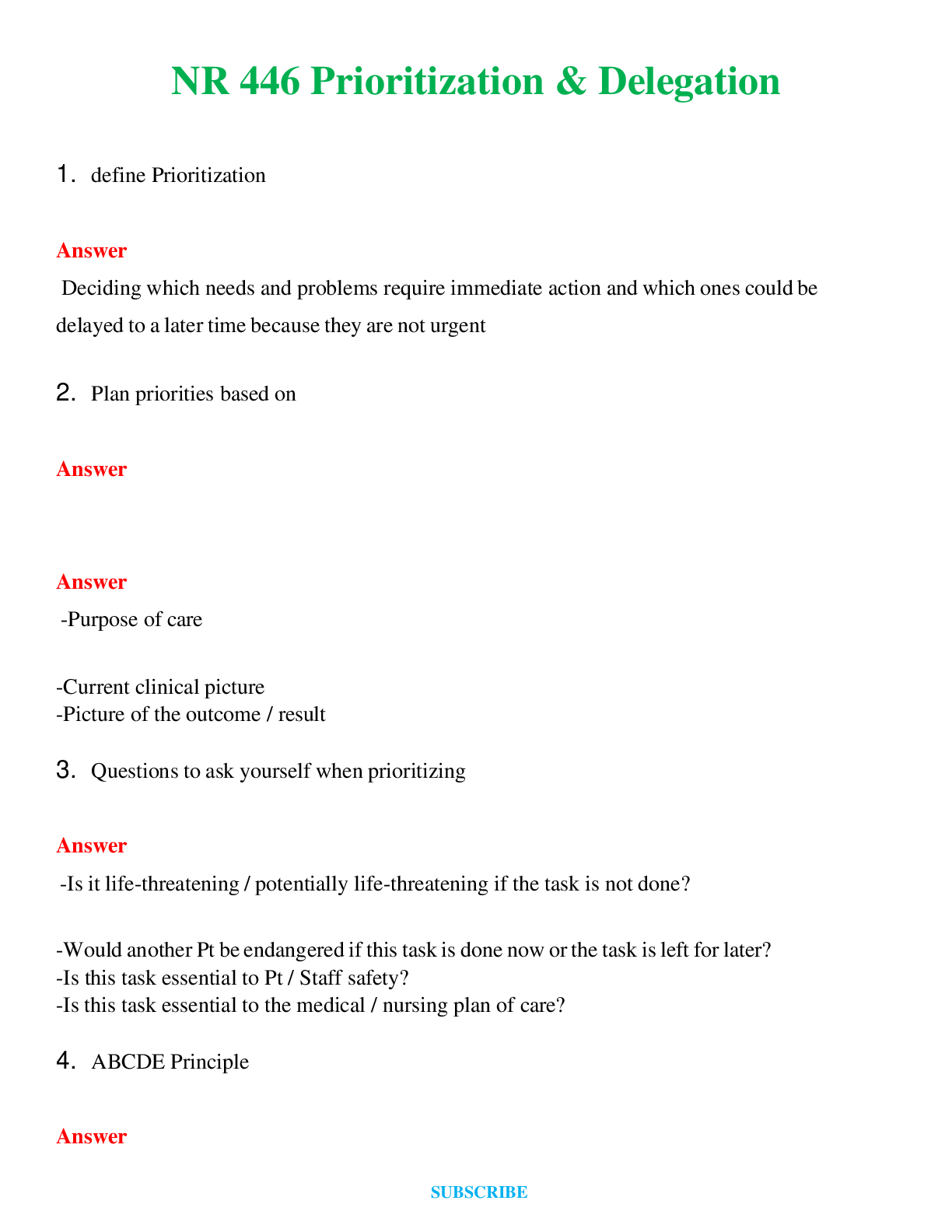
NR 446 Prioritization & Delegation Questions and Answers (V...
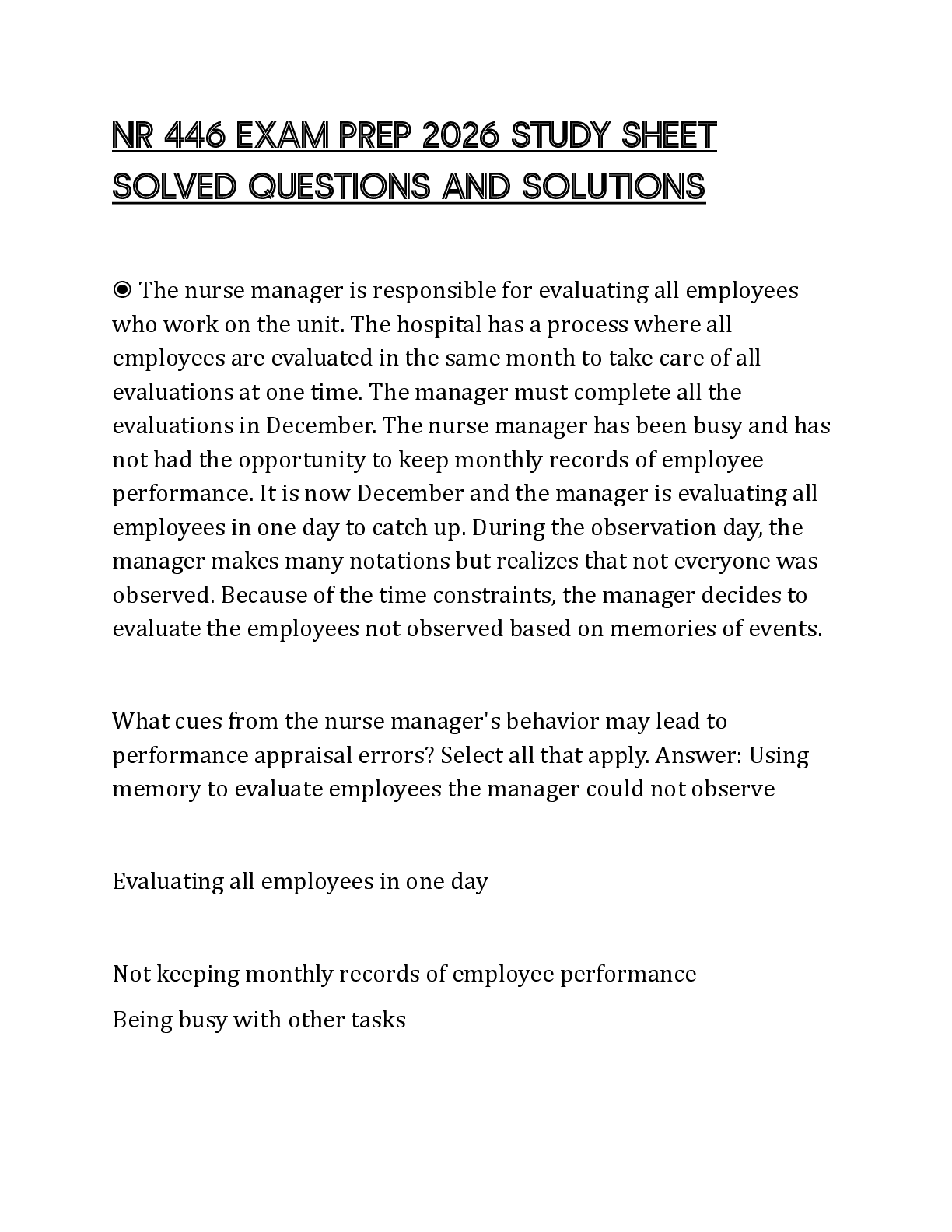
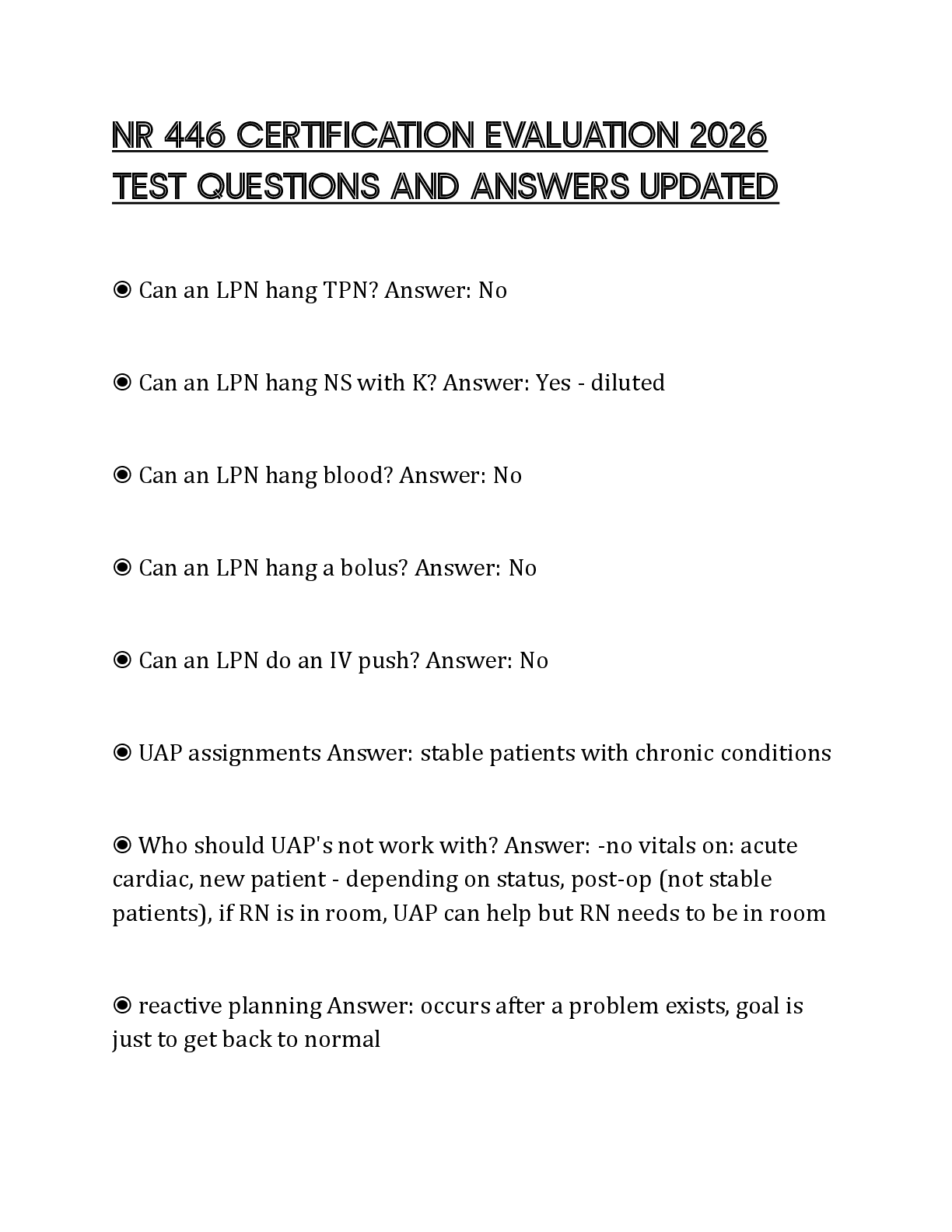
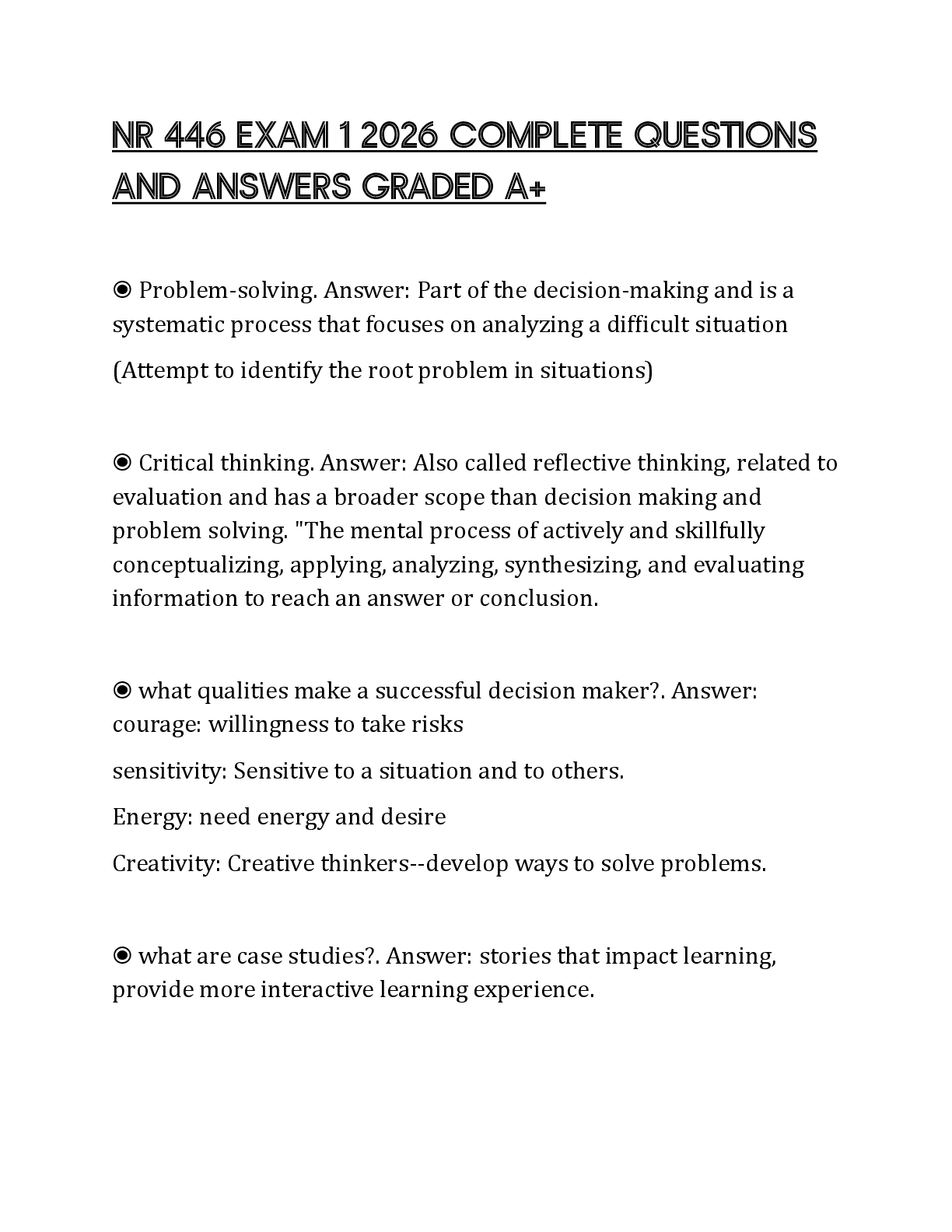

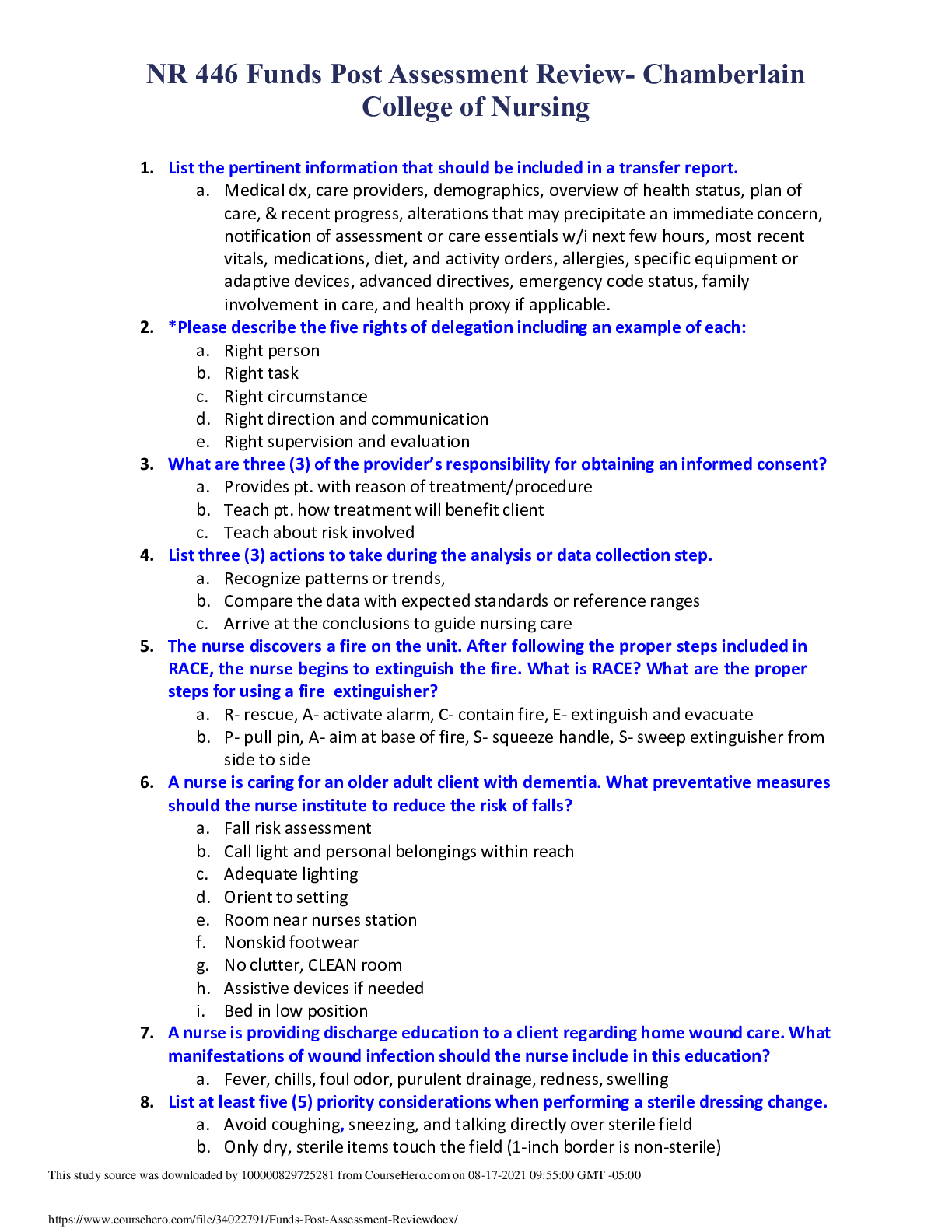
Fundamentals Post Assessment Review|NR 446 Funds Post Assessme...
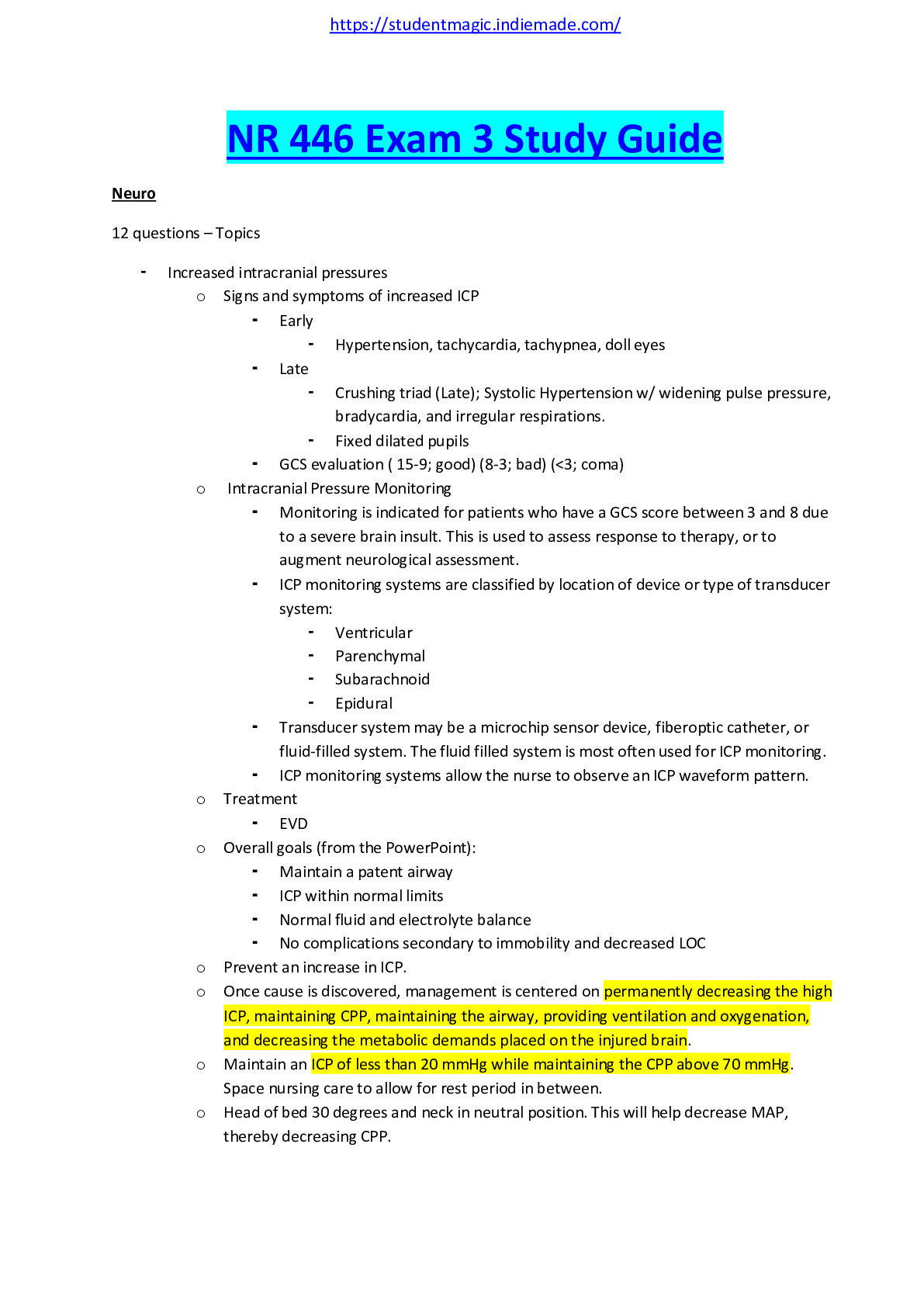
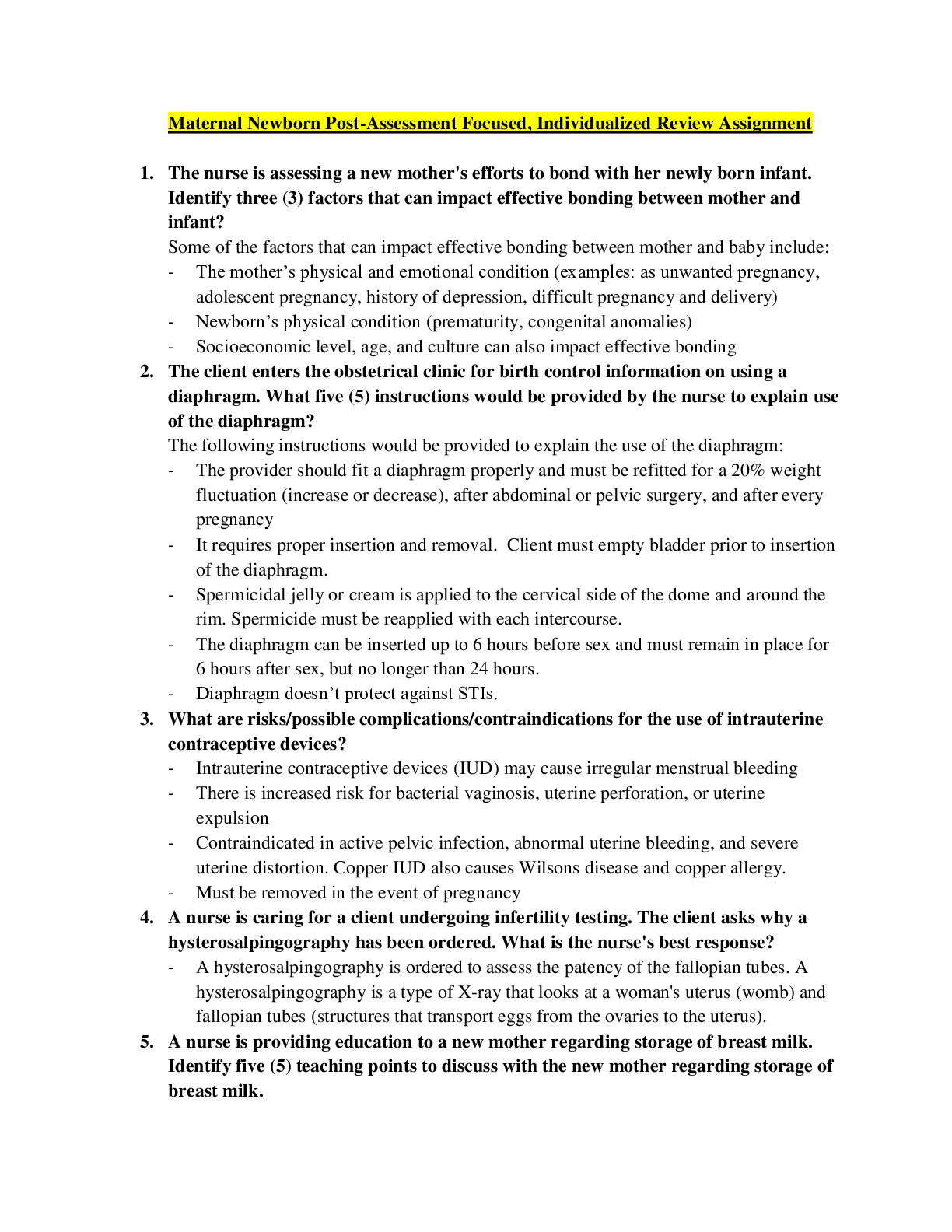
NR 446 Week 4 Maternal Newborn Post-Assessment Focused, Indivi...

iHuman patient Amka Oxendine Chamberlain College of Nursing -...
OCR GCE History A Y105/01: England 1445-1509: Lancastrians, Yo...

CHIM NCE Health Information Management Practice Exam 1 – Ver...
Complete Test Bank For Community Public Health Nursing Promoti...

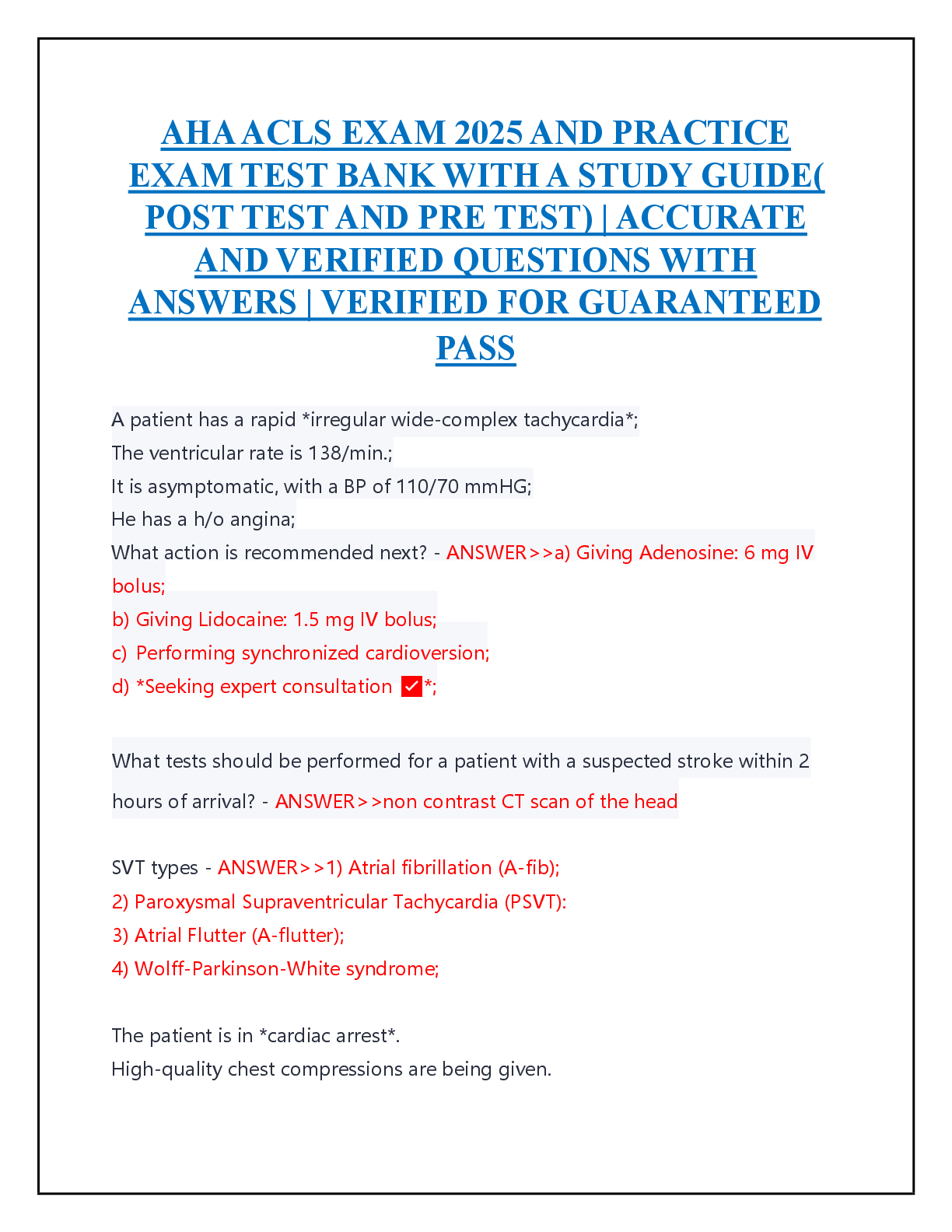
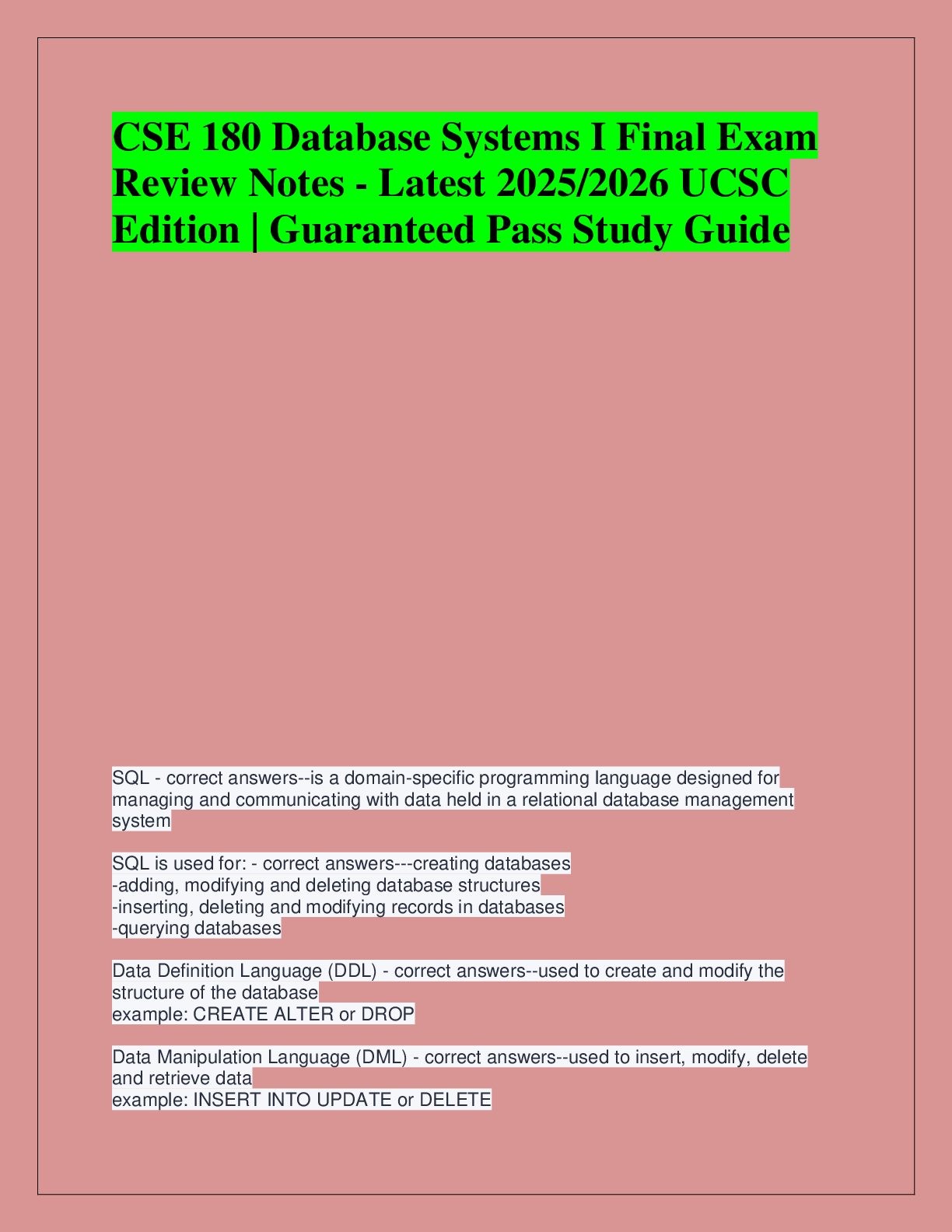
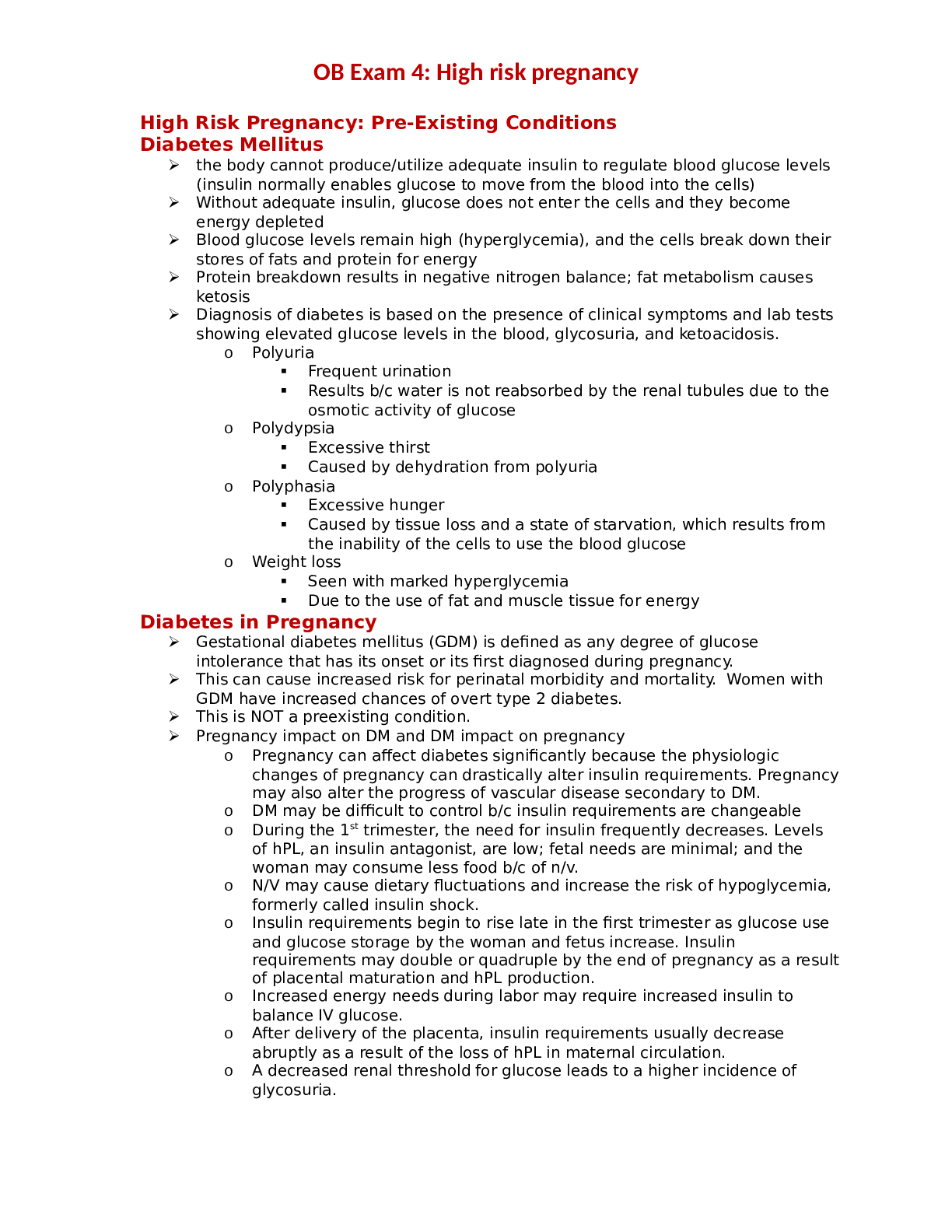

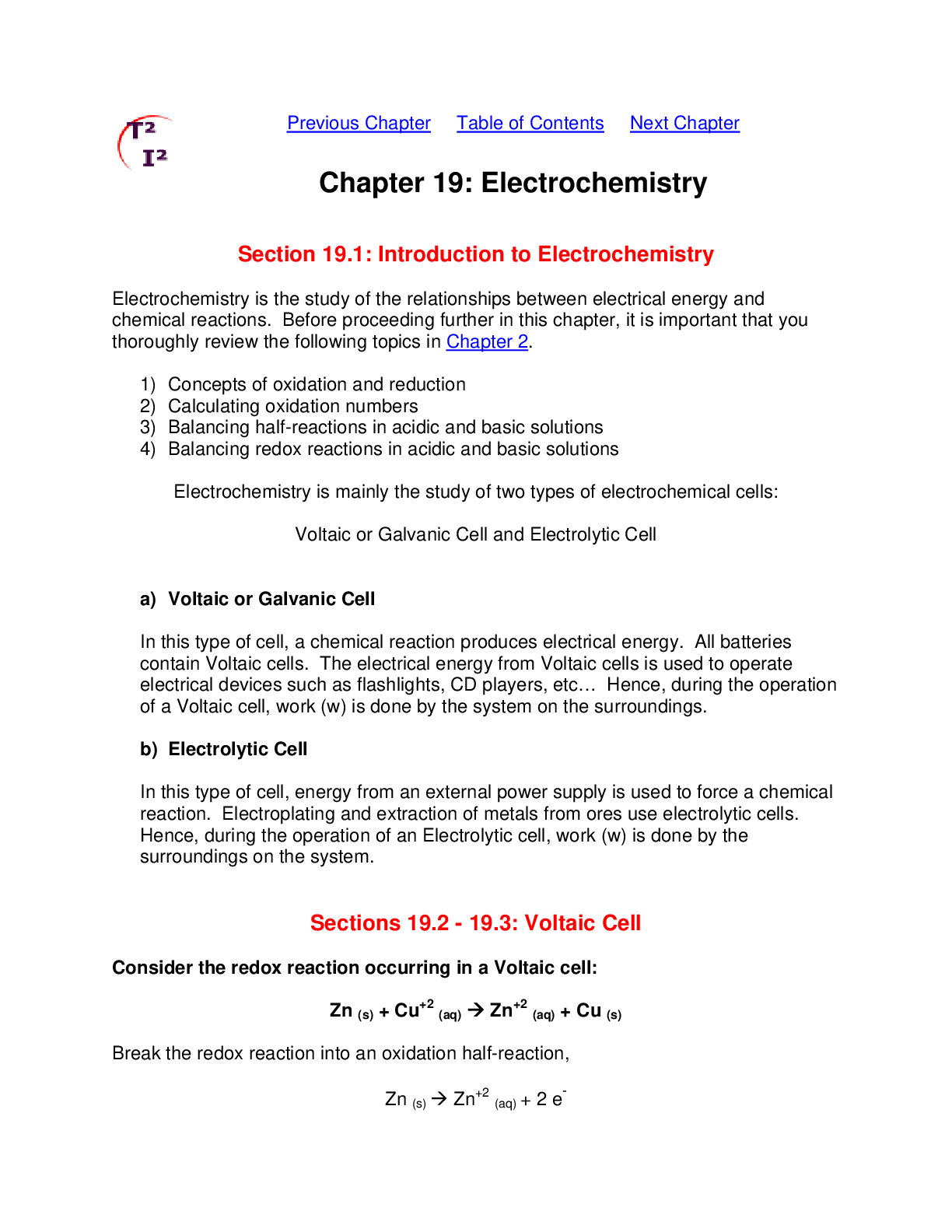


 (1).png)