Anatomy > EXAM > Examination-Questions-and-Answers-in-Basic-Anatomy-and-Physiology_-2000-Multiple-C. (All)
Examination-Questions-and-Answers-in-Basic-Anatomy-and-Physiology_-2000-Multiple-C.
Document Content and Description Below
Last updated: 3 years ago
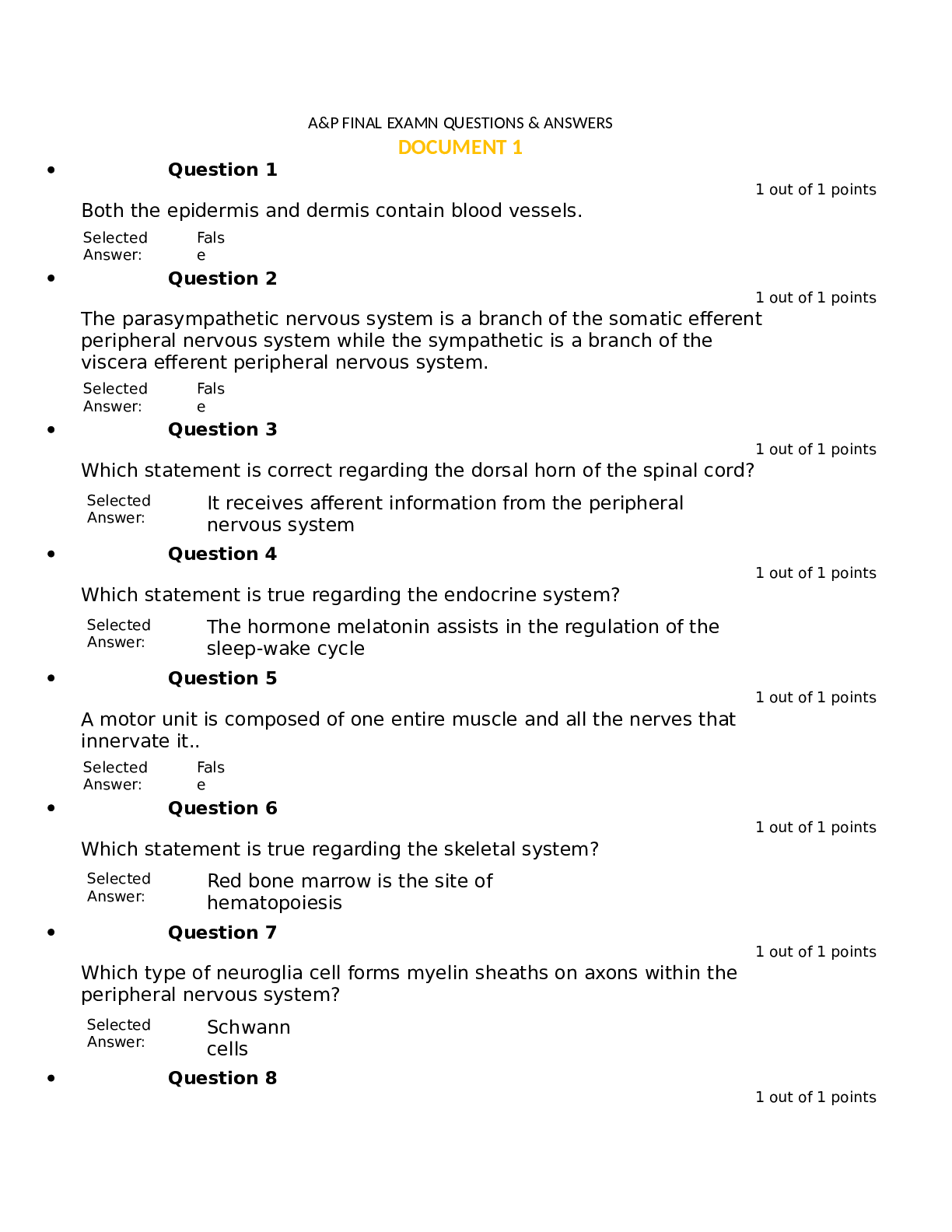
Preview 1 out of 508 pages
Instant download

Buy this Document to get the Full Access Instantly
Provided by Students Who Aced it
We Verify Document Content to Gurantee Accuracy
Reviews( 0 )
Document information
Connected school, study & course
About the document
Uploaded On
Nov 15, 2021
Number of pages
508
Written in
All

Additional information
This document has been written for:
Uploaded
Nov 15, 2021
Downloads
0
Views
131
Topic Tags
Related Subjects & Courses
Explore similar study resources and related concepts.
Recommended For You
Get more on EXAM »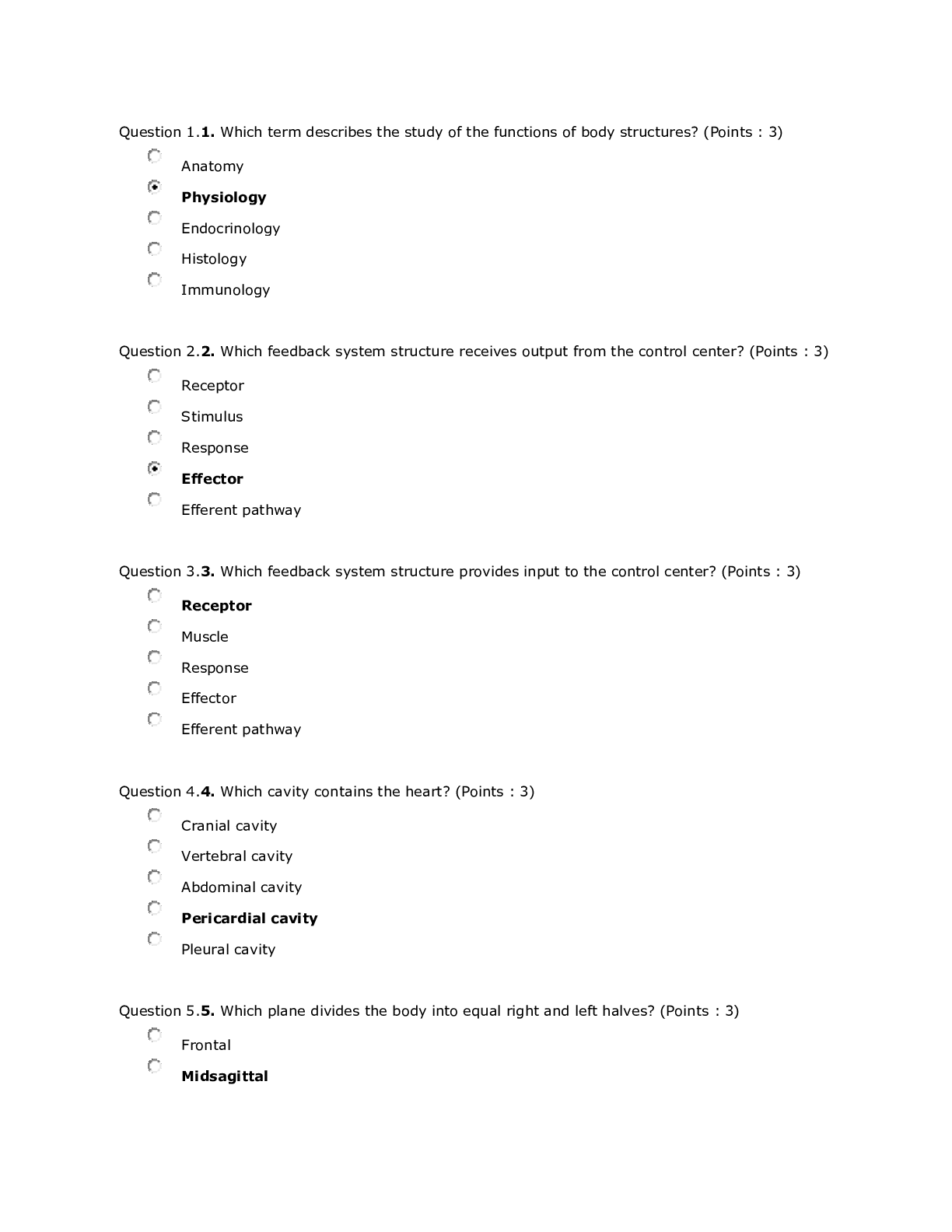
ANATOMY BIO 251 Week 5 Quiz 1/ANATOMY BIO 251 Week 5 Quiz 1_Ve...

ANATOMY BIO 251 Week 5 Quiz 4/ANATOMY BIO 251 Week 5 Quiz 4_Ve...

ANATOMY BIO 251 Week 5 Quiz 3/ANATOMY BIO 251 Week 5 Quiz 3_Ve...

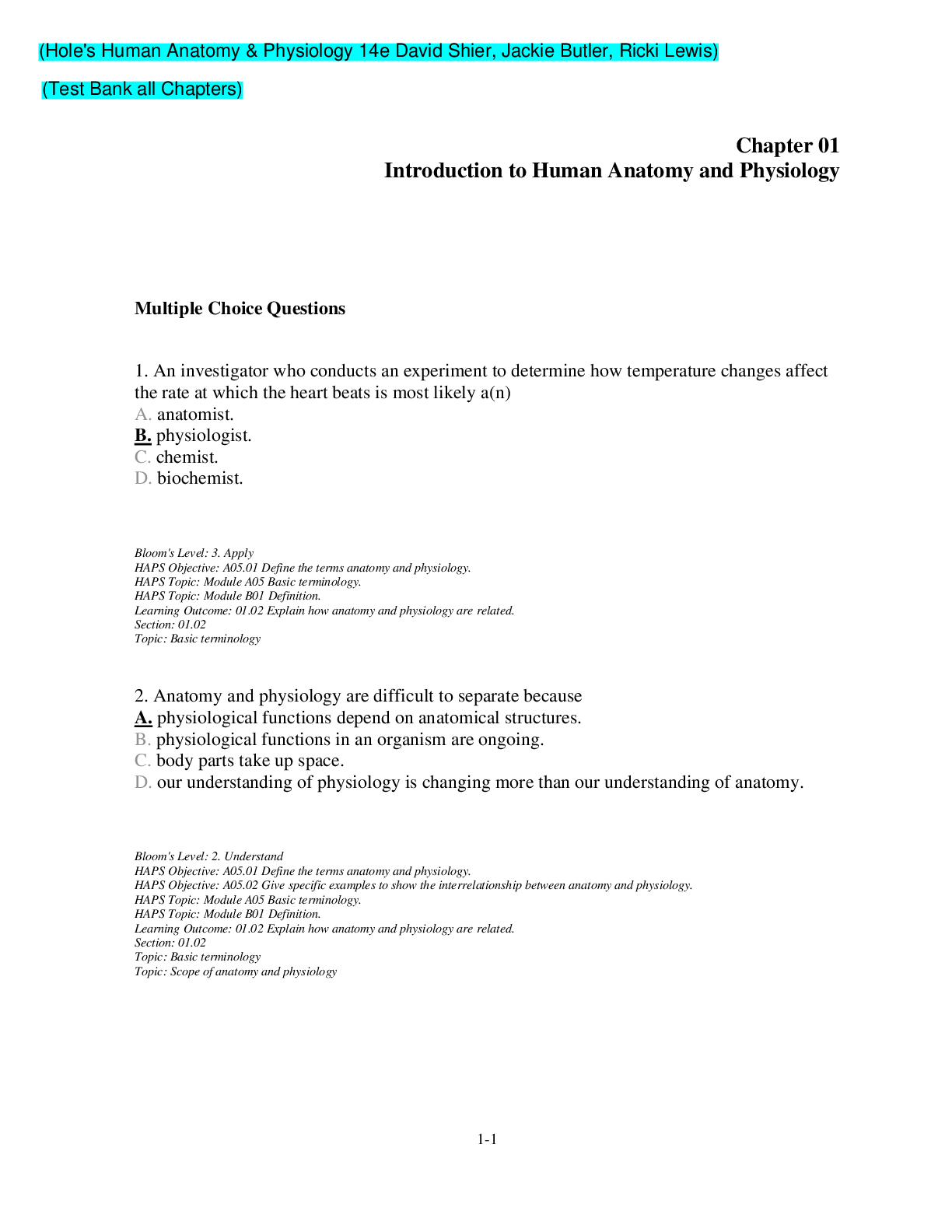
Hole's Human Anatomy & Physiology 14e David Shier, Jackie Butl...

Fundamentals of Anatomy & Physiology 11th Edition by Frederic...

Anatomy & Physiology An Integrative Approach, 4th Edition by...

Essentials of Human Anatomy & Physiology, 13th Edition by Mari...
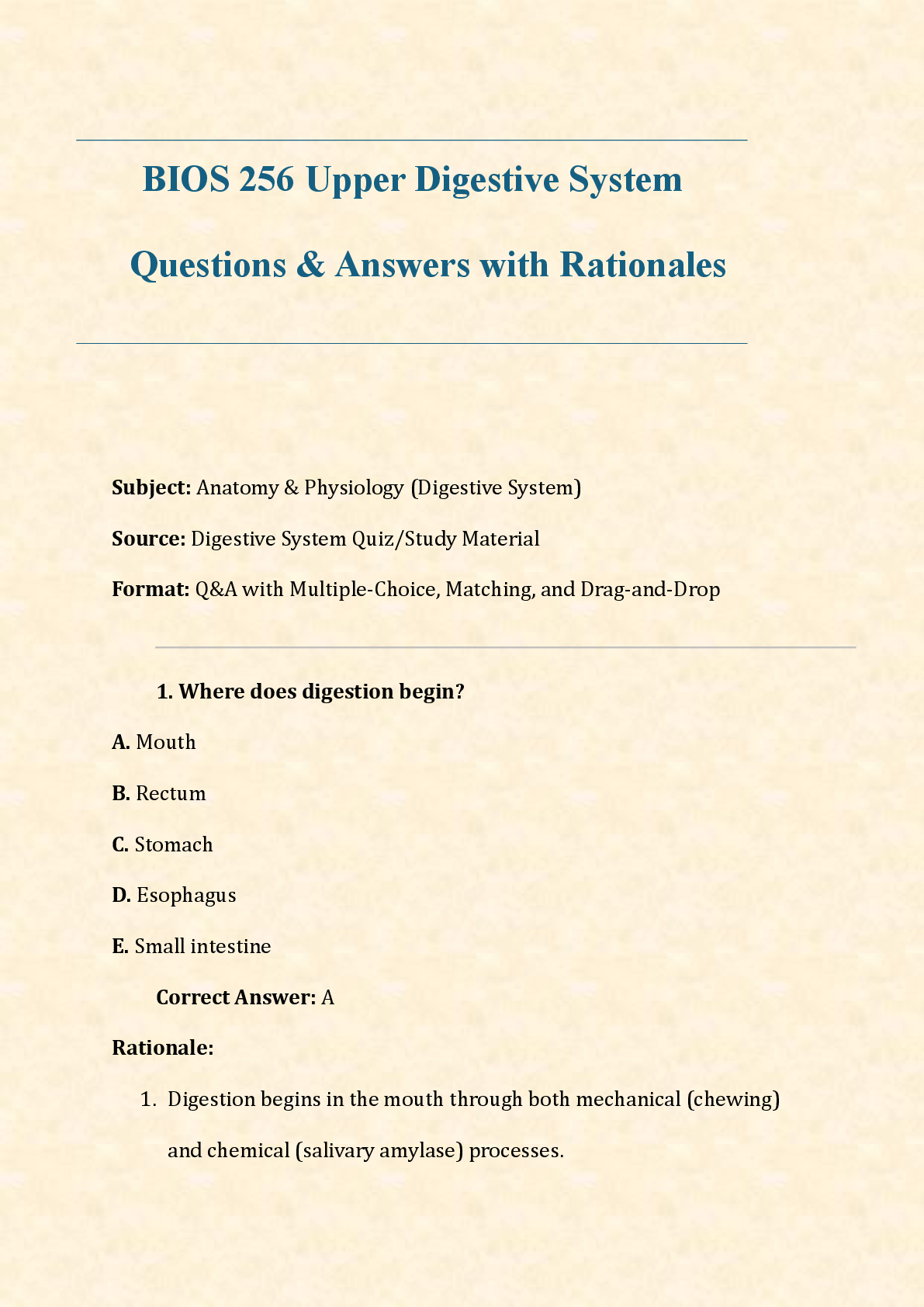
BIOS 256 Upper Digestive System Questions & Answers with Rati...
Visual Anatomy Physiology Lab Manual, Cat Version, 2nd Editi...
Test Bank Anatomy & Physiology An Integrative Approach 2025 Re...
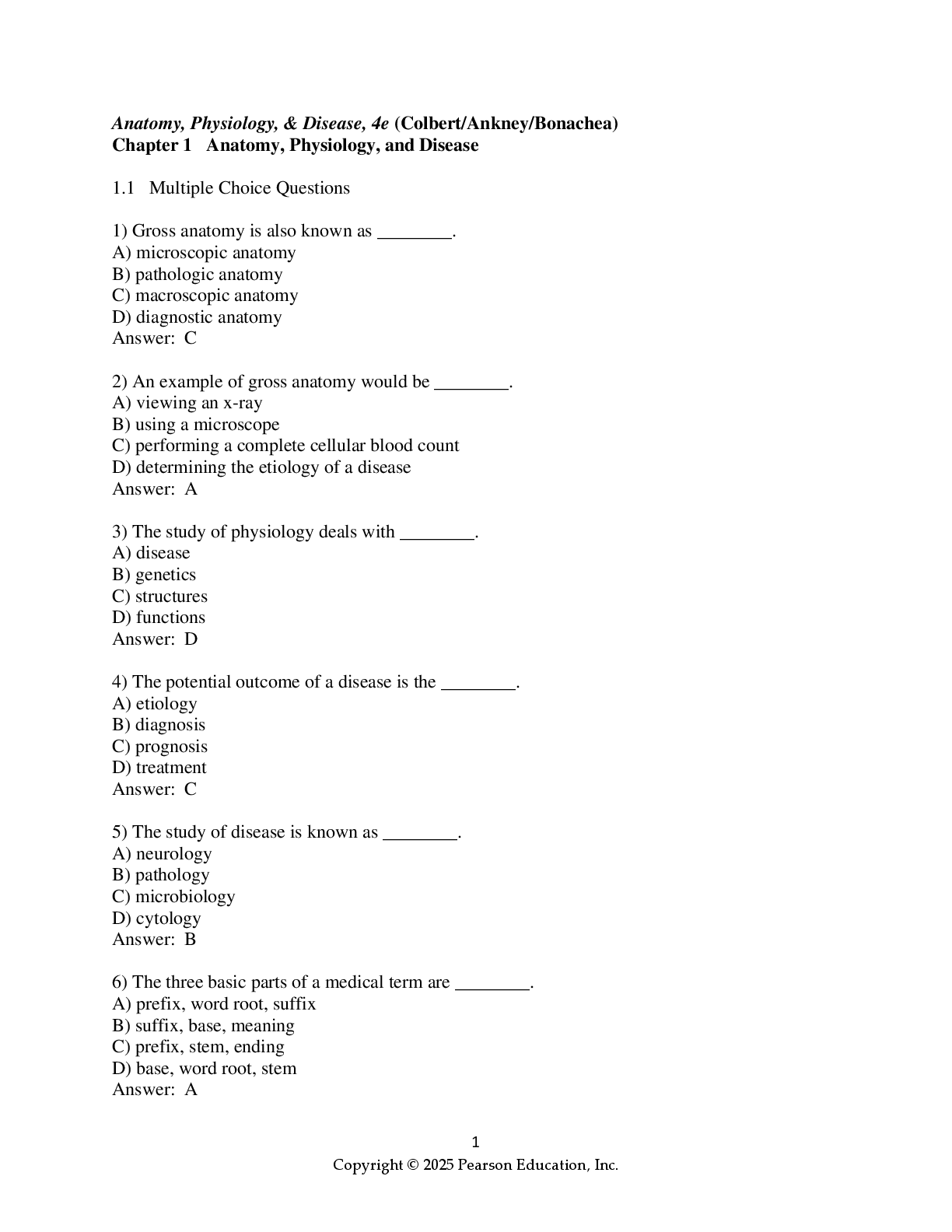
Test Bank For Anatomy, Physiology, & Disease An Interactive J...


.png)