NURS 6531 Final Exam (Version-1, 100 Q & A) The most common symptoms of transient ischemic attack (TIA) include: Central obesity, "moon" face, and dorsocervical fat pad are associated with: Cushing's Syndrome Diagnos
...
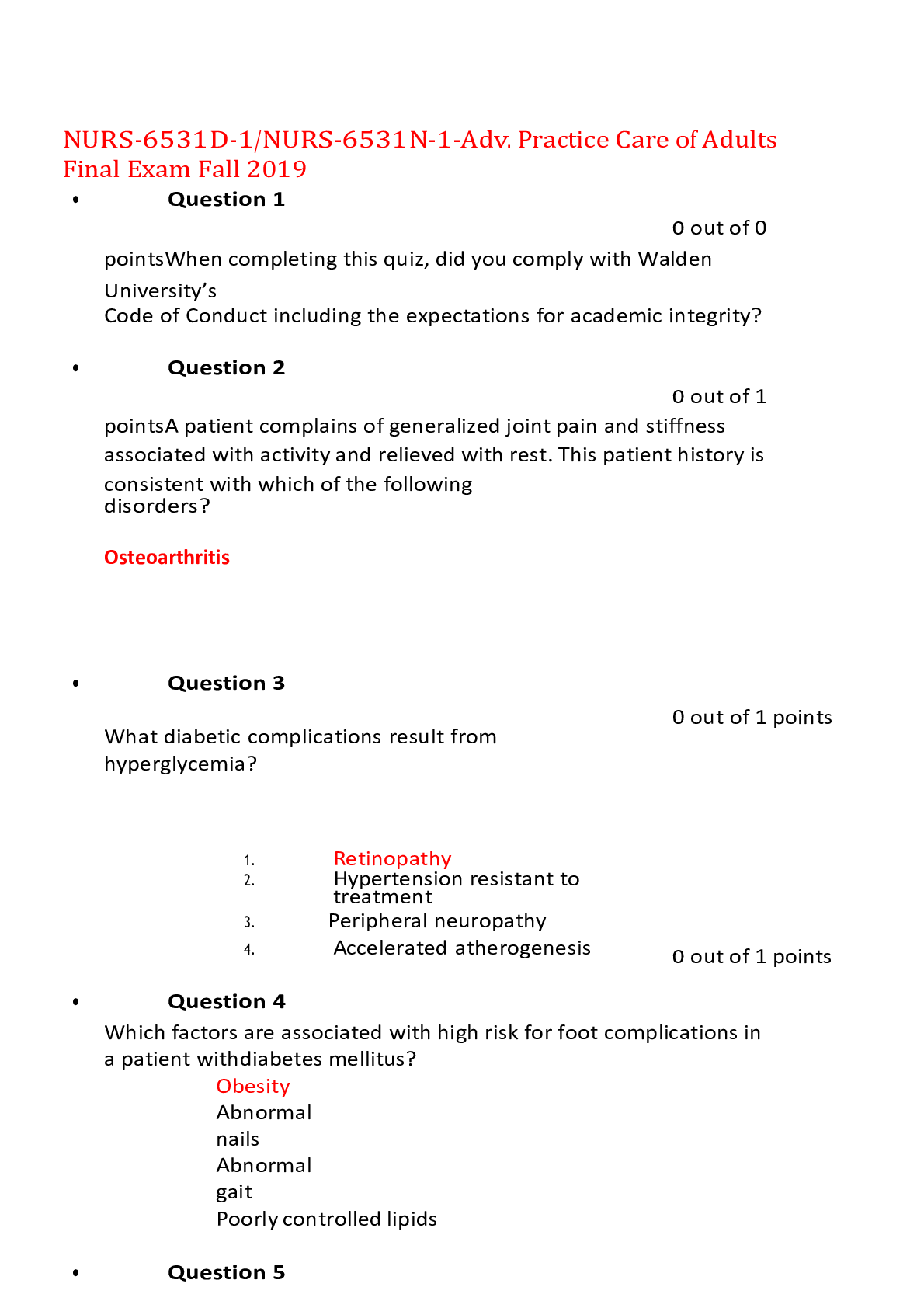
NURS 6531 Final Exam (Version-1, 100 Q & A) The most common symptoms of transient ischemic attack (TIA) include: Central obesity, "moon" face, and dorsocervical fat pad are associated with: Cushing's Syndrome Diagnostic evaluation for urinary calculi includes: A. Urinalysis and culture B. Non contrast CT C. Serum calcium D. All of the above A 72-year-old female patient reports a 6-month history of gradually progressive swollen and painful distal interphalangeal (DIP) joints of one hand. She has no systemic symptoms but the erythrocyte sedimentation rate (ESR), antinuclear antibody (ANA), and rheumatoid factor (RF) are all minimally elevated. What is the most likely diagnosis? A. Rheumatoid arthritis B. Osteoarthritis C. Infection D. Lupus Phalen's test, 90°wrist flexion for 60 seconds, reproduces symptoms of: Who is at a higher risk for developing nephrolithiasis? A patient complains of generalized joint pain and stiffness associated with activity and relieved with rest. This patient history is consistent with which of the following disorders? Which of the following is NOT true about Carpal Tunnel Syndrome? A. Symptoms present in the first 3 fingers of the affected hand. B. Symptoms are absent in the 5th finger. C. Median nerve compression can result in decreased strength and impaired fine motor coordination. D. Phalen's and Tinel's signs are negative. What diabetic complications result from hyperglycemia? A.Retinopathy B.Hypertension resistant tobtreatment C. Peripheral neuropathy D. Accelerated atherogenesis ... A patient presents with dehydration, hypotension, and fever. Laboratory testing reveals hyponatremia, hyperkalemia, and hypoglycemia. These imbalances are corrected, but the patient returns 6 weeks later with the same symptoms of hyperpigmentation, weakness, anorexia, fatigue, and weight loss. What action(s) should the nurse practitioner take? .A Obtain a thorough history and physical, and check serum cortisol and ACTH levels. B. Perform a diet history and check CBC and FBS. C. Provide nutritional guidance and have the patient return in one month. D. Consult home health for intravenous administration A. Obtain a thorough history and physical, and check serum cortisol and ACTH levels. An elderly man is started on lisinopril and hydrochlorhiazide for hypertension. Three days later, he returns to the office complaining of left great toe pain. On exam, the nurse practitioner notes an edematous, erythematous tender left great toe. The likely precipitant of this patient's pain is: Maria, age 17, was raped when she was 13 year old. She is now experiencing sleeping problems, flashbacks, and depression. What is your initial diagnosis? Martin is complaining of erectile dysfunction. He also has a condition that has reduced arterial blood flow to his penis. The most common cause of this condition is: 1. Epilepsy. 2. Multiple sclerosis. 3. Diabetes mellitus. 4. Parkinson disease. A patient has a prolonged PT. Which deficiency can you infer from this result? The most effective treatment of non-infectious bursitis includes: Which of the following is not a common early sign of benign prostatic hyperplasia (BPH)? A. Nocturia B. Urgency incontinence C. Strong urinary stream flow D. Straining to void C. Strong urinary stream flow You are assessing a patient after a sports injury to his right knee. You elicit a positive anterior/posterior drawer sign. This test indicates an injury to the: he A. lateral meniscus B. cruciate ligament C. medial meniscus D. collateral ligament. B. cruciate ligament Reed-Sternberg B lymphocytes are associated with which of the following disorders: A. Aplastic anemia B. Hodgkin's lymphoma C. Non Hodgkin's lymphoma D. Myelodysplastic syndromes Which of the following is a potential acquired cause of thrombophilia? A. Homocysteinuria B. Protein C deficiency C. Factor V Leiden D. Antiphospholipid antibodies A 75-year-old female is diagnosed with primary hyperparathyroidism and asks the nurse practitioner what the treatment for this disorder is. The nurse practitioner explains: A. Primary hyperparathyroidism is treated with Vitamin D restriction B. Primary hyperparathyroidism is treated with parathyroidectomy C. Primary hyperparathyroidism is treated with daily magnesium D. Primary hyperparathyroidism is treated with parenteral parathyroid hormone (PTH) The most common cause of elevated liver function tests is? a. Hepatitis. b. A drug-induced injury. c. Biliary tract obstruction. d. Chronic alcohol abuse. A 32-year-old female patient presents with fever, chills, right flank pain, right costovertebral angle tenderness, and hematuria. Her urinalysis is positive for leukocytes and red blood cells. The nurse practitioner diagnoses pyelonephritis. The most appropriate intervention is: . The reason beta-adrenergic blockers should be avoided in patients with diabetes is because they may: A. potentiate hypoglycemia. B. interfere with the action of insulin and oral hypoglycemics. C. mask symptoms of hypoglycemia. D. stimulate hepatic glucose secretion. Which of the following is the most common cause of low back pain? A. Lumbar disc disease B. Spinal stenosis C. Traumatic fracture D. Osteoporosis A 77-year-old female presents to the office complaining a sudden swelling on her right elbow. She denies fever, chills, trauma, or pain. The physical exam reveals a non-tender area of swelling over the extensor surface over the right elbow with evidence of trauma or irritation. The nurse practitioner suspects: A. Arthritis B. Ulnar neuritis C. Septic arthritis D. Olecranon bursitis What is the most common cause of Cushing's syndrome? A. Excessive ACTH production B. Administration of a glucocorticoid or ACTH C. Pituitary adenoma or a nonpituitary ACTH-producing tumor D. Autonomous cortisol production from adrenal tissue Which of the following medications may predispose the patient to hypoglycemia? A. Beta-adrenergic blockers B. Thiazide diuretics C. Phenytoin (Dilantoin) D. Glucocorticosteroids An 81-year-old female is diagnosed with type 2 diabetes. When considering drug therapy for this patient, the nurse practitioner is most concerned with which of the following side effects? A. Weight gain B. Fracture risk C. Hypoglycemia D. Weight loss Which of the following is the most common causative organism of nongonococcal urethritis? A. Chlamydia trachomatis B. Ureaplasma urealyticum C. Mycoplasma hominis D. Trichonomas vaginalis The organism most often associated with prostatitis is: A. Klebsiella B. Neiserria gonorrhoaes C. Chlamydia trachomatis D. Escherichia coli An obese hyperlipidemic patient, newly diagnosed with type 2 diabetes mellitus, has fasting glucose values 180 to 250 mg/Dl. What is the most appropriate initial treatment to consider? A. A low-calorie diet and exercise B. Sliding-scale NPH insulin every 12 hours C. A sulfonylurea and/or metformin (Glucophage® -XR) D. Sliding-scale regular insulin every 6 hours Jack, age 55, comes to the office with a blood pressure of 144/98 mm Hg. He states that he did not know if it was ever elevated before. When you retake his blood pressure at the end of the exam, it remains at 144/98. What should your next action be? stage 2 hypertension (lifestyle change, and medication Marsha presents with symptoms resembling both fibromyalgia and chronic fatigue syndrome, which have many similarities. Which of the following is more characteristic of fibromyalgia? A. Musculosckeletal pain B. Difficulty sleeping C. Depression D. Fatigue Sally, a computer programmer, has just been given a new diagnosis of carpal tunnel syndrome. Your next step is to: a. refer her to a hand surgeon b. take a more complete hx c. try neutral position wrist splinting and order an oral NSAID d. order a nerve conduction study such as an electromyography (EMG) A 63-year-old man presents to the office with hematuria, hesitancy, and dribbling. Digital rectal exam (DRE) reveals a moderately enlarged prostate that is smooth. The PSA is 1.2. What is the most appropriate management strategy for you to follow at this time? A. Prescribe an alpha adrenergic blocker. B. Recommend saw palmetto. C. Prescribe an antibiotic D. Refer the client to urology. A 72 year old patient exhibits sudden onset of fluctuating restlessness, agitation, confusion, and impaired attention. This is accompanied by visual hallucinations and sleep disturbance. What is the most likely cause of this behavior? A. Dementia B. Delirium C. Parkinson's disease D. Depression Which of the following set of symptoms should raise suspicion of a brain tumor? A 63-year-old man presents to your office with hematuria, hesitancy, and dribbling. Digital rectal examination (DRE) reveals a smooth, moderately enlarged prostate. The client's prostate-specific antigen (PSA) is 1.2. What is the most appropriate management strategy at this time? 1. Prescribing an alpha-adrenergic blocker. 2. Recommending saw palmetto extract. 3. Prescribing an antibiotic .4. Referring the client to urology. Which of the following is not a common early sign of benign prostatic hyperplasia (BPH)? A 30 year old female patient presents to the clinic with heat intolerance, tremors, nervousness, and weight loss inconsistent with increased appetite. Which test would be most likely to confirm the suspected diagnosis? Which history is commonly found in a patient with glomerulonephritis? A 60 year old male patient with multiple health problems presents with a complaint of erectile dysfunction (ED). Of the following, which medication is most likely to be causing the problem? characteristic of type 2 diabetes mellitus? A patient has been diagnosed with hypothyroidism and thyroid hormone replacement therapy is prescribed. How long should the nurse practitioner wait before checking the patient's TSH? A patient has been diagnosed with generalized anxiety disorder (GAD). Which of the following medications may be used to treat generalized anxiety disorder? What is the most common cause of Cushing's syndrome? The most commonly recommended pharmacological treatment regimen for low back pain (LBP) is: A 72 year old patient exhibits sudden onset of fluctuating restlessness, agitation, confusion, and impaired attention. This is accompanied by visual hallucinations and sleep disturbance. What is the most likely cause of this behavior? Which of the following is the most common causative organism of nongonococcal urethritis? a chlamydia b. mycoplasma c. neisseria d. ureaplasma Which of the following does not cause nongonococcal urethritis? Nongonococcal urethritis can be caused by all of the following EXCEPT A) Trichomonas vaginalis. B) Neisseria gonorrhoeae. C) streptococci. D) Mycoplasma homini. E) Candida albicans. A patient presents with dehydration, hypotension, and fever. Laboratory testing reveals hyponatremia, hyperkalemia, and hypoglycemia. These imbalances are corrected, but the patient returns 6 weeks later with the same symptoms of hyperpigmentation, weakness, anorexia, fatigue, and weight loss. What action(s) should the nurse practitioner take? A. Obtain a thorough history and physical, and check serum cortisol and ACTH levels. B. Perform a diet history and check CBC and FBS. C. Provide nutritional guidance and have the patient return in one month. D. Consult home health for intravenous administration The cornerstone of treatment for stress fracture of the femur or metatarsal stress fracture is: Which drug category contains the drugs that are the first line Gold standard therapy for COPD? -beta 2 agonist -best treatmenat beta 2 agonist + corticosteroids. A thymectomy is usually recommended in the early treatment of which disease? The most effective intervention(s) to prevent stroke is (are): 72 year old female patient reports a 6 month history of progressively more swollen and painful distal interphalangeal (DIP) joints of one hand. There are no systemic symptoms but the erythrocyte sedimentation rate (ESR), antinuclear antibody (ANA), and rheumatoid factor (RF) are all minimally elevated. What is the most likely diagnosis? A. Rheumatoid arthritis B. Osteoarthritis C. Infection D. Lupus Phalen's test, 90°wrist flexion for 60 seconds, reproduces symptoms of