NUR 256 Exam 1
Why Psych??
• Not just for psychiatric nursing All clients can have
Anxiety, fear, body image issues and grief
PSYCH Patients are
Your clients with:
• delirium
• Dementia
• Anxiety – Often
...
NUR 256 Exam 1
Why Psych??
• Not just for psychiatric nursing All clients can have
Anxiety, fear, body image issues and grief
PSYCH Patients are
Your clients with:
• delirium
• Dementia
• Anxiety – Often worried about future
• Substance abuse
• Anger or aggression issues
• Personality disorders – Will never admit to personality disorders.
• Mood swings
• Depression - Lives in the past
• Schizophrenia
• Grief and loss
Mental Health Vs Mental Illness
• How are we functioning?
• Emotionally, Cognitively, Socially, Physically
• Are we coping?
• Are we achieving?
• Are we functioning?
• The old definition of “being different” does not fit (think of Abraham Lincoln, Mother Teresa, Albert Einstein, etc.)
Factors affecting Mental Health
• Physical health
• Genetics/Biological predisposition
• Individual Factors RESILIENCE, COPING SKILLS, TEMPERMENT
• Our Socioeconomic circumstances and support systems
• Our ENVIRONMENTAL influences
Diathesis – Stress Model
• This is the most accepted explanation for mental illness. Combination of genetic vulnerability and negative environmental stressors
• Diathesis – biological predisposition
• Stress – environmental stress or trauma
• Diathesis-stress model - Nature PLUS Nurture:
Biological predisposition plus Environmental stress and traumas
Scope of Practice
• Know scope of practice for R.N. vs ARNP vs mental health technicians and licensed social workers RN - Can work in general or specialty areas
PMH-RN - Works in psychiatric setting
• RN-BC - after 2 yrs full time work in psychiatric setting (2000 hours) , 30 hours of continuing psychiatric education
, and having a BSN, can take a certification exam (ANCC) to be board certified in psychiatric mental health nursing.
• Psychiatric-Mental Health Advanced Practice Registered Nurse (PMH-APRN) - possesses a MSN or DNP, passes certification exam and keeps up requirements
Chapter 2 – Theorists
• Freud - transference/counter transference defines defense mechanisms
• Levels of awareness
• Conscious – Everything the individual is aware of
• Preconscious – Retrievable through effort by individual
• Unconscious - repressed memories, passions, feelings, traumas, are placed here as a protective way to manage painful stimuli
• Personality structure
• Id - Pleasure principle- screaming baby
• Ego - Problem solver vs Reality tester
• Superego - Moral component-seeks perfection instead of pleasure or reasoning.
• Defense mechanisms and anxiety
• Operate on unconscious level
• Deny, falsify, or distort reality to make it less threatening to the individual’s view of self
• Maslow-hierarchy of needs - must meet lower needs first – (Example: I cannot counsel a client on medication education (self esteem) when the client is afraid they will not make it through surgery (safety need) or is too week to complete their own ADLs (physiological needs)
• Human beings are active participants in life striving for self-actualization
• Self-transcendence
• Self-actualization – Becoming all that one is capable of.
• Esteem – competence, achievement, and esteem from others
• Love and belonging – affiliation, affection, relationships and love
• Safety needs – Security, protection, structure, order and limits
• Physiological needs – Food, water, rest and sex
• Erikson- stages of development Halter
• As nurses, it is important to know if our clients are moving from stage to stage appropriately
• Example: Is a 40 y/o still struggling to live on their own and establish and identity?
• As nurses, it is important to know if our clients are functioning adaptively in their stage
• Example: Is a retired person depressed and confined to their home or are they active in the community (self absorption vs. generativity)
• Eight stages of development - Personality continues to develop through old age
• Failures at one stage can be rectified at another stage
• Developmental model is important part of nursing assessment
• Helps determine what types of interventions are most likely to be effective
• See p. 31 Table 2.6
• KNOW the psychosocial crisis involved in seeking therapy: Adolescence through Later years
• Peplau - pre orientation, orientation, working and termination; she described effects of levels of anxiety on perception and learning
• Foundation for Hildegard Peplau's theory of Psychiatric Nursing
• Participant observer
• Mutuality
• Respect for the patient
• Unconditional acceptance
• Empathy
• Peplau Theory
• Pre orientation
• Orientation – Setting goals with the patient
• Working – Accomplishing Goals
• Termination – Reviewing the patient goals.
Nurse Client Relationship
• Transference - the client acts abnormally friendly or unfriendly because you remind them of someone in their life and they are transferring feelings about them to you unconsciously
• Countertransference- when you transfer feelings about someone else to your client
• Both transference and countertransference are non therapeutic
• When transference or counter transference occurs recognize it and refocus on the purpose of the relationship which is to help the client cope and heal
• Address counter transference with the client and recognize both as the nurse
Chapter 3 – Biology / Pharmacology
Functions of the Brain
• The brain is designed to monitor both internal and external stimuli and function to maintain homeostasis
• Regulation of the Autonomic Nervous System (AANS)
• Parasympathetic (rest-digest) /Sympathetic (fight-flight)
Imaging
• EEG (electrical brain activity)
• CT scan of the brain
– (gross anatomical details)
• MRI of the brain
– (anatomical MRI and functional if fMRI)
• PET, SPECT scan(brain function)
Terminology
• Agonists - mimics effects of a neurotransmitter
• Antagonists - opposes or blocks the neurotransmitter
Neurotransmitters Psych-A Simplification
• Dopamine (too little causes Parkinsons but too much causes symptoms of schizophrenia)
• Serotonin (too little in Depression) – Feel good happens with exercise – Promote movement
• Norepinephrine (too little in Depression)
• GABA (too little in anxiety)
• Acetylcholine (too little in Alzheimers)
Psychotropic Medications Objectives
• Identify Anxiolytic medications
• Identify Three classes of Antidepressant meds. And the major adverse reactions to the respective classes
• Identify Two classes of Antipsychotic meds. And the major adverse reactions to the respective classes
• Identify additional psychotropic medications
Anxiolytic – Anxiety Drugs
• Increasing GABA decreases Anxiety
• Drugs to Decrease anxiety Increase receptors response to GABA so more GABA
• Benzodiazepines (Xanax, Ativan, Librium, Valium)
• CNS depressants - Habit forming - Decreases cellular excitation
• Do not combine with other CNS depressants to avoid respiratory depression
• -DRUGS-
• Alprazolam (xanax
• Lorazepam (Ativan)
• Diazepam (Valium)
• Chlordiazepoxide (Librium)
• Clonazepam (Klonopin)
• Oxazepam (Serax)
• Flurazepam (Dalmane)
• Temazepam (Restoril)
• Triazolam (Halcion)
• Estazolam (ProSom)
• Quazepam (Doral)
• Barbituates
• Z-drugs (short acting for sleep), Ambien, Sonata, Lunesta
• Short-Acting Sedative-Hypnotic Sleep Agents
• (“Z-hypnotics”)
• Zolpidem (Ambien) – Melatonin is not going to touch it
• Zaleplon (Sonata)
• Eszopiclone (Lunesta)
• Uses for seizures, alcohol withdrawal also
• Non-Benzodiaepine Antianxiety Drugs
• BuSpar (Buspirone)
• Melatonin Receptor Agonists
• Doxepin
• Suvorexant
Antidepressants
• Serotonin, Norepinephrine and Dopamine as a group are called MONOAMINES.
• DECREASED Serotonin and Norepinephrine INCREASES depression so antidepressants try to INCREASE Serotonin and Norepinephrine by blocking their destruction. Dopamine also plays a role
• Antidepressants take 1 - 3 weeks or longer to reach desired effect (MONITOR FOR SUICIDAL IDEATIONS)
• Antidepressants block the destruction of serotonin and norepinephrine (these are also part of a group called monoamines)
• There are 2 ways to stop their destruction:
• 1) Block the reuptake pathway back into the “mother cell” to be destroyed intracellularly by MAO (SSRI, SNRI and tricyclics work this was)
• 2) Block the enzyme that destroys them (MAOIs work that way)
• Other Antidepressants
• Mirtazapine (Remeron) NaSSA -norepinephrine and serotonin specific antidepressant
• Buproprion(Wellbutrin) norepinephrine/dopamine reuptake inhibitor
• SARI serotonin antagonist and reuptake inhibitor Brexpipraznole (Rexulti), Nefazodone, Trazodone
• Serotonin Modulater and Stimulator -Vortioxetine (Trintellix)
• Serotonin Partial Agonist and Reuptake Inhibitor, Vilazodone (Viibryd)
•
SSRI
• Selective Serotonin Reuptake Inhibitors
• Drug blocks the reuptake pathway for these neurotransmitters so they are INCREASED
SSRIs used first line because fewer side effects than other antidepressants (sexual side effects, GI side effects, serotonin syndrome
• Citalopram (Celexa)
• Escitalopram (Lexapro)
• Fluoxetine (Prozac)
• Fluvoxamine (Luvox)
• Paroxetine (Paxil)
• Sertraline (Zoloft)
• Vilazodone (Viibryd)
SNRI
• Selective Serotonin and Norepinephrine Reuptake Inhibitors
• Both drugs block the reuptake pathway for these neurotransmitters so they are INCREASED
• Duloxetine (Cymbalta)
• Venlafaxine (Effexor)
• Milnacipran (Savella)
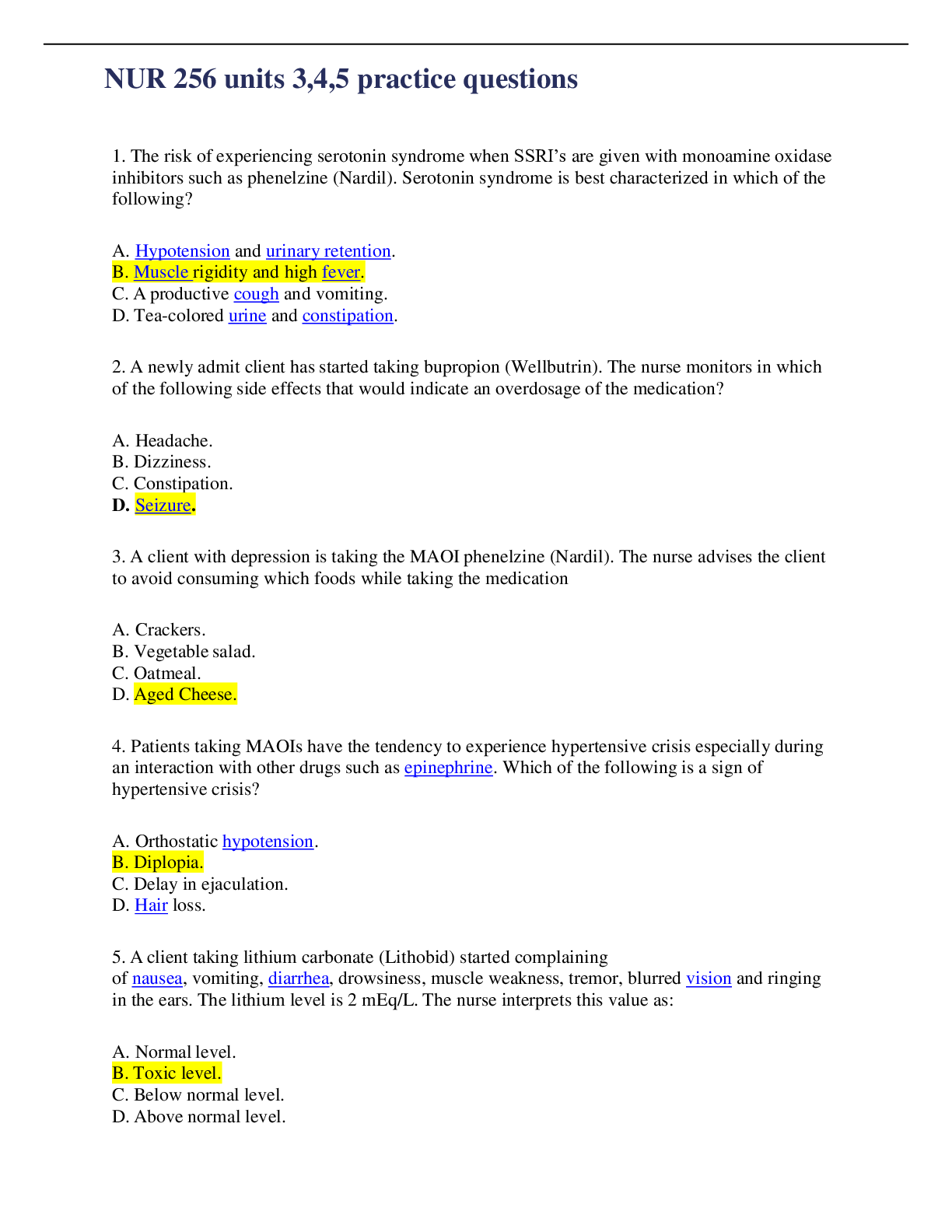
Serotonin Syndrome
• SEROTONIN SYNDROME- TOO MUCH SEROTONIN build up of serotonin can cause fatal reaction - starts out like the flu (abdominal pain, diarrhea, sweating, elevated VS, delirium, myoclonus , seizures etc.)
• Increased vitals – Anything above 90 sustained tachycardia. Blood pressure – systolic of 165 and diastolic greater then 100 is immediate need for calling physician -
• St. Johns Wort (OTC) and other drugs that increase Serotonin can cause increased Serotonin if taken with SSRI/SNRI.
• Patients taking too much medication increasing serotonin can also cause it.
• MAOI should not be taken with these drugs (two -five weeks in between)
• Stop Drug and Treat EMERGENTLY
Tricyclic antidepressants (TCAs)
• Mechanism of action: Block reuptake of serotonin and norepinephrine—decreased depression
• Blockade of Ach, NE and H1—leads to side effects
• Dangers-OBP, cardiac toxicity, drug of choice for suicide (1 wk supply may be lethal OD)
• Amitriptyline (Elavil) – Number 1 drug of choice of suicide
• Imipramine (Tofranil)
• Nortriptyline (Pamelor)
• Block reuptake of serotonin and norepinephrine.
• THESE ARE NOT USED FIRST LINE because they have more severe side effects
• Number 1 drug choice of suicide.
• Anticholinergic (can’t see, can’t pee, can’t spit, can’t s_it) - Blurred vision (Test question) – Ask patients if they had bowl movement because of elevated ammonia in the patient’s body. – On Anticholinergics need to encourage bowl movements, fluid intake (Prune juice), stool softeners,
• Cardiac arrythmias - fatal overdose
• Amitriptyline (Elavil)
• Amoxapine (Asendin)
• Clomipramine (Anafranil)
• Desipramine (Norpramin)
• Doxepin (Sinequan)
• Imipramine (Tofranil)
• Mirtazapine (Remeron)
• Nortriptyline (Pamelor)
• Trazodone (Desyrel)
Monoamine oxidase inhibitors (MAOIs)
• Mechanism of action: Prevent the enzymatic breakdown of serotonin, NE and dopamine
• Side effects: prevent the breakdown of tyramine in foods leading to HTN crisis if diet is not followed.
– Phenelzine (Nardil)
– Tranylcypromine (Parnate)
– Selegiline (ENSAM)
• MAOIs work to increase serotonin by destroying the enzyme that destroys serotonin. The other antidepressants work differently. They block the reuptake of serotonin to increase it. Therefore, if you take a MAOI while taking one of the other antidepressants, destruction of serotonin will be blocked in two ways causing a great increase in
serotonin which could cause serotonin syndrome. MAOIs must be weaned off before beginning another antidepressant . Usually 2 -5 weeks must be between the end of one and the beginning of the other.
• These Antidepressants increase serotonin and norepinephrine (also called monoamines) by blocking the enzyme (monoamine oxidase) that destroys these neurotransmitters
• BUT>>>>>>>>>>>>>>>>>
• There is another monoamine that enters the body in foods, called TYRAMINE. When you block that enzyme tyramine also increases
• If you have too much tyramine it will cause vasoconstriction>>>Hypertensive Crisis>>>>DEATH
You must not take in foods that are high in tyramine or you can die. Think of a tailgate party or a cocktail party. Review the table of foods to avoid in your text.
• Isocarboxazid (Marplan)
• Phenelzine (Nardil)
• Tranylcypromine (Parnate)
Mood Stabilizers
• Bipolar disorders are treated with Mood Stabilizers primarily
• There are 2 general categories - Levels of these drugs must be monitored via labwork at regular intervals while the clients are taking them
• 1) Lithium (Eskalith, Lithobid)
• 2) Anticonvulsants (Valproate-Depakote, Depakene, etc., Carbamazepine - Tegretol, etc. and other anticonvulsants)
• Lithium
• Lithium - it is a salt, must maintain good fluid and sodium balance. Dehydration or low sodium can cause toxicity. Teach your patients. – Sodium Lab values 135 – 145. Salt too high or too low it looks the same as altered mental status.
• Many drugs can interact with Lithium (for example, NSAIDS). Teach your patients to check with PCP.
• TSH (Thyroid stimulation hormone) comes from pituitary gland – Hyperthyroidism TSH is low in t3 and t4.
• Onset of action 10 - 21 days
• Works on electrical conductivity (can cause arrhythmias, tremors, seizures)
• Long term use can cause hypothyroidism (monitor TSH)
• Narrow therapeutic window (low therapeutic index) toxicity main worry - must draw labs regularly
• 0.6mEq/L - 1.2 mEq/L therapeutic >1.5mEq/L toxic >2.5 mEq/L death
• Labs should be drawn in the morning (10-12 hours after the last dose)
• Measure at least 5 days after beginning treatment and with any change of dose until therapeutic level is reached, than monthly
• After 6 months to 1 yr of stability you can measure every 3 months.
• Be sure to measure if there is a change in the patient condition (for example dehydration) or symptoms of lithium toxicity before giving the next dose
• Slight Hand tremors are NORMAL
• Early signs of Lithium toxicity are important to note: Thirst, severe nausea, coarse tremors.
• Suspect toxicity if the client is losing fluids or has fluid or sodium imbalance (diarrhea, vomiting, etc.)
• Nursing Intervention : Hold the next dose of medication and get a Dr. order for a STAT Lithium level to be drawn before giving the medication - to see if it is okay to give.
• Signs of Lithium Toxicity
• Muscle weakness, tremors, vomiting, diarrhea, GI upset, thirst , lethargy, slurred speech. These symptoms continue to worsen as toxicity increases. Slight nausea and fine hand tremors can be normal on Lithium when started but Coarse Hand Tremors and severe nausea is not
• At first signs of toxicity, hold medication and get a stat lithium level drawn.
• A patient with an elevated Lithium level needs to be a priority for the RN
• Anticonvulsant drugs
• Valproate (Depakote, Depakene)
• Carbamazepine (Tegretol)
• Lamotrigine (Lamictal)
• Gabapentin (Neurontin)
• Topiramate (Topamax)
• Oxcarbazepine (Trileptal)
Anticonvulsants as Mood Stabilizers
• Anticonvulsants valproate (depakote), valproic acid (Depakene) lamotrigine (Lamictal); Carbamazepine (Tegretol)
• Need blood levels monitored – Thrombocytopenia – Platelet count 150 - 400
• Side effects: drowsiness, weight gain, thrombocytopenia, pancreatitis, hepatic failure
• Monitor drug levels, CBC, liver function tests, with Tegretol and Lamictal increased risk of serious rash, Stevens- Johnson syndrome.
• Valproates (Depakote, Depakene)
• Carbamazapine (Tegretol)
• Lamotrigine (Lamictal)
Antipsychotics
• INCREASED Dopamine INCREASES Schizophrenic symptoms
• DECREASED Dopamine INCREASES Parkinson’s disease
• Antipsychotics block receptors so Dopamine cannot be used so it is REDUCED
• Take 2 - 6 weeks to reach the desired effect
• Side Effects of Antipsychotics
• EPS (worse with first generation), Anticholinergic side effects,
• Galactorrhea (Leakage of breast tissue), amenorrhea, gynecomastia (Development of breasts)
• Orthostatic hypotension, Sedation, Impaired swallowing, Weight gain, Sexual side effects, photosensitivity,
• Antipsychotics not recommended for age related dementia (black box warning)
• Serious Side effects of Antipsychotics
• Anticholinergic Toxicity
• Can be caused by multiple drugs with anticholinergic side effects - can be fatal
• ANS instability and delirium (which can be confused with worsening psychosis)
• Prolongation of the QT interval
• Results in sudden death, so monitor EKG for underlying QT prolongation prior to starting drug Neuroleptic Malignant Syndrome
• Neuroleptic Malignant Syndrome
• Reduced level of consciousness
• Muscle rigidity
• Increased vital signs (autonomic dysfunction so B/P may be high or low)
• Treat emergently - stop drug, treat symptoms
• Can be fatal quickly
Injectable Antipsychotics
• Short-acting - Used for emergent
• Long acting -Increase compliance - Less frequent administration (weeks or even months)
Treatment for Extrapyramidal Symptoms (EPS)
• Since EPS is caused by decreased Dopamine and so is Parkinsons Disease the treatment makes sense
• May need to use anti -parkinsons drugs like Benztropine (Cogentin) or Trihexyphenidyl (Artane) to limit these effects. These drugs have anticholinergic side effects
• These may be ordered as needed at first sign of symptoms of EPS (tremors, etc.) or just started routinely with the antipsychotic medication
Antipsychotic Drugs
• Typical First-Generation or Conventional Antipsychotic Drugs
• Strong antagonists (blocking agents)
– Bind to D2 receptors
– Block attachment of dopamine
– Reduce dopaminergic transmission
• Antagonists of receptors for
– Acetylcholine
– Norepinephrine
– Histamine
• Chlorpromazine (Thorazine)
• Fluphenazine (Prolixin)
• Haloperidol (Haldol)
• Thioridazine (Mellaril)
• Higher risk of EPS (extrapyramidal side effects) including tardive dyskinesia, dystonia, akathisia, parkinsonism
• Treat only positive symptoms of schizophrenia
• Not first line
• AIMS scale (Abnormal Involuntary Movement Scale) measures EPS
Atypical Antipsychotic Drugs (Second Generation)
• Bind to dopamine receptors in the limbic system
– Preferentially over dopamine receptors in neostriatal areas of basal ganglia
– Decrease motor side effects
• Used first line
• Treat both positive and negative symptoms of schizophrenia – 12.2 Box PG 199
– Positive symptom is something we don’t want
– Negative symptom, NOT THERE (Not talking a lot), Flat face, Anhedonia (Don’t feel joy), Asocial (Don’t choose to hang with people),
• Metabolic syndrome risk (weight gain, insulin resistance, high triglycerides)
• Agranulocytosis (Clozaril) requires lab draws of CBC - absolute neutrophil count ANC (usually weekly for the first 6 months and every other week for the next 6 months then monthly if all is normal each time)
– Olanzapine (Zyprexa)
– Quetiapine (Seroquel)
– Ziprasidone (Geodon)
– Paliperidodne (Invega)
– Lurasidone (Latuda)
– Asenapine (Saphris)
– Risperidone (Risperdal)
– Clozapine (Clozaril) – Reduction of white blood cells. Risks for Angranulocytosis
Third Generation Antipsychotics
• Aripiprazole (Abilify)
• Brexpiprazole (Rexulti)
• Cariprazine (Vraylar)
ADHD Drugs
• Psychostimulants (block reuptake of norepinephrine and dopamine)
• Methylphenidates (Ritalin, Daytrana)
• Dextroamphetamines (Adderall, Vyvanse)
• Side effects, weight loss, insomnia, growth suppression, abuse potential, agitation
• Non stimulant drugs: Atomoxetine (Strattera), Guanfacine (Intuniv) Clonidine (Kapvay)
• Appears on drug tests Alzheimer’s Disease Pharmacology
• DECREASED Acetylcholine INCREASES Alzheimer’s disease progression
• Acetylcholinesterase inhibitors (cholinesterase inhibitors, ChE) are one class of drugs used.
• These drugs block the enzyme (acetylcholinesterase) that destroys it to INCREASE acetylcholine
• They do not CURE, and NO NOT SLOW the disease. (ONLY MANAGE THE SYMPTOMS)
• For Alzheimer's Disease
– Tacrine (Cognex)
– Donepezil (Aricept)
– Galantamaine (Razadyne)
– Revastigmine (Exelon)
– Memantine (Namenda)
Herbal Medicine
• Major concerns
– Potential long-term effects - Nerve damage, Kidney damage, Liver damage
– Possibility of adverse chemical reactions - With other substances, With conventional medications
Some Lab Values to Consider
• Remember that even though you are in mental health, we are always nurses.
• Do not forget the physical assessment of your clients, even though our focus is mental health
• If you client has a physical problem assess and address it
• Also be aware of lab values as they pertain to the client's health and mental status and medications
• Remember side effects of psychotropic medications and know the normals for the labs.
• Remember there can be cultural considerations with these medications also
Here are some examples
• Thrombocytopenia monitor platelets 150 - 400mm3 is normal
• Agranulocytosis monitor WBC 5 - 10mm3 is adult normal
• Liver function monitor liver panel (refer to Galen lab values)
• Kidney function monitor BUN 10 - 20 mg/dL adult normal
• monitor Creatinine 0.6 - 1.2 mg/dL adult - male normal Creatinine 0.5 - 1.1 mg/dL adult - female normal GFR refer to lab reference for normal
• Glucose 70 - 110mg/dl adult normal
• Hgb A1C <6% adult normal
• Sodium 135 - 145 mEq/L adult normal
• Potassium 3.5 - 5 mEq/L adult normal
• Cholesterol < 200mg/dL adult normal
• BnP If elevated think Heart Failure
• TSH 0.5 - 5 milli-IU/L
• Ammonia 15 - 110 mcg/dL adult normal
• Drug levels for medications - refer to lab values for specific drugs
Chapter 4
Patient Rights Pg 70 BOX 4.2
• PATIENT RIGHTS INCLUDE
• Doctrine of Least Restrictive Environment p94
– The least restrictive alternative doctrine mandates that care providers must take the least drastic action to achieve a specific purpose
– (ASK WHAT IS GOING ON 1st)
(Highest function to lowest function-see Global Assessment of Functioning - GAF chart online)
Most stable
– Long-term chronic outpatient
• treatment with support services[PCP; Specialists; ALFs; Community clinics]
• Little help needed-Transitional outpatient treatment
– (less than daily therapy, usually long-term, some support network) [Clinical case worker]
Most acute
– Short-term hospitalization
• More support required-Intensive outpatient treatment (IOP/PHP, usually short-term but several hrs./daily) [Psychiatric home care; ACT teams]
Community Mental Health Nursing Movement
Ongoing Challenges
– Few choices for outpatient treatment
– Limited funding
– More clients than resources
– Resistance of seriously mentally ill patients to treatment
Roles and Functions of Community Mental Health Nurse
• Bio-psychosocial assessment
• Negotiating flexible and resourceful treatment goals and interventions
• Member of a multidisciplinary team
– MD-NSG-UAP-Other disciplines-
• Promoting continuation of treatment
• Providing care in a variety of settings
Community Settings
– Partial hospitalization program (PHP)
– Intensive, short-term treatment with patient able
– to return home each day
– Patients receive 5 to 6 hours of treatment daily
– Typically 5 days a week
– Average 2 to 6 weeks
– Multidisciplinary team (psychiatrist, RN, and social worker) Assertive Community Treatment (ACT)
– For clients with repeated hospitalizations, severe symptoms, or inability to participate in traditional treatment
– Multidisciplinary team
– Work with patients in homes, agencies, hospitals, or clinics
– ACT team provides support and resources; on call 24 hours a day Community Mental Health Centers
Acute and chronic, adult, and children’s services for those who have no access to private care These facilities provide:
– Medication administration
– Individual therapy
– Psychoeducational and therapy groups
– Family therapy
– Dual-diagnosis treatment
Chapter 5
Importance of Culturally Relevant care
• Culture
– Groups with shared beliefs, values, and practices
– Influences their thinking and behavior
• Cultural norms
– Define what is normal or abnormal within a culture
• Ethnic groups
– Common heritage and history
– Share worldview for thinking
Culturally Relevant Care
• Concept of mental health and illness is formed within a culture
• Deviance from cultural expectations can be defined as illness by other members of the group
• Diversity of United States and the rest of the world increasing
• Culturally relevant nursing becoming more important
Cultural Issues
• Touch, eye contact, reactions to events are often cultural preferences
• Western – Eye contact expected, Native American – Don’t look in eye as sign of respect.
• East coast – Kissing on cheek, kiss host,
• Use professional translator, not family
Eastern Tradition
– Family basis for identity,
– Body-mind-spirit one entity, Disease caused by fluctuations in opposing forces
– Time is circular and recurring, Born into a fate; duty to comply Western Tradition
– Identity found in individuality
– Values
• Autonomy, Independence, Self-reliance
– Mind and body separate entities
– Disease has a cause, and treatment is aimed at cause
– Time is linear - Success obtained in preparing for the future
Indigenous Culture
• Place significance on place of humans in natural world
• Basis of identity is the tribe
• Person an entity only in relation to others
• Disease – lack of harmony of individual with environment
• Ethnocentrism
– Assuming one’s own beliefs, values, and practices are the best, preferred, or only way
Barriers to Quality Mental Health Services
• Communication barriers
• Stigma of mental illness
• Misdiagnosis
– Culture-bound syndromes
• Ethnic variation in pharmacodynamics
– Did you know?
• CCB are the most effective anti-HTN meds for African Americans (AA) and older adults.
• ACE/ARB meds not as effective in AA unless used in combo w/diuretics/BBs/CCBs
Populations at Risk of Mental Illness and inadequate Care
• Immigrants, Refugees, Cultural “minorities”
Cultural Competence for Psychiatric Mental Health Nurses Five “C”s - constructs
– Cultural awareness
▪ Examine beliefs, values, and practices of own culture
▪ Recognize that during a cultural encounter, three cultures are intersecting
▪ Culture of the patient, nurse, and setting
▪ Understand role as patient advocate
▪ Negotiates and advocates on behalf of the patient's cultural needs and preferences
– Cultural knowledge
▪ Learn by attending cultural events and programs
▪ Forge friendships with diverse cultural groups
▪ Learn by studying
▪ Learning cultural differences helps nurse
• Establish rapport
• Ask culturally relevant questions
• Avoid cultural insensitivity
– Cultural encounters
▪ Deter nurses from stereotyping
▪ Help nurses gain confidence in cross-cultural interactions
▪ Help nurses avoid or reduce cultural pain
– Cultural skill
▪ Ability to perform a cultural assessment in a sensitive way
• Use professional medical interpreter to ensure meaningful communication
• Use culturally sensitive assessment tools
▪ Goal
• A mutually agreeable therapeutic plan
o Culturally acceptable
o Capable of producing positive outcomes
– Cultural desire
▪ Genuine concern for client's welfare
▪ Willingness to listen until client's viewpoint understood
▪ Patience, consideration, and empathy
Chapter 6
SAFETY IS ALWAYS FIRST
Five Principles of Bioethics
1. Beneficence: The duty to promote good – Best for all
2. Autonomy: Respecting the rights of others to make their own decisions – Independence
3. Justice: Distribute resources or care equally – Equal treatment
4. Fidelity (nonmaleficence): Maintaining loyalty and commitment; doing no wrong(harm) to a patient – keeping promises.
5. Veracity: One's duty to always communicate truthfully - Honesty
Ethical Concepts
• Ethical dilemma: Conflict between two or more courses of action, each with favorable and unfavorable consequences
• Ethics: The study of philosophical beliefs about what is considered right or wrong in a society
• Bioethics: Used in relation to ethical dilemmas surrounding health care Resolving Ethical Dilemmas
• Role of nurse
– Act in the best interests of the patient and society to the highest degree possible
• Resources for consultation?
– Hospital ethics committee, Agency ethics consultant, Professional nursing organizations, State board of nursing
• Barriers to Mental Health Treatment
Admission Procedures
• Voluntary Admission – sought by patient or guardian
• Involuntary admission – without patient’s consent
• Involuntary Outpatient Admission-released but with requirements
Patient’s Rights Under the Law
• Right to treatment, Right to refuse treatment, Right to informed consent, Rights surrounding involuntary commitment and psychiatric advance directives, Rights regarding restraint and seclusion, Right to confidentiality
• Right to refuse treatment EVEN IF INVOLUNTARILY ADMITTED UNLESS CLEAR AND PRESENT DANGER TO SELF OR OTHERS
• CANNOT INVOLUNTARILY COMMITT (BAKER ACT) UNLESS CLEAR AND PRESENT DANGER TO SELF OR OTHERS
• Always try to talk to the patient prior to restraint or seclusion. Talk with in private but with others nearby but not obvious.
• Seclusion or Restraints may only be used in situations where the client is a clear and present danger to themselves or others and all other methods of alleviating the danger have been tried (AND DOCUMENTED)
• An order must be IMMEDIATELY obtained for the use of the above from the doctor. No standing orders for use of seclusion or restraints is acceptable.
Patient Confidentiality – PG 98
• Legal considerations
– Health Insurance Portability and Accountability Act (HIPAA)
– Confidentiality after death
– Confidentiality of professional communications
– Confidentiality and human immunodeficiency virus (HIV) status
• Exceptions to the rule
– Duty to warn and protect third parties
– Child and elder abuse reporting statutes – NEVER separate child from parent or guardian
Nursing Liability – Page 100
Negligence is the most common unintentional tourt
Discharge Procedures
• Release against medical advice (AMA)
• What other responsibilities do nurses have for discharging patients?
• *Who can discharge a patient?
Chapter 7 Assessment/Interview
Consider age when interviewing
• Children (may need to use art or dolls)
• Adolescents (may be secretive)
• Language Barriers(caution with interpreters)
• Older Adults (hearing aids, etc)
GOLDEN RULE - MUST ESTABLISH RAPPORT FIRST
Assessment
• Rapport - Current Problem/chief complaint - Physical exam baseline vitals (overlap of physical and psych disorders - labs; consider TSH, kidney, liver, tox screen, etc.), Safety (risk factors), MSE, Psychosocial, Spiritual/Religious, Culture, Social, Rating scales, Validate
Mental Status Exam
• Appearance/Demeanor, Speech, Mood/Emotional state, Thought Process or Disturbances, Cognition/Perception
Nursing Diagnosis
• Problem/Potential Problem
• Related factors
• Defining Characteristics
Hopelessness related to abandonment as evidenced by stating “Nothing will change”.
Documentation
• For example. DO NOT CHART “client appears depressed.” DO CHART “client is staring at floor and not participating in any activities today with a flat affect.”
• Use Facts, Use Quotes, No judgement
Outcomes
• What you want to achieve in attainable and measureable terms.
• Set positive short and long term goals as incremental steps in achieving the outcome
• Interventions should be evidenced based, compatible and appropriate, and able to be carried out.
• Implement according to your scope (health teaching, milieu therapy, pharmacology), ARNP psychotherapy Evaluations
• Is goal met , partially met or not met.
• If goal is to drink one 8 oz glass of water with each meal and the client drinks 6 oz with each meal, the goal is NOT MET
Noncompliant/Nonadherent
• Noncompliant is a more judgmental term
• It is still our obligation to find out Why.
• Make sure our patient education is documented and the patient response to it is documented
• Possible lawsuits if client states they did not understand the importance of the treatment or something else about it
• May interfere with medicare/medicaid payment to the facility if client is non adherent
Lab Tests – BASELINE LABS FIRST!
• CBC – Electrolytes – Thyroid - Liver function - Renal function - Drug Screen - Blood Alcohol
Scales for Measuring
• General
-- Global Assessment of Functioning (GAF)
https://www.webmd.com/mental-health/gaf-scale-facts
• Cognitive function
MMSE, MSE
• Depression
Beck, Hamilton
• Substance Use
CAGE
Interview
• Pace
• Seating
• Lighting
• Nonverbal
Interview Setting
• Privacy
• Quiet, uninterrupted
• Sit at conversational position from client 90 to 120 degrees
(not standing over, behind desk, etc.) DOCUMENT FACTS, not your interpretation
CHAPTER 8
Therapeutic Relationships
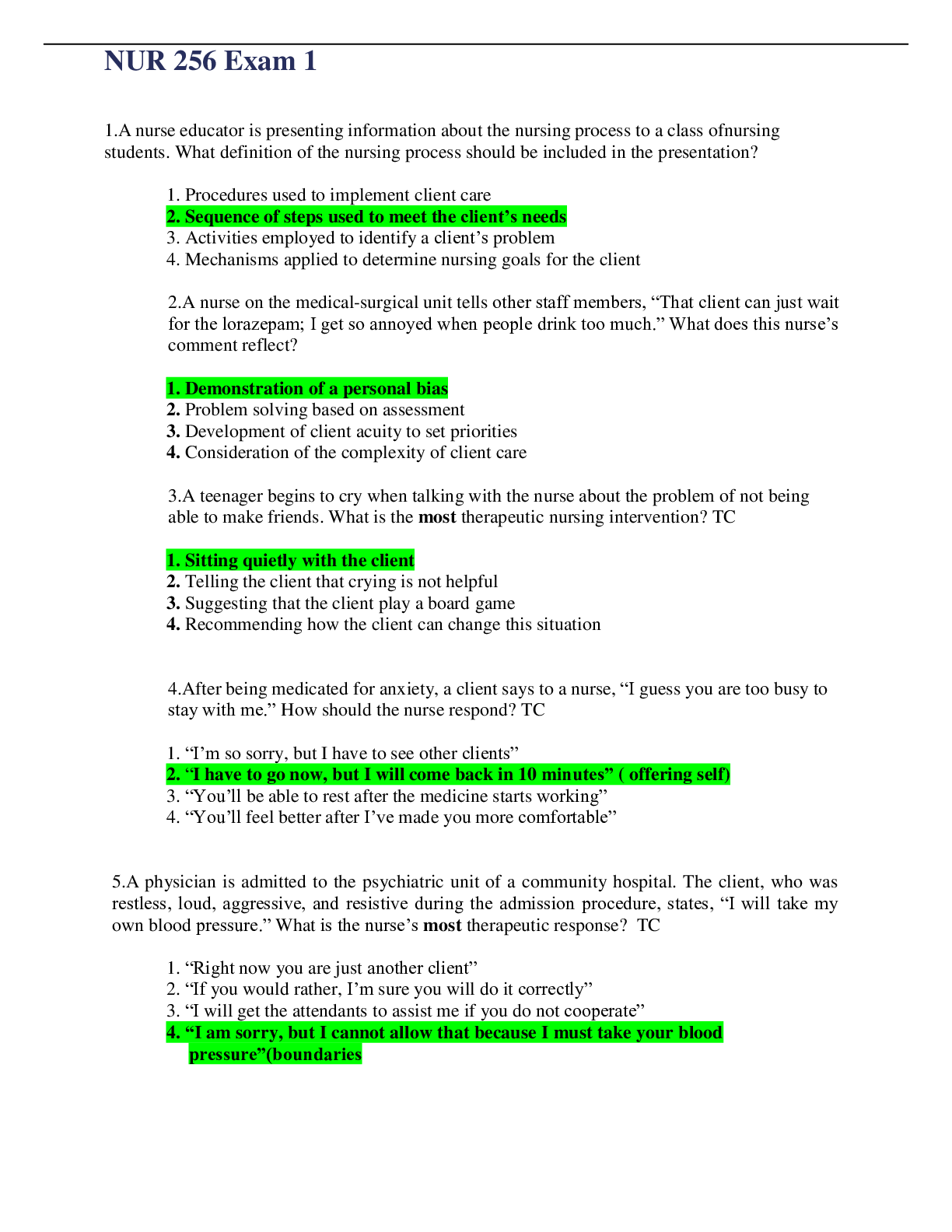
• Therapeutic Communication is always patient centered (not about you)
• Therapeutic Use of Self
• Social vs. Therapeutic relationships judgement, compliments, multiple questions advice, opinions, meeting mutual needs, lend money, superficial, boundaries
• Boundaries
• Nurse must set these and clients need to follow
• This is not like a social relationship
Self check
• Values, judgements, criticisms, countertransference
• Verbal
• Nonverbal (Style, Eye Contact,Touch,Cultural Influences)
• Therapeutic Use of self
• Empathy Vs. Sympathy
Social Vs Therapeutic
• Social
both parties get something out of it can give advice can ask many and rapid questions superficial dependency (give money or help) shifting roles/boundaries no evaluations
• Therapeutic
it’s all about the patient clear boundaries privacy no advice not multiple or rapid questions goal directed at assisting the patient
CHAPTER 9 Therapeutic Tech
9.2 Page 143 Therapeutic Techniques
• Silence, Active Listening, Clarifying, Restating, Reflecting, Exploring, Focusing
• Open ended vs close ended questions
• Offering self, Summarizing, Giving Information, Presenting Reality, Using Humor, Suggesting Options
Non Therapeutic Techniques
• Giving advice, Minimizing feelings, Falsely reassuring, Asking “why” questions, Disapproving , Approving, or Judging, Asking too many questions, Changing the subject
34.3 BOX for Roles PG 614 Table 34.1 – Behavior
[Show More]