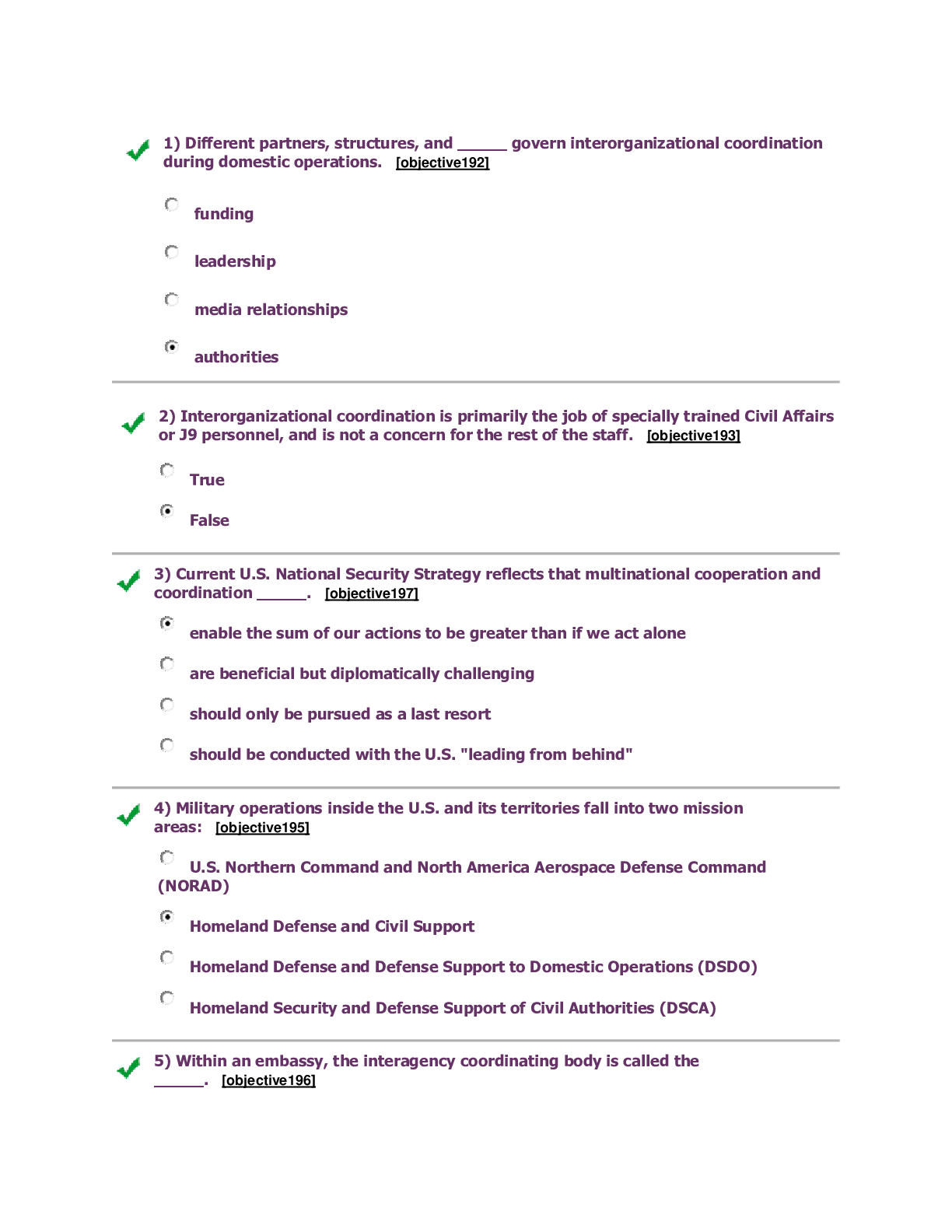
NURSING > STUDY GUIDE > SEJPME Module 11 - Interorganizational Coordination and Multinational Considerations Post Test (All)
SEJPME Module 11 - Interorganizational Coordination and Multinational Considerations Post Test
Document Content and Description Below
Last updated: 3 years ago
Preview 1 out of 2 pages
Instant download
Buy this Document to get the Full Access Instantly
Provided by Students Who Aced it
We Verify Document Content to Gurantee Accuracy
Reviews( 0 )
Document information
Connected school, study & course
About the document
Uploaded On
Oct 11, 2020
Number of pages
2
Written in
All

Additional information
This document has been written for:
Uploaded
Oct 11, 2020
Downloads
0
Views
493
Topic Tags
Related Subjects & Courses
Explore similar study resources and related concepts.
Recommended For You
Get more on STUDY GUIDE »
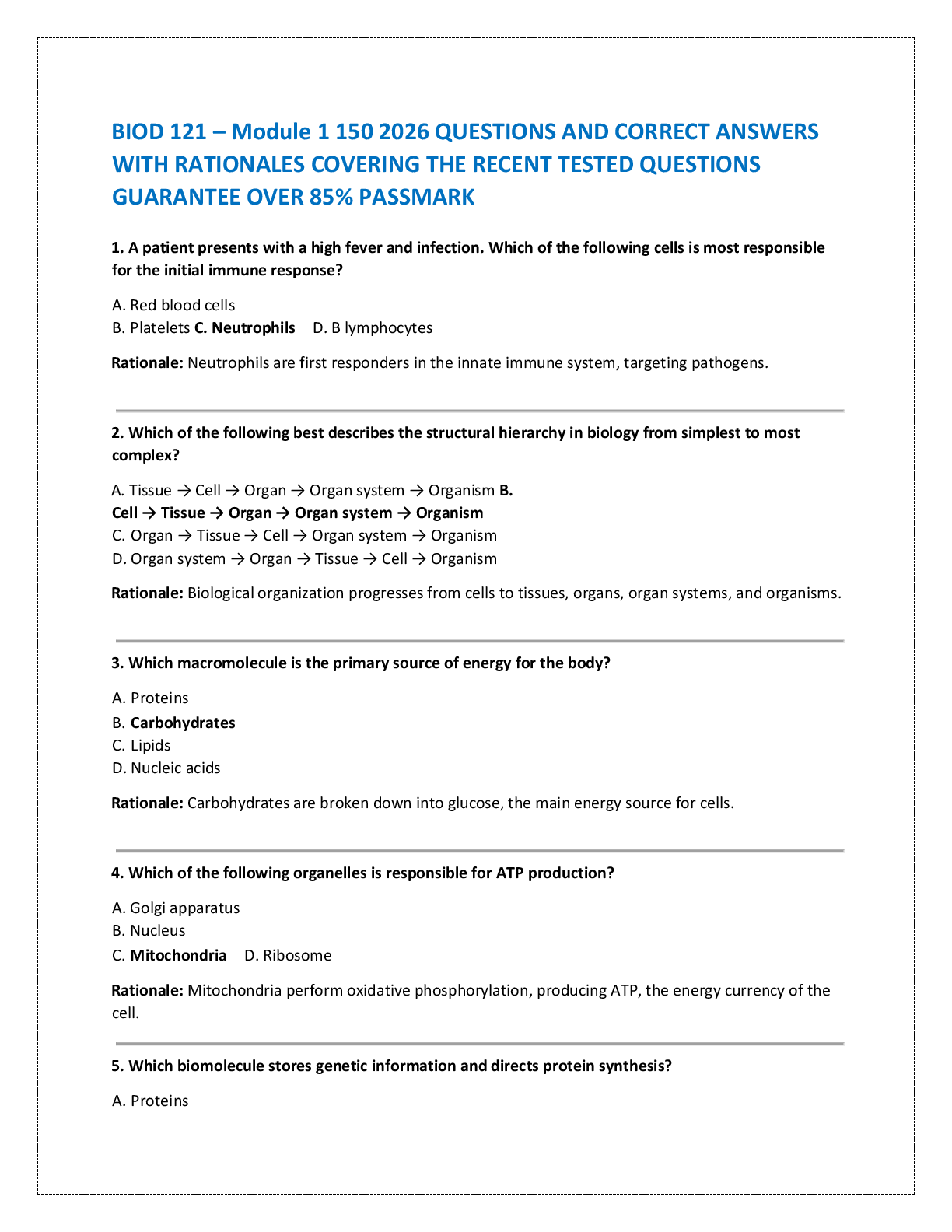
Rasmussen College - MCB 2289 Microbiology Final Exam|Module 11...
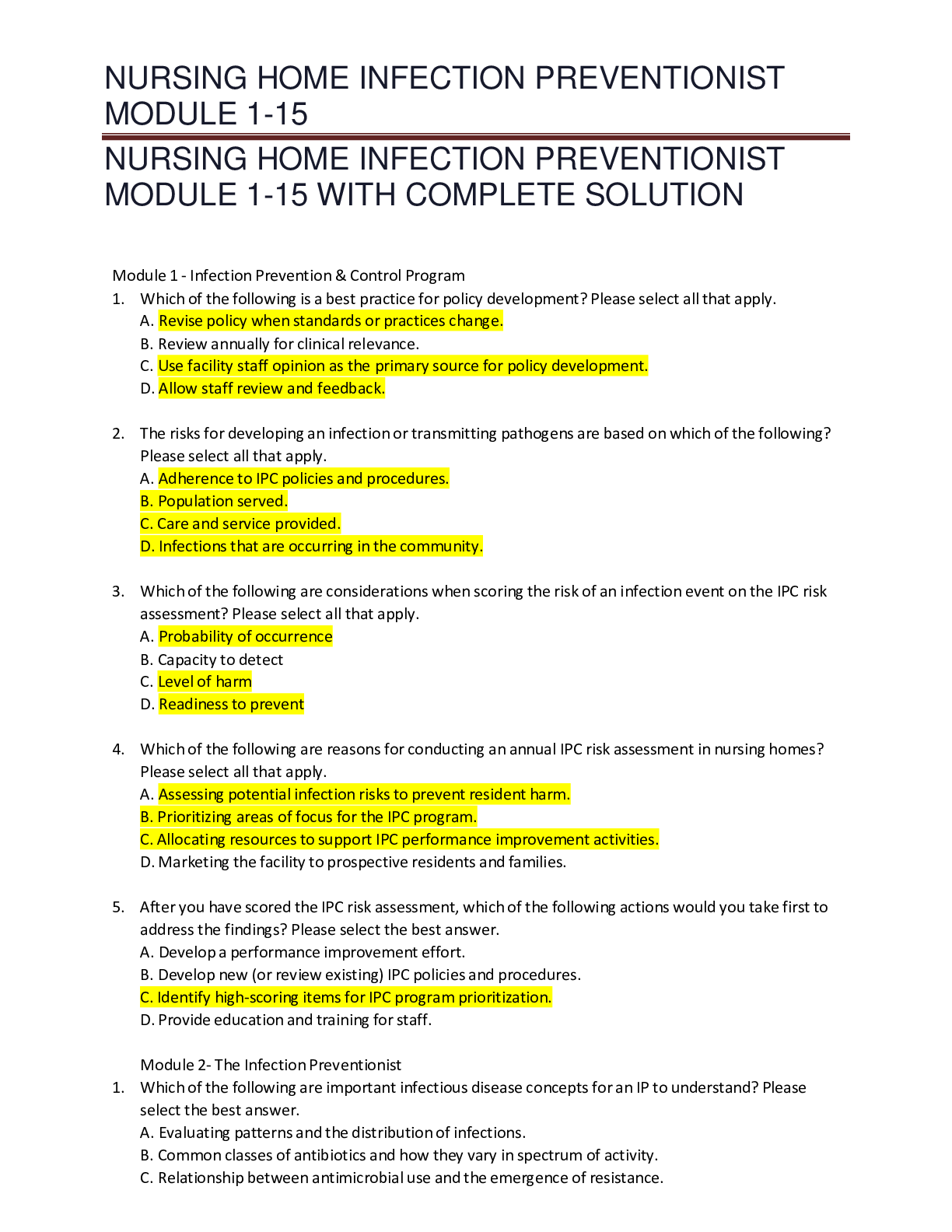
NURSING HOME INFECTION PREVENTIONIST MODULE 1-15 WITH COMPLETE...

A&P 1 Module 1- 10 Quizzes + Module 11 Final Questions & Answe...
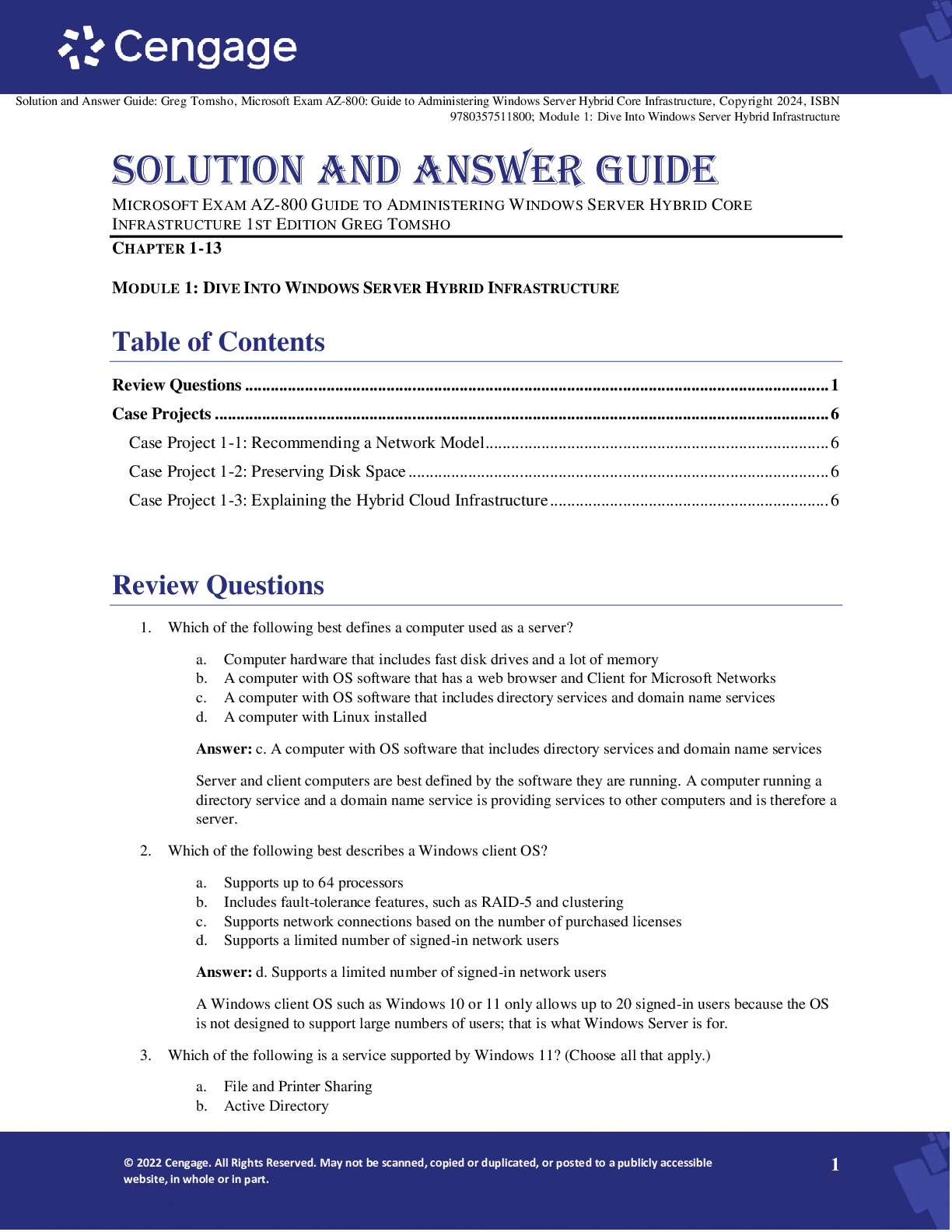
Solution Manual For Microsoft Exam AZ-800 Guide to Administeri...
Solution Manual For CompTIA PenTest+ Guide to Penetration Test...
FSA3e Test Bank Mod11_091212. Module 11 Forecasting Financial...
FAMBA4e TestBank Mod11_09 10 09. Module 11. Adjusting and Fore...
NCCER Electrical Level 1: Module 11 - Residential Wiring

ARCH7031 Architectural Practice: Business Management MODULE 11...
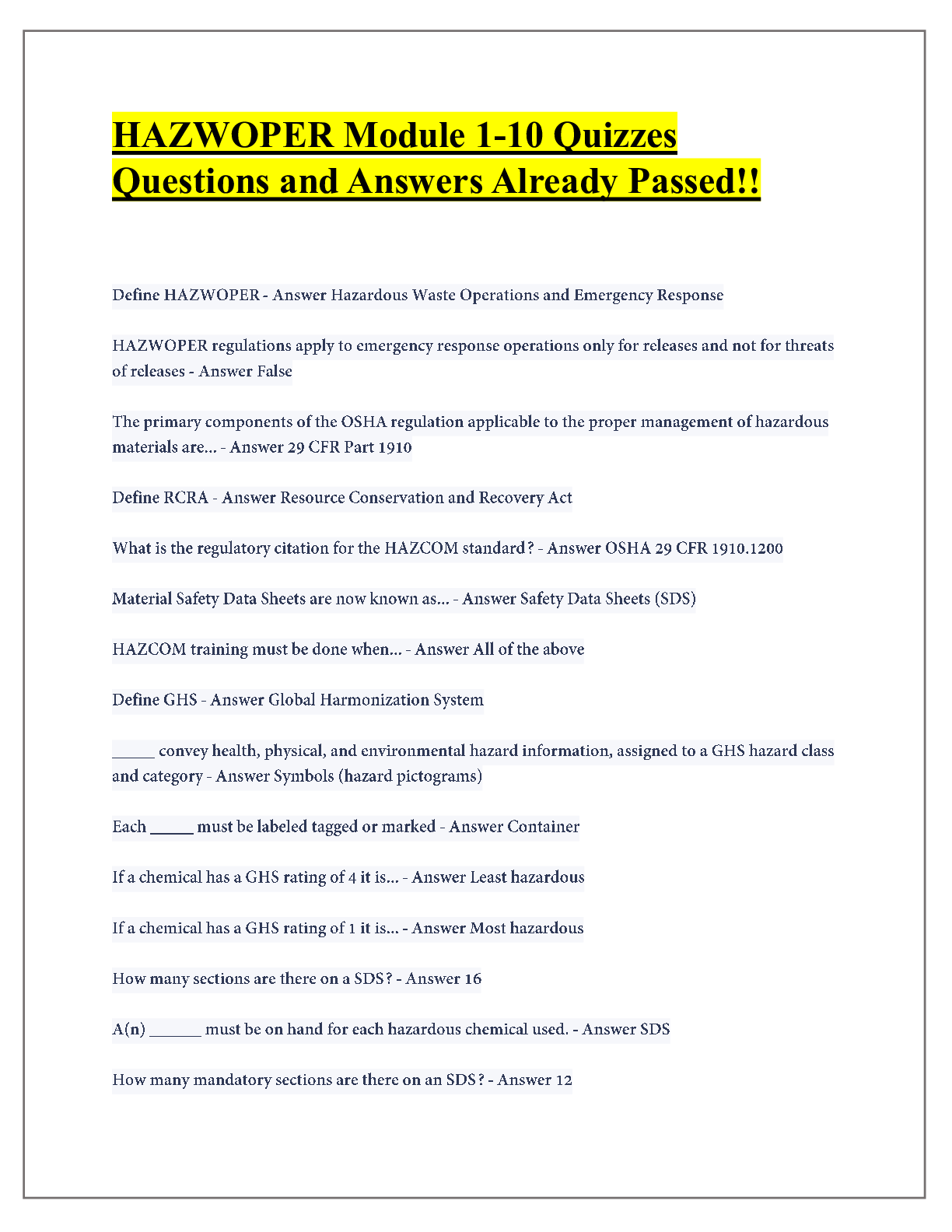
HAZWOPER Module 1-10 Quizzes Questions and Answers 2024 Alread...
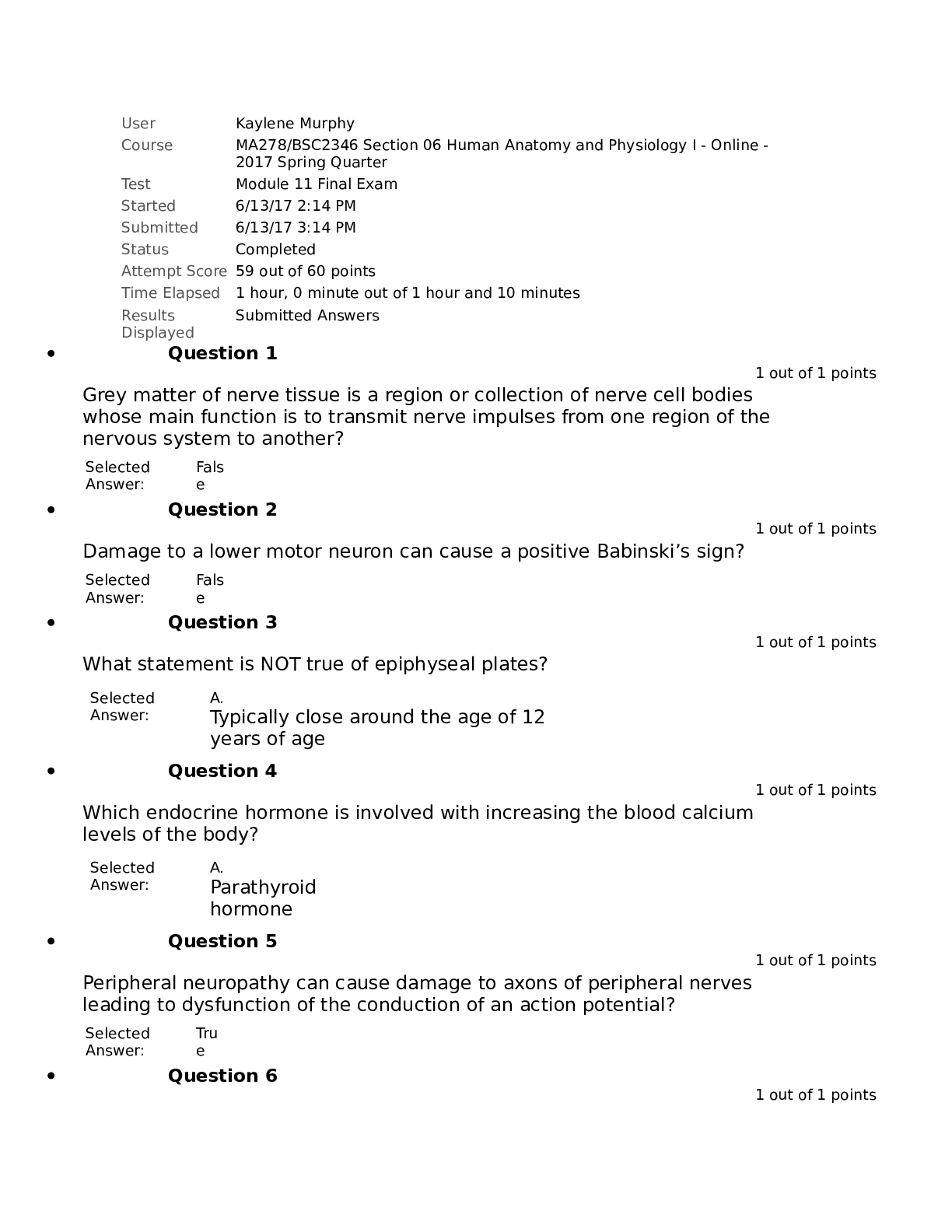
BSC 2346 Section 06 Human Anatomy and Physiology I Module 11 F...
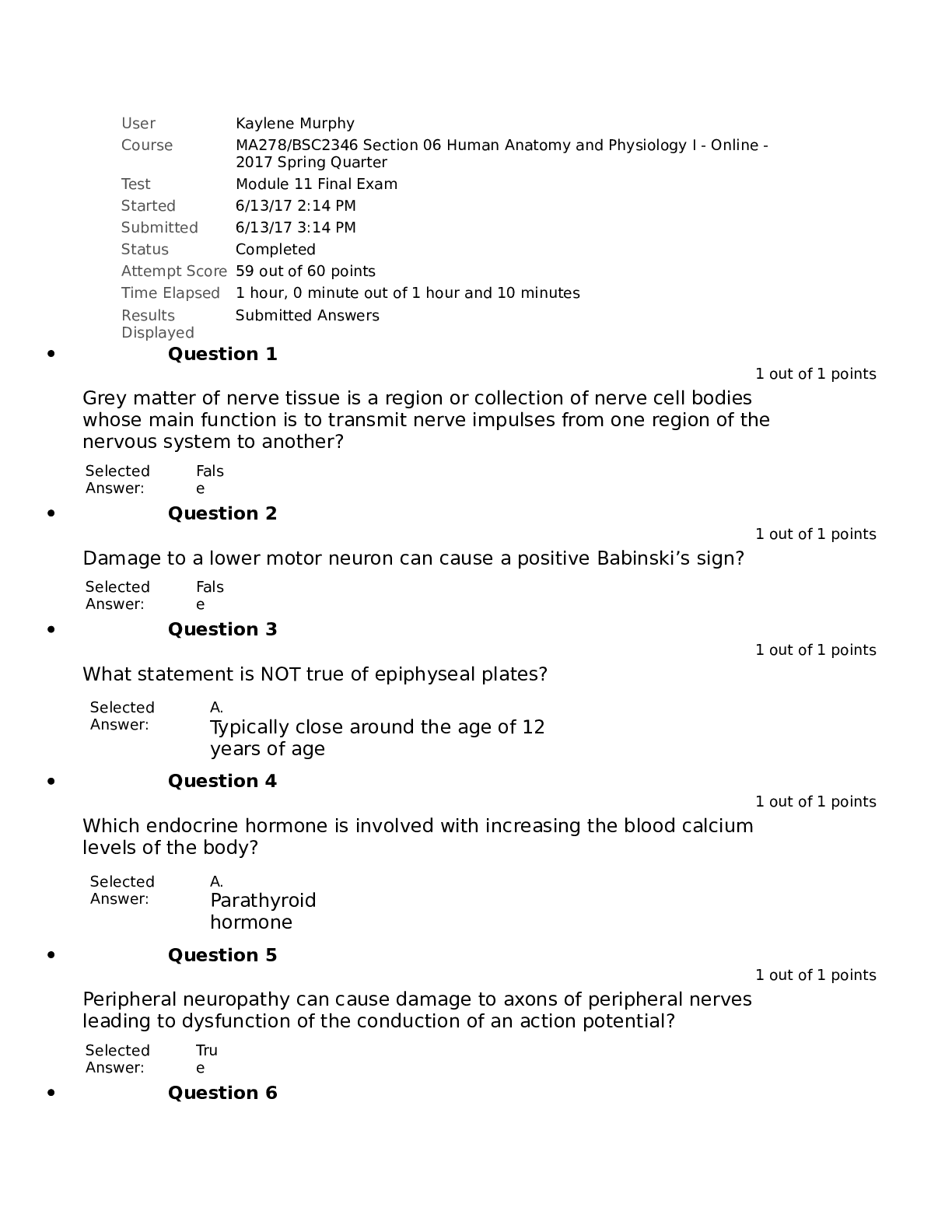
BSC 2346 Module 11 Anatomy & Physiology I Final Exam | Questio...
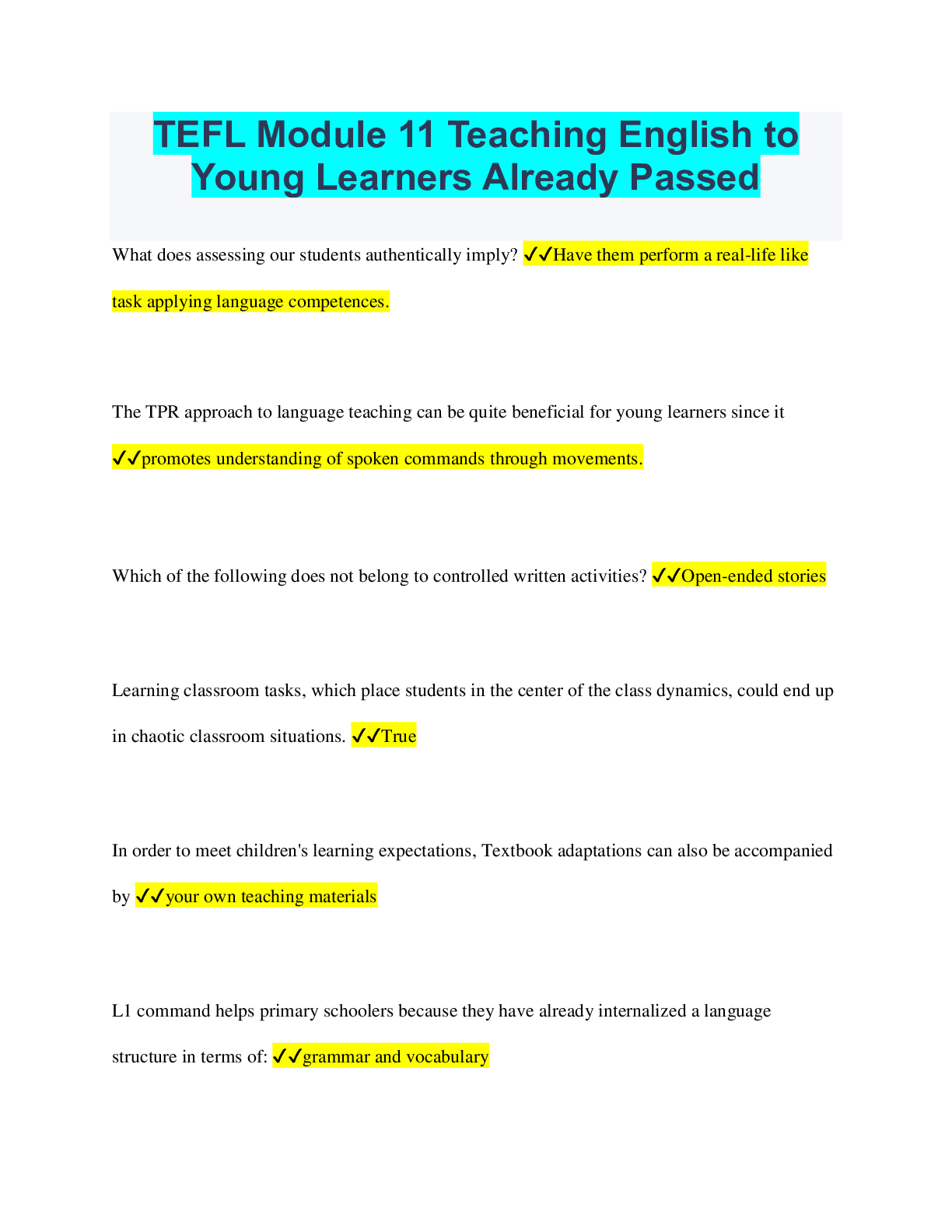
TEFL Module 11 Teaching English to Young Learners Already Pass...


 Rasmussen College.png)