Medical Studies > QUESTIONS & ANSWERS > Med Surg II_ Midterm (Test)_Latest,100% CORRECT (All)
Med Surg II_ Midterm (Test)_Latest,100% CORRECT
Document Content and Description Below
Last updated: 7 months ago
Preview 1 out of 8 pages
Instant download

Buy this Document to get the Full Access Instantly
Provided by Students Who Aced it
We Verify Document Content to Gurantee Accuracy
Reviews( 0 )
Document information
Connected school, study & course
About the document
Uploaded On
Feb 11, 2022
Number of pages
8
Written in
All

Additional information
This document has been written for:
Uploaded
Feb 11, 2022
Downloads
0
Views
249
Topic Tags
Recommended For You
Get more on QUESTIONS & ANSWERS »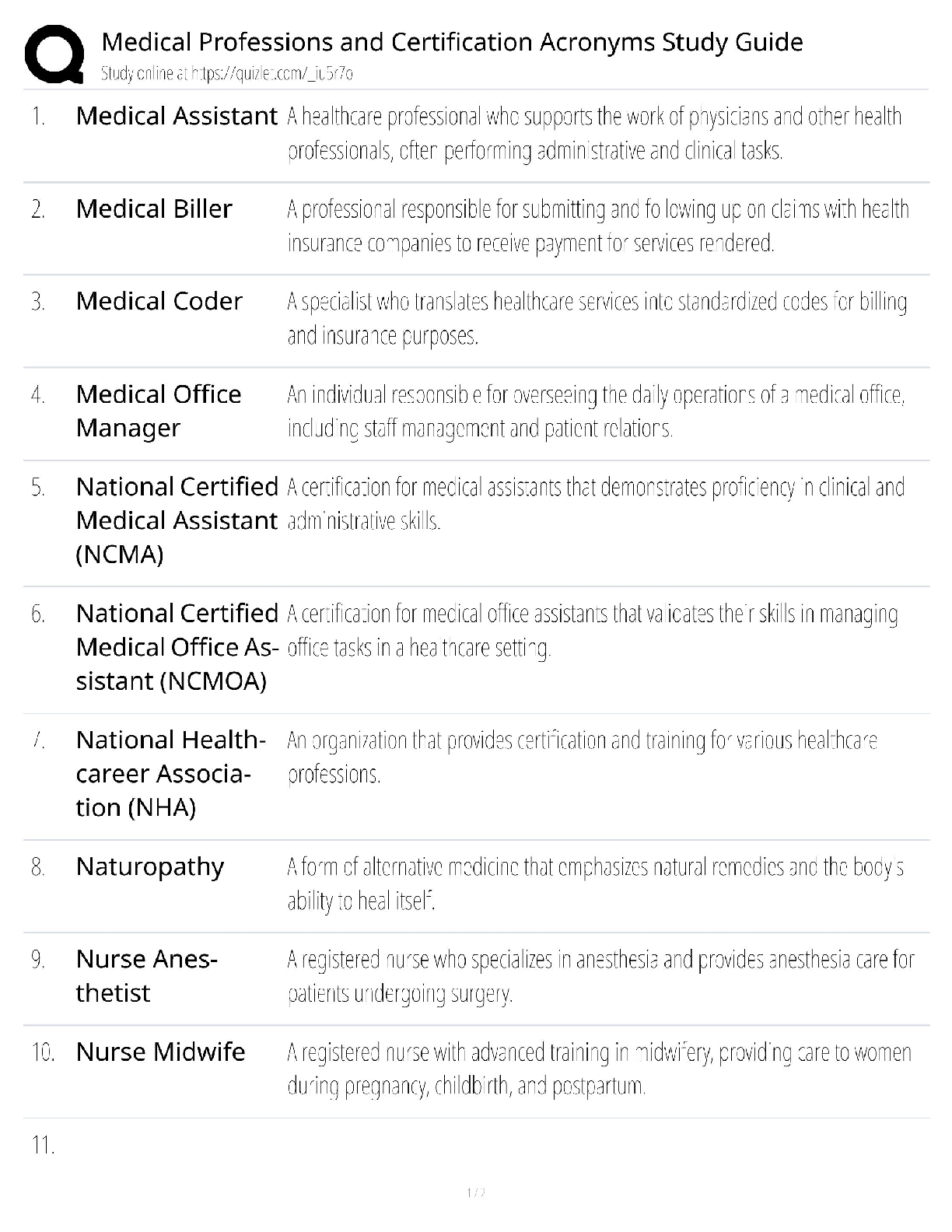
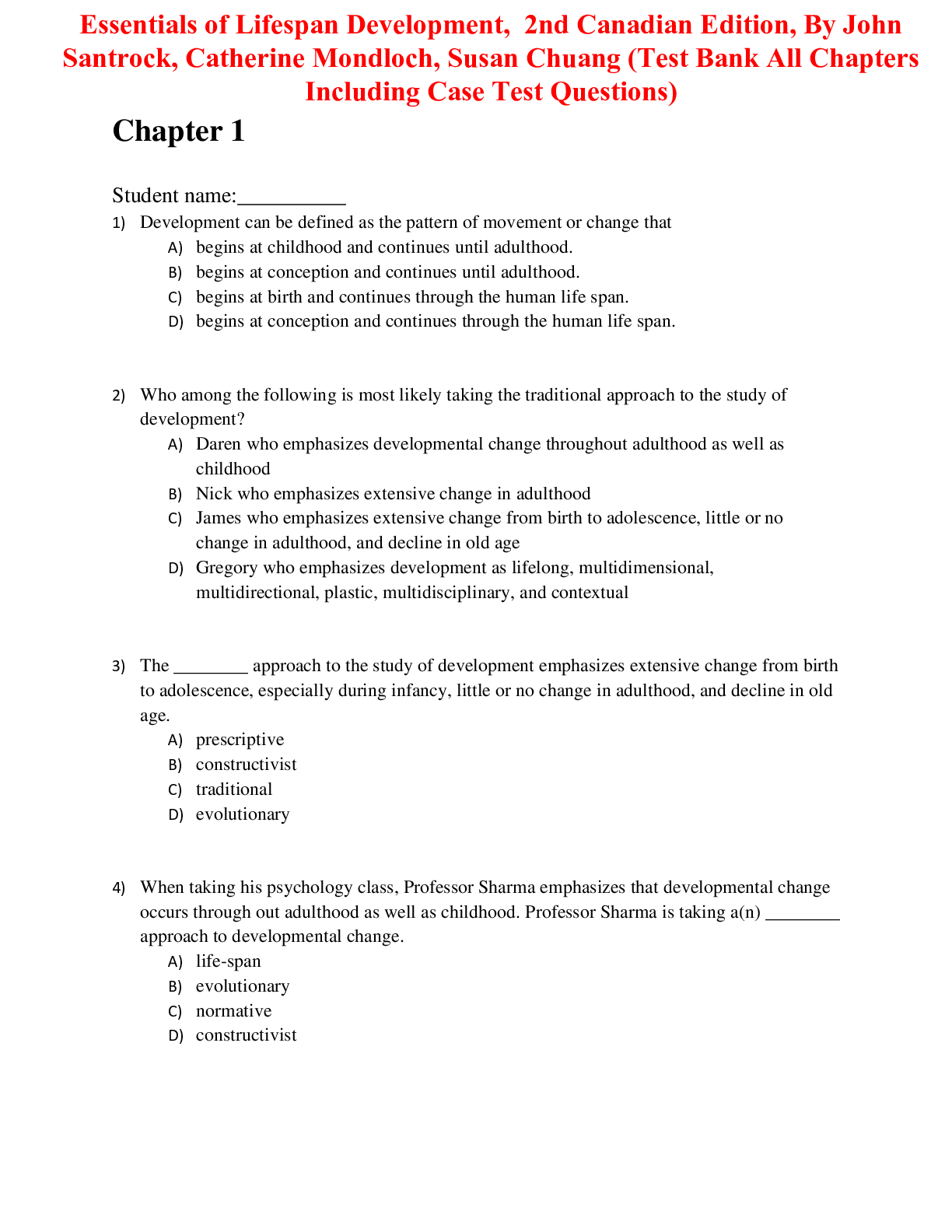
Essentials of Lifespan Development, 2nd Canadian Edition, 2e...
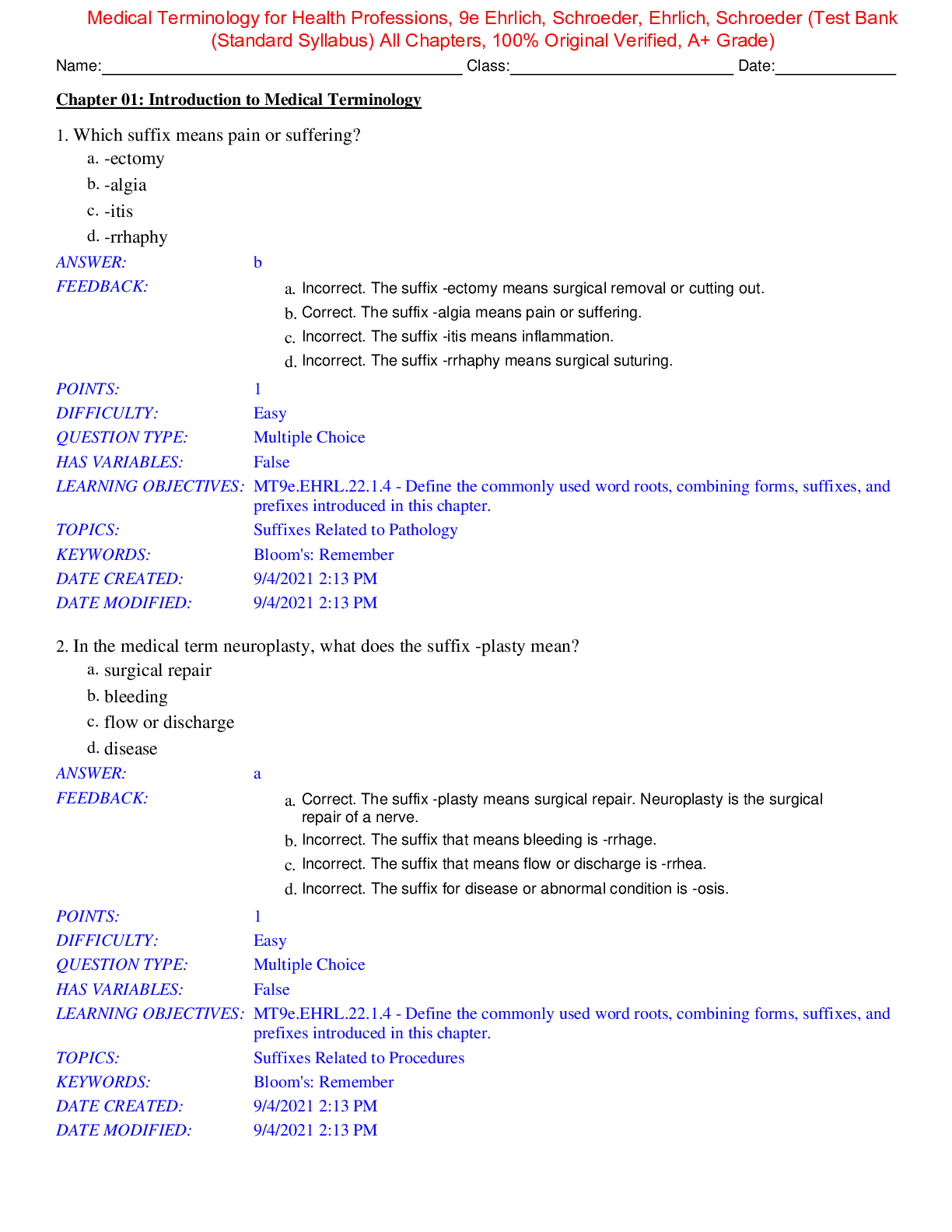
Medical Terminology for Health Professions 9th Edition by Ehrl...
.png)
Test Bank for Focus on Adult Health Medical Surgical Nursing 2...
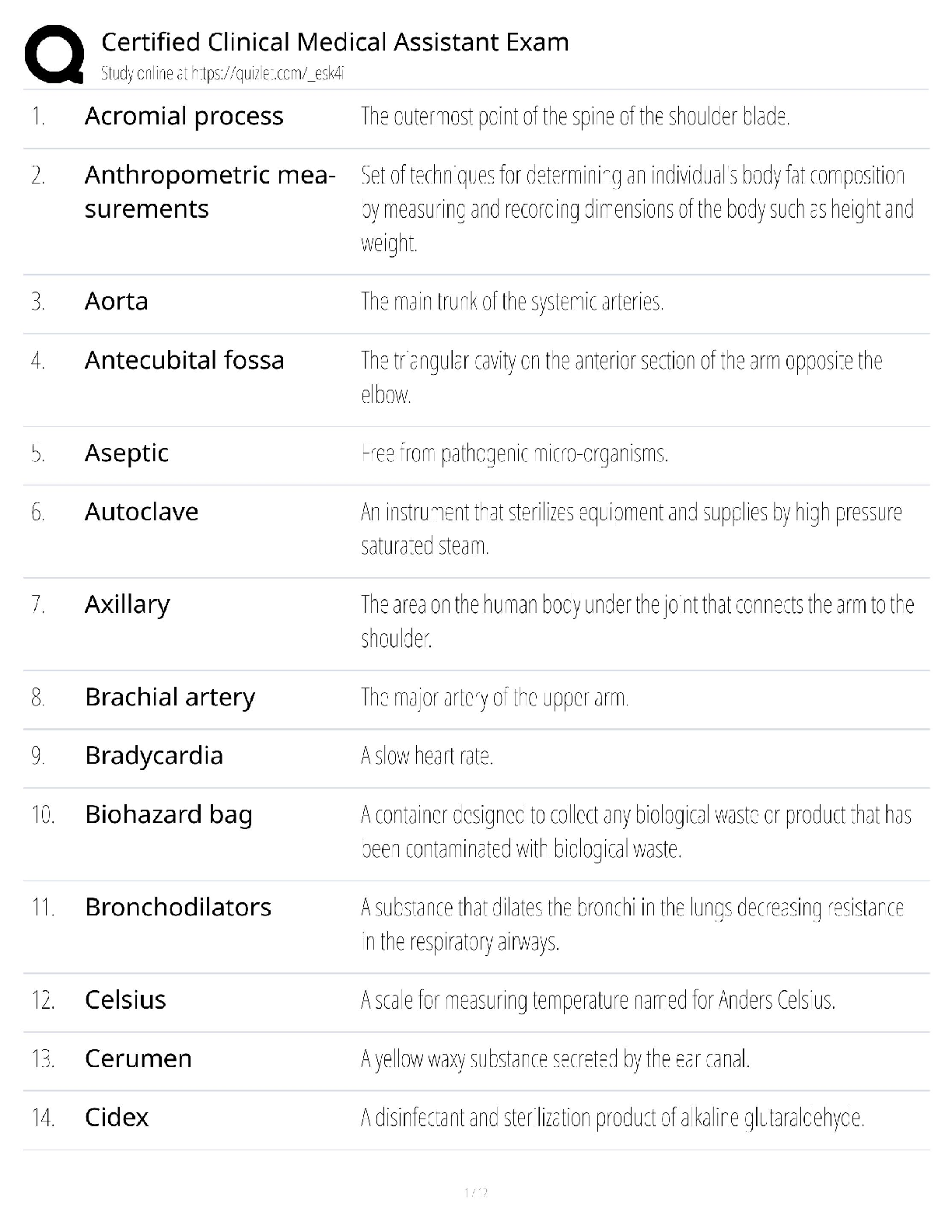

Emergency Care 14th Edition By Daniel J. Limmer, Michael F. O'...
Patient Care Skills 7e Scott Duesterhaus Minor Mary Alice Dues...
Clinical Immunology and Serology A Laboratory Perspective, 4e...

TEST BANK for Structure & Function of the Body, 16th Editiion...
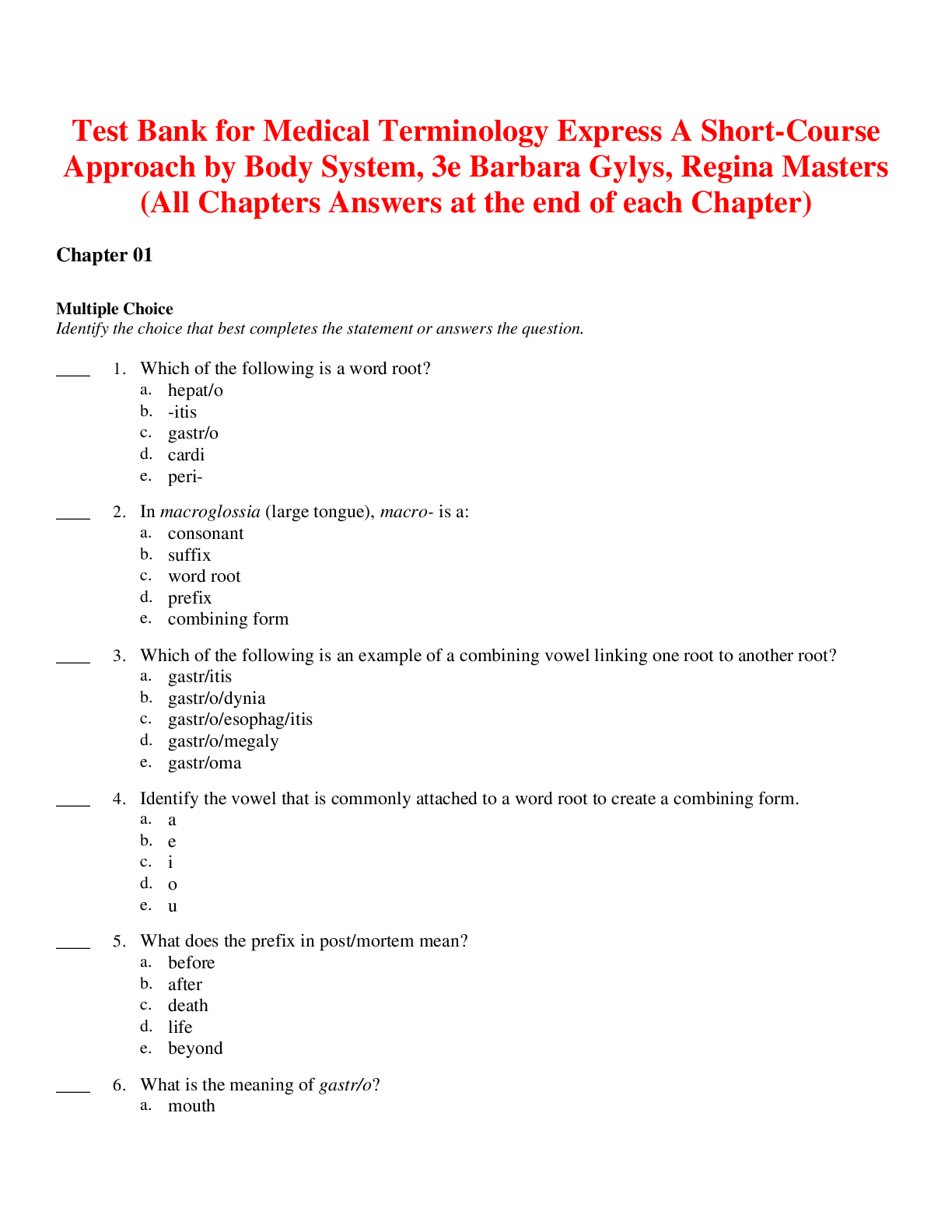
Medical Terminology Express A Short-Course Approach by Body Sy...
TEST BANK for Medical Terminology Systems: A Body Systems Appr...
TEST BANK for Medical Terminology Simplified A Programmed Lear...
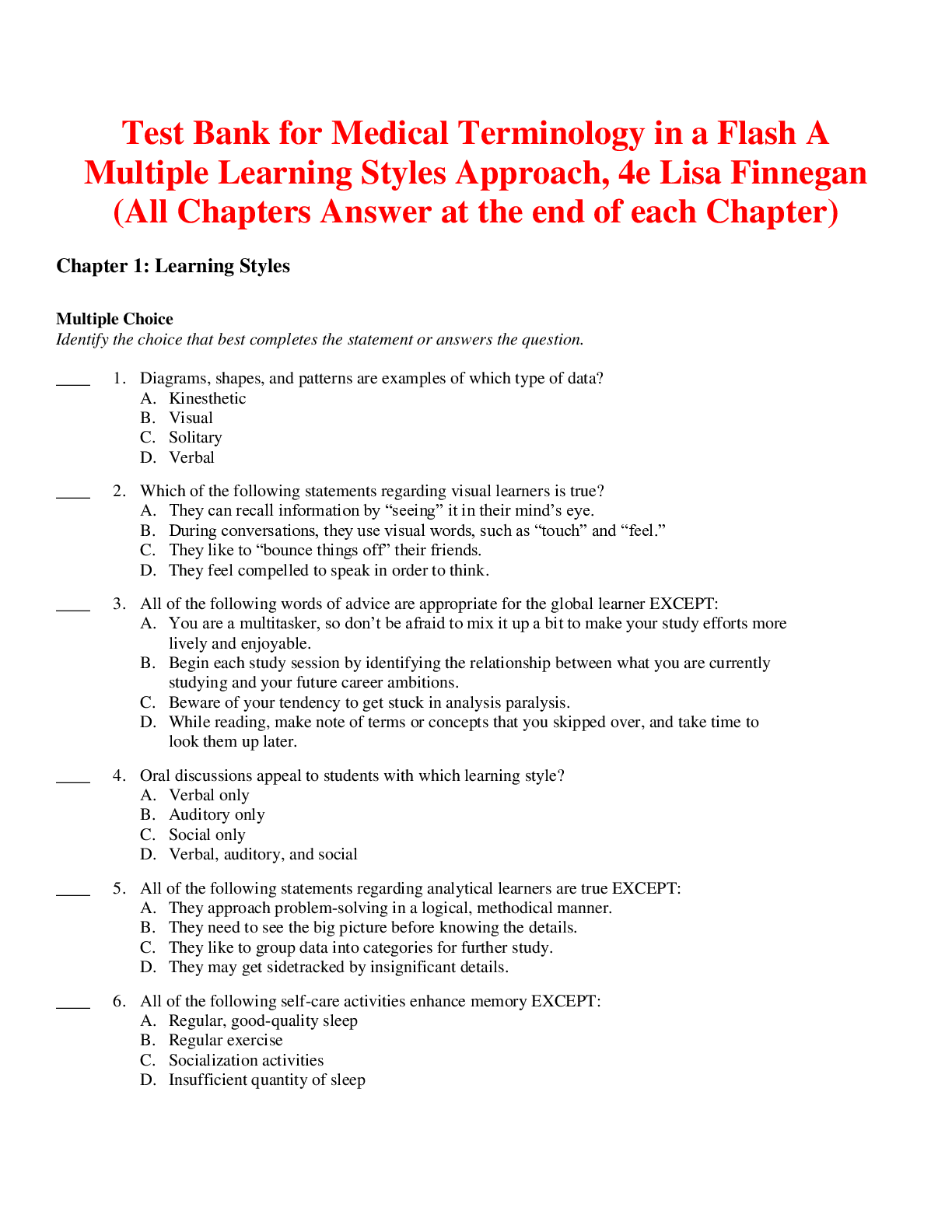
Medical Terminology in a Flash A Multiple Learning Styles Appr...

Calculating Drug Dosages A Patient-Safe Approach to Nursing an...

Foundations in Kinesiology and Biomechanics, 1e Vickie Samuels...
.png)
Medical Parasitology A Self-Instructional Text, 7e Ruth Levent...
Leading & Managing Occupational Therapy Services An Evidence-B...
.png)













