Statistics > QUESTIONS & ANSWERS > Grand Canyon University - HLT 362V HLTV Exercise 18 & 33 Rated A+ (All)
Grand Canyon University - HLT 362V HLTV Exercise 18 & 33 Rated A+
Document Content and Description Below
Last updated: 4 years ago
Preview 1 out of 5 pages
Instant download

Buy this Document to get the Full Access Instantly
Provided by Students Who Aced it
We Verify Document Content to Gurantee Accuracy
Also available in bundle (1)
Click Below to Access Bundle(s)

Grand Canyon University - HLT 362V HLTV quiz week 1 & 3 Exercise 18 & 33
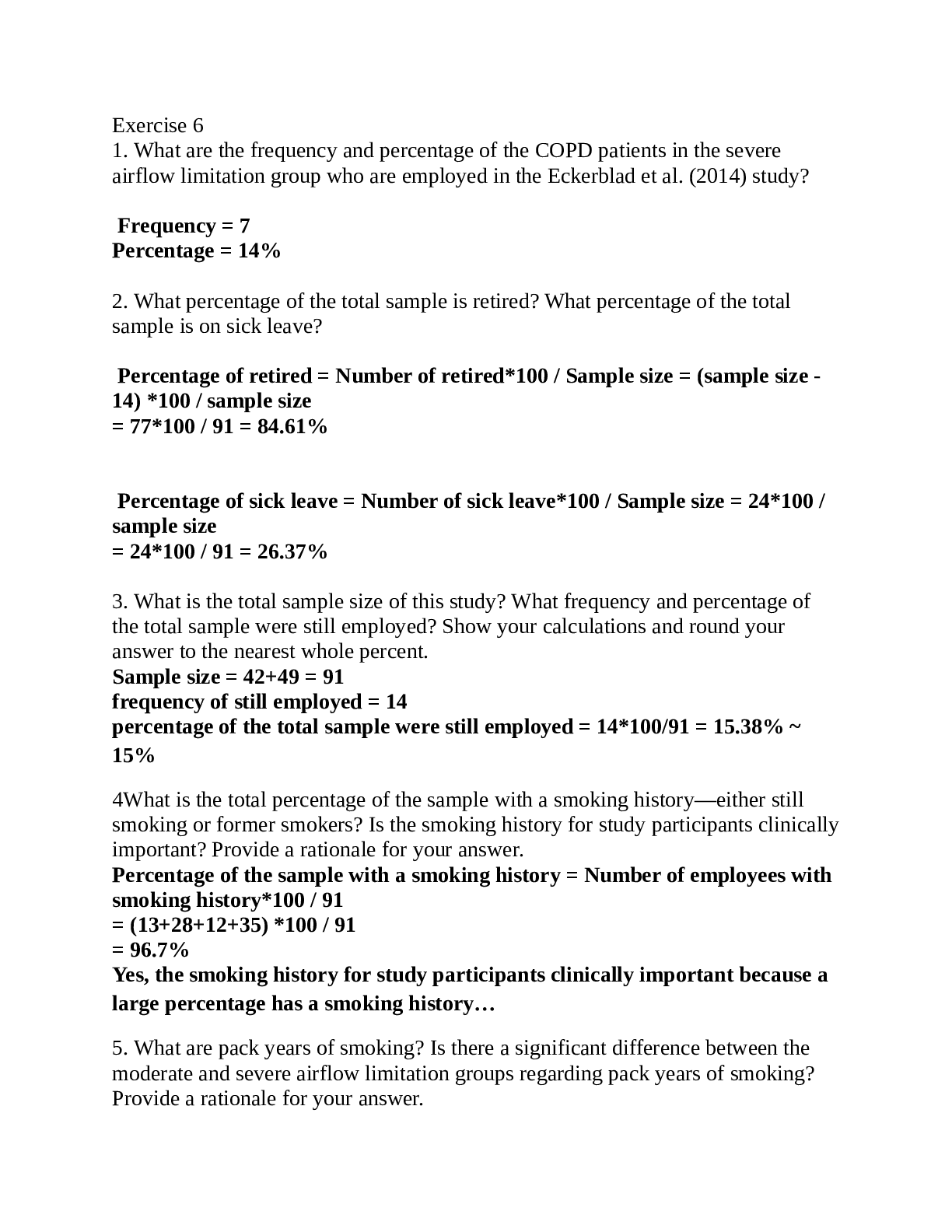
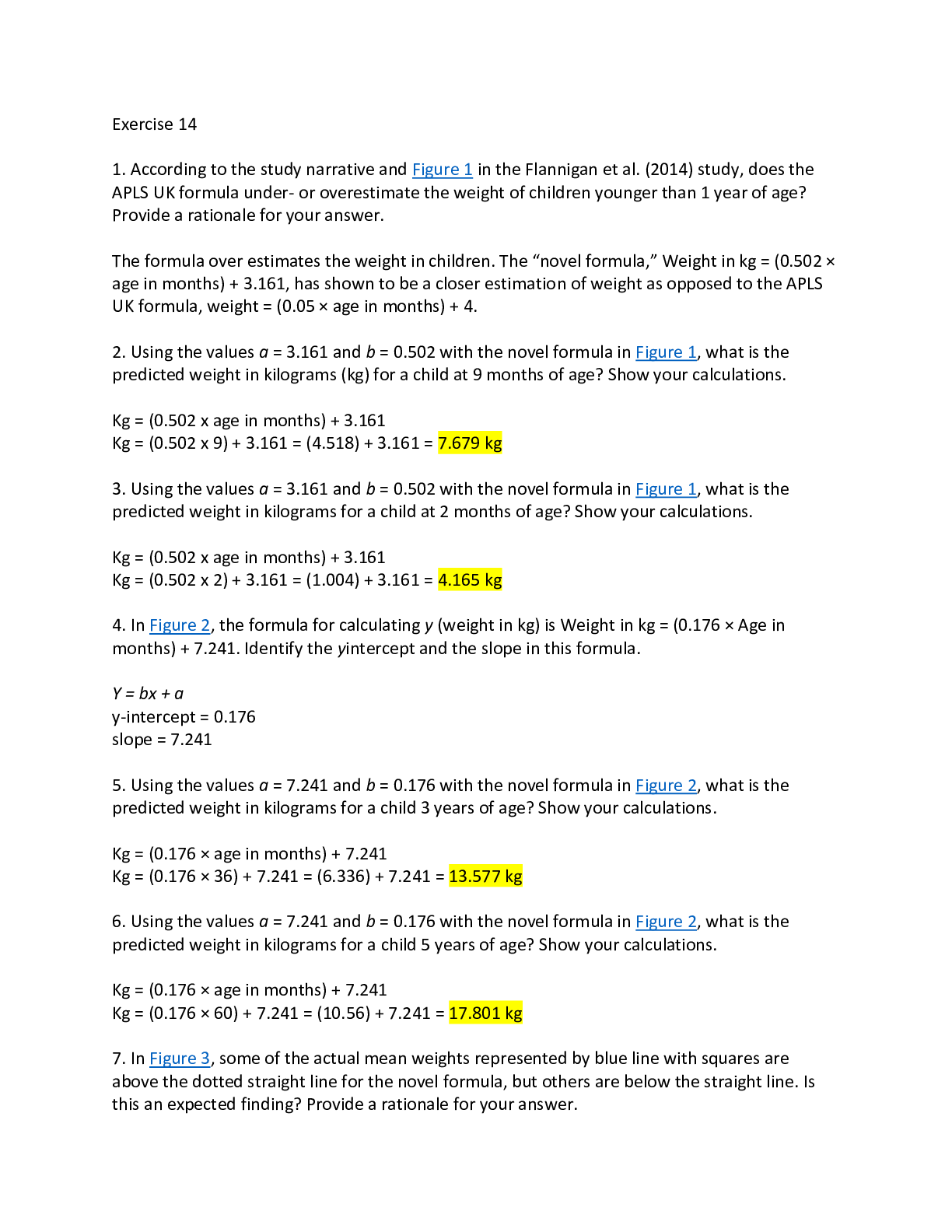
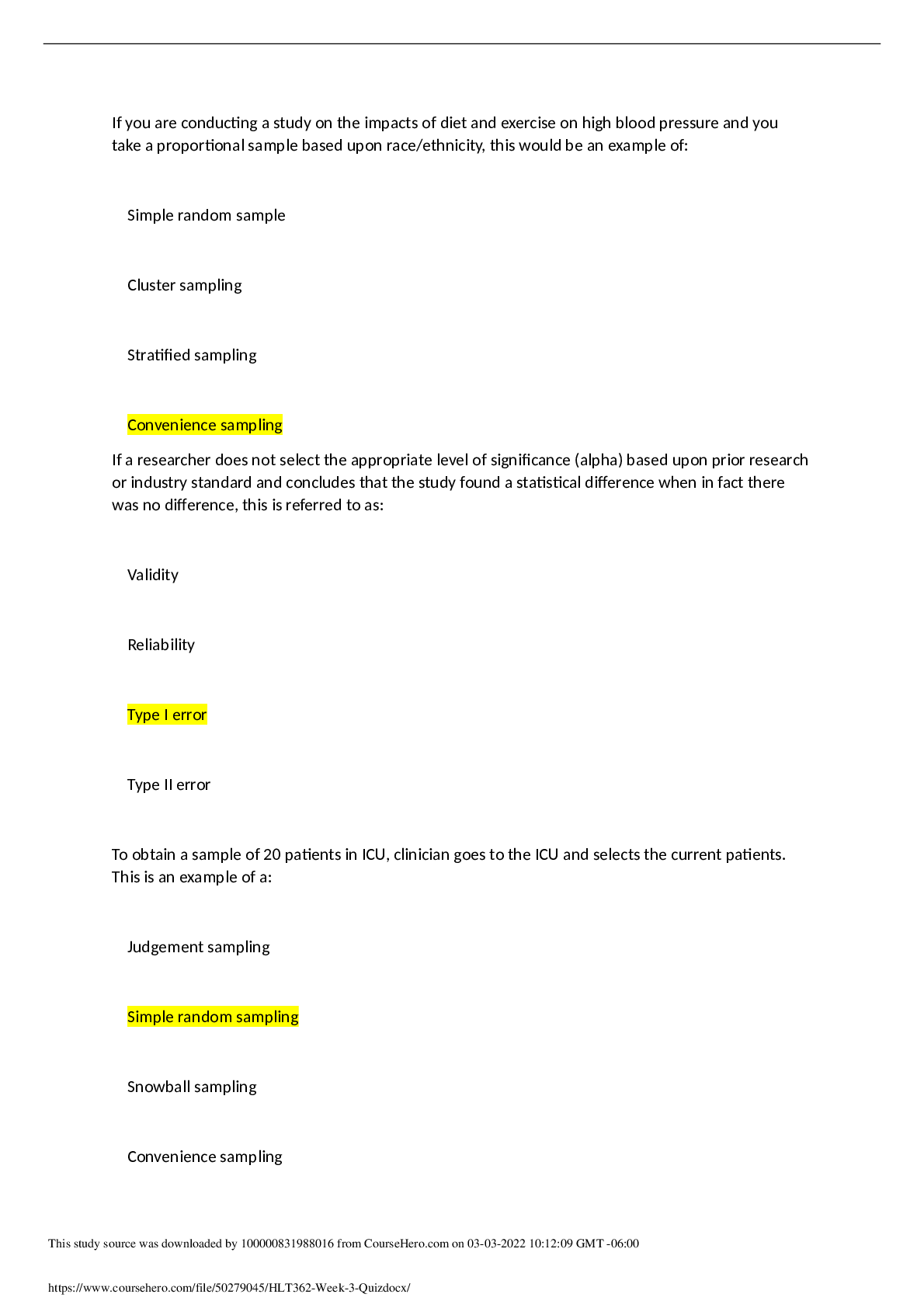
1. If you are conducting a study on the impacts of diet and exercise on high blood pressure and you take a proportional sample based upon race/ethnicity, this would be an example of: ok Simple rand...
By Nutmegs 4 years ago
$20
4
Reviews( 0 )
Document information
Connected school, study & course
About the document
Uploaded On
Feb 28, 2022
Number of pages
5
Written in
All

Additional information
This document has been written for:
Uploaded
Feb 28, 2022
Downloads
0
Views
170
Topic Tags
Recommended For You
Get more on QUESTIONS & ANSWERS »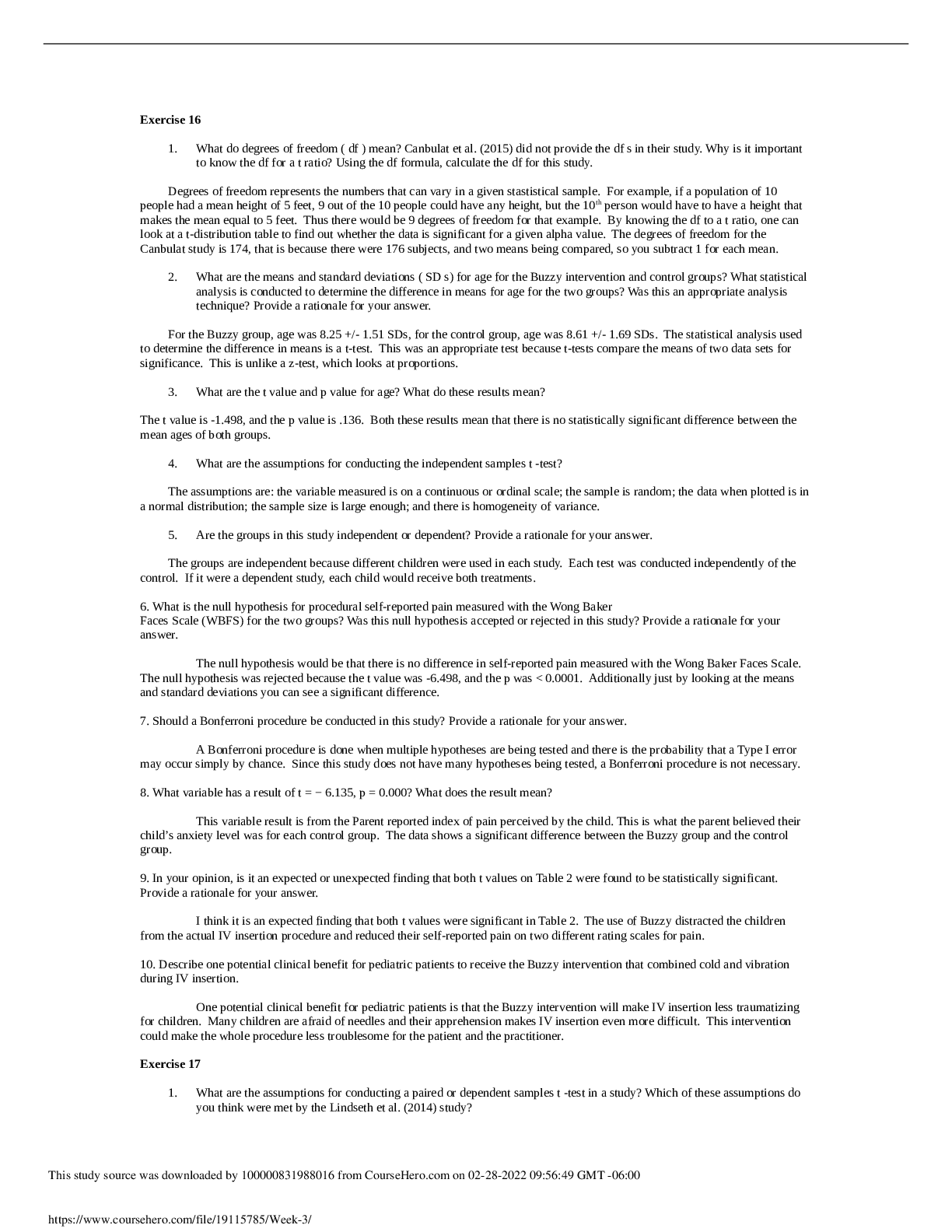
Grand Canyon University - HLT 362V HLTV Exercise 16 & 17 All G...
HLT 362VWk 5 Exercise 14 and 19 Quiz | Grand Canyon Universit...

HLT 362 V GCU QUIZ 1 Questions And Answers {Latest Version }

HLT-362V-Applied Statistics for Health Care Professionals Quiz...
HLT 362 V GCU QUIZ 1 Questions And Answers {Latest Version }


Application_of_Statistics_in_Health_Care.docx(1) HLT 362V Ap...

Sampling Design and Analysis, 3e by Sharon Lohr (Solutions Man...
.png)
TEST BANK for Business Statistics, 4e Norean Sharpe, Richard V...