Chapter 8. Respiratory System
Multiple Choice
Identify the choice that best completes the statement or answers the question.
____ 1. A 66-year-old patient presents to the clinic complaining of dyspnea and
wheezing. T
...
Chapter 8. Respiratory System
Multiple Choice
Identify the choice that best completes the statement or answers the question.
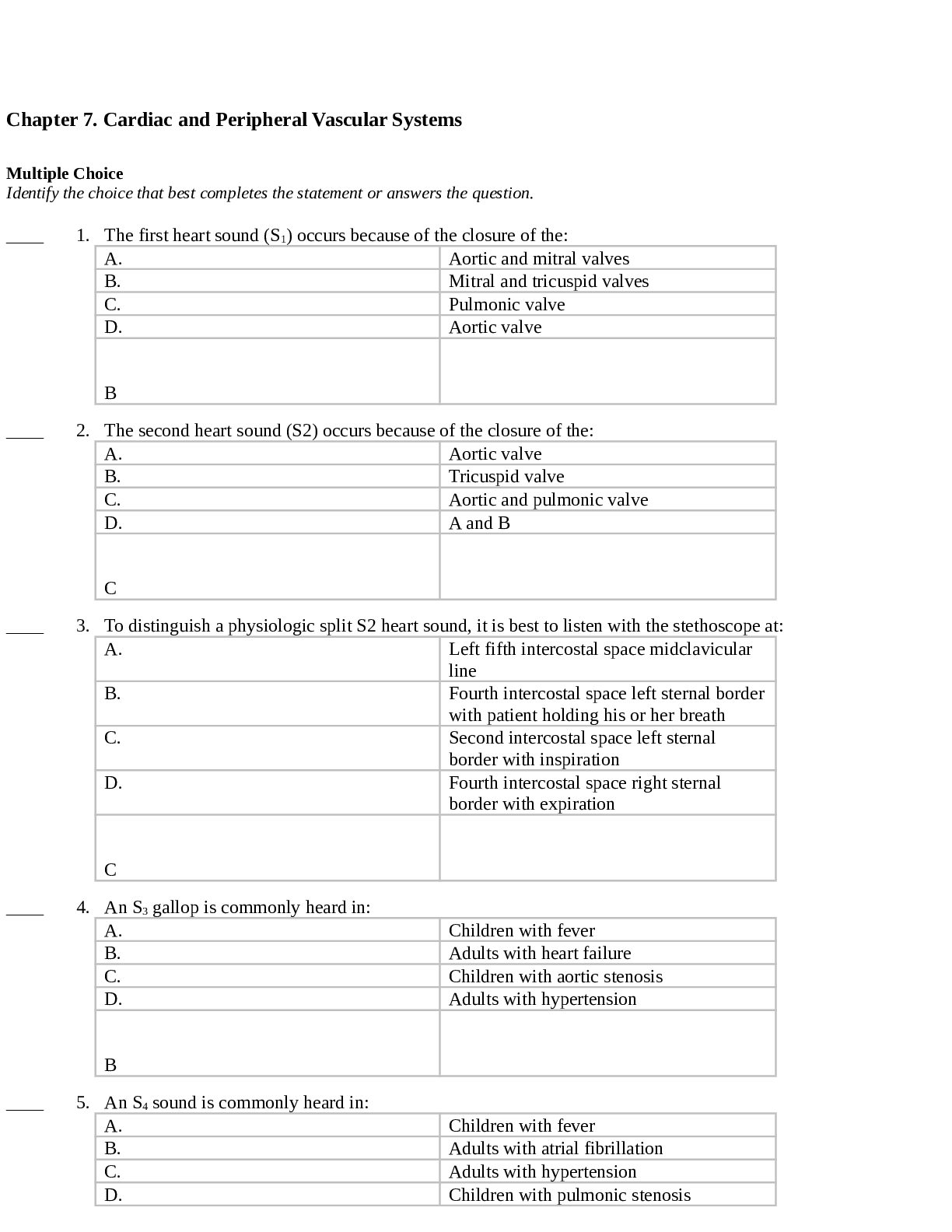
____ 1. A 66-year-old patient presents to the clinic complaining of dyspnea and
wheezing. The patient reports a smoking history of 2 packs of
cigarettes per day since age 16. This would be recorded in the chart
as:
A. 50 x 2-pack years
B. 100-pack years
C. 50-year, 2-pack history
D. 100 pack history
____ 2. Which of the following is characteristic of COPD?
A. Asymmetric chest expansion
B. Increased lateral diameter
C. Increased anterior-posterior
diameter
D. Pectus excavatum
____ 3. When palpating the posterior chest, the clinician notes increased
tactile fremitus over the left lower lobe. This can be indicative of:
A. Pneumonia
B. Emphysema
C. Pneumothorax
D. Asthma
____ 4. During physical examination of a patient, you note resonance on
percussion in the upper lung fields. This is consistent with:
A. COPD
B. Pneumothorax
C. A normal finding
D. Pleural effusion
____ 5. Which of the following imaging studies should be considered if a
pulmonary malignancy is suspected?
A. Computed tomography (CT) scan
B. Chest xray with PA, lateral, and
lordotic views
C. Ultrasound
D. Positron emission tomography
(PET) scan
____ 6. Alpha-1 antitrypsin deficiency should be considered in patients
diagnosed with:
A. Exercise-induced cough
B. Bronciectasis
C. COPD
D. Pericarditis
____ 7. Upon assessment of respiratory excursion, the clinician notes
asymmetric expansion of the chest. One side expands greater than the
other. This could be due to:
A. Pneumothorax
B. Pleural effusion
C. Pneumonia
D. Pulmonary embolism
____ 8. During auscultation of the chest, your exam reveals a loud grating
sound at the lower anterolateral lung fields, at full inspiration and early
expiration. This finding is consistent with:
A. Pneumonia
B. Pleuritis
C. Pneumothorax
D. A and B
____ 9. While assessing auscultated spoken sounds, the ausculated sound is
heard as “a-a-a” when he is asked to repeat “e-e-e.” This is indicative
of:
A. Asthma
B. Tumor
C. Pneumonia
D. Pleural effusion
____ 10. A cough is described as chronic if it has been present for:
A. 2 weeks or more
B. 8 weeks or more
C. 3 months or more
D. 6 months or more
____ 11. Which of the following medications are commonly associated with the
side effect of cough?
A. Beta blocker
B. Diuretic
C. ACE inhibitor
D. Calcium antagonist
____ 12. Which of the following details are NOT considered while staging
asthma?
A. Nighttime awakenings
B. Long-acting beta agonist usage
C. Frequency of symptoms
D. Spirometry findings
____ 13. When asthma is suspected, which of the following is NOT useful in
making a diagnosis?
A. Decreased FEV1/FVC ratio
B. Decreased FEV1
C. Some reversibility with
administration of bronchodilator
D. Peak flow meter reading
____ 14. The following criterion is considered a positive finding when
determining whether a patient with asthma can be safely monitored
and treated at home:
A. Age over 40
B. Fever greater than 101
C. Tachypnea greater than 30
breaths/minute
D. Productive cough
____ 15. The most common etiologic organism for community-acquired
pneumonia is:
A. Streptococcus pneumoniae
B. Beta hemolytic streptococcus
C. Mycoplasma
D. Methicillin resistant
staphylococcus
____ 16. A 75-year-old patient with community-acquired pneumonia presents
with temperature of 102.1, chills, productive cough, BP 90/5062, WBC
12,000, and blood urea nitrogen (BUN) 20 mg/dl. He has a history of
mild dementia and his mental status is unchanged from his last visit.
These findings indicate that the patient:
A. Can be treated as an outpatient
B. Requires hospitalization for
treatment
C. Requires a high dose of
parenteral antibiotic
D. Can be treated with oral
antibiotics
[Show More]
.png)





.png)
.png)






![Preview of [SOLVED] EDCO 740 / EDCO740 Quiz 1 (LATES 2021/2022 Graded A)](https://scholarfriends.com/storage/EDCO_740_Quiz_1.png)

