Psychology > QUESTIONS & ANSWERS > Miami University PSY 111 Questions and Answers Latest Graded A+ (All)
Miami University PSY 111 Questions and Answers Latest Graded A+
Document Content and Description Below
Last updated: 8 months ago
Preview 1 out of 78 pages
Instant download
.png)
Buy this Document to get the Full Access Instantly
Provided by Students Who Aced it
We Verify Document Content to Gurantee Accuracy
Reviews( 0 )
Document information
Connected school, study & course
About the document
Uploaded On
Mar 17, 2022
Number of pages
78
Written in
All

Additional information
This document has been written for:
Uploaded
Mar 17, 2022
Downloads
0
Views
111
Topic Tags
Recommended For You
Get more on QUESTIONS & ANSWERS ».png)
Miami University PSY 111 Questions and Answers Already Graded...
Social Psychology, Canadian Edition, 7th Canadian Edition, 7e...

Test Bank for Engineering Psychology and Human Performance, 5t...
Health Psychology: A Biopsychosocial Approach 6th Edition by R...

Test Bank for The Principles of Learning and Behavior, 7th Edi...
Introduction to Psychology Gateways to Mind and Behavior with...
Introduction to Psychology v. 2.1 Charles Stangor (Instructor...
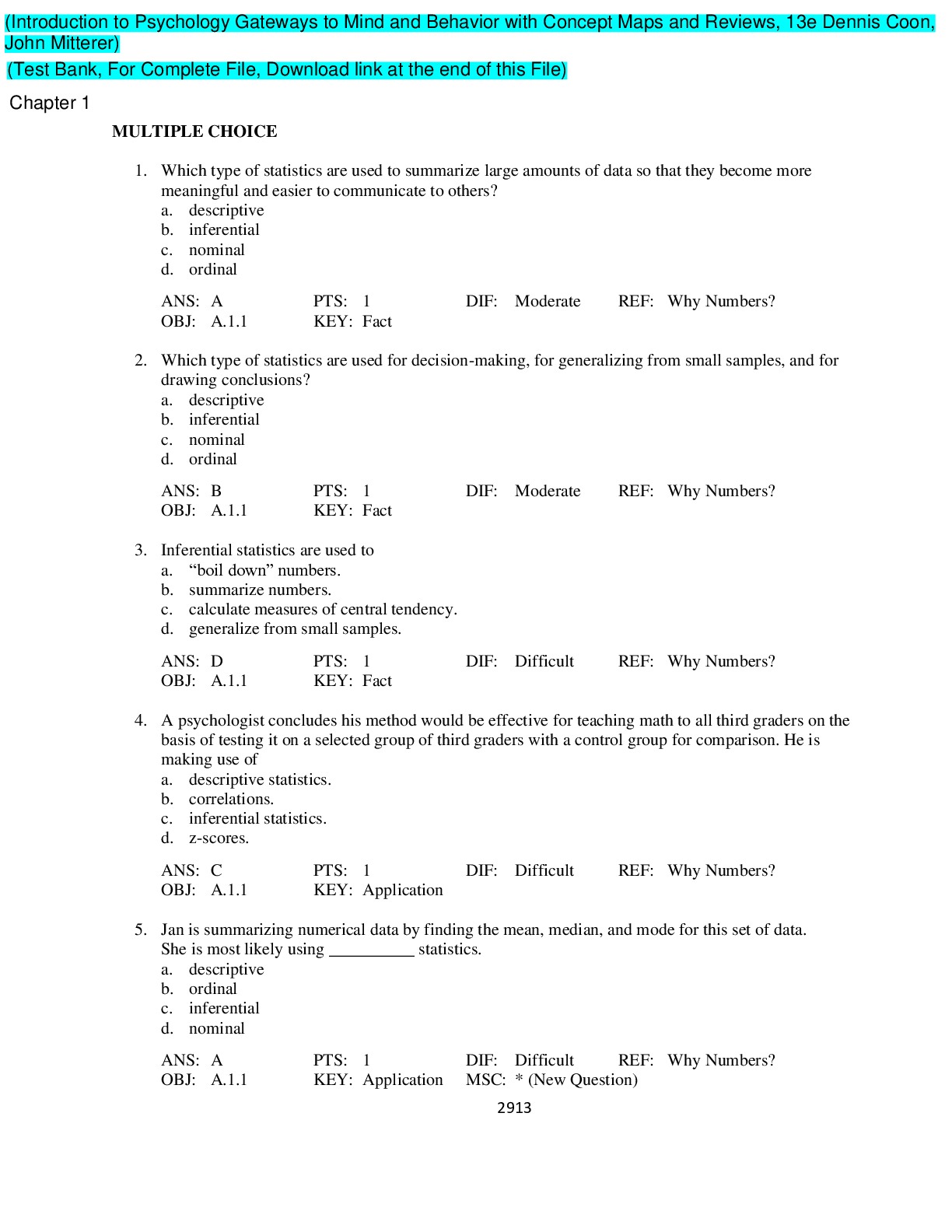
Introduction to Psychology Gateways to Mind and Behavior with...
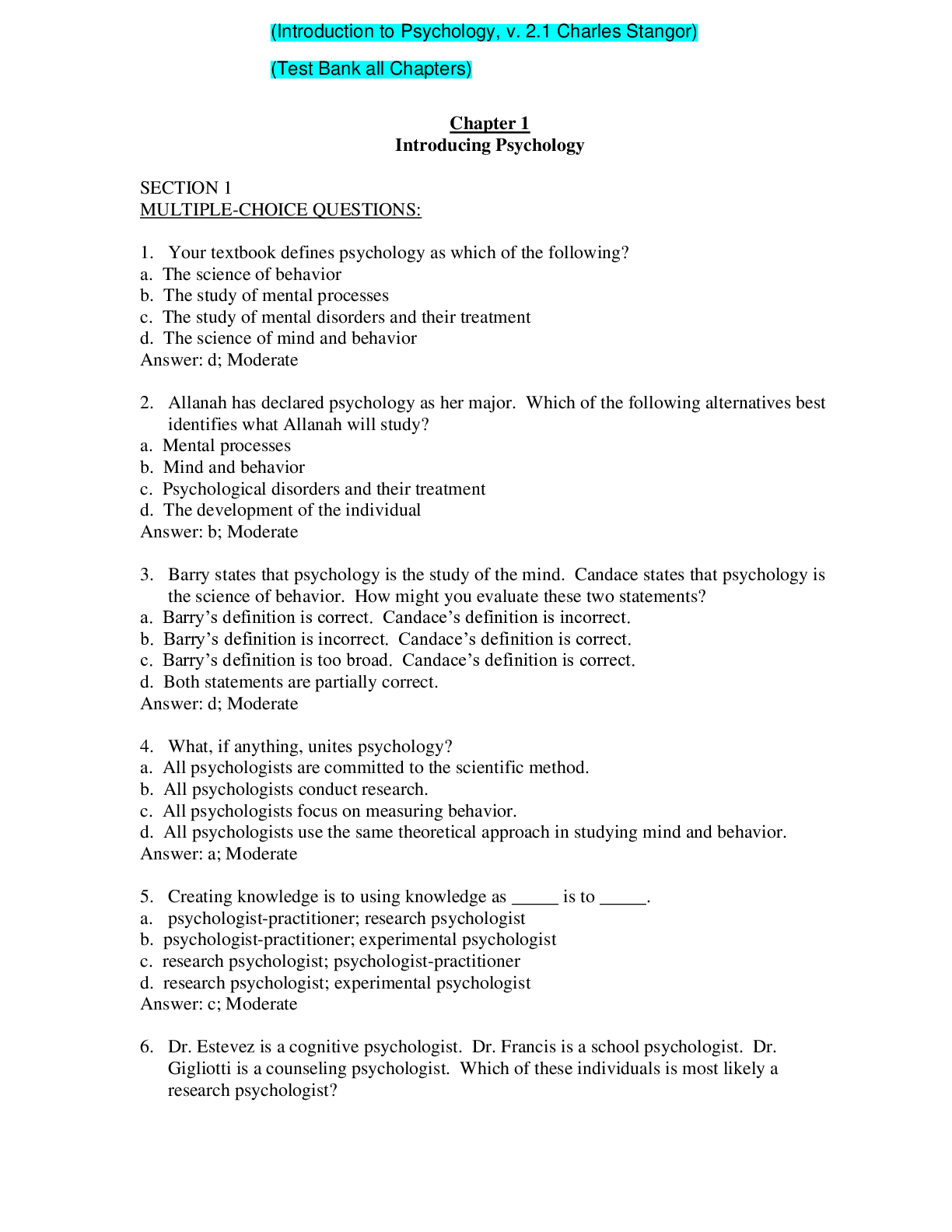
Introduction to Psychology v. 2.1 Charles Stangor (Test Bank)

Introduction to Political Psychology 3rd Edition By Martha Cot...

Psychology Around Us, 4th Canadian Edition 4th Edition By Nanc...
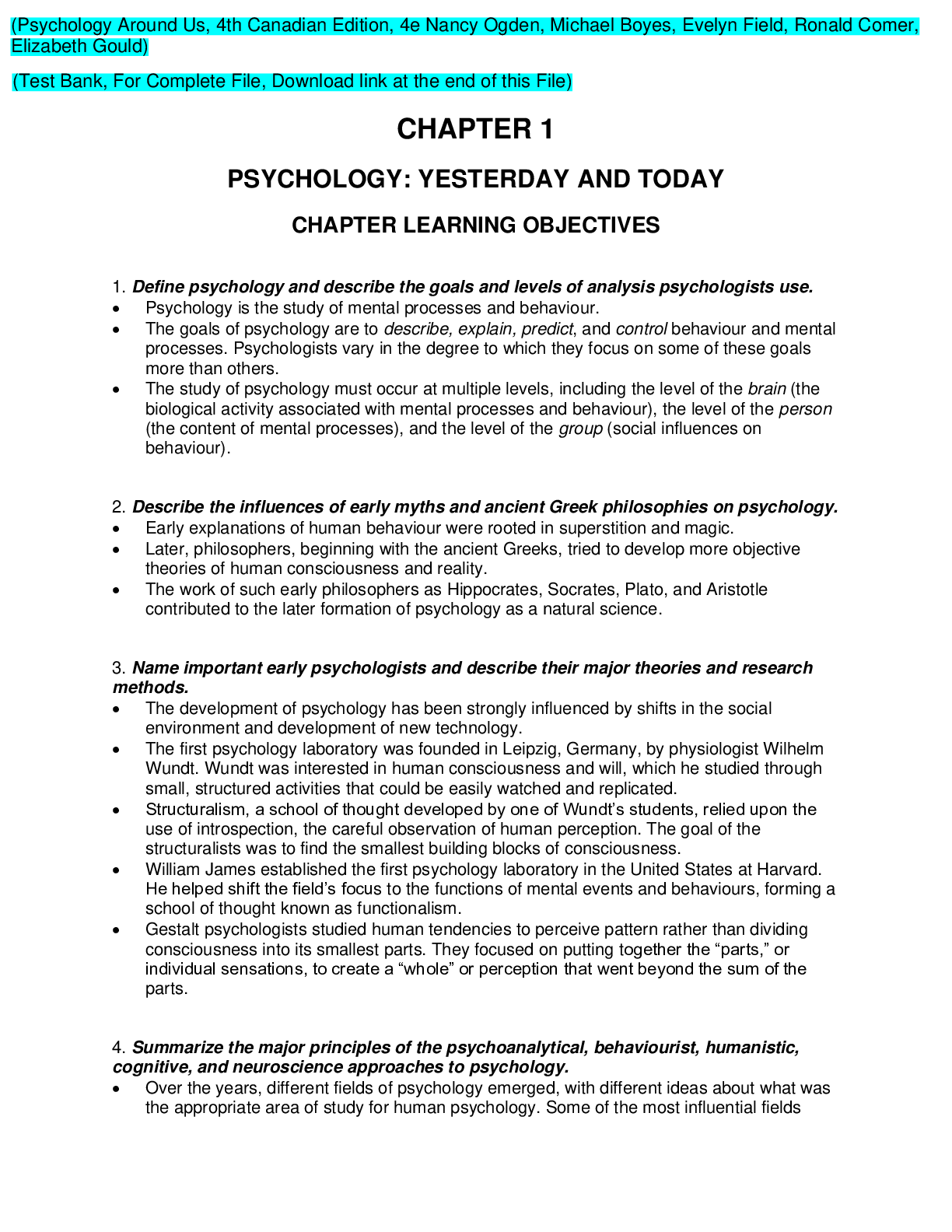
Psychology Around Us, 4th Canadian Edition 4th Edition By Nanc...

Health Psychology An Introduction to Behavior and Health, 10e...

Test Bank for Health Psychology, 10th Edition by Shelley E. Ta...

Health Psychology An Introduction to Behavior and Health, 9e L...


Health Psychology 1st Canadian Edition 1e Edward Sarafino, Tim...

Health Psychology 1st Canadian Edition 1e Edward Sarafino, Tim...















