Health Care  >  STUDY GUIDE  >  NR511 Final Exam Study Guide(Latest Solution) A+Guide (All)

NR511 Final Exam Study Guide(Latest Solution) A+Guide

Document Content and Description Below

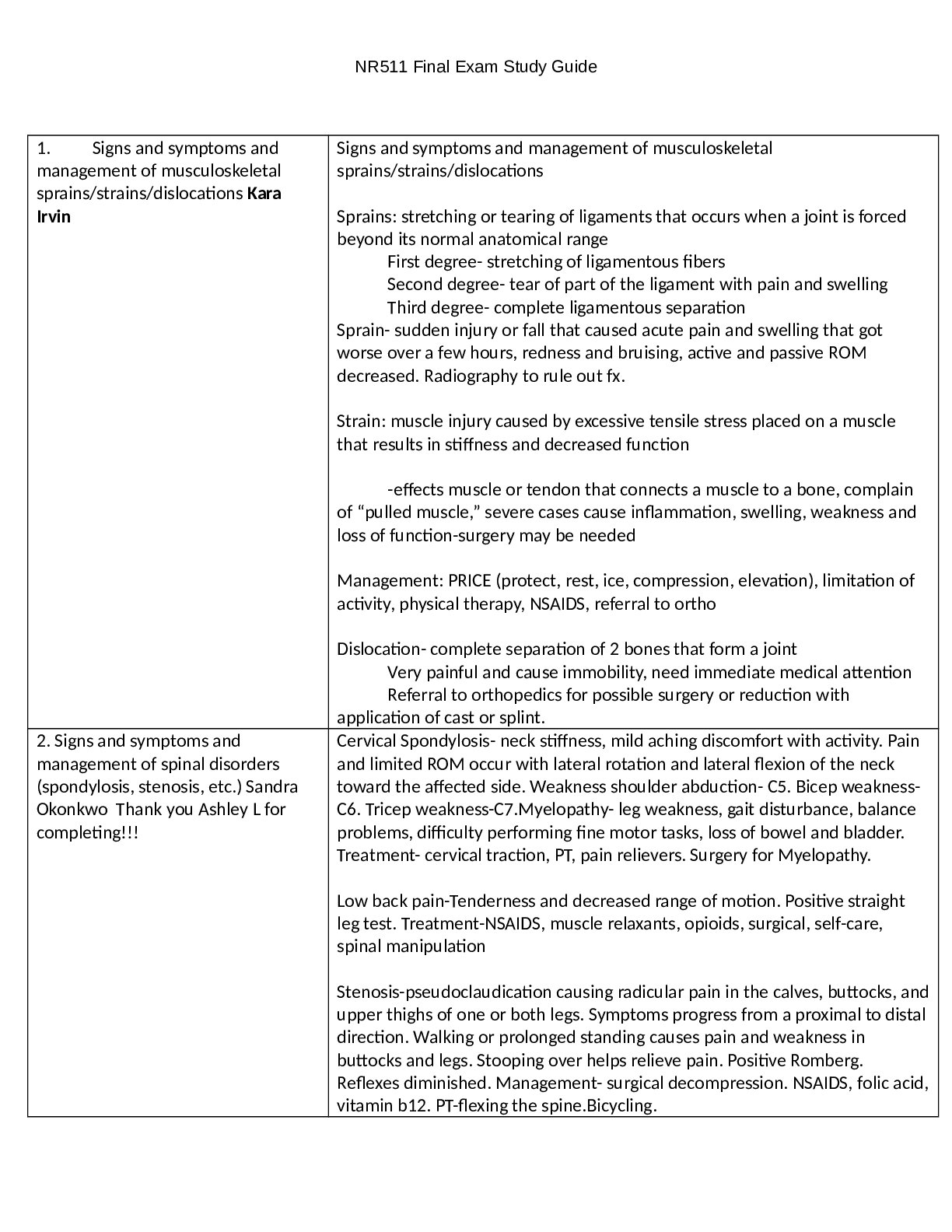
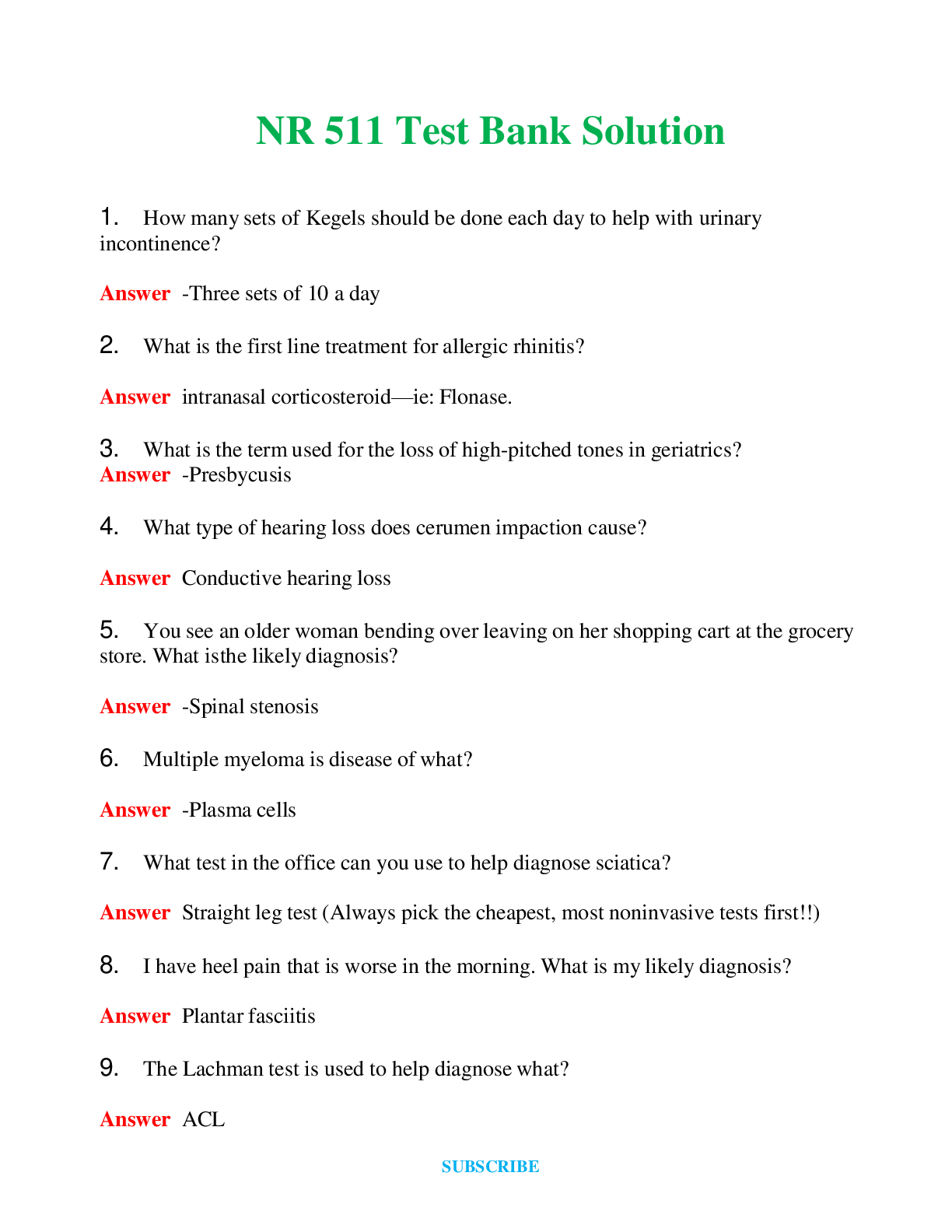
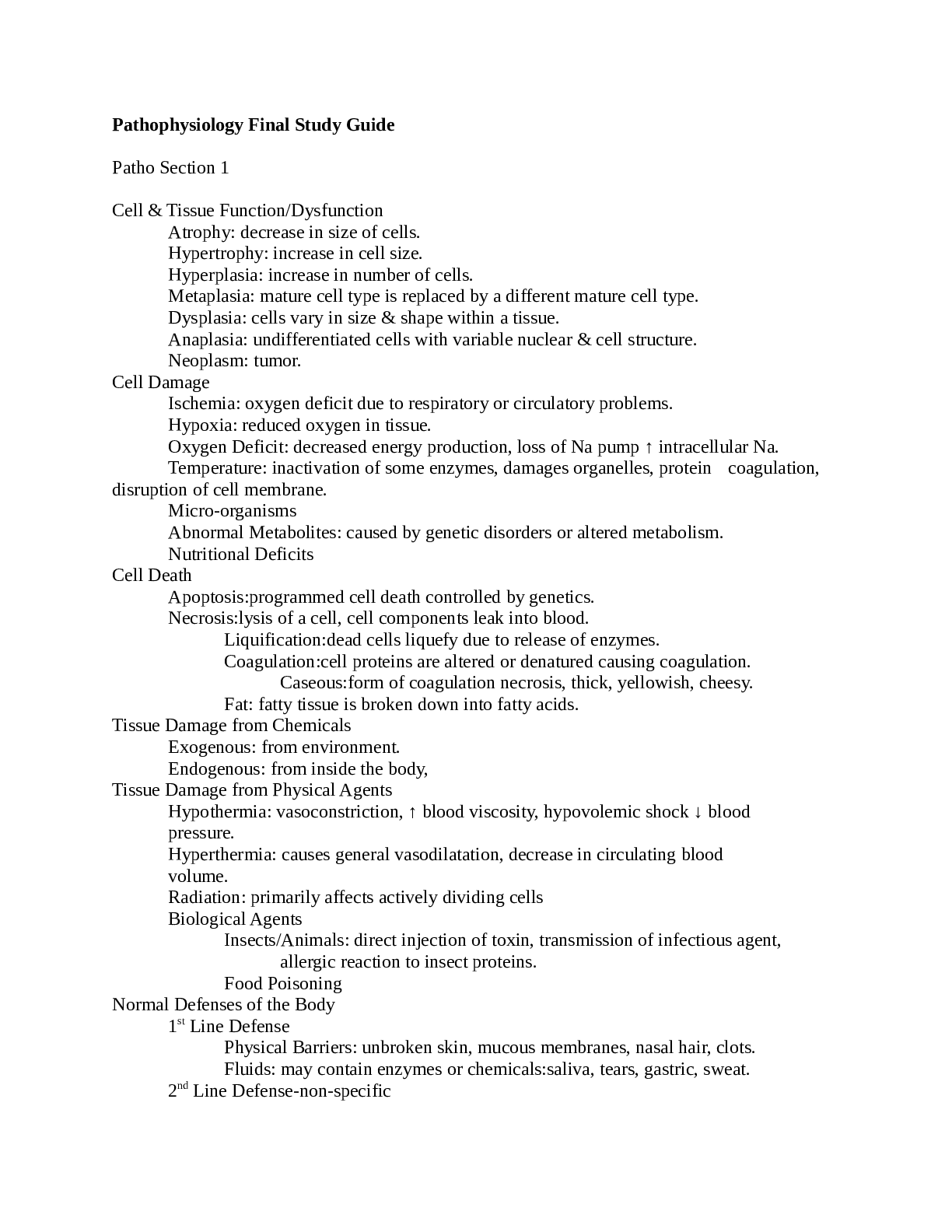
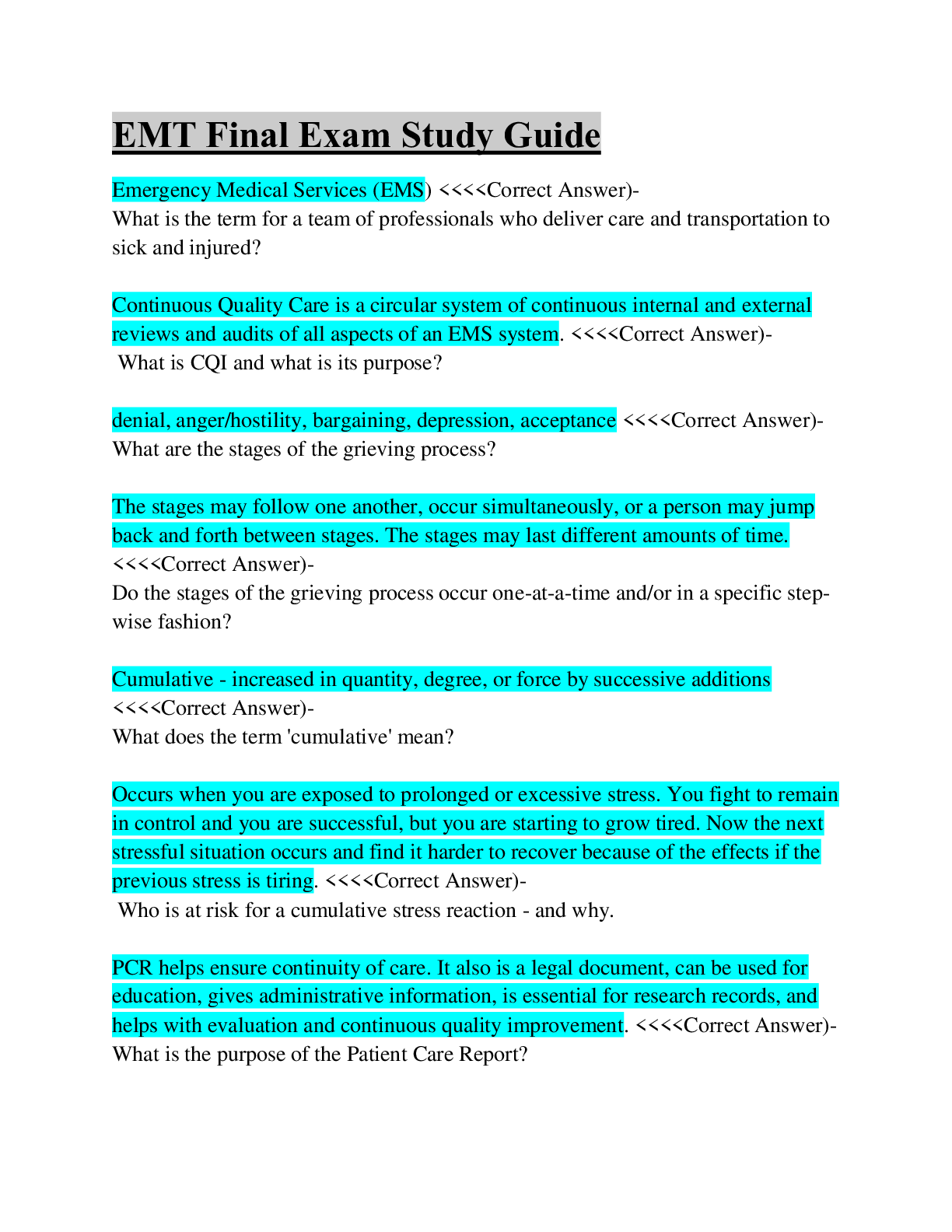
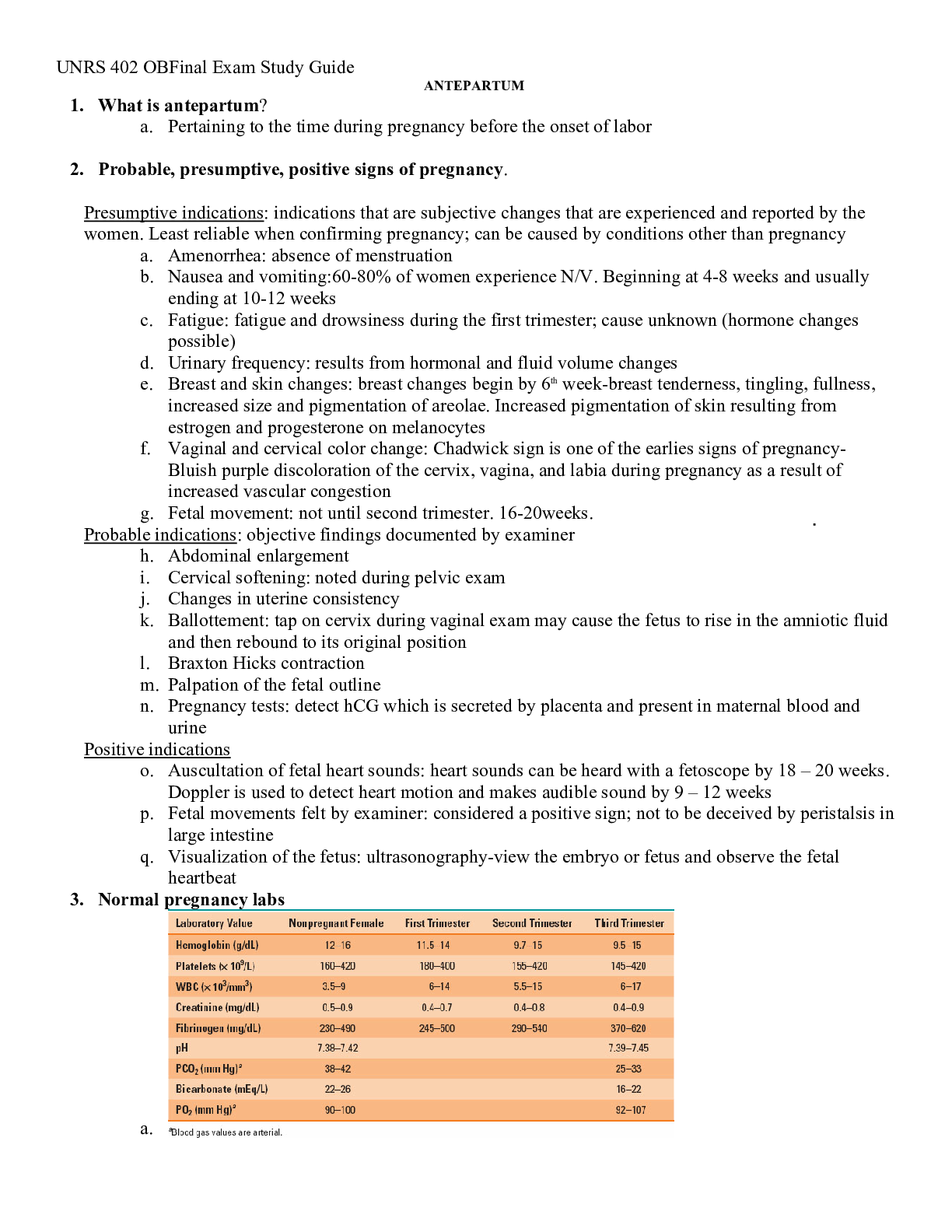
1. Signs and symptoms and management of musculoskeletal sprains/strains/dislocations Signs and symptoms and management of musculoskeletal sprains/strains/dislocations Sprains: stretching or teari ... ng of ligaments that occurs when a joint is forced beyond its normal anatomical range First degree- stretching of ligamentous fibers Second degree- tear of part of the ligament with pain and swelling Third degree- complete ligamentous separation Sprain- sudden injury or fall that caused acute pain and swelling that got worse over a few hours, redness and bruising, active and passive ROM decreased. Radiography to rule out fx. Strain: muscle injury caused by excessive tensile stress placed on a muscle that results in stiffness and decreased function -effects muscle or tendon that connects a muscle to a bone, complain of “pulled muscle,” severe cases cause inflammation, swelling, weakness and loss of function-surgery may be needed Management: PRICE (protect, rest, ice, compression, elevation), limitation of activity, physical therapy, NSAIDS, referral to ortho Dislocation- complete separation of 2 bones that form a joint Very painful and cause immobility, need immediate medical attention Referral to orthopedics for possible surgery or reduction with application of cast or splint. 2. Signs and symptoms and management of spinal disorders (spondylosis, stenosis, etc.) Cervical Spondylosis- neck stiffness, mild aching discomfort with activity. Pain and limited ROM occur with lateral rotation and lateral flexion of the neck toward the affected side. Weakness shoulder abduction- C5. Bicep weakness- C6. Tricep weakness-C7.Myelopathy- leg weakness, gait disturbance, balance problems, difficulty performing fine motor tasks, loss of bowel and bladder. Treatment- cervical traction, PT, pain relievers. Surgery for Myelopathy. Low back pain-Tenderness and decreased range of motion. Positive straight leg test. Treatment-NSAIDS, muscle relaxants, opioids, surgical, self-care, spinal manipulation Stenosis-pseudoclaudication causing radicular pain in the calves, buttocks, and upper thighs of one or both legs. Symptoms progress from a proximal to distal direction. Walking or prolonged standing causes pain and weakness in buttocks and legs. Stooping over helps relieve pain. Positive Romberg. Reflexes diminished. Management- surgical decompression. NSAIDS, folic acid, vitamin b12. PT-flexing the spine.Bicycling. [Show More]

Last updated: 3 years ago

Preview 1 out of 28 pages

Buy Now

Instant download

We Accept:

Payment methods accepted on Scholarfriends (We Accept)
Preview image of NR511 Final Exam Study Guide(Latest Solution) A+Guide document

Buy this document to get the full access instantly

Instant Download Access after purchase

Buy Now

Instant download

We Accept:

Payment methods accepted on Scholarfriends (We Accept)

Reviews( 0 )

$10.00

Buy Now

We Accept:

Payment methods accepted on Scholarfriends (We Accept)

Instant download

Can't find what you want? Try our AI powered Search

68
0

Document information


Connected school, study & course


About the document


Uploaded On

Mar 29, 2022

Number of pages

28

Written in

All

Seller


Profile illustration for Ace-It
Ace-It

Member since 4 years

44 Documents Sold

Reviews Received
8
2
0
1
1
Additional information

This document has been written for:

Uploaded

Mar 29, 2022

Downloads

 0

Views

 68

Document Keyword Tags

Recommended For You

Get more on STUDY GUIDE »
$10.00
What is Scholarfriends

Scholarfriends.com Online Platform by Browsegrades Inc. 651N South Broad St, Middletown DE. United States.

We are here to help

We're available through e-mail, Twitter, and live chat.
 FAQ
 Questions? Leave a message!


Copyright © Scholarfriends · High quality services·