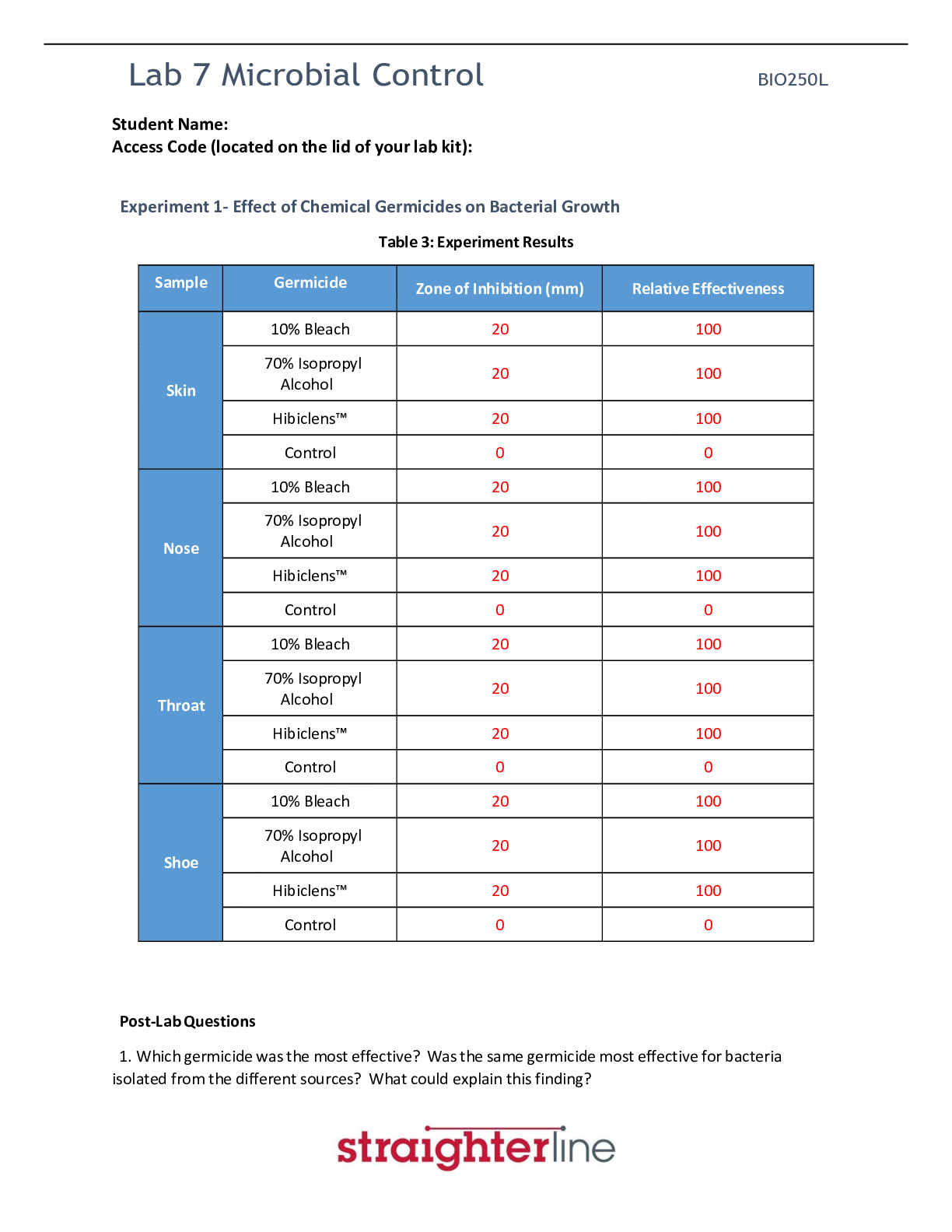
Biology > QUESTIONS & ANSWERS > BIO 250 Exam 3 and Midterm Test Prep Questions and Answers 2022 | Graded A (All)
BIO 250 Exam 3 and Midterm Test Prep Questions and Answers 2022 | Graded A
Document Content and Description Below
Last updated: 8 months ago
Preview 1 out of 41 pages
Instant download
Buy this Document to get the Full Access Instantly
Provided by Students Who Aced it
We Verify Document Content to Gurantee Accuracy
Also available in bundle (1)
Click Below to Access Bundle(s)

BIO 250 Exams 1,2 & 3 and Midterm Test Prep Questions and Answers 2022 | Graded A
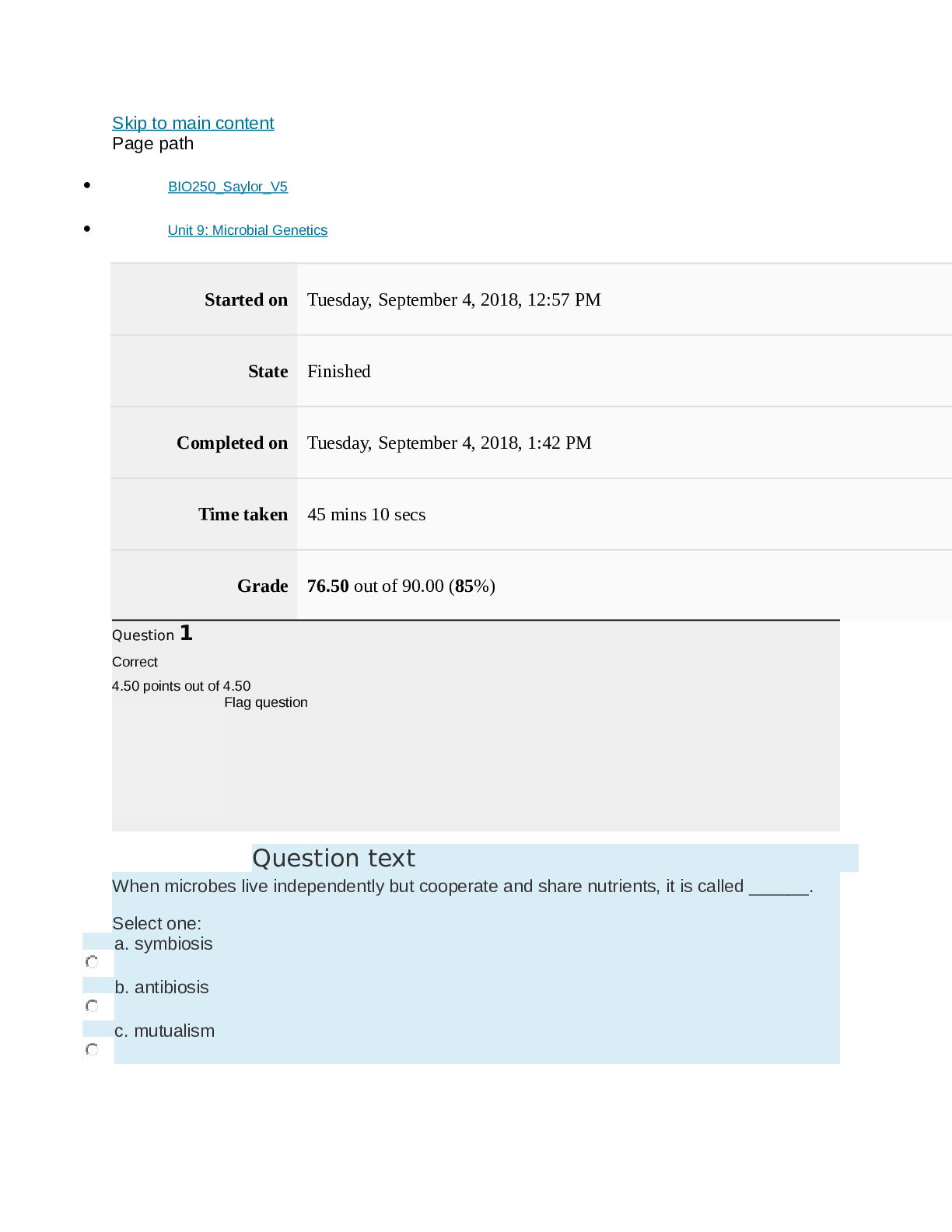
Page path BIO250_Saylor_V5 Unit 9: Microbial Genetics Started on Tuesday, September 4, 2018, 12:57 PM State Finished Completed on Tuesday, September 4, 2018, 1:42 PM Time taken 45 mins 10 se...
By Nutmegs 4 years ago
$25
3
Reviews( 0 )
Document information
Connected school, study & course
About the document
Uploaded On
Apr 15, 2022
Number of pages
41
Written in
All

Additional information
This document has been written for:
Uploaded
Apr 15, 2022
Downloads
0
Views
322
Topic Tags
Recommended For You
Get more on QUESTIONS & ANSWERS »
BIO 250 Microbiology QUIZ 5 - {2022} | BIO250 Microbiology QUI...

BIO 250 Microbiology QUIZ 4 - {2022} | BIO250 Microbiology QUI...

BIO 250 Microbiology QUIZ 1 - 2022 | BIO250 Microbiology QUIZ...
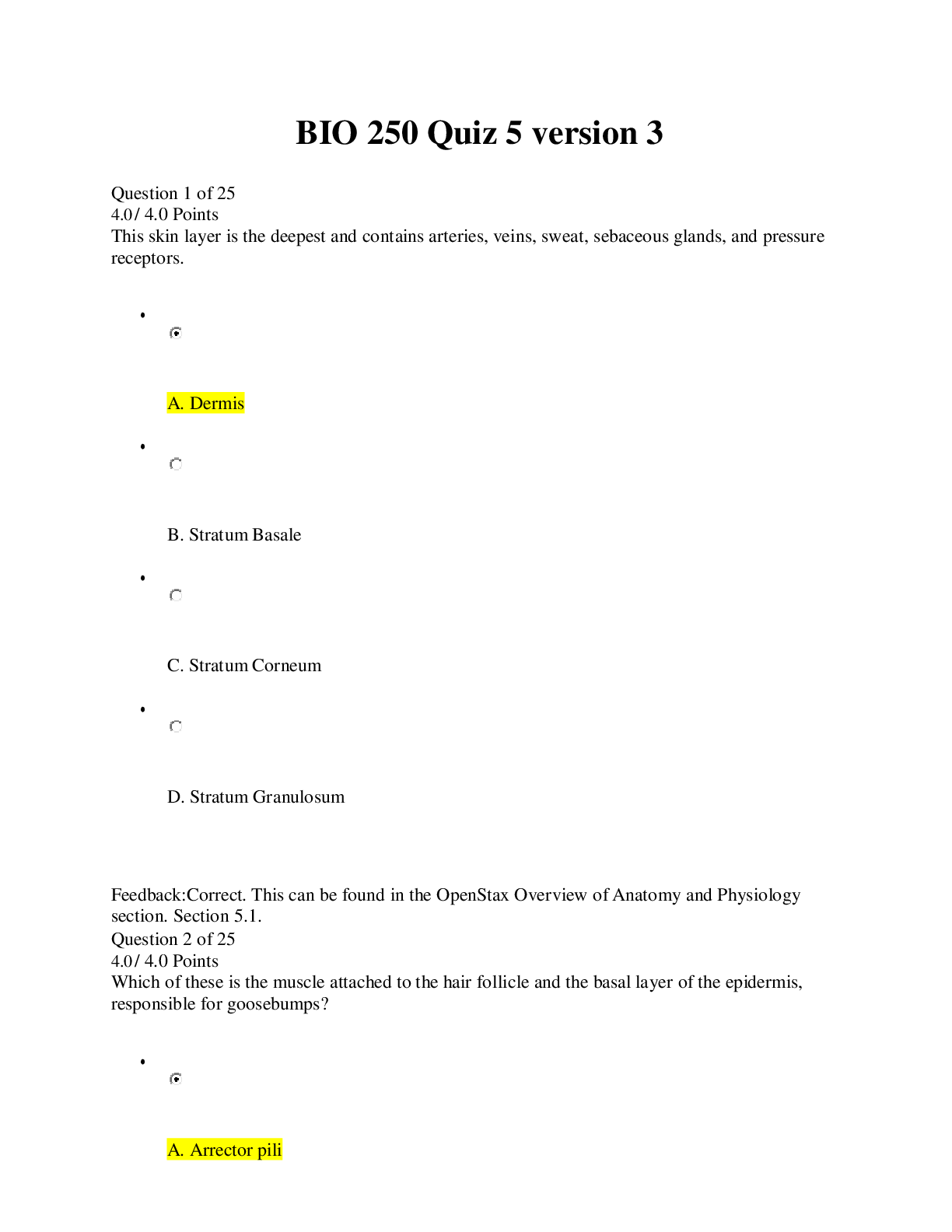
BIO 250 Quiz 5 version 3 (GRADED A) Questions and Answer elabo...

BIO BIO250L Midterm Exam (GRADED A) Questions and answers | 10...


STRAIGHTERLINE-Microbiology-BIO-250L-Lab-8| Identifying an Unk...

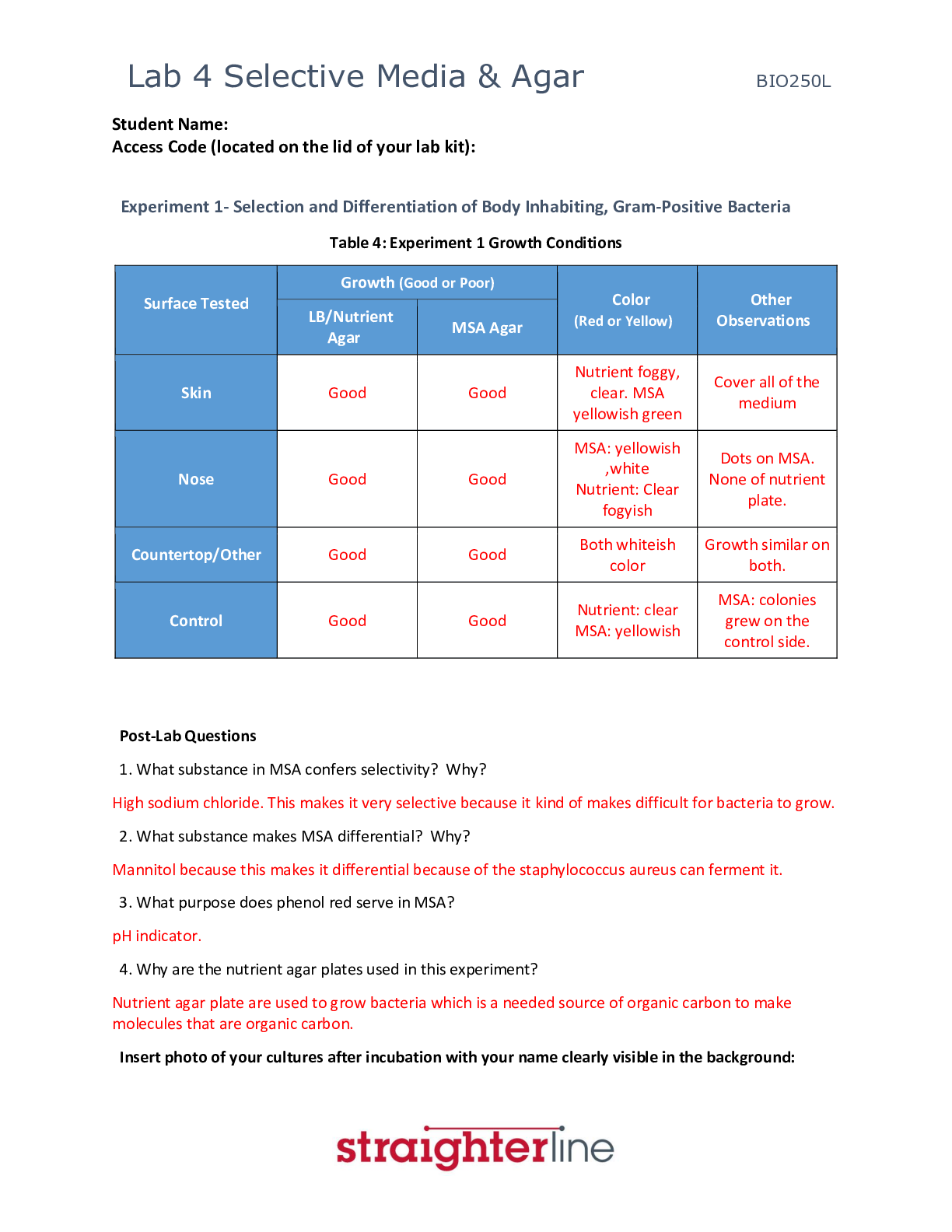
STRAIGHTERLINE-Microbiology-BIO-250L-Lab-3| Quantification-of-...