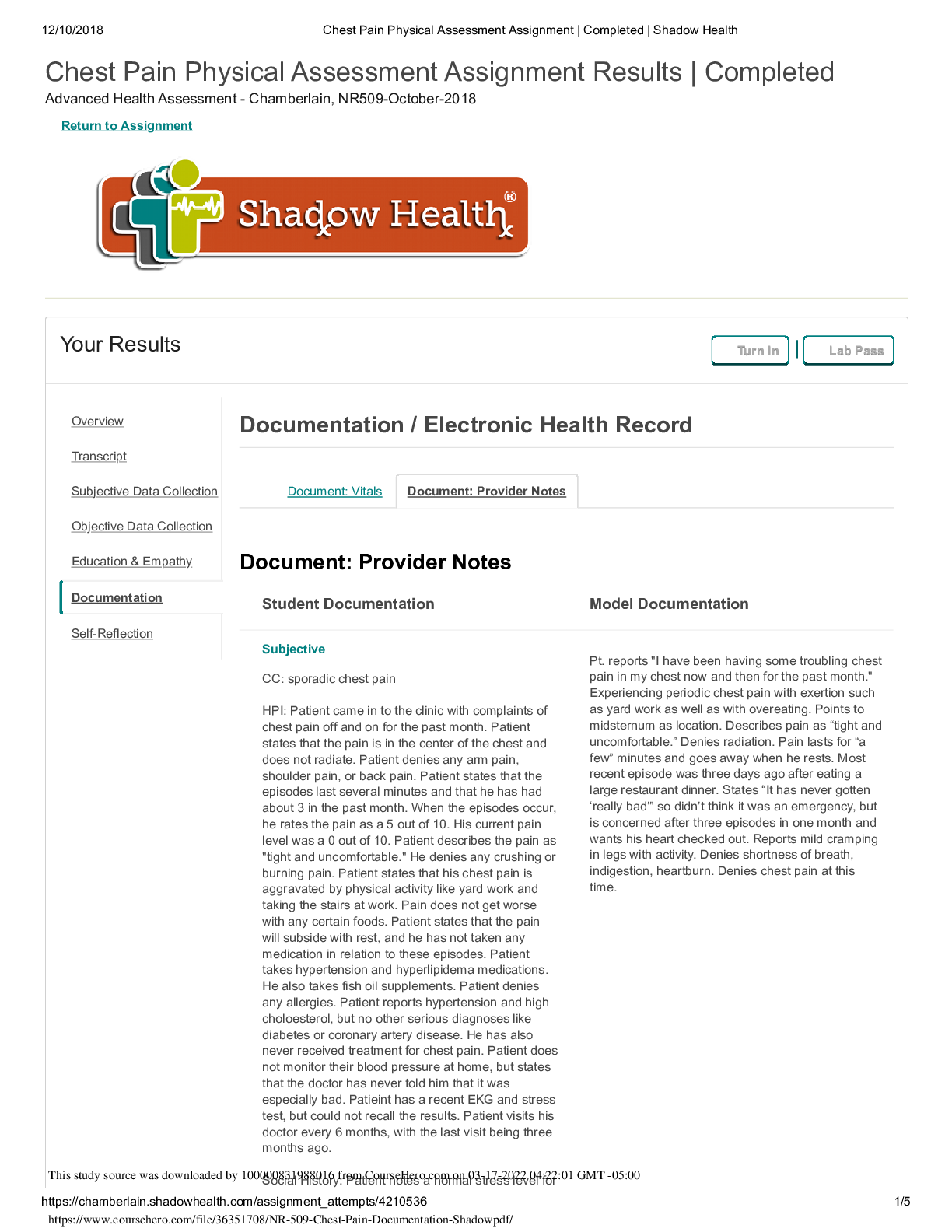
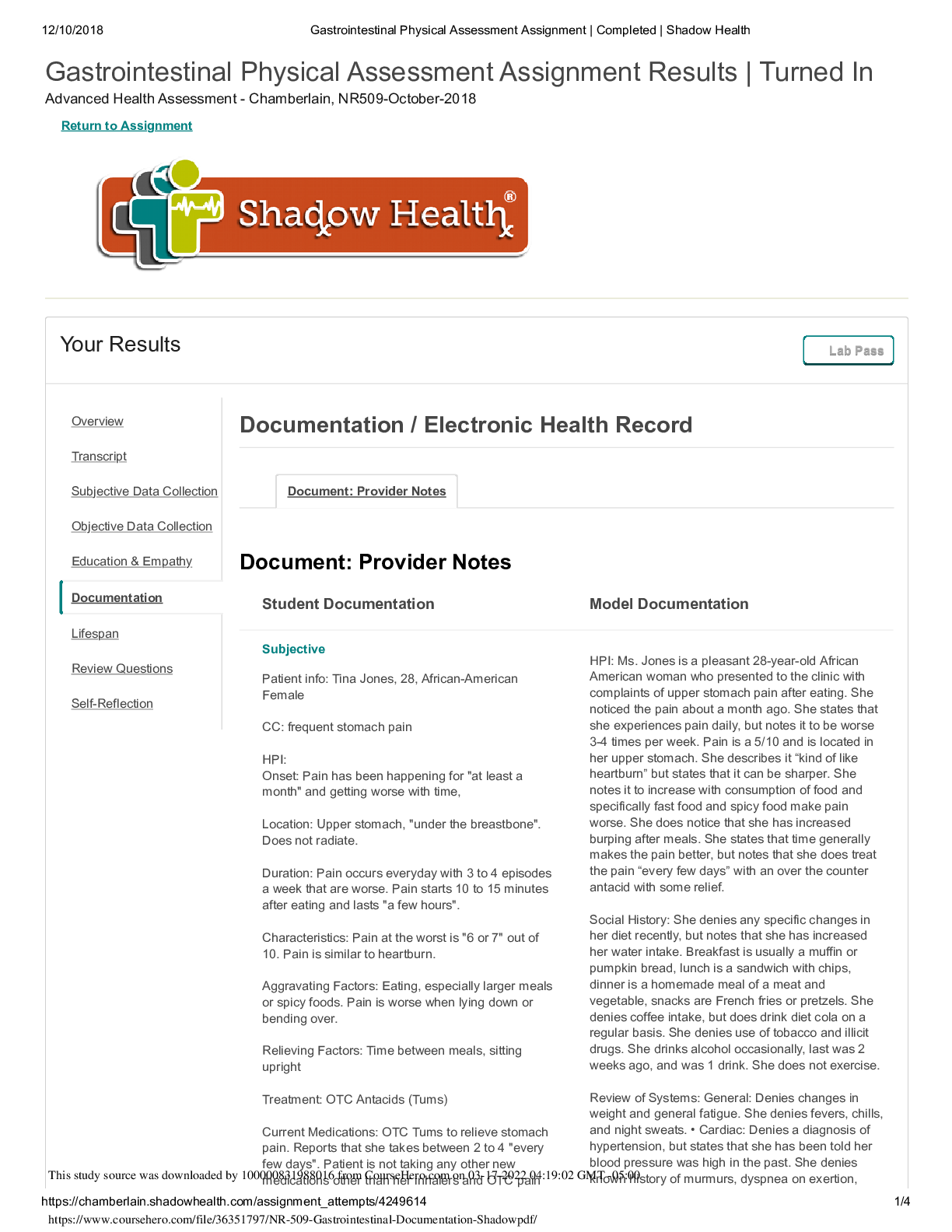
Focused Exam: Community-Acquired
Pneumonia Results
Anita Douglas- Subjective Data
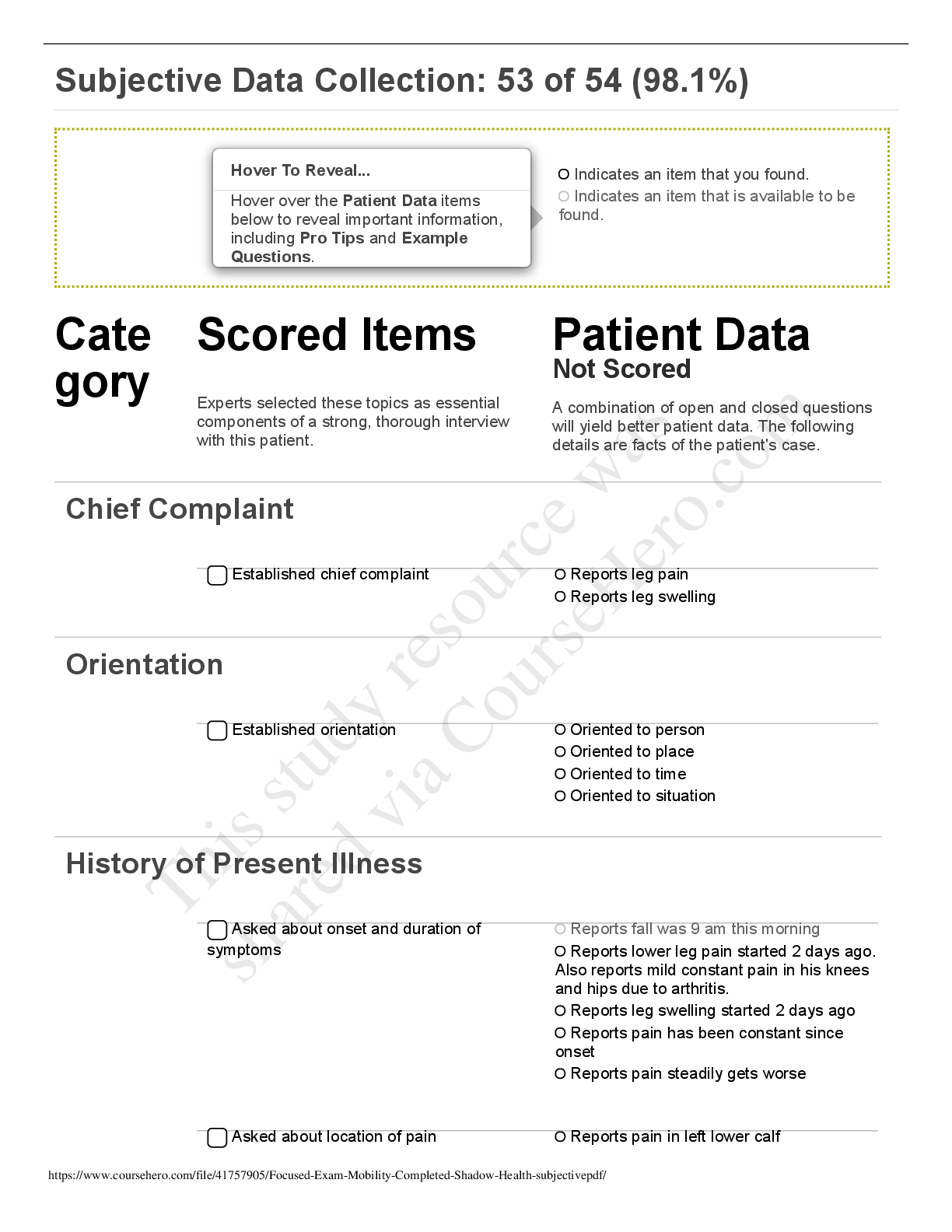
Chief Complaint
Finding:
Established chief complaint and reason for admittance
Finding:
Reports fever
(Found)
Pro Tip: A patient'
...
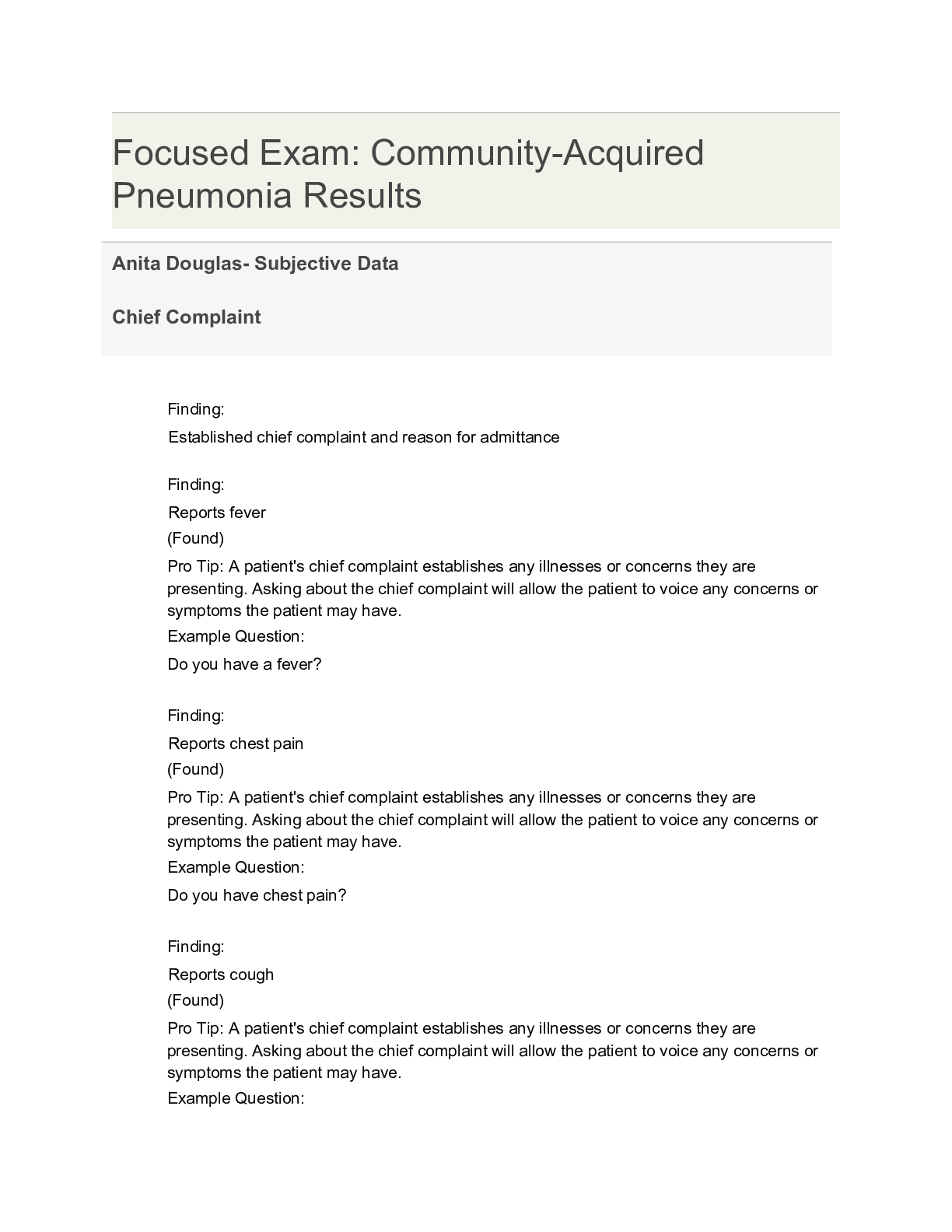
Focused Exam: Community-Acquired
Pneumonia Results
Anita Douglas- Subjective Data
Chief Complaint
Finding:
Established chief complaint and reason for admittance
Finding:
Reports fever
(Found)
Pro Tip: A patient's chief complaint establishes any illnesses or concerns they are
presenting. Asking about the chief complaint will allow the patient to voice any concerns or
symptoms the patient may have.
Example Question:
Do you have a fever?
Finding:
Reports chest pain
(Found)
Pro Tip: A patient's chief complaint establishes any illnesses or concerns they are
presenting. Asking about the chief complaint will allow the patient to voice any concerns or
symptoms the patient may have.
Example Question:
Do you have chest pain?
Finding:
Reports cough
(Found)
Pro Tip: A patient's chief complaint establishes any illnesses or concerns they are
presenting. Asking about the chief complaint will allow the patient to voice any concerns or
symptoms the patient may have.
Example Question:
Do you have a cough?
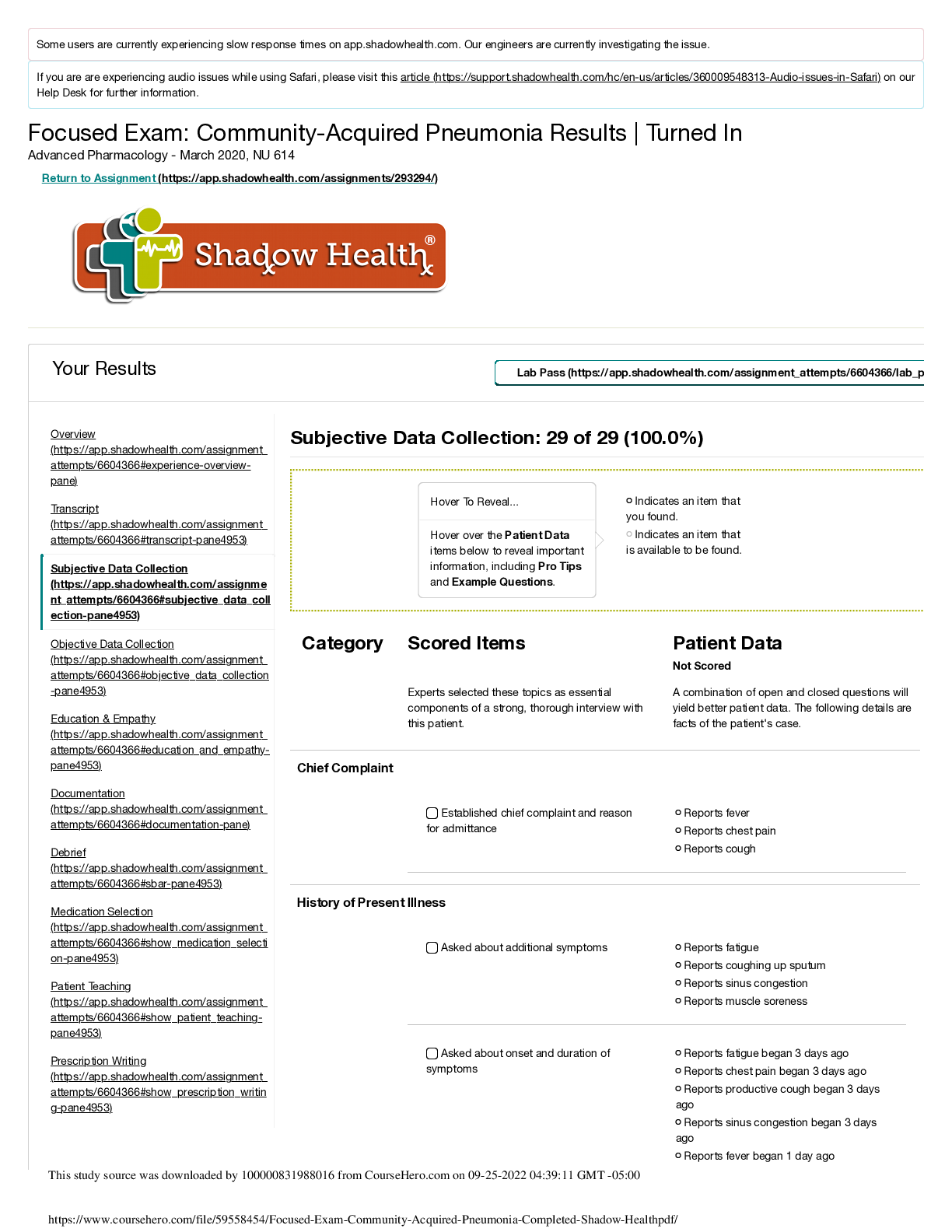
History of Present Illness
Finding:
Asked about additional symptoms
Finding:
Reports fatigue
(Found)
Pro Tip: Asking a patient about the length of their current health issues solicits information
relevant to the history of their present illness. Details of their current complaint will help you
follow-up on any present conditions or symptoms, such as the location of their pain or the
amount of pain they may be experiencing.
Example Question:
Are you fatigued?
Finding:
Reports coughing up sputum
(Found)
Pro Tip: Asking a patient about the length of their current health issues solicits information
relevant to the history of their present illness. Details of their current complaint will help you
follow-up on any present conditions or symptoms, such as the location of their pain or the
amount of pain they may be experiencing.
Example Question:
Do you cough anything up?
Finding:
Reports sinus congestion
(Found)
Pro Tip: Asking a patient about the length of their current health issues solicits information
relevant to the history of their present illness. Details of their current complaint will help you
follow-up on any present conditions or symptoms, such as the location of their pain or the
amount of pain they may be experiencing.
Example Question:
Are you feeling congested?
Finding:
Reports muscle soreness
(Found)
Pro Tip: Asking a patient about the length of their current health issues solicits information
relevant to the history of their present illness. Details of their current complaint will help you
follow-up on any present conditions or symptoms, such as the location of their pain or the
amount of pain they may be experiencing.
Example Question:
Are your muscles sore?
Finding:
Asked about onset and duration of symptoms
Finding:
Reports fatigue began 3 days ago
(Found)
Pro Tip: Asking a patient about the length of their current health issues solicits information
relevant to the history of their present illness. Details of their current complaint will help you
follow-up on any present conditions or symptoms, such as the location of their pain or the
amount of pain they may be experiencing.
Example Question:
When did your fatigue start?
Finding:
Reports chest pain began 3 days ago
(Available)
Pro Tip: Asking a patient about the length of their current health issues solicits information
relevant to the history of their present illness. Details of their current complaint will help you
follow-up on any present conditions or symptoms, such as the location of their pain or the
amount of pain they may be experiencing.
Example Question:
When did your chest pain start?
Finding:
Reports productive cough began 3 days ago
(Available)
Pro Tip: Asking a patient about the length of their current health issues solicits information
relevant to the history of their present illness. Details of their current complaint will help you
follow-up on any present conditions or symptoms, such as the location of their pain or the
amount of pain they may be experiencing.
Example Question:
When did your cough start?
Finding:
Reports sinus congestion began 3 days ago
(Available)
Pro Tip: Asking a patient about the length of their current health issues solicits information
relevant to the history of their present illness. Details of their current complaint will help you
follow-up on any present conditions or symptoms, such as the location of their pain or the
amount of pain they may be experiencing.
Example Question:
When did your congestion start?
Finding:
Reports fever began 1 day ago
(Found)
Pro Tip: Asking a patient about the length of their current health issues solicits information
relevant to the history of their present illness. Details of their current complaint will help you
follow-up on any present conditions or symptoms, such as the location of their pain or the
amount of pain they may be experiencing.
Example Question:
When did your fever start?
Finding:
Asked about frequency of symptoms
Finding:
Reports fatigue is constant
(Found)
Pro Tip: Asking a patient about the length of their current health issues solicits information
relevant to the history of their present illness. Details of their current complaint will help you
follow-up on any present conditions or symptoms, such as the location of their pain or the
amount of pain they may be experiencing.
Example Question:
How often are you fatigued?
Finding:
Reports fever is constant
(Found)
Pro Tip: Asking a patient about the length of their current health issues solicits information
relevant to the history of their present illness. Details of their current complaint will help you
follow-up on any present conditions or symptoms, such as the location of their pain or the
amount of pain they may be experiencing.
Example Question:
Is the fever constant?
Finding:
Reports congestion is constant
(Available)
Pro Tip: Asking a patient about the length of their current health issues solicits information
relevant to the history of their present illness. Details of their current complaint will help you
follow-up on any present conditions or symptoms, such as the location of their pain or the
amount of pain they may be experiencing.
Example Question:
How often are you congested?
Finding:
Reports less severe chest pain is constant
(Found)
Pro Tip: Asking a patient about the length of their current health issues solicits information
relevant to the history of their present illness. Details of their current complaint will help you
follow-up on any present conditions or symptoms, such as the location of their pain or the
amount of pain they may be experiencing.
Example Question:
How often do you have less severe chest pain?
Finding:
Reports more severe chest pain occurs with coughing
(Found)
Pro Tip: Asking a patient about the length of their current health issues solicits information
relevant to the history of their present illness. Details of their current complaint will help you
follow-up on any present conditions or symptoms, such as the location of their pain or the
amount of pain they may be experiencing.
Example Question:
How often do you have more severe chest pain?
Finding:
Reports coughing every few minutes
(Available)
Pro Tip: Asking a patient about the length of their current health issues solicits information
relevant to the history of their present illness. Details of their current complaint will help you
follow-up on any present conditions or symptoms, such as the location of their pain or the
amount of pain they may be experiencing.
Example Question:
How often do you cough?
Finding:
Followed up on location of pain
Finding:
Reports pain in lower right side of chest
(Found)
Pro Tip: Asking a patient about the length of their current health issues solicits information
relevant to the history of their present illness. Details of their current complaint will help you
follow-up on any present conditions or symptoms, such as the location of their pain or the
amount of pain they may be experiencing.
Example Question:
Where is your pain located?
Finding:
Followed up on characteristics of pain
Finding:
Reports chest pain is dull
(Found)
Pro Tip: Asking a patient about the length of their current health issues solicits information
relevant to the history of their present illness. Details of their current complaint will help you
follow-up on any present conditions or symptoms, such as the location of their pain or the
amount of pain they may be experiencing.
Example Question:
What is the pain like?
Finding:
Followed up on characteristics of discharge
Finding:
Reports coughing up rust-colored sputum
(Found)
Pro Tip: Asking a patient about the length of their current health issues solicits information
relevant to the history of their present illness. Details of their current complaint will help you
follow-up on any present conditions or symptoms, such as the location of their pain or the
amount of pain they may be experiencing.
Example Question:
Can you describe your mucus?
Finding:
Reports nasal mucus varies from yellow to green in color
(Available)
Pro Tip: Asking a patient about the length of their current health issues solicits information
relevant to the history of their present illness. Details of their current complaint will help you
follow-up on any present conditions or symptoms, such as the location of their pain or the
amount of pain they may be experiencing.
Example Question:
Can you describe your mucus?
Finding:
Asked about aggravating factors
Finding:
Reports deep breathing aggravates chest pain
(Found)
Pro Tip: Asking a patient about the length of their current health issues solicits information
relevant to the history of their present illness. Details of their current complaint will help you
follow-up on any present conditions or symptoms, such as the location of their pain or the
amount of pain they may be experiencing.
Example Question:
Does deep breathing hurt your chest?
Finding:
Reports speaking aggravates chest pain
(Found)
Pro Tip: Asking a patient about the length of their current health issues solicits information
relevant to the history of their present illness. Details of their current complaint will help you
follow-up on any present
[Show More]


.png)









.png)