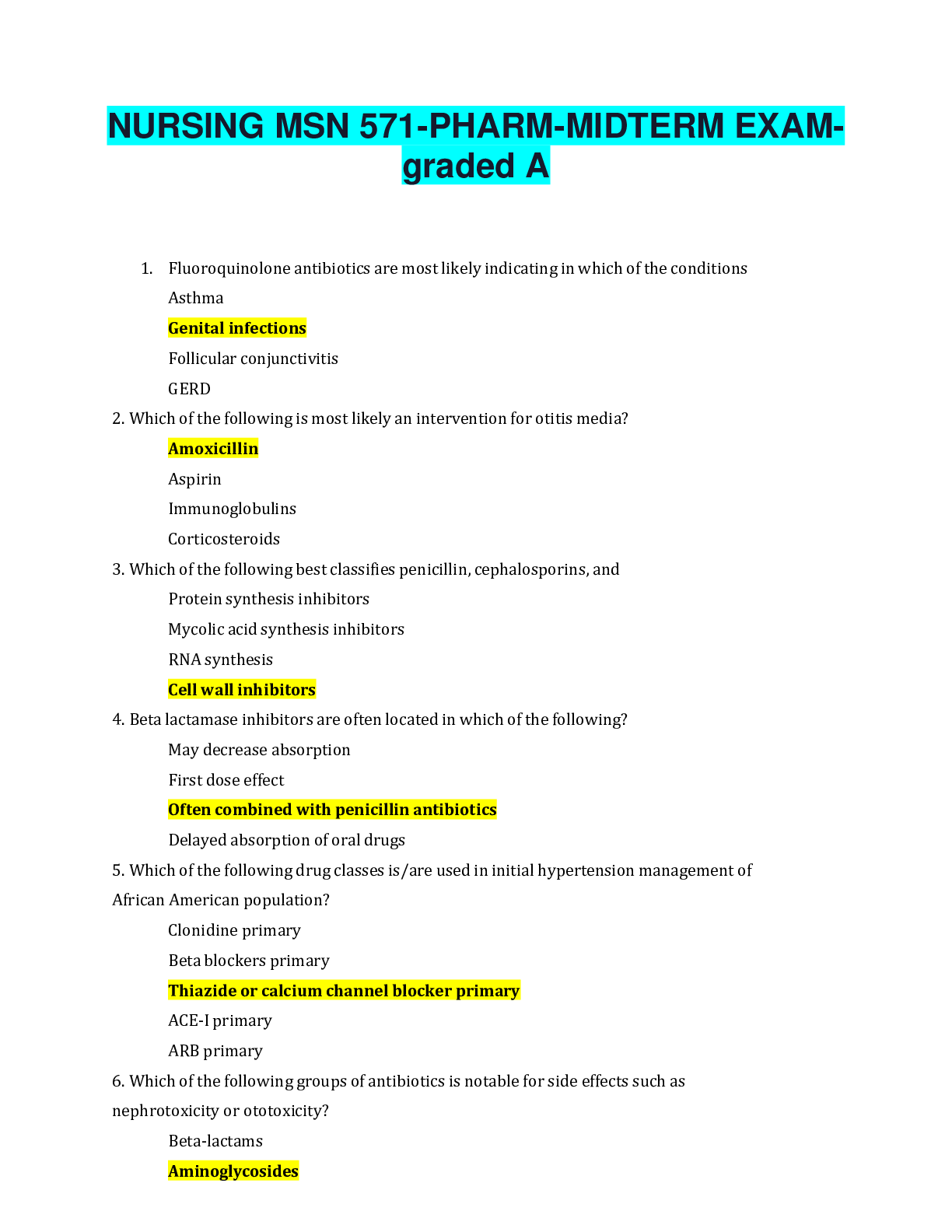
1. Fluoroquinolone antibiotics are most likely indicating in which of the conditions Asthma
Genital infections Follicular conjunctivitis GERD
2. Which of the following is most likely an intervention for otitis media?
...
1. Fluoroquinolone antibiotics are most likely indicating in which of the conditions Asthma
Genital infections Follicular conjunctivitis GERD
2. Which of the following is most likely an intervention for otitis media?
Amoxicillin Aspirin Immunoglobulins Corticosteroids
3. Which of the following best classifies penicillin, cephalosporins, and Protein synthesis inhibitors
Mycolic acid synthesis inhibitors RNA synthesis
Cell wall inhibitors
4. Beta lactamase inhibitors are often located in which of the following? May decrease absorption
First dose effect
Often combined with penicillin antibiotics
Delayed absorption of oral drugs
5. Which of the following drug classes is/are used in initial hypertension management of African American population?
Clonidine primary Beta blockers primary
Thiazide or calcium channel blocker primary
ACE-I primary ARB primary
6. Which of the following groups of antibiotics is notable for side effects such as nephrotoxicity or ototoxicity?
Beta-lactams Aminoglycosides Tetracyclines
7. Which of the following groups of antibiotics has a beta-lactam ring in the molecular
Structure
Sulfonamides Macrolides Tetracyclines Fluoroquinolone Cephalosporins
8. Which of the follow medication is a fluoroquinolone antibiotic?
Ciprofloxacin Azithromycin Amikacin Penicillin
9. Which of the following medications or drugs classes is commonly indicated for managing gestational hypertension?
Spironolactone (Aldactone) Loop diuretics
Calcium channel blockers
Dobutamine Calcium gluconate
10. Which of the following best classifies aminoglycosides, macrolides and clindamycin? Protein synthesis inhibitor
Folic acid synthesis inhibitors Cell wall inhibitors
Mycolic acid synthesis inhibitors
11. The long half-life of amiodarone contributes to which complications Enhanced therapeutic effects
Liver toxicity Decreased dosing Short onset of action
12. Pharmacokinetics involves the study of which factor? Distribution rates among various body compartment Physiologic interactions of drugs
Interactions among various drugs Adverse reactions to medications
13. Which route of drug administration is used with potent and lipophilic drugs in a patch formulation and avoids first-pass metabolism?
Oral Topical Rectal
Transdermal
14. Patients who have a poor metabolism phenotype will have: A need for increased dosages of medications
Increased elimination of an active drug Accumulation of inactive metabolites of drugs
Slowed metabolism of prodrug into an active drug leading to accumulation of prodrug
15. Lower doses of sublingual nitroglycerin can be used effectively because
It bypasses the liver
The potency is 100 times higher
It does not need to be absorbed into the bloodstream It is not catabolized down by gastric acids
16. Which term refers to the ratio between a drugs therapeutic effects and its toxic effects? Cumulative effect
Therapeutic index
Tolerance Affinity
17. In geriatric patients the percentage of body fat is increased. What are the pharmacologic implications of the physiologic change?
A lipid soluble medication will be eliminated more quickly and not work as well Absorption of lipid soluble drugs is impaired in older adults.
The bioavailability of the lipid soluble drug will be increased in older adults
A lipid soluble medication will accumulate in fat tissue and its duration of action may be prolonged
18. A patient diagnosed with otitis externa and taking a fluoroquinolone with glucocorticoid benefit is taking the medication together you reply
The glucocorticoid reduces the swelling caused by the inflammation and ear infection
The glucocorticoid decreased likelihood of antibiotic resistant
The glucocorticoid decreases the adverse effects of the fluoroquinolone
The two medications are contraindicated for use together
19. A two year old child presents to the clinic with arthralgia and fever in the last tympanic membrane is erythematous and bulging the right TMS is perforated and draining the child’s parent states “this is fifth year infection this year “what can we do? what action will the provider take to address to Childs ear problems
Prescribe amoxicillin/clavulanate and refer the child to an otolaryngologist??? I THINK THIS IS CORRECT
Prescribe both ceftriaxone (Rocephin) IM with benzocaine ear drops for pain
20. A patient is diagnosed with otitis externa. Comorbidities include diabetes mellitus, hypertension, and advanced multiple sclerosis. Which type of education regarding medication administration would you provide? page 1304 repeat #20
CONTINUED.......................
[Show More]