Sensory Function Case Study with Rationale – COMPLETE SOLUTION
Document Content and Description Below
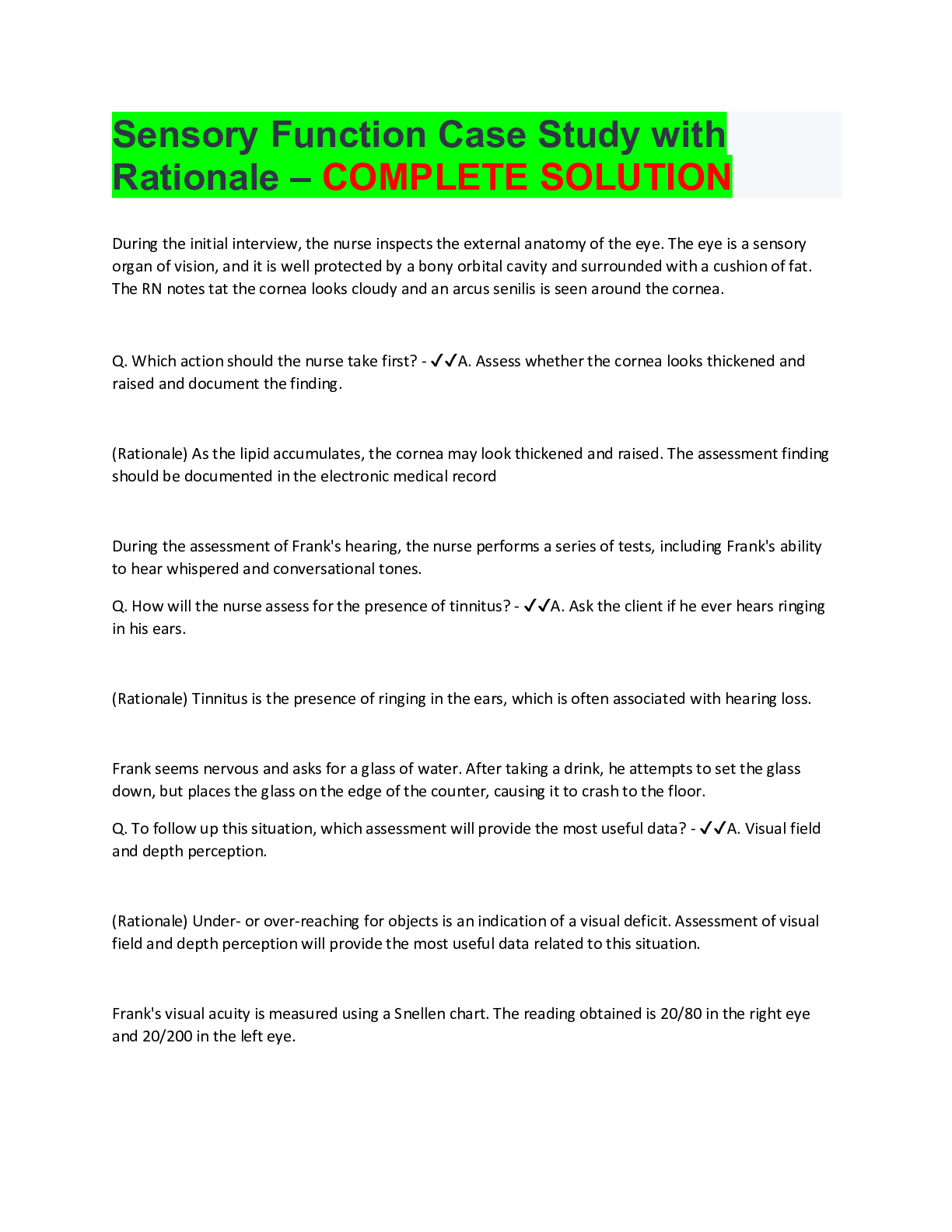
During the initial interview, the nurse inspects the external anatomy of the eye. The eye is a sensory
organ of vision, and it is well protected by a bony orbital cavity and surrounded with a cushion of fat.
The RN not
...
[Show More]
Last updated: 3 years ago
Preview 1 out of 9 pages
Instant download
Buy this Document to get the Full Access Instantly
Provided by Students Who Aced it
We Verify Document Content to Gurantee Accuracy
Reviews( 0 )
Document information
Connected school, study & course
About the document
Uploaded On
May 18, 2022
Number of pages
9
Written in
All

Additional information
This document has been written for:
Uploaded
May 18, 2022
Downloads
0
Views
236
Topic Tags
Recommended For You
Get more on EXAM »
$7.5
9 Pages
Sensory Function Case Study with Rationale – COMPLETE SOLUTION
$6
9 Pages
Sensory Function Case Study with Rationale – COMPLETE SOLUTION
More related documents below