NURS 6501 Week 10 Case Study 2020 – Mercer County Community College
Prostatitis-Men’s Health
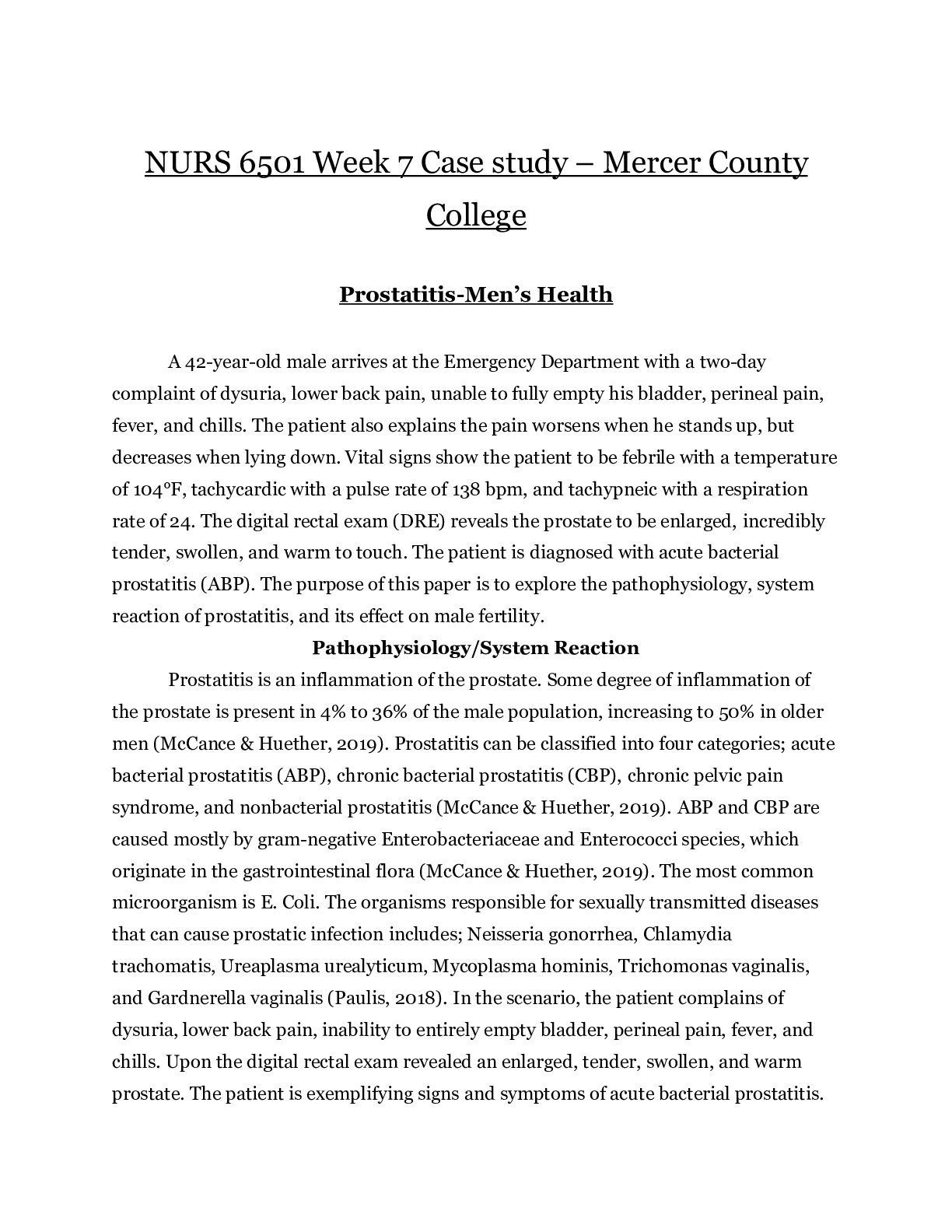
A 42-year-old male arrives at the Emergency Department with a two-day complaint of dysuria, lower back pain, unable to fu
...
NURS 6501 Week 10 Case Study 2020 – Mercer County Community College
Prostatitis-Men’s Health
A 42-year-old male arrives at the Emergency Department with a two-day complaint of dysuria, lower back pain, unable to fully empty his bladder, perineal pain, fever, and chills. The patient also explains the pain worsens when he stands up, but decreases when lying down. Vital signs show the patient to be febrile with a temperature of 104°F, tachycardic with a pulse rate of 138 bpm, and tachypneic with a respiration rate of 24. The digital rectal exam (DRE) reveals the prostate to be enlarged, incredibly tender, swollen, and warm to touch. The patient is diagnosed with acute bacterial prostatitis (ABP). The purpose of this paper is to explore the pathophysiology, system reaction of prostatitis, and its effect on male fertility.
Pathophysiology/System Reaction
Prostatitis is an inflammation of the prostate. Some degree of inflammation of the prostate is present in 4% to 36% of the male population, increasing to 50% in older men (McCance & Huether, 2019). Prostatitis can be classified into four categories; acute bacterial prostatitis (ABP), chronic bacterial prostatitis (CBP), chronic pelvic pain syndrome, and nonbacterial prostatitis (McCance & Huether, 2019). ABP and CBP are caused mostly by gram-negative Enterobacteriaceae and Enterococci species, which originate in the gastrointestinal flora (McCance & Huether, 2019). The most common microorganism is E. Coli. The organisms responsible for sexually transmitted diseases that can cause prostatic infection includes; Neisseria gonorrhea, Chlamydia trachomatis, Ureaplasma urealyticum, Mycoplasma hominis, Trichomonas vaginalis,
-
-
-
-
-
-
-
-
-
-
-
-
-
-
-
-
-
-
-
-
-
Prostatitis is an infection that can affect men of all ages. Not only can prostatitis affect a man’s daily life but also fertility. Prevention of prostatitis involves making a number of lifestyle and dietary changes towards maintaining a healthy prostate. The prostate plays a crucial role in the male reproductive system. As healthcare providers, it is important to assess patients thoroughly and educate them on modifiable risk factors to decrease the risk of prostatitis, which can play a negative role in procreation.
References
Alshahrani, S., McGill, J., & Agarwal, A. (2015). Prostatitis and male infertility. Journal of Reproductive Immunology, 100(1), 30-36. Retrieved from http://www.clevelandclinic.org/reproductiveresearchcenter/docs/agradoc474.pdf
Biotech Week. (2018, September 19). Reproductive medicine - male infertility; recent findings from southeast university provides new insights into male infertility (role of oxidative stress in pathology of chronic prostatitis/chronic pelvic pain syndrome and male infertility and antioxidants function in ameliorating ...). Retrieved from https://ezp.waldenulibrary.org/login?qurl=https%3A%2F%2Fsearch.proquest.com%2Fdocview%2F2103189625%3Facco
McCance, K. L., & Huether, S. E. (2019). Pathophysiology: the biologic basis for disease in adults and children (8th ed.). St. Louis, MO: Mosby/Elsevier
Paulis, G. (2018). Inflammatory mechanisms and oxidative stress in prostatitis: The possible role of antioxidant therapy. Research and Reports in Urology, 10, 75-87. doi:http://dx.doi.org.ezp.waldenulibrary.org/10.2147/RRU.S170400
[Show More]