Breastfeeding Newborn
RAPID Reasoning
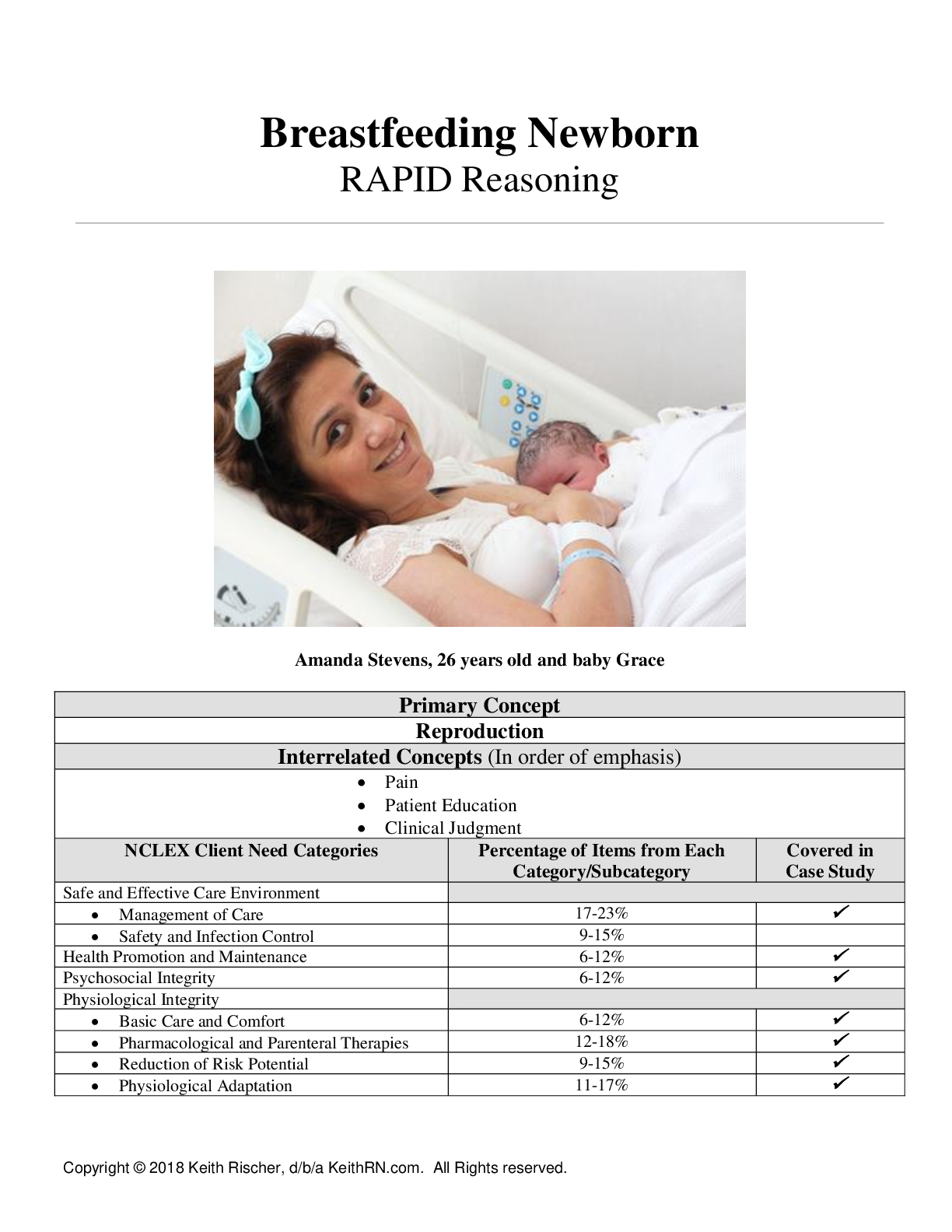
Amanda Stevens, 26 years old and baby Grace
Primary Concept
Reproduction
Interrelated Concepts (In order of emphasis)
• Pain
• Patient Education
• Clinical Judgment
NCLEX Cl
...
Breastfeeding Newborn
RAPID Reasoning
Amanda Stevens, 26 years old and baby Grace
Primary Concept
Reproduction
Interrelated Concepts (In order of emphasis)
• Pain
• Patient Education
• Clinical Judgment
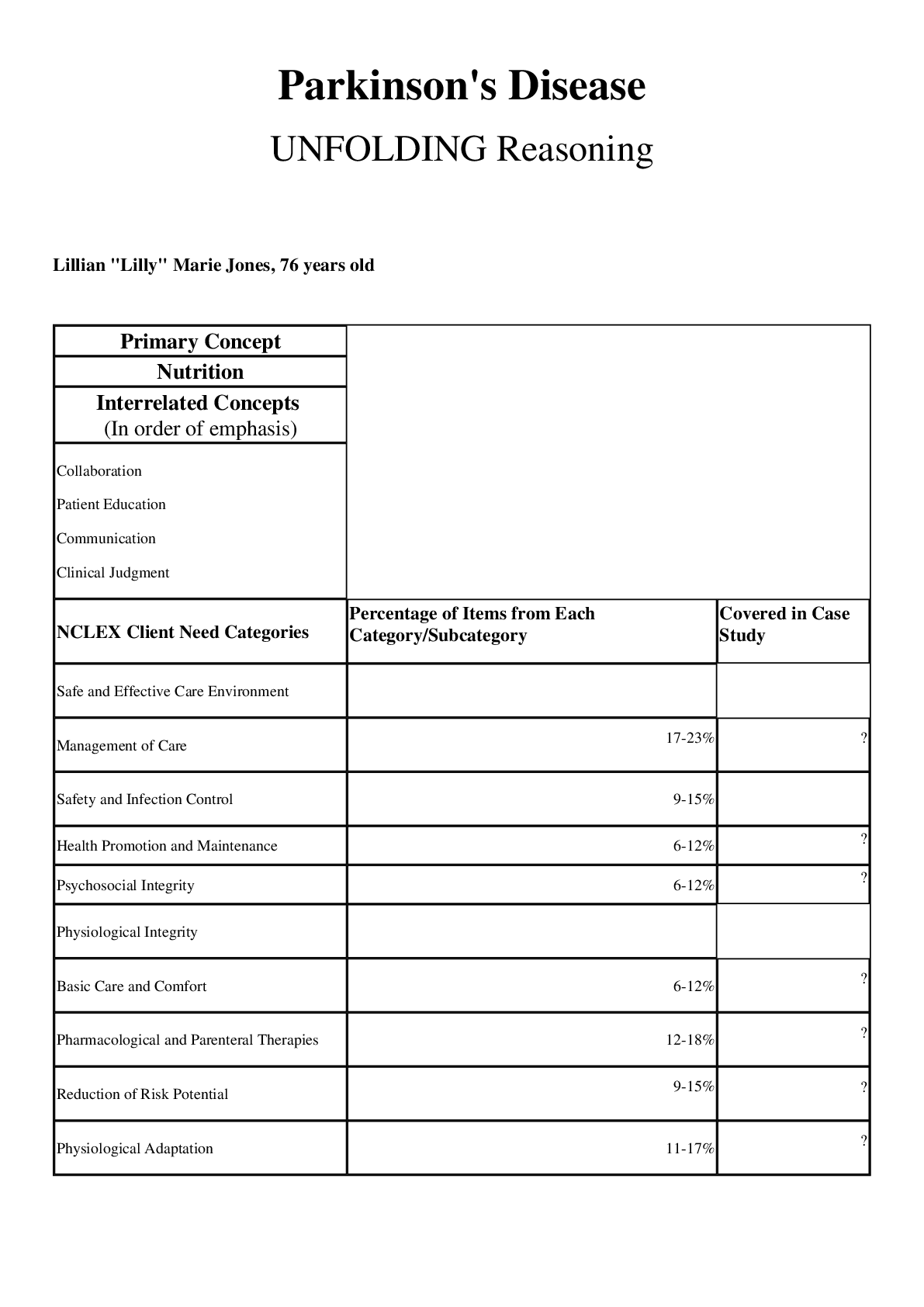
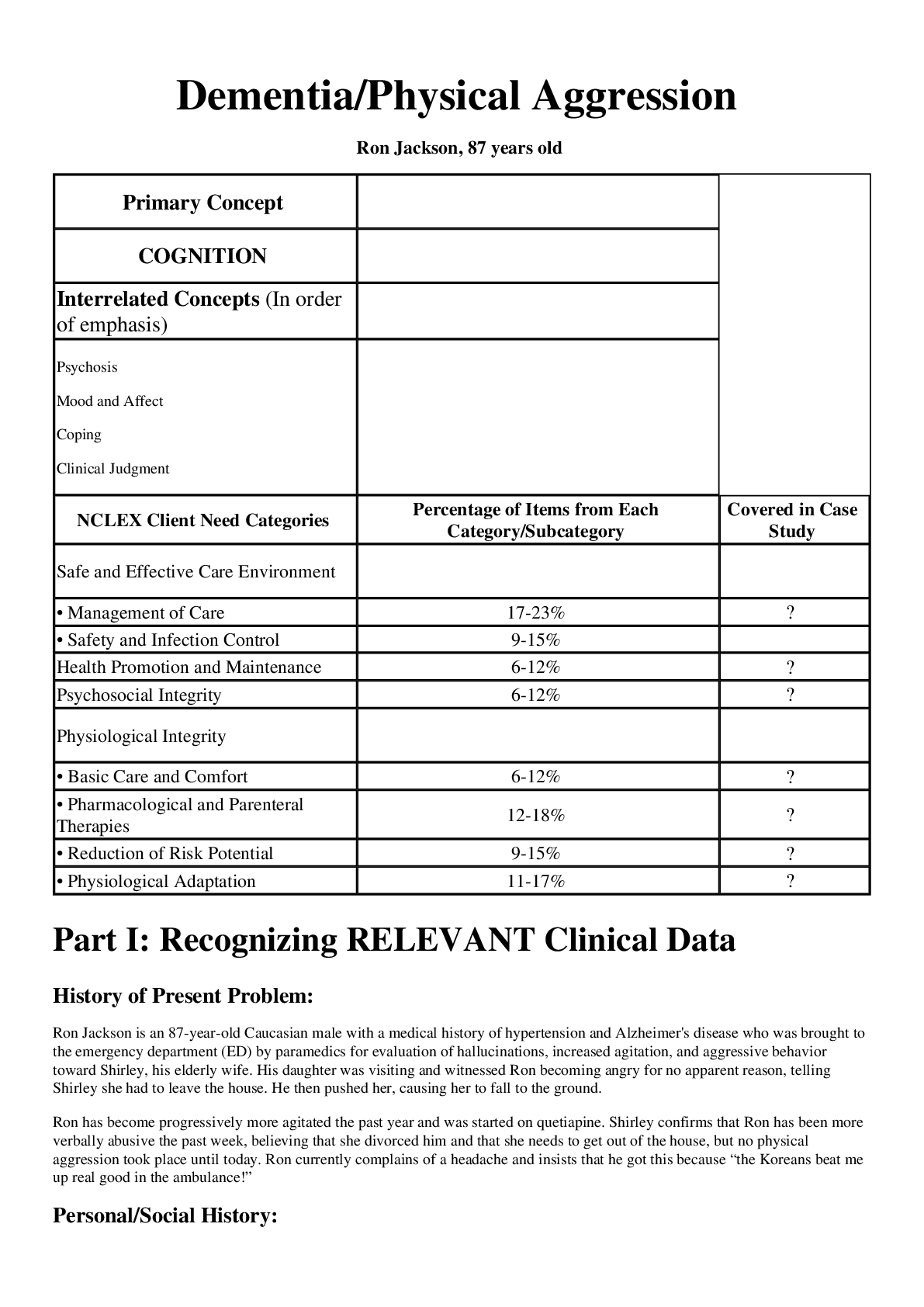
NCLEX Client Need Categories Percentage of Items from Each
Category/Subcategory
Covered in
Case Study
Safe and Effective Care Environment
• Management of Care 17-23% ✓
• Safety and Infection Control 9-15%
Health Promotion and Maintenance 6-12% ✓
Psychosocial Integrity 6-12% ✓
Physiological Integrity
• Basic Care and Comfort 6-12% ✓
• Pharmacological and Parenteral Therapies 12-18% ✓
• Reduction of Risk Potential 9-15% ✓
• Physiological Adaptation 11-17% ✓Copyright © 2018 Keith Rischer, d/b/a KeithRN.com. All Rights reserved.
History of Present Problem:
Amanda Stevens is a 26-year-old female, G1 P1, accompanied by her husband, Brad. She presented to the
maternity unit complaining of contractions every five minutes for the past three hours. She was dilated to 6 cm,
50% effaced, -2 station and admitted for labor. Brad was very supportive throughout her labor. She received an
epidural for pain control and delivered by spontaneous vaginal delivery (SVD) a baby girl 12 hours later at 39
5/7 weeks gestation. Amanda’s blood type is A+ and is Group B strep (GBS) negative.
Baby Grace was 7 pounds 8 ounces (3.4 kg), 20 inches (50.8 cm) long with APGARS of 9 at one minute
and 9 at 5 minutes. Delayed cord clamping for one minute occurred and then she immediately went to breast
and latched with minimal assist and nursed for ten minutes. Initial newborn assessment was completed with no
abnormal findings. Her vital signs at birth were HR: 158, R: 54 T: 98.1 F/36.7 C axillary.
Personal/Social History:
Amanda and Brad have been married for two years and live 15 miles from the hospital in a small, rural
community. Brad is a security guard at a prison located 30 miles from home and Amanda is a preschool
teacher for the local preschool in her town. She will be taking eight weeks off from work before returning full
time.
Amanda’s parents live two hours away and will be coming tomorrow to stay with Amanda for a few days
when she and the baby are discharged. Brad’s parents live out of state and will be coming to visit next month.
Amanda’s sister lives an hour away and has a toddler and has offered to help Amanda if she needs it. Amanda
and Brad just moved to their home six months ago and do not have many friends in the area.
What data from the histories are RELEVANT and must be interpreted as clinically significant by the nurse?
RELEVANT Data from Present Problem: Clinical Significance:
RELEVANT Data from Social History: Clinical Significance:
Patient Care Begins One Hour After Delivery:
-
-
-
-
-
-
-
-
-
-
-
-
-
-
-
-
-
-
-
-
-
-
-
-
-
-
-
-
EMOTIONAL (How to develop a
therapeutic relationship):
Discuss the following principles needed
as conditions essential for a therapeutic
relationship:
• Rapport
• Trust
• Respect
• Genuineness
• EmpathyCopyright © 2018 Keith Rischer, d/b/a KeithRN.com. All Rights reserved.
Education Priorities/Discharge Planning
What educational/discharge priorities will be needed to develop a teaching plan for this patient and/or family?
(Health Promotion and Maintenance)
Education PRIORITY:
PRIORITY Topics to Teach: Rationale:
Caring and the “Art” of Nursing
What is the patient likely experiencing/feeling right now in this situation? What can you do to engage yourself with
this patient’s experience, and show that he/she matters to you as a person? (Psychosocial Integrity)
What Patient is Experiencing: How to Engage:
Use Reflection to THINK Like a Nurse
Reflection-IN-action (Tanner, 2006) is the nurse’s ability to accurately interpret the patient’s response to an intervention
at the moment as the events are unfolding to make a correct clinical judgment.
What did I learn from this scenario? How can I use what has been learned from this scenario to improve patient care
in the future?
What Did You Learn? How to Use to Improve Future Patient Care:
[Show More]