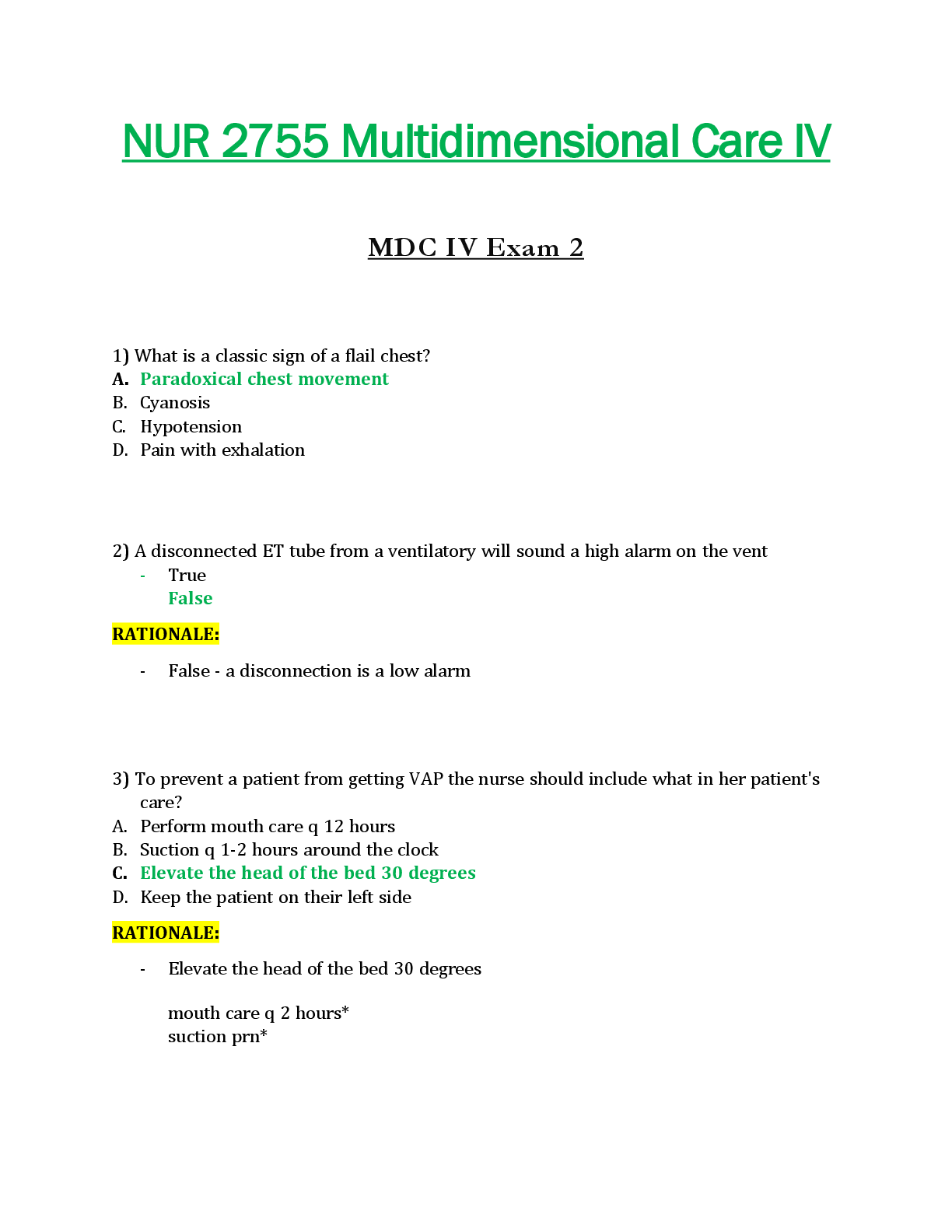
NUR 2755 MDC 3 EXAM 2 (Latest 2021 / 2022)-Rasmussen College Anthrax risk factors Correct Answer- Occupational exposure and drug use
Asthma Nursing care and education Correct Answer- Adherence to medication regimen, reg
...
NUR 2755 MDC 3 EXAM 2 (Latest 2021 / 2022)-Rasmussen College Anthrax risk factors Correct Answer- Occupational exposure and drug use
Asthma Nursing care and education Correct Answer- Adherence to medication regimen, regular physical activity, and avoidance of triggers that exacerbate the condition. Patients experiencing exacerbations require prompt nursing interventions including administration of supplemental oxygen, IV fluids, bronchodilators, and steroids and preparation of emergency intubation.
Asthma S/S Correct Answer- Labored breathing, Wheezing, chest pain, sleep problems, Frequent coughing, Allergies, Common cold, Feeling tired
Asthma risk factors Correct Answer- Risk factors include women, genetics, and living in cities with high air pollution. Education on finding out the "triggers" on the patient is important in order to avoid them. Things that could trigger are inhaled allergens, air pollutants, viral or bacterial, drugs (NSAIDS and beta blockers) occupational exposure (workplace) and foods.
asthma treatment Correct Answer- Avoid Triggers
Medications (Bronchodilators, Corticosteroids)
Reduce stress
Oxygen therapy
Regular exercise
Asthma Pathophysiology Correct Answer- Is a chronic disease in which reversible airway obstruction occurs intermittently, reducing air flow
Coccidioidomycosis Causes / risk factors Correct Answer- Also known as "Valley fever" it is a fungus that is found in the soil that when inhaled can cause respiratory complications
-Caused by Coccidioides immitis or C. posadasii.
-Risk factors include Agricultural workers
COPD Nursing care and education Correct Answer- Improve gas exchange, ensure adequate dietary input: weight loss common as progresses as the increase work of breathing increase metabolism, physical therapy and support, and psychosocial support-manage anxiety and post-op care
COPD positioning Correct Answer- Tripod and Fowler's/semi-fowler's promote effective breathing
COPD treatment Correct Answer- Medical management, Surgical management for some such as Lung transplant (rare), Lung reduction surgery is more common in emphysema (Remove hyperinflated lungs that are filled with mostly stagnant air)
COPD S/S Correct Answer- chronic cough (bronchitis), chronic sputum production (bronchitis), barrel chest (emphysema), recurrent dyspnea (both), wheezing & chest tightness and weight loss. (clubbed fingers as a result of chronic hypoxemia)
COPD lab results Correct Answer- polycythemia (elevated hematocrit or hemoglobin), chronic hypoxemia, acidosis, increased risk for respiratory infection
COPD nutrition Correct Answer- Increased breathing efforts leads to increased nutritional needs.
Cystic Fibrosis Signs and symptoms Correct Answer- -Non pulmonary:
Abdominal distention, GERD, Rectal prolapse, Foul smelling stools, Malnourished,Diabetes mellitus (type 1 variation), Osteoporosis and osteopenia
-Pulmonary issues:
Frequent or chronic respiratory infections, Chest congestion, Limited exercise tolerance, Chronic cough, Sputum production, Use of accessory muscles, Decreased pulmonary function test.
Cystic Fibrosis nursing care/education Correct Answer- Adequate hydration, weight management, medications, chest physiotherapy, manage other organ complications (especially pancreatic) and insulin therapy if needed
Cystic Fibrosis complications and management Correct Answer- Do NOT nurse CF patients near other CF patients (Burkholderia cepacia bacteria) because it is easily spread to another. Complete daily physiotherapy, positive expiratory pressure, oxygen therapy, and lung transplant. Client will need vitamins to prevent malnutrition and osteoporosis. Pancreatic enzymes.
Cystic fibrosis diagnosis Correct Answer- -*Sweat chloride test
-Pulmonary function test
-Chest X ray
-ABG
Cystic Fibrosis treatment Correct Answer- Treat active symptoms, Vitamin supplementation (struggle to absorb fat soluble vitamins (ADEK) - so at risk of bone issue, Diabetes management - loss of pancreatic function leads to loss of insulin production, Pancreatic enzyme replacement, Daily chest physiotherapy, LUNG TRANSPLANT
Epistaxis Nursing care Correct Answer- Management of bleeding by holding lateral pressure on the nose for 10 mins with cool compress. If bleeding does not stop, nasal packing may be applied.
Upright position to prevent aspiration
Do not blow nose for 24 hrs
Avoid straining or bending over
Epistaxis treatment Correct Answer- Seek care if traumatic cause, sit forward, Apply pressure, Apply ice or cool compress if possible, 15min-by the clock, pack if needed, explore cause (Blood work, humidifier, Behavior); Capillary cauterization, silver nitrate, electrocautery, nasal packing and pitaxis catheters
Facial trauma Diagnostics and testing Correct Answer- Xray, CT, and cervical spine Xray; S&S: Stridor, SOB/dyspnea, anxiety/restlessness/confusion, hypoxia/decreased saturation/hypercarbia, cyanosis and loss of consciousness
Facial Trauma Treatment Correct Answer- Fixed occlusion, Internal fixation (ORIF), and inner maxillary fixation (IMF); Nurse: Assess AIRWAY, assess for bleeding, look for facial asymmetry, edema, obvious fractures, check for CSF leakage from the nose or ears, check vision and eye movement, and check behind the ear for bruising swelling or bleeding.
Facial trauma nursing care/education Correct Answer- Patient airway, Control bleeding (Treat hypotension and hypovolemia), Stabilize patient for likely surgery
Head and neck cancer signs & symptoms Correct Answer- Red and white patch in mouth, Ulcer that
[Show More]