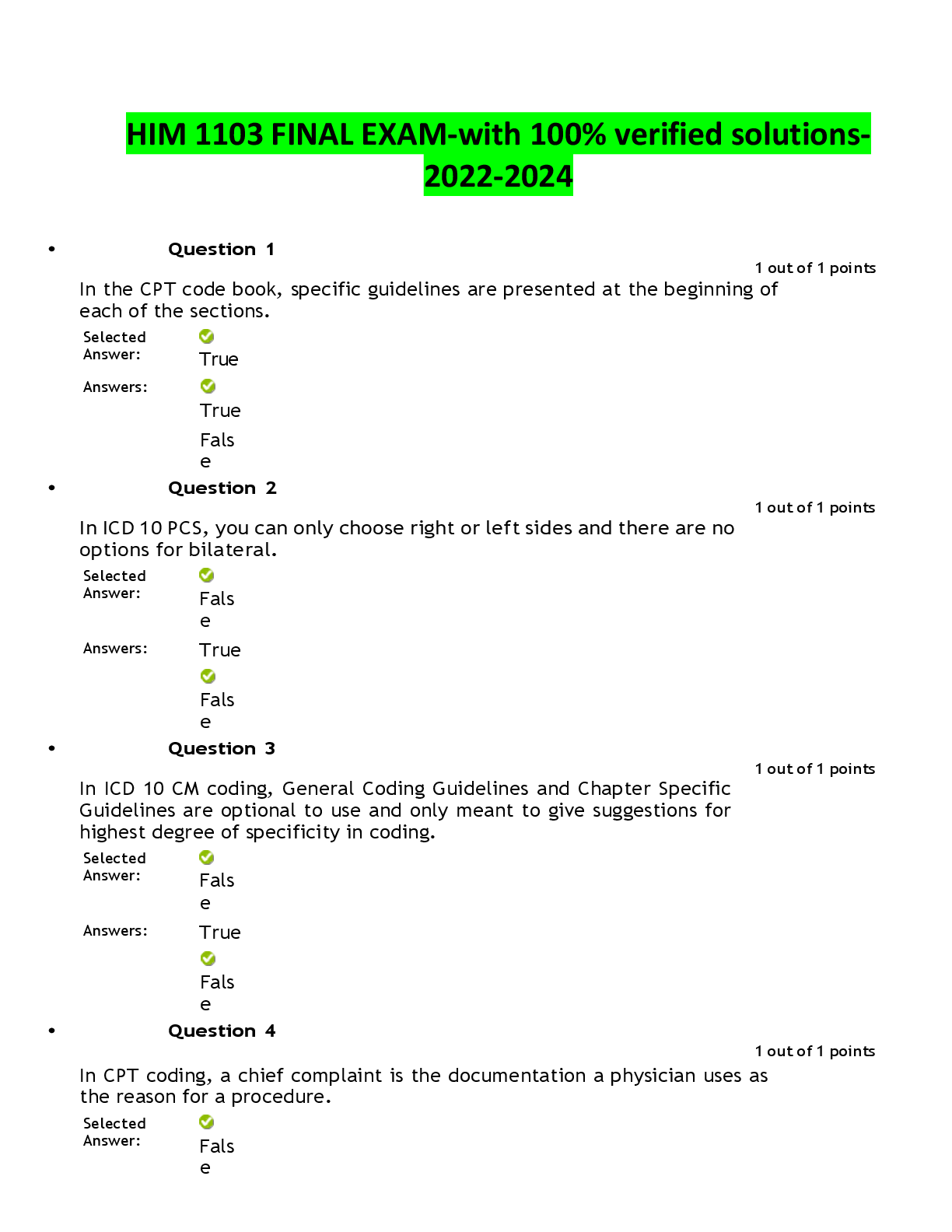
FTECH 144- primary assessment -complete 2022
Document Content and Description Below
1. A 20-year-old male was pulled from cold water by his friends. The length of his submersion is not known and was not witnessed. You perform a primary assessment and determine that the patient is apneic and has a slow,
...
[Show More]
Last updated: 3 years ago
Preview 1 out of 27 pages
Instant download
Buy this Document to get the Full Access Instantly
Provided by Students Who Aced it
We Verify Document Content to Gurantee Accuracy
Reviews( 0 )
Document information
Connected school, study & course
About the document
Uploaded On
May 26, 2022
Number of pages
27
Written in
All

Additional information
This document has been written for:
Uploaded
May 26, 2022
Downloads
0
Views
85
Topic Tags
Recommended For You
Get more on EXAM »
$10
215 Pages
(Complete 2022) Test Bank For Seidel's Guide to Physical Exami...
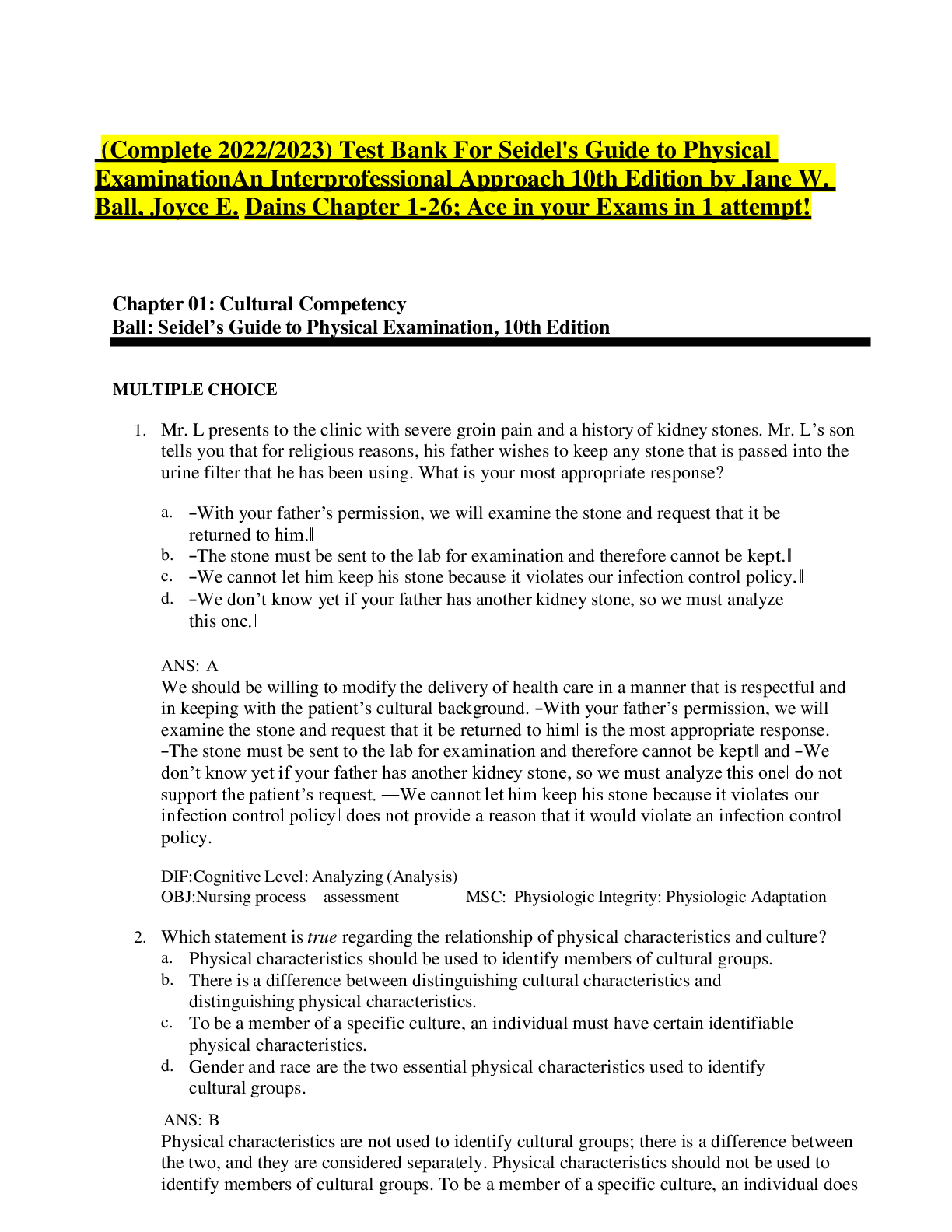
$17
426 Pages
(Complete 2022/2023) Test Bank For Seidel's Guide to Physical...

 & 2 (week 5) -complete-2022.png)
$12
12 Pages
NURSING HLT-306V-QUIZ 1 (Week 4) & 2 (week 5) -complete-2022
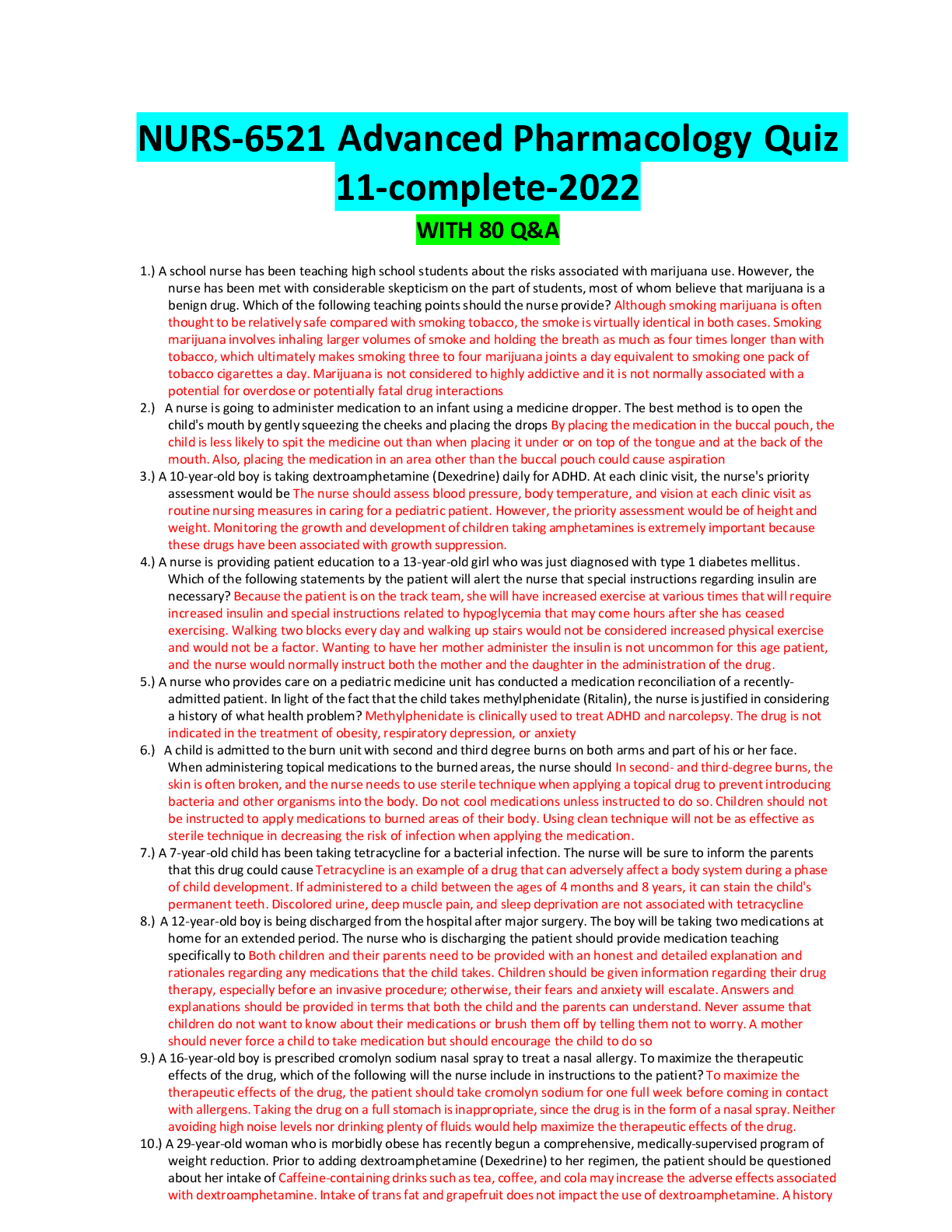

$7
8 Pages
CNA STATE BOARD EXAM QUESTIONS WITH CORRECT ANSWERS COMPLETE...
$10
2 Pages
COMPLETE 2022 EXAM NEW REVIEW UPDATE LAW ENFORCEMENT CJBAT
$12.5
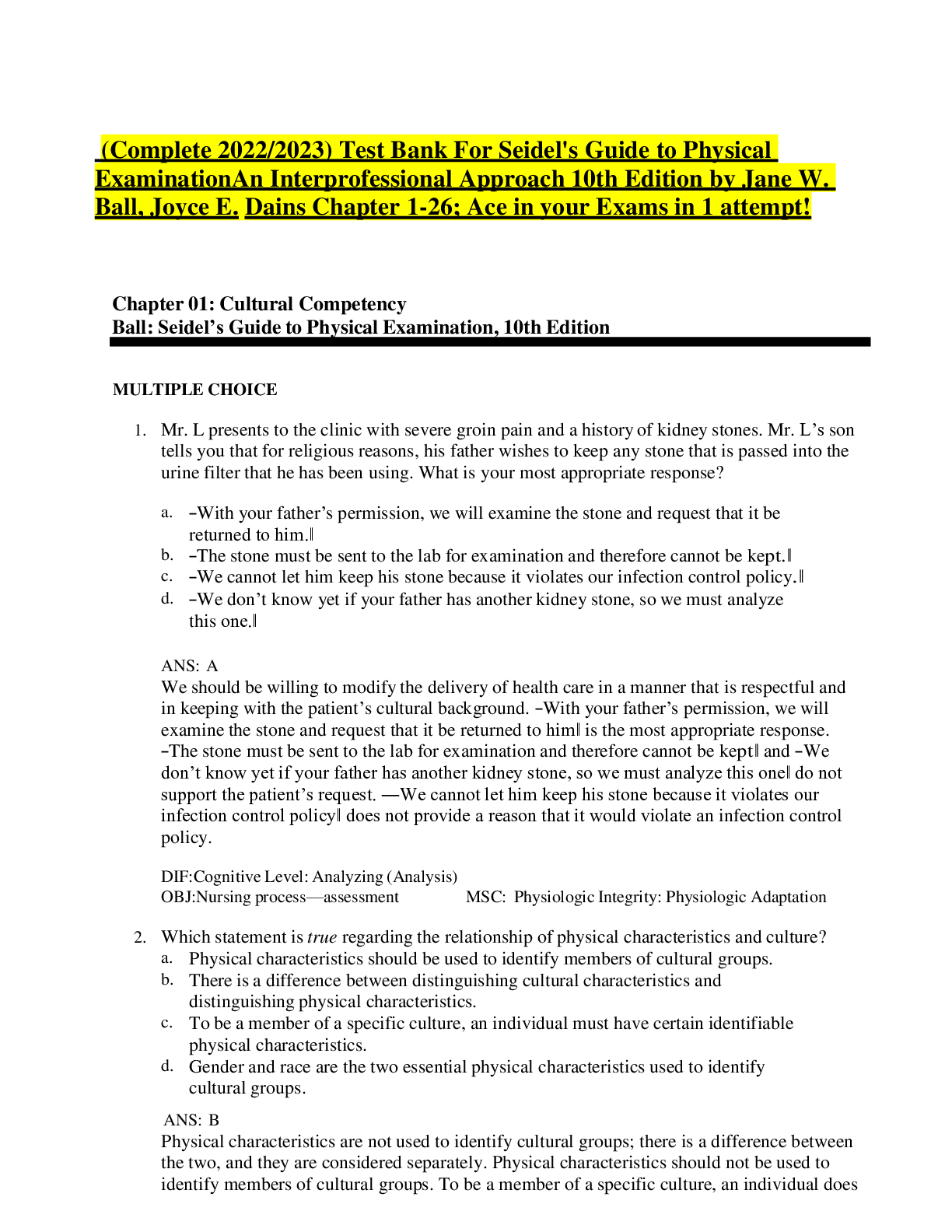
426 Pages
(Complete 2022/2023) Test Bank For Seidel's Guide to Physical...
$14.5
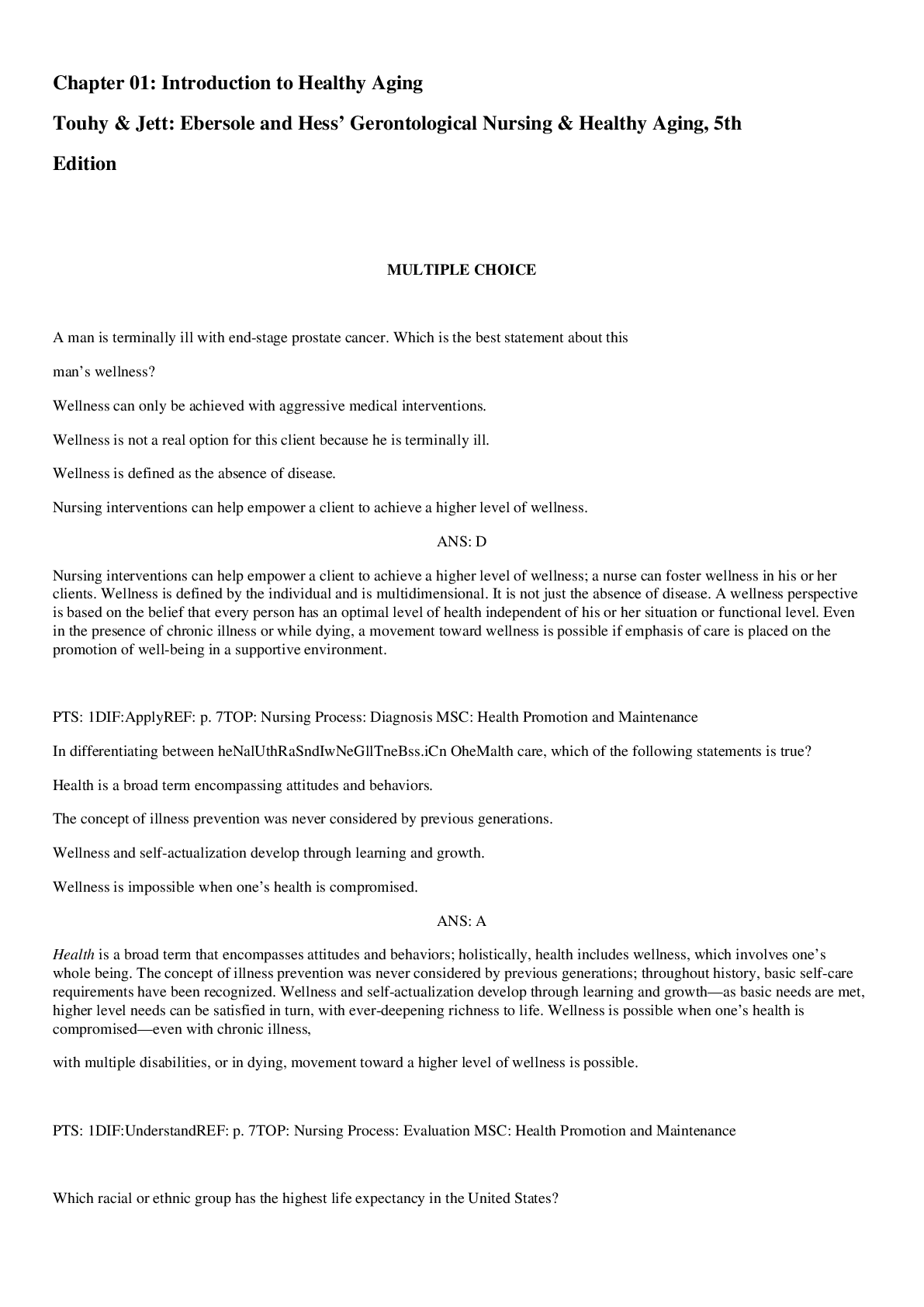
237 Pages
Test Bank for Ebersole and Hess Gerontological Nursing and Hea...

$18
7 Pages
(Complete 2022) Test Bank For Seidel's Guide to Physical Exami...
$14
219 Pages
(COMPLETE 2022-23) TEST BANK FOR SEIDEL'S GUIDE TO PHYSICAL EX...
$5.5
2 Pages
COMPLETE 2022 EXAM NEW REVIEW UPDATE LAW ENFORCEMENT CJBAT

$8
7 Pages
(Answered) Covalent Bonds Virtual Lab Gizmo, complete 2022-202...



More related documents below